Why "Charger Horsepower" Is the Wrong Question (But the Right Instinct)
If you've searched for "charger horsepower," you're not alone—and you're not entirely wrong to think in those terms. Horsepower measures the rate at which work gets done, and when you plug in an electric vehicle, you're essentially asking: how fast can this charger do the work of filling my battery?
The EV industry just uses a different unit: kilowatts (kW). One horsepower equals roughly 0.746 kW, so a 48-amp Level 2 home charger delivering 11.5 kW is pushing about 15.4 "charger horsepower" into your battery. A 350 kW DC fast charger? That's roughly 469 horsepower of electrical flow.
But here's the critical distinction that trips up new EV owners: kW measures power (the rate of energy delivery), while kWh measures energy (the total amount stored in your battery). Think of kW as the width of the hose and kWh as the size of the bucket. A 75 kWh battery (the bucket) charged at 11.5 kW (the hose) takes roughly 6.5 hours from empty to full. Confusing these two units is the single most common EV literacy mistake—and it leads to bad purchasing decisions.
This guide breaks down every charging level by the numbers, what home installation actually costs, which connectors fit which vehicles, and what equipment we'd recommend in 2026.
Charging Levels Decoded: Speed, Power, and Real-World Range Added
Every EV owner deals with three charging tiers. The table below shows what each delivers in practice, not just on paper.
| Level | Voltage | Max Power (kW) | Miles of Range Added Per Hour | Typical Use Case |
|---|---|---|---|---|
| Level 1 | 120V AC | 1.4–1.9 kW | 3–5 miles | Overnight trickle; PHEVs; emergency backup |
| Level 2 | 240V AC | 3.3–19.2 kW | 12–75 miles | Daily home/work charging; primary method for most owners |
| DC Fast Charge (Level 3) | 400–800V DC | 50–350 kW | 150–1,200+ miles (equivalent/hr) | Road trips; quick top-ups; 10–80% in 18–45 min |
A few realities that spec sheets gloss over:
- Level 1 is viable for PHEVs with small batteries (10–18 kWh). A Toyota RAV4 Prime or Chrysler Pacifica PHEV recovers its full electric range overnight on a standard outlet. For a 80+ kWh BEV battery? Level 1 adds maybe 30 miles in a 10-hour night—not enough for most commutes.
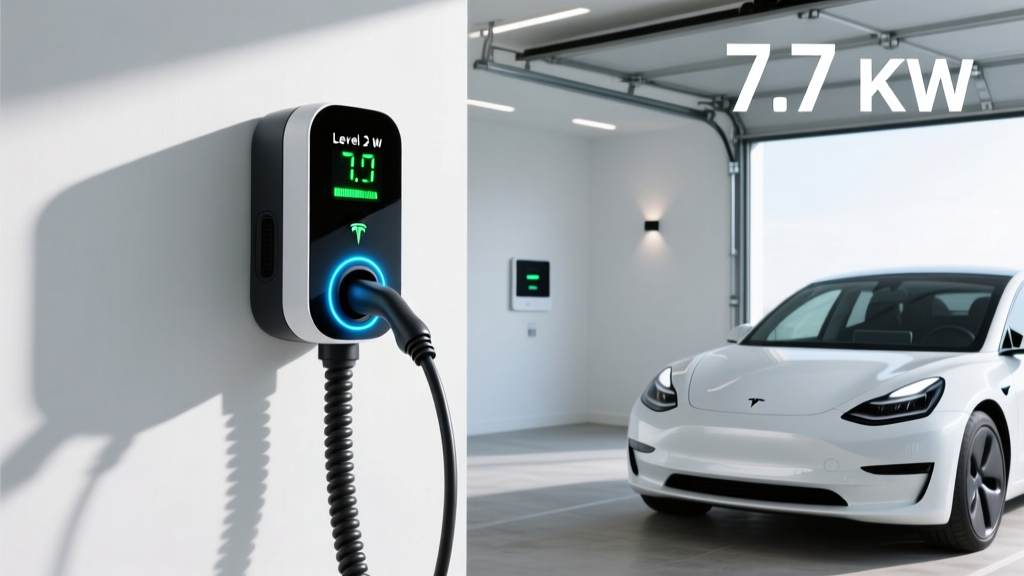
- Level 2 is where 90% of charging happens for BEV owners with home access. A 48-amp, 11.5 kW unit refills a Tesla Model Y's ~75 kWh battery in under 7 hours—plug in at 11 PM, full by 6 AM.
- DC fast charging is not a daily habit. Frequent use of 150+ kW charging accelerates battery degradation slightly, and peak rates are never sustained across the full session (more on charge curves below).
How Much Does It Cost to Install a Home EV Charger?
This is the question that stalls more EV purchases than range anxiety. The honest answer: it depends heavily on your home's electrical panel, the distance from panel to charger location, and your local permit requirements. Here's what the numbers actually look like in 2026.
| Component | Low-End Cost | High-End Cost | Notes |
|---|---|---|---|
| Level 2 Charger (Equipment) | $300 | $700 | 32A–48A smart chargers; hardwired or NEMA 14-50 plug |
| Electrician Labor | $400 | $1,500 | Depends on run length, conduit, wall material |
| Electrical Permit | $50 | $250 | Varies by municipality; some jurisdictions waive for EV |
| Panel Upgrade (if needed) | $1,500 | $4,000+ | Required if panel is 100A or near capacity; 200A service recommended |
| Total (no panel upgrade) | $750 | $2,450 | Most homes with 200A service fall in $1,000–$1,800 range |
| Total (with panel upgrade) | $2,250 | $6,450+ | Older homes (pre-1990s) are most at risk |
The panel-upgrade gotcha: If your home has a 100-amp electrical service—which is common in houses built before the 1990s—adding a 48-amp EV circuit (which requires a 60-amp breaker per NEC continuous-load rules) may exceed your panel's capacity. An electrician will perform a load calculation. If you're already running central AC, an electric oven, and a dryer, you may need a service upgrade to 200 amps. Budget accordingly.
Electrical Requirements for a Standard 48-Amp Level 2 Charger
- Voltage: 240V (same as your dryer or oven)
- Circuit breaker: 60-amp (NEC requires breakers rated at 125% of continuous load; 48A × 1.25 = 60A)
- Wire gauge: 6 AWG copper (THHN in conduit) or 4 AWG aluminum for longer runs
- Connection type: Hardwired (recommended for 48A+) or NEMA 14-50 receptacle (rated for 50A, limiting charger to 40A continuous)
- Dedicated circuit: Required—no sharing with other appliances
How Fast Will Each Charging Level Add Range? Real Charge-Time Examples
Spec sheets quote peak kW numbers that rarely hold for an entire session. Here's why: charge curves taper. A battery accepting 250 kW at 10% state of charge (SoC) might drop to 150 kW by 50% and 50 kW by 80%. This is normal lithium-ion physics—the battery management system (BMS) protects cells from heat damage by reducing current as the battery fills.
Below are realistic 10–80% charge times for common battery sizes, assuming optimal conditions (battery preconditioned, moderate ambient temperature):
Real-World 10–80% Charging Times
- 60 kWh battery (e.g., Chevy Equinox EV) — 250 kW DC fast: ~25 min | 11.5 kW Level 2: ~4.5 hours
- 75 kWh battery (e.g., Tesla Model Y) — 250 kW DC fast: ~28 min | 11.5 kW Level 2: ~5.5 hours
- 84 kWh battery (e.g., Ford F-150 Lightning Extended) — 150 kW DC fast: ~41 min | 11.5 kW Level 2: ~6 hours
- 100 kWh battery (e.g., GMC Sierra EV) — 350 kW DC fast: ~30 min | 19.2 kW Level 2: ~4.5 hours
- 18 kWh PHEV battery (e.g., RAV4 Prime) — Level 2 (3.3 kW): ~4 hours | Level 1 (1.4 kW): ~10 hours
Cold-weather caveat: Below 32°F (0°C), lithium-ion cells accept charge more slowly unless preconditioned. Expect DC fast-charge times to increase 20–40% in winter if your EV doesn't have active battery thermal management or if you haven't navigated to the charger (which triggers preconditioning on Teslas and many newer models).
Which Connector Is Compatible With My EV?
The connector landscape consolidated significantly in 2024–2025 when most major automakers adopted the North American Charging Standard (NACS), originally developed by Tesla. But millions of CCS1-equipped EVs remain on the road, and adapters bridge the gap. Here's where things stand in 2026.
| Connector | Brands Using It (New Vehicles) | Notes |
|---|---|---|
| NACS (Tesla-style) | Tesla, Ford, GM, Rivian, Volvo, Polestar, Nissan, Honda, Fisker, Lucid (newer) | Now the dominant standard; most new 2025+ EVs ship with NACS ports |
| CCS1 (Combo) | Hyundai, Kia, BMW, VW, Mercedes-Benz, Stellantis (most 2024 and earlier) | Still widely deployed at public stations; adapters to NACS available |
| CHAdeMO | Nissan Leaf (legacy), Mitsubishi Outlander PHEV (legacy) | Effectively discontinued for new vehicles; stations being phased out |
Adapter reality check: If you drive a CCS1-equipped EV (say, a 2024 Hyundai Ioniq 5) and want to use Tesla Superchargers, you'll need a CCS-to-NACS adapter. Tesla sells one for ~$250, and third-party options exist. The adapter adds minor resistance but does not meaningfully reduce charge speed. The reverse—NACS vehicles using CCS stations—also works with adapters, and most new public DC fast chargers now offer both cable types.
For Level 2 home charging, all non-Tesla EVs sold before 2025 use the J1772 connector. Newer NACS-equipped vehicles accept J1772 via a small adapter (usually included with the vehicle). Most home chargers ship with J1772; if your EV has a native NACS port, buy a charger with a NACS cable or use the vehicle's J1772-to-NACS adapter.
Charging Cost Per Mile: EV vs. Gas, By the Numbers
The economic case for EVs rests heavily on fuel cost savings, but the gap depends on where and when you charge. Let's run real numbers.
| Scenario | Rate / Price | Vehicle Efficiency | Cost Per Mile |
|---|---|---|---|
| Home Level 2 (off-peak utility rate) | $0.10/kWh | 3.0 mi/kWh (105 MPGe) | $0.033 |
| Home Level 2 (national avg residential) | $0.17/kWh | 3.0 mi/kWh | $0.057 |
| Public Level 2 (network pricing) | $0.30/kWh | 3.0 mi/kWh | $0.10 |
| DC Fast Charging ( Electrify America, EVgo) | $0.48/kWh | 3.0 mi/kWh | $0.16 |
| Gasoline vehicle (28 MPG combined) | $3.30/gallon | 28 MPG | $0.118 |
| Gasoline vehicle (truck, 19 MPG) | $3.30/gallon | 19 MPG | $0.174 |
Key takeaways:
- Home off-peak charging is 3–5× cheaper per mile than gasoline. Over 15,000 annual miles, that's a $1,200–$1,500 yearly savings.
- DC fast charging on the road can approach or exceed gasoline cost per mile. This is the trade-off for speed and convenience on road trips.
- Public Level 2 rates vary wildly—some workplaces and shopping centers offer free charging; networks like ChargePoint and EVgo price dynamically.
- If your utility offers time-of-use (TOU) rates, scheduling charges between midnight and 6 AM can drop your cost below $0.08/kWh in many regions.
According to fueleconomy.gov, the average 2026 EV achieves 97–132 MPGe (miles per gallon equivalent), translating to 2.8–3.8 miles per kWh. Efficiency varies—smaller, lighter EVs like the Tesla Model 3 and Hyundai Ioniq 6 lead the pack, while large trucks like the GMC Hummer EV sit around 1.8–2.0 mi/kWh.
Level 2 Home Charger Recommendations: What to Buy in 2026
Not all Level 2 chargers are equal. Below are our picks across categories, based on power output, build quality, smart features, and cable length—factors that matter in daily use.
Best Overall: ChargePoint Home Flex
- Power: Up to 12 kW (50A) — configurable from 16A to 50A
- Connector: J1772 (NACS adapter available)
- Cable: 23 feet
- Smart features: Wi-Fi, app scheduling, energy tracking, Alexa integration
- Price: ~$550
- Why: Adjustable amperage lets you match your circuit exactly; UL-listed; robust app
Best for NACS Vehicles: Tesla Wall Connector
- Power: Up to 11.5 kW (48A)
- Connector: Native NACS (J1772 adapter included for non-Tesla EVs)
- Cable: 24 feet
- Smart features: Wi-Fi, over-the-air updates, power sharing between two units
- Price: ~$475
- Why: Seamless Tesla integration; power-sharing lets two chargers split one 60A circuit
Best Value: Emporia Level 2 EV Charger
- Power: Up to 11.5 kW (48A)
- Connector: J1772
- Cable: 24 feet
- Smart features: Wi-Fi, app control, energy monitoring, solar integration
- Price: ~$350
- Why: Lowest price for a full-featured 48A smart charger; pairs with Emporia home energy monitors
Best for High-Power Needs: Grizzl-E Smart
- Power: Up to 19.2 kW (80A) on hardwired circuit
- Connector: J1772 or NACS (selectable at purchase)
- Cable: 24 feet
- Smart features: Wi-Fi, OCPP protocol, adjustable amperage
- Price: ~$650
- Why: One of few residential chargers supporting 80A/19.2 kW — useful for large batteries (100+ kWh) or future-proofing; requires 100A breaker
A note on NEMA 14-50 vs. hardwired: Chargers rated above 40A continuous (i.e., 48A or higher) should be hardwired. A NEMA 14-50 outlet is rated for 50A total, which means only 40A continuous per code. If you buy a 48A charger and plug it into a 14-50 outlet, you're exceeding the receptacle's continuous rating—a fire risk. Hardwiring eliminates this concern and is required by code for anything above 40A continuous.
Safety, Code, and Installation Best Practices
EV charging is a high-draw, continuous electrical load—exactly the scenario the National Electrical Code (NEC) is designed to govern. Here's what a proper installation includes:
- Dedicated circuit: Your EV charger must have its own breaker. No shared circuits with laundry, HVAC, or other loads.
- GFCI protection: NEC 2020 and later require ground-fault circuit-interrupter protection for all EV receptacles (NEMA 14-50). Hardwired chargers are exempt from GFCI in most jurisdictions, which is one reason hardwiring is preferred—it avoids nuisance trips.
- Outdoor rating: If mounting outside, ensure the charger is rated NEMA 4 (weatherproof). Most major chargers are, but confirm before purchase.
- Permit and inspection: Most municipalities require an electrical permit for EV charger installation. The inspection ensures your electrician followed code—and it protects your homeowner's insurance coverage in the unlikely event of a fault.
- Cable management: A 24-foot cable dragging on a garage floor is a trip hazard and wears the insulation. Wall-mounted cable organizers ($20–$40) are a worthwhile add.
Never use an extension cord with an EV charger. The continuous high current generates heat at connection points, and standard extension cords are not rated for it.
Frequently Asked Questions
How much does it cost to install a home EV charger?
For a typical 48-amp Level 2 charger in a home with adequate 200-amp electrical service, expect to pay $1,000–$1,800 total (equipment + electrician + permit). If your panel needs upgrading to 200A, add $1,500–$4,000. The federal government does not currently offer a dedicated home charger tax credit for 2026, though some utilities and states offer rebates of $250–$500—check with your local provider.
How fast will each charging level add range?
Level 1 (120V) adds 3–5 miles of range per hour. Level 2 (240V) adds 12–75 miles per hour depending on amperage (16A to 80A). DC fast charging adds the equivalent of 150–1,200+ miles per hour, which is why a 10–80% session takes just 18–45 minutes. Remember: these are peak rates that taper as the battery fills.
Which connector or charger is compatible with my EV?
Check your vehicle's charge port. New 2025–2026 models from Tesla, Ford, GM, Rivian, Volvo, Nissan, and others use NACS. Most 2024 and earlier non-Tesla EVs use CCS1 for DC fast charging and J1772 for Level 2. Adapters bridge all combinations. When buying a home charger, match the cable connector to your vehicle's port—or use the adapter your EV likely ships with.
How much does charging cost per mile vs. gas?
Home charging at average residential rates ($0.17/kWh) costs about $0.05–$0.06 per mile for a typical EV. Gasoline at $3.30/gallon in a 28 MPG vehicle costs about $0.12 per mile. That's roughly a 50% per-mile savings for the EV. DC fast charging on road trips ($0.48/kWh) pushes cost to ~$0.16/mile, which can exceed gas for efficient cars but still beats truck fuel costs.
What electrical upgrades might I need?
The most common upgrade is a panel service increase from 100A to 200A, costing $1,500–$4,000. You may also need a new conduit run if your panel is far from the garage or parking spot (long wire runs add $200–$800 in material and labor). Some older homes need the panel physically relocated to accommodate new breaker slots. Always have a licensed electrician perform a load calculation before committing to a charger amperage—oversizing your charger relative to available panel capacity is a code violation and a safety hazard.
Does a higher-kW home charger always mean faster charging?
Not necessarily. Your EV has an onboard charger that converts AC power from the wall to DC power for the battery, and that onboard charger has its own limit. Most EVs accept 7.7–11.5 kW on Level 2. If your car's onboard charger maxes at 7.7 kW (like some base-model EVs), buying a 19.2 kW home charger won't charge it any faster—the car will only draw what it can accept. Check your vehicle's Level 2 acceptance rate before overspending on charger hardware.