Whether you're transitioning from a high-performance truck like the Harley F150 Supercharged to an electric vehicle, or adding a second EV to your garage, understanding home charging infrastructure is critical. This guide breaks down exactly what you need: electrical requirements, realistic installation costs, charging speeds, and equipment recommendations for 2026.
Understanding EV Charging Levels: Speed and Power Explained
EV charging operates across three primary levels, each with distinct power delivery measured in kilowatts (kW) — the rate of energy flow — and energy capacity measured in kilowatt-hours (kWh), the total energy stored in your battery. Confusing these units is the most common EV literacy mistake.
| Charging Level | Voltage/Amperage | Power Output (kW) | Miles Added Per Hour | Typical Use Case |
|---|---|---|---|---|
| Level 1 | 120V / 12-16A | 1.4-1.9 kW | 3-5 miles/hour | Overnight top-ups, PHEVs, emergency backup |
| Level 2 (Home) | 240V / 32-48A | 7.7-11.5 kW | 25-45 miles/hour | Daily home charging, full battery overnight |
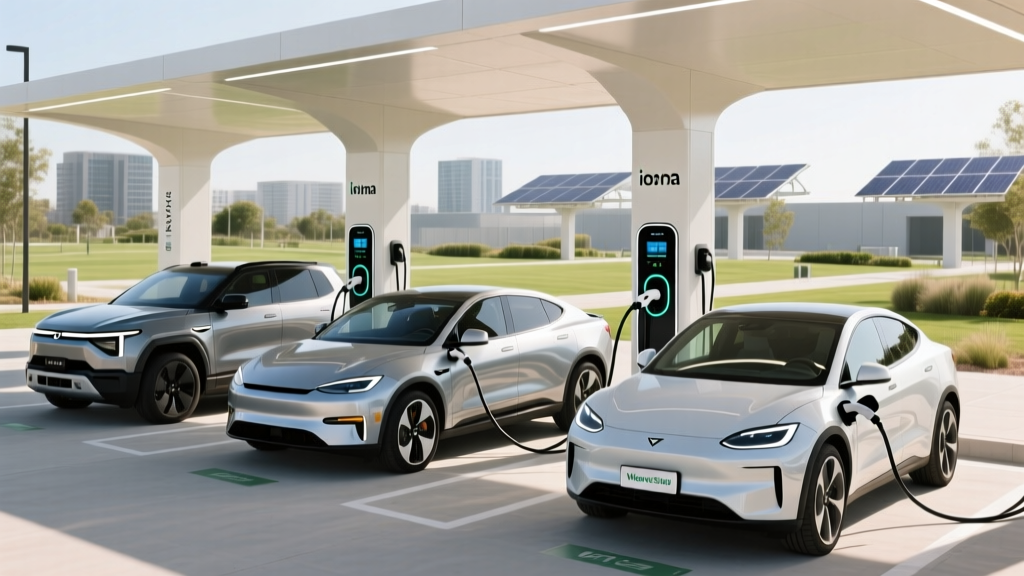
| DC Fast Charging | 400-800V DC | 50-350 kW | 150-1,200 miles/hour* | Road trips, quick top-ups away from home |
*DC fast charging speeds peak at low state-of-charge and taper significantly above 80% to protect battery health. A 350 kW peak doesn't mean sustained delivery.
For context, a typical 75 kWh battery (like the Ford Mustang Mach-E Extended Range) charging at 11.5 kW Level 2 adds roughly 40 miles of range per hour, fully replenishing from 10-80% in about 5 hours. The same battery on a 150 kW DC fast charger hits 10-80% in approximately 28 minutes, though real-world times stretch to 35-40 minutes accounting for charge-curve taper.
Home Level 2 Charger Installation: Electrical Requirements and Costs
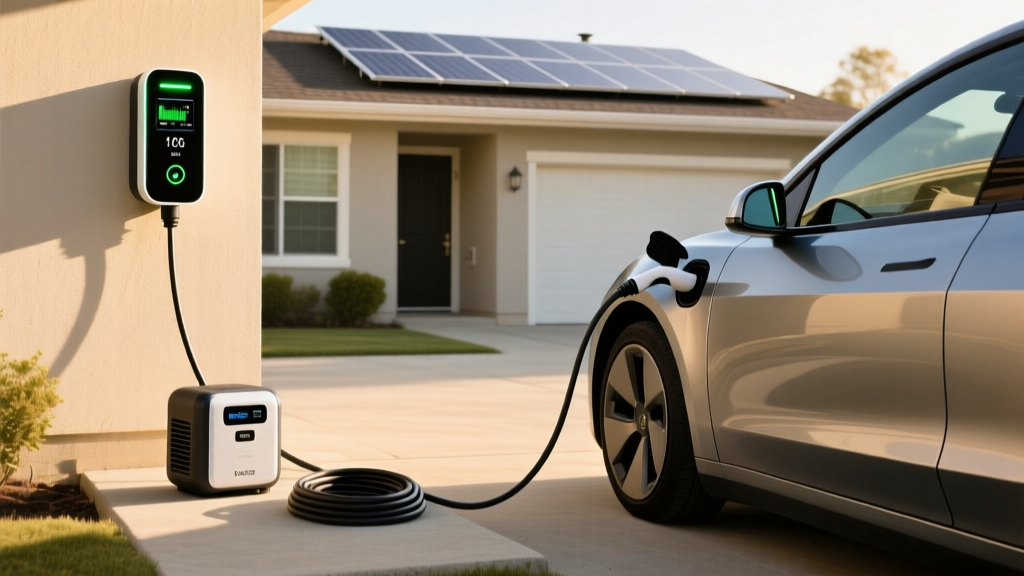
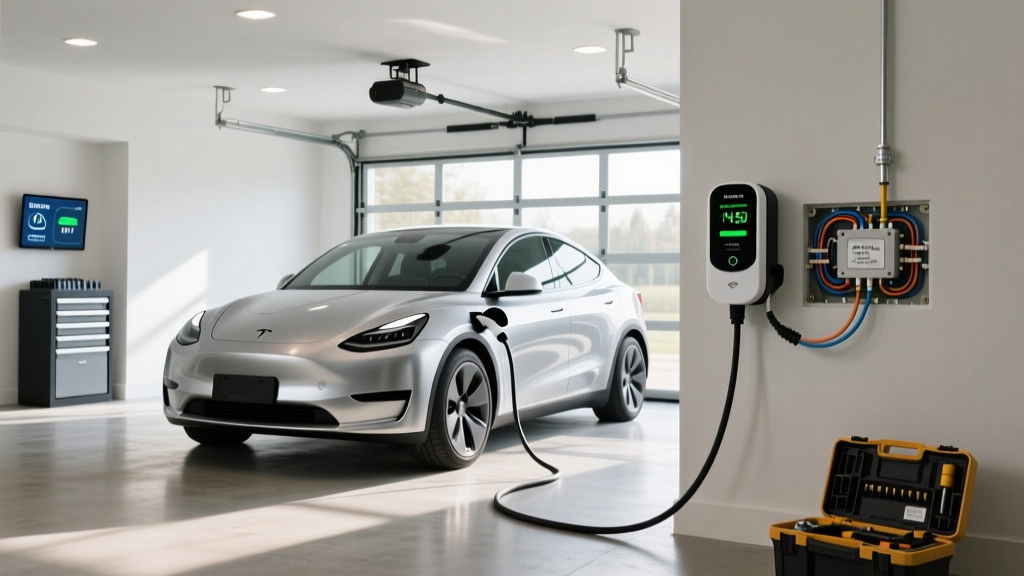
Installing a Level 2 home charger requires a dedicated 240-volt circuit, similar to what powers an electric dryer or oven. Here's what's involved:
Electrical Specifications
- Voltage: 240V (split-phase residential service)
- Amperage: 40A circuit for 32A continuous charging (National Electrical Code requires circuits rated 125% above continuous load)
- Wire gauge: 6 AWG copper for runs under 50 feet; 4 AWG for longer runs
- Circuit breaker: 40A double-pole breaker
- Outlet type: NEMA 14-50 (if using plug-in charger) or hardwired connection
Installation Cost Breakdown
| Component | Cost Range | Notes |
|---|---|---|
| Level 2 Charger Equipment | $400-$700 | 32-48A smart chargers with Wi-Fi and cable |
| Electrician Labor | $300-$800 | Depends on panel proximity and wall type |
| Electrical Permit | $50-$200 | Varies by municipality |
| Materials (wire, conduit, breaker) | $100-$300 | Longer runs increase cost |
| Total (Standard Install) | $850-$2,000 | Panel accessible, short wire run |
| Total (Complex Install) | $2,000-$3,500 | Long conduit run, panel upgrade needed |
When You Need a Panel Upgrade
Homes with 100-amp electrical service or older panels may need an upgrade to 200A service before adding a 40A EV circuit. Panel upgrades cost $1,500-$3,500 additional. Signs you might need an upgrade:
- Your panel is at or near capacity (calculate existing loads: HVAC, electric range, dryer, water heater)
- You have a Federal Pacific or Zinsco panel (known safety hazards requiring replacement)
- Your home was built before 1980 with original 100A service
- You plan to add multiple high-draw circuits (EV charger + heat pump + solar inverter)
A licensed electrician can perform a load calculation to determine if your panel supports an additional 40A circuit. Don't skip this step — overloading a panel creates fire risk.
Connector Compatibility: NACS, CCS, and CHAdeMO
The EV charging landscape has consolidated around the North American Charging Standard (NACS), originally developed by Tesla and now adopted by most major automakers for 2025-2026 models.
| Connector Type | Compatible Brands | Adapter Needed? |
|---|---|---|
| NACS (Tesla) | Tesla, Ford, GM, Rivian, Volvo, Polestar, Mercedes, BMW (2025+), Hyundai/Kia (2025+) | CCS-to-NACS adapter for older CCS vehicles at Tesla Superchargers |
| CCS1 | Legacy models: pre-2025 VW, Hyundai, Kia, BMW; Stellantis brands | NACS-to-CCS adapter to access Tesla Supercharger network |
| CHAdeMO | Nissan Leaf (discontinued 2025), Mitsubishi Outlander PHEV | Limited public infrastructure; CHAdeMO-to-CCS adapters rare |
Home charger selection: Most Level 2 home chargers now ship with NACS connectors or include CCS adapters. If you own a CCS-equipped vehicle, ensure your home charger has the matching plug or purchase a $150-$300 adapter from the manufacturer.
For public charging, networks like Electrify America, EVgo, and ChargePoint offer both NACS and CCS connectors at most 2026 stations. Tesla Superchargers now welcome non-Tesla vehicles with NACS ports or approved CCS adapters.
Charging Cost: Home vs. Public vs. Gas Comparison
Electricity pricing varies dramatically by location, time-of-use, and charging method. Here's how costs break down:
| Charging Scenario | Electricity Cost ($/kWh) | Cost Per Mile* | Annual Fuel Cost (12,000 mi) |
|---|---|---|---|
| Home (off-peak rate) | $0.08-$0.14 | $0.03-$0.05 | $360-$600 |
| Home (standard rate) | $0.15-$0.20 | $0.05-$0.07 | $600-$840 |
| Public Level 2 | $0.25-$0.49 | $0.08-$0.16 | $960-$1,920 |
| DC Fast Charging | $0.35-$0.69 | $0.12-$0.23 | $1,440-$2,760 |
| Gas Vehicle (25 MPG combined) | $3.50/gallon | $0.14 | $1,680 |
*Based on 3.5 miles per kWh efficiency (typical for midsize EVs like Tesla Model Y, Ford Mach-E). Actual efficiency varies: highway driving reduces efficiency 10-15%, cold weather can reduce it 20-30%.
Home charging with off-peak rates delivers 60-75% savings versus gas. Even at standard residential rates, EVs cost 50-65% less to "fuel." Public DC fast charging narrows the gap but remains competitive with gas for road trips.
Time-of-use optimization: Many utilities offer EV-specific rate plans with overnight rates as low as $0.06-$0.09/kWh. Programming your charger to start at 10 PM can cut charging costs by 40-60% versus peak afternoon rates.
Recommended Home EV Chargers (2026)
ChargePoint Home Flex
- Power Output: Up to 11.5 kW (48A) on 60A circuit, or 9.6 kW (40A) on 50A circuit
- Connector: NACS (J3400) standard; CCS adapter included
- Cable Length: 23 feet
- Smart Features: Wi-Fi, Alexa integration, scheduled charging, energy tracking
- Price: $599 (frequently $549 on sale)
- Best For: High-power charging, multi-EV households
Wall Connector (Tesla)
- Power Output: Up to 11.5 kW (48A)
- Connector: NACS native; J1772 adapter available for CCS vehicles
- Cable Length: 24 feet
- Smart Features: Wi-Fi updates, power sharing (multiple units on one circuit), load management
- Price: $475
- Best For: Tesla owners, clean aesthetic, power sharing
Emporia Level 2 EV Charger
- Power Output: Up to 11.5 kW (48A)
- Connector: NACS or CCS (select at purchase)
- Cable Length: 24 feet
- Smart Features: Real-time energy monitoring, solar integration, circuit breaker monitoring
- Price: $399
- Best For: Budget-conscious buyers, solar homes, energy monitoring
Grizzl-E Smart
- Power Output: Up to 10 kW (40A)
- Connector: NACS or CCS options
- Cable Length: 24 feet
- Smart Features: Basic scheduling, adjustable amperage (16-40A)
- Price: $449
- Best For: Cold climates (-40°F rating), adjustable power for older panels
Safety, Permits, and Code Compliance
Proper installation isn't optional — it's required by the National Electrical Code (NEC) and your homeowner's insurance policy.
Critical Safety Requirements
- Dedicated circuit: Your EV charger must have its own breaker, not shared with other appliances
- GFCI protection: NEC 2023+ requires ground-fault circuit interrupter protection for outdoor EV outlets (some chargers include built-in GFCI)
- Outdoor rating: If mounting outside, ensure the charger is rated NEMA 4 (weatherproof) or NEMA 3R (rain-resistant)
- Cable management: Use a holster or retractor to prevent tripping hazards and cable damage
- Ventilation: Indoor garage installations don't require special ventilation for Level 2 chargers (no off-gassing)
Permit Process
Most jurisdictions require an electrical permit for EV charger installation ($50-$200). The process:
- Electrician submits permit application with load calculation
- Permit issued (usually same day or within 1-3 business days)
- Installation completed
- City/county inspector visits to verify code compliance (typically within 1-2 weeks)
- Final approval issued
Skipping the permit risks insurance claim denial if an electrical fire occurs and may violate local ordinance. Licensed electricians handle permitting as part of their service.
Frequently Asked Questions
How much does it cost to install a home EV charger?
A standard Level 2 charger installation costs $850-$2,000 total, including equipment ($400-$700), electrician labor ($300-$800), permit ($50-$200), and materials ($100-$300). Complex installations requiring long conduit runs or panel upgrades can reach $2,000-$3,500. Homes with accessible panels and short wire runs fall on the lower end.
How fast will each charging level add range?
Level 1 (120V) adds 3-5 miles per hour — suitable for plug-in hybrids or overnight top-ups. Level 2 (240V, 40A) adds 25-45 miles per hour, fully charging most EVs overnight in 5-8 hours. DC fast charging adds 150-1,200 miles per hour at peak rates, delivering 10-80% charges in 18-40 minutes depending on battery size and charger power.
Which connector/charger is compatible with my EV?
2025-2026 models from Ford, GM, Rivian, Volvo, Mercedes, BMW, Hyundai, and Kia use NACS (Tesla connector). Older CCS-equipped vehicles need a NACS-to-CCS adapter ($150-$300) to access Tesla Superchargers. CHAdeMO vehicles (Nissan Leaf, Mitsubishi Outlander PHEV) have limited public charging options. For home charging, match your charger's connector to your vehicle's port or use the manufacturer's adapter.
How much does charging cost per mile vs. gas?
Home charging at off-peak rates costs $0.03-$0.05 per mile, versus $0.14 per mile for a 25 MPG gas vehicle at $3.50/gallon — a 65-75% savings. Standard residential rates ($0.15-$0.20/kWh) yield $0.05-$0.07 per mile. Public DC fast charging costs $0.12-$0.23 per mile, still competitive with gas for road trips.
What electrical upgrades might I need?
Homes with 100-amp service, older panels (Federal Pacific, Zinsco), or panels near capacity need upgrades costing $1,500-$3,500. A licensed electrician performs a load calculation considering existing circuits (HVAC, electric range, dryer, water heater) to determine if your panel supports an additional 40A EV circuit. Homes built after 1990 with 200A service typically accommodate EV chargers without upgrades.
Can I install a Level 2 charger myself?
Technically possible for licensed electricians or experienced DIYers, but not recommended. Mistakes create fire risk, void equipment warranties, and violate insurance requirements. Professional installation ensures code compliance, proper grounding, and permit documentation.
Do I need a smart charger with Wi-Fi?
Smart features enable scheduled charging (to capture off-peak rates), energy monitoring, and remote control via smartphone app. If your utility offers time-of-use rates, a smart charger pays for itself within months through optimized charging schedules. Basic non-smart chargers cost $100-$200 less but lack these savings features.
Next Steps: Planning Your Installation
Before contacting an electrician:
- Check your electrical panel: Locate the amperage rating (100A, 150A, 200A) and note available breaker slots
- Measure the distance: From panel to desired charger location (garage wall, carport, driveway)
- Review utility rates: Check if your provider offers EV-specific time-of-use plans
- Verify vehicle compatibility: Confirm your EV's connector type (NACS or CCS) and maximum Level 2 charge rate (some vehicles cap at 7.7 kW even on 11.5 kW chargers)
- Get 2-3 quotes: Licensed electricians provide free estimates including load calculations
For detailed electrical specifications and safety standards, consult the National Electrical Code (NEC) or your local building department. The U.S. Department of Energy provides additional guidance on home charging best practices and utility incentive programs.