If you've searched for the 2023 Super Bee Charger quarter mile time (it runs the strip in roughly 12.4 seconds with its 485-hp 6.4L HEMI V8), you already understand the appeal of raw, instant performance. What you may not realize is that modern electric vehicles deliver comparable straight-line acceleration — and the real "refueling" advantage happens at home while you sleep. This guide translates that muscle-car mindset into EV charging literacy: exact kW speeds, real installation costs, connector standards, and per-mile economics.
Charging Levels Explained: kW Speeds and Miles Per Hour
The single most important distinction in EV ownership is between kW (kilowatts) and kWh (kilowatt-hours). Think of kW as the flow rate of a hose (power), and kWh as the total volume of water in the tank (energy). Your battery capacity is measured in kWh; your charger's speed is measured in kW. Confusing them is the most common EV literacy mistake.
| Level | Voltage | Max Power (kW) | Miles of Range Per Hour | Best For |
|---|---|---|---|---|
| Level 1 | 120V AC | 1.2–1.9 kW | 3–5 mi/hr | Overnight top-ups, PHEVs, low-mileage drivers |
| Level 2 | 240V AC | 7.2–19.2 kW | 20–60 mi/hr | Daily home charging, workplace, apartments |
| DC Fast Charge | 200–900V DC | 50–350 kW | 150–1,000+ mi/hr (peak) | Road trips, highway corridors, commercial fleets |
A critical real-world caveat: DC fast charging speeds are peak rates, not sustained. A vehicle advertising 250 kW peak will typically only sustain that rate between 10–30% State of Charge (SoC), then taper as the battery management system protects cell health. Expect a 10–80% charge to take 18–25 minutes on a capable 350 kW station, not the theoretical minimum.
Home Charger Installation: Electrical Requirements and True Costs
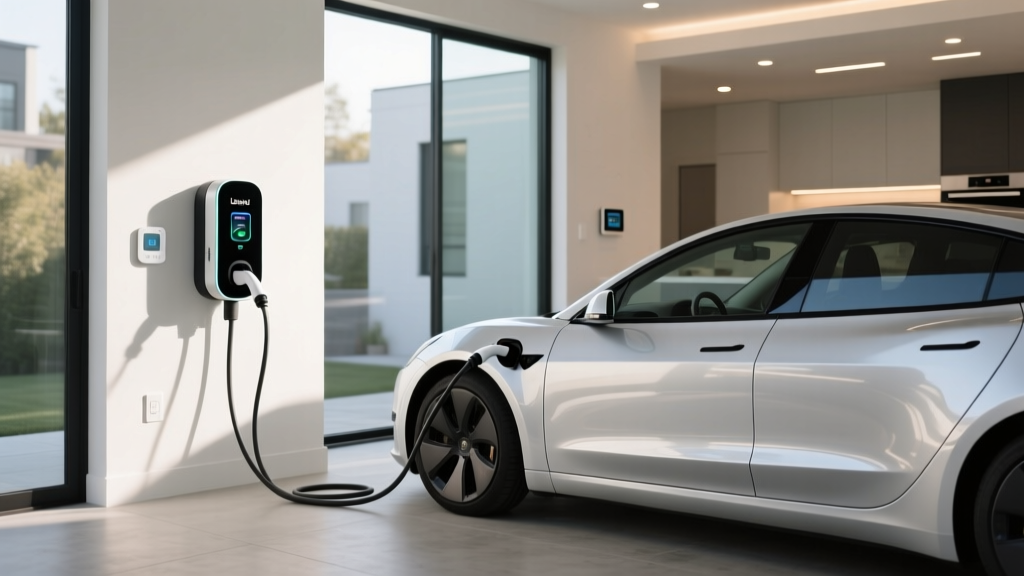
Level 2 home charging is where 80–90% of EV "refueling" happens for owners with garage or driveway access. But the sticker price of the charger itself is only part of the equation. Here's what a real installation involves:
Electrical requirements: A typical Level 2 home charger runs on a dedicated 240V circuit, most commonly 40A (delivering 9.6 kW continuous) or 48A (11.5 kW). Hardwired units can go up to 80A (19.2 kW) on a 100A breaker. The National Electrical Code (NEC) requires the circuit breaker to be rated at 125% of the continuous load — so a 48A charger needs a 60A breaker.
Panel upgrade reality: Many homes built before 2000 have 100A or 150A main service panels. Adding a 60A EV circuit may push total load beyond 80% of panel capacity, triggering a $1,500–$3,500 panel upgrade to 200A. This is the hidden cost that catches buyers off guard. A licensed electrician will perform a load calculation before recommending a circuit size.
| Component | Low End | High End | Notes |
|---|---|---|---|
| Level 2 charger unit (32A–48A) | $300 | $700 | Smart WiFi units cost more; dumb units are cheaper |
| Electrician labor (2–6 hrs) | $300 | $900 | Varies by region; $75–$150/hr typical |
| Wiring, conduit, breaker | $150 | $600 | Longer runs from panel to garage increase cost |
| Permit and inspection | $50 | $300 | Required in most jurisdictions; protects resale value |
| Panel upgrade (if needed) | $1,500 | $3,500 | 100A→200A service upgrade; ~20% of homes need this |
| Total (no panel upgrade) | $800 | $2,500 | Most common scenario for 200A-panel homes |
| Total (with panel upgrade) | $2,300 | $6,000 | Older homes; consider future solar/battery needs too |
The IRS §30D federal tax credit does not cover home charger equipment for most taxpayers — the alternative fuel vehicle refueling property credit (§30C) was extended but has strict census-tract and income requirements. Check with a tax professional before assuming eligibility.
Connector Compatibility: NACS, CCS, and CHAdeMO in 2026
The connector landscape has consolidated significantly since 2024, when Ford, GM, Rivian, Volvo, and nearly every major automaker committed to adopting Tesla's North American Charging Standard (NACS). Here's where things stand:
| Connector | Brands Using It | DC Fast Charge Max | Adapter Needed? |
|---|---|---|---|
| NACS (Tesla standard) | Tesla, Ford, GM, Rivian, Volvo, Polestar, Mercedes, Hyundai/Kia (2025+) | Up to 350 kW | CCS vehicles need a CCS→NACS adapter ($150–$250) |
| CCS1 | VW, Audi, BMW, older Hyundai/Kia, Honda Prologue (early), legacy models | Up to 350 kW | NACS vehicles need NACS→CCS adapter for non-Tesla networks |
| CHAdeMO | Nissan Leaf (legacy only — discontinued 2025), Mitsubishi Outlander PHEV | Up to 100 kW | Limited station availability; adapters rare and expensive |
If you're buying a new EV in 2026, NACS is the default for most brands. CCS remains widely supported at Electrify America, EVgo, and ChargePoint stations, and adapters bridge the gap. CHAdeMO is effectively legacy — avoid it unless you already own a compatible vehicle and charge primarily at home.
Cost Per Mile: EV Charging vs. Gasoline (Real Numbers)
The economic case for EV charging hinges on electricity rates, which vary enormously. Here's a realistic comparison using a midsize EV averaging 3.0 miles/kWh (roughly 112 MPGe) versus a comparable gas sedan at 28 MPG combined:
| Scenario | Rate / Price | Cost Per Mile | Annual Cost (12,000 mi) |
|---|---|---|---|
| Home Level 2 (off-peak, $0.12/kWh) | $0.12/kWh | $0.040 | $480 |
| Home Level 2 (standard, $0.18/kWh) | $0.18/kWh | $0.060 | $720 |
| Public Level 2 (ChargePoint, $0.30/kWh) | $0.30/kWh | $0.100 | $1,200 |
| DC Fast (Electrify America, $0.48/kWh) | $0.48/kWh | $0.160 | $1,920 |
| Gas sedan (28 MPG, $3.40/gal) | $3.40/gal | $0.121 | $1,457 |
| Muscle car (16 MPG, $3.40/gal) | $3.40/gal | $0.213 | $2,550 |
Home off-peak charging delivers fuel costs at roughly one-third of a gas sedan and one-fifth of a V8 muscle car. But exclusive DC fast charging on the road erases most of the savings — a key reason home charging access remains the top predictor of EV ownership satisfaction. According to fueleconomy.gov, the average EV efficiency across the 2026 fleet is approximately 3.0–3.5 mi/kWh, with larger SUVs closer to 2.5 mi/kWh.
Charging Time Examples: 10–80% for Common Battery Sizes
How long does a real charge session take? It depends on battery capacity (kWh), the charger's peak power (kW), and the vehicle's charge curve. Here are representative 10–80% times for popular configurations:
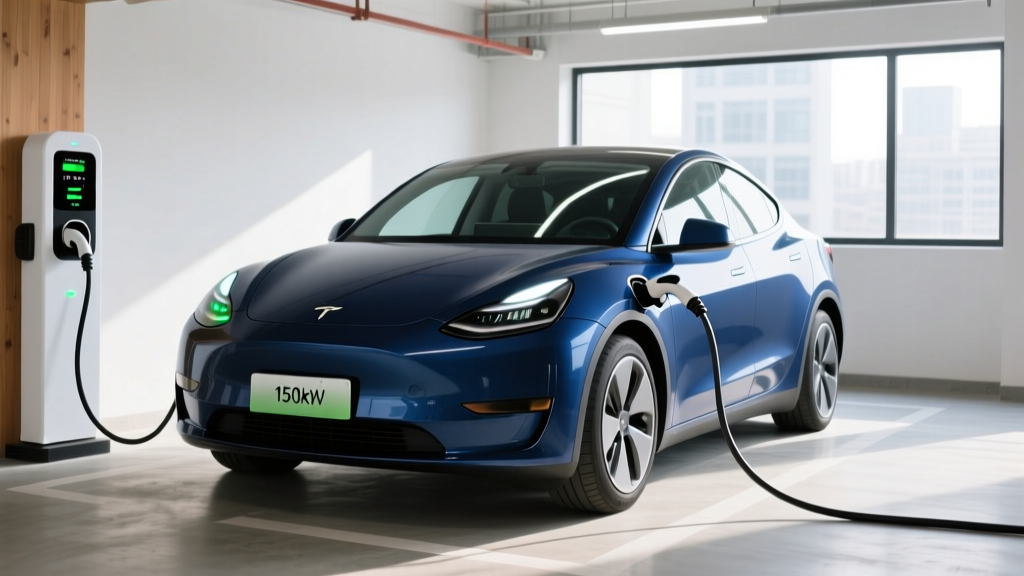
- 60 kWh battery (e.g., base EV sedan) on a 150 kW DC charger: Peak rate ~130 kW tapering to ~60 kW above 50% SoC. Expect 10–80% in approximately 25–30 minutes.
- 84 kWh battery (e.g., midsize EV SUV) on a 350 kW DC charger: Peak rate ~240 kW tapering to ~80 kW above 60% SoC. Expect 10–80% in approximately 18–22 minutes.
- 100 kWh battery (e.g., full-size EV truck) on a 350 kW DC charger: Peak rate ~250 kW with a flatter curve. Expect 10–80% in approximately 28–35 minutes.
- 84 kWh battery on a 48A (11.5 kW) home Level 2 charger: 0–100% in approximately 7.5 hours. Plug in at 10 PM, wake up fully charged at 5:30 AM.
- 13 kWh PHEV battery on a 12A (2.9 kW) Level 2 charger: 0–100% in approximately 4.5 hours.
Preconditioning matters. Most EVs will warm or cool the battery to optimal temperature when you navigate to a DC fast charger, enabling faster peak charge rates. Skipping preconditioning in cold weather can add 10–15 minutes to a session because the battery limits charge acceptance until cells reach ~25°C.
Equipment Recommendations: Top Home Chargers for 2026
ChargePoint Home Flex (Best Overall)
- Power output: Up to 50A (12 kW) on a 60A circuit; adjustable down to 16A for smaller panels
- Connector: NACS native (2025+ models); J1772 available with NACS adapter
- Cable length: 23 feet
- Smart features: WiFi, scheduled charging, energy tracking, Alexa integration, load sharing between two units
- Price: ~$550 (unit only)
- UL listed, indoor/outdoor rated (NEMA 4)
Tesla Wall Connector (Best for Tesla/NACS Owners)
- Power output: Up to 48A (11.5 kW) on a 60A circuit
- Connector: NACS native; J1772 adapter included in box
- Cable length: 24 feet
- Smart features: WiFi firmware updates, power sharing between up to 6 units, access control
- Price: ~$475 (unit only)
- Indoor/outdoor rated (NEMA 3R)
Emporia Level 2 EV Charger (Best Budget Smart Charger)
- Power output: Up to 48A (11.5 kW) on a 60A circuit
- Connector: J1772 (use NACS adapter for Tesla-standard vehicles)
- Cable length: 24 feet
- Smart features: WiFi, solar integration with Emporia Vue energy monitor, scheduled charging, real-time cost tracking
- Price: ~$350 (unit only)
- Indoor/outdoor rated
When choosing, match the charger's amperage to your available circuit. A 48A charger on a 60A breaker is the sweet spot for most homes — it charges any consumer EV overnight and rarely requires a panel upgrade on a 200A service.
Safety, Code, and Installation Best Practices
EV charging draws sustained high current for hours — unlike a dryer or oven that cycles on and off. This makes proper installation non-negotiable:
- Dedicated circuit: Your EV charger must have its own dedicated breaker. Never share a circuit with other appliances.
- GFCI protection: NEC 2020 and later require GFCI protection for outdoor receptacles used for EV charging. Hardwired installations typically do not require GFCI breakers (the charger has built-in ground fault protection), which avoids nuisance tripping.
- Outdoor rating: If your charger is mounted outside or in an open carport, ensure it carries at least a NEMA 4 rating (splash-proof). NEMA 3R covers rain but not hose-directed water.
- Wire gauge: A 60A circuit requires 6 AWG copper wire (THHN in conduit) or 4 AWG if using NM-B (Romex) cable. Your electrician will specify based on run length and local code.
- Permit and inspection: Always pull an electrical permit. An unpermitted installation can void home insurance coverage and create problems at resale. Most jurisdictions charge $50–$200 for the permit, and the inspection ensures the work meets NEC standards.
- Cable management: For garage installs, a wall-mounted cable holster or retractable reel prevents trip hazards and protects the connector from damage.
Frequently Asked Questions
How much does it cost to install a home EV charger?
Expect $800–$2,500 for a standard Level 2 installation on an existing 200A panel, including the charger unit ($300–$700), electrician labor ($300–$900), wiring and breaker ($150–$600), and permit ($50–$300). If your home needs a panel upgrade from 100A to 200A, add $1,500–$3,500. Total project cost in that scenario: $2,300–$6,000.
How fast will each charging level add range?
Level 1 (120V) adds 3–5 miles per hour. Level 2 (240V, 48A) adds approximately 35–45 miles per hour for a typical EV. DC fast charging can add 150–250+ miles in 20–30 minutes depending on the station's kW output and the vehicle's charge acceptance curve.
Which connector/charger is compatible with my EV?
For 2026 model-year vehicles, NACS is the dominant standard (Tesla, Ford, GM, Rivian, Volvo, Hyundai/Kia). CCS1 is used by VW, BMW, Audi, and some carryover models. CHAdeMO is legacy only (older Nissan Leaf). Check your vehicle's charge port or owner's manual. Adapters ($150–$250) bridge between NACS and CCS for public charging flexibility.
How much does charging cost per mile vs gas?
Home off-peak charging averages $0.04/mile — roughly one-third the cost of a 28 MPG gas sedan at $3.40/gallon ($0.12/mile). Standard-rate home charging is about $0.06/mile. Exclusive DC fast charging ($0.48/kWh) runs $0.16/mile, which is more expensive than gasoline. The savings case for EVs depends heavily on home charging access.
What electrical upgrades might I need?
The most common upgrade is a panel capacity increase from 100A or 150A to 200A, needed when the EV circuit would push total household load beyond 80% of panel capacity. Other upgrades include running new conduit from the panel to the garage (especially in homes with finished walls), installing a sub-panel for detached garages, or adding a smart load management system that shares capacity between the EV charger and other high-draw appliances.
Can I just use a regular 120V outlet?
Yes — that's Level 1 charging, and it works for plug-in hybrids (which have small 10–20 kWh batteries) and EV drivers who travel under 30 miles daily. But for a full BEV with a 60–100 kWh battery, Level 1 adds only 3–5 miles per hour, meaning a full charge takes 15–30+ hours. Most BEV owners install Level 2 for practical daily use.
Whether you're coming from a HEMI-powered muscle car or a four-cylinder commuter, the EV charging equation comes down to access and arithmetic. A properly installed Level 2 home charger delivers the cheapest, most convenient "refueling" experience in automotive history — roughly $480/year for 12,000 miles of driving. The upfront investment of $800–$2,500 pays back within 2–4 years for most drivers, and every morning starts with a full battery.