The Real Speed Behind the Hype
If you've ever searched for "charger Dominic Toretto" hoping to find something that delivers Fast & Furious-level performance for your EV, you're not alone. The internet loves a good meme, but when it comes to actually charging your electric vehicle, you need real numbers—not Hollywood theatrics. This guide cuts through the noise with exact charging speeds, installation costs, connector compatibility, and the math behind what you'll actually pay per mile.
Let's establish the critical distinction upfront: kW (kilowatts) measures power—how fast energy flows into your battery. kWh (kilowatt-hours) measures energy—the total capacity of your battery. A 75 kWh battery charged at 7 kW takes roughly 10 hours; at 150 kW, it takes about 30 minutes to reach 80%.
Charging Levels Explained: How Fast Will Each Add Range?
Every EV owner deals with three charging tiers. Here's what each delivers in real-world conditions:
| Level | Voltage/Amps | Power (kW) | Miles Added/Hour | Best For |
|---|---|---|---|---|
| Level 1 | 120V / 12-16A | 1.4-1.9 kW | 3-5 miles | Overnight top-ups, PHEVs, low-mileage drivers |
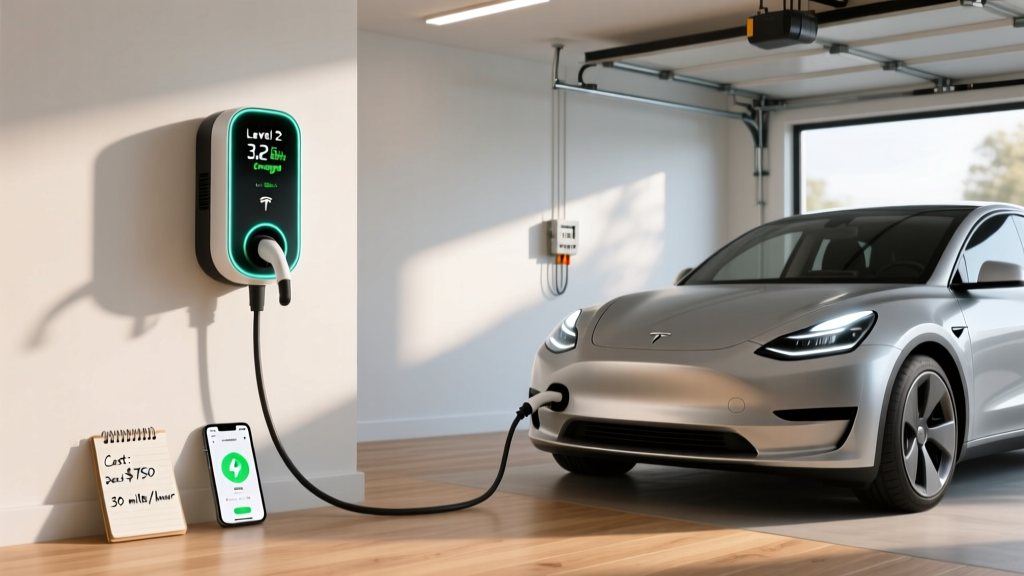
| Level 2 | 240V / 32-48A | 7.7-11.5 kW | 25-45 miles | Daily home charging, most EV owners |
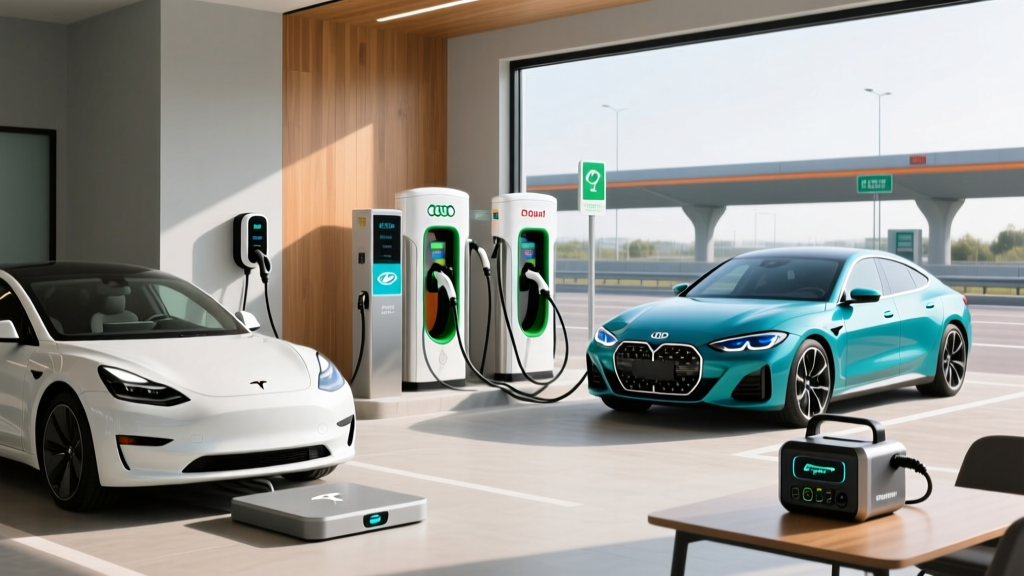
| DC Fast | 400-800V DC | 50-350 kW | 150-300+ miles (peak) | Road trips, rapid top-ups |
Real-world charging time examples (10-80% SoC):
- 75 kWh battery (Tesla Model Y, Hyundai Ioniq 5): ~8 hours on Level 2 (11.5 kW), ~18-25 minutes on 150-250 kW DC fast charger
- 100 kWh battery (Ford F-150 Lightning Extended Range): ~10 hours on Level 2, ~30-40 minutes on DC fast (peak 230 kW, tapering above 80%)
- 40 kWh battery (older Nissan Leaf): ~5 hours on Level 2, ~40-50 minutes on 50 kW CHAdeMO DC
Charge curve reality check: DC fast charging doesn't sustain peak kW. A charger rated at 250 kW might deliver that rate from 10-30% SoC, then taper to 150 kW by 50%, and drop below 50 kW past 80%. This is why manufacturers quote 10-80% times—not 0-100%.
Home Charger Installation: Electrical Requirements & Costs
Installing a Level 2 home charger isn't plug-and-play. Here's what's actually involved:
Electrical Specifications
- Circuit requirement: Dedicated 40-60 amp, 240V circuit (similar to an electric dryer)
- Charger amperage: Most Level 2 units draw 32A or 40A continuous (requires 40A or 50A breaker per NEC 80% rule)
- Wire gauge: 6 AWG copper for 40A circuits, 4 AWG for 50A circuits
- Hardwired vs. plug: Hardwired units can deliver full 48A; NEMA 14-50 outlets max at 40A continuous
Panel Upgrade Considerations
If your home has a 100A or 150A main panel and you're already running electric heat, A/C, and an electric stove, adding a 40-50A EV circuit may exceed capacity. A panel upgrade to 200A costs $1,500-$3,000 but is sometimes unavoidable. Newer homes (post-2000) typically have 200A panels with sufficient headroom.
| Component | Cost Range | Notes |
|---|---|---|
| Level 2 Charger Equipment | $300-$700 | 32A-48A smart chargers |
| Electrician Labor | $500-$1,500 | Depends on panel distance, wall type |
| Permit & Inspection | $50-$300 | Required in most jurisdictions |
| Panel Upgrade (if needed) | $1,500-$3,000 | Only for older/undersized panels |
| Total (No Panel Upgrade) | $850-$2,500 | Most common scenario |
| Total (With Panel Upgrade) | $2,350-$5,500 | Older homes, high-load situations |
Federal incentive: The IRS §30D tax credit covers up to $1,000 for home charging equipment installation through 2032, but only for residents in census tracts that are rural or have low-income designation. Check IRS Form 8911 for eligibility.
Connector Compatibility: Which Plug Does Your EV Use?
The connector landscape shifted dramatically in 2024-2025 when most automakers adopted Tesla's NACS (North American Charging Standard). Here's where things stand:
| Connector Type | Compatible Brands | Adapter Needed? |
|---|---|---|
| NACS (Tesla) | Tesla, Ford, GM, Rivian, Volvo, Polestar, Mercedes, Fisker | No (native on 2025+ models) |
| CCS1 | Hyundai, Kia, BMW, VW, Audi, Porsche (2024 and earlier) | NACS-to-CCS adapter for Tesla Superchargers |
| CHAdeMO | Nissan Leaf (legacy) | Limited network, being phased out |
Adapter reality: If you buy a 2025+ Ford, GM, or Rivian with NACS, you can use Tesla Superchargers directly. If you own a 2024 or earlier Hyundai Ioniq 5 with CCS1, you'll need Tesla's $199 CCS-to-NACS adapter to access Superchargers. Most non-Tesla DC fast networks (Electrify America, EVgo, ChargePoint) now offer both CCS and NACS cables.
Cost Per Mile: Charging vs. Gas
The economics depend heavily on where and when you charge. Here's the math using 2026 national averages:
| Scenario | Cost per kWh | Cost per Mile* | Annual Cost (12k miles) |
|---|---|---|---|
| Home Off-Peak (utility rate) | $0.12-$0.18 | $0.03-$0.05 | $360-$600 |
| Home Peak (utility rate) | $0.22-$0.30 | $0.06-$0.08 | $720-$960 |
| Public Level 2 (ChargePoint, etc.) | $0.30-$0.50 | $0.08-$0.13 | $960-$1,560 |
| DC Fast (Electrify America, Tesla) | $0.35-$0.55 | $0.09-$0.14 | $1,080-$1,680 |
| Gas Vehicle (25 MPG, $3.50/gal) | N/A | $0.14 | $1,680 |
*Based on 3.5 miles per kWh average EV efficiency (EPA combined for vehicles like Tesla Model Y, Hyundai Ioniq 5).
The verdict: Home off-peak charging delivers 3-5x lower cost per mile than gas. Exclusive DC fast charging approaches gas costs. Most EV owners charge 80-90% at home and use DC fast only for road trips.
Equipment Recommendations: Best Home Chargers (2026)
ChargePoint Home Flex
- Power: Up to 50A (12 kW) adjustable via dip switches
- Connector: NACS or J1772 (CCS) options
- Cable length: 23 feet
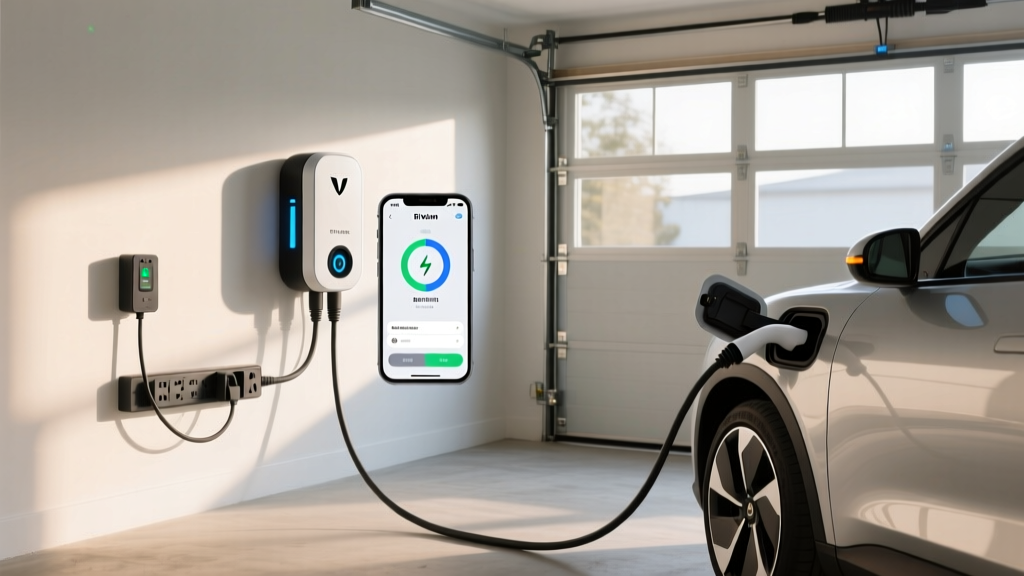
- Smart features: Wi-Fi, app scheduling, energy tracking, Alexa integration
- Price: $549-$599
- Best for: Flexibility across amperages, reliable app
Wall Connector (Tesla)
- Power: 48A (11.5 kW) on 60A circuit
- Connector: NACS native
- Cable length: 24 feet
- Smart features: Wi-Fi, over-the-air updates, power sharing (multiple units on one circuit)
- Price: $420
- Best for: Tesla owners, best value for 48A output
Emporia Level 2 Smart Charger
- Power: 40A (9.6 kW) or 48A (11.5 kW)
- Connector: J1772 (CCS) with NACS adapter included
- Cable length: 24 feet
- Smart features: Energy monitoring, solar integration, time-of-use scheduling
- Price: $399-$449
- Best for: Budget-conscious, solar panel owners
Safety & Code Compliance
EV charging involves sustained high-current draw—far longer than your dryer or oven. Code compliance isn't optional:
- Dedicated circuit: EV chargers require their own breaker; no sharing with other appliances
- GFCI protection: Required for outdoor installations and garages (NEC 2023 update)
- Outdoor rating: If mounted outside, the unit must be NEMA 4 rated for weather resistance
- Permit requirement: Most municipalities require electrical permits and inspection for 240V circuits
- Load calculation: Electrician must verify your panel can handle the added load per NEC Article 220
Skip the permit and you risk voided insurance claims if an electrical fire occurs, plus potential fines and forced removal during home sale inspections.
Frequently Asked Questions
How much does it cost to install a home EV charger?
Typical Level 2 installation runs $850-$2,500 including equipment ($300-$700), electrician labor ($500-$1,500), and permits ($50-$300). Homes needing a 200A panel upgrade add $1,500-$3,000. The federal §30D credit covers up to $1,000 of installation costs, but only in eligible rural or low-income census tracts—check IRS guidelines.
How fast will each charging level add range?
Level 1 (120V): 3-5 miles per hour. Level 2 (240V, 32-48A): 25-45 miles per hour. DC Fast (50-350 kW): 150-300+ miles per hour at peak, but tapers significantly above 80% SoC. For a 75 kWh battery, expect ~8 hours Level 2, ~20 minutes DC fast (10-80%).
Which connector/charger is compatible with my EV?
2025+ Tesla, Ford, GM, Rivian, and Volvo models use NACS natively. Most 2024 and earlier non-Tesla EVs use CCS1. Nissan Leaf uses CHAdeMO. Check your vehicle's charge port or owner's manual. CCS-to-NACS adapters ($199-$250) enable older CCS vehicles to use Tesla Superchargers.
How much does charging cost per mile vs. gas?
Home off-peak charging costs $0.03-$0.05 per mile (assuming $0.12-$0.18/kWh and 3.5 mi/kWh efficiency). Gas at $3.50/gallon and 25 MPG costs $0.14 per mile. Exclusive DC fast charging ($0.35-$0.55/kWh) costs $0.09-$0.14 per mile, approaching gas prices.
What electrical upgrades might I need?
If your home has a 100A or 150A main panel with existing high-draw appliances (electric heat, A/C, stove), you may need a 200A panel upgrade ($1,500-$3,000). Newer homes typically have 200A panels with sufficient capacity. Your electrician will perform a load calculation per NEC Article 220 to determine this.
Can I use a regular outlet for EV charging?
Yes, but it's slow. A standard 120V outlet (Level 1) adds 3-5 miles of range per hour—adequate for PHEVs with 30-50 mile electric ranges or EV owners driving under 30 miles daily. For BEVs with 250+ mile batteries used for daily commuting, Level 2 is strongly recommended.
Do I need a smart charger or is a basic unit fine?
Smart chargers ($400-$700) offer app-based scheduling for off-peak utility rates, energy tracking, and remote monitoring—worth it if your utility has time-of-use pricing. Basic non-smart chargers ($250-$350) work fine if you have flat-rate electricity or a simple timer. Both deliver the same charging speed.