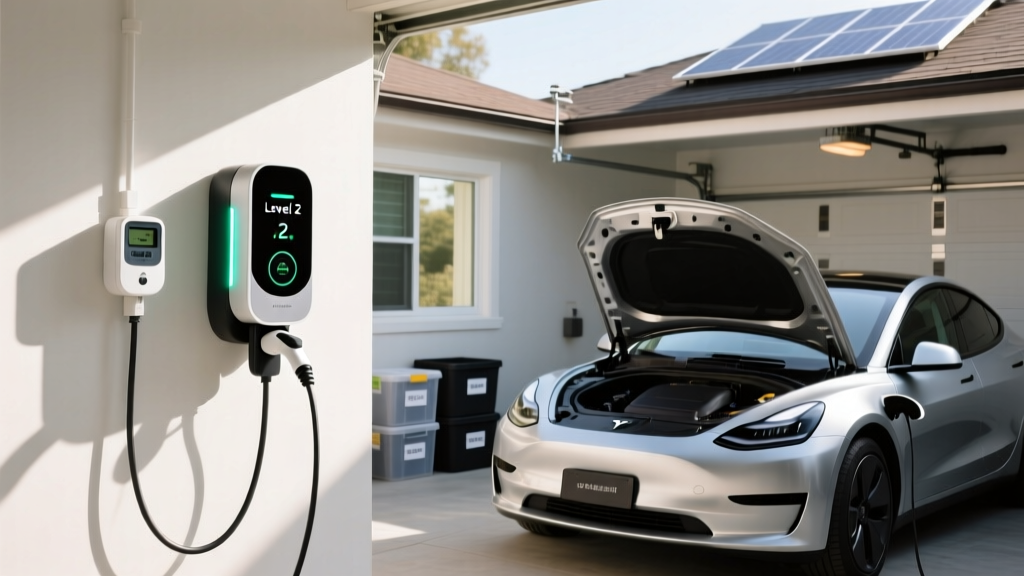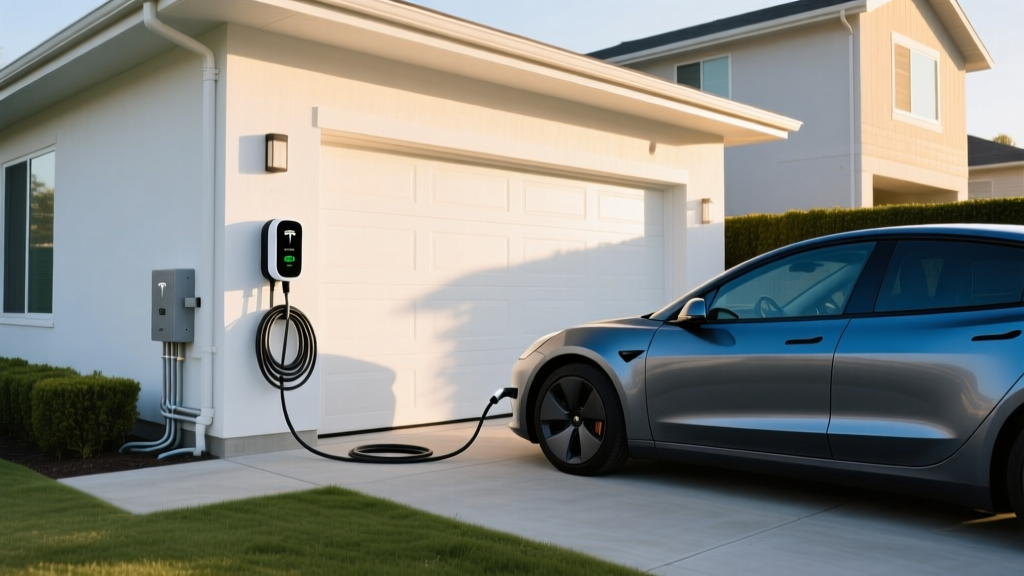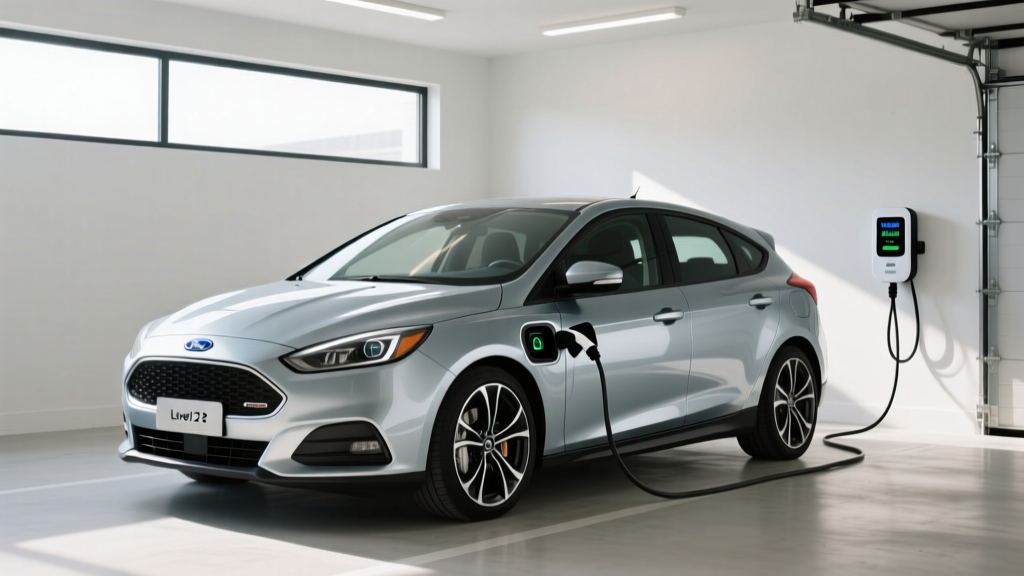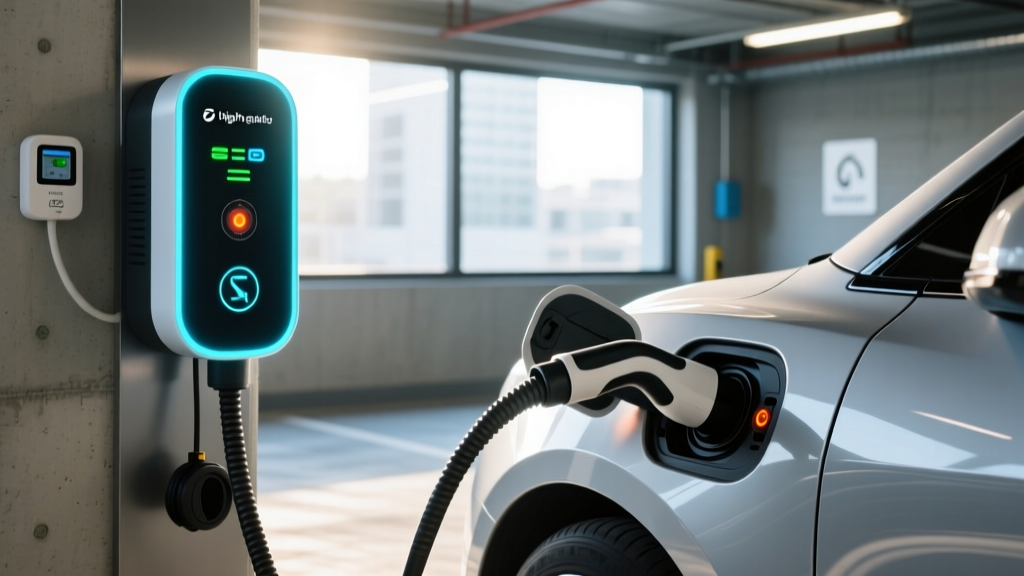
If you've ever touched the plug end of a DC fast-charging cable after a long session and felt serious heat, you're not alone in wondering: can a hot charger catch fire? The short answer is that properly installed, UL-listed EV charging equipment operating within its rated specifications is extremely unlikely to ignite. But heat is a real byproduct of pushing high current through conductors, connectors, and battery cells — and understanding where thermal risk actually lives is essential for every EV owner.
This guide walks through the physics of charger heat, the safety engineering that mitigates fire risk, and everything you need to know about installing and using home and public charging equipment in 2026 — from electrical panel upgrades to connector compatibility to real cost-per-mile numbers.
Why EV Chargers Get Hot (and When Heat Becomes Dangerous)
Every time electricity flows through a conductor — your home wiring, the charging cable, the connector pins, the vehicle's onboard charger — some energy is lost as heat due to electrical resistance. This is basic physics (I²R losses), and it scales with the square of the current. That means doubling the amperage quadruples the heat generated.
At Level 1 (120V, 12A), heat generation is minimal — roughly 1.4 kW of power with negligible thermal buildup. At Level 2 (240V, 40–48A), you're pushing 9.6–11.5 kW continuously for hours, and the connector, cable, and outlet can become warm to the touch — typically 40–55°C (104–131°F) at the plug face during sustained sessions. That's normal and within the design tolerance of UL-listed equipment.
At DC fast chargers (50–350 kW), the cables are liquid-cooled in many modern stations (like Tesla V4 Superchargers and Electrify America's 350 kW dispensers) specifically because the current is so high that passive air cooling would be insufficient and the cables would be dangerously hot and unwieldy.
Where fire risk actually comes from
According to NFPA data and incident reports analyzed by EV safety researchers, charger-related fires are rare and almost always trace back to one of these root causes:
- Undersized or degraded wiring: A circuit rated for 20A feeding a 40A charger, or aluminum wiring with loose connections that arc and overheat.
- Non-UL-listed equipment: Cheap, uncertified chargers from unknown manufacturers lacking thermal cutoffs, ground-fault protection, or proper overcurrent protection.
- Worn or damaged connectors: Corroded, pitted, or melted plug pins that create high-resistance contact points — a particular concern with older CHAdeMO and CCS1 public connectors that see heavy daily use.
- Improper outlet use: Plugging a Level 2 charger into a standard NEMA 14-50 receptacle that wasn't torqued to spec or is on a circuit without a properly rated breaker — the NHTSA and multiple fire departments have flagged NEMA 14-50 outlet fires as the most common residential EV charging incident.
- Extension cords or adapters not rated for continuous EV loads: EV charging is a continuous load (defined by the NEC as running 3+ hours), which requires conductors rated at 125% of the actual draw.
Charging Levels Explained: Speeds, kW, and Miles Per Hour
Before we get into installation and equipment, you need to understand the three charging levels and what they actually deliver. A critical distinction: kW (kilowatts) measures power — the rate at which energy flows. kWh (kilowatt-hours) measures energy — the total amount stored in your battery. Think of kW as the flow rate of a hose, and kWh as the size of the bucket.
| Level | Voltage | Max Power (kW) | Miles of Range Added Per Hour | Typical Use Case |
|---|---|---|---|---|
| Level 1 | 120V AC | 1.4 kW (12A) | 3–5 mi/hr | Overnight top-up, PHEVs, low-mileage drivers |
| Level 2 | 240V AC | 7.2–11.5 kW (30–48A) | 20–44 mi/hr | Home daily charging, workplace, destination |
| DC Fast | 200–900V DC | 50–350 kW | 150–800+ mi/hr (equivalent) | Road trips, highway corridors, commercial fleets |
Real-world context: A 75 kWh battery (like the Tesla Model Y Long Range) charged from 10% to 80% takes roughly 8–10 hours on Level 1, about 5–7 hours on a 40A Level 2 home charger, and approximately 20–28 minutes on a 250 kW DC fast charger (with charge-curve taper above 80% SoC). That taper is critical — peak kW is never sustained across the full session.
Home Charger Installation: Electrical Requirements, Costs, and Panel Upgrades
Installing a Level 2 home charger is the single biggest ownership decision you'll make after buying the car. Here's what's actually involved electrically and financially.
Electrical requirements
A typical 48A Level 2 charger requires a dedicated 60A, 240V circuit (the NEC mandates that continuous loads not exceed 80% of a breaker's rating, so 48A continuous draw requires a 60A breaker). The circuit must use appropriately gauged copper wire — typically 6 AWG for runs under 50 feet, 4 AWG for longer runs to minimize voltage drop.
Your electrical panel must have two adjacent open slots (for a double-pole breaker) and sufficient remaining capacity. A standard 200A residential panel with moderate existing loads can usually accommodate a 60A EV circuit. A 100A panel in an older home often cannot — this is where a panel upgrade becomes necessary.
Do you need a panel upgrade?
Many homes built before 2000 have 100A or 150A service. Adding a 60A EV circuit to an already-loaded 100A panel may require upgrading to 200A service — a significant expense. Signs you'll need an upgrade:
- Your panel is 100A and has few or no open breaker slots
- You already have high-draw appliances (electric range, dryer, HVAC, hot tub) on a 100–150A panel
- Your panel is a known problematic brand (Federal Pacific, Zinsco, certain Challenger models) that an electrician recommends replacing regardless
Installation cost breakdown
| Component | Cost Range | Notes |
|---|---|---|
| Level 2 charger unit (40–48A, UL-listed) | $350–$700 | Smart/Wi-Fi models at upper end |
| Electrician labor (standard install, <30 ft run) | $500–$1,200 | Varies by region; harder access = higher cost |
| Electrical materials (wire, conduit, breaker, junction box) | $150–$400 | Longer runs and conduit requirements increase cost |
| Permit and inspection fees | $50–$200 | Required in most jurisdictions; varies by municipality |
| Total (standard install, no panel upgrade) | $1,050–$2,500 | Most homeowners land in the $1,200–$1,800 range |
| Panel upgrade (100A → 200A, if needed) | $2,000–$5,000+ | Major variable; some utilities offer rebates |
Connector Compatibility: NACS, CCS1, CHAdeMO, and Adapters
The connector landscape in North America has consolidated significantly since 2023, but you still need to know what fits your vehicle — especially if you're buying a charger or planning road trips.
| Connector | Brands Using It | Notes |
|---|---|---|
| NACS (North American Charging Standard / Tesla) | Tesla (all years), Ford (2025+), GM (2025+), Rivian (2025+), Hyundai/Kia (2025+), Volvo/Polestar, BMW, Mercedes, most major OEMs | Now the dominant standard; most new EVs ship with NACS. Legacy CCS vehicles can use adapters. |
| CCS1 (Combined Charging System) | Older VW ID.4, older Ford Mustang Mach-E, older Hyundai Ioniq 5/6, older Kia EV6, Stellantis EVs, some remaining 2024–2025 models | Being phased out on new vehicles but still widely available at public chargers. CCS-to-NACS adapters available ($150–$300). |
| CHAdeMO | Nissan Leaf (legacy), Mitsubishi Outlander PHEV (older) | Effectively discontinued for new vehicles. Chargers increasingly rare but still present at some older stations. |
For home Level 2 charging: Nearly all home chargers now ship with either a NACS connector or a J1772 connector (the legacy Level 2 standard). If your EV has a NACS port (which most 2025–2026 models do), buy a NACS-equipped home charger. If your EV still has a J1772/CCS port, buy a J1772 charger or use the J1772-to-NACS adapter that many automakers include. The key is matching the connector to your vehicle's charge port — not to the public DC fast-charging standard.
Charging Cost: $/kWh Scenarios and Cost Per Mile vs. Gas
One of the strongest arguments for home charging is cost. Let's run the real numbers.
| Scenario | Cost per kWh | Efficiency (kWh/mi) | Cost per Mile | Gas Equivalent (30 MPG at $3.40/gal) |
|---|---|---|---|---|
| Home, off-peak utility rate | $0.08–$0.12 | 0.28–0.33 | $0.025–$0.04 | $0.11/mile |
| Home, standard residential rate | $0.14–$0.18 | 0.28–0.33 | $0.04–$0.06 | $0.11/mile |
| Public Level 2 (network pricing) | $0.25–$0.49 | 0.28–0.33 | $0.07–$0.16 | $0.11/mile |
| DC fast charging (Electrify America, EVgo, etc.) | $0.35–$0.58 | 0.28–0.33 | $0.10–$0.19 | $0.11/mile |
Bottom line: If you charge at home on a standard or off-peak rate (which ~80% of EV owners do for daily driving), you'll spend roughly $0.03–$0.06 per mile — about one-third to one-half the fuel cost of a 30 MPG gasoline car. Public DC fast charging can approach or exceed gas costs per mile, which is why road-trippers should plan strategically and use networks included in their vehicle's complimentary charging programs where available.
Equipment Picks: Top Home Level 2 Chargers for 2026
These are the chargers we recommend based on build quality, safety certification, real-world charging performance, and smart features. All are UL-listed (or ETL-listed to equivalent standards) — a non-negotiable requirement for safe, insurable installation.
ChargePoint Home Flex
- Power: Up to 11.5 kW (48A) on a 60A circuit; configurable down to 16A
- Connector: NACS or J1772 options
- Cable length: 23 ft
- Smart features: Wi-Fi, Alexa integration, scheduling, energy tracking, OTA updates
- Price: ~$550–$650
- Best for: Most EV owners wanting a reliable, app-controlled charger with flexible amperage
Tesla Wall Connector
- Power: Up to 11.5 kW (48A) on a 60A circuit
- Connector: NACS native; J1772 adapter available
- Cable length: 24 ft
- Smart features: Wi-Fi, OTA updates, Power Sharing (link multiple units on one circuit), vehicle integration
- Price: ~$475–$500
- Best for: Tesla owners and NACS-equipped EVs; excellent value for the power output
Emporia Level 2 EV Charger
- Power: Up to 11.5 kW (48A) on a 60A circuit
- Connector: NACS or J1772
- Cable length: 24 ft
- Smart features: Wi-Fi, detailed energy monitoring, solar integration (pairs with Emporia Vue), scheduling
- Price: ~$350–$400
- Best for: Budget-conscious buyers who want full smart features and energy monitoring
Grizzl-E Smart
- Power: Up to 10 kW (40A) on a 50A circuit
- Connector: NACS or J1772
- Cable length: 24 ft
- Smart features: Wi-Fi, OCPP-compatible, adjustable amperage, extreme-cold rated (-40°C)
- Price: ~$400–$500
- Best for: Cold-climate owners and outdoor installations; built in Canada, ruggedized enclosure
Safety and Electrical Code: What Your Installation Must Include
The National Electrical Code (NEC) treats EV charging as a continuous load — any load expected to run for three hours or more. This designation triggers specific requirements that protect you from the exact overheating scenarios that could lead to a fire:
- Dedicated circuit: Your EV charger must be on its own dedicated breaker — no sharing with other outlets or appliances. This prevents overloading and ensures the breaker trips at the correct threshold.
- 80% rule: The continuous draw cannot exceed 80% of the breaker rating. A 48A charger needs a 60A breaker. A 32A charger needs a 40A breaker. Never install a charger that draws more than 80% of the circuit's rated capacity.
- GFCI protection: The 2023 NEC update (and subsequent editions adopted by most states by 2026) requires GFCI (Ground Fault Circuit Interrupter) protection for all EV charging outlets. Hardwired chargers are typically exempt from this specific requirement, which is one reason many electricians now recommend hardwiring over plug-in installations.
- Outdoor rating: If your charger is installed outdoors or in an unenclosed carport, the unit must carry an appropriate weather resistance rating (minimum IP55 for outdoor exposure; IP65+ preferred). The electrical box and conduit entries must also be rated for wet locations.
- Proper torque: All wire connections must be torqued to the manufacturer's specification using a calibrated torque screwdriver. Loose connections are the number one cause of outlet overheating — this is a step that separates professional electricians from handymen.
Hardwired vs. plug-in: which is safer?
Hardwired installations eliminate the outlet entirely — the charger's wiring connects directly to the circuit in a junction box. This removes the most common failure point (the NEMA 14-50 receptacle) and is generally considered safer for high-amperage, continuous-duty applications. The trade-off is that a hardwired charger can't be easily moved or replaced without an electrician. For a permanent garage installation, we recommend hardwiring. For renters or those who may move the charger, a properly installed NEMA 14-50 on a dedicated 50A circuit with a 40A charger is a safe alternative — but have the outlet inspected annually for signs of heat discoloration.
Frequently Asked Questions
Can a hot charger catch fire during normal use?
Under normal conditions with properly installed, UL-listed equipment on a correctly sized circuit, the risk of fire is extremely low. Warmth at the connector during a Level 2 session (up to ~55°C / 131°F) is expected. If you notice a burning smell, visible melting, discoloration on the outlet faceplate, or a breaker that trips repeatedly, stop charging immediately and have an electrician inspect the circuit. These are signs of a high-resistance connection, not normal operation.
How much does it cost to install a home EV charger?
A standard Level 2 home charger installation — including the charger unit ($350–$700), electrician labor ($500–$1,200), materials ($150–$400), and permits ($50–$200) — typically costs between $1,050 and $2,500. If your home needs a panel upgrade from 100A to 200A service, add $2,000–$5,000+. Most homes with 200A service and an accessible garage panel land in the $1,200–$1,800 range.
How fast will each charging level add range?
Level 1 (120V, 1.4 kW) adds 3–5 miles of range per hour. Level 2 (240V, 7.2–11.5 kW) adds 20–44 miles per hour depending on amperage and vehicle efficiency. DC fast charging (50–350 kW) can add 150–800+ miles per hour equivalent, but sessions are typically limited to 10–80% SoC in 18–35 minutes due to charge-curve taper. For daily driving, Level 2 at home is the practical standard — an overnight 8-hour session on a 48A charger adds roughly 200–350 miles, more than enough for any daily commute.
Which connector and charger is compatible with my EV?
Check your vehicle's charge port. Most 2025–2026 EVs now use the NACS connector (Tesla, Ford, GM, Rivian, Hyundai/Kia, Volvo, BMW, and others). Older models from 2022–2024 may still have CCS1 or CHAdeMO. For home charging, buy a Level 2 charger with the matching connector — NACS for NACS-port vehicles, J1772 for CCS/CHAdeMO vehicles (with an adapter for DC fast charging on the road). Refer to the connector compatibility table above for brand-specific details.
How much does charging cost per mile vs. gas?
Home charging at average residential rates ($0.14–$0.18/kWh) costs approximately $0.04–$0.06 per mile for a typical EV getting 3–3.5 mi/kWh. A comparable 30 MPG gasoline car at $3.40/gallon costs about $0.11 per mile. That's roughly a 50–65% fuel cost reduction for home charging. Public DC fast charging ($0.35–$0.58/kWh) narrows the gap to $0.10–$0.19 per mile — sometimes comparable to or exceeding gas costs.
What electrical upgrades might I need?
The most common upgrade is a panel capacity increase from 100A to 200A service ($2,000–$5,000+), needed when your existing panel lacks the capacity for a 60A dedicated EV circuit. Other potential upgrades include replacing a Federal Pacific or Zinsco panel (known fire hazards regardless of EV charging), adding a sub-panel in a detached garage ($800–$2,000), or upgrading the utility service drop if your home's total calculated load exceeds the existing service rating. A licensed electrician will perform a load calculation before recommending any of these — get this assessment before purchasing your charger.
Is DC fast charging bad for my battery long-term?
Occasional DC fast charging has minimal impact on modern battery health. However, frequent daily DC fast charging — particularly at high power (>150 kW) and in hot weather — can accelerate degradation by 1–3% over the battery's lifetime compared to predominantly Level 2 charging. Modern battery management systems (BMS) actively manage thermal conditions during fast charging, and most manufacturers warranty their batteries for 8 years/100,000 miles with a minimum 70% capacity retention threshold. For daily use, Level 2 home charging remains the optimal balance of speed and battery longevity.
Sources: fueleconomy.gov (EPA efficiency data), NFPA (fire safety standards), NHTSA (vehicle safety), manufacturer specification sheets. Electrical installation requirements per NEC 2023/2026 editions — always consult a licensed electrician for your specific installation. Tax credit and incentive availability varies by jurisdiction and is subject to change; verify current rules at irs.gov.