Finding a reliable public charger is the difference between a stress-free road trip and a stranded afternoon in a parking lot. While home Level 2 charging handles most daily needs, every EV owner eventually needs public infrastructure — and the right EV charger finding app determines whether you pull up to an available, working stall or discover three broken chargers and a 45-minute wait.
This guide covers how to evaluate and use charger-finding apps effectively, the charging speeds and connector types you'll encounter, what home installation actually costs, and how to calculate your real cost per mile. We tested the major platforms across real-world road trips and daily commuting to give you a data-driven framework for choosing the right tools.
Charging Levels Explained: Speeds That Matter
Before comparing apps, understand what you're searching for. Every EV charger finding app filters by charging level, and knowing the difference between kW (power — the rate of energy flow) and kWh (energy — your battery's capacity) prevents costly confusion.
| Level | Voltage | Power (kW) | Miles Added/Hour | 10-80% Time | Best For |
|---|---|---|---|---|---|
| Level 1 | 120V AC | 1.4-1.9 kW | 3-5 mi/hr | 40-55 hours | Overnight trickle, PHEV top-ups |
| Level 2 | 240V AC | 7.2-19.2 kW | 20-60 mi/hr | 5-10 hours | Home daily charging, workplace, hotels |
| DC Fast | 400-800V DC | 50-350 kW | 150-900 mi/hr | 18-45 minutes | Road trips, rapid top-ups |
How to Choose the Right EV Charger Finding App
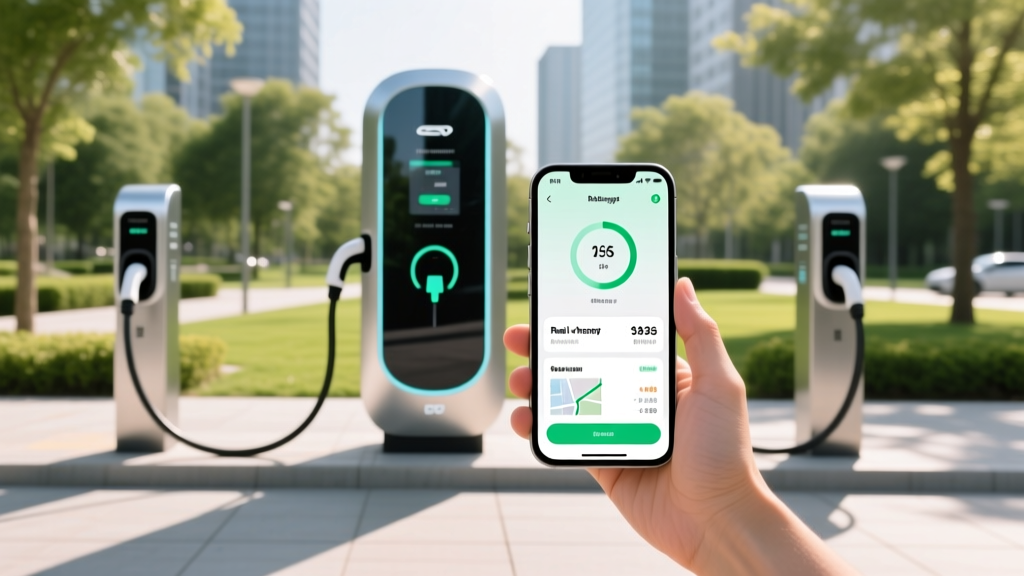
Not all apps serve the same purpose. Some excel at route planning; others focus on real-time stall availability or community-sourced reliability data. Here's what separates a useful tool from a frustrating one:
Real-Time Availability and Status
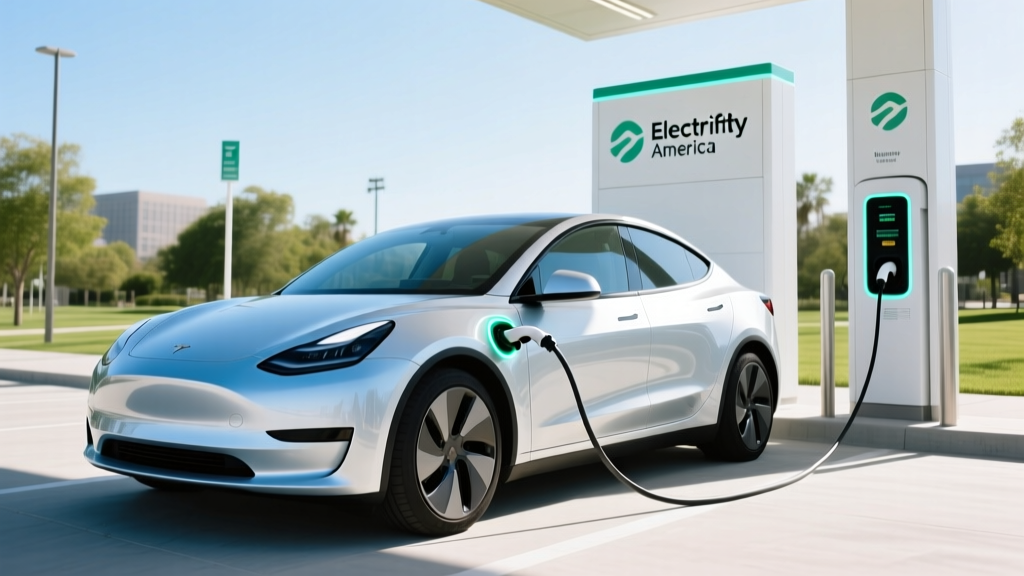
The single most important feature. Apps that integrate directly with network operators (Tesla Supercharger, Electrify America, EVgo, ChargePoint) show live stall status — available, in use, or offline. Apps relying solely on third-party data often show chargers as "available" when they've been broken for weeks.
Connector Filtering and Compatibility
Your app must filter by your vehicle's connector type. In 2026, the North American market features three primary connectors:
| Connector | Brands Using It | Adapter Needed? |
|---|---|---|
| NACS (Tesla) | Tesla, Ford, GM, Rivian, Volvo, Polestar, Mercedes-Benz, BMW (newer models) | CCS-to-NACS adapter for legacy CCS vehicles |
| CCS1 | Hyundai, Kia, Volkswagen, Subaru, legacy Ford/GM (pre-2025) | NACS-to-CCS adapter for Tesla Superchargers |
| CHAdeMO | Nissan Leaf (discontinued), Mitsubishi Outlander PHEV | Limited network; no practical adapter solution |
Cost Transparency
Public charging prices vary wildly — from $0.25/kWh at a grocery store Level 2 to $0.65/kWh at a highway DC fast charger. The best apps display per-kWh pricing before you navigate, preventing sticker shock. Some networks (Tesla, Electrify America) require membership for lower rates; apps should flag this.
Route Planning with Charging Stops
For road trips, you need an app that calculates where to stop, how long to charge, and factors in elevation changes and temperature. Tesla's built-in navigation does this natively for its own network. For non-Tesla EVs, A Better Route Planner (ABRP) remains the gold standard, accepting your exact vehicle model, battery size, and current SoC to generate optimized multi-stop routes.
Home Charger Installation: What It Actually Costs
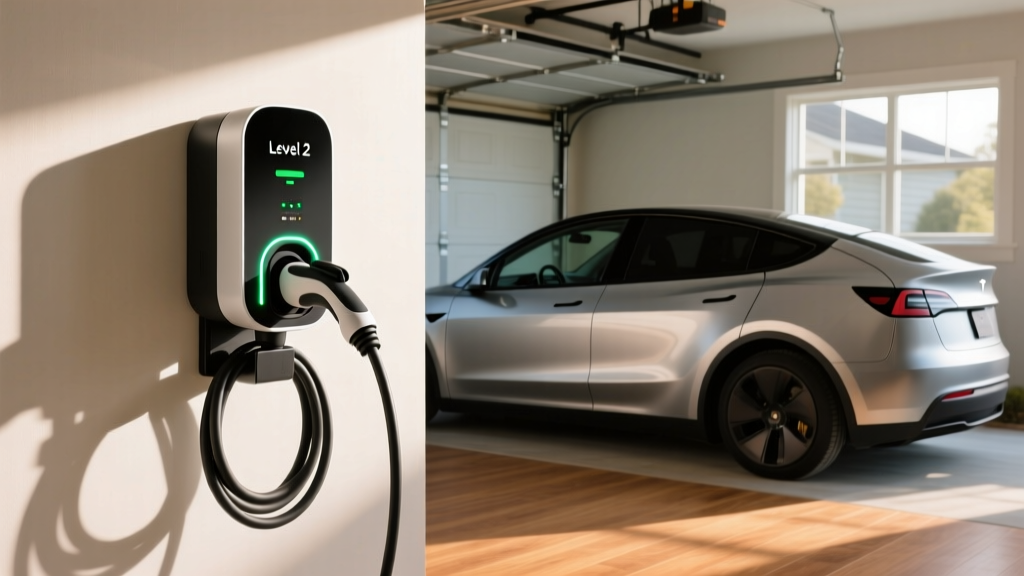
Public charging is convenient, but 80-90% of EV charging happens at home. If you're installing a Level 2 home charger, budget for more than just the equipment.
| Component | Cost Range | Notes |
|---|---|---|
| Level 2 Charger (Equipment) | $400 - $750 | 32A-48A hardwired or NEMA 14-50 plug |
| Electrician Labor | $800 - $2,500 | Depends on panel distance, wall type, conduit run |
| Electrical Permit | $50 - $250 | Varies by municipality; required in most jurisdictions |
| Panel Upgrade (if needed) | $1,500 - $3,500 | Required if your panel lacks capacity for a 40-60A circuit |
| Total (no panel upgrade) | $1,250 - $3,500 | Most homes with 200A service |
| Total (with panel upgrade) | $2,750 - $7,000 | Older homes with 100A service or maxed-out panels |
Electrical Requirements
A typical Level 2 home charger requires a dedicated 240V circuit rated for 40-60 amps. The National Electrical Code (NEC) requires continuous loads (like EV charging) to use only 80% of a circuit's rated capacity — so a 40A circuit delivers 32A (7.7 kW) to your vehicle, and a 50A circuit delivers 40A (9.6 kW).
Panel upgrade reality: Homes built before 2000 often have 100A or 150A main panels. Adding a 40-60A EV circuit may exceed your panel's capacity, especially if you also run electric HVAC, a dryer, and an oven. A licensed electrician will perform a load calculation (NEC Article 220) to determine if an upgrade is mandatory. Don't skip this step — overloaded panels are a fire hazard.
Safety and Code Considerations
- Dedicated circuit: Your EV charger must have its own breaker — never share a circuit with other appliances.
- GFCI protection: NEC 2020 and later require GFCI (Ground Fault Circuit Interrupter) protection for all EV charging outlets. Hardwired chargers with built-in GFCI satisfy this.
- Outdoor rating: If your charger is outside, it must be NEMA 4-rated (weatherproof). Look for UL or ETL certification marks.
- Cable management: Longer cables (25 ft vs 18 ft) add flexibility for parking positioning but cost $50-100 more.
Recommended Home Chargers: Equipment Comparison
ChargePoint Home Flex
- Power Output: Up to 12 kW (50A) on a 60A circuit; configurable down to 16A for older panels
- Connector: J1772 (NACS adapter available for Tesla vehicles)
- Cable Length: 23 feet
- Smart Features: Wi-Fi, scheduling, energy tracking, Alexa integration
- Price: ~$550
Tesla Wall Connector
- Power Output: Up to 11.5 kW (48A) on a 60A circuit
- Connector: NACS native; includes J1772 adapter for non-Tesla EVs
- Cable Length: 24 feet
- Smart Features: Wi-Fi, over-the-air updates, power sharing between multiple units, load management
- Price: ~$475
Emporia Vue Level 2 Charger
- Power Output: Up to 11.5 kW (48A) on a 60A circuit
- Connector: J1772 (NACS adapter sold separately)
- Cable Length: 24 feet
- Smart Features: Wi-Fi, integration with Emporia energy monitoring, solar-aware scheduling
- Price: ~$400
Cost to Charge: EV vs Gas Per Mile
One of the strongest arguments for EV ownership is lower fuel cost — but only if you charge strategically. Here's how common scenarios compare:
| Charging Scenario | Rate ($/kWh) | Cost per Mile* | Annual Fuel Cost (12,000 mi) |
|---|---|---|---|
| Home Level 2 (off-peak utility rate) | $0.12 | $0.036 | $432 |
| Home Level 2 (standard rate) | $0.18 | $0.054 | $648 |
| Public Level 2 (workplace/grocery) | $0.30 | $0.090 | $1,080 |
| DC Fast Charging (highway) | $0.48 | $0.144 | $1,728 |
| Gas Vehicle (28 MPG avg, $3.50/gal) | — | $0.125 | $1,500 |
*Based on a vehicle averaging 3.3 miles per kWh (typical for midsize EVs like the Tesla Model Y, Hyundai Ioniq 5, or Ford Mustang Mach-E). Source: fueleconomy.gov
Charging Time Examples: What to Expect
How long does charging actually take? Here are real-world 10-80% charging times for common battery sizes and charger types:
- 60 kWh battery (e.g., Nissan Ariya, base Tesla Model 3):
- 150 kW DC fast charger: ~25-30 minutes
- 50 kW DC fast charger: ~55-65 minutes
- Level 2 (9.6 kW): ~6 hours
- 80 kWh battery (e.g., Ford F-150 Lightning extended range, Tesla Model Y Long Range):
- 250 kW DC fast charger: ~20-25 minutes
- 150 kW DC fast charger: ~35-40 minutes
- Level 2 (11.5 kW): ~7 hours
- 100 kWh battery (e.g., GMC Hummer EV, Lucid Air Grand Touring):
- 350 kW DC fast charger: ~25-30 minutes (with preconditioning)
- 150 kW DC fast charger: ~45-55 minutes
- Level 2 (11.5 kW): ~9 hours
FAQ: Common EV Charging Questions
How much does it cost to install a home EV charger?
A typical Level 2 home charger installation costs $1,250-$3,500 if your electrical panel has sufficient capacity. If you need a panel upgrade (common in homes with 100A service), total costs range from $2,750-$7,000. Always get 2-3 quotes from licensed electricians and verify they pull permits — unpermitted work can void home insurance and cause issues at resale.
How fast will each charging level add range?
Level 1 (120V) adds 3-5 miles per hour — suitable only for plug-in hybrids or overnight trickle charging. Level 2 (240V) adds 20-60 miles per hour depending on amperage, fully replenishing most EVs overnight. DC fast charging adds 150-900 miles per hour at peak rates, but sustained averages are 30-50% lower due to charge curve taper.
Which connector/charger is compatible with my EV?
Check your vehicle's charge port. As of 2026, most new EVs from Ford, GM, Rivian, Volvo, and Tesla use NACS. Hyundai, Kia, and Volkswagen still use CCS1. Nissan Leaf uses CHAdeMO. If your vehicle uses CCS1 but you want Tesla Supercharger access, you'll need a CCS-to-NACS adapter (~$200-300). Always verify adapter compatibility with your specific model year before purchasing.
How much does charging cost per mile vs gas?
Home charging on off-peak rates costs 3-4 cents per mile — roughly 75% less than a 28 MPG gas car at $3.50/gallon. Public Level 2 charging costs 8-10 cents per mile, still cheaper than gas. DC fast charging at highway rates ($0.48/kWh) costs 14-15 cents per mile, approaching gasoline costs. Strategic home charging is essential for maximizing EV savings.
What electrical upgrades might I need?
If your home has a 200A main panel with available capacity, you likely need only a dedicated 40-60A circuit. If your panel is maxed out or you have 100A service, you'll need a panel upgrade ($1,500-$3,500). Some utilities offer "make-ready" programs that cover panel upgrade costs for EV adoption — check with your local provider. A licensed electrician will perform a load calculation to determine your exact needs.
Do I need a specific app to find chargers?
While most EVs have built-in navigation that shows compatible chargers, a dedicated EV charger finding app provides real-time availability, user reviews, pricing, and multi-network route planning. For non-Tesla vehicles, apps like PlugShare, A Better Route Planner, and ChargeHub aggregate data across networks. Tesla owners can rely on the Tesla app and in-car navigation for Supercharger access, but PlugShare helps find non-Tesla destination chargers.
Final Thoughts: Matching App to Your Charging Lifestyle
The right EV charger finding app depends on your driving patterns. Daily commuters with reliable home charging need only basic apps for occasional public top-ups. Road trippers need route planning with real-time availability and cost estimates. Fleet drivers or rideshare operators benefit from apps showing charger reliability scores and wait times.
Whatever app you choose, verify it updates in real-time, filters by your connector type, and displays pricing before you navigate. The best apps save you time, money, and the frustration of pulling up to a broken charger. Pair a solid app with a properly installed home Level 2 charger, and you'll rarely think about "range anxiety" again.
For detailed information on federal EV tax credits and home charging incentives, consult the IRS clean vehicle credit guidelines. For safety standards and electrical code requirements, reference the National Electrical Code (NEC) or consult a licensed electrician in your area.