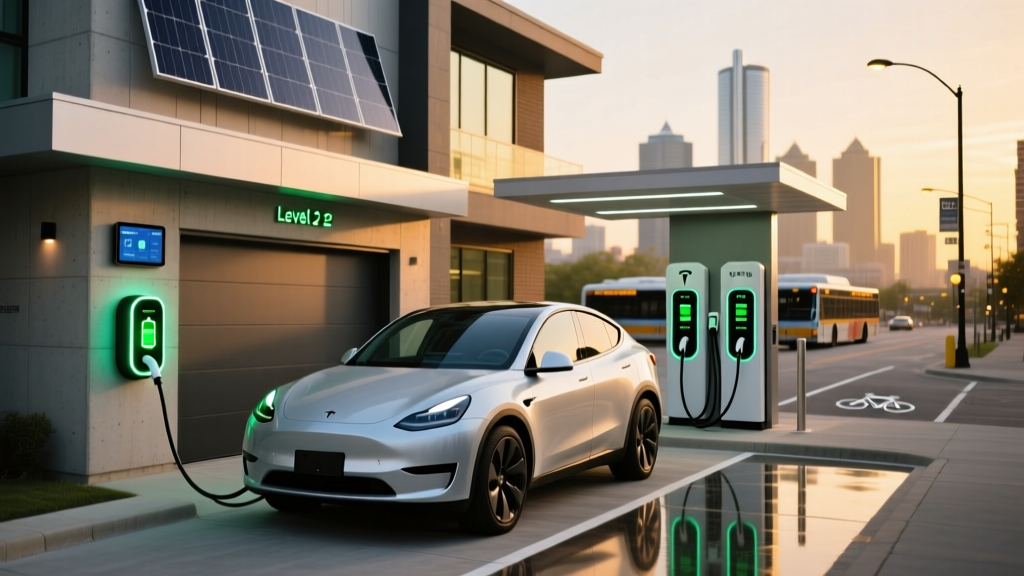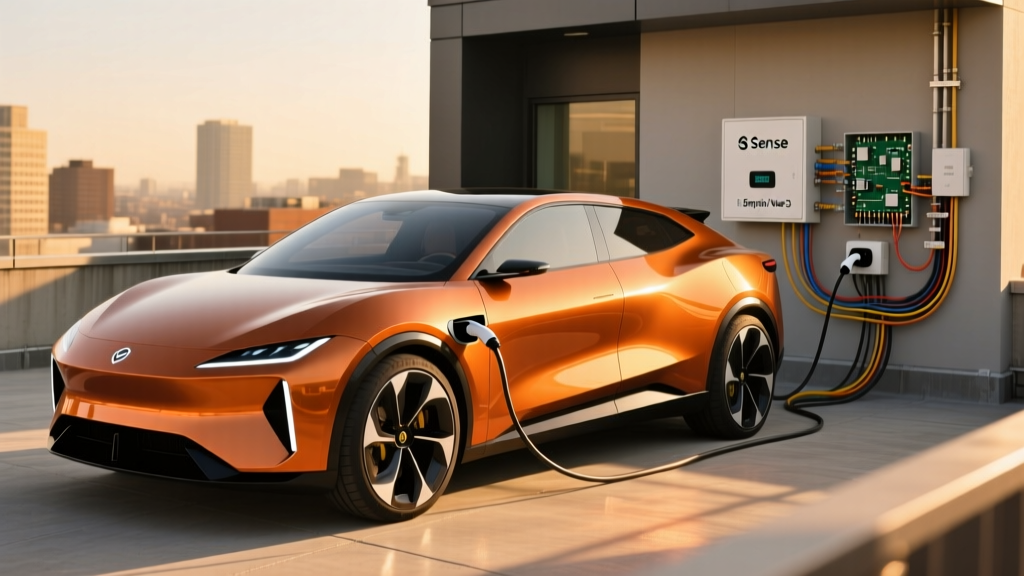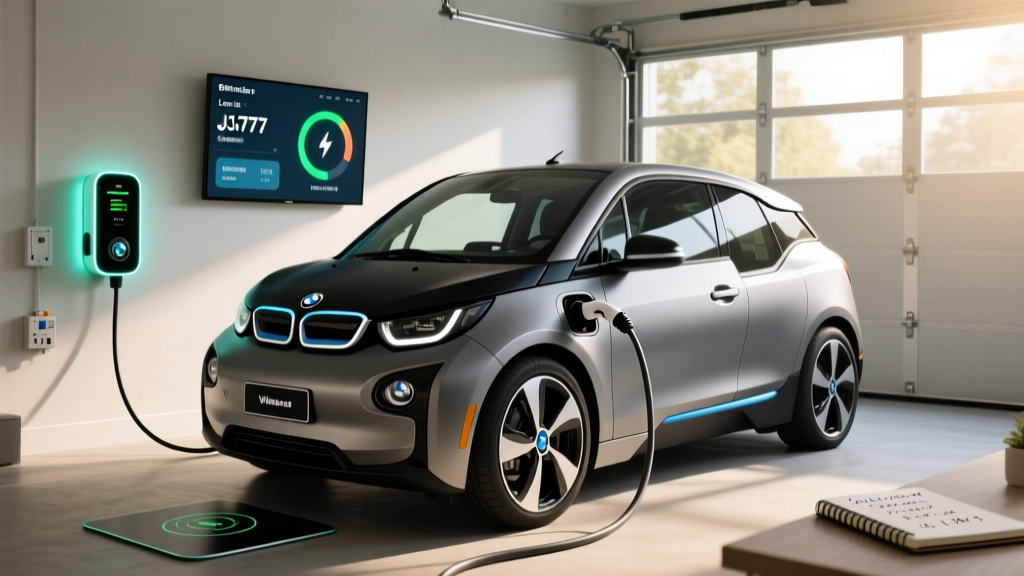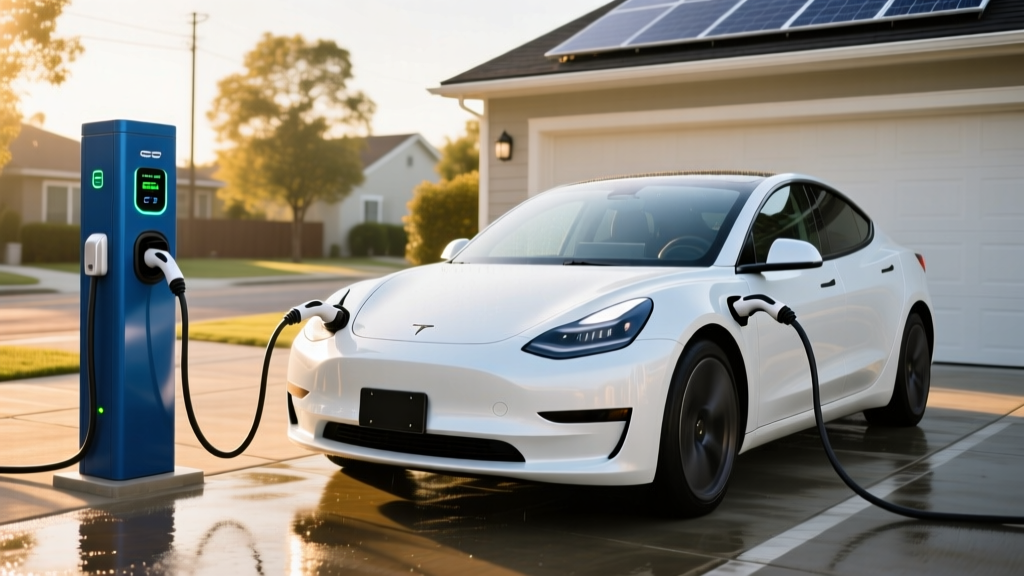
If you've searched for an EV charger and felt overwhelmed by conflicting speeds, connectors, and install quotes, you're not alone. The phrase "fast and furious" applies surprisingly well to the EV charging landscape in 2026: DC fast chargers now push up to 350 kW at public stations, while home Level 2 units quietly replenish your battery overnight at 7–19 kW. The trick is knowing which speed you actually need, what it costs, and whether your home's electrical panel can handle it.
This guide breaks down every charging tier with exact numbers — kW power, miles added per hour, 10–80% charge times for common battery sizes, real installation costs, and the per-mile economics versus gasoline. No marketing fluff, just the data you need to wire up your garage or plan your next road trip.
Charging Levels Explained: Level 1, Level 2, and DC Fast Charging
Before comparing hardware, you need to understand the three charging tiers and the critical distinction between kW (kilowatts — the rate of power delivery, like water pressure) and kWh (kilowatt-hours — the total energy stored, like gallons in a tank). A 10 kW charger delivers 10 kWh of energy per hour. Confusing the two is the single most common EV mistake.
| Level | Voltage | Power (kW) | Miles of Range Per Hour | Typical Use Case |
|---|---|---|---|---|
| Level 1 (120V) | 120V AC | 1.0–1.4 kW | 3–5 mi/hr | Overnight trickle; PHEVs; emergency top-ups |
| Level 2 (240V) | 240V AC | 3.3–19.2 kW | 12–75 mi/hr | Daily home charging; workplace; destinations |
| DC Fast Charging | 400–800V DC | 50–350 kW | 150–1,000+ mi/hr (peak) | Road trips; highway corridors; quick top-ups |
Level 1 plugs into a standard household outlet and is fine for plug-in hybrids with 30–45 miles of electric range, but a full BEV with an 80 kWh battery would take over 60 hours from empty. Level 2 is the practical standard for daily BEV ownership. DC fast charging bypasses the car's onboard AC-to-DC converter and feeds DC power directly to the battery, which is why speeds are exponentially higher — but also why sustained rates taper as the battery fills.
Real-World Charging Times: 10–80% for Common Battery Sizes
Peak kW ratings are headline numbers, not sustained averages. Every EV's charging curve tapers significantly above 80% state of charge (SoC) to protect battery health. Here's what 10–80% charging actually looks like for representative battery sizes and charger types:
| Battery Size (kWh usable) | Example Vehicles | Level 2 at 11.5 kW | 150 kW DCFC (avg ~90 kW) | 250 kW DCFC (avg ~150 kW) | 350 kW DCFC (avg ~200 kW) |
|---|---|---|---|---|---|
| 58 kWh | VW ID.4 Standard | ~3.5 hours | ~35 min | ~22 min | ~18 min |
| 77 kWh | Ford Mustang Mach-E ER, Tesla Model Y LR | ~4.6 hours | ~45 min | ~28 min | ~22 min |
| 84 kWh | Hyundai Ioniq 5, Kia EV6 | ~5.0 hours | ~50 min | ~25 min (800V arch) | ~18 min (800V arch) |
| 100 kWh | Tesla Model S, Rivian R1T Max | ~6.1 hours | ~60 min | ~38 min | ~30 min |
| 123 kWh | GMC Hummer EV, Chevy Silverado EV | ~7.5 hours | ~75 min | ~48 min | ~38 min |
Notice that 800-volt architectures (Hyundai/Kia/Porsche/Audi e-tron GT) extract dramatically more benefit from 250+ kW chargers than 400V platforms. A vehicle limited to 400V simply can't accept 350 kW regardless of the station's capability. Always check your EV's max DC charge rate — it's the bottleneck, not the charger.
Home Charger Installation: Electrical Requirements and True Costs
A Level 2 home charger is the single biggest quality-of-life upgrade in EV ownership. You wake up every morning with a "full tank." But installation costs vary wildly depending on your electrical panel, the distance from panel to charger location, and local permit fees.
Electrical Requirements
- Voltage: 240V (same as an electric dryer or oven)
- Amperage: Most home chargers draw 32A (7.7 kW), 40A (9.6 kW), or 48A (11.5 kW). High-power units can draw 64A or 80A (15.3–19.2 kW) but require a 100A circuit.
- Circuit sizing: NEC code requires the circuit breaker to be rated at 125% of the continuous load. A 48A charger needs a 60A breaker; a 40A charger needs a 50A breaker.
- Dedicated circuit: Your EV charger must be on its own dedicated circuit — no sharing with other appliances.
Panel Upgrade: The Hidden Cost
Many homes built before 2000 have 100A or 150A main service panels. If your panel is already near capacity (electric dryer, range, HVAC, water heater all drawing from it), adding a 60A EV circuit may require a panel upgrade to 200A. This is the single most expensive variable in home charger installation.
| Component | Low-End Estimate | High-End Estimate | Notes |
|---|---|---|---|
| Level 2 charger hardware | $300 | $750 | 32A–48A smart chargers; hardwired or NEMA 14-50 plug |
| Electrician labor (standard install) | $500 | $1,500 | Short run from panel to garage; includes conduit, wiring, breaker |
| Extended wiring run (50+ ft) | $300 | $800 | Additional wire, conduit, and labor per foot |
| Permit and inspection | $50 | $300 | Varies by municipality; some jurisdictions waive for EV |
| Panel upgrade (100A → 200A) | $1,500 | $4,000 | Required if existing panel lacks capacity; includes new panel, labor, utility coordination |
| Total (no panel upgrade) | $850 | $3,350 | Typical scenario for newer homes with 200A service |
| Total (with panel upgrade) | $2,350 | $7,350 | Older homes or those with high existing electrical loads |
The IRS §30D and related energy credits may offset some costs. The Alternative Fuel Vehicle Refueling Property Credit (IRC §30C) covers up to 30% of home charger installation costs (max $1,000), subject to income and census-tract eligibility. Check irs.gov for current-year qualification rules, as they change annually.
Connector Compatibility: NACS, CCS, and CHAdeMO in 2026
The connector landscape has consolidated significantly since Ford, GM, Rivian, and most major automakers adopted Tesla's North American Charging Standard (NACS) starting in 2025. Here's where things stand for 2026 model-year vehicles:
| Connector | Brands Using It (2026 Models) | Max DC Speed | Adapter Needed For |
|---|---|---|---|
| NACS (J3400) | Tesla, Ford, GM, Rivian, Volvo, Polestar, Mercedes, BMW, Hyundai (select), Kia (select) | Up to 350 kW | CCS stations (with NACS-to-CCS adapter, ~$200–$250) |
| CCS1 (Combo) | VW ID.4, Hyundai Ioniq 5/6, Kia EV6/EV9, Subaru Solterra, Toyota bZ4X, older inventory | Up to 350 kW | Tesla Superchargers (with CCS-to-NACS adapter, included with many vehicles) |
| CHAdeMO | Nissan Leaf (legacy only; discontinued in US) | Up to 100 kW | Limited network; adapters available but expensive (~$400+) |
For new EV buyers in 2026, NACS is the default for most brands, meaning native access to the Tesla Supercharger network — the largest and most reliable DC fast-charging network in North America with over 30,000 stalls. If you're buying a CCS-equipped vehicle, confirm whether the manufacturer includes a NACS adapter; Ford and GM provide them with most models.
Cost Per Mile: EV Charging vs. Gasoline
The economic argument for EV charging hinges on where and when you charge. Here's a realistic cost breakdown using a mid-size EV averaging 3.5 miles per kWh (roughly 28.5 kWh/100mi, typical for a Model Y or Ioniq 5):
| Charging Scenario | Avg $/kWh | Cost Per Mile | Annual Cost (12,000 mi) |
|---|---|---|---|
| Home Level 2 (off-peak utility rate) | $0.08–$0.14 | $0.023–$0.040 | $275–$480 |
| Home Level 2 (standard residential rate) | $0.14–$0.20 | $0.040–$0.057 | $480–$685 |
| Public Level 2 (ChargePoint, EVgo) | $0.25–$0.49 | $0.071–$0.140 | $855–$1,680 |
| DC Fast Charging (Electrify America, EVgo) | $0.35–$0.55 | $0.100–$0.157 | $1,200–$1,885 |
| Gasoline car (28 MPG combined, $3.40/gal) | $3.40/gal | $0.121 | $1,457 |
Home charging at off-peak rates delivers a cost per mile roughly one-quarter to one-third of gasoline. Even exclusive DC fast charging — the most expensive scenario — is cost-competitive with gas in most states. The catch: if you rely entirely on public DC fast charging without any home or workplace access, your fuel costs may equal or slightly exceed a fuel-efficient hybrid. Home charging access is the economic linchpin.
For reference, the EPA's fueleconomy.gov lists combined MPGe ratings for every EV sold in the US, allowing direct cost comparisons using your local electricity rate.
Equipment Recommendations: Best Home Level 2 Chargers
Here are proven Level 2 chargers across price and capability tiers. All are UL-listed and compatible with NACS or CCS (or both with adapters):
Emporia Vue Level 2 EV Charger
- Power: 48A / 11.5 kW (hardwired) or 40A / 9.6 kW (NEMA 14-50)
- Connector: J1772 (NACS adapter included or native NACS option)
- Cable length: 24 ft
- Smart features: Wi-Fi, app scheduling, solar integration, energy monitoring
- Price: ~$399–$449
- Best for: Budget-conscious buyers who want smart scheduling and solar-aware charging
ChargePoint Home Flex
- Power: Up to 50A / 12 kW (adjustable via DIP switch: 16A–50A)
- Connector: J1772 or NACS (configurable at purchase)
- Cable length: 23 ft
- Smart features: Wi-Fi, Alexa integration, ChargePoint app, flexible amperage
- Price: ~$549–$699
- Best for: Homes with varying circuit capacities; the adjustable amperage means you can match it to a 30A, 40A, 50A, or 60A breaker
Tesla Wall Connector (Gen 4)
- Power: 48A / 11.5 kW (hardwired, 60A circuit)
- Connector: Native NACS
- Cable length: 24 ft
- Smart features: Wi-Fi updates, power sharing between two units, load management
- Price: ~$495
- Best for: Tesla and NACS-equipped vehicle owners; power-sharing is ideal for two-EV households on a single circuit
Grizzl-E Smart
- Power: 40A / 9.6 kW (NEMA 14-50) or 48A / 11.5 kW (hardwired)
- Connector: J1772 or NACS
- Cable length: 24 ft
- Smart features: OCPP-compatible, app control, extreme cold rated (-40°F)
- Price: ~$449–$549
- Best for: Cold-climate owners; built in Canada, rated for harsh winters; rugged outdoor enclosure
Safety, Electrical Code, and Installation Best Practices
EV charging is a continuous high-load electrical operation — often running 6–10 hours straight. This places demands on your wiring that few other household appliances match. Key safety considerations:
- Dedicated circuit required: The NEC (National Electrical Code) mandates a dedicated circuit for EVSE. Never share the circuit with a dryer, welder, or other appliance.
- GFCI protection: NEC 2020 and later requires GFCI (Ground Fault Circuit Interrupter) protection for all EV charging outlets. Hardwired units may have GFCI built in; receptacle-based installs need a GFCI breaker.
- Outdoor rating: If your charger is mounted outside, it must be rated NEMA 4 (weather-resistant). All chargers listed above meet this standard.
- Wire gauge: A 60A circuit requires 6 AWG copper wire (or 4 AWG aluminum). Your electrician will size this correctly — but if you're getting multiple quotes, verify they're not undersizing wire to cut costs.
- Permit and inspection: Most jurisdictions require an electrical permit for EV charger installation. Skipping the permit may void your homeowner's insurance coverage for electrical fires. The inspection typically costs $50–$150 and takes 15–30 minutes.
- Load management: If your panel is tight on capacity but you don't want a full upgrade, consider a smart load-management system (e.g., Emporia, Span panel) that dynamically reduces charger amperage when other circuits are drawing heavily.
Always hire a licensed electrician — and ideally one with documented EV charger installation experience. The NHTSA and your vehicle manufacturer both recommend professional installation for liability and warranty purposes.
Frequently Asked Questions
How much does it cost to install a home EV charger?
A typical Level 2 home charger installation runs $850–$3,350 if your electrical panel has sufficient capacity (200A service with available breaker slots). If a panel upgrade from 100A to 200A is required, expect $2,350–$7,350 total. The charger hardware itself costs $300–$750; the rest is electrician labor, wiring, conduit, permits, and potentially the panel upgrade.
How fast will each charging level add range?
Level 1 (120V) adds roughly 3–5 miles per hour — enough for PHEVs but impractical for BEVs. Level 2 (240V) adds 12–75 miles per hour depending on amperage (32A yields ~25 mi/hr; 48A yields ~37 mi/hr). DC fast charging adds the equivalent of 150–1,000+ miles per hour at peak power, though real-world 10–80% sessions typically take 18–50 minutes depending on battery size and charger power.
Which connector or charger is compatible with my EV?
For 2026 models, most new EVs from Tesla, Ford, GM, Rivian, Volvo, BMW, and Mercedes use the NACS connector natively. Hyundai, Kia, VW, Toyota, and Subaru still largely ship with CCS1, though many now include NACS adapters. CHAdeMO is effectively discontinued in the US (Nissan Leaf ended). Check your vehicle's charge port or owner's manual, and verify whether the manufacturer includes an adapter for the other standard.
How much does charging cost per mile vs. gas?
Home charging at off-peak rates costs $0.02–$0.04 per mile — roughly 75% cheaper than gasoline at $3.40/gal and 28 MPG ($0.12/mile). Even standard-rate home charging ($0.14–$0.20/kWh) costs $0.04–$0.06/mile. Public DC fast charging at $0.35–$0.55/kWh costs $0.10–$0.16/mile, which is comparable to or slightly above gasoline. The economic advantage of EVs depends heavily on home charging access.
What electrical upgrades might I need?
The most common upgrade is a panel capacity increase from 100A or 150A to 200A, required when your existing panel can't accommodate a new 50A or 60A dedicated circuit. Signs you may need an upgrade: your panel has no open breaker slots, your main service is 100A, or you already run multiple high-draw appliances (electric range, dryer, HVAC, water heater). A licensed electrician can perform a load calculation to determine if an upgrade is necessary. Alternative solutions include smart load-management devices that share capacity dynamically.
Should I get a hardwired or plug-in (NEMA 14-50) charger?
Hardwired installations support higher amperage (48A+) and eliminate the receptacle as a potential failure point — the connection is more reliable for daily heavy use. A NEMA 14-50 plug offers portability (take the charger when you move) but is limited to 40A continuous draw on a 50A circuit and requires a GFCI breaker (adding ~$100–$150). For most homeowners planning to stay put, hardwired is the better long-term choice.