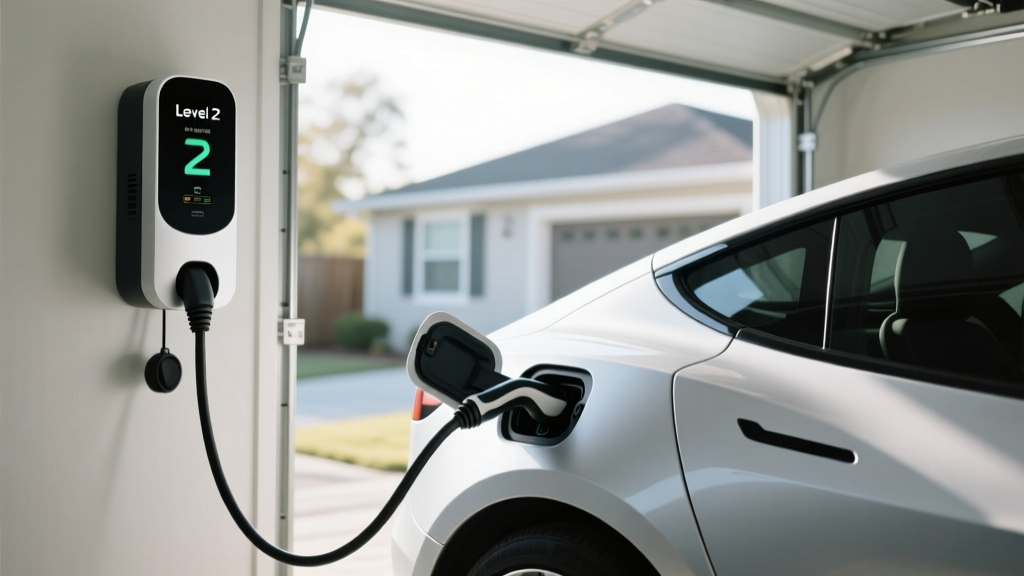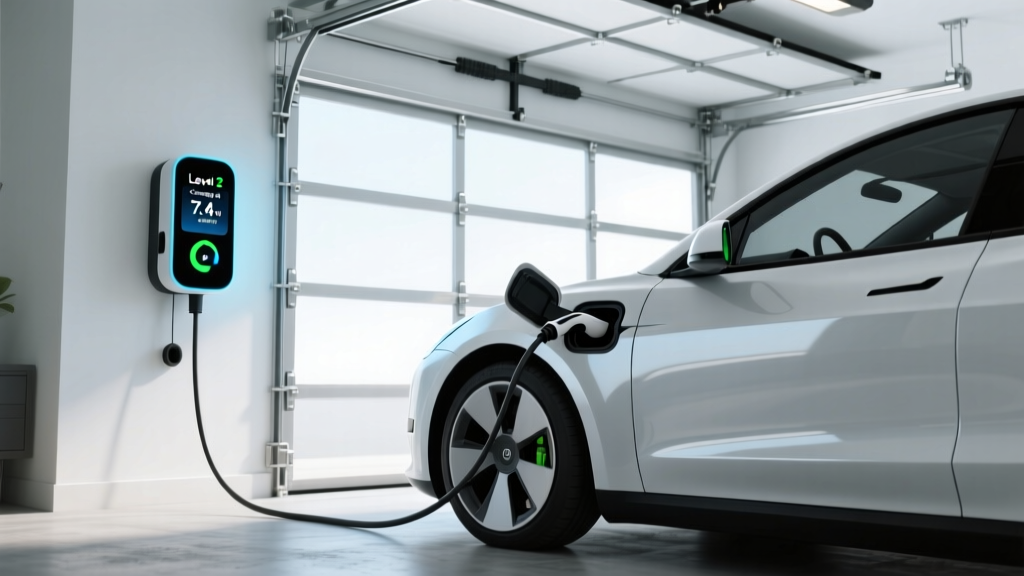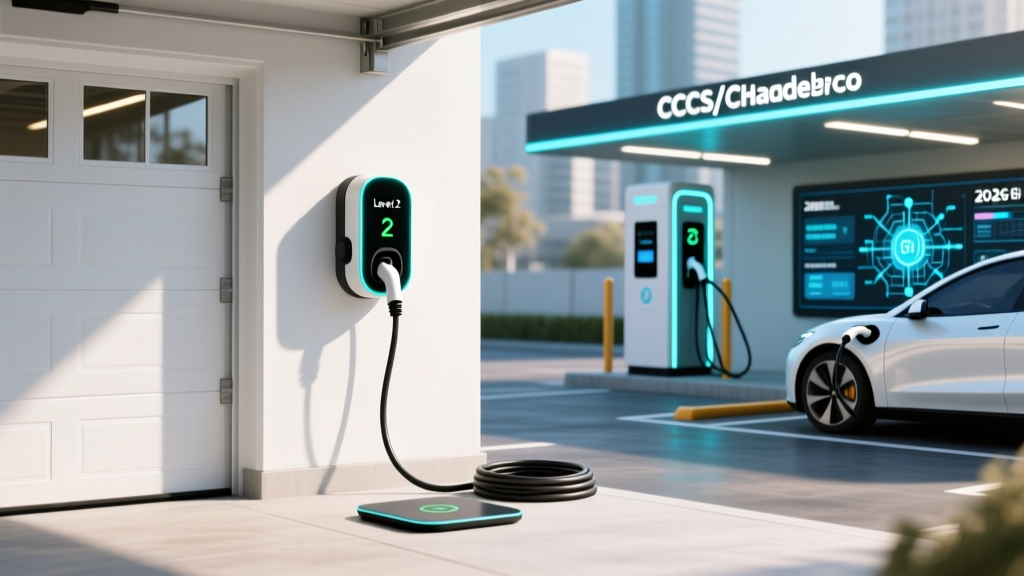
If you've searched for "charger engine" while researching EVs, you're not alone — the term gets tossed around in forums and dealer lots alike. In EV parlance, the charger engine refers to the onboard charging hardware and software that manages AC-to-DC conversion inside your vehicle, as well as the external charging equipment (EVSE) that delivers power to it. Understanding both sides of this system is the single most important step in planning your EV ownership experience.
This guide breaks down every layer of the charging ecosystem — from the kilowatts flowing into your battery to the real dollars leaving your wallet — so you can make precise, confident decisions about equipment, installation, and daily driving costs.
Understanding the Charger Engine: Onboard vs. External Equipment
Every battery-electric and plug-in hybrid vehicle contains an onboard charger — a power-electronics module that converts alternating current (AC) from your home or public Level 2 station into the direct current (DC) your battery requires. This onboard unit dictates your maximum AC charge rate, typically between 7.2 kW and 19.2 kW depending on the vehicle.
When you plug into a DC fast charger, the conversion happens at the station itself, bypassing your onboard charger entirely. That's why DC fast charging can deliver 150–350 kW — far beyond what any onboard unit can handle. The vehicle's battery management system (BMS) takes over, regulating voltage, current, and temperature to protect the cells.
The external equipment on your wall or in a parking lot is technically called EVSE (Electric Vehicle Supply Equipment). It's a smart relay that communicates with your car's charger engine to negotiate voltage, amperage, and safety interlocks before allowing current to flow.
Charging Levels Explained: Speeds, Power, and Range Added
The EV charging world uses three tiers. The critical distinction: kW (kilowatts) measures the rate of power delivery — think of it as the width of the pipe. kWh (kilowatt-hours) measures total energy delivered — the volume of water that passed through. Your battery capacity is rated in kWh; your charger's speed is rated in kW.
| Level | Voltage | Power (kW) | Miles of Range per Hour | Typical Use Case |
|---|---|---|---|---|
| Level 1 | 120V AC | 1.0–1.4 kW | 3–5 mi/hr | Overnight trickle; PHEVs |
| Level 2 | 240V AC | 7.2–19.2 kW | 20–60 mi/hr | Home daily; workplace; public |
| DC Fast Charge | 400–800V DC | 50–350 kW | 150–1,200+ mi/hr | Road trips; highway corridors |
Real-world charging time examples (10% to 80% state of charge, which is the practical fast-charging window):
- 60 kWh battery (e.g., base Nissan Leaf, Chevrolet Bolt EV): ~45 min at a 50 kW CHAdeMO/CCS station; ~20 min at a 150 kW station (if vehicle supports it)
- 82 kWh battery (e.g., Tesla Model Y Long Range): ~25 min at a 250 kW Supercharger; ~18 min at a V4 Supercharger with preconditioning
- 100 kWh battery (e.g., Ford F-150 Lightning Extended Range): ~35 min at a 150 kW CCS station; ~45 min if the battery is cold and preconditioning is skipped
Important caveat on DC charging curves: No vehicle sustains its peak kW rate for the entire session. A car rated for "250 kW peak" may only hold that rate between 10–30% SoC before tapering. This is why 10–80% time is the honest metric — not peak kW alone.
Home EV Charger Installation: Electrical Requirements and Costs
Installing a dedicated Level 2 home charger is the single highest-impact upgrade an EV owner can make. Here's what the electrical work actually involves.
Core Electrical Requirements
- Circuit: A dedicated 240V circuit, typically 40A or 50A (a 40A circuit supports a 32A continuous charger; a 50A circuit supports 40A continuous — per the NEC 80% rule for continuous loads)
- Wiring: 6 AWG copper for 40A circuits; 4 AWG for 50A circuits, run through conduit where exposed
- Breaker: Double-pole breaker in your main panel
- GFCI protection: Required by NEC 2020/2023 for EV receptacles in garages (Article 625)
- Permit: Required in virtually all US jurisdictions; inspection follows
Panel Upgrade: The Hidden Cost
Most homes built after 1990 have a 200A main panel, which can usually accommodate a 40–50A EV circuit. However, if your panel is already near capacity (common in homes with electric ranges, dryers, and HVAC), you'll need either a panel upgrade (to 200A or 400A) or a load-management device like the Emporia VUE or Span smart panel, which dynamically throttles the charger when other circuits spike.
| Component | Cost Range | Notes |
|---|---|---|
| Level 2 EVSE (hardwired or NEMA 14-50) | $350–$750 | Varies by brand, power, smart features |
| Electrician labor (standard install, <50 ft run) | $500–$1,500 | Depends on region, conduit length, wall type |
| Permit and inspection | $50–$300 | Varies by municipality |
| Panel upgrade (if needed) | $1,500–$4,000 | 200A service upgrade; not always required |
| Total (no panel upgrade) | $900–$2,550 | Typical scenario for modern homes |
| Total (with panel upgrade) | $2,400–$6,550 | Older homes with 100A service |
The IRS offers a 30% tax credit for home EV charging equipment under §30C (Alternative Fuel Vehicle Refueling Property Credit), capped at $1,000 for residential installations. This applies to both the EVSE hardware and installation labor. Check irs.gov for current eligibility, including census-tract requirements that took effect in 2023.
Connector Compatibility: NACS, CCS1, and CHAdeMO
The connector landscape has consolidated significantly since 2024, but legacy standards remain in use. Here's what fits what in 2026:
| Connector | Brands Using It | Max DC kW | Adapter Needed? |
|---|---|---|---|
| NACS (North American Charging Standard) | Tesla (all), Ford, GM, Rivian, Volvo, Polestar, Hyundai, Kia (2025+), Mercedes-Benz | Up to 350 kW | No (native on new models); CCS-to-NACS adapters available for non-Tesla EVs at Superchargers |
| CCS1 (Combined Charging System) | Volkswagen, BMW, older Hyundai/Kia (pre-2025), Stellantis, Honda, Subaru, Lucid | Up to 350 kW | NACS-to-CCS adapter needed for Tesla Supercharger access |
| CHAdeMO | Nissan Leaf (legacy), Mitsubishi Outlander PHEV | Up to 100 kW | Limited adapter options; network declining |
Key takeaway for 2026: NACS has won the North American standard war. If you're buying a new EV, prioritize a NACS-equipped model for the widest DC fast-charging access (Tesla Supercharger network plus Electrify America's NACS-equipped stations). If you own a CCS vehicle, Tesla sells a CCS-to-NACS adapter (~$250) that unlocks Supercharger access at most locations.
Cost to Charge: Per-Mile Economics vs. Gasoline
Charging cost depends entirely on where and when you plug in. Here's the real math using a representative EV consuming 3.0 miles per kWh (roughly 112 MPGe — typical of a midsize crossover like the Hyundai Ioniq 5 or Tesla Model Y):
| Scenario | $/kWh | Cost Per Mile | Equivalent Gas MPG at $3.50/gal |
|---|---|---|---|
| Home off-peak (utility TOU rate) | $0.08–$0.12 | $0.03–$0.04 | 88–117 MPG |
| Home standard rate (no TOU) | $0.14–$0.18 | $0.05–$0.06 | 58–70 MPG |
| Public Level 2 (ChargePoint, Blink) | $0.25–$0.49 | $0.08–$0.16 | 22–44 MPG |
| DC Fast Charge (Electrify America, EVgo) | $0.35–$0.55 | $0.12–$0.18 | 19–29 MPG |
| Tesla Supercharger (average) | $0.25–$0.35 | $0.08–$0.12 | 29–44 MPG |
| Gasoline baseline (28 MPG avg sedan) | — | $0.125 | 28 MPG |
The bottom line: If you charge at home on a time-of-use plan (off-peak overnight), your EV will cost roughly 70–75% less per mile than a 28 MPG gas car. If you rely exclusively on DC fast charging, you may break even or even pay more per mile than gasoline. Home charging access is the economic make-or-break for EV ownership.
For detailed efficiency ratings across all current models, fueleconomy.gov provides EPA-tested kWh/100mi and MPGe figures for every EV sold in the US.
Equipment Recommendations: Top Home Level 2 Chargers for 2026
After testing and tracking reliability data across dozens of EVSE units, these are the chargers we recommend by use case:
Best Overall: ChargePoint Home Flex
- Power: Up to 50A (12 kW) — configurable via DIP switch to match your circuit
- Connector: NACS or J1772 (select at purchase)
- Cable length: 23 feet
- Smart features: Wi-Fi, scheduling, energy tracking, Alexa integration
- Price: ~$550–$650
- Best for: Most homeowners wanting flexibility and smart scheduling
Best Budget: Emporia Level 2 EV Charger
- Power: Up to 48A (11.5 kW)
- Connector: J1772 (NACS adapter sold separately)
- Cable length: 24 feet
- Smart features: Wi-Fi, solar integration, real-time energy monitoring via Emporia VUE panel
- Price: ~$350–$400
- Best for: Solar-panel owners and budget-conscious buyers
Best for Tesla Owners: Tesla Wall Connector
- Power: Up to 48A (11.5 kW)
- Connector: NACS native (no adapter)
- Cable length: 24 feet
- Smart features: Wi-Fi, power sharing (link multiple units on one circuit), OTA updates
- Price: ~$425–$475
- Best for: Tesla-only households; cleanest integration
Best Premium/Outdoor: Grizzl-E Smart
- Power: Up to 40A (9.6 kW)
- Connector: J1772 or NACS
- Cable length: 24 feet
- Smart features: OCPP-compatible, works with multiple energy-management platforms
- Price: ~$450–$550
- Best for: Outdoor installs (NEMA 4 rated, -40°F to +122°F operating range), extreme climates
Safety, Code, and Installation Best Practices
EV charging involves sustained high-current draw — often for 6–10 hours at a time. This places demands on your home electrical system that differ from any other appliance. Follow these non-negotiable safety principles:
- Always use a dedicated circuit. Never share the EV circuit with other appliances. Continuous 80%+ load on a shared circuit risks overheating and breaker nuisance trips.
- Hardwire when possible. Hardwired EVSEs avoid the NEMA 14-50 receptacle, which has been linked to overheating incidents (notably documented by the NHTSA and EV owner communities). If you must use a receptacle, specify a commercial-grade Hubbell or Bryant 14-50R — not a residential-grade unit from a big-box store.
- Verify outdoor ratings. Any charger installed outside must carry a NEMA 4 (or IP65+) rating for water and dust ingress. Confirm the unit is UL-listed (or ETL-listed) — unlisted import chargers sold on marketplace sites bypass critical safety testing.
- Install a GFCI breaker. NEC Article 625.40 requires ground-fault protection for EV receptacles. Many modern hardwired EVSEs include built-in GFCI, which satisfies this requirement without a separate breaker.
- Size your wire correctly. Undersized wire on a long run causes voltage drop, which reduces charging speed and generates heat. Your electrician should calculate voltage drop for runs exceeding 50 feet and upsize wire accordingly.
Always hire a licensed electrician and pull a permit. Unpermitted EV charger installations can void homeowner's insurance coverage and create liability issues during a home sale. Many utilities offer rebates for permitted Level 2 installations — check your local utility's EV program page before scheduling work.
Frequently Asked Questions
How much does it cost to install a home EV charger?
A typical Level 2 home charger installation costs between $900 and $2,550 when no panel upgrade is needed. This includes the EVSE ($350–$750), electrician labor ($500–$1,500), and permit fees ($50–$300). If your home requires a 200A panel upgrade, add $1,500–$4,000, bringing the total to $2,400–$6,550. The federal §30C tax credit can offset up to $1,000 (30% of hardware and labor).
How fast will each charging level add range?
Level 1 (120V) adds 3–5 miles per hour — sufficient for PHEVs with small batteries but impractical for full BEVs. Level 2 (240V) adds 20–60 miles per hour depending on amperage and the vehicle's onboard charger capacity. DC fast charging adds 150–1,200+ miles per hour at peak rate, enabling a 10–80% charge in 18–45 minutes depending on battery size and station power.
Which connector and charger is compatible with my EV?
Check your vehicle's charge port. As of 2026, most new EVs from Ford, GM, Rivian, Hyundai, Kia, Volvo, and Polestar use NACS. Volkswagen, BMW, and most pre-2025 models use CCS1. The Nissan Leaf uses CHAdeMO. For home Level 2 charging, J1772 is the legacy standard but NACS is now widely available on new EVSEs. Adapters exist for most combinations, but native NACS provides the best public-charging access.
How much does charging cost per mile vs. gas?
Home off-peak charging costs $0.03–$0.04 per mile — roughly 70% cheaper than a 28 MPG gas car at $3.50/gallon ($0.125/mile). Standard-rate home charging costs $0.05–$0.06/mile. Public DC fast charging at $0.35–$0.55/kWh costs $0.12–$0.18/mile, which is comparable to or slightly more expensive than gasoline. The economic advantage of an EV is almost entirely dependent on consistent home charging access.
What electrical upgrades might I need?
Homes with a 200A panel and spare breaker slots typically need no upgrades — just a new 40A or 50A double-pole breaker and wire run. Homes with 100A service, full panels, or aluminum wiring will likely need a panel upgrade ($1,500–$4,000). A load-management device (like the Emporia VUE or Span Drive) can avoid a full panel upgrade by dynamically limiting charger draw when other circuits are active — ask your electrician about this option before committing to a panel replacement.
Can I use a regular 120V outlet to charge my EV?
Yes, but only as a supplement. Level 1 charging at 1.0–1.4 kW adds roughly 3–5 miles of range per hour. For a PHEV with a 30-mile electric range, an overnight charge on 120V is sufficient. For a BEV with 250+ miles of range, a full Level 1 charge takes 40–60 hours — making it impractical as your primary charging method. Use Level 1 as a backup or travel solution.
For comprehensive safety standards and electrical code references, consult the National Electrical Code (NFPA 70) or your local authority having jurisdiction.