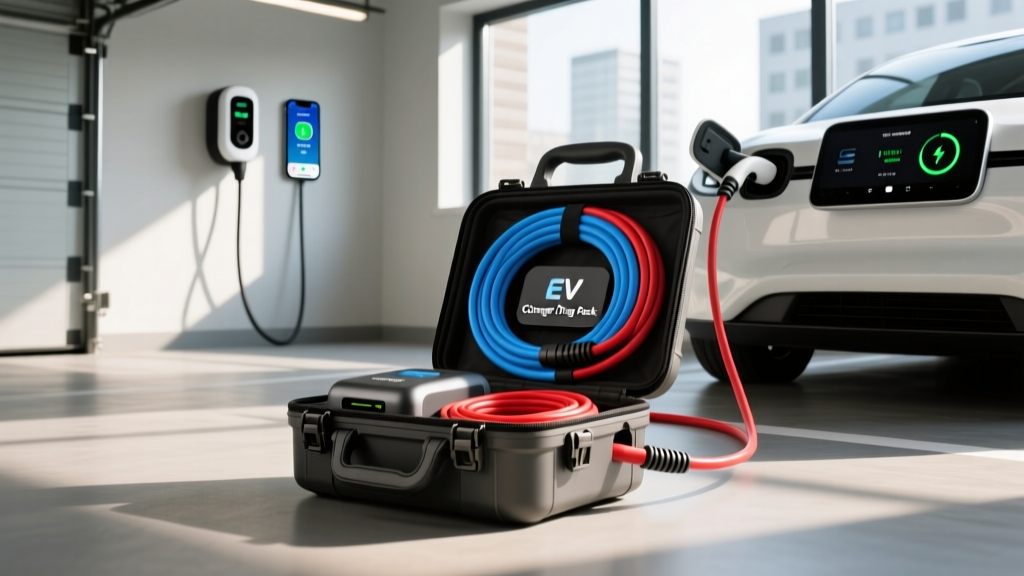
If you own an electric vehicle long enough, you'll eventually find yourself at a cabin, a relative's garage, or a remote trailhead with no dedicated EV charger in sight. That's when a well-built charger drag pack — a curated kit of portable charging cables, outlet adapters, and connector dongles — becomes the most important gear in your frunk.
Unlike a fixed home wall connector, a drag pack travels with you, turning ordinary 120V and 240V outlets into opportunistic charging stations. But throwing random cables in the trunk won't cut it. You need to understand exactly how much power each outlet type delivers, which connectors your vehicle requires, and what equipment is worth the weight and wallet hit. This guide breaks down the electrical realities, the gear, and the costs so you can build a kit that actually works.
Charging Levels Explained: What Your Drag Pack Can Actually Deliver
Before selecting equipment, you need to understand the three charging tiers available to EV owners and how they translate into real range recovery. The critical distinction: kW (kilowatts) measures power delivery rate — how fast energy flows — while kWh (kilowatt-hours) measures total energy stored in your battery. Your charger's kW rating determines how quickly you refill kWh.
| Level | Voltage | Max Power (kW) | Miles of Range per Hour | Typical 10–80% Time (75 kWh battery) | Best For |
|---|---|---|---|---|---|
| Level 1 | 120V AC | 1.4–1.9 kW | 3–5 mi/hr | ~37–50 hours | Overnight trickle, PHEVs, emergencies |
| Level 2 | 240V AC | 3.3–19.2 kW | 12–75 mi/hr | ~3–11 hours | Home daily charging, destination stops |
| DC Fast | 400–900V DC | 50–350 kW | 150–1,000+ mi/hr | ~18–45 minutes | Road trips, highway corridors |
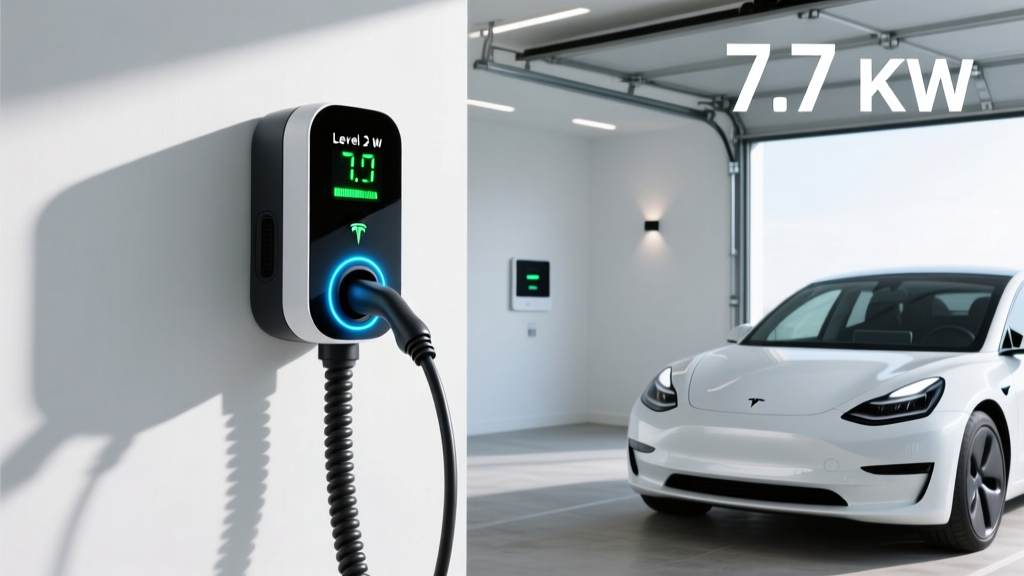
A charger drag pack primarily covers Level 1 and Level 2 scenarios. You won't carry a DC fast charger — those are fixed installations weighing hundreds of pounds. But with the right portable Level 2 EVSE (Electric Vehicle Supply Equipment) and a NEMA 14-50 outlet adapter, you can pull up to 9.6 kW from a common 240V dryer or RV-park outlet, adding roughly 30–40 miles of range per hour on a mid-size SUV like the Hyundai Ioniq 5 or Tesla Model Y.
Building Your Charger Drag Pack: Essential Equipment
A functional drag pack has three layers: the EVSE unit itself, outlet adapters to fit whatever receptacle you encounter, and connector adapters to match your vehicle's charge port. Here's what earns a spot in the kit.
Portable EVSE Units: The Core of the Pack
| Model | Max Output | Connector | Cable Length | Smart Features | Price (MSRP) |
|---|---|---|---|---|---|
| Emporia Level 2 Portable | 9.6 kW (40A / 240V) | NACS or CCS1 (J1772 included) | 24 ft | Wi-Fi, app scheduling, energy tracking | ~$349 |
| ChargePoint Home Flex (Portable Config) | 12 kW (50A / 240V) | J1772 (NACS adapter avail.) | 25 ft | App control, Alexa, load sharing | ~$599 |
| Lectron V-BOX Pro | 9.6 kW (40A / 240V) | J1772 / NACS options | 21 ft | LED status, basic timer | ~$279 |
| Grizzl-E Smart | 9.6 kW (40A / 240V) | J1772 (NACS adapter sold separately) | 24 ft | OCPP, RFID, extreme-cold rated (-40°C) | ~$499 |
For most EV owners, the 40A / 9.6 kW tier is the sweet spot. It charges a 75 kWh battery from 10–80% in roughly 5.5 hours — enough to fully replenish overnight at a vacation rental with a 240V outlet. Units rated at 48A or 50A (like the ChargePoint Home Flex) require a 60A dedicated circuit, which you're unlikely to find outside your own garage, so a 40A portable unit on a NEMA 14-50 receptacle is the practical ceiling for a travel kit.
Outlet Adapters: The Key to Opportunistic Charging
The real value of a drag pack is outlet versatility. Most portable EVSEs ship with a NEMA 14-50 plug (the standard 240V/50A receptacle found in RV parks and many garages). But you'll encounter other outlet types, and having the right adapter means the difference between a full battery and a dead one.
Common adapter targets for a drag pack include:
- NEMA 14-50 (240V, 50A) — RV parks, campgrounds, newer garages. Delivers up to 9.6 kW on a 40A EVSE.
- NEMA 14-30 (240V, 30A) — Older dryer outlets. Limits you to ~5.8 kW (24A continuous).
- NEMA 10-30 (240V, 30A, no ground) — Pre-1996 dryer outlets. Requires a ground adapter or dedicated EVSE plug; use with caution.
- NEMA 6-20 (240V, 20A) — Workshop or AC outlets. Delivers ~3.8 kW (16A continuous) — slow but meaningful for overnight top-ups.
- NEMA 5-15 (120V, 15A) — Standard household outlet. Level 1 at ~1.4 kW. Emergency trickle only.
Companies like EVSE Adapters and Lectron sell purpose-built adapter pigtails ($35–$95 each) that convert your EVSE's 14-50 plug to these configurations. Budget $150–$250 for a three-adapter set covering the most common outlets you'll encounter.
Connector Compatibility: NACS, CCS1, and CHAdeMO in 2026
The connector landscape has shifted dramatically. As of 2026, the North American Charging Standard (NACS), originally developed by Tesla, has become the dominant light-vehicle connector. Most legacy J1772/CCS1 vehicles can use adapters at NACS chargers, and most new EVs ship with native NACS ports.
| Connector | Brands Using It (Native) | AC Level 2 Charging | DC Fast Charging | Adapter Needed? |
|---|---|---|---|---|
| NACS (Tesla standard) | Tesla, Ford, GM, Rivian, Volvo, Polestar, Hyundai/Kia (2025+) | Yes | Yes (Supercharger + NACS DC networks) | CCS1→NACS adapter for legacy CCS1 vehicles (~$150–$250) |
| CCS1 (J1772 Combo) | VW ID.4 (pre-2026), BMW iX, older Hyundai/Kia, Nissan Ariana | Yes (J1772 AC) | Yes (Electrify America, EVgo CCS stalls) | NACS→CCS1 adapter needed at Tesla Superchargers (~$200) |
| CHAdeMO | Nissan Leaf (legacy only, discontinued after 2025) | Yes (J1772 AC) | Yes (declining network) | No CCS/NACS adapter widely available; CHAdeMO infrastructure shrinking |
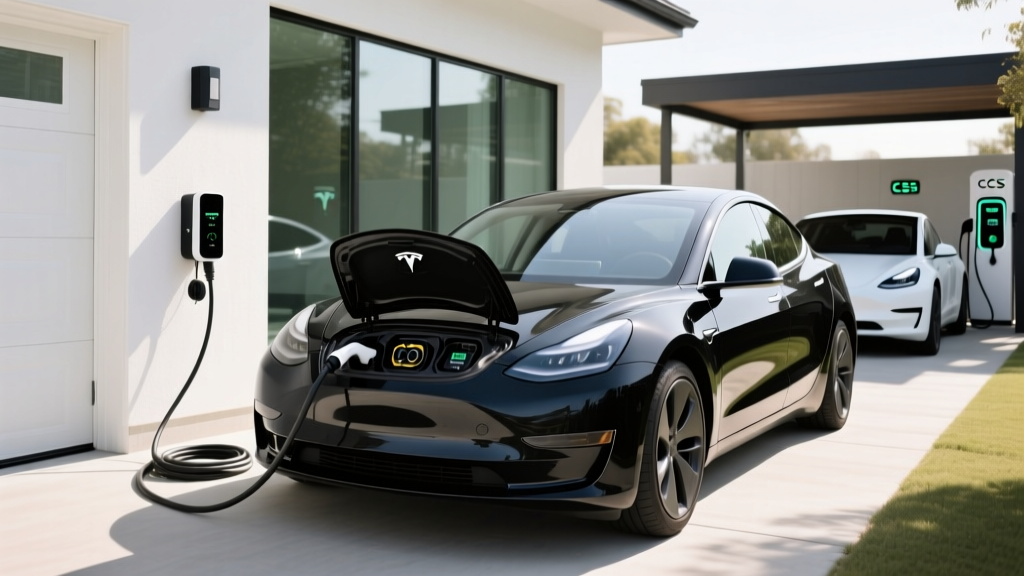
For your drag pack, the practical takeaway: if you drive a NACS-equipped vehicle (most 2025+ models), a NACS-connector portable EVSE is your primary cable. If you're still on CCS1, carry a J1772-connector EVSE plus a NACS-to-CCS1 adapter (~$200) so you can access the expanding Tesla Supercharger network, which now lists over 25,000 stalls open to non-Tesla vehicles via the Tesla Supercharger network.
Home Charging Installation: Costs, Electrical Requirements, and Panel Gotchas
Even if your drag pack is built for travel, most EV owners do 80%+ of their charging at home. Understanding installation requirements helps you decide whether to invest in a dedicated wall connector or rely on your portable EVSE plugged into an existing 240V outlet.
Electrical Requirements for a Dedicated Level 2 Circuit
A hardwired Level 2 charger typically requires:
- 240V dedicated circuit on a double-pole breaker
- 40A–60A breaker depending on charger amperage (NEC requires the breaker to be rated at 125% of continuous load, so a 40A charger needs a 50A breaker; a 48A charger needs a 60A breaker)
- 6 AWG copper wire (for 50A circuits) or 4 AWG (for 60A circuits), run through conduit if exposed
- GFCI protection if the outlet is outdoors or in a garage (per NEC 2023/2026 code updates for EVSE)
- Permit and inspection — most jurisdictions require an electrical permit ($50–$200) and a post-install inspection
The Panel-Upgrade Reality
Here's where costs can balloon unexpectedly. If your home has a 100A main electrical panel — common in houses built before 2000 — adding a 50A EV circuit may exceed your panel's available capacity, especially if you already run electric range, dryer, and HVAC. An electrician will perform a load calculation (per NEC Article 220) to determine available headroom.
If a panel upgrade from 100A to 200A is needed, expect to add $1,500–$3,500 to your project. This is the single largest variable in home charger installation and the reason quotes range so widely.
| Component | Simple Install (Panel Has Capacity) | Complex Install (Panel Upgrade Needed) |
|---|---|---|
| EVSE Equipment (40A–48A wall connector) | $350–$650 | $350–$650 |
| Electrician Labor (2–6 hours) | $400–$1,000 | $800–$2,000 |
| Materials (wire, conduit, breaker) | $100–$300 | $200–$500 |
| Permit & Inspection | $50–$200 | $100–$250 |
| Panel Upgrade (100A → 200A) | Not needed | $1,500–$3,500 |
| Total Estimated Cost | $900–$2,150 | $2,950–$6,900 |
Always get a load calculation before committing to a charger purchase. A licensed electrician can assess your panel in about 30 minutes, often for free as part of a quote. According to the U.S. Department of Energy, some utilities offer rebates of $250–$1,000 for smart charger installations, which can offset a significant portion of the simpler install path.
Cost to Charge: EV Electricity vs. Gas Per Mile
The financial case for EV charging hinges on your electricity rate. Here's how common scenarios compare to a gas vehicle averaging 28 MPG combined on $3.40/gallon fuel.
| Charging Scenario | Rate ($/kWh) | Vehicle Efficiency | Cost per Mile | Savings vs. Gas |
|---|---|---|---|---|
| Home, off-peak utility rate | $0.09 | 3.5 mi/kWh (120 MPGe) | $0.026 | ~$0.095/mi saved |
| Home, average residential rate | $0.16 | 3.5 mi/kWh | $0.046 | ~$0.075/mi saved |
| Public Level 2 (ChargePoint, etc.) | $0.30 | 3.5 mi/kWh | $0.086 | ~$0.035/mi saved |
| DC Fast Charging (Electrify America) | $0.48 | 3.5 mi/kWh | $0.137 | ~$0.016/mi more expensive |
| Gas Vehicle Baseline | $3.40/gal | 28 MPG combined | $0.121 | — |
The takeaway: home charging is dramatically cheaper than gas — often 70–80% less per mile. Public Level 2 narrows the gap but still saves money. DC fast charging at peak rates can actually exceed the cost of gas per mile, which is why your drag pack strategy should prioritize overnight Level 2 top-ups over repeated DC fast sessions. Over 12,000 annual miles, home charging at $0.12/kWh saves roughly $1,100 compared to gas.
Safety and Code Considerations for Portable EVSE Use
A drag pack gives you flexibility, but plugging a high-amperage load into an unknown outlet carries real risk. Follow these non-negotiable safety practices:
- Inspect outlets before use. Look for discoloration, loose fit, or a warm faceplate — signs of worn contacts that can overheat under sustained 30–40A load. A $15 outlet tester can verify correct wiring on NEMA 14-50 receptacles.
- Never use extension cords. Portable EVSE cables are purpose-built for their rated amperage. A standard household extension cord (even 12 AWG) is not rated for continuous 40A loads and is a fire hazard.
- Use GFCI-protected circuits outdoors. NEC 2023 and later codes require GFCI protection for all outdoor and garage EVSE installations. If you're plugging into an outdoor RV-park pedestal, verify the breaker is GFCI-equipped.
- Check the outlet's circuit rating. A NEMA 14-50 outlet may be on a 50A breaker, but it could also be on a 40A breaker wired with the wrong receptacle (a surprisingly common electrician shortcut). Set your EVSE to draw no more than 80% of the breaker rating — most smart units let you configure max amperage in the app.
- Outdoor-rated equipment only for exterior use. If your portable EVSE is rated NEMA 4 (weather-resistant), it's fine outdoors. IP54 or lower ratings mean it should stay under cover.
Your Complete Charger Drag Pack: A $700–$1,200 Kit
Here's a concrete packing list for a versatile, road-ready kit that covers the vast majority of situations an EV owner will encounter away from home:
- Portable EVSE — Emporia Level 2 Portable (40A, NACS, 24 ft cable): ~$349
- NEMA 14-50 to 14-30 adapter (for 30A dryer outlets): ~$55
- NEMA 14-50 to 6-20 adapter (for workshop 240V): ~$45
- NEMA 14-50 to 5-15 adapter (for standard 120V trickle): ~$35
- CCS1-to-NACS adapter (if your vehicle is CCS1-equipped): ~$200
- Outlet tester (120V/240V combo): ~$25
- Heavy-duty cable organizer bag: ~$30
Total: ~$739–$1,100 depending on whether you need the CCS1 adapter. This kit lets you charge from virtually any 120V or 240V outlet in North America, at rates from 1.4 kW (emergency trickle) up to 9.6 kW (solid overnight replenishment).
Frequently Asked Questions
How much does it cost to install a home EV charger?
A straightforward Level 2 installation on an existing 200A panel with nearby capacity runs $900–$2,150 including the charger, electrician labor, materials, and permit. If your home needs a panel upgrade from 100A to 200A, total costs jump to $2,950–$6,900. Always get a load calculation first.
How fast will each charging level add range?
Level 1 (120V) adds 3–5 miles of range per hour. Level 2 at 9.6 kW (240V, 40A) adds roughly 30–40 miles per hour on a mid-size EV. DC fast charging at 150 kW can add 150+ miles in 20 minutes, though charge speed tapers significantly above 80% state of charge due to battery management system protections.
Which connector/charger is compatible with my EV?
Check your vehicle's charge port. Most 2025+ models from Tesla, Ford, GM, Rivian, Hyundai, and Kia use NACS. Older models from VW, BMW, and pre-2025 Hyundai/Kia typically use CCS1 (J1772 for AC). The Nissan Leaf used CHAdeMO but is discontinued. Your portable EVSE must match your vehicle's connector, or you'll need an adapter.
How much does charging cost per mile vs gas?
At the U.S. average residential electricity rate of ~$0.16/kWh and a typical EV efficiency of 3.5 miles per kWh, home charging costs about $0.046 per mile. A comparable gas vehicle at 28 MPG and $3.40/gallon costs $0.121 per mile — roughly 2.6× more. DC fast charging at $0.48/kWh can exceed gas costs, so prioritize home and destination Level 2 charging.
What electrical upgrades might I need?
The most common upgrade is a panel capacity increase from 100A to 200A service ($1,500–$3,500). You may also need a new double-pole breaker, conduit run from panel to garage, and GFCI breaker if the outlet is outdoors. Homes built after 2005 with 200A panels usually have sufficient capacity for a 40–50A EV circuit without upgrades. Per the National Electrical Code (NEC), all EVSE installations must comply with Article 625 and local amendments.