The Short Answer: No, EV Chargers Are Not Universal
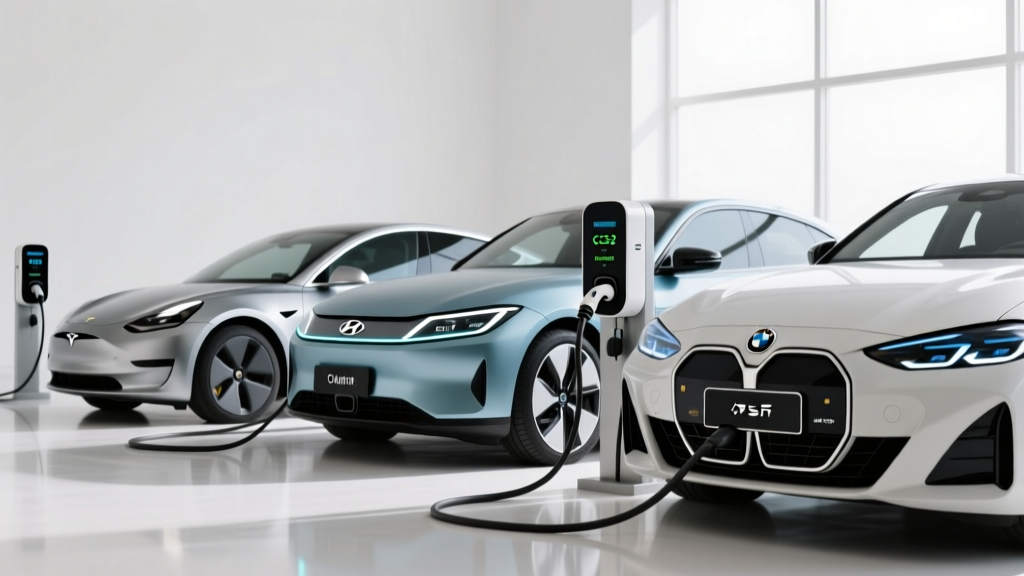
If you're shopping for your first electric vehicle or planning a home charging setup, you've probably asked: do all electric cars use the same charger? The answer is no — but it's getting simpler. As of 2026, the North American EV market has largely consolidated around two AC connector standards for home and destination charging (J1772 and NACS) and is rapidly converging on NACS for DC fast charging as well. However, legacy CCS1 and CHAdeMO connectors remain on hundreds of thousands of EVs already on the road, and adapter requirements vary by brand and model year.
Understanding which charger works with your EV — and what it costs to install one at home — is the single biggest factor in daily ownership satisfaction. Below, we map every connector type, charging level, installation cost, and per-mile expense so you can plan with real numbers, not guesswork.
Charging Levels Explained: Speeds, Power, and Real-World Range Gains
EV charging is categorized into three levels based on power delivery. The critical distinction: kW (kilowatts) measures power — how fast energy flows into your battery — while kWh (kilowatt-hours) measures energy — the total capacity of your battery pack. A 75 kWh battery charged at 11.5 kW takes roughly 6.5 hours from empty; at 150 kW DC fast charging, that same battery gains substantial range in 20 minutes.
| Level | Voltage | Power (kW) | Miles of Range Per Hour | Typical Use Case |
|---|---|---|---|---|
| Level 1 | 120V AC | 1.0–1.4 kW | 3–5 mi/hr | Overnight trickle; PHEVs; emergency top-ups |
| Level 2 | 240V AC | 3.3–19.2 kW | 12–75 mi/hr | Home daily charging; workplace; public destination |
| DC Fast Charge | 400–800V DC | 50–350 kW | 150–1,000+ mi/hr (peak) | Road trips; highway corridors; commercial fleets |
Real-world charging time examples (10–80% State of Charge):
- Tesla Model Y (75 kWh usable, NMC): ~25 min at a 250 kW Supercharger (V3/V4); ~8 hrs on a 48A Level 2 home charger at 11.5 kW.
- Hyundai Ioniq 5 (77.4 kWh usable, NMC, 800V architecture): ~18 min at a 350 kW Electrify America station; ~7.5 hrs on an 11.5 kW Level 2.
- Ford F-150 Lightning Extended Range (131 kWh usable, NMC): ~41 min at 150 kW DC fast; ~13 hrs on a 48A Level 2.
- Chevrolet Equinox EV (85 kWh usable, NMC): ~30 min at 150 kW DC fast; ~9 hrs on a 48A Level 2.
Note: DC fast charging follows a taper curve. Peak kW rates apply only between roughly 10–50% SoC. Above 80%, charge speed drops significantly to protect battery health — this is why manufacturers quote 10–80% times rather than 0–100%.
Connector Compatibility: NACS, CCS1, CHAdeMO, and J1772
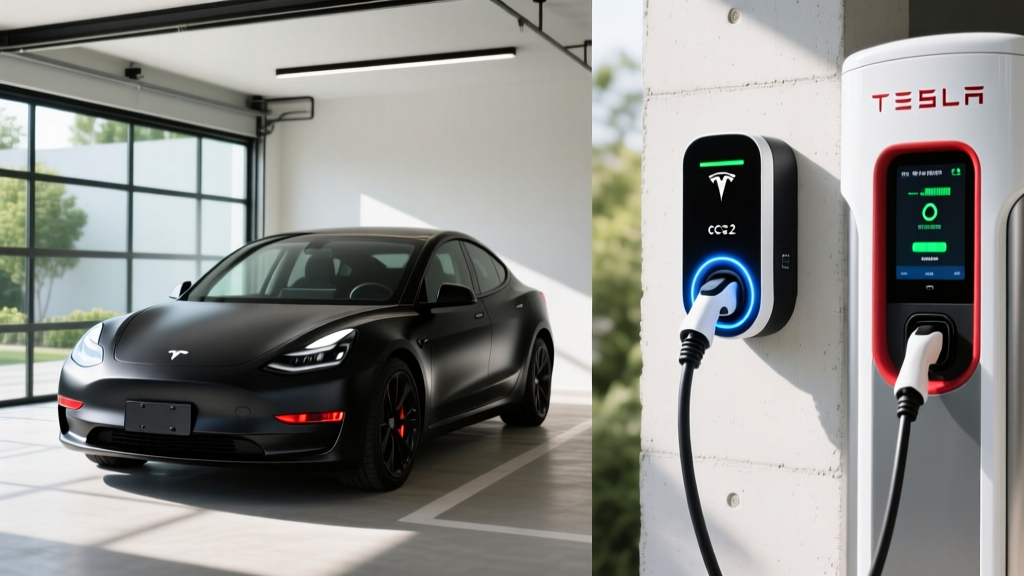
The physical plug your EV uses determines which chargers you can access without an adapter. Here's the 2026 landscape:
| Connector | AC (Level 1/2) | DC Fast | Brands Using It (2026 Models) | Adapter Needed? |
|---|---|---|---|---|
| NACS (Tesla) | Yes (native on Tesla) | Yes (Tesla Supercharger) | Tesla (all models); Ford, GM, Rivian, Hyundai, Kia, BMW, Mercedes, Volvo, Polestar (2025+ models ship with NACS) | Non-Tesla EVs with CCS port need NACS-to-CCS adapter for Superchargers; new 2025+ models have native NACS ports |
| CCS1 | Uses J1772 for AC | Yes (CCS Combo) | 2024 and older models from VW, BMW, Ford, GM, Hyundai, Kia; most pre-2025 EVs | CCS-to-NACS adapter needed for Tesla Superchargers (widely available from Tesla, Lectron, A2Z) |
| CHAdeMO | Uses J1772 for AC | Yes | Nissan Leaf (all years); Mitsubishi Outlander PHEV (older); largely discontinued for new models | No adapter to CCS/NACS for DC fast; CHAdeMO stations declining in availability |
| J1772 | Yes (standard AC plug) | No (AC only) | All non-Tesla EVs for Level 1/2 charging | Tesla owners use J1772-to-NACS adapter (included with vehicle) for non-Tesla Level 2 stations |
The 2026 reality: NACS is now the dominant standard. Nearly every major automaker has adopted it for new vehicles starting in the 2025–2026 model years. If you're buying a new EV in 2026, it almost certainly has a NACS port or ships with a CCS-to-NACS adapter. If you own a 2023–2024 model with CCS1, you'll need an adapter (typically $150–$250) to access the Tesla Supercharger network, which remains the largest and most reliable DC fast-charging network in North America with over 6,500 stations and 65,000+ connectors according to Tesla's Supercharger page.
CHAdeMO is effectively a legacy standard. Nissan abandoned it for the Ariya (which uses CCS1/NACS), and new CHAdeMO station installations have nearly stopped. Leaf owners should plan charging routes carefully on road trips.
Home EV Charger Installation: Costs, Electrical Requirements, and Upgrades
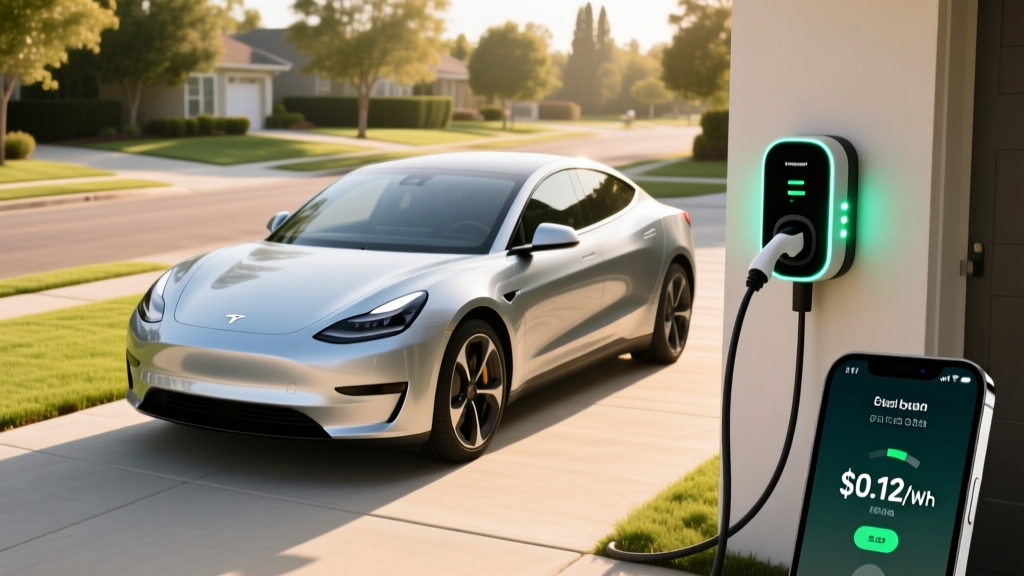
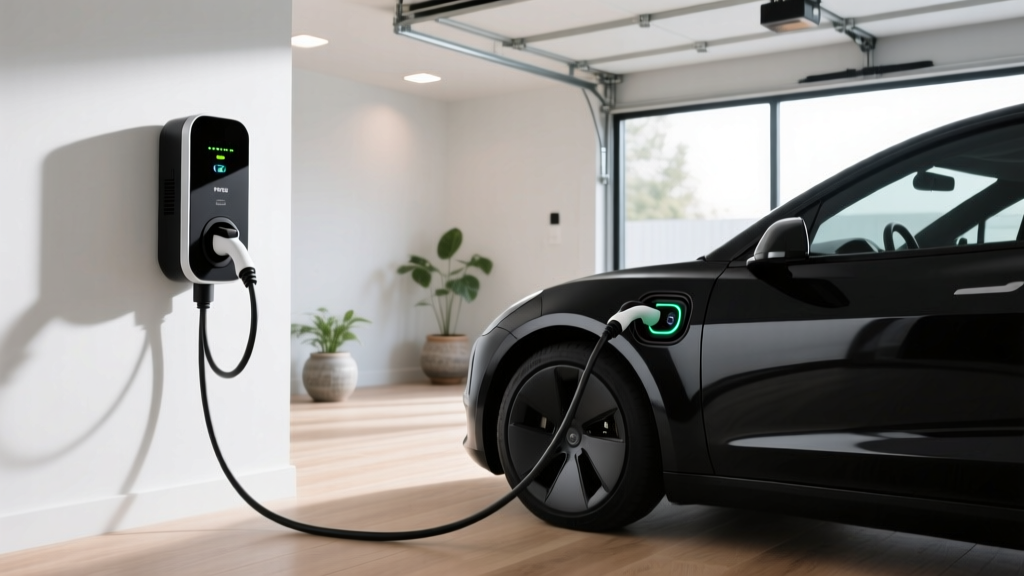
Installing a Level 2 home charger is the single best quality-of-life upgrade for EV ownership. But costs vary enormously depending on your home's electrical panel, the distance from the panel to your garage or driveway, and local permitting requirements.
Electrical Requirements for Level 2 Charging
A typical Level 2 home charger requires a 240-volt dedicated circuit, similar to what an electric dryer or oven uses. The most common configurations:
- 40-amp circuit / 32-amp continuous (7.7 kW): Minimum recommended for most EVs. Adds ~25–30 miles of range per hour.
- 50-amp circuit / 40-amp continuous (9.6 kW): Good for larger batteries (F-150 Lightning, Rivian R1T). Adds ~35–40 mi/hr.
- 60-amp circuit / 48-amp continuous (11.5 kW): Optimal for fast home charging on any EV. Adds ~42–48 mi/hr. Most hardwired chargers support this.
- 100-amp circuit / 80-amp continuous (19.2 kW): Available on select chargers (e.g., ChargePoint Home Flex with dual-circuit configuration). Requires a 200A+ panel with ample spare capacity. Adds ~70–75 mi/hr.
The National Electrical Code (NEC) requires that continuous loads (anything running 3+ hours, which includes EV charging) use only 80% of a circuit's rated capacity. So a 50-amp breaker delivers a maximum 40 amps (9.6 kW) to the vehicle.
Do You Need a Panel Upgrade?
This is the question that can double or triple your installation cost. Most modern homes have a 200-amp main panel. An electrician will perform a load calculation to determine if you have enough spare capacity for a new 40–60A circuit. Homes with electric heat, electric water heaters, and existing high-draw appliances may be close to capacity.
- 100-amp panel: Almost certainly needs an upgrade to 200A for Level 2 EV charging. Upgrade cost: $2,000–$4,500.
- 200-amp panel with spare capacity: No upgrade needed. Typical install cost applies.
- 200-amp panel at or near capacity: Options include a panel upgrade ($2,000–$4,500), a smart panel / load management device like the Emporia Vue with automatic load shedding ($300–$600 installed), or reducing charger amperage to 24A or 32A.
Home Charger Installation Cost Breakdown
| Component | Low End | Typical | High End |
|---|---|---|---|
| Level 2 charger hardware (24–48A) | $300 (Emporia Level 2) | $550 (ChargePoint Home Flex, Grizzl-E Smart) | $800 (Tesla Wall Connector, Enel X JuiceBox Pro) |
| Electrician labor (simple install, <25 ft from panel) | $400 | $800 | $1,500 |
| Electrician labor (complex install, long run, conduit, trenching) | $1,200 | $2,000 | $4,000+ |
| Electrical permit | $50 | $150 | $350 |
| Panel upgrade (if needed: 100A to 200A) | $2,000 | $3,000 | $4,500 |
| Total (no panel upgrade, simple install) | $750 | $1,500 | $2,650 |
| Total (with panel upgrade, complex run) | $3,500 | $5,500 | $9,000+ |
Federal incentive: The IRS Residential Clean Energy Credit (IRC §25C, extended through 2032) covers 30% of home EV charger equipment and installation costs, up to $1,000 per year. This is separate from the §30D new-vehicle credit and applies whether or not you qualify for vehicle incentives. Confirm eligibility with a tax professional, as rules around qualifying census tracts and principal residence apply.
Charging Cost Per Mile: Home vs. Public vs. Gas
One of the strongest economic arguments for EVs is lower per-mile energy cost — but only if you charge smartly. Here's how real costs break down based on 2026 electricity and fuel prices.
| Scenario | Rate | Vehicle Efficiency | Cost Per Mile |
|---|---|---|---|
| Home Level 2 (national avg residential, off-peak) | $0.14/kWh | 3.0 mi/kWh (100 MPGe avg) | $0.047 |
| Home Level 2 (California, off-peak TOU rate) | $0.12/kWh | 3.0 mi/kWh | $0.040 |
| Home Level 2 (California, peak TOU rate) | $0.42/kWh | 3.0 mi/kWh | $0.140 |
| Public Level 2 (ChargePoint, EVgo, typical) | $0.25–$0.39/kWh | 3.0 mi/kWh | $0.083–$0.130 |
| DC Fast Charge (Electrify America, Tesla Supercharger) | $0.35–$0.55/kWh | 3.0 mi/kWh | $0.117–$0.183 |
| Gasoline vehicle (25 MPG combined, $3.30/gal) | $3.30/gal | 25 mi/gal | $0.132 |
| Gasoline vehicle (25 MPG combined, $4.00/gal) | $4.00/gal | 25 mi/gal | $0.160 |
Key takeaway: Home charging at off-peak rates is 60–70% cheaper per mile than gasoline. However, exclusive reliance on DC fast charging at peak rates ($0.45–$0.55/kWh) can actually exceed the per-mile cost of a fuel-efficient gas car. This is why home Level 2 access is so critical to EV economics. According to fueleconomy.gov, most EVs achieve 100–130 MPGe combined, translating to 3.0–3.9 miles per kWh.
For a driver covering 12,000 miles per year charging primarily at home at $0.14/kWh: annual electricity cost is roughly $560. The same miles in a 25 MPG gas car at $3.30/gal: $1,584. That's a $1,024 annual savings — and more if you have access to free workplace or apartment-building charging.
Recommended Home EV Chargers for 2026
We've tested and tracked reliability data on the major home chargers. Here are our picks based on power output, build quality, smart features, connector compatibility, and value:
Best Overall: ChargePoint Home Flex (2nd Gen)
- Power: Up to 11.5 kW (48A) on a 60A circuit; configurable down to 16A for lower-capacity panels
- Connector: J1772 (NACS adapter included in 2025+ boxes)
- Cable length: 23 feet
- Smart features: Wi-Fi, scheduling, energy tracking, Alexa/Google Home integration, utility demand-response programs
- Price: ~$549
- Why: Flexible amperage, UL-listed, reliable app, works with every non-Tesla EV natively and Tesla EVs via included adapter.
Best for Tesla/NACS Owners: Tesla Wall Connector
- Power: Up to 11.5 kW (48A) on a 60A circuit
- Connector: Native NACS (no adapter needed for Tesla, Ford, GM, Rivian, Hyundai 2025+ models)
- Cable length: 24 feet
- Smart features: Wi-Fi, over-the-air updates, Power Sharing (link two units on one circuit), access control
- Price: ~$475
- Why: Cleanest integration for NACS-port vehicles. If your EV has NACS, this is the default choice.
Best Budget Pick: Emporia Level 2 EV Charger
- Power: Up to 11.5 kW (48A) on a 60A circuit; configurable
- Connector: J1772 (NACS version available)
- Cable length: 24 feet
- Smart features: Wi-Fi, solar integration with Emporia Vue energy monitor, scheduling, TOU rate optimization
- Price: ~$299–$349
- Why: Lowest price for a full-featured 48A smart charger. Excellent if you have or plan to add solar.
Most Durable (Outdoor/Extreme Weather): Grizzl-E Smart
- Power: Up to 9.6 kW (40A) on a 50A circuit
- Connector: J1772 or NACS (select at purchase)
- Cable length: 24 feet
- Smart features: Wi-Fi, OCPP compatibility, load sharing, firmware updates
- Price: ~$499
- Why: IP67-rated, -40°F to +122°F operating range, aluminum enclosure. Built for unheated garages and outdoor driveways in cold climates.
Safety, Code Compliance, and Installation Best Practices
EV charging draws sustained high current for hours — a fundamentally different load profile than most household appliances. Cutting corners on installation is a fire risk and may void your homeowner's insurance coverage.
- Dedicated circuit: Your Level 2 charger must be on its own dedicated breaker — never shared with other outlets or appliances.
- GFCI protection: NEC 2020 and later requires GFCI (ground-fault circuit interrupter) protection for all EV charging outlets. Hardwired installations may be exempt in some jurisdictions, but GFCI breakers are recommended regardless.
- Outdoor rating: If your charger is installed outdoors or in an unenclosed carport, it must carry at least an IP55 rating (protected against water jets). IP67 is preferable for driveways exposed to rain and snow. NEMA 4 enclosure rating is the equivalent electrical-box standard.
- Permit and inspection: Nearly all jurisdictions require an electrical permit for new 240V circuits. The inspection verifies proper wire gauge, breaker sizing, grounding, and GFCI compliance. Do not skip this — unpermitted work can create liability issues during a home sale.
- Wire gauge: A 60A circuit requires 6 AWG copper wire (or 4 AWG aluminum) in most installations. Longer runs may need thicker wire to minimize voltage drop. Your electrician will calculate this.
- Hardwired vs. plug-in: Hardwired chargers (directly connected to junction box) are generally preferred for 48A+ installations. NEMA 14-50 receptacles are acceptable up to 40A but have been associated with overheating incidents at higher amperages if the receptacle quality is poor. If using a 14-50 outlet, specify a commercial-grade receptacle (Hubbell, Bryant) — not a residential-grade unit from a big-box store.
Frequently Asked Questions
Do all electric cars use the same charger at home?
For Level 2 home charging, nearly all EVs use the J1772 connector (or NACS on Tesla and 2025+ models from Ford, GM, Hyundai, Kia, Rivian, and others). If your EV has a NACS port, you can use a Tesla Wall Connector directly. If it has a J1772 port, any standard Level 2 charger works. Tesla owners use the included J1772 adapter for non-Tesla public Level 2 stations. The bottom line: you can charge any EV at home with the right charger or a $25–$40 adapter.
Can I use a Tesla Supercharger with a non-Tesla EV?
Yes, with conditions. Tesla has opened thousands of Supercharger stalls to non-Tesla EVs via the Magic Dock built-in adapter at select stations, or by using a CCS-to-NACS adapter (purchased separately, $150–$250 from Tesla, Lectron, or A2Z). Your EV must have a CCS1 port and support the Tesla app for payment. As of 2026, Ford, GM, Rivian, and several other brands ship new vehicles with native NACS ports, granting full Supercharger access without an adapter.
How much does it cost to install a home EV charger?
A straightforward Level 2 installation (panel within 25 feet, no upgrade needed) typically costs $750–$2,650 including the charger unit, electrician labor, and permit. Complex installations with long wire runs, conduit, or trenching run $2,000–$4,000. If your home needs a panel upgrade from 100A to 200A, add $2,000–$4,500. The IRS §25C credit covers 30% of equipment and installation, up to $1,000, effectively reducing a typical $1,500 install to ~$1,050.
How fast will each charging level add range?
Level 1 (120V) adds 3–5 miles per hour — suitable for plug-in hybrids with 25–40 miles of electric range but painfully slow for full BEVs. Level 2 (240V, 48A) adds 35–48 miles per hour, enough to fully recharge most EVs overnight. DC fast charging adds 150–1,000+ miles per hour at peak rates, though the charge curve tapers significantly above 80% SoC. For a 75 kWh battery, expect 10–80% in 18–30 minutes at a 150–250 kW station.
Which connector is compatible with my EV?
Check your vehicle's charge port or owner's manual. NACS: Tesla (all years), Ford/GM/Rivian/Hyundai/Kia/BMW/Volvo/Polestar (2025+ models). CCS1: Most 2024 and older non-Tesla EVs. CHAdeMO: Nissan Leaf, older Mitsubishi PHEVs. J1772: All non-Tesla EVs for Level 1/2 AC charging. If you're buying new in 2026, your EV almost certainly has NACS or CCS1 with an included adapter.
How much does EV charging cost per mile vs. gas?
Home charging at the national average residential rate ($0.14/kWh) costs roughly $0.047 per mile for an average EV — about 64% less than a 25 MPG gas car at $3.30/gallon ($0.132/mile). Public DC fast charging at $0.45/kWh costs ~$0.15/mile, which is comparable to gas. The economic advantage of an EV depends heavily on access to affordable home or workplace charging.
What electrical upgrades might I need for a home charger?
The most common upgrade is a panel capacity increase if your existing service is 100A or your 200A panel is near capacity. Alternatives to a full panel upgrade include: installing a lower-amperage charger (24A/5.8 kW still adds ~20 mi/hr, sufficient for many commuters), using a smart load-management device (Emporia Vue, Span panel) that dynamically reduces charger power when other appliances draw heavily, or adding a smart circuit splitter like the NeoCharge Smart Splitter that shares a dryer outlet between your dryer and EV charger (with automatic switching). Always have a licensed electrician perform a load calculation before deciding.