If you have ever pulled up to a public DC fast-charging station and wondered why one stall glows green while the next pulses blue — or if your home Level 2 wall unit blinks amber and you are not sure whether your car is actually charging — you are not alone. EV charger colors and LED indicator patterns are the primary way charging equipment communicates status, errors, and availability. But unlike the standardized red-yellow-green of traffic signals, charger color codes vary by manufacturer and network.
This guide decodes what charger colors mean across major home and public networks, then gives you the complete picture of EV charging: speeds, costs, electrical requirements, and the best equipment to buy in 2026.
What EV Charger Colors and LED Lights Actually Mean
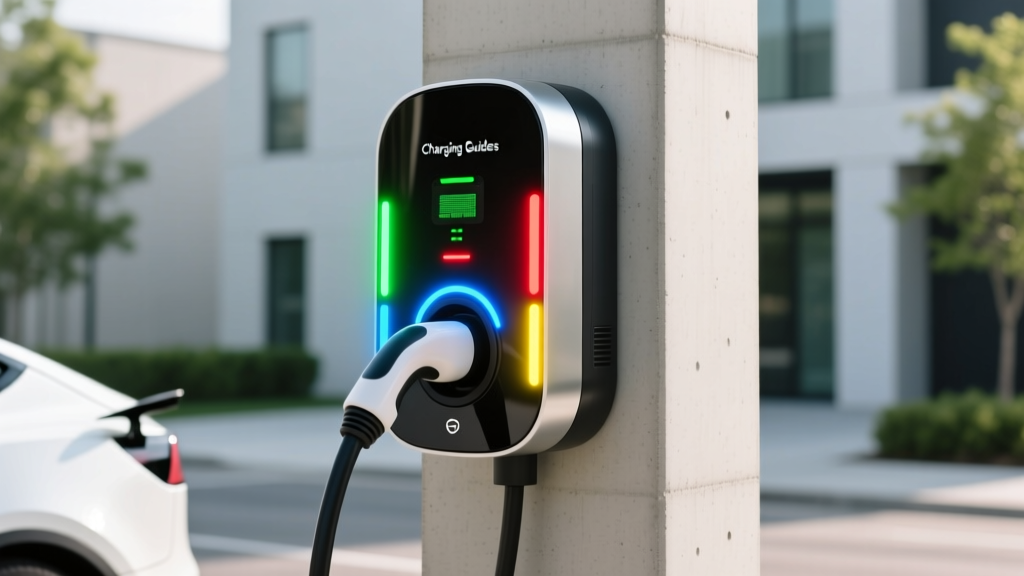
There is no universal standard for charger indicator colors, but most manufacturers and networks follow a loose convention. Here is a practical decoder ring for the most common LED colors you will encounter on home wall chargers and public stations:
| LED Color / Pattern | Typical Meaning | Where You Will See It |
|---|---|---|
| Solid Green | Charging complete / station ready | Home chargers (ChargePoint, Emporia, Wallbox); Electrify America, EVgo public stalls |
| Pulsing / Breathing Green | Actively charging | ChargePoint Home Flex, Tesla Wall Connector (green ring), many public networks |
| Solid Blue | Standby / plugged in but not yet charging (often waiting for vehicle handshake or schedule) | Wallbox Pulsar Plus, some ChargePoint units, Electrify America idle |
| Pulsing Blue | Charging in progress (some brands use blue instead of green) | Emporia Level 2, Grizzl-E smart mode, some EVgo stations |
| Amber / Yellow (solid or blinking) | Warning — reduced power, high temperature, or firmware update in progress | Most home chargers; Electrify America (reduced-power mode) |
| Red (solid) | Fault / error — charger needs attention, ground fault, or overcurrent event | All networks — do not use; report to network or check breaker |
| Red (blinking) | Critical fault — GFCI trip, emergency stop, or communication failure | All networks — reset breaker or contact support |
| White (solid or pulsing) | Powered on / Wi-Fi connected / firmware up to date | Tesla Wall Connector, ChargePoint Home Flex (status ring) |
| Off / No Light | No power — check breaker, outlet, or network connectivity | All chargers |
Charging Levels: Speeds, kW, and Miles Added Per Hour
Understanding charger colors is only useful if you also understand what is actually happening electrically. The most critical distinction in EV charging is between kW (kilowatts), which measures power — the rate at which energy flows — and kWh (kilowatt-hours), which measures energy — the total amount stored in your battery. Think of kW as the width of a pipe and kWh as the size of the tank you are filling.
Here are the three charging levels every EV owner needs to know:
| Level | Voltage | Max Power (kW) | Miles of Range Added Per Hour | Typical Use Case |
|---|---|---|---|---|
| Level 1 | 120V AC | 1.4–1.9 kW | 3–5 miles/hr | Emergency / overnight top-off for short commutes; PHEVs with small batteries |
| Level 2 | 240V AC | 3.3–19.2 kW | 12–75 miles/hr | Primary home charging; workplace; destination charging (hotels, malls) |
| DC Fast Charging (Level 3) | 400–900V DC | 50–350+ kW | 150–1,200+ miles/hr (peak) | Road trips; rapid top-ups; commercial fleet depots |
Charging Time Examples: 10–80% for Common Battery Sizes
EV batteries charge fastest between roughly 10% and 50% State of Charge (SoC), then taper significantly above 80% to protect cell longevity. This is the charge curve, and it is why manufacturers quote 10–80% times rather than 0–100%. Here are realistic examples:
| Vehicle (Example) | Usable Battery (kWh) | Level 2 at 11.5 kW | DC Fast (Peak kW) | 10–80% DC Fast Time |
|---|---|---|---|---|
| Tesla Model Y (2026) | ~75 kWh (NMC) | ~6.5 hours | 250 kW (V3 Supercharger) | ~25 minutes |
| Hyundai Ioniq 5 (2026) | ~77.4 kWh (NMC) | ~7 hours | 240 kW (800V architecture) | ~18 minutes |
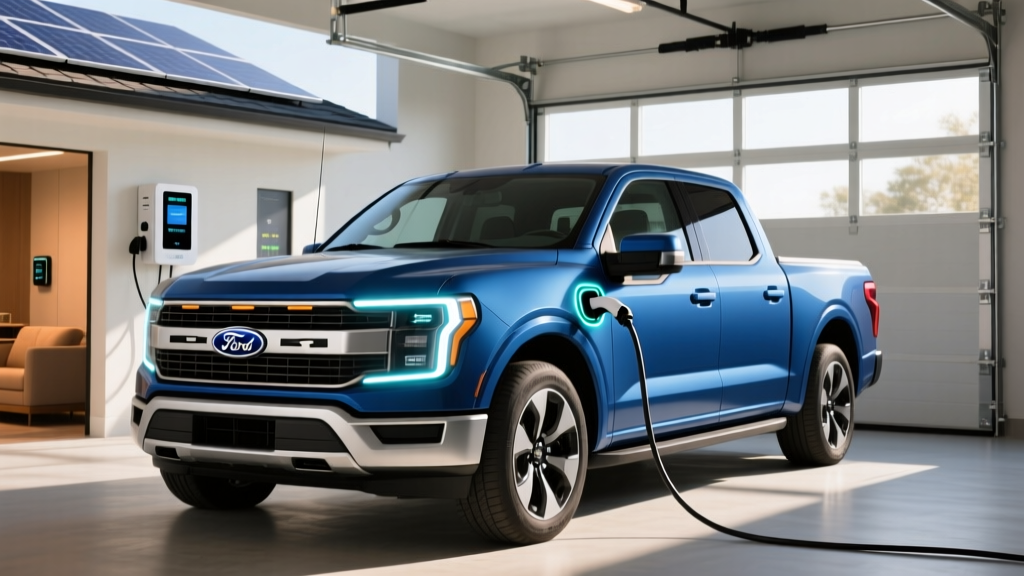
| Ford F-150 Lightning (2026) | ~131 kWh (extended, NMC) | ~11.5 hours | 150 kW | ~41 minutes |
| Chevrolet Equinox EV (2026) | ~85 kWh (NMC) | ~7.5 hours | 150 kW | ~30 minutes |
| Toyota RAV4 Prime PHEV (2026) | ~18.1 kWh (NMC) | ~2.5 hours | N/A (no DC fast) | N/A |
How Much Does It Cost to Install a Home EV Charger?
This is the question every prospective EV buyer asks, and the honest answer is: it depends heavily on your home's electrical panel. The total cost breaks down into equipment, electrician labor, permits, and — the wildcard — a potential panel upgrade.
| Cost Component | Low End | High End | Notes |
|---|---|---|---|
| Level 2 Charger (hardware) | $350 | $750 | Smart Wi-Fi chargers (Emporia, ChargePoint, Wallbox); dumb units start ~$250 |
| Electrician labor (standard install) | $400 | $1,200 | Assumes panel has capacity and charger is within 20–40 ft of panel |
| Permit & inspection | $50 | $250 | Varies by municipality; some jurisdictions waive for EV circuits |
| Conduit / wiring materials | $100 | $400 | Longer runs, outdoor conduit, or attic crawls increase cost |
| Electrical panel upgrade (200A) | $1,500 | $4,000 | Required if existing panel (100A or older) lacks capacity for a 40–60A dedicated circuit |
| Total (no panel upgrade) | $900 | $2,600 | Most homes with 200A service fall in this range |
| Total (with panel upgrade) | $2,400 | $6,600 | Older homes (pre-2000) with 100A or 150A panels |
Electrical Requirements for a Level 2 Home Charger
For a typical 48A Level 2 charger (the most common residential spec), your electrician will need:
- Voltage: 240V (split-phase, standard US residential)
- Circuit breaker: 60A dedicated (double-pole)
- Wire gauge: 6 AWG copper (THHN in conduit) or 4 AWG aluminum for longer runs
- Receptacle: NEMA 14-50 (if using a plug-in charger) or hardwired connection (preferred for 48A+ units — many jurisdictions now require hardwiring for circuits above 40A per NEC 2023/2026 updates)
- GFCI protection: Required for outdoor receptacles; hardwired units typically have built-in ground-fault protection
- Outdoor rating: NEMA 4 or NEMA 4X enclosure if mounted outside; all major chargers (ChargePoint, Wallbox, Emporia, Tesla) carry outdoor ratings
Which Connector and Charger Is Compatible with My EV?
The connector landscape shifted dramatically between 2023 and 2026. Tesla opened its Supercharger network to non-Tesla vehicles via the NACS (North American Charging Standard) connector, and nearly every major automaker — Ford, GM, Rivian, Volvo, Polestar, Hyundai, Kia, BMW, Mercedes — adopted NACS for new vehicles starting in the 2025–2026 model years. The legacy CCS1 connector is still found on vehicles sold through 2024, and CHAdeMO is limited to the Nissan Leaf (discontinued in the US after 2025).
| Connector | Brands Using It (2026 Models) | DC Fast Availability | Adapter Needed? |
|---|---|---|---|
| NACS (Tesla) | Tesla (all), Ford (2025+), GM (2025+), Rivian (2025+), Hyundai/Kia (2026+), Volvo/Polestar, BMW, Mercedes | Tesla Supercharger network (19,000+ US stalls), Electrify America (new stalls), many independents | CCS-to-NACS adapters available from Tesla ($195) and third parties for older CCS vehicles |
| CCS1 | VW ID.4 (2024 and earlier), Hyundai Ioniq 5 (2024 and earlier), Kia EV6 (2024 and earlier), BMW i4 (2024 and earlier), legacy models | Electrify America, EVgo, ChargePoint, Ionity (EU) | NACS-to-CCS adapters for accessing Tesla Superchargers (Ford/GM provide complimentary adapters to owners) |
| CHAdeMO | Nissan Leaf (discontinued US after 2025), Mitsubishi Outlander PHEV (older) | Limited and shrinking — mostly legacy Electrify America and EVgo stalls | No practical adapter to NACS or CCS; CHAdeMO owners rely on remaining public infrastructure |
How Much Does EV Charging Cost Per Mile vs. Gas?
The economics of EV charging depend on where and when you charge. Here is a realistic breakdown for a mid-size EV crossover averaging 3.5 mi/kWh (similar to a 2026 Tesla Model Y or Hyundai Ioniq 5):
| Charging Scenario | Cost per kWh | Cost per Mile | Annual Cost (12,000 mi) |
|---|---|---|---|
| Home — off-peak utility rate (overnight) | $0.08–$0.14 | $0.02–$0.04 | $240–$480 |
| Home — standard residential rate | $0.14–$0.22 | $0.04–$0.06 | $480–$720 |
| Public Level 2 (workplace, mall, ChargePoint) | $0.20–$0.40 | $0.06–$0.11 | $720–$1,320 |
| DC Fast Charging (Electrify America, EVgo, Tesla) | $0.30–$0.55 | $0.09–$0.16 | $1,080–$1,920 |
| Gasoline car (27 MPG avg, $3.40/gal) | — | $0.13 | $1,560 |
The data is clear: home charging at off-peak rates is 3–6x cheaper per mile than gasoline. Even exclusive DC fast charging is roughly cost-competitive with gas, and most EV owners do 80–90% of their charging at home. According to fueleconomy.gov, the average EV driver who charges primarily at home saves $800–$1,200 annually on fuel compared to a comparable gas vehicle.
For a more personalized estimate, use the DOE's EV cost calculator which factors in your local electricity rate and vehicle efficiency.
Best Home EV Chargers for 2026: Equipment Recommendations
After testing and tracking reliability data across the major home Level 2 chargers available in 2026, here are our top picks based on power output, build quality, smart features, connector compatibility, and price:
Emporia Vue Level 2 — Best Value
- Power: 48A / 11.5 kW (240V)
- Connector: J1772 (NACS adapter included in 2026 kit)
- Cable length: 24 ft
- Smart features: Wi-Fi, app scheduling, energy monitoring via Emporia Vue panel integration, solar-aware charging
- Price: ~$399
- Best for: Budget-conscious buyers who want full smart features and solar integration
ChargePoint Home Flex — Best All-Around
- Power: Up to 50A / 12 kW (configurable 16–50A)
- Connector: J1772 or NACS (NACS model available 2025+)
- Cable length: 23 ft
- Smart features: Wi-Fi, Alexa/Google Home, ChargePoint app with detailed session data, flexible amperage for older panels
- Price: ~$549–$649
- Best for: Buyers who want a proven, flexible unit that can be dialed down to match a 40A circuit if panel capacity is limited
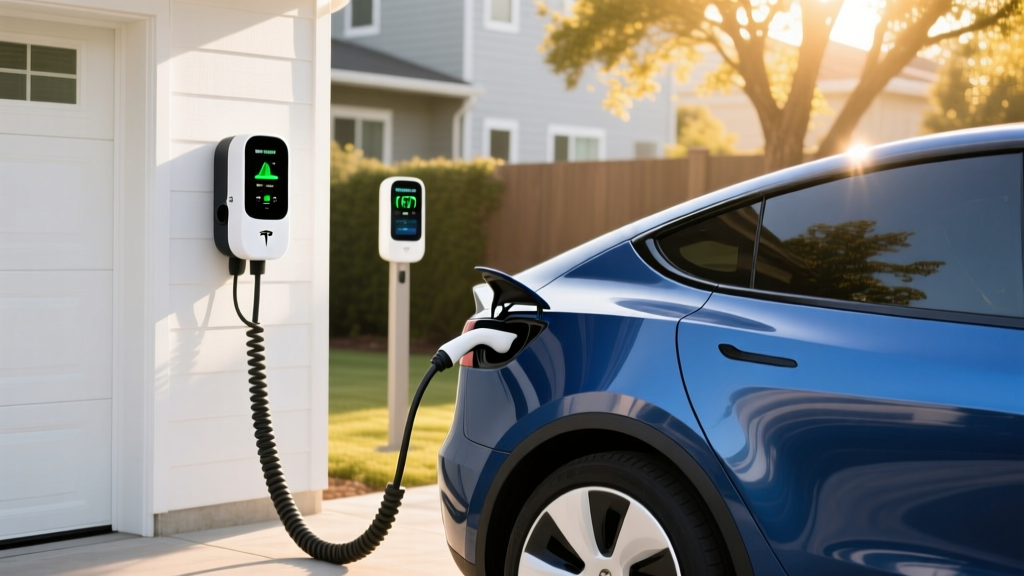
Tesla Wall Connector — Best for Tesla / NACS Owners
- Power: 48A / 11.5 kW (240V)
- Connector: NACS native (J1772 adapter available)
- Cable length: 24 ft
- Smart features: Wi-Fi, power sharing (link up to 6 units on one circuit), OTA updates, integrated cable management
- Price: ~$475
- Best for: Tesla owners or anyone with a NACS-equipped EV who values clean design and power sharing for multi-EV garages
Wallbox Pulsar Plus — Best Compact / Outdoor
- Power: 40A / 9.6 kW (240V)
- Connector: J1772 (NACS version shipping 2026)
- Cable length: 25 ft
- Smart features: Wi-Fi + Bluetooth, Power Boost (dynamic load balancing with your panel), myWallbox app, Eco-Smart solar mode
- Price: ~$499
- Best for: Tight garage spaces, outdoor installs (NEMA 4 rated), and homes where load balancing is critical to avoid a panel upgrade
Safety, Code, and Installation Best Practices
EV charging involves sustained high-current draw — your charger will pull near-maximum amperage for hours at a time, which is a fundamentally different load profile than a dryer or oven that cycles on and off. This makes proper installation non-negotiable.
- Dedicated circuit: Your Level 2 charger must be on its own dedicated double-pole breaker. Never share a circuit with other appliances.
- Hardwired vs. plug-in: Hardwired installations are preferred for 48A+ chargers. NEC 2023 and most 2026 local adoptions require GFCI breakers for receptacles, which can cause nuisance tripping with EV chargers (the charger has its own internal GFCI). Hardwiring avoids this problem entirely.
- Outdoor rating: If your charger is mounted outside, ensure it carries a NEMA 4 (splash-proof) or NEMA 4X (corrosion-resistant) rating. All chargers recommended above meet this standard.
- Wire sizing: Undersized wire causes heat buildup and fire risk. Your electrician should follow NEC Table 310.16 and account for ambient temperature and conduit fill. For a 60A circuit, 6 AWG copper is the minimum; 4 AWG is recommended for runs over 50 feet.
- Permits: Most jurisdictions require an electrical permit for a new 240V circuit. The inspection ensures proper wire gauge, breaker sizing, grounding, and GFCI compliance. Skipping the permit risks insurance denial in the event of a fire.
- Utility rebates: Many utilities offer $250–$1,000 rebates for home charger installation, sometimes covering the entire cost of the hardware. Check with your local utility before purchasing. Some programs require a specific charger model or a time-of-use rate plan enrollment.
FAQ: EV Charger Colors, Costs, and Setup
How much does it cost to install a home EV charger?
Expect $900–$2,600 for a standard Level 2 installation in a home with adequate 200A panel capacity. If your home needs a panel upgrade (common in pre-2000 homes with 100A service), total costs can reach $2,400–$6,600. The charger hardware itself runs $350–$750 for a quality smart unit.
How fast will each charging level add range?
Level 1 (120V) adds 3–5 miles per hour. Level 2 (240V) adds 12–75 miles per hour depending on amperage (16A to 80A). DC fast charging adds 150–1,200+ miles per hour at peak rates, though the charge curve tapers significantly above 80% SoC. For a 75 kWh battery on a 48A Level 2 charger, expect a full 10–80% charge in roughly 5–7 hours.
Which connector/charger is compatible with my EV?
For 2026 model-year vehicles, NACS is the dominant standard — Tesla, Ford, GM, Rivian, Hyundai, Kia, Volvo, BMW, and Mercedes all use it. Older CCS1 vehicles (2024 and earlier) can use adapters to access NACS chargers. CHAdeMO is limited to the discontinued Nissan Leaf. For home Level 2, all EVs accept J1772 or NACS (which supports J1772 AC signaling).
How much does charging cost per mile vs. gas?
Home charging at off-peak rates costs $0.02–$0.04 per mile — roughly 3–4x cheaper than a 27 MPG gas car at $3.40/gallon ($0.13/mile). Even exclusive DC fast charging ($0.09–$0.16/mile) is cost-competitive with gasoline. Most EV owners who charge at home save $800–$1,200 per year on fuel.
What electrical upgrades might I need?
The most common upgrade is a 200A electrical panel replacement ($1,500–$4,000) if your existing panel lacks capacity for a dedicated 60A circuit. Other potential needs include: new conduit runs for garages far from the panel, a utility meter upgrade (rare), or enrollment in a time-of-use rate plan to optimize charging costs. Always request a load calculation from your electrician before proceeding.
Why does my charger LED blink amber or yellow?
Amber or yellow typically indicates a warning condition: reduced charging power due to high ambient temperature, a firmware update in progress, or a minor communication fault between the charger and vehicle. Check the charger's app for a specific error code. If the amber light persists, try unplugging and re-plugging the connector, or power-cycle the charger at the breaker. A solid or blinking red light indicates a more serious fault requiring professional attention.