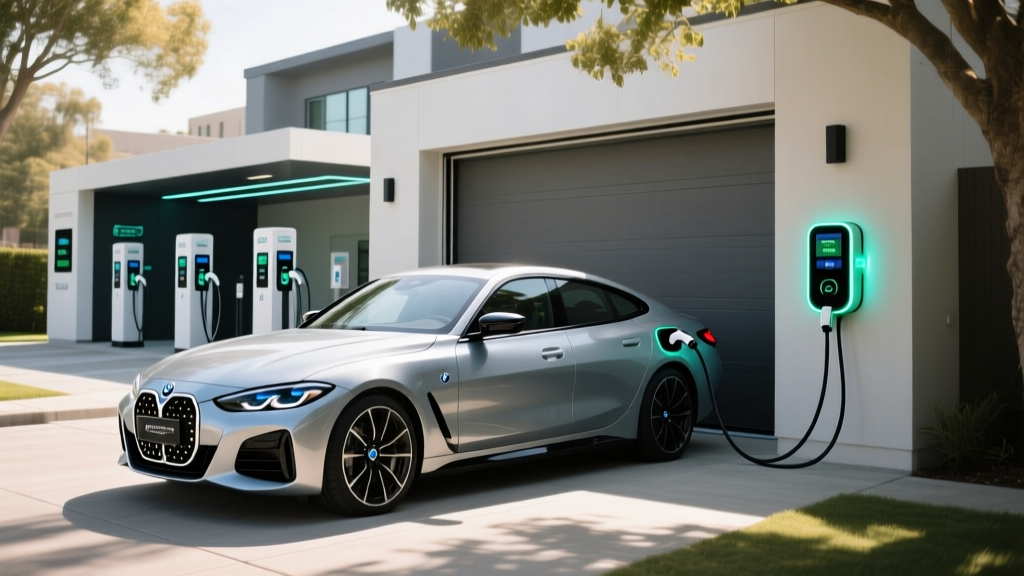
If you're researching your first EV charger — whether for a new electric vehicle or to upgrade an existing setup — the terminology alone can feel like a barrier. Kilowatts, kilowatt-hours, NACS, CCS1, circuit amperage... it's a lot. This guide cuts through the noise with exact numbers: charging speeds, real installation costs, connector compatibility, and specific equipment recommendations that work in 2026.
One distinction we need to establish immediately, because it's the single most common confusion in EV charging: kW (kilowatts) measures power — the rate at which energy flows into your battery, like water pressure from a hose. kWh (kilowatt-hours) measures energy — the total capacity of your battery, like the size of the tank. A 10 kW charger delivers energy at a 10 kW rate; a 75 kWh battery holds 75 kWh of energy total. We'll use both correctly throughout this guide.
Charging Levels Explained: Speeds in kW and Miles Per Hour
Every EV sold in the US charges at one of three levels. Understanding the speed difference between them is the foundation of a practical charging strategy — especially if you're deciding whether a simple wall outlet will suffice or whether you need a dedicated 240V circuit.
| Level | Voltage | Power (kW) | Miles of Range Per Hour | Typical Use |
|---|---|---|---|---|
| Level 1 | 120V AC | 1.0–1.9 kW | 3–5 mi/hr | Overnight trickle; PHEVs; low-mileage drivers |
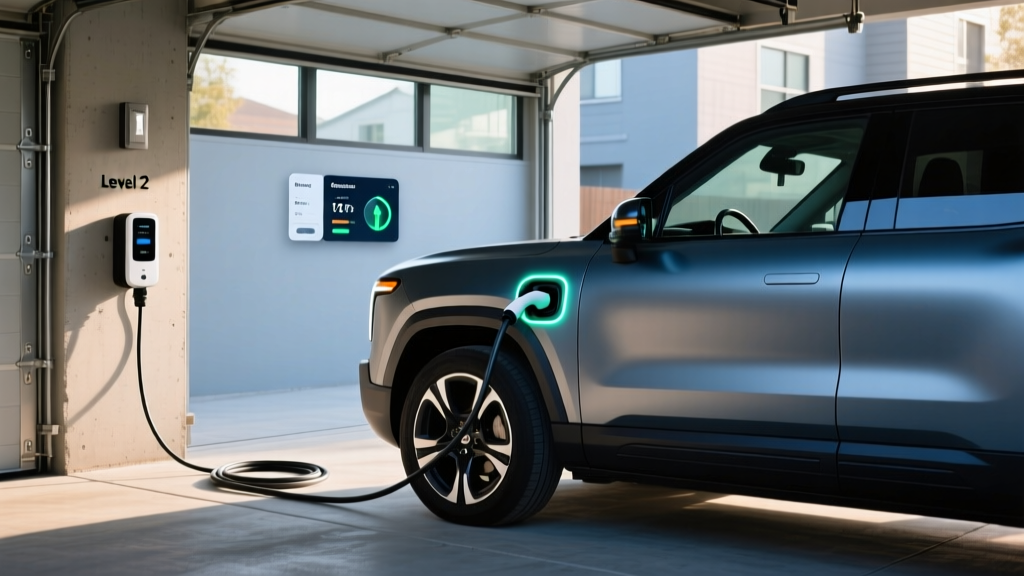
| Level 2 | 240V AC | 3.3–19.2 kW | 12–75 mi/hr | Home daily charging; workplace; destinations |
| DC Fast Charge | 400–900V DC | 50–350+ kW | 150–1,200+ mi/hr (peak) | Road trips; rapid top-ups; commercial fleets |
A few real-world caveats matter here. Level 1 charging on a standard 120V outlet delivers roughly 1.4 kW continuously — enough to add about 40–50 miles overnight (10–12 hours). That's viable for plug-in hybrids with 25–40 miles of electric range, or for BEV owners who drive under 30 miles daily. For anyone with a full battery-electric vehicle and a typical commute, Level 1 won't replenish a full day's driving in a single night.
Level 2 is where most EV owners live day-to-day. A 48-amp (11.5 kW) home charger adds roughly 35–45 miles of range per hour, meaning a 75 kWh battery charging from 10% to 80% takes about 5–6 hours — perfectly suited for overnight replenishment. Higher-amperage units at 80 amps (19.2 kW) cut that time significantly, but require heavier wiring and a 100-amp dedicated circuit.
DC fast charging operates on an entirely different electrical principle: it bypasses the vehicle's onboard AC-to-DC converter and feeds direct current straight to the battery. Speeds are dramatic but not sustained — a vehicle advertising a 250 kW peak charge rate might only hold that peak for 2–4 minutes before the charge curve tapers to protect battery health. Expect a realistic 10–80% session on a 350 kW-capable vehicle to take 18–25 minutes under ideal conditions, and longer in cold weather or at crowded stations.
How Much Does It Cost to Install a Home EV Charger?
Home Level 2 installation costs vary enormously depending on your electrical panel's capacity, the distance from panel to charger location, and local permit requirements. Below is a realistic breakdown based on 2026 electrician rates across US metro areas.
| Component | Typical Range | Notes |
|---|---|---|
| Level 2 charger hardware | $350–$750 | 40A–48A smart Wi-Fi-enabled units |
| Electrician labor (standard install) | $400–$1,500 | Panel to charger: under 20 ft, same wall or garage |
| Electrical permit | $50–$250 | Varies by municipality; some jurisdictions waive for EV |
| Conduit and wiring materials | $100–$400 | 6 AWG copper for 48A circuits; longer runs cost more |
| Total — standard install | $900–$2,900 | Most homes with 200A panel and short wire runs |
| Panel upgrade (100A → 200A) | $1,500–$4,000+ | Required for older homes with insufficient capacity |
| Total — with panel upgrade | $2,400–$6,900+ | Significant but adds home value; consider long-term |
The single biggest cost variable is whether your existing electrical panel can handle the additional load. A 48-amp EV charger requires a 60-amp dedicated circuit (the National Electrical Code requires circuits to be rated at 125% of continuous load). If your home has a 200-amp main panel with available capacity, the installation is straightforward. If you're in an older home with a 100-amp panel, or if your panel is already near capacity with HVAC, electric range, and dryer loads, an upgrade becomes necessary.
A licensed electrician will perform a load calculation before quoting. Some utilities and states offer rebates that offset panel upgrades — check with your local provider. The IRS §30D clean vehicle credit does not cover charger installation directly, but the separate Residential Clean Energy Credit (25C) has historically covered some energy-related home improvements; consult a tax professional for current-year eligibility.
Electrical Requirements by Charger Amperage
Match your charger's amperage to your available circuit capacity. Here are the electrical requirements for common home charger configurations:
- 32-amp charger (7.7 kW): Requires a 40-amp dedicated circuit, 8 AWG wire. Suitable for most 100-amp panels.
- 40-amp charger (9.6 kW): Requires a 50-amp dedicated circuit, 6 AWG wire. Common residential sweet spot.
- 48-amp charger (11.5 kW): Requires a 60-amp dedicated circuit, 6 AWG or 4 AWG wire depending on run length. Most popular for new BEV owners.
- 80-amp charger (19.2 kW): Requires a 100-amp dedicated circuit, 3 AWG or 2 AWG wire. Only for homes with 200A+ panels and high-capacity EVs.
Connector Compatibility: NACS, CCS1, and CHAdeMO
The connector landscape shifted dramatically between 2023 and 2026. Here's where things stand now and what it means for your charger purchase.
| Connector | Brands Using It (Native) | Status in 2026 |
|---|---|---|
| NACS (J3400) | Tesla, Ford, GM, Rivian, Volvo, Polestar, Mercedes-Benz, Nissan, Honda, Fisker, BMW, Hyundai/Kia (select) | Adopted by most major OEMs; becoming the US standard |
| CCS1 | Legacy VW/Audi ID.4/e-tron, Stellantis, some Hyundai/Kia models | Phasing out on new models; supported at most DC stations via adapter or dual-cable dispensers |
| CHAdeMO | Nissan Leaf (prior gen); Mitsubishi Outlander PHEV (older) | Effectively discontinued for new vehicles; limited station support |
For home Level 2 charging, the J1772 connector remains the universal AC standard — even vehicles with NACS charge ports accept J1772 AC power through a simple adapter (included with most NACS-equipped vehicles). So any Level 2 home charger with a J1772 plug will work with virtually every EV on the road.
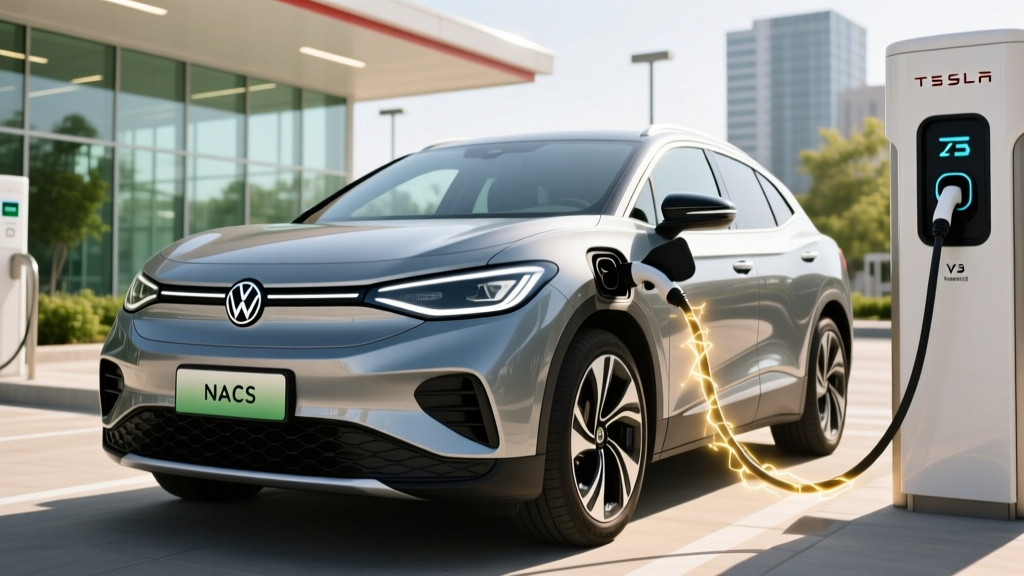
For DC fast charging, however, the connector matters more. If you're buying a Ford, GM, Rivian, or Tesla in 2026, your vehicle has a NACS port and can access Tesla Superchargers directly. If you're driving a CCS1-equipped vehicle, you'll need a CCS-to-NACS adapter (roughly $150–$250) to access the Supercharger network, which remains the largest and most reliable DC fast-charging network in the US.
Cost to Charge: Home vs. Public vs. Gas
The economic case for EVs hinges on fuel cost. Here's a realistic comparison using 2026 electricity and gasoline prices.
| Scenario | Rate | Cost Per Mile (3 mi/kWh EV) | Annual Cost (12,000 mi) |
|---|---|---|---|
| Home charging (national avg) | $0.16/kWh | $0.053 | $640 |
| Home off-peak (time-of-use) | $0.08–$0.12/kWh | $0.027–$0.040 | $320–$480 |
| Public Level 2 (network) | $0.25–$0.49/kWh | $0.083–$0.163 | $1,000–$1,960 |
| DC fast charging (EA, EVgo) | $0.35–$0.55/kWh | $0.117–$0.183 | $1,400–$2,200 |
| Gasoline (25 MPG avg, $3.40/gal) | $3.40/gal | $0.136 | $1,632 |
The data is clear: home charging, especially on a time-of-use plan with off-peak rates, delivers a per-mile cost roughly 60–75% lower than gasoline. Public DC fast charging, however, can match or exceed gasoline costs depending on the network and your region. The economic advantage of EV ownership depends heavily on your ability to charge at home.
Efficiency varies by vehicle. A Hyundai Ioniq 6 achieves roughly 4.0–4.5 miles per kWh on the highway, making its per-mile cost even lower. A Ford F-150 Lightning or Rivian R1T may deliver 2.0–2.5 miles per kWh, narrowing the gap with gasoline. Always check the EPA's fueleconomy.gov for your specific vehicle's kWh/100mi rating.
Charging Time Examples: 10–80% by Battery Size
How long does a charge session actually take? Here are real-world estimates for common battery sizes at various power levels. We use 10–80% because charging above 80% slows dramatically due to battery management system (BMS) tapering — most EV owners rarely DC-charge beyond 80% on road trips.
| Battery Size | Level 2 (11.5 kW / 48A) | DC Fast (150 kW peak) | DC Fast (250 kW peak) | DC Fast (350 kW peak) |
|---|---|---|---|---|
| 60 kWh (e.g., base Model 3, Chevy Bolt) | ~3.6 hours | ~22–28 min | ~18–22 min | N/A (vehicle limited) |
| 75 kWh (e.g., Model Y LR, Ioniq 5) | ~4.5 hours | ~26–34 min | ~18–25 min | ~15–20 min* |
| 100 kWh (e.g., F-150 Lightning Ext, Lucid Air) | ~6.1 hours | ~35–45 min | ~24–32 min | ~18–25 min* |
*Only vehicles with 800V+ architecture (Hyundai Ioniq 5/6, Kia EV6/EV9, Porsche Taycan, Lucid Air) can sustain charge rates above 250 kW. Vehicles on 400V platforms will not benefit from 350 kW stations beyond their peak acceptance rate.
Cold weather impact is significant: battery preconditioning (warming the pack before charging) can reduce 10–80% times by 20–40% in sub-40°F conditions. Vehicles with heat pumps and active thermal management — including all Tesla models, Hyundai/Kia E-GMP vehicles, and GM Ultium platforms — handle cold charging better than passively cooled packs.
Equipment Picks: Top Home Level 2 Chargers for 2026
These recommendations are based on sustained reliability, smart features, connector compatibility, and value. All units listed are hardwired or NEMA 14-50 plug-in capable, Wi-Fi enabled, and UL-listed for safety.
ChargePoint Home Flex
- Power: Up to 12 kW (50A) — adjustable down to 16A, 24A, 32A, or 40A
- Connector: J1772 (works with all EVs; NACS vehicles use included adapter)
- Cable length: 23 feet
- Smart features: Wi-Fi, ChargePoint app scheduling, Alexa integration, energy tracking
- Price: ~$550–$650
- Best for: Versatility — adjustable amperage lets you match your circuit without buying a new unit if you move
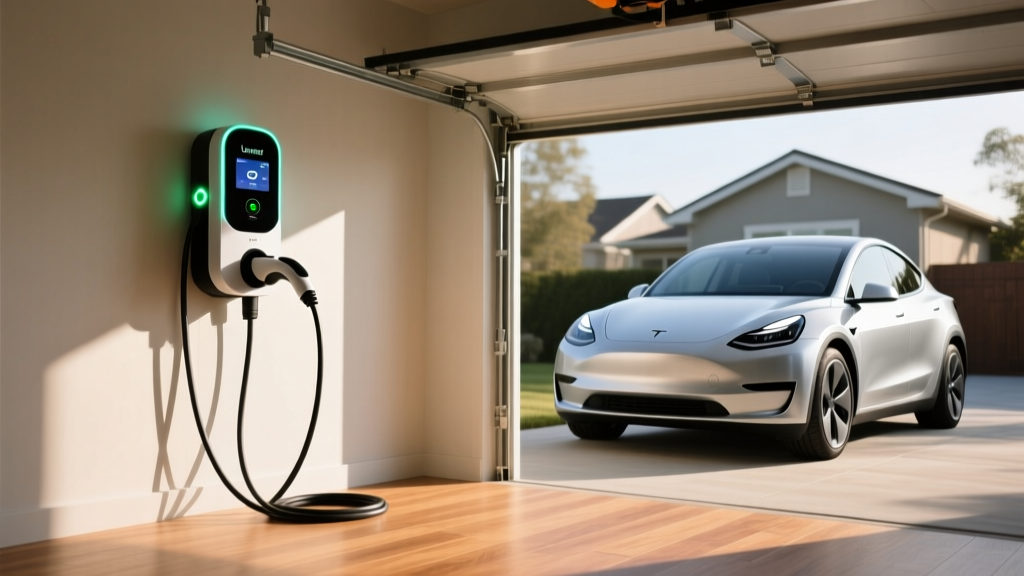
Wall Connector (Tesla, 3rd Gen)
- Power: Up to 11.5 kW (48A)
- Connector: NACS native (J1772 adapter available for non-Tesla EVs)
- Cable length: 24 feet
- Smart features: Wi-Fi, over-the-air updates, power sharing (link multiple units on one circuit), Tesla app
- Price: ~$420–$475
- Best for: Tesla owners and households with NACS-equipped vehicles; best value per kW
Emporia Level 2 EV Charger
- Power: Up to 11.5 kW (48A)
- Connector: J1772
- Cable length: 24 feet
- Smart features: Wi-Fi, Emporia energy monitoring integration, solar-aware charging, load management
- Price: ~$350–$400
- Best for: Budget-conscious buyers and homes with solar panels — pairs with Emporia Vue energy monitor for solar-only charging
Enel X JuiceBox 48
- Power: 11.5 kW (48A)
- Connector: J1772
- Cable length: 25 feet
- Smart features: Wi-Fi, JuiceNet app, utility demand-response program compatibility, scheduling
- Price: ~$500–$600
- Best for: Utility program participants — many utilities offer rebates for JuiceBox enrollment in load-management programs
Safety, Electrical Code, and Installation Best Practices
EV charging is a continuous high-amperage load — your charger will draw near-maximum current for 6–10 hours straight, night after night. This is fundamentally different from intermittent loads like a dryer or oven. Proper installation isn't optional; it's a fire-safety requirement.
Critical Code and Safety Requirements
- Dedicated circuit: Your Level 2 charger must be on its own dedicated circuit — it cannot share with other outlets or appliances. This is NEC Article 625.
- GFCI protection: The 2020 and 2023 National Electrical Code require GFCI (ground-fault circuit interrupter) protection for EV charging circuits. Some chargers have built-in GFCI; confirm with your electrician to avoid nuisance tripping from double-GFCI setups.
- Outdoor rating: If your charger is mounted outdoors, it must be rated NEMA 4 (weatherproof). All chargers listed above carry NEMA 4 ratings, but verify connector holster placement to prevent water ingress.
- Wire gauge: Undersized wire causes overheating. For 48A circuits, 6 AWG copper is standard for runs under 50 feet; 4 AWG for longer runs. Your electrician will calculate voltage drop.
- Hardwired vs. plug-in: Hardwired installations (no plug) are preferred for circuits above 40A. NEMA 14-50 receptacles are rated for 50A but continuous EV loads at 40A can stress the connection over time. Many electricians now recommend hardwiring all 48A+ chargers.
- Permit and inspection: Most jurisdictions require an electrical permit and post-installation inspection. Skipping this can void your homeowner's insurance coverage for electrical fires. Permit costs are typically $50–$250.
One often-overlooked consideration: if your garage has a gas water heater or furnace, the charger must be mounted at least 18 inches above the floor (or be sealed/spark-resistant) to comply with NEC requirements around potential ignition sources in areas where flammable vapors may be present.
Frequently Asked Questions
How much does it cost to install a home EV charger?
A standard Level 2 home charger installation — including a $400–$650 charger, electrician labor, permit, and wiring — typically costs $900–$2,900 for homes with a 200-amp panel and short wire runs. If your home needs a panel upgrade from 100A to 200A, add $1,500–$4,000+ to the total. Always get a load calculation from a licensed electrician before committing.
How fast will each charging level add range?
Level 1 (120V) adds 3–5 miles of range per hour. Level 2 (240V, 48A) adds 35–45 miles per hour for most vehicles. DC fast charging adds 150–1,200+ miles per hour at peak rate, but tapers significantly after 80% state of charge. Real-world DC sessions average roughly half the advertised peak rate across a 10–80% session.
Which connector and charger is compatible with my EV?
For home Level 2 charging, any J1772 connector charger works with every EV — NACS-equipped vehicles use a simple adapter. For DC fast charging, check your vehicle's charge port: NACS is now standard on Tesla, Ford, GM, Rivian, and most new 2025–2026 models. CCS1 remains on some VW, Stellantis, and older models. CHAdeMO is effectively discontinued.
How much does charging cost per mile compared to gas?
Home charging at the national average electricity rate of $0.16/kWh costs roughly $0.05 per mile in an average-efficiency EV — about one-third the cost of gasoline at $3.40/gallon in a 25 MPG vehicle. Off-peak home rates drop this to $0.03–$0.04/mile. Public DC fast charging at $0.40–$0.55/kWh can cost $0.13–$0.18/mile, matching or exceeding gasoline.
What electrical upgrades might I need?
The most common upgrade is a panel capacity increase from 100A to 200A ($1,500–$4,000+), required when your existing panel can't accommodate a new 60A dedicated circuit. Other potential needs: a new sub-panel if your charger is far from the main panel, conduit runs through finished walls or underground, or a utility service upgrade if your home's incoming service is below 200A. A licensed electrician's load calculation will identify all requirements before work begins.