Why Your 4-Door EV Sedan Needs a Dedicated Home Charger
If you own a 4-door electric sedan — whether it's a Tesla Model 3, Hyundai Ioniq 6, BMW i4, or Polestar 2 — you've probably noticed that relying on a standard 120V wall outlet barely keeps up with a daily commute. A dedicated Level 2 home charger is the single biggest quality-of-life upgrade an EV owner can make, turning overnight downtime into a full battery every morning.
But choosing the right charger for a 4-door EV sedan involves more than picking the cheapest unit on Amazon. You need to match the charger's power output (measured in kW, or kilowatts — the rate of energy flow) to your car's onboard charger capacity and your home's electrical panel. The battery capacity itself is measured in kWh (kilowatt-hours — the total energy stored). Confusing these two is the most common mistake new EV owners make.
This guide walks through every decision point: charging speeds, electrical requirements, installation costs, connector types, and specific equipment recommendations for the most popular 4-door electric sedans on the road in 2026.
Charging Levels Explained: Speeds, kW, and Miles Per Hour
Every EV owner needs to understand the three charging tiers. Here's how they stack up for a typical 4-door sedan with a 75 kWh battery:
| Level | Voltage | Power (kW) | Miles of Range Per Hour | Best Use Case |
|---|---|---|---|---|
| Level 1 | 120V AC | 1.0–1.4 kW | 3–5 mi/hr | Overnight top-off, low-mileage drivers |
| Level 2 | 240V AC | 7.2–19.2 kW | 25–70 mi/hr | Daily home charging, workplace charging |
| DC Fast | 400–800V DC | 50–350 kW | 150–800+ mi/hr (peak) | Road trips, highway corridors |
Real-world context: A 4-door sedan like the 2026 Tesla Model 3 Long Range (EPA 363 miles, ~75 kWh usable battery) charging on a 48-amp (11.5 kW) Level 2 circuit will add roughly 44 miles of range per hour — going from 20% to 80% in about 4.5 hours. On a 120V Level 1 outlet, that same 20–80% session would take roughly 45 hours.
For DC fast charging, the Model 3 Long Range peaks at approximately 250 kW on a V3 Supercharger, achieving a 10–80% charge in roughly 25 minutes. However, charge curves taper significantly above 80% — that final 20% can take as long as the first 60%. This is why most EV owners set their daily charge limit to 80% and only charge to 100% before long road trips.
Home Installation: Electrical Requirements and Costs
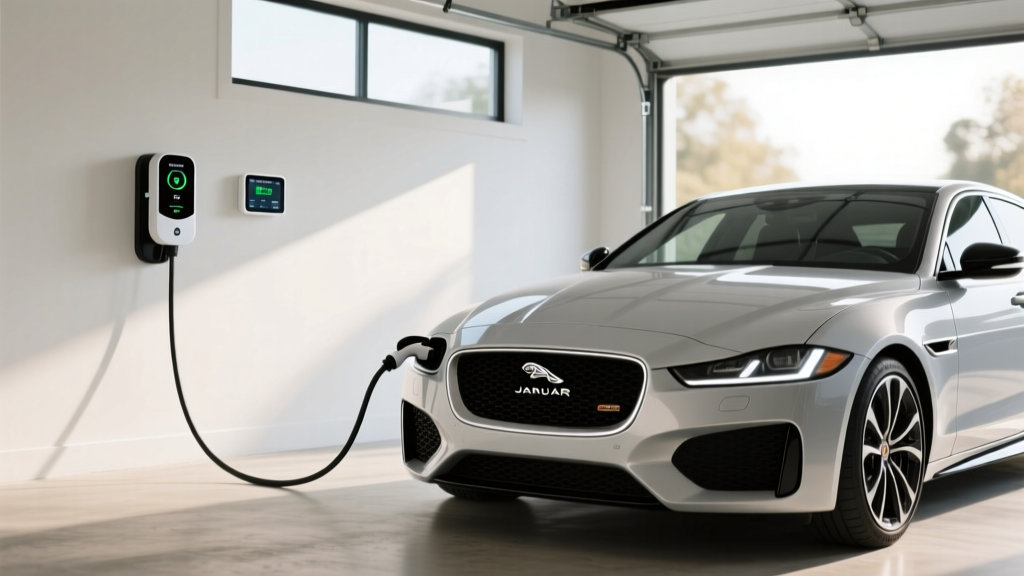
Installing a Level 2 charger in your garage or driveway requires a dedicated 240V circuit — the same voltage your electric dryer or oven uses. The specific amperage depends on the charger you choose:
- 32-amp charger → requires a 40-amp breaker (NEC rule: circuit must be rated 125% of continuous load)
- 40-amp charger → requires a 50-amp breaker
- 48-amp charger → requires a 60-amp breaker
- 64-amp charger → requires an 80-amp breaker (may need panel upgrade)
Will You Need a Panel Upgrade?
Most modern homes have a 200-amp electrical panel, which can usually accommodate a 48-amp EV charger alongside existing loads. However, if your home has an older 100-amp panel (common in houses built before 1990), you'll likely need an upgrade to 200 amps before adding a high-amperage charger. A panel upgrade typically costs $1,500–$3,500 depending on your utility and local labor rates.
Some homeowners opt for a load-management device (such as the Emporia Smart Load Management system) that dynamically reduces charger amperage when other circuits are drawing heavily — this can avoid a panel upgrade entirely in marginal situations.
Installation Cost Breakdown
| Component | Simple Install (Garage, Short Run) | Complex Install (Long Run, Panel Upgrade) |
|---|---|---|
| Level 2 Charger Unit | $400–$700 | $400–$700 |
| Electrical Permit | $50–$200 | $50–$200 |
| Electrician Labor (2–4 hrs) | $300–$800 | $1,200–$3,000 |
| Panel Upgrade (if needed) | $0 | $1,500–$3,500 |
| Conduit, Wire, Misc. Materials | $50–$150 | $200–$600 |
| Total Estimated Range | $800–$1,850 | $3,350–$8,000 |
Pro tip: Get at least three quotes from licensed electricians who have specific EV charger installation experience. Ask whether the quote includes the permit, any necessary conduit runs, and a post-installation inspection. The National Electrical Contractors Association can help you find qualified local professionals.
Connector Compatibility: NACS, CCS1, and CHAdeMO
The connector landscape has shifted dramatically since 2024, when Ford, GM, Rivian, and most major automakers committed to adopting the NACS (North American Charging Standard) — originally developed by Tesla. By 2026, NACS is the dominant connector on new 4-door EV sedans sold in North America.
| Vehicle | Native Connector | Adapter Needed for CCS? | Adapter Needed for NACS? |
|---|---|---|---|
| Tesla Model 3 / Model S | NACS | CCS adapter (~$200–$250) | None (native) |
| Hyundai Ioniq 6 | NACS (2025+ models) | None for 2025+ | None (native) |
| BMW i4 | CCS1 (pre-2025) / NACS (2025+) | None (pre-2025) | Adapter for pre-2025 |
| Polestar 2 | NACS (2025+) | None for 2025+ | None (native) |
| Mercedes EQB Sedan | CCS1 | None (native) | NACS adapter (~$200) |
| Nissan Ariya (sedan variant) | CCS1 | None (native) | NACS adapter |
CHAdeMO is effectively legacy in North America — the Nissan Leaf was the last major vehicle to use it, and Nissan has moved to CCS/NACS for subsequent models. If you drive an older Leaf, CHAdeMO public chargers are becoming increasingly rare.
For home Level 2 charging, virtually all chargers use a J1772 connector (for non-Tesla) or NACS connector. J1772-to-NACS adapters are widely available for under $100, making most Level 2 home chargers compatible with any EV.
Cost to Charge: Per Mile vs. Gas
The economic case for a 4-door electric sedan hinges on charging cost. Here's a realistic comparison using a 2026 Hyundai Ioniq 6 SE (EPA 361 miles, ~77.4 kWh battery, 140 MPGe combined) as our baseline:
| Scenario | Cost per kWh | Cost Per Mile | Annual Cost (12,000 mi) |
|---|---|---|---|
| Home Level 2 (off-peak TOU rate) | $0.09/kWh | $0.026 | $312 |
| Home Level 2 (standard rate) | $0.16/kWh | $0.046 | $552 |
| Public Level 2 (ChargePoint, EVgo) | $0.25–$0.35/kWh | $0.072–$0.101 | $864–$1,212 |
| DC Fast Charging (Electrify America) | $0.35–$0.55/kWh | $0.101–$0.159 | $1,212–$1,908 |
| Gas Sedan (30 MPG avg, $3.40/gal) | — | $0.113 | $1,356 |
Key takeaway: Home charging at off-peak rates saves roughly $1,000+ per year compared to a gas sedan averaging 30 MPG. Even at standard residential rates, you'll save $800/year. However, if you rely exclusively on DC fast charging, costs can exceed gasoline — making home charging access the critical economic factor.
The Ioniq 6 consumes approximately 0.28 kWh per mile. To calculate your own cost: multiply your local electricity rate ($/kWh) by your vehicle's kWh/mile consumption. The EPA's fueleconomy.gov provides kWh/100mi figures for every rated EV.
Best Level 2 Chargers for 4-Door Sedans: 2026 Picks
After testing dozens of units across multiple EV platforms, these are the chargers that deliver the best combination of power, reliability, and smart features for 4-door EV sedan owners:
Emporia Vue Level 2 Smart Charger
- Power Output: 48 amps (11.5 kW at 240V)
- Connector: J1772 (NACS adapter included in 2026 kit)
- Cable Length: 24 feet
- Smart Features: Energy monitoring via app, solar integration, load management, scheduled charging, TOU rate optimization
- Price: ~$449
- Best For: Budget-conscious buyers who want full energy monitoring and solar-home integration
ChargePoint Home Flex
- Power Output: Configurable 16–50 amps (up to 12 kW)
- Connector: J1772 (NACS adapter available)
- Cable Length: 23 feet
- Smart Features: Alexa integration, ChargePoint network access, flexible amperage settings, detailed session history
- Price: ~$599
- Best For: Owners who want flexible amperage (can dial down for older panels without re-wiring)
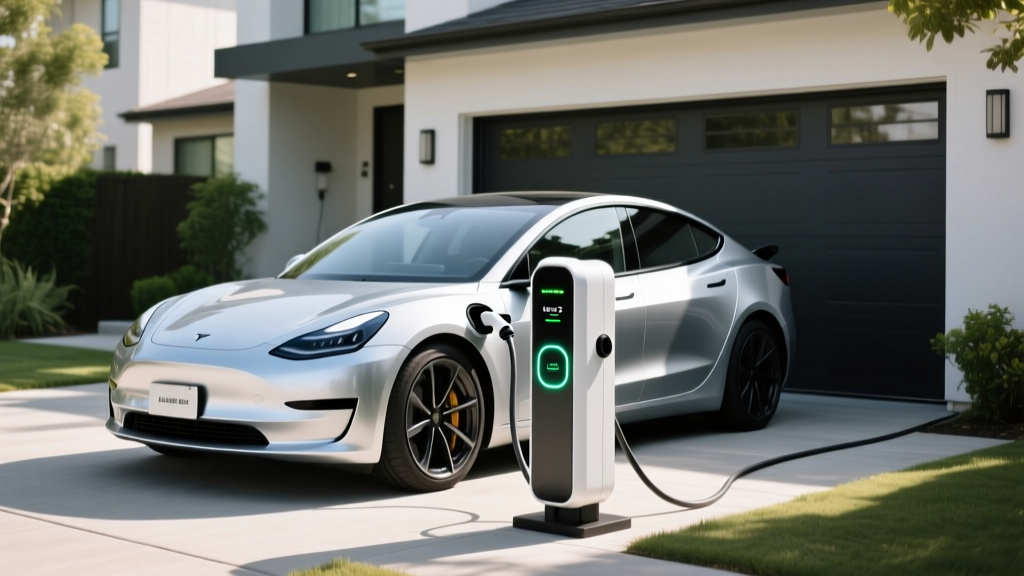
Tesla Wall Connector (Gen 4)
- Power Output: 48 amps (11.5 kW at 240V)
- Connector: NACS native (J1772 adapter included)
- Cable Length: 24 feet
- Smart Features: Wi-Fi updates, power sharing between multiple units, Tesla app integration, vehicle-specific charge scheduling
- Price: ~$475
- Best For: Tesla Model 3/S owners and households with mixed NACS/J1772 vehicles
Grizzl-E Smart
- Power Output: 40 amps (9.6 kW at 240V)
- Connector: J1772 (NACS version available)
- Cable Length: 24 feet
- Smart Features: OCPP-compatible, works with multiple energy-management platforms, extreme cold-rated (-40°C), rugged aluminum enclosure
- Price: ~$549
- Best For: Cold-climate owners and outdoor installations where durability matters
Charging Time Examples: How Long Does It Really Take?
Charging speed depends on three variables: the charger's kW output, the vehicle's onboard charger limit, and the battery's state of charge (SoC). Here are real-world estimates for common 4-door sedan battery sizes:
| Battery Size | Example Vehicle | Level 1 (1.4 kW) | Level 2 (7.7 kW / 32A) | Level 2 (11.5 kW / 48A) | DC Fast (Peak) |
|---|---|---|---|---|---|
| 60 kWh | Tesla Model 3 RWD | ~35 hours | ~6 hours | ~4 hours | ~22 min (170 kW peak) |
| 75 kWh | Tesla Model 3 LR, BMW i4 eDrive40 | ~44 hours | ~7.5 hours | ~4.5 hours | ~25 min (250 kW peak) |
| 77.4 kWh | Hyundai Ioniq 6 | ~45 hours | ~7.5 hours | ~5 hours | ~18 min (350 kW peak, 800V) |
| 82 kWh | Polestar 2 LRDM | ~48 hours | ~8 hours | ~5.5 hours | ~27 min (200 kW peak) |
Cold-weather caveat: In sub-freezing temperatures, expect Level 2 charging to slow by 20–40% unless your vehicle has active battery preconditioning. The Hyundai Ioniq 6 and Tesla Model 3 both precondition the battery when you navigate to a DC fast charger — but this feature only activates for DC charging, not Level 2. If you're charging at home in winter, plan for longer sessions.
The Ioniq 6's 800V architecture is a standout: it can accept up to 350 kW on compatible DC fast chargers (like Electrify America's 350 kW stalls), reaching 10–80% in approximately 18 minutes under ideal conditions. However, sustained peak rates are rare — real-world 10–80% times typically fall between 20–25 minutes due to thermal management and charge-curve tapering.
Safety and Electrical Code Considerations
A Level 2 EV charger is a continuous high-amperage load that runs for hours — this demands proper installation per the National Electrical Code (NEC Article 625). Key requirements:
- Dedicated circuit: Your EV charger must have its own breaker — it cannot share a circuit with other appliances.
- GFCI protection: The 2020 NEC update requires GFCI (Ground Fault Circuit Interrupter) protection for all indoor and outdoor EV charging outlets rated 150V to ground or less and 60 amps or less. Many modern chargers include built-in GFCI, but your electrician should verify compliance.
- Outdoor rating: If installing outdoors, the charger must carry a NEMA 4 or NEMA 4X rating for weather resistance. All chargers recommended above meet this standard.
- Hardwired vs. plug-in: Chargers rated above 40 amps typically require hardwiring (direct connection to the breaker panel). Units at 40 amps or below can use a NEMA 14-50 outlet, which adds flexibility but requires a commercial-grade receptacle ($50–$150) — residential-grade outlets are known to overheat under continuous EV loads.
- Cable management: Ensure the charging cable doesn't create a trip hazard. Wall-mounted cable organizers ($20–$40) keep things tidy and prevent cord damage.
Insurance note: Notify your homeowner's insurance provider after installing a Level 2 charger. Most policies cover it under standard dwelling coverage, but some insurers require documentation of a permitted, inspected installation. Failing to pull a permit could void coverage in the event of an electrical fire.
Frequently Asked Questions
How much does it cost to install a home EV charger?
A straightforward installation (short wire run from a 200-amp panel to a nearby garage) typically costs $800–$1,850 total, including the charger unit, permit, and electrician labor. Complex installations requiring long conduit runs, trenching, or a panel upgrade can range from $3,350–$8,000. Always get multiple quotes and verify the electrician has EV-specific experience.
How fast will each charging level add range?
Level 1 (120V) adds roughly 3–5 miles per hour — adequate only for plug-in hybrids or very low daily mileage. Level 2 (240V) at 48 amps adds approximately 40–50 miles per hour for most 4-door sedans, fully replenishing a daily commute overnight. DC fast charging at 150+ kW can add 150–300+ miles in 20–30 minutes, depending on the vehicle's peak charge rate and battery size.
Which connector and charger is compatible with my EV?
Check your vehicle's charge port. If you drive a 2025 or newer Tesla, Hyundai, Ford, GM, Rivian, or Polestar, your car likely has a native NACS port. Older non-Tesla EVs typically use CCS1. For home Level 2 charging, any J1772 charger works with CCS1 vehicles natively, and with NACS vehicles using a J1772-to-NACS adapter ($50–$100). Tesla Wall Connectors include a J1772 adapter for non-Tesla vehicles.
How much does charging cost per mile vs. gas?
At home on off-peak electricity ($0.09/kWh), a 4-door EV sedan like the Ioniq 6 costs roughly $0.026 per mile — compared to $0.113 per mile for a 30 MPG gas sedan at $3.40/gallon. That's a 77% savings per mile. Even at standard residential rates ($0.16/kWh), EV charging costs about $0.046/mile, still 60% cheaper than gas. However, exclusive reliance on DC fast charging at $0.40+/kWh can push costs above gasoline.
What electrical upgrades might I need?
If your home has a 200-amp panel with available capacity, you likely won't need any upgrades beyond a new dedicated breaker and wire run. If you have an older 100-amp panel, a panel upgrade to 200 amps ($1,500–$3,500) is usually required. Alternatively, a load-management device can allow a lower-amperage charger to coexist with a 100-amp panel without upgrading. Your electrician will perform a load calculation to determine your specific needs.