Plugging your electric vehicle into a 240-volt outlet can cut charging time in half compared to a standard 120V wall socket. But what happens when your garage outlet is just out of reach of your EVSE's cord? That's where an EV charger 240V extension cord enters the conversation — and, frankly, the controversy. Used correctly, a heavy-duty 240V cord can be a practical bridge. Used poorly, it can overheat, trip breakers, or worse.
This guide walks you through everything you need to know: wire gauge, plug types, National Electrical Code (NEC) compliance, cost, and the safety checks that separate a smart setup from a fire hazard.
Difficulty level: Moderate (plug-and-play if your outlet and cord match; advanced if you need a new receptacle)
Estimated cost: $80–$350 for a quality 240V EV extension cord; $300–$1,200+ if a new 240V circuit is required
Time required: 30 minutes for setup; 2–6 hours if an electrician installs a new outlet
Understanding 240V Extension Cords for EV Chargers
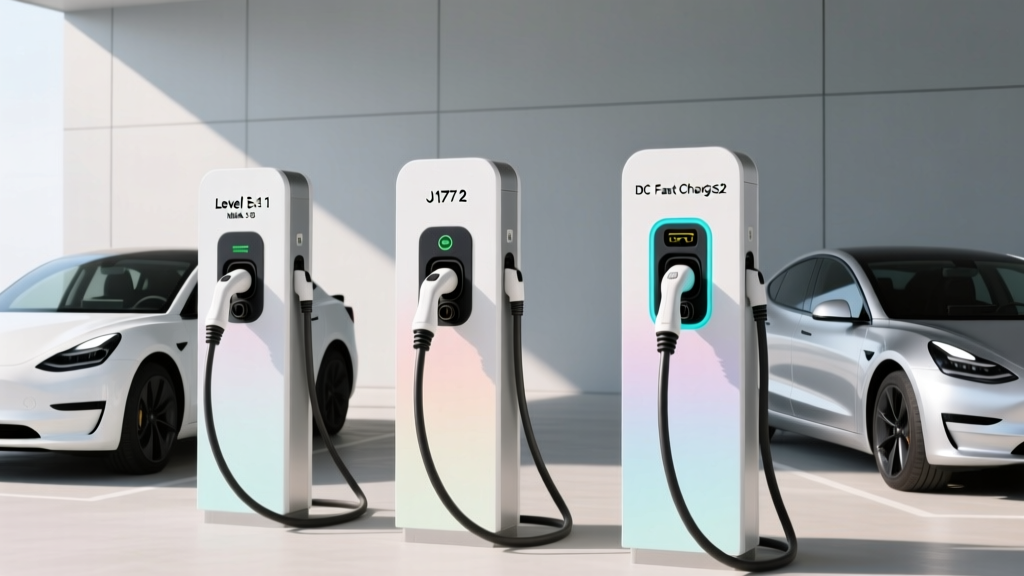
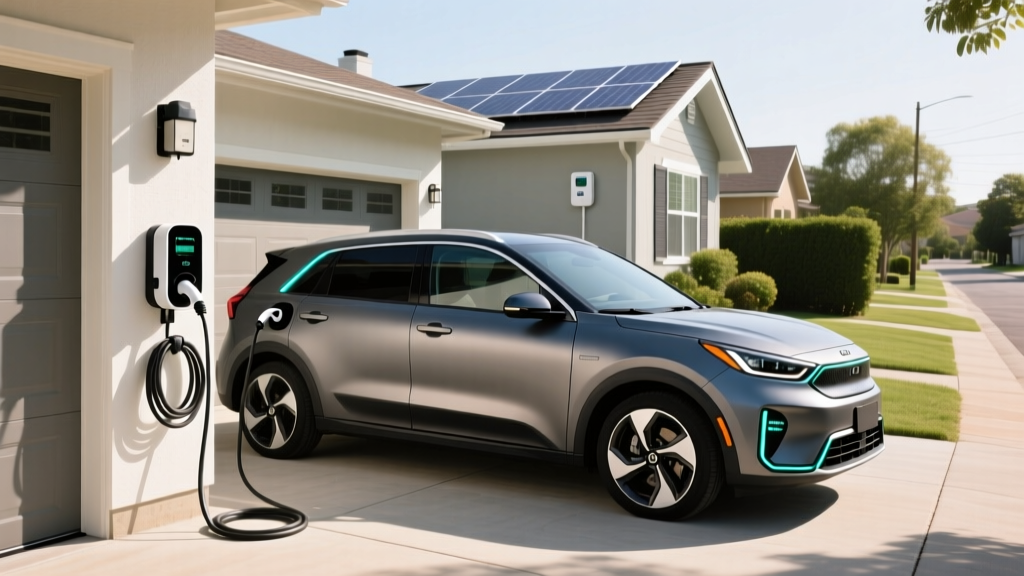
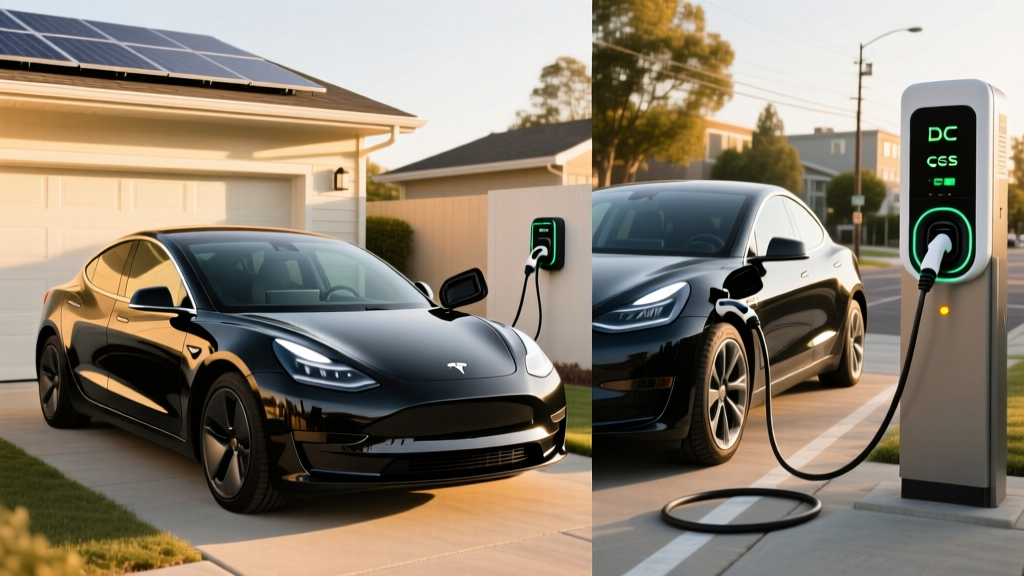
Most Level 2 home chargers — including popular models from ChargePoint, Emporia, Grizzl-E, and Tesla — draw between 16 and 48 amps at 240 volts. That's a sustained electrical load that runs for hours, often overnight. Standard household extension cords are never rated for this kind of duty, which is why dedicated EV-rated 240V extension cords exist.
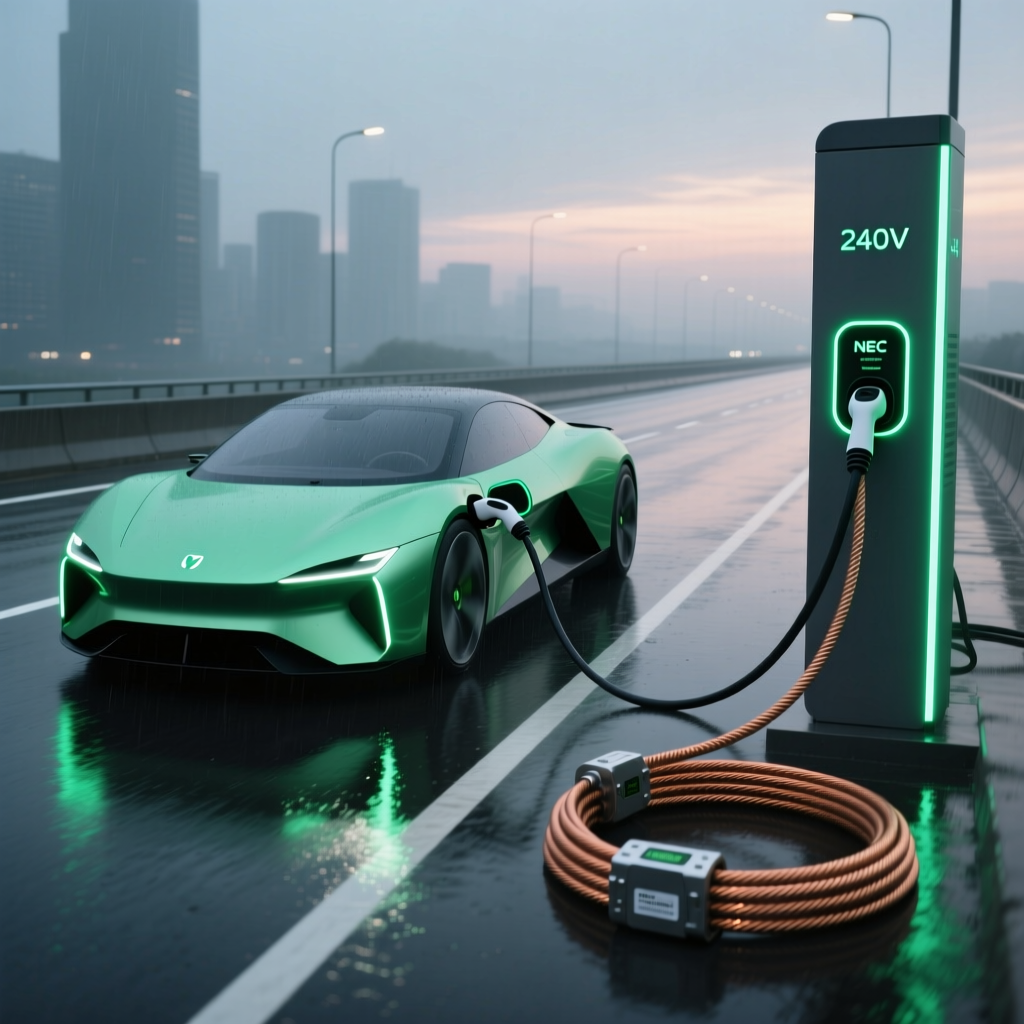
These cords are essentially short, flexible runs of the same heavy-gauge wire you'd find inside your walls: typically 6 AWG or 8 AWG copper, terminated with matching NEMA plugs and receptacles (most commonly NEMA 14-50, 6-50, or 10-50). They're engineered to handle continuous loads without the voltage drop, heat buildup, or connection looseness that causes cheap cords to fail.
Before buying anything, understand one important reality: the NEC generally does not permit flexible cords to be used as a substitute for permanent wiring (NEC Article 400.8). That means a 240V extension cord is acceptable as a temporary connection — for example, while you wait for a hardwired charger install — but it should not become a permanent, always-plugged-in fixture. If you need a cord in place every single night, the correct long-term solution is to move the outlet or install a dedicated EV circuit.
Requirements and Specifications You Must Match
A 240V EV extension cord only works safely when every link in the chain is compatible. Here are the four non-negotiable specifications:
1. Wire Gauge (AWG)
The American Wire Gauge number must match or exceed your charger's amperage. General rules:
- 16A charger (3.8 kW): 12 AWG minimum, 10 AWG preferred
- 32A charger (7.7 kW): 8 AWG minimum
- 40A charger (9.6 kW): 6 AWG minimum
- 48A charger (11.5 kW): 6 AWG or 4 AWG, and honestly, hardwire is better
NEC 210.20 requires branch circuits supplying continuous loads (anything running 3+ hours — which includes EV charging) to be rated at 125% of the load. A 40A charger therefore needs a 50A circuit and cord.
2. Plug and Receptacle Type
Your extension cord's ends must match both the wall outlet and the EVSE plug. Common configurations:
- NEMA 14-50: 4-prong, 50A, the modern standard for EV charging (hot-hot-neutral-ground)
- NEMA 6-50: 3-prong, 50A, hot-hot-ground only — increasingly common for EVSE-only circuits
- NEMA 10-50: 3-prong legacy dryer plug — not recommended for EV charging because it lacks a dedicated ground
- NEMA 14-30: 30A, appropriate only for 24A or smaller chargers
If you're unsure what you have, look at the plug face or consult our EV charging guides for illustrated diagrams.
3. Length
Shorter is always better. Voltage drop becomes a real concern beyond 25 feet on 8 AWG and beyond 50 feet on 6 AWG. Most quality EV extension cords are sold in 10, 18, and 25-foot lengths. Avoid anything longer than 25 feet unless it's specifically engineered (and warrantied) for EV use at your amperage.
4. Continuous-Duty Rating and Certification
Look for cords that are ETL, UL, or CSA listed, and explicitly rated for continuous duty. According to the U.S. Department of Energy's EV charging guidance, any cord used for vehicle charging should be rated for the full amperage of the EVSE and installed in a way that avoids physical damage.
Step-by-Step Setup of a 240V EV Extension Cord
Once you have the right cord, setup is straightforward — but the order of operations matters.
- Turn off the breaker. Before plugging anything in, switch off the 240V circuit at the main panel. Confirm it's off with a non-contact voltage tester.
- Inspect the outlet. Look for scorch marks, loose blades, or a warm faceplate. A worn NEMA 14-50 is a common source of EV charging fires — if anything looks suspect, stop and call an electrician.
- Plug the cord into the wall first. Push it fully in until you feel it seat. Do not force it; mismatched plugs will not align.
- Route the cord safely. Run it along a wall or overhead with cable hooks. Never run a 240V cord under a rug, through a doorway where it can be pinched, or across a driveway where a tire can crush it.
- Connect the EVSE to the cord's receptacle end. Ensure the connection is tight and the strain relief (if any) is engaged.
- Turn the breaker back on. Wait for the EVSE's indicator lights, then plug the vehicle side into your car.
- Monitor the first session. After 30 minutes of charging, carefully feel the wall plug, the cord, and the EVSE plug. Warm is normal; hot is not. Anything too hot to touch for more than a few seconds means shut down and investigate.
If you're shopping for a charger to pair with the cord, our EV charger reviews break down the best Level 2 units for every budget.
Safety Tips and NEC Compliance
Electricity at 240V and 40+ amps is unforgiving. These rules keep you, your car, and your home safe:
- Never daisy-chain an extension cord into another extension cord or power strip.
- Never use a standard household or RV cord not specifically rated for EV continuous loads. "Dryer cords" sold at hardware stores often lack the right strain relief and duty cycle.
- Keep connections dry. If your outlet is outdoors, the cord's receptacle end must be protected from rain. Use an in-use weatherproof cover.
- Avoid adapters when possible. A NEMA 14-50 to 6-50 adapter introduces another failure point and can mask a missing ground.
- Install a GFCI breaker on the circuit if NEC 2020 or later applies in your jurisdiction — 240V receptacles in garages now require GFCI protection in many areas.
- Retire the cord if damaged. Cracked insulation, bent prongs, or a loose receptacle end mean replacement, not repair.
- Use a torque screwdriver if you ever open a plug head. Loose terminal screws are a leading cause of outlet fires, per Tesla's installation guidance and multiple fire-investigation reports.
A good rule of thumb: if your 240V extension cord is plugged in every night for months on end, it's time to call an electrician and make the connection permanent.
DIY vs. Professional Installation
Plugging a pre-made, UL-listed 240V EV extension cord into an existing, code-compliant outlet is a legitimate DIY task. What is not DIY:
- Installing a new 240V receptacle or circuit
- Upgrading a panel to add a 50A breaker
- Building your own extension cord from bulk wire and plug heads (unless you're a qualified electrician)
- Replacing a NEMA 10-50 with a properly grounded 14-50
Hiring a licensed electrician for a new 50A circuit typically costs $500–$1,500 depending on panel proximity, conduit runs, and local labor rates. That's real money — but compared to the cost of a garage fire or a voided EV warranty, it's a bargain. Many utilities also offer rebates that cover a significant chunk of professional EVSE installation.
Cost Breakdown
Here's what to budget for a complete 240V extension-cord-based charging setup:
| Item | Typical Cost |
|---|---|
| UL-listed 240V EV extension cord (18–25 ft, 6 AWG) | $120–$250 |
| Shorter 8 AWG cord (10 ft, 32A-rated) | $80–$140 |
| Weatherproof in-use cover (outdoor outlet) | $20–$45 |
| Cable hooks and strain relief hardware | $10–$25 |
| New 50A circuit installed by electrician (if needed) | $500–$1,500 |
| Permit and inspection (where required) | $75–$250 |
For most homeowners who already have a 14-50 or 6-50 outlet, total out-of-pocket cost lands between $150 and $300.
Permits and Inspection
Simply plugging a listed cord into an existing outlet rarely requires a permit. However, any new circuit, panel upgrade, or receptacle installation almost always does. Your local building department will typically require:
- An electrical permit pulled by a licensed contractor (or by you, if homeowner permits are allowed)
- A rough-in inspection if new conduit or wire is run
- A final inspection after the outlet is energized
Skipping the permit can void your homeowner's insurance coverage if a fire originates at the EV circuit — a risk not worth taking for a $100 permit fee.
Troubleshooting Common Issues
EVSE reports "ground fault" or won't start charging. Your outlet may be a NEMA 10-50 without a real ground, or a GFCI breaker is tripping on normal EVSE leakage current. Verify the ground with a receptacle tester and confirm GFCI compatibility with your EVSE manufacturer.
Charging speed is slower than expected. Voltage drop across a long or undersized cord reduces the power the car actually receives. Try a shorter or thicker-gauge cord, or move the outlet closer.
Plug or cord gets hot. Immediate stop. This usually means a loose connection, worn receptacle blades, or a cord rated below your EVSE's amperage. Replace the weakest link before resuming charging.
Breaker trips during charging. Confirm the breaker is rated at 125% of the EVSE's max draw (a 40A charger needs a 50A breaker). Also check that no other loads share the circuit.
Intermittent charging or EVSE rebooting. Often caused by a loose plug connection. Tighten the terminal screws inside the plug heads to manufacturer torque specs.
For charger-specific quirks, browse our EV ownership guides for model-by-model troubleshooting.
Frequently Asked Questions
Is it safe to use a 240V extension cord with an EV charger long-term?
For occasional or short-term use, a properly rated, UL-listed cord is safe. For daily, permanent use, the NEC considers this a code violation and a fire risk — the right solution is a hardwired charger or a relocated outlet.
Can I use a dryer extension cord for my EV charger?
Usually no. Dryer cords are often rated for intermittent duty and may use NEMA 10-30 plugs that lack a dedicated ground. Always choose a cord explicitly marketed and listed for EV continuous-duty use.
What gauge wire do I need for a 40-amp EV charger?
A 40A continuous load requires a 50A circuit and 6 AWG copper wire. Using 8 AWG on a 40A charger is a code violation and a fire hazard.
Will an extension cord void my EV or charger warranty?
It can. Most EVSE manufacturers (Tesla, ChargePoint, Emporia) explicitly warn against extension cords in their manuals. If a failure is traced to an undersized or uncertified cord, warranty coverage may be denied.
How long can a 240V EV extension cord be?
For 6 AWG at 40A, keep it under 25 feet. For 8 AWG at 32A, stay under 20 feet. Beyond these lengths, voltage drop reduces charging speed and increases heat. Longer runs should be done with permanent in-wall wiring instead.
Used wisely, a quality 240V extension cord is a practical bridge between where your outlet is and where your car parks. Used carelessly, it's one of the most common causes of residential EV charging incidents. Match the gauge, match the plug, monitor the heat, and when in doubt, call a licensed electrician. Your car — and your garage — will thank you.