Understanding EV Charging Levels: Speed Comparison
When evaluating EV chargers, the "0-60" metric that matters most isn't acceleration—it's how quickly you can add meaningful range. Charging speed is measured in kilowatts (kW), which represents power delivery rate, while battery capacity is measured in kilowatt-hours (kWh), representing total energy stored. This distinction is critical: a 150 kW charger delivers energy faster than a 7.2 kW unit, but both fill the same kWh battery.
| Charging Level | Power (kW) | Voltage/Amps | Miles Added/Hour | 10-80% Time (75 kWh Battery) |
|---|---|---|---|---|
| Level 1 (Standard Outlet) | 1.3-2.4 kW | 120V / 12-16A | 3-5 miles | 35-40 hours |
| Level 2 (Home/Public AC) | 3.3-19.2 kW | 240V / 16-80A | 12-60 miles | 4-12 hours |
| DC Fast Charging | 50-350 kW | 400-800V DC | 150-1,300+ miles | 18-45 minutes |
Real-world charging times vary based on battery state of charge (SoC), temperature, and the vehicle's charge curve. Most EVs accept peak power only between 10-50% SoC, then taper significantly above 80% to protect battery health. A 350 kW charger won't maintain that rate for the entire session.
Home EV Charger Installation: Cost Breakdown
Installing a Level 2 home charger typically costs $1,200-$3,500 total, with significant variation based on your electrical panel's capacity and distance from the panel to the charging location.
| Component | Cost Range | Notes |
|---|---|---|
| Level 2 Charger Equipment | $400-$800 | 40A-48A smart chargers (ChargePoint, Wallbox, Tesla) |
| Electrician Labor | $500-$2,000 | Varies by region, complexity, and cable run distance |
| Electrical Permit | $50-$200 | Required in most jurisdictions for new 240V circuits |
| Panel Upgrade (if needed) | $1,500-$4,000 | 200A service upgrade for older homes with 100A panels |
| Total (no panel upgrade) | $950-$3,000 | Most homes with 200A service |
| Total (with panel upgrade) | $2,450-$7,000 | Homes needing service upgrade |
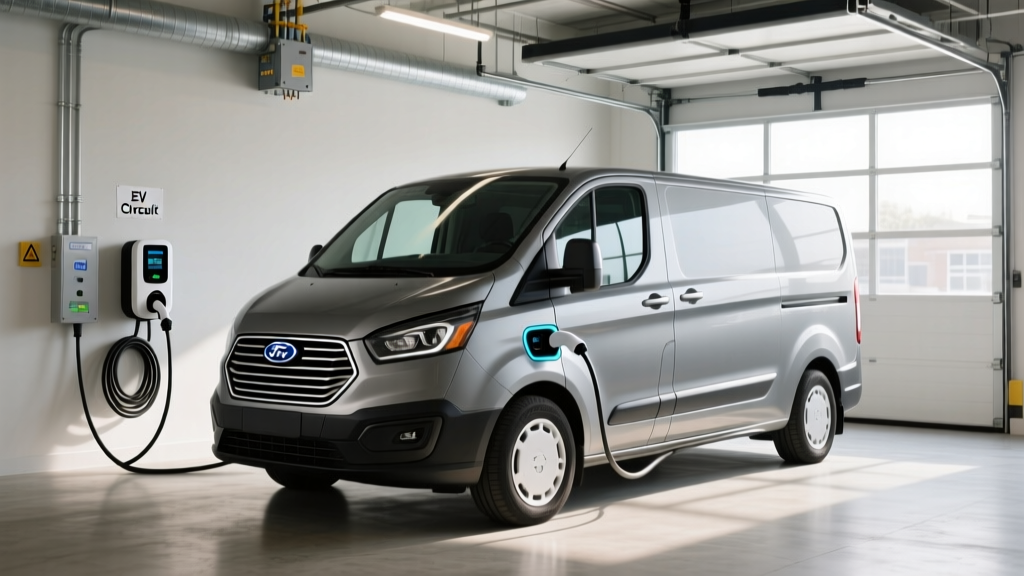
The electrical requirements for a typical 48A Level 2 charger include a dedicated 60A, 240V circuit with 6-gauge copper wire. The National Electrical Code (NEC) requires the circuit breaker to be rated 125% higher than the continuous load—hence a 48A charger needs a 60A breaker.
Do You Need a Panel Upgrade?
Perform a load calculation: add up your home's existing electrical loads (HVAC, water heater, dryer, range, etc.). If your total calculated load plus the new 48A (11.5 kW) charger exceeds 80% of your panel's capacity, you'll need an upgrade. Most modern homes have 200A service and can accommodate Level 2 charging without upgrades. Homes built before 1980 often have 100A or 150A service and may require upgrades.
Safety requirements include a GFCI (Ground Fault Circuit Interrupter) breaker for outdoor installations, proper conduit and wire ratings, and weatherproof enclosures for outdoor chargers. All work must meet NEC Article 625 (Electric Vehicle Charging System Equipment) and local building codes.
EV Connector Compatibility Guide
North America is undergoing a connector transition in 2026. Tesla's North American Charging Standard (NACS) is becoming the dominant connector, with most major automakers adopting it for 2025-2026 models.
| Connector Type | Vehicles Using It | Adapter Availability | Max Power |
|---|---|---|---|
| NACS (Tesla) | Tesla (all), Ford, GM, Rivian, Volvo, Polestar, Mercedes (2025+) | CCS-to-NACS: $200-$400 | 250 kW (Tesla), 350 kW (third-party) |
| CCS1 (Combined Charging System) | VW, Hyundai, Kia, BMW, legacy Ford/GM (pre-2025) | NACS-to-CCS: Included with many new EVs | 350 kW |
| CHAdeMO | Nissan Leaf, Mitsubishi Outlander PHEV (legacy) | Limited adapters available | 100 kW (typically 50 kW) |
For home charging, all Level 2 chargers use the J1772 connector (or Tesla's proprietary connector, which includes a J1772 adapter). The J1772 standard supports up to 19.2 kW AC charging. When purchasing a home charger, ensure it matches your vehicle's connector or plan for adapter use.
Charging Cost Analysis: Home vs. Public vs. Gas
Electricity costs vary dramatically by location, time of day, and charging type. Here's how charging costs compare to gasoline on a per-mile basis:
| Fuel Source | Rate | Vehicle Efficiency | Cost Per Mile |
|---|---|---|---|
| Home Charging (Off-Peak) | $0.12/kWh | 3.5 miles/kWh (120 MPGe) | $0.034 |
| Home Charging (Peak) | $0.25/kWh | 3.5 miles/kWh | $0.071 |
| Public Level 2 | $0.30-$0.50/kWh | 3.5 miles/kWh | $0.086-$0.143 |
| DC Fast Charging | $0.35-$0.60/kWh | 3.0 miles/kWh (highway) | $0.117-$0.200 |
| Gasoline (Regular) | $3.50/gallon | 30 MPG | $0.117 |
| Gasoline (Premium) | $4.20/gallon | 25 MPG | $0.168 |
Home off-peak charging delivers the lowest cost per mile—roughly one-third the cost of gasoline. However, frequent DC fast charging at public rates can equal or exceed gasoline costs, especially for less efficient EVs. Time-of-use (TOU) electricity plans can reduce home charging costs by 40-60% by shifting charging to overnight hours (typically 9 PM - 6 AM).
According to fueleconomy.gov, the average EV achieves 97 MPGe combined, equivalent to 3.2 miles per kWh. Efficiency varies from 2.5 miles/kWh (large SUVs like Rivian R1S) to 4.5 miles/kWh (sedans like Tesla Model 3).
Recommended Home EV Chargers (2026)
Based on reliability, smart features, and value, these Level 2 chargers lead the market:
ChargePoint Home Flex
- Power: Up to 12 kW (50A) adjustable
- Connector: J1772 (NACS adapter available)
- Cable Length: 23 feet
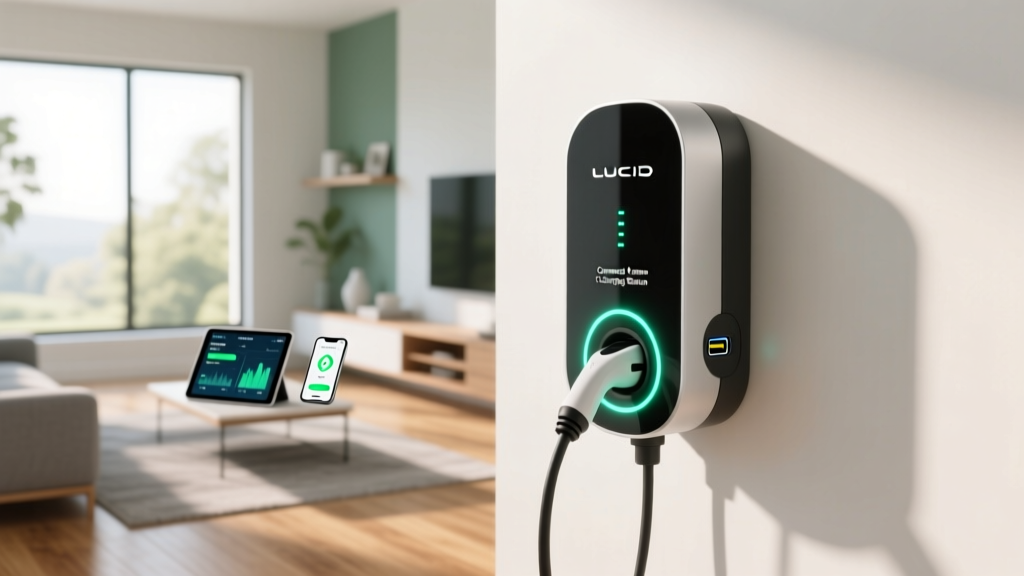
- Smart Features: WiFi, scheduling, energy tracking, Alexa integration
- Price: $699
- Best For: Most EVs, flexible amperage settings
Tesla Wall Connector
- Power: Up to 11.5 kW (48A)
- Connector: NACS (J1772 adapter included for non-Tesla)
- Cable Length: 24 feet
- Smart Features: WiFi, power sharing (multiple units), access control
- Price: $475
- Best For: Tesla owners, multi-Tesla households
Wallbox Pulsar Plus
- Power: Up to 11.5 kW (48A)
- Connector: J1772 or NACS (2025+ models)
- Cable Length: 25 feet
- Smart Features: WiFi, Bluetooth, Eco-Smart (solar integration), load balancing
- Price: $649
- Best For: Solar panel owners, smart home integration
For homes with limited electrical capacity, consider the Emporia Level 2 EV Charger ($399, 40A max), which offers real-time energy monitoring and automatic load management to prevent panel overload.
Charging Time Examples: 10-80% by Battery Size
Battery capacity directly impacts charging duration. Here are real-world 10-80% charging times for common EV battery sizes:
| Battery Size | Example Vehicles | Level 2 (11.5 kW) | DC Fast (150 kW peak) | DC Fast (250+ kW peak) |
|---|---|---|---|---|
| 60 kWh | Chevy Bolt EV, Nissan Leaf Plus | 3.5 hours | 35 minutes | N/A (50-100 kW max) |
| 75 kWh | Tesla Model 3 RWD, Hyundai Ioniq 6 | 4.5 hours | 28 minutes | 18 minutes |
| 85 kWh | Ford Mustang Mach-E ER, VW ID.4 | 5 hours | 32 minutes | 22 minutes |
| 100 kWh | Tesla Model S/X, BMW iX | 6 hours | 38 minutes | 25 minutes |
| 130 kWh | GMC Hummer EV, Rivian R1T Max | 8 hours | 48 minutes | 32 minutes |
These times assume optimal battery temperature (68-77°F) and preconditioning. Cold batteries (below 50°F) can increase charging times by 30-50% due to reduced charge acceptance. Most modern EVs precondition the battery automatically when you navigate to a DC fast charger, warming it to optimal temperature.
Federal Tax Credit for Home Charging Equipment
The IRS §30D Alternative Fuel Vehicle Refueling Property Credit covers 30% of home EV charger installation costs, up to $1,000. To qualify:
- Equipment must be installed at your primary residence
- Installation must occur in 2026 (credit expires December 31, 2026 unless extended)
- Your home must be in an eligible census tract (non-urban areas typically qualify; check IRS guidelines)
- There are no income caps for this credit (unlike the vehicle purchase credit)
For a $2,000 total installation (charger + electrician + permit), you'd receive a $600 tax credit, reducing your net cost to $1,400. The credit is non-refundable, meaning it can only reduce your tax liability to zero—it won't generate a refund if you owe no taxes.
Consult a tax professional and review IRS Form 8911 for complete eligibility details.
Public Charging Networks: Speed & Reliability
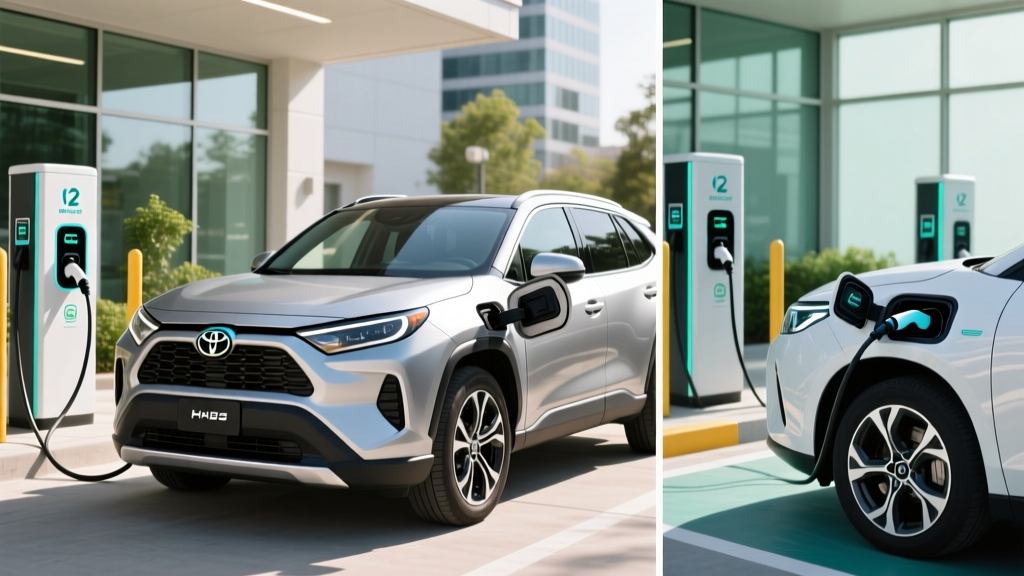
Public DC fast charging infrastructure continues expanding in 2026, with Tesla's Supercharger network opening to non-Tesla vehicles via the NACS connector or built-in adapters.
Tesla Supercharger Network: 50,000+ stalls globally, 250 kW peak (V3), 350 kW (V4 rolling out). Non-Tesla access available at select locations via Magic Dock adapter or NACS connector. Reliability: 99.5% uptime.
Electrify America: 5,000+ stalls, 150-350 kW chargers. CCS1 and NACS connectors available. Reliability improved to 95% in 2025 after hardware upgrades. Pricing: $0.36-$0.48/kWh depending on location.
EVgo: 3,500+ stalls, 50-350 kW. Partnerships with GM and Toyota for expanded network. Pricing: $0.35-$0.45/kWh.
For road trip planning, use apps like PlugShare or A Better Routeplanner (ABRP) to identify charger locations, check real-time availability, and estimate charging times based on your specific EV model.
Frequently Asked Questions
How much does it cost to install a home EV charger?
Most homeowners pay $1,200-$3,000 for a complete Level 2 installation (48A charger, electrician labor, permit). Homes needing a 200A panel upgrade should budget $2,500-$7,000 total. The federal tax credit reduces costs by 30% (up to $1,000) for eligible installations.
How fast will each charging level add range?
Level 1 (120V outlet): 3-5 miles per hour. Level 2 (240V, 48A): 30-40 miles per hour. DC Fast Charging (150 kW): 200-300 miles in 20-30 minutes. Actual rates depend on your EV's onboard charger capacity and battery acceptance rate.
Which connector/charger is compatible with my EV?
Check your vehicle's charge port: Tesla vehicles and 2025+ Ford, GM, Rivian, Volvo use NACS. Most pre-2025 non-Tesla EVs use CCS1. Nissan Leaf uses CHAdeMO. For home Level 2 charging, all EVs accept J1772 (or Tesla's connector with included adapter). Purchase a charger matching your vehicle's connector or plan to use adapters.
How much does charging cost per mile vs gas?
Home off-peak charging costs $0.03-$0.07 per mile, compared to $0.12-$0.17 per mile for gasoline vehicles. Public DC fast charging ranges $0.10-$0.20 per mile, similar to or slightly higher than gasoline. Your actual costs depend on local electricity rates, your EV's efficiency (miles per kWh), and whether you charge at home or rely on public chargers.
What electrical upgrades might I need?
If your home has a 100A or 150A electrical panel, you'll likely need a 200A service upgrade ($1,500-$4,000). Homes with 200A service typically need only a dedicated 60A circuit for a 48A charger. An electrician will perform a load calculation to determine if your existing panel can handle the additional 11.5 kW load.
Can I install a Level 2 charger myself?
While physically possible for experienced DIYers, most jurisdictions require a licensed electrician and permit for 240V circuit installation. Improper installation risks fire, equipment damage, and voided warranties. The $500-$2,000 electrician cost is justified by safety and code compliance.
Do I need a smart charger or will a basic unit work?
Basic chargers (no WiFi/app) work identically for charging but lack scheduling, energy monitoring, and utility integration features. Smart chargers enable off-peak scheduling (reducing costs by 40-60%), solar integration, and remote monitoring. For most owners, the $100-$200 premium for smart features pays for itself through optimized charging schedules.