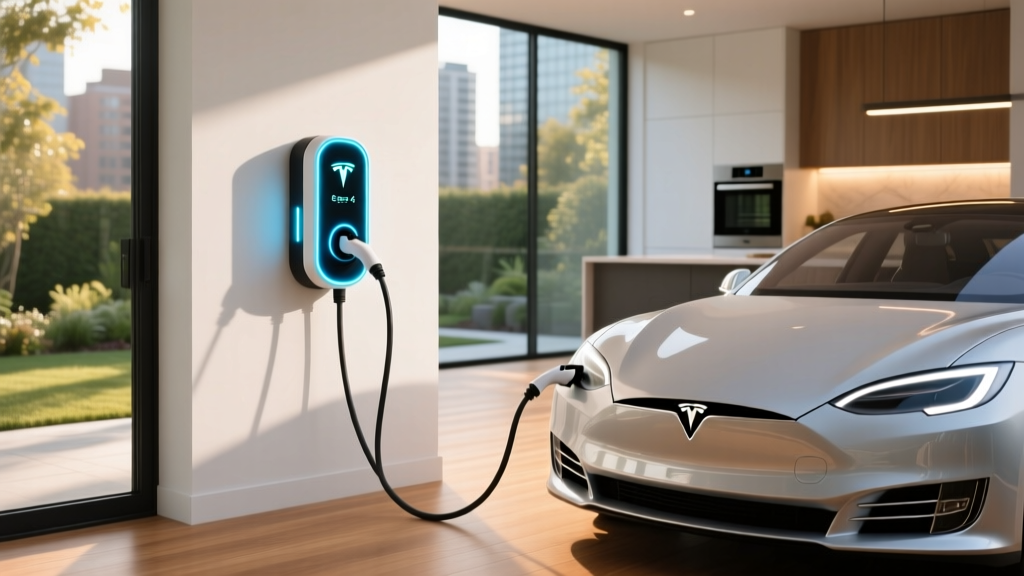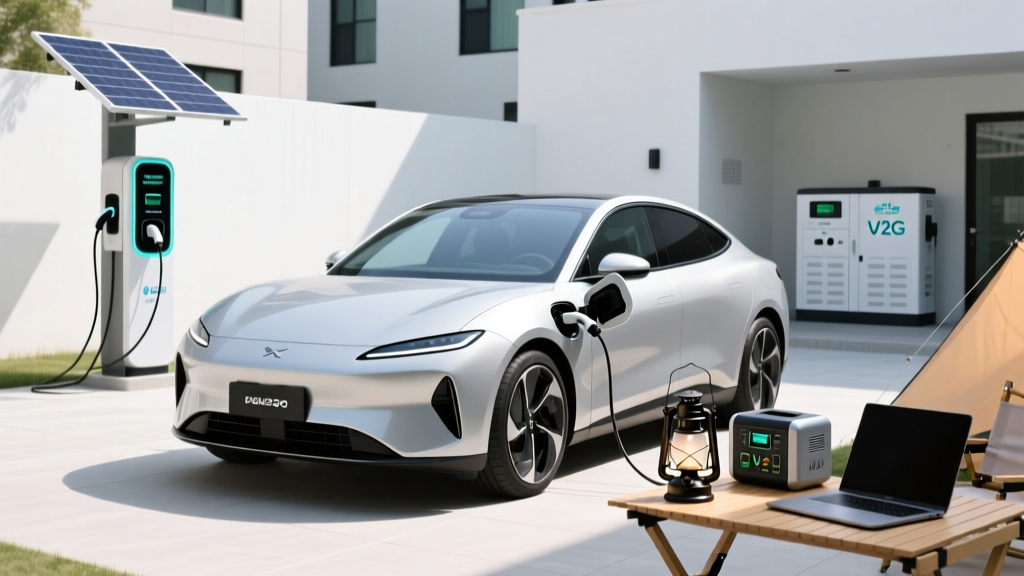
Most EVs take energy in one direction: from the grid into the battery. Bidirectional charging reverses that equation, turning your vehicle into a mobile power station that can push energy back out — to your home during an outage, to a campsite appliance, or even to the utility grid during peak demand. In 2026, this technology is no longer theoretical. Multiple automakers ship vehicles with bidirectional capability, and the first utility vehicle-to-grid (V2G) programs are paying EV owners real money for their stored electrons.
But bidirectional charging doesn't replace the fundamentals. Before you can send power back, you still need to charge efficiently. This guide covers the full charging stack — from Level 1 basics to bidirectional hardware — so you understand exactly what's required, what it costs, and which 2026 vehicles support it.
Bidirectional Charging Modes: V2L, V2H, and V2G Defined
"Bidirectional charging" is an umbrella term covering three distinct capabilities. Confusing them leads to expensive mistakes — buying a vehicle for home backup that only supports device-level power, for example.
V2H (Vehicle-to-Home): Feeds power back through your home's electrical panel, potentially running your entire house during an outage. Requires a compatible bidirectional charger (like the Wallbox Quasar or Ford Charge Station Pro) and a transfer switch or integrated inverter. Typical output: 7–11.5 kW continuous.
V2G (Vehicle-to-Grid): Sends power back to the utility grid in response to demand signals, earning credits or payments. Requires utility enrollment, a compatible bidirectional charger, and specific vehicle firmware. Still limited in availability — only a handful of U.S. utilities offered active V2G programs as of early 2026.
Charging Levels and Speeds: The Foundation Before You Go Bidirectional
Understanding bidirectional output requires understanding input first. Here's how each charging level works, with real-world speeds. Note the critical distinction: kW (kilowatts) measures power — the rate of energy flow. kWh (kilowatt-hours) measures energy — the total capacity stored. A 100 kWh battery charged at 10 kW takes roughly 10 hours from empty.
| Level | Voltage | Max Power (kW) | Miles of Range per Hour | Typical Use Case |
|---|---|---|---|---|
| Level 1 | 120V AC | 1.4–1.9 kW | 3–5 mi/hr | Overnight top-up, PHEV charging |
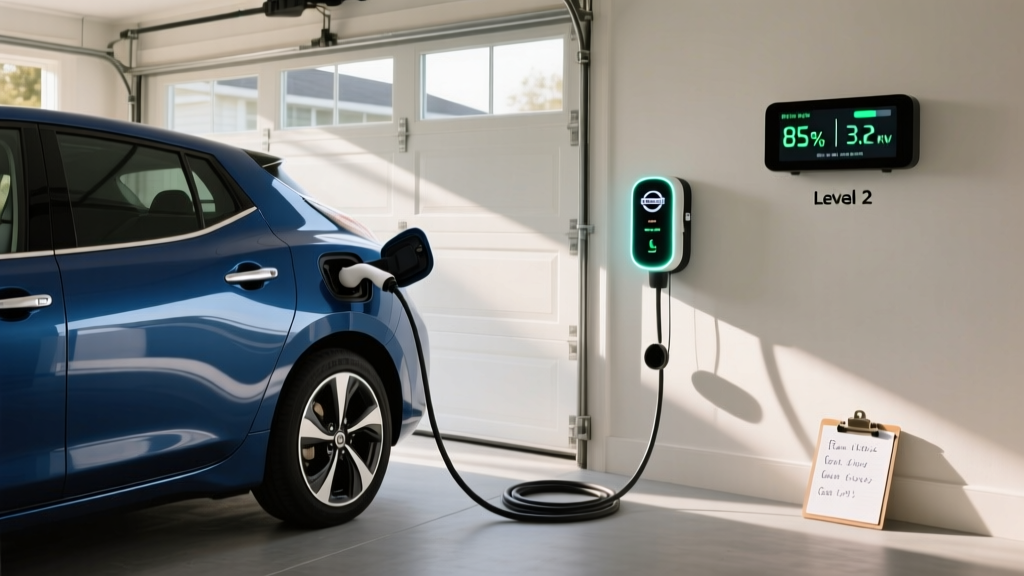
| Level 2 | 240V AC | 7.2–19.2 kW | 20–60 mi/hr | Home daily charging, workplace |
| DC Fast Charging | 400–800V DC | 50–350 kW | 150–1,000+ mi/hr | Road trips, rapid top-up |
For a typical 80 kWh battery (like the one in the Hyundai Ioniq 5 or Ford F-150 Lightning extended-range), expect a 10–80% charge in roughly 18–25 minutes on a 250–350 kW DC fast charger, assuming the battery is preconditioned. On Level 2 at 11.5 kW, that same 10–80% takes about 5–6 hours — fine for overnight. Level 1 at 1.4 kW would need over 40 hours, which is why it's only practical for plug-in hybrids with smaller batteries or emergency trickle charging.
Which 2026 EVs Support Bidirectional Charging?
Not every EV can push power back out. Bidirectional capability requires specific onboard hardware — typically a dual-inverter architecture — and compatible software. Here's the landscape for current 2026 models:
| Vehicle | V2L | V2H | V2G | Battery (kWh) | Max Bidirectional Output |
|---|---|---|---|---|---|
| Ford F-150 Lightning | ✓ (Pro Power Onboard) | ✓ (with Charge Station Pro) | Limited pilots | 98–131 usable | 9.6 kW (V2H) |
| Hyundai Ioniq 5 | ✓ | Announced (2026 update) | Not available | 77.4 usable | 3.6 kW (V2L) |
| Kia EV9 | ✓ | ✓ (with accessory) | Not available | 99.8 usable | 3.6 kW (V2L) / 11 kW (V2H planned) |
| GMC Sierra EV | ✓ | ✓ (Energy Transfer Pro) | Not available | ~200 usable (Max Range) | Up to 12 kW |
| Chevrolet Silverado EV | ✓ | ✓ (with accessory) | Not available | ~200 usable (Max Range) | Up to 12 kW |
| VW ID.4 (2025+) | ✓ | Not available in U.S. | Not available | 77 usable | 3.6 kW (V2L) |
| Nissan Leaf | ✗ | ✗ | ✓ (Japan/Europe pilots) | 40–60 | N/A in U.S. |
The Ford F-150 Lightning remains the most mature bidirectional platform in the U.S. market. Its Intelligent Backup Power system, paired with the $1,300 Ford Charge Station Pro and a home integration system (typically $3,000–$5,000 installed by a Sunrun or certified electrician partner), can power an average home for up to three days on a full 131 kWh extended-range battery. The Ford F-150 Lightning spec page details current configurations.
Hyundai and Kia have expanded V2L across most E-GMP platform vehicles, but full V2H in the U.S. has been slower to arrive due to regulatory and hardware certification requirements. If home backup is your primary motivation, trucks and large SUVs with bigger batteries offer more practical runtime.
Home Charger Installation: Costs, Electrical Requirements, and Panel Upgrades
Installing a Level 2 home charger is straightforward in newer homes with modern electrical panels — and potentially expensive in older ones. Here's what determines your cost.
Electrical Requirements
A standard Level 2 home charger requires a 240V dedicated circuit, typically 40A to 60A. The circuit must be rated for 125% of the charger's continuous draw — so a 48A charger needs a 60A breaker. The charger connects either via a NEMA 14-50 receptacle (plug-in, allows portability) or hardwired directly to the panel (required for circuits above 50A in most jurisdictions and often needed for bidirectional chargers).
Panel Upgrade Reality
Homes built before 2000 often have 100A or 150A main service panels. Adding a 60A EV circuit may exceed available capacity, especially if you already run electric range, dryer, and HVAC. A panel upgrade to 200A costs $1,500–$3,500. In rare cases, a full service upgrade to 400A (needed for simultaneous V2H and high-power charging) runs $4,000–$8,000.
An alternative: load-management devices like the Emporia Smart Load Manager or Span smart panel can dynamically share capacity between your EV charger and other appliances, sometimes avoiding a panel upgrade entirely.
| Component | Simple Install (Near Panel) | Complex Install (Far Run / Upgrade) |
|---|---|---|
| Level 2 Charger Equipment | $300–$700 | $700–$1,600 (bidirectional: $1,300–$4,000) |
| Electrician Labor | $400–$800 | $1,500–$4,000 |
| Permit & Inspection | $50–$200 | $100–$400 |
| Panel Upgrade (if needed) | $0 | $1,500–$3,500 |
| Conduit, Wire, Misc. | $50–$150 | $200–$800 |
| Total Estimated Range | $800–$1,850 | $4,000–$14,300 |
For bidirectional V2H specifically, expect costs at the higher end. The Ford Charge Station Pro runs about $1,300 for the unit, but the complete home integration system — including the transfer switch, additional wiring, and certified installation — typically totals $5,000–$9,000. The Wallbox Quasar 2 (CCS/NACS bidirectional, up to 11.5 kW) lists around $3,500–$4,000 for the charger alone, with total installed V2H systems reaching $7,000–$12,000.
Federal Incentive
The IRS §25C Residential Clean Energy Credit (note: this is separate from the §30D vehicle credit) covers 30% of home EV charger equipment and installation costs, up to $1,000. Eligibility depends on your census tract being classified as a "qualified area." Confirm with a tax professional before assuming the credit applies.
Connector Compatibility: NACS, CCS, and Bidirectional Adapter Requirements
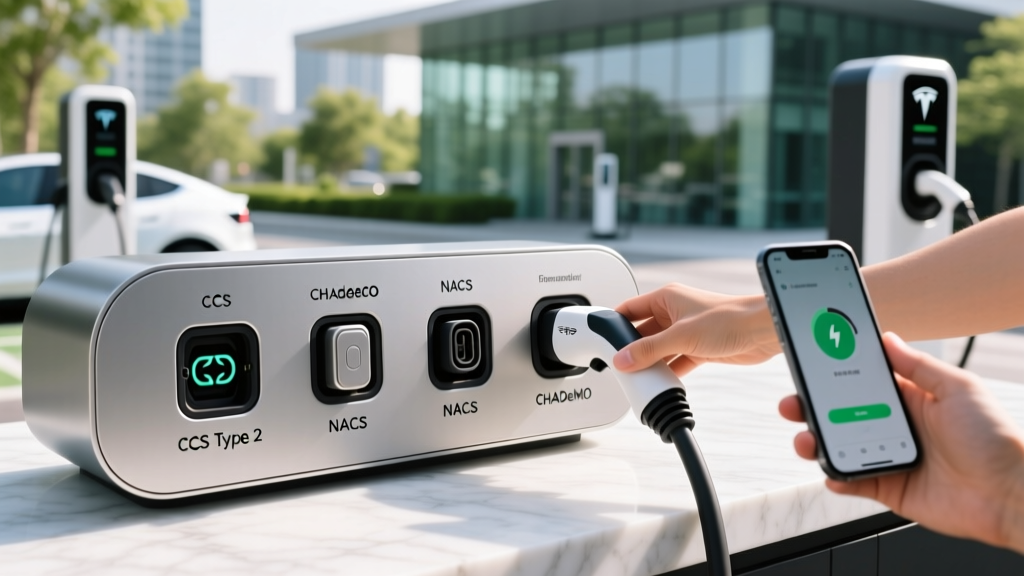
The connector on your EV determines which chargers — and bidirectional systems — you can use. As of 2026, the North American market has largely consolidated around NACS (the Tesla-originated standard now adopted by most major automakers), but CCS1 vehicles remain common.
| Connector | Brands Using It (2026) | Bidirectional Chargers Available | Adapter Notes |
|---|---|---|---|
| NACS (J3400) | Tesla, Ford, GM, Rivian, Volvo, Polestar, Hyundai/Kia (2025+), BMW, Mercedes | Ford Charge Station Pro (NACS), Wallbox Quasar 2 (NACS variant) | CCS-to-NACS adapters available from Tesla and third parties; verify bidirectional compatibility |
| CCS1 | Hyundai/Kia (pre-2025), VW ID.4 (pre-2025), BMW i4 (pre-2025), legacy models | Wallbox Quasar (CCS1), Dcbel r16 (CCS) | NACS-to-CCS adapters available; not all support bidirectional flow |
| CHAdeMO | Nissan Leaf (discontinued in U.S.), Mitsubishi Outlander PHEV | Limited (mostly Japan/Europe) | Effectively legacy in U.S.; no new vehicles use it |
Critical note: not all adapters support bidirectional power flow. A CCS-to-NACS adapter may work fine for charging your CCS vehicle at a Tesla Supercharger, but it may not pass power in reverse for V2H. Always confirm bidirectional compatibility with both the charger manufacturer and the adapter maker before purchasing.
Charging Cost Per Mile: Home, Public, and Bidirectional Earnings
One of the strongest economic arguments for EV ownership is fuel cost savings. Bidirectional charging adds a potential revenue stream on top.
| Scenario | Rate ($/kWh) | Vehicle Efficiency | Cost per Mile |
|---|---|---|---|
| Home (off-peak utility rate) | $0.08–$0.14 | 3.0 mi/kWh | $0.03–$0.05 |
| Home (standard rate) | $0.14–$0.20 | 3.0 mi/kWh | $0.05–$0.07 |
| Public Level 2 (ChargePoint, etc.) | $0.20–$0.35 | 3.0 mi/kWh | $0.07–$0.12 |
| DC Fast (Electrify America, EVgo) | $0.30–$0.55 | 3.0 mi/kWh | $0.10–$0.18 |
| Gasoline (28 MPG avg, $3.40/gal) | — | 28 MPG | $0.12 |
| Gasoline (22 MPG truck, $3.40/gal) | — | 22 MPG | $0.15 |
Home charging at off-peak rates delivers the lowest cost per mile — typically one-third to one-quarter the cost of gasoline. Even DC fast charging, the most expensive EV option, often undercuts a fuel-efficient gas car.
Bidirectional earnings: V2G programs that exist in 2026 (such as Duke Energy's Smart EV Charger Rewards in the Carolinas, or PG&E's Emergency Load Reduction Program in California) typically pay $1–$3 per event or $0.10–$0.30/kWh exported. A vehicle with a 100 kWh battery discharging 20 kWh during a peak event could earn $2–$6. Over a year, active V2G participants report $100–$400 in credits, though programs vary significantly by utility. V2H doesn't earn money directly but offsets generator or battery-backup costs — a Tesla Powerwall equivalent stores 13.5 kWh and costs $8,000–$12,000 installed, while your EV battery already holds 80–130 kWh.
Recommended Bidirectional and Standard Level 2 Chargers
Whether you need full bidirectional capability or a reliable standard Level 2 charger, these are the units we'd recommend based on power output, connector support, build quality, and smart features.
Bidirectional Chargers (V2H/V2G-Capable)
Power: 11.5 kW (bidirectional V2H)
Connector: NACS (Tesla-style)
Cable: 25 ft
Smart features: FordPass app integration, Intelligent Backup Power with home integration system
Price: ~$1,300 (charger only); ~$5,000–$9,000 total V2H system
Best for: F-150 Lightning owners wanting whole-home backup
Power: 11.5 kW (bidirectional)
Connector: CCS1 or NACS (variants)
Cable: 18 ft
Smart features: myWallbox app, solar integration, V2G-ready firmware
Price: ~$3,500–$4,000 (charger only)
Best for: CCS/NACS EV owners wanting a universal bidirectional solution
Standard Level 2 Chargers (Charge-Only)
Power: 11.5 kW (48A)
Connector: NACS (J3400)
Cable: 24 ft
Smart features: Real-time energy monitoring via Emporia app, load management, solar-aware scheduling
Price: ~$350–$400
Best for: Budget-conscious smart charging with energy tracking
Power: Up to 12 kW (50A configurable)
Connector: NACS or CCS1 (configurable)
Cable: 23 ft
Smart features: ChargePoint app, Alexa integration, flexible amperage settings
Price: ~$550–$700
Best for: Multi-EV households needing adjustable amperage
Power: 10 kW (40A)
Connector: NACS or J1772 (variants)
Cable: 24 ft
Smart features: Smart charging via app, outdoor-rated (NEMA 4), extreme cold tested (-40°F)
Price: ~$450–$550
Best for: Outdoor installs in cold climates
Safety, Electrical Code, and Bidirectional-Specific Considerations
All EV charger installations must comply with the National Electrical Code (NEC) and local amendments. Key requirements:
- Dedicated circuit: Your Level 2 charger must be on its own circuit — not shared with other appliances.
- GFCI protection: NEC 2023 (625.54) requires GFCI protection for all EV receptacles rated 150V to ground or less and 50A or less. Hardwired units may have GFCI built into the charger.
- Outdoor rating: If your charger is installed outside, it must be rated NEMA 3R or NEMA 4 (weatherproof). All recommended units above meet this standard.
- Permit and inspection: Most jurisdictions require an electrical permit for EV charger installation. Your electrician pulls this; the inspection verifies code compliance.
Bidirectional chargers add complexity. V2H systems require an automatic transfer switch (or integrated inverter system) to prevent back-feeding the grid during an outage — a critical safety requirement that protects utility line workers. This transfer switch must be installed by a licensed electrician and inspected. Never attempt a DIY bidirectional install; improper anti-islanding protection can be lethal to utility workers.
Is Bidirectional Charging Worth It in 2026?
The answer depends on your use case and local infrastructure.
Choose V2H if: You live in an area with frequent outages (storm-prone coasts, wildfire-risk zones, unreliable grid) and want to avoid buying a separate home battery or generator. The F-150 Lightning with Intelligent Backup Power is the most proven system. Budget $5,000–$9,000 for the complete install.
Choose V2G if: Your utility offers an active V2G program with meaningful compensation and you can charge during cheap off-peak hours to sell back at peak. As of 2026, this is still early-stage in most of the U.S. — check with your specific utility before investing in V2G-specific hardware.
Stick with standard Level 2 if: You have reliable grid power, don't need home backup, and want to minimize installation costs. A quality Level 2 charger installed on an existing panel runs $800–$1,850 and handles daily charging needs perfectly.
Bidirectional charging is real, it works, and for specific scenarios — particularly home backup with a large-battery truck — it offers genuine value today. But it's not a requirement for EV ownership. Most buyers are well-served by a reliable Level 2 home charger and standard one-way charging. The bidirectional premium buys you resilience and flexibility; whether that's worth the investment depends on your outage risk, utility programs, and willingness to pay for the hardware.
Frequently Asked Questions
How much does it cost to install a home EV charger?
A standard Level 2 charger installation costs $800–$1,850 when your electrical panel has capacity and the charger is near the panel. Complex installations requiring long wire runs, conduit, or a panel upgrade range from $4,000–$14,300. Bidirectional V2H systems (like Ford Intelligent Backup Power) total $5,000–$9,000 including the charger, transfer switch, and certified installation.
How fast will each charging level add range?
Level 1 (120V) adds 3–5 miles per hour. Level 2 (240V) adds 20–60 miles per hour depending on amperage. DC fast charging adds 150–1,000+ miles per hour at peak rate, though charging curves taper significantly above 80% state of charge. For a typical 80 kWh battery, expect 10–80% in about 18–25 minutes on a 250+ kW DC fast charger.
Which connector and charger is compatible with my EV?
Check your vehicle's charge port. Most 2025+ vehicles from Ford, GM, Rivian, Hyundai, Kia, BMW, and others now use NACS (J3400). Older or pre-2025 models from Hyundai, Kia, VW, and BMW use CCS1. CHAdeMO is effectively discontinued in the U.S. For bidirectional charging, verify that both the charger and any adapter explicitly support reverse power flow — not all adapters do.
How much does charging cost per mile versus gas?
Home charging at off-peak rates costs $0.03–$0.05 per mile — roughly one-third the cost of gasoline at $0.12/mile (28 MPG average). Even expensive DC fast charging at $0.10–$0.18/mile often undercuts gas. Bidirectional V2G earnings can partially offset charging costs, though active programs are still limited.
What electrical upgrades might I need for bidirectional charging?
Bidirectional V2H chargers typically require a 60A 240V circuit and a home transfer switch or integrated inverter. If your home has a 100A or 150A panel, you'll likely need a panel upgrade to 200A ($1,500–$3,500) to accommodate the bidirectional charger alongside your other electrical loads. A load-management device may allow you to avoid the upgrade in some cases. Always have a licensed electrician perform a load calculation before committing to a bidirectional system.