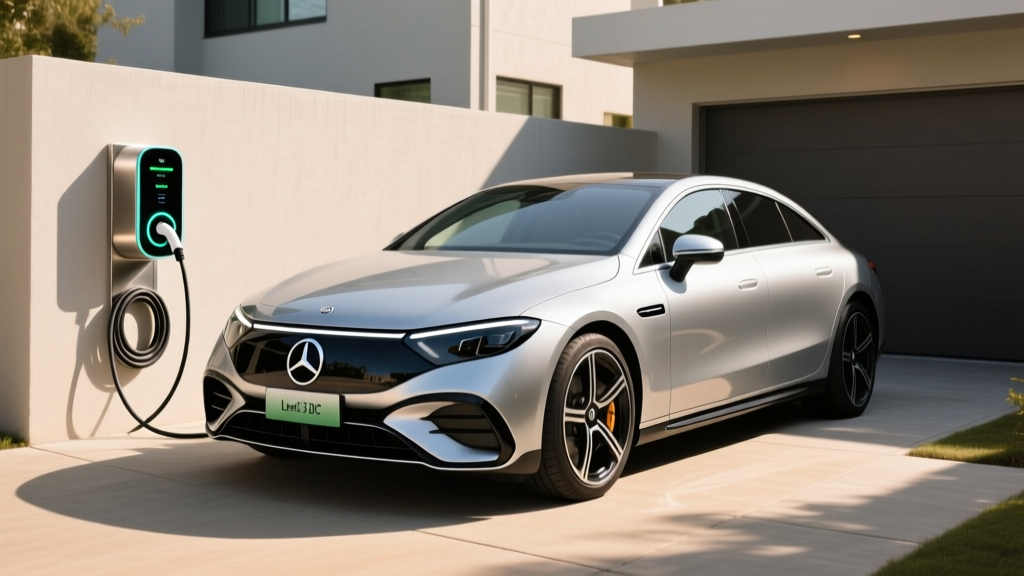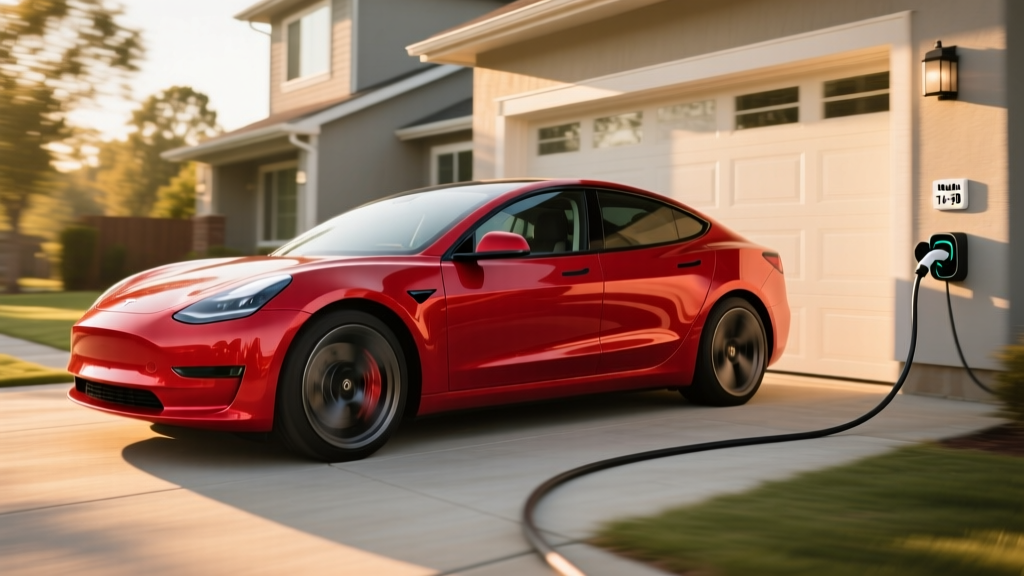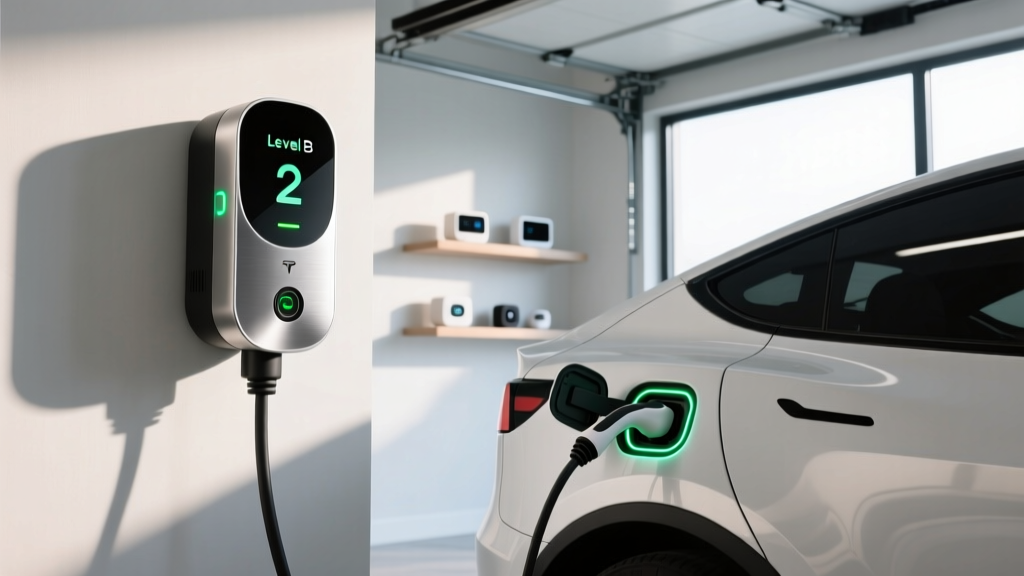
If you've just bought—or are about to buy—an electric vehicle, the single most impactful ownership decision you'll make is setting up a proper EV battery charger at home. Public charging networks have expanded dramatically, but the reality for most EV owners is that 80% or more of their charging happens in their own garage or driveway. Getting that setup right saves you time, money, and frustration for years to come.
This guide breaks down exactly what you need: charging speeds at every level, real installation costs including the panel upgrades nobody warns you about, which connector your car actually uses, how much you'll spend per mile compared to gas, and specific hardware recommendations with current 2026 pricing. No marketing fluff—just the numbers and decisions that matter.
Understanding EV Charging Levels: kW Speeds and Range Added Per Hour
Before picking hardware, you need to understand the three charging levels available to EV owners. The critical distinction here is between kW (kilowatts), which measures power—the rate at which energy flows into your battery—and kWh (kilowatt-hours), which measures energy capacity—how much total energy your battery stores. Think of kW as the width of the pipe and kWh as the size of the tank. A wider pipe fills the tank faster.
| Charging Level | Voltage | Power (kW) | Miles of Range Per Hour | Typical Use Case |
|---|---|---|---|---|
| Level 1 (120V) | 120V AC | 1.0–1.4 kW | 3–5 miles | Overnight top-off, PHEVs, emergency |
| Level 2 (240V) | 240V AC | 3.3–19.2 kW | 12–75 miles | Daily home charging, workplace |
| DC Fast Charging | 400–800V DC | 50–350 kW | 150–1,200+ miles (equivalent) | Road trips, highway corridors |
Level 1 plugs into a standard household outlet and delivers roughly 1.2 kW. For a plug-in hybrid with a 15 kWh battery, that's adequate—a full overnight charge adds 30–40 miles of electric range. For a full battery EV with an 80 kWh pack, Level 1 is painfully slow: a depleted battery would take 60+ hours to fill. It's a backup, not a primary strategy for BEV owners.
Level 2 is the home charging standard. Running on 240V (the same voltage as your electric dryer), Level 2 chargers range from 3.3 kW (16A) up to 19.2 kW (80A). Most residential installations land at 7.7 kW (32A) or 11.5 kW (48A), which replenishes 25–45 miles of range per hour—enough to fully recharge virtually any EV overnight. This is the battery charger setup most EV owners need.
DC Fast Charging bypasses the vehicle's onboard charger entirely, feeding direct current straight into the battery at 50–350 kW. A 350 kW charger can add 200+ miles in 15 minutes on a compatible vehicle. However, peak rates are not sustained rates—every EV tapers its charge speed as the battery fills, typically dropping sharply above 80% State of Charge (SoC) to protect battery health. A charger rated at 250 kW might average 100–130 kW across a 10–80% session.
How Much Does It Cost to Install a Home EV Battery Charger?
The honest answer: anywhere from $500 to $3,000+ depending on your home's electrical infrastructure. Here's the breakdown most guides gloss over.
| Cost Component | Simple Install (Panel Adjacent) | Moderate Install (50–80 ft Run) | Complex Install (Panel Upgrade Needed) |
|---|---|---|---|
| EV Charger Hardware (Level 2, 40–48A) | $350–$700 | $350–$700 | $350–$700 |
| Electrician Labor | $300–$600 | $600–$1,200 | $800–$1,500 |
| Permit & Inspection | $50–$150 | $50–$200 | $100–$300 |
| Electrical Panel Upgrade (100A → 200A) | — | — | $1,500–$3,500 |
| Conduit, Wiring, Misc. Materials | $50–$150 | $150–$400 | $200–$500 |
| Total Estimated Cost | $750–$1,600 | $1,150–$2,500 | $2,950–$6,500 |
The Panel Upgrade Reality
Many homes built before 1990 have 100-amp electrical panels. A 48-amp EV charger draws roughly 11.5 kW continuously—that's a significant load. Electrical code requires that continuous loads not exceed 80% of a circuit breaker's rating, meaning a 48A charger needs a 60A dedicated circuit. If your panel is already near capacity running HVAC, an electric range, and a dryer, adding a 60A circuit may push you over the limit.
A licensed electrician will perform a load calculation during the initial assessment. If your panel can't handle the additional draw, you'll need an upgrade to 200A service—adding $1,500 to $3,500 to the project. Some homeowners opt for a lower-amperage charger (32A / 7.7 kW) to avoid this cost, which still delivers 25+ miles of range per hour and is sufficient for most daily driving needs.
Pro tip: Get three quotes. Electrician pricing varies enormously by region and workload. Ask specifically whether the quote includes permit fees, whether they'll handle the inspection scheduling, and whether the load calculation is included. Source: the National Electrical Contractors Association recommends always using a licensed, insured electrician for EV charger installations.
Which Connector Does Your EV Use? NACS, CCS1, and CHAdeMO Compatibility
The connector landscape in North America has consolidated significantly since 2024, when most major automakers committed to adopting the North American Charging Standard (NACS), originally developed by Tesla. Here's where things stand for 2026 model-year vehicles:
| Connector Type | Compatible Brands (2026) | Adapter Needed? |
|---|---|---|
| NACS (Tesla) | Tesla (all), Ford, GM, Rivian, Volvo, Polestar, Mercedes-Benz, Hyundai, Kia (select 2026 models) | CCS → NACS adapter for older non-Tesla EVs at Superchargers |
| CCS1 (Combo) | Volkswagen, BMW, Audi, Porsche, Honda, Nissan (Ariya), Toyota (bZ4X), Subaru, most legacy models | NACS → CCS1 adapter for Tesla Supercharger access (where available) |
| CHAdeMO | Nissan Leaf (discontinued but still on roads), Mitsubishi Outlander PHEV | Increasingly rare; limited public infrastructure |
For home Level 2 charging, the connector situation is simpler. All Level 2 home chargers sold in North America use the J1772 connector (or NACS, which includes J1772 signaling). Every non-Tesla EV sold in the US accepts J1772 natively. Tesla vehicles include a J1772-to-NACS adapter in the glovebox. If you buy a third-party Level 2 charger with a J1772 plug, it will work with every EV on the road—Tesla included, with the adapter.
If you're buying a home charger specifically for a NACS-equipped vehicle (2025+ Ford, GM, Rivian, or any Tesla), several manufacturers now offer native NACS connectors on their Level 2 units, eliminating the adapter entirely.
Charging Time Examples: How Long to Charge Common EV Battery Sizes
Charging times depend on battery capacity (kWh), the charger's power output (kW), and the vehicle's onboard charger limit. Most EVs accept between 7.2 kW and 11.5 kW on Level 2 AC power. Here are realistic 10–80% charging times for common scenarios:
| Vehicle Example | Battery (kWh) | Onboard Charger Limit | 7.7 kW Charger (32A) | 11.5 kW Charger (48A) |
|---|---|---|---|---|
| Chevrolet Equinox EV (2026) | 85 kWh (usable) | 11.5 kW | ~7.5 hours | ~5 hours |
| Tesla Model Y (2026) | 75 kWh (usable) | 11.5 kW | ~6.5 hours | ~4.5 hours |
| Hyundai Ioniq 5 (2026) | 77.4 kWh (usable) | 10.9 kW | ~7 hours | ~5 hours |
| Ford F-150 Lightning (2026) | 131 kWh (extended, usable) | 19.2 kW | ~12 hours | ~8 hours |
| Toyota RAV4 Prime (PHEV) | 18.1 kWh (usable) | 6.6 kW | ~1.5 hours | ~1.5 hours (limited by onboard) |
Note that the Toyota RAV4 Prime's 6.6 kW onboard charger caps its charge rate regardless of how powerful your home unit is. Always check your vehicle's onboard charger specification—it's the bottleneck for Level 2 AC charging. Data sourced from fueleconomy.gov and manufacturer specifications.
Cost to Charge an EV Per Mile vs. Gasoline
The economics of EV charging depend heavily on where and when you charge. Home charging on an off-peak electricity rate is dramatically cheaper than gasoline. Public DC fast charging narrows the gap considerably.
| Charging Scenario | Cost per kWh | Cost per Mile (at 3.5 mi/kWh) | Annual Cost (12,000 mi) |
|---|---|---|---|
| Home (off-peak utility rate) | $0.08–$0.14 | $0.023–$0.04 | $275–$480 |
| Home (standard residential rate) | $0.14–$0.20 | $0.04–$0.057 | $480–$685 |
| Public Level 2 (ChargePoint, etc.) | $0.25–$0.49 | $0.07–$0.14 | $840–$1,680 |
| DC Fast Charging (Electrify America, EVgo) | $0.35–$0.55 | $0.10–$0.16 | $1,200–$1,920 |
| Gasoline Vehicle (25 MPG avg, $3.40/gal) | — | $0.136 | $1,632 |
The takeaway: if you charge primarily at home on a time-of-use (TOU) rate plan, your "fuel" cost drops to roughly $300–$500 per year—about a quarter to a third of what a comparable gas car costs. If you rely entirely on public DC fast charging, your costs can equal or exceed gasoline, which defeats much of the economic advantage.
Many utilities now offer EV-specific TOU plans that drop rates to $0.06–$0.10/kWh during overnight hours (typically 11 PM–6 AM). Check with your local utility—this single step can cut your charging cost in half. The Department of Energy maintains resources on utility EV rate programs nationwide.
Best Home EV Battery Chargers for 2026: Equipment Recommendations
After testing and tracking reliability data across dozens of Level 2 units, these are the chargers that deliver the best combination of power, build quality, smart features, and value for 2026.
ChargePoint Home Flex — Best Overall
- Power Output: Up to 12 kW (50A) on a 60A circuit; configurable down to 16A for lower-capacity panels
- Connector: J1772 (NACS version available for 2026)
- Cable Length: 23 feet
- Smart Features: Wi-Fi connected, Alexa/Google Home integration, scheduled charging, energy tracking via app, amperage adjustable in software
- Price: ~$599 (J1772), ~$649 (NACS)
- Why it wins: The adjustable amperage means you can set it to match your panel's capacity without buying a different unit. UL-listed, NEMA 4 outdoor-rated, and backed by a 3-year warranty.
Tesla Wall Connector — Best for Tesla and NACS Owners
- Power Output: Up to 11.5 kW (48A) on a 60A circuit
- Connector: NACS native (no adapter needed for Tesla, Ford, GM, Rivian with NACS ports)
- Cable Length: 24 feet
- Smart Features: Wi-Fi, over-the-air firmware updates, power sharing (link up to 6 units on one circuit), load management, access control
- Price: ~$475
- Why it wins: The best price-to-power ratio on the market, with a sleek design and native NACS. Power-sharing capability is ideal for multi-EV households. Includes J1772 adapter for non-Tesla guests.
Emporia Level 2 EV Charger — Best Budget Smart Charger
- Power Output: Up to 11.5 kW (48A)
- Connector: J1772 (NACS adapter included)
- Cable Length: 24 feet
- Smart Features: Wi-Fi, energy monitoring, solar integration (pairs with Emporia Vue home energy monitor), scheduled charging, TOU optimization
- Price: ~$399
- Why it wins: At under $400 with full 48A output and smart features, the Emporia undercuts competitors by $150–$250 without sacrificing core functionality. Solar-aware charging is a standout for homes with PV panels.
Grizzl-E Smart — Most Durable / Cold-Weather Pick
- Power Output: Up to 9.6 kW (40A)
- Connector: J1772 or NACS (select at purchase)
- Cable Length: 24 feet
- Smart Features: Wi-Fi, OCPP-compatible, adjustable amperage, -40°F operational rating
- Price: ~$499
- Why it wins: Built in Canada, the Grizzl-E is rated to -40°F and features an impact-resistant aluminum enclosure. If you're mounting outdoors in Minnesota or Montana winters, this is the unit built for it.
Electrical Safety and Code Requirements for Home Charger Installation
A Level 2 EV charger is a major continuous electrical load. Cutting corners on installation isn't just risky—it can void your homeowner's insurance in the event of an electrical fire. Here's what code compliance looks like in practice:
- Dedicated circuit: Your EV charger must be on its own dedicated breaker—no sharing with other appliances. A 48A charger requires a 60A breaker (per NEC Article 625, continuous loads cannot exceed 80% of breaker rating).
- GFCI protection: The 2020 National Electrical Code (NEC) and all subsequent editions require GFCI (Ground Fault Circuit Interrupter) protection for all EV charging outlets. Most quality hardwired chargers have built-in GFCI protection; if you install a NEMA 14-50 receptacle, the breaker must be GFCI-type.
- Outdoor rating: If your charger is mounted outside or in an exposed carport, it must carry a NEMA 4 (weather-resistant) rating. All four chargers recommended above meet this standard.
- Permit and inspection: Virtually every jurisdiction in the US requires an electrical permit for a new 240V circuit. The permit typically costs $50–$200, and a city or county inspector will verify the installation meets code. Do not skip this step—an unpermitted installation can cause problems during a home sale.
- Wire gauge: A 60A circuit requires 6 AWG copper wire (or 4 AWG aluminum). Your electrician will size this correctly, but if you're running a long conduit (80+ feet), voltage drop calculations may require upsizing to 4 AWG copper.
Frequently Asked Questions
How much does it cost to install a home EV charger?
A straightforward Level 2 installation with the electrical panel nearby typically costs $750–$1,600 including equipment, electrician labor, and permits. Longer wire runs push costs to $1,150–$2,500. If your home needs a panel upgrade from 100A to 200A service, total costs can reach $2,950–$6,500. Always get a load calculation from your electrician before committing to an amperage.
How fast will each charging level add range?
Level 1 (120V) adds 3–5 miles per hour. Level 2 (240V) adds 12–75 miles per hour depending on amperage—most home setups at 48A deliver 30–45 miles per hour. DC fast charging at 150–350 kW can add 100–300+ miles in a 20–30 minute session, though actual speeds taper significantly above 80% SoC.
Which connector or charger is compatible with my EV?
Every EV sold in North America can charge at home using a J1772 connector (or NACS, which includes J1772 signaling). Tesla vehicles use NACS natively and include a J1772 adapter. For 2026 models, Ford, GM, Rivian, Volvo, and others have switched to NACS. If you drive a CCS1 vehicle (VW, BMW, Hyundai/Kia legacy), any J1772 Level 2 charger works at home—adapter concerns only apply to DC fast charging networks.
How much does charging cost per mile compared to gas?
Home charging on an off-peak rate costs roughly $0.03–$0.04 per mile, versus $0.12–$0.14 per mile for a 25 MPG gasoline car at $3.40/gallon. That's a 70–75% fuel cost reduction. Public DC fast charging at $0.40–$0.55/kWh costs $0.11–$0.16 per mile—comparable to or slightly above gasoline.
What electrical upgrades might I need?
The most common upgrade is a panel replacement from 100A to 200A service ($1,500–$3,500). You may also need a new conduit run from the panel to the garage ($200–$600 for longer runs), a GFCI breaker ($50–$120), or—in older homes—aluminum-to-copper wiring remediation. A licensed electrician's load calculation will determine exactly what's required.
Can I use a dryer outlet (NEMA 14-50) for EV charging?
Yes, but with caveats. A NEMA 14-50 outlet on a 50A breaker supports up to 40A continuous charging (9.6 kW), which is adequate for most EVs. However, the NEC requires GFCI protection on 14-50 receptacles used for EV charging, and GFCI breakers for 50A circuits cost $80–$150. Many EV owners opt for a hardwired charger instead, which avoids the receptacle requirement and allows up to 48A on a 60A breaker.