Why a 400-Mile EV Changes Your Charging Strategy
If you're shopping for an EV with 400 mile range or longer — think the Lucid Air Grand Touring (EPA 512 mi, 112 kWh pack), Tesla Model S Long Range (EPA 402 mi, ~100 kWh), or the 2026 Chevrolet Silverado EV 4WT (EPA 492 mi, 200+ kWh Ultium pack) — the size of the battery fundamentally changes how you should think about charging. A bigger battery means more miles between stops, but it also means longer charge sessions if your equipment isn't sized correctly.
A 100 kWh battery charged on a standard 120V household outlet (Level 1) adds roughly 3–5 miles of range per hour. To recover 300 miles of range, that's 60–100 hours of continuous charging — completely impractical for daily use. The solution is a properly spec'd Level 2 home charger and an understanding of DC fast-charging curves on the road.
This guide covers exactly what you need: charging speeds at every level, home installation costs and electrical requirements, connector compatibility, equipment picks, and real cost-per-mile math versus gasoline.
Charging Levels Explained: Speeds in kW and Miles Per Hour
Before we get into hardware, let's nail down the terminology that trips up most new EV buyers. kW (kilowatts) measures power — the rate at which energy flows into your battery. kWh (kilowatt-hours) measures energy — the total capacity of your battery, like gallons in a gas tank. A 100 kWh battery charged at 10 kW takes roughly 10 hours from empty to full (minus charging losses).
Here's how the three charging levels break down for a large-battery, 400-mile-class EV:
| Level | Voltage | Power (kW) | Miles of Range Added Per Hour | 10–80% Time (approx.) | Best Use Case |
|---|---|---|---|---|---|
| Level 1 | 120V AC | 1.0–1.4 kW | 3–5 mi/hr | 55–70 hours | Overnight top-off, PHEVs, emergency |
| Level 2 | 240V AC | 7.2–19.2 kW | 25–70 mi/hr | 4.5–10 hours | Daily home charging, workplace |
| DC Fast Charge | 400–800V DC | 50–350 kW | 150–1,000+ mi/hr (peak) | 15–35 minutes | Road trips, rapid top-ups |
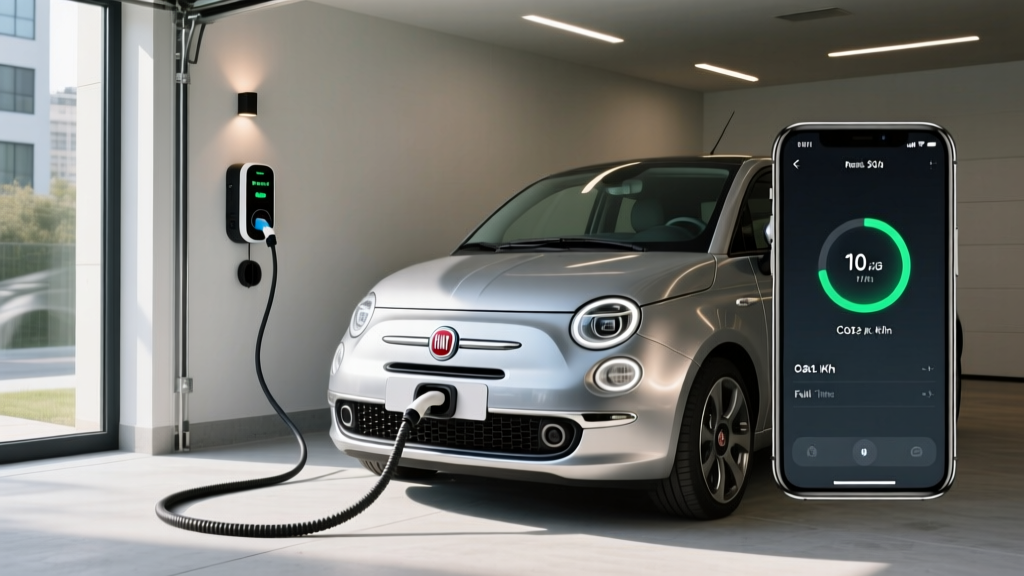
For a 400-mile EV, Level 2 at 11.5 kW (a 48-amp circuit) is the practical minimum for daily home charging. It adds roughly 40 miles of range per hour, meaning an overnight session of 8 hours restores about 320 miles — enough to refill most of the usable pack.
DC Fast Charging: Peak kW vs. Sustained Reality
Automakers advertise peak charge rates — "up to 250 kW" — but charging speed follows a charge curve that tapers significantly as the battery fills. On a 100 kWh pack at a 250 kW charger, you might see 250 kW from 10–30% state of charge (SoC), dropping to 150 kW by 50%, and falling below 50 kW past 80%. This is why 10–80% time is the standard benchmark rather than 0–100%.
Real-world 10–80% times for 400-mile-class EVs:
- Tesla Model S Long Range (~100 kWh, 250 kW peak): ~25–30 minutes at a V3 Supercharger
- Lucid Air Grand Touring (112 kWh, 300+ kW peak): ~20–25 minutes at a 350 kW Electrify America station
- Chevy Silverado EV (200+ kWh, 350 kW peak): ~30–40 minutes at a 350 kW DCFC (larger battery takes longer even at high power)
Preconditioning matters. If your EV has battery preconditioning for DC fast charging (Tesla, Lucid, Hyundai/Kia E-GMP platform), always use the navigation system to route to the charger. This warms the battery to optimal temperature and can shave 5–10 minutes off your charge session, especially in cold weather.
Home Charger Installation: Electrical Requirements and Costs
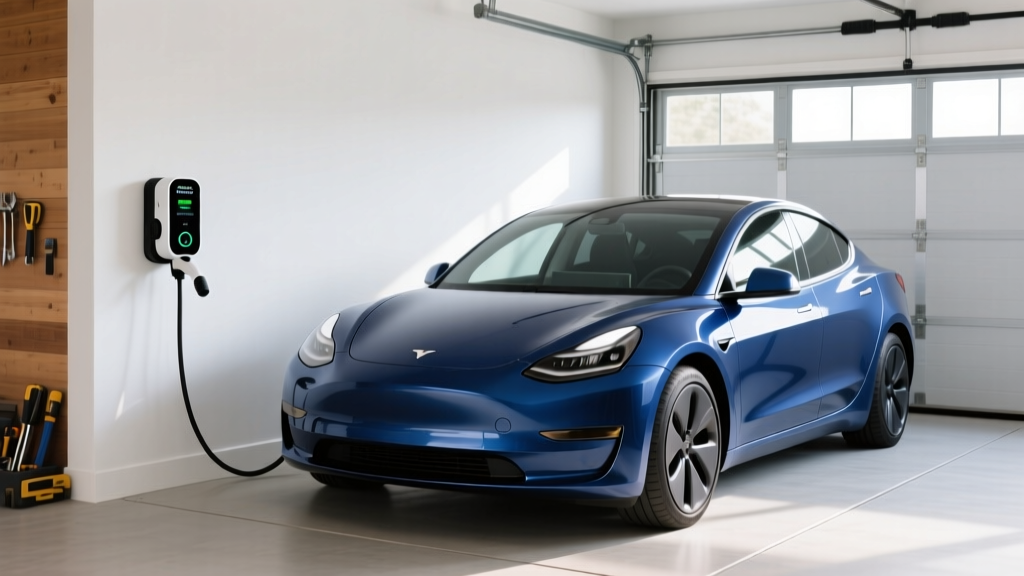
Installing a Level 2 home charger is the single highest-impact upgrade for EV ownership. Here's what's involved electrically and financially.
Electrical Requirements
A Level 2 charger requires a 240-volt circuit, the same type of outlet your electric dryer or oven uses. The circuit amperage determines your charging speed:
- 240V / 20A circuit → 16A continuous draw → 3.8 kW → ~14 mi/hr
- 240V / 40A circuit → 32A continuous draw → 7.7 kW → ~28 mi/hr
- 240V / 50A circuit → 40A continuous draw → 9.6 kW → ~35 mi/hr
- 240V / 60A circuit → 48A continuous draw → 11.5 kW → ~42 mi/hr
Per the National Electrical Code (NEC), EV chargers are considered continuous loads, meaning the circuit must be rated for 125% of the charger's maximum draw. A 48-amp charger requires a 60-amp circuit. Always hire a licensed electrician to assess your panel capacity and pull the required permits.
Panel Upgrade Considerations
Many homes built before 2000 have 100-amp or 150-amp main electrical panels. Adding a 60-amp EV circuit to a panel already serving central AC, an electric dryer, and an electric oven may exceed the panel's capacity. In these cases, a panel upgrade to 200 amps is necessary and represents the single largest cost variable in a home charger installation.
Signs you may need a panel upgrade:
- Main breaker rated below 150 amps
- No available breaker slots (fewer than 2–4 open spaces)
- Existing high-draw appliances already consuming 80%+ of panel capacity
- Frequent breaker trips under current load
Installation Cost Breakdown
| Component | Simple Install (Panel Nearby, No Upgrade) | Complex Install (Long Run or Panel Upgrade) |
|---|---|---|
| Level 2 Charger (hardware) | $350–$700 | $350–$700 |
| Electrician labor (2–4 hrs simple / 6–12 hrs complex) | $300–$800 | $1,200–$3,000 |
| Electrical materials (conduit, wire, breaker) | $100–$300 | $300–$800 |
| Permit and inspection | $50–$200 | $50–$200 |
| Panel upgrade (if needed) | $0 | $1,500–$3,500 |
| Total | $800–$2,000 | $3,400–$8,200 |
Connector Compatibility: NACS, CCS1, and CHAdeMO
The EV charging connector landscape has consolidated significantly as of 2026, but you still need to know what's on your vehicle and what's available at public stations.
| Connector | Also Known As | Used By (2026 Models) | AC Level 2? | DC Fast Charge? | Max DC kW (typical) |
|---|---|---|---|---|---|
| NACS | Tesla connector, J3400 | Tesla (all), Ford, GM, Rivian, Volvo, Polestar, Hyundai, Kia, BMW, most new 2025+ models | Yes | Yes | 350+ kW |
| CCS1 | Combo | Legacy 2024 and earlier models (VW ID.4 pre-2025, older Bolt EV, etc.) | Yes (J1772 portion) | Yes | 350 kW |
| CHAdeMO | — | Nissan Leaf (legacy), Mitsubishi Outlander PHEV (older) | No (uses J1772 for AC) | Yes | 100 kW (mostly retired) |
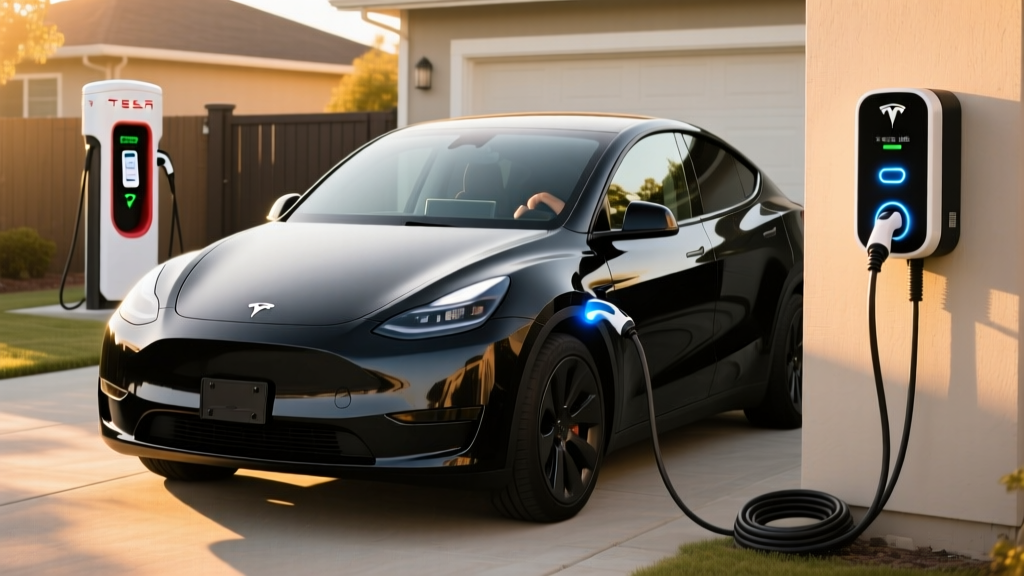
For 400-mile EVs in 2026: Nearly every new long-range EV now ships with the NACS port. If you own a 2023–2024 model-year EV with CCS1 (like an early Ford F-150 Lightning or Hyundai Ioniq 5), you'll need a CCS-to-NACS adapter ($150–$250) to access Tesla Superchargers, which now number over 25,000 stalls in North America and represent the most reliable public DC fast-charging network. According to Tesla's Supercharger network page, non-Tesla EV access continues to expand.
- CCS1 vehicle → NACS Supercharger: Requires CCS-to-NACS adapter (Tesla, Lectron, or A2Z)
- NACS vehicle → CCS1 station: Requires NACS-to-CCS adapter (available from Tesla and third parties)
- CHAdeMO vehicle → CCS/NACS station: No widely available adapter; CHAdeMO infrastructure is being retired — plan charging accordingly
Cost to Charge: Per-Mile Math vs. Gasoline
Charging cost varies enormously depending on where and when you plug in. Here's the real math for a 400-mile EV with a 100 kWh battery, assuming an efficiency of 3.0 miles per kWh (a reasonable figure for a large sedan; SUVs and trucks will be lower).
| Scenario | Rate ($/kWh) | Cost to Add 300 Miles | Cost Per Mile | Equivalent Gas Price (at 25 MPG) |
|---|---|---|---|---|
| Home, off-peak utility rate | $0.08–$0.12 | $8.00–$12.00 | $0.027–$0.040 | $0.67–$1.00/gal |
| Home, standard residential rate | $0.14–$0.18 | $14.00–$18.00 | $0.047–$0.060 | $1.17–$1.50/gal |
| Public Level 2 (workplace, retail) | $0.20–$0.35 | $20.00–$35.00 | $0.067–$0.117 | $1.67–$2.92/gal |
| DC Fast Charge (Electrify America, EVgo) | $0.35–$0.55 | $35.00–$55.00 | $0.117–$0.183 | $2.92–$4.58/gal |
| Tesla Supercharger (varies by location/time) | $0.25–$0.40 | $25.00–$40.00 | $0.083–$0.133 | $2.08–$3.33/gal |
| Gasoline vehicle (25 MPG combined, $3.50/gal) | — | $42.00 | $0.140 | $3.50/gal |
The bottom line: If you charge primarily at home on off-peak rates, your per-mile fuel cost is roughly one-quarter to one-third of a 25 MPG gasoline vehicle. If you rely exclusively on DC fast charging at peak rates, your cost per mile can equal or slightly exceed gasoline — though this is an unusual usage pattern. The EPA's fueleconomy.gov EV comparison tool lets you look up specific MPGe and kWh/100mi figures for any model.
For a 400-mile EV driven 12,000 miles per year with 80% home charging at $0.13/kWh and 20% DC fast charging at $0.42/kWh, your annual electricity cost is approximately $1,720 — versus $4,800 in gasoline for a comparable 25 MPG vehicle at $3.50/gallon. That's roughly $3,000 in annual fuel savings, though real-world figures depend on your utility rates, driving mix, and local gas prices.
Best Level 2 Home Chargers for 400-Mile EVs (2026 Picks)
With a 100+ kWh battery, you want a Level 2 charger that delivers at least 11.5 kW (48 amps) to keep overnight sessions under 8 hours. Here are three proven options:
ChargePoint Home Flex (NACS or J1772)
- Power: Up to 12 kW (50A circuit) adjustable down to 16A
- Connector: Available in NACS or J1772 (with J1772-to-NACS adapter included in some bundles)
- Cable length: 18 ft or 23 ft
- Smart features: Wi-Fi, ChargePoint app scheduling, Alexa, utility demand-response integration
- Price: ~$550–$650 (hardware only)
- Best for: Flexible amperage adjustment if your panel is tight on capacity
Tesla Wall Connector (NACS)
- Power: Up to 11.5 kW (48A on a 60A circuit)
- Connector: NACS native
- Cable length: 24 ft
- Smart features: Wi-Fi, over-the-air updates, power-sharing between two units on one circuit, load management
- Price: ~$425–$475
- Best for: Tesla owners or any NACS-equipped EV; best value-to-power ratio
Emporia Vue Level 2 Charger (J1772/NACS adapter)
- Power: Up to 11.5 kW (48A on a 60A circuit)
- Connector: J1772 (NACS adapter available)
- Cable length: 24 ft
- Smart features: Wi-Fi, Emporia app, energy monitoring, solar integration, scheduling
- Price: ~$350–$400
- Best for: Budget-conscious buyers who want energy monitoring and solar pairing
All three chargers are hardwired (no plug) at 48A+ — hardwired connections are required by code for circuits above 40A in most jurisdictions and eliminate the failure point of a receptacle. If you opt for a plug-in unit (NEMA 14-50 outlet), you're limited to 40A continuous (9.6 kW), which still adds ~35 miles per hour and is adequate for many 400-mile EV owners who drive under 80 miles daily.
Safety, Code, and Permit Considerations
EV charger installation is regulated electrical work. Skipping permits or using undersized wiring creates fire risk and may void your homeowner's insurance in the event of an electrical incident.
- Dedicated circuit: Your EV charger must have its own dedicated breaker — never share a circuit with other appliances.
- GFCI protection: The 2023 NEC (adopted by most states as of 2026) requires GFCI protection for all EV charging receptacles. Hardwired chargers are exempt from this requirement in most jurisdictions, which is one reason hardwired installs are preferred.
- Outdoor rating: If your charger is mounted outdoors, ensure it carries a NEMA 4 (weatherproof) rating. All three chargers above meet this standard.
- Wire gauge: A 60A circuit requires 4 AWG copper wire (or 3 AWG aluminum) for runs under 50 feet. Longer runs may require upsizing to prevent voltage drop — your electrician will calculate this.
- Permit and inspection: Most municipalities require an electrical permit ($50–$200) and a post-installation inspection. This protects you legally and ensures code compliance.
Frequently Asked Questions
How much does it cost to install a home EV charger?
A straightforward Level 2 installation with an adequate electrical panel runs $800–$2,000 including hardware, labor, and permit. If your home needs a panel upgrade to 200A or a long wire run through finished walls, costs can reach $3,500–$8,200. The charger hardware itself is $350–$700.
How fast will each charging level add range to a 400-mile EV?
Level 1 (120V): 3–5 miles per hour. Level 2 (240V, 48A): ~40 miles per hour. DC Fast Charge (250 kW peak): 150–250 miles in 15–20 minutes at peak rate, tapering as the battery fills. For a 100 kWh pack, Level 2 at 11.5 kW is the practical daily solution, restoring ~320 miles overnight.
Which connector and charger is compatible with my EV?
If your EV is a 2025–2026 model, it almost certainly has a NACS port. Older 2023–2024 models may have CCS1. Check your vehicle's charge port or owner's manual. For home charging, buy a Level 2 charger with the matching connector — or use a J1772-to-NACS adapter. For DC fast charging, NACS vehicles can use Tesla Superchargers directly; CCS1 vehicles need a CCS-to-NACS adapter for Supercharger access.
How much does charging cost per mile compared to gas?
Home charging at $0.13/kWh costs roughly $0.04–$0.05 per mile for a 400-mile EV (at 3 mi/kWh efficiency). Gasoline at $3.50/gallon in a 25 MPG vehicle costs $0.14 per mile. Even DC fast charging at $0.45/kWh costs ~$0.15/mile — comparable to gas but used infrequently. Most owners save $2,000–$3,500 annually on fuel by charging primarily at home. Use the EPA's EV fuel cost calculator for model-specific comparisons.
What electrical upgrades might I need for a home charger?
The most common upgrade is a panel capacity increase from 100A or 150A to 200A, costing $1,500–$3,500. You may also need additional breaker slots, a sub-panel in the garage, or heavier-gauge wire for long conduit runs. Homes with 200A+ panels and available breaker spaces typically need no upgrade — just a new 240V circuit. A licensed electrician can perform a load calculation to determine your panel's remaining capacity before you commit to a charger purchase.