Escalade IQ Range and Battery: The Numbers That Matter
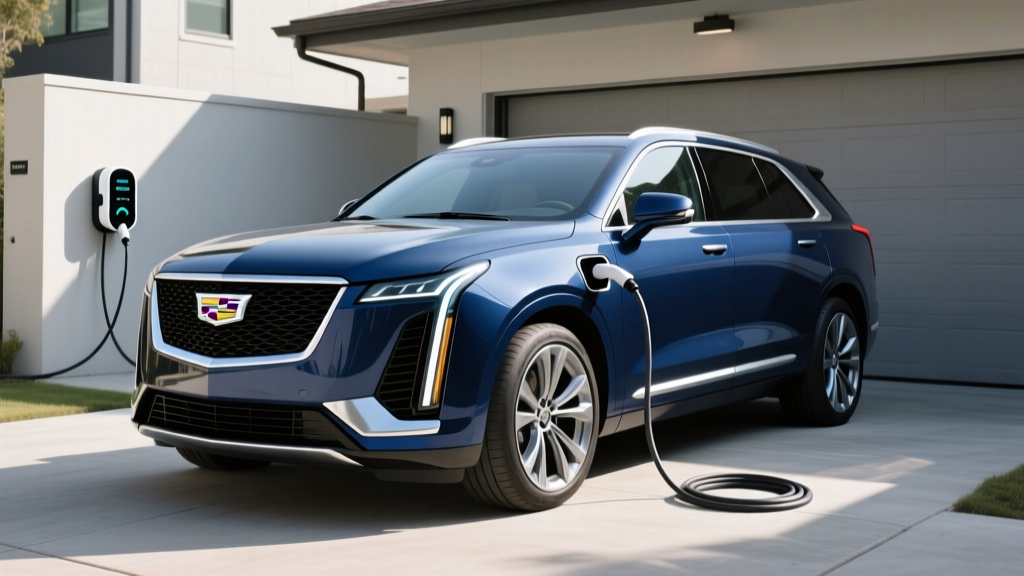
The 2026 Cadillac Escalade IQ arrives with a massive 200 kWh usable battery pack (Ultium platform, NMC chemistry) and an EPA-estimated range of up to 460 miles on the Luxury trim with 22-inch wheels. That figure places it among the longest-range EVs ever sold in the U.S., rivaling the Lucid Air Grand Touring. But as with every EV, the sticker number isn't the whole story.
| Spec | Value |
|---|---|
| EPA Range (Luxury 22") | 460 miles |
| Battery Capacity (usable) | ~200 kWh (NMC) |
| DC Fast Charge Peak | ~200+ kW |
| 10–80% DC Fast Charge | ~35–40 minutes (est.) |
| Level 2 AC Charge Rate | 19.2 kW (80A capable) |
| 0–60 mph | ~3.5 sec (AWD, Velocity Max) |
| Horsepower | 680 hp (AWD) |
| Base MSRP (Luxury) | ~$129,990 |
| Battery Warranty | 8 years / 100,000 miles |
At a base MSRP near $129,990, the Escalade IQ exceeds the IRS §30D federal tax credit MSRP cap of $80,000 for SUVs, meaning it does not qualify for the $7,500 new clean vehicle credit. Buyers should consult a tax professional regarding state-level incentives and potential commercial fleet credit pathways under §45W.
Charging Levels Explained: Speeds, kW, and Miles Per Hour
Understanding EV charging requires distinguishing between kW (kilowatts), which measures power flow rate—how fast energy is delivered—and kWh (kilowatt-hours), which measures total energy stored in the battery. Think of kW as the width of a hose and kWh as the size of the tank you're filling. The Escalade IQ's ~200 kWh battery is the tank; your charger's kW rating determines how quickly you fill it.
| Level | Voltage / Amps | Power (kW) | Miles of Range Per Hour | Full Charge Time (0–100%) |
|---|---|---|---|---|
| Level 1 (Standard Outlet) | 120V / 12A | 1.4 kW | ~3–4 mi/hr | ~6+ days |
| Level 2 (Home / Workplace) | 240V / 48A | 11.5 kW | ~25–30 mi/hr | ~18–20 hours |
| Level 2 (High-Power) | 240V / 80A | 19.2 kW | ~40–48 mi/hr | ~11–13 hours |
| DC Fast Charging | 400–800V DC | Up to 200+ kW | ~500+ mi/hr (peak) | 10–80% in ~35–40 min |
For a 200 kWh battery, Level 1 charging is essentially impractical as a primary strategy—it would take nearly a week to fill from empty. Level 2 at home is the sweet spot for daily ownership: plug in overnight and wake up with 200+ miles restored. The Escalade IQ supports up to 19.2 kW AC charging, which means investing in an 80-amp Level 2 circuit extracts maximum value from overnight sessions.
DC fast charging peaks above 200 kW but sustains that rate only through roughly 30–40% state of charge before tapering. Expect the 10–80% session to average around 150–170 kW on a capable 350 kW station, with the curve dropping sharply past 80% to protect battery health. Preconditioning the battery (navigating to a DC fast charger in the navigation system) warms the pack for optimal charge acceptance—skip this in cold weather and your peak rate may drop by 30–50%.
Home Charger Installation: Electrical Requirements and Costs
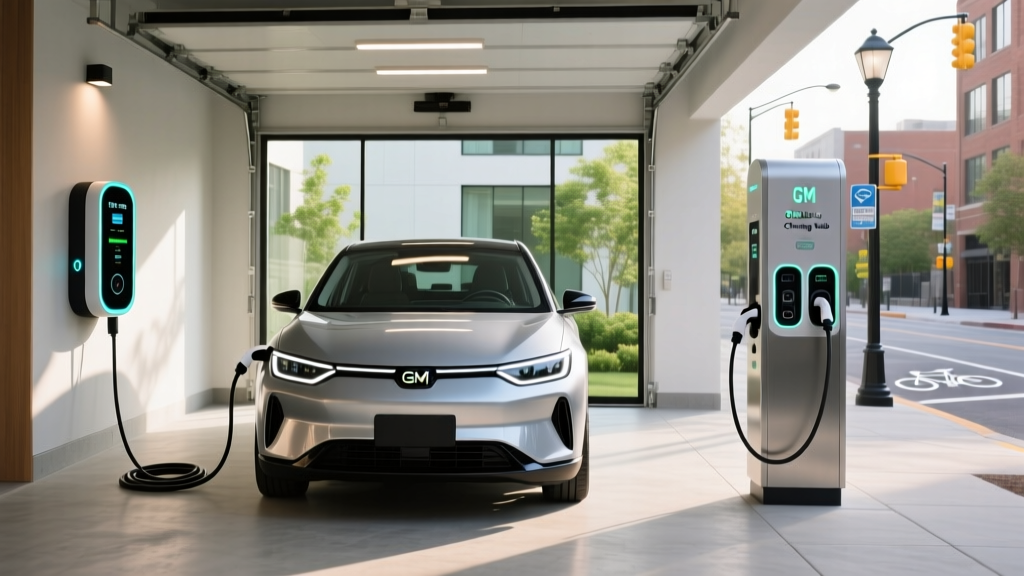
Charging the Escalade IQ efficiently at home means installing a dedicated 240-volt Level 2 circuit. Here's what that involves for a large-battery EV that can accept up to 19.2 kW.
Electrical Requirements
To deliver 19.2 kW, you need a 240V / 80A dedicated circuit with a 100-amp breaker (NEC code requires circuits to be rated at 125% of continuous load). For a more common 48A charger delivering 11.5 kW, a 240V / 60A breaker on a dedicated circuit suffices. Both require:
- A double-pole breaker in your main electrical panel
- Appropriate-gauge copper wiring (typically 6 AWG for 48A, 3 AWG for 80A)
- A hardwired connection or NEMA 14-50 receptacle (for 48A units)
- GFCI protection if installed outdoors per NEC 2020/2023 requirements
- A permit and inspection from your local building department
Panel Upgrade Reality
Most modern homes have 200-amp electrical service, which generally supports a 48A or even 80A EV circuit. However, older homes with 100-amp panels, homes already running multiple high-draw appliances (electric range, dryer, HVAC), or homes with the panel at near-capacity may need a service upgrade to 200A or even 400A. This is one of the most expensive variables in EV charger installation and frequently surprises buyers of larger homes built before the 1990s.
| Component | 48A (11.5 kW) Setup | 80A (19.2 kW) Setup |
|---|---|---|
| Charger Equipment | $400–$700 | $600–$1,200 |
| Electrician Labor | $500–$1,500 | $800–$2,500 |
| Permit & Inspection | $50–$300 | $50–$300 |
| Panel Upgrade (if needed) | $1,500–$3,500 | $2,000–$5,000 |
| Wiring Materials | $100–$400 | $200–$600 |
| TOTAL (no panel upgrade) | $1,050–$2,900 | $1,650–$4,600 |
| TOTAL (with panel upgrade) | $2,550–$6,400 | $3,650–$9,600 |
The IRS Energy Efficient Home Improvement Credit (§25C) covers 30% of qualified EV charger equipment and installation costs, up to a $1,000 maximum. This credit applies to your primary residence and can offset a meaningful portion of your install. Verify current-year eligibility with a tax professional, as rules around census-tract eligibility and income thresholds apply.
Connector Compatibility: NACS, CCS, and the Escalade IQ
The 2026 Cadillac Escalade IQ ships with the North American Charging Standard (NACS) connector, also known as the Tesla-style plug. GM committed to NACS adoption across its EV lineup starting in 2025, and the Escalade IQ benefits from direct access to Tesla Supercharger stations (V3 at 250 kW and V4 at higher rates) without an adapter.
| Connector | Brands Using It | Escalade IQ Compatible? |
|---|---|---|
| NACS (Tesla-style) | Tesla, GM, Ford, Rivian, Volvo, Polestar, Hyundai/Kia (2025+) | ✅ Native — no adapter needed |
| CCS1 (Combo) | Legacy VW, BMW, older GM models, Stellantis | ⚠️ NACS-to-CCS adapter needed for Electrify America, some public stations |
| CHAdeMO | Nissan Leaf (legacy), Mitsubishi | ❌ Not compatible; network is sunsetting |
| J1772 (AC Level 1/2) | All EVs (AC charging standard) | ✅ J1772-to-NACS adapter included with most NACS vehicles |
For public DC fast charging, your NACS connector works natively at Tesla Superchargers and a growing number of NACS-equipped Electrify America, EVgo, and ChargePoint stations. For older CCS-only public chargers, GM provides or sells a NACS-to-CCS adapter. Always verify station connector type in the Tesla, Electrify America, or PlugShare app before driving to a charger.
Level 2 Charger Equipment Recommendations
With the Escalade IQ's 19.2 kW AC acceptance rate, you have a choice: install a 48A charger (more common, less expensive electrical work) or invest in an 80A unit to maximize overnight range recovery. Here are top picks for each tier.
ChargePoint Home Flex (48A)
- Power Output: Up to 11.5 kW (240V/48A)
- Connector: NACS (J1772 variant available)
- Cable Length: 23 feet
- Smart Features: Wi-Fi, app scheduling, energy tracking, Alexa integration
- Price: ~$550–$650
- Best For: Most homes with 60A breaker capacity; reliable daily overnight charging
Tesla Wall Connector (48A)
- Power Output: Up to 11.5 kW (240V/48A)
- Connector: NACS native
- Cable Length: 24 feet
- Smart Features: Wi-Fi, OTA updates, power sharing between units, load management
- Price: ~$475
- Best For: NACS-vehicle households; excellent value and build quality
Grizzl-E Smart (48A)
- Power Output: Up to 11.5 kW (240V/48A)
- Connector: J1772 (use included NACS adapter)
- Cable Length: 24 feet
- Smart Features: OCPP-compatible, adjustable amperage, extreme cold rated (-40°C)
- Price: ~$450–$550
- Best For: Cold-climate installations; rugged outdoor mounting
FLO Home X80 (80A)
- Power Output: Up to 19.2 kW (240V/80A)
- Connector: J1772 (NACS adapter required)
- Cable Length: 25 feet
- Smart Features: Wi-Fi, app control, energy management, utility integration
- Price: ~$1,000–$1,200
- Best For: Maximum AC speed; requires 100A breaker and 3 AWG wiring
Emporia Vue Level 2 (48A)
- Power Output: Up to 11.5 kW (240V/48A)
- Connector: J1772 / NACS (configurable)
- Cable Length: 24 feet
- Smart Features: Whole-home energy monitoring integration, solar-aware scheduling, load management
- Price: ~$400–$500
- Best For: Solar-panel homes; best-in-class energy dashboard
Charging Cost: Per-Mile Economics vs. Gas
The Escalade IQ's efficiency hovers around 2.0 kWh/mile given its 8,000+ lb curb weight and luxury-class aerodynamics. That's thirsty by EV standards but still dramatically cheaper per mile than the gas Escalade's 14–16 MPG combined on premium fuel.
| Scenario | Cost per kWh or Gallon | Cost Per Mile | Cost for 460-Mile Trip |
|---|---|---|---|
| Home Charging (off-peak utility rate) | $0.13/kWh | $0.026/mi | $11.96 |
| Home Charging (avg. national rate) | $0.17/kWh | $0.034/mi | $15.64 |
| Public Level 2 (ChargePoint, etc.) | $0.25–$0.35/kWh | $0.05–$0.07/mi | $23–$32 |
| DC Fast Charging (EA, EVgo) | $0.35–$0.55/kWh | $0.07–$0.11/mi | $32–$51 |
| Tesla Supercharger (avg.) | $0.28–$0.36/kWh | $0.056–$0.072/mi | $26–$33 |
| Gas Escalade (premium, 15 MPG) | $4.50/gal | $0.30/mi | $138.00 |
Home charging is where EV economics shine: filling the Escalade IQ's 200 kWh battery overnight costs $26–$34 depending on your utility rate, versus $138+ for an equivalent tank of premium in the gas Escalade. Even at public DC fast charger rates, the IQ costs roughly one-third to one-half per mile compared to gasoline. Over 15,000 miles per year, home-charging savings versus gas run approximately $3,500–$4,200 annually.
Safety, Code Compliance, and Installation Best Practices
A Level 2 charger draws significant continuous current—often for 8+ hours overnight. Proper installation isn't optional; it's a fire-safety necessity. Here's what your licensed electrician should address:
- Dedicated circuit: Your EV charger must have its own breaker—never share a circuit with other appliances.
- GFCI protection: NEC 2020 and later requires ground-fault circuit interrupter protection for outdoor receptacles. Hardwired indoor installations may not require GFCI, but local codes vary.
- Outdoor rating: If mounting outdoors, the charger must carry a NEMA 4 or IP65 rating for weather resistance. All connectors and junction boxes must be rated for wet locations.
- Wire gauge: Undersized wiring causes overheating. A 48A circuit needs 6 AWG copper minimum; an 80A circuit needs 3 AWG copper. Your electrician will calculate based on run length and voltage drop.
- Permit and inspection: Virtually all jurisdictions require an electrical permit for EV charger installation. The inspection ensures code compliance and protects your home insurance coverage.
- Load calculation: Your electrician should perform a NEC Article 220 load calculation to verify your panel can handle the added continuous draw without overloading the service.
Always hire a licensed electrician experienced with EV charger installations. The National Electrical Code (NEC) governs these requirements, and local amendments may add further restrictions.
Frequently Asked Questions
How much does it cost to install a home EV charger for the Escalade IQ?
Expect $1,050–$2,900 for a standard 48A (11.5 kW) installation in a home with adequate panel capacity. An 80A (19.2 kW) setup runs $1,650–$4,600. If your home needs a panel upgrade from 100A to 200A service, add $1,500–$5,000. The IRS §25C credit can offset up to $1,000 (30% of costs).
How fast will each charging level add range to the Escalade IQ?
Level 1 (120V) adds roughly 3–4 miles per hour—impractical for a 200 kWh battery. Level 2 at 48A (11.5 kW) adds about 25–30 miles per hour. Level 2 at 80A (19.2 kW) adds 40–48 miles per hour. DC fast charging at peak rates adds over 500 miles per hour but tapers significantly above 80% state of charge, making the practical 10–80% session take about 35–40 minutes.
Which connector and charger is compatible with the Escalade IQ?
The Escalade IQ uses the NACS (Tesla-style) connector natively. This gives you direct access to Tesla Superchargers and all NACS-equipped public stations. For AC home charging, use a NACS-equipped wall connector or a J1772 charger with the included J1772-to-NACS adapter. For legacy CCS-only public DC chargers, a NACS-to-CCS adapter is available from GM.
How much does charging the Escalade IQ cost per mile compared to a gas Escalade?
At home off-peak rates ($0.13/kWh), the Escalade IQ costs roughly $0.026 per mile. The gas Escalade on premium fuel at 15 MPG costs about $0.30 per mile—more than 10x the cost. Even at the most expensive public DC fast chargers ($0.55/kWh), the IQ costs about $0.11 per mile, still nearly three times cheaper than gasoline.
What electrical upgrades might I need for home charging?
If your home has a 200-amp panel with available capacity, you likely need only a new double-pole breaker and wiring run. Homes with 100-amp service, panels already near capacity, or subpanels feeding the garage may require a panel upgrade ($1,500–$5,000), a service upgrade from the utility, or a secondary subpanel installation. A licensed electrician's load calculation determines this before any work begins.
Can I charge the Escalade IQ on a regular 120V outlet?
Technically yes, but at 1.4 kW (roughly 3–4 miles of range per hour), a full charge would take over six days. For a vehicle with a 200 kWh battery, Level 1 is only viable as an emergency trickle or for plugging in during extended parking. A 240V Level 2 installation is strongly recommended as the primary home charging method.