The Chevrolet Equinox EV's appeal hinges on its EPA-estimated 319 miles of range (on the 3LT and 3RS trims with the larger battery). But achieving that number—and minimizing downtime when you can't—depends entirely on your charging strategy. The Equinox EV uses an 85 kWh usable Ultium lithium-ion (NMC) battery pack, and how you replenish those kilowatt-hours determines whether you enjoy seamless daily driving or frustrating waits.
This guide breaks down exactly how to charge the Equinox EV at home and on the road, what equipment you need, what it costs, and how to get the most real-world miles from every session.
Understanding Equinox EV Range: EPA vs. Real World
EPA Estimate: 319 miles (FWD, 85 kWh battery, 3LT/3RS trims)
Real-World Expectation: Plan for 260–285 miles on mixed highway driving at 70+ mph. In freezing temperatures (below 32°F), expect a 20–30% reduction, bringing usable range to roughly 220–255 miles. City driving with regenerative braking recovers closer to the EPA sticker.
Efficiency: Approximately 3.0–3.3 miles per kWh (combined). Source: EPA / fueleconomy.gov
The Equinox EV's range is competitive among compact electric SUVs, but range is only useful if you can reliably and affordably refill the battery. That starts at home.
Charging Levels Explained: Speed, Power, and Range Added
Before choosing equipment, understand the three charging tiers. Power is measured in kW (kilowatts), which is the rate of energy delivery—like water pressure from a hose. Energy is measured in kWh (kilowatt-hours), which is the total amount delivered—like gallons in a bucket. The Equinox EV's battery holds 85 kWh of usable energy.
| Level | Voltage / Amps | Max Power (kW) | Miles of Range Added Per Hour | Best For |
|---|---|---|---|---|
| Level 1 | 120V / 12–16A | 1.4–1.9 kW | 3–5 miles | Overnight trickle; emergency top-offs |
| Level 2 (Home/Public AC) | 240V / 32–48A | 7.7–11.5 kW | 22–38 miles | Daily home charging; workplace; shopping centers |
| DC Fast Charging | 400V+ architecture | Up to 150 kW (Equinox EV peak) | ~250+ miles in 30 min (10–80%) | Road trips; rapid replenishment |
The Equinox EV's onboard charger accepts up to 11.5 kW on Level 2 (48 amps at 240V). On DC fast charging, it peaks at approximately 150 kW, though like all EVs, the charge rate tapers significantly above 80% State of Charge (SoC) to protect battery longevity. A 10–80% DC fast charge takes roughly 30–35 minutes under ideal thermal conditions.
Home Level 2 Installation: Requirements, Costs, and Panel Upgrades
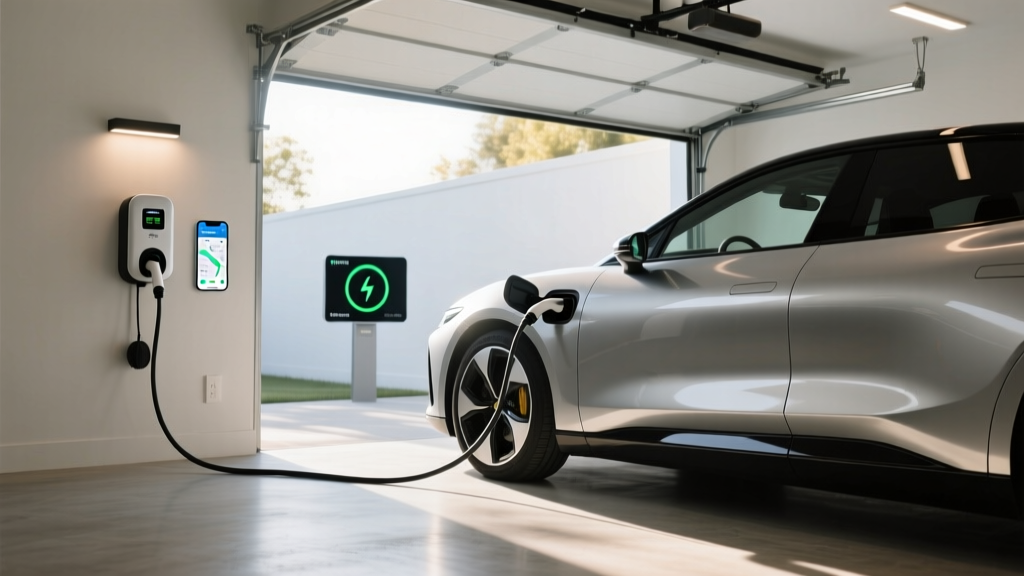
A Level 2 home charger is the backbone of practical Equinox EV ownership. Here's what installation actually involves and what it costs.
Electrical Requirements
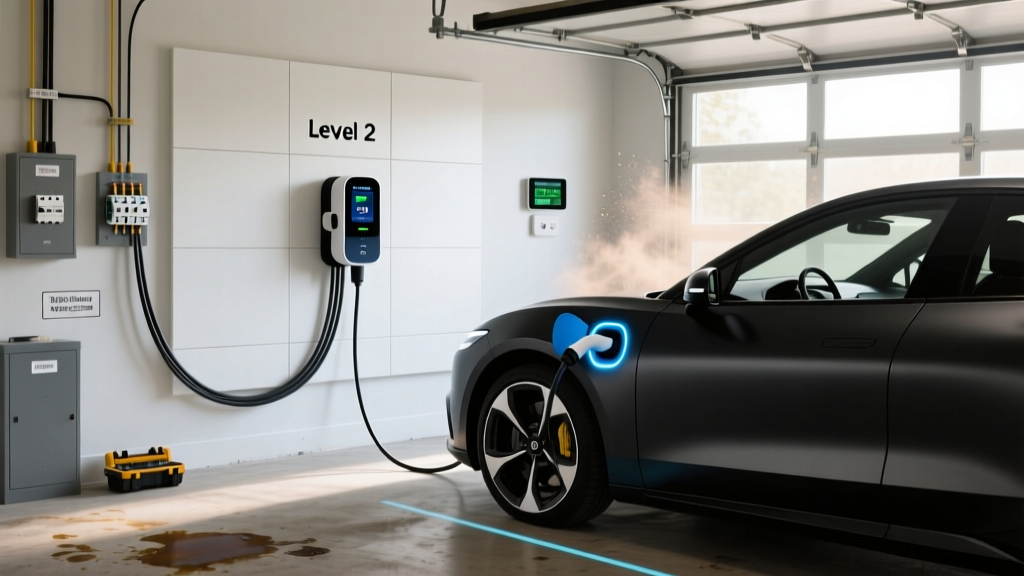
To deliver the Equinox EV's maximum 11.5 kW Level 2 rate, you need a 240V, 60-amp dedicated circuit (which allows 48 amps of continuous draw, per National Electrical Code 80% rule). If your charger is hardwired, a 60A breaker is standard. If you use a NEMA 14-50 outlet, a 50A breaker is typical, delivering up to 40A continuous (9.6 kW)—still enough to add roughly 30 miles of range per hour and fully recharge the 85 kWh battery overnight in about 9 hours.
Do You Need a Panel Upgrade?
Most modern homes with a 200-amp electrical panel can accommodate a 60A EV circuit without an upgrade. However, older homes with 100A or 150A service, or homes already running heavy loads (electric range, dryer, HVAC, hot tub), may need a panel upgrade to 200A or even 400A. A licensed electrician will perform a load calculation to determine this. Panel upgrades add $1,500–$4,000+ to the project.
Installation Cost Breakdown
| Item | Typical Cost Range | Notes |
|---|---|---|
| Level 2 Charger (Equipment) | $400–$750 | Smart Wi-Fi-enabled 40A–48A units |
| Electrician Labor (standard install) | $600–$1,800 | Depends on run length from panel to garage/driveway |
| Permit & Inspection | $100–$300 | Required by most jurisdictions; ensures code compliance |
| Electrical Panel Upgrade (if needed) | $1,500–$4,000+ | 100A→200A or 200A→400A; older homes |
| Total (no panel upgrade) | $1,100–$2,850 | Most common scenario for 200A homes |
| Total (with panel upgrade) | $2,600–$6,850+ | Older homes or max-load situations |
Always hire a licensed electrician and pull a permit. Unpermitted work can void home insurance and create fire risk. For the Equinox EV's 11.5 kW max acceptance, specify a 48A charger on a 60A circuit to avoid leaving charging speed on the table.
Connector Compatibility: NACS, CCS1, and the 2026 Landscape
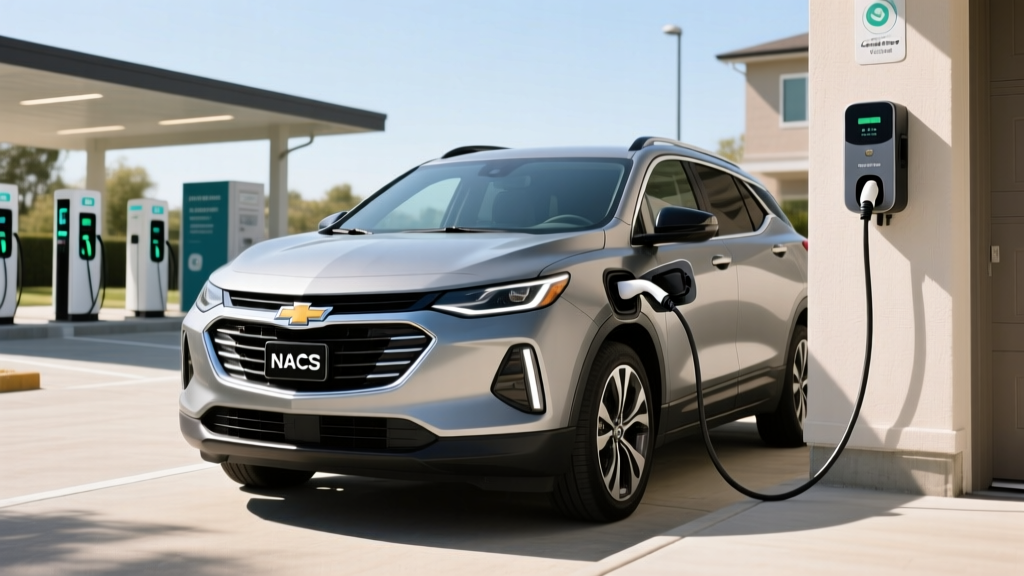
The 2025–2026 Chevrolet Equinox EV ships with the NACS (North American Charging Standard) connector—Tesla's design, now adopted by GM and most major automakers. This means native access to Tesla Supercharger stations (over 25,000 stalls in North America) without an adapter.
| Connector | Network / Use | Equinox EV Compatibility |
|---|---|---|
| NACS (J3400) | Tesla Superchargers, newer Electrify America & EVgo stalls, home Wall Connectors | Native — built-in on 2025+ Equinox EV |
| CCS1 | Legacy Electrify America, ChargePoint, EVgo public DC fast chargers | Requires NACS-to-CCS adapter (GM provides or sells one; ~$200 aftermarket) |
| CHAdeMO | Older Nissan Leaf–era stations; largely deprecated | Not compatible; adapter not practical for DC fast charging |
| J1772 (AC Level 2 public) | Public Level 2 stations (workplace, malls, hotels) | Requires NACS-to-J1772 adapter for public AC charging (~$100–$150) |
Practical tip: Keep a NACS-to-J1772 adapter in the Equinox EV's frunk or cargo area for public Level 2 chargers that haven't transitioned to NACS. GM has committed to NACS, and infrastructure is shifting fast, but adapters ensure you're never stranded during the transition.
Charging Cost Per Mile: Home vs. Public vs. Gas
One of the Equinox EV's strongest ownership arguments is fuel cost savings. Here's the math using real 2026 electricity and gas prices.
| Scenario | Rate | Cost to Fill 85 kWh (0–100%) | Cost Per Mile (319-mi range) |
|---|---|---|---|
| Home (off-peak utility rate) | $0.13/kWh | $11.05 | $0.035/mile |
| Home (average blended rate) | $0.17/kWh | $14.45 | $0.045/mile |
| Public Level 2 (ChargePoint, etc.) | $0.25–$0.35/kWh | $21.25–$29.75 | $0.067–$0.093/mile |
| DC Fast Charging (Electrify America, EVgo) | $0.35–$0.55/kWh | $29.75–$46.75 | $0.093–$0.147/mile |
| Gas Equivalent (28 MPG compact SUV at $3.40/gal) | $3.40/gallon | $38.67 (11.4 gal equivalent) | $0.121/mile |
At home off-peak rates, the Equinox EV costs roughly one-quarter to one-third what a comparable gas SUV costs per mile. Even at public DC fast charger rates, you're breaking even or saving slightly versus gas. The savings compound: a driver covering 12,000 miles/year saves roughly $1,000–$1,400 annually charging primarily at home versus buying gas. Source: fueleconomy.gov comparison tool.
Best Level 2 Home Chargers for the Equinox EV (2026 Picks)
These chargers match the Equinox EV's 11.5 kW / 48A maximum and feature NACS connectors natively.
ChargePoint Home Flex (NACS)
- Power Output: Up to 12 kW (50A) — configurable down to 16A
- Connector: NACS native (2025+ model)
- Cable Length: 23 feet
- Smart Features: Wi-Fi, app scheduling, utility demand-response integration, Alexa
- Price: ~$550–$650
- Why: Flexible amperage lets you match your circuit; excellent app and utility integration
Tesla Wall Connector (NACS)
- Power Output: Up to 11.5 kW (48A)
- Connector: NACS native
- Cable Length: 24 feet
- Smart Features: Wi-Fi, over-the-air updates, power-sharing for multi-charger setups, Tesla app
- Price: ~$420–$475
- Why: Best value for NACS-native charging; clean design; proven reliability
Emporia Vue Level 2 Charger
- Power Output: Up to 11.5 kW (48A)
- Connector: NACS (2025+ model) or J1772 with adapter
- Cable Length: 24 feet
- Smart Features: Wi-Fi, energy monitoring, solar integration, scheduling, load management
- Price: ~$400–$500
- Why: Budget-friendly smart charger with excellent energy-tracking for solar homes
All three are UL-listed (or ETL-listed), which is essential for safety and insurance compliance. Avoid non-certified chargers from unknown brands—they may lack proper GFCI protection, thermal management, and surge protection.
Safety, Code, and Outdoor Installation
EV charging draws sustained high current for hours—unlike any other household appliance. Safety isn't optional.
- Dedicated Circuit: The charger must be on its own dedicated breaker—never shared with other loads.
- GFCI Protection: Required for outdoor outlets (NEMA 14-50) per NEC 2023+. Hardwired chargers have built-in ground-fault protection.
- Outdoor Rating: If installing outside or in an unenclosed carport, choose a charger rated NEMA 4 (weather-resistant). All three picks above carry outdoor ratings.
- Cable Management: Use a holster or cable organizer to prevent tripping hazards and cord damage.
- Permit & Inspection: Most municipalities require an electrical permit for EV charger installs. The inspection ensures your wiring, breaker, and grounding meet code—this protects you and your home insurance coverage.
Frequently Asked Questions
How much does it cost to install a home EV charger for the Equinox EV?
Expect $1,100–$2,850 for a standard installation (equipment, electrician labor, and permit) if your home already has a 200A electrical panel. If a panel upgrade is needed, add $1,500–$4,000+. Get three quotes from licensed electricians and always pull a permit.
How fast will each charging level add range to the Equinox EV?
Level 1 (120V): 3–5 miles per hour. Level 2 (240V, 48A): roughly 35–38 miles per hour—enough to fully recharge the 85 kWh battery in about 9 hours. DC Fast Charging (150 kW peak): approximately 190 miles in 20 minutes under ideal conditions (10–80% in ~30–35 minutes), tapering significantly above 80%.
Which connector and charger is compatible with my Equinox EV?
The 2025–2026 Equinox EV uses the NACS connector natively. For home Level 2 charging, buy a NACS-equipped charger (Tesla Wall Connector, ChargePoint Home Flex NACS, or Emporia Vue NACS). For public CCS1 DC fast chargers, you'll need a NACS-to-CCS adapter. For older public J1772 Level 2 stations, carry a NACS-to-J1772 adapter.
How much does charging cost per mile versus gas?
Charging at home at $0.13/kWh costs roughly $0.035 per mile—about 3.5 cents. A comparable gas SUV at 28 MPG and $3.40/gallon costs about $0.12 per mile. That's roughly $1,000–$1,400 in annual fuel savings for a driver covering 12,000 miles, assuming primarily home charging.
What electrical upgrades might I need?
If your home has a 200A panel with available capacity, you likely need only a dedicated 60A circuit run from the panel to your garage or driveway. If your panel is 100A or 150A, or already near capacity with existing loads, you'll need a panel upgrade to 200A or 400A. A licensed electrician will perform a load calculation to determine this—don't skip this step.
Does the Equinox EV qualify for the federal tax credit?
The Equinox EV is assembled in North America and may qualify for up to $7,500 under IRS §30D, subject to buyer income caps ($150K single / $300K joint), MSRP caps ($80K for SUVs), and critical-mineral/battery-sourcing requirements that change annually. As of 2026, the credit can be transferred to the dealer as a point-of-sale discount. Always verify current eligibility at IRS.gov or with a tax professional before purchasing.
How can I maximize my Equinox EV's real-world range?
Use seat heaters and a heat pump (standard on most trims) instead of cabin air heating in winter. Precondition the battery and cabin while plugged in. Maintain tire pressure at the door-jamb spec. Use "one-pedal driving" mode in city traffic to maximize regenerative braking. On the highway, reducing speed from 75 to 65 mph can recover 20–30 miles of range on a full charge.
The Equinox EV's 319-mile EPA range is genuinely useful for daily driving and road trips alike—but only if your charging setup matches your lifestyle. A properly installed Level 2 home charger turns the Equinox EV into a vehicle you plug in at night and drive every morning with a full battery, at a fuel cost that gas vehicles simply can't match. Get the electrical assessment, choose a UL-listed NACS charger, and keep an adapter for legacy public stations. That's the formula for effortless EV ownership.