Equinox EV Charging Speed at a Glance
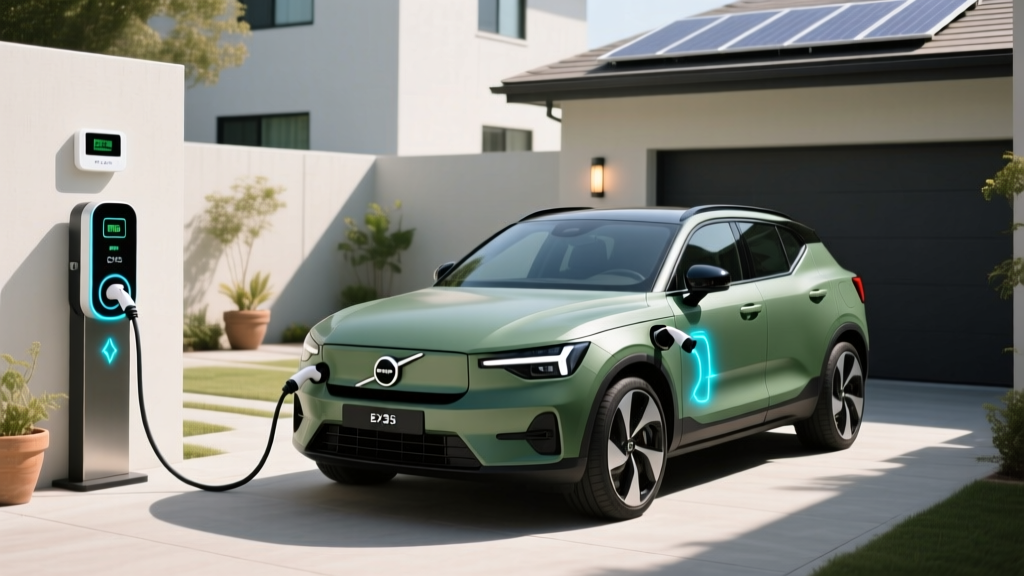
The Chevrolet Equinox EV is one of the most accessible long-range electric crossovers on the market, with an EPA-estimated range of up to 319 miles on the 3RS trim. But range is only half the equation — how quickly you can replenish that 85 kWh (usable) battery determines whether the Equinox EV fits your daily routine or your road-trip plans.
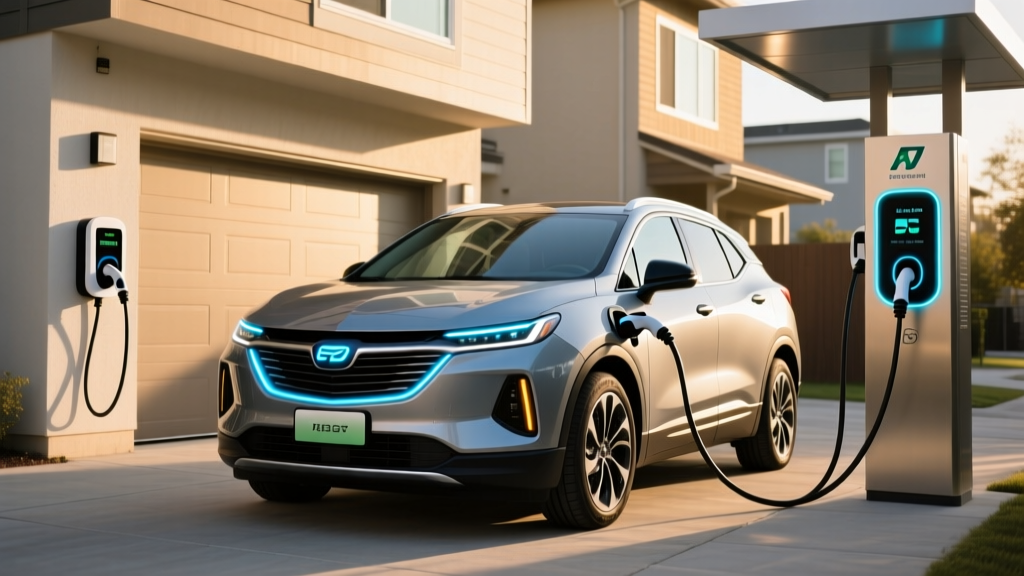
Chevy equips the Equinox EV with a capable charging system across both Level 2 and DC fast charging, though real-world speeds depend heavily on your home electrical setup, the public charger's output, and battery preconditioning. Below, we break down every charging scenario with exact numbers.
| Spec | Value |
|---|---|
| Battery Capacity (usable) | ~85 kWh (Ultium, NMC) |
| EPA Range (3RS FWD) | 319 miles |
| Real-World Highway Range | ~260–280 miles (70+ mph, moderate temps) |
| Max Level 2 AC Charge Rate | 11.5 kW |
| Max DC Fast Charge Rate | 150 kW (peak) |
| DC Fast 10–80% Time | ~30 minutes (optimal conditions) |
| Level 2 (11.5 kW) 0–100% Time | ~9.5 hours |
| Connector (2024–2026 models) | NACS (native Tesla Supercharger access) |
| Base MSRP (2LT, 2025) | ~$33,600 |
| Battery/Powertrain Warranty | 8 years / 100,000 miles |
Charging Levels Explained: How Fast Will Each Add Range?
The three EV charging levels differ dramatically in power output (measured in kilowatts, or kW — the rate of energy flow, not to be confused with kilowatt-hours, or kWh, which measures total energy stored). Here's what each level delivers for the Equinox EV:
| Level | Voltage / Amperage | Power Output | Miles of Range Added Per Hour | Best For |
|---|---|---|---|---|
| Level 1 (120V) | 120V / 12A | ~1.4 kW | ~3–4 miles/hr | Emergency top-ups, low-mileage days |
| Level 2 (240V) | 240V / 48A | 11.5 kW (max) | ~34–38 miles/hr | Daily home charging, overnight replenishment |
| DC Fast Charging | 400V+ DC | Up to 150 kW (peak) | ~200+ miles in 10 min (peak rate) | Road trips, quick public top-ups |
Level 1 is included with the vehicle via the portable charge cord plugged into a standard 120V household outlet. At roughly 3–4 miles of range per hour, a full recharge from empty would take over 60 hours. It's adequate only if you drive fewer than 30 miles per day and can leave the car plugged in overnight.
Level 2 is where most Equinox EV owners will do 90%+ of their charging. At the vehicle's maximum 11.5 kW acceptance rate, you'll add roughly 34–38 miles of range per hour. A depleted battery reaches full in about 9.5 hours — perfect for overnight charging on a dedicated 240V circuit.
DC Fast Charging bypasses the vehicle's onboard AC-to-DC converter and feeds DC current directly to the battery. The Equinox EV peaks at 150 kW, though this rate is only sustained briefly at a low state of charge (typically 10–25%). Above 50% SoC, the charge curve tapers significantly — this is a battery-protection mechanism, not a malfunction. Expect 10–80% in roughly 30 minutes at a 150+ kW station under optimal conditions (warm battery, low starting SoC).
Home Charger Installation: Requirements, Costs & Panel Upgrades
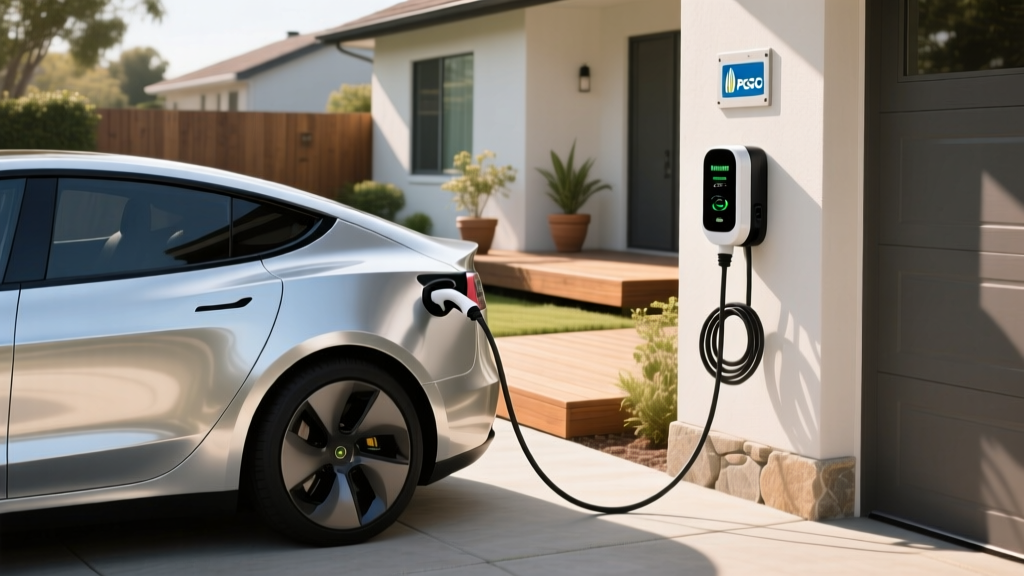
To unlock the Equinox EV's full 11.5 kW Level 2 charging capability at home, you need a 240V circuit rated for at least 60 amps (which allows 48 amps of continuous draw, per the National Electrical Code's 80% rule for continuous loads). Here's what that involves:
Electrical Requirements
- Circuit: Dedicated 60-amp, 240V breaker
- Wiring: 6 AWG copper (or 4 AWG aluminum) for a 60A circuit; some electricians run 4 AWG copper for future-proofing
- Outlet vs. hardwired: A NEMA 14-50 outlet offers flexibility (you can take the charger when you move), while hardwired units are slightly cheaper to install and avoid GFCI breaker compatibility issues
- GFCI protection: NEC 2017+ requires GFCI protection for EV outlets in garages; hardwired chargers typically have built-in ground-fault protection, avoiding nuisance tripping
Do You Need a Panel Upgrade?
This is the variable that can double or triple your installation cost. A Level 2 charger on a 60A circuit draws substantial continuous load. If your home has a 100-amp main panel (common in homes built before the 1990s), you likely cannot add a 60A EV circuit without exceeding the panel's capacity — especially if you already run electric range, dryer, and HVAC.
200-amp panel: Usually sufficient for a 60A EV circuit, assuming existing loads don't already consume most of the capacity. An electrician will perform a load calculation per NEC Article 220.
100-amp panel: A service upgrade to 200A typically costs $2,000–$4,000 depending on your utility, local permit fees, and whether the service drop from the utility pole needs replacement.
Alternative: If a panel upgrade is prohibitive, you can install a lower-amperage circuit (e.g., 30A or 40A), which will charge the Equinox EV at 7.2 kW or 9.6 kW respectively. You'll still fully recharge overnight — it just takes 11–12 hours instead of 9.5.
| Component | Cost Range | Notes |
|---|---|---|
| Level 2 Charger (Equipment) | $300–$700 | Smart Wi-Fi chargers with 25-ft cable |
| Electrician Labor (standard install) | $500–$1,500 | Varies by run length, conduit, wall type |
| Electrical Permit | $50–$200 | Required in most jurisdictions |
| Panel Upgrade (if needed) | $2,000–$4,000 | 100A → 200A service upgrade |
| Total (no panel upgrade) | $850–$2,400 | Most homes with 200A panel |
| Total (with panel upgrade) | $2,850–$6,400 | Older homes with 100A service |
Federal incentive: The IRS Residential Clean Energy Credit covers 30% of home EV charger equipment and installation costs, up to $1,000, for chargers placed in service. Check current-year eligibility on irs.gov, as rules and caps may shift.
Connector Compatibility: NACS, CCS1 & Adapter Needs
Starting with the 2025 model year, Chevrolet adopted the North American Charging Standard (NACS) connector for the Equinox EV, replacing the CCS1 port used on earlier GM EVs. This is a significant practical advantage — it gives the Equinox EV native access to Tesla's Supercharger network, the largest and most reliable DC fast-charging network in North America.
| Connector | Compatibility with Equinox EV | Network Access |
|---|---|---|
| NACS (Tesla-style) | Native (2025+ models) | Tesla Superchargers, Electrify America (NACS stalls), Rivian Adventure Network |
| CCS1 | Adapter required (NACS-to-CCS1) | Electrify America, EVgo, ChargePoint DC stations with CCS1 cables |
| CHAdeMO | Not compatible (no adapter available) | Legacy Nissan/Mitsubishi stations — largely being phased out |
| J1772 (Level 2 public) | Adapter required (NACS-to-J1772) | Public Level 2 stations at malls, workplaces, hotels |
Adapter note: GM includes a NACS-to-J1772 adapter with some trims for public Level 2 charging. For CCS1 DC fast chargers that haven't yet added NACS cables, GM offers or approves a NACS-to-CCS1 adapter (typically $200–$300). Always verify that any adapter is rated for the full amperage of the charger you're using.
Recommended Home Chargers for the Equinox EV
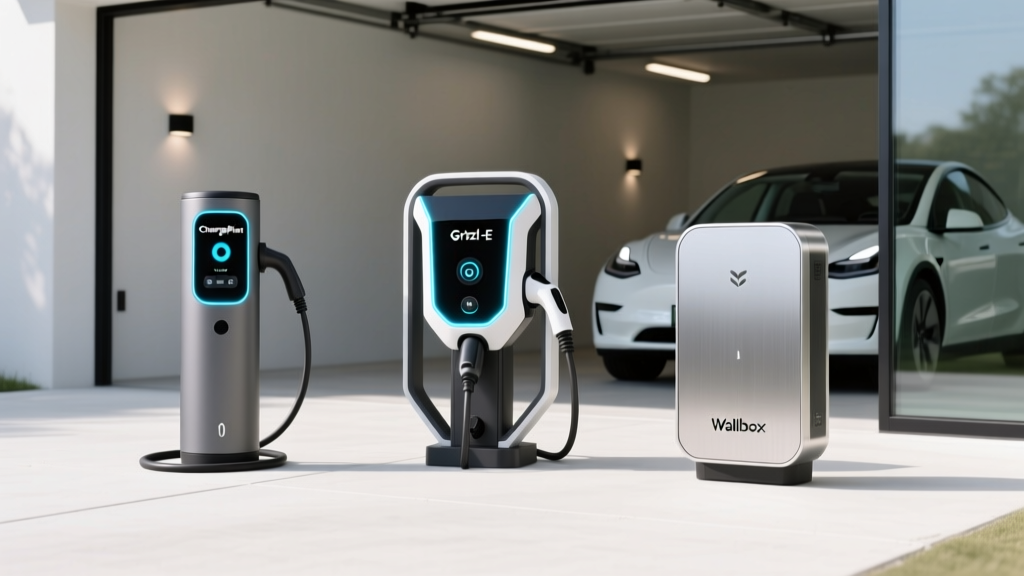
Because the Equinox EV accepts up to 11.5 kW (48A at 240V), you'll want a Level 2 charger rated for at least 48 amps to capture its full charging speed. Here are three proven options across different budgets:
ChargePoint Home Flex (Best Overall)
- Power Output: Up to 12 kW (50A) — configurable down to 16A
- Connector: NACS (native, as of 2025 model)
- Cable Length: 23 feet
- Smart Features: Wi-Fi, scheduled charging, energy tracking, Alexa integration
- Price: ~$550–$650
- Why it works: Amperage flexibility means you can install it on a 40A, 50A, or 60A circuit depending on your panel capacity. UL-listed, indoor/outdoor rated.
Emporia Vue Level 2 Charger (Best Value)
- Power Output: Up to 11.5 kW (48A)
- Connector: NACS or J1772 (select at purchase)
- Cable Length: 24 feet
- Smart Features: Wi-Fi, solar integration, time-of-use scheduling, energy dashboard
- Price: ~$350–$400
- Why it works: Excellent price-to-feature ratio. The solar-aware scheduling is ideal if you have rooftop panels.
Grizzl-E Smart (Most Durable)
- Power Output: Up to 10 kW (40A) — note: won't hit the Equinox EV's 11.5 kW max
- Connector: NACS available
- Cable Length: 24 feet
- Smart Features: Wi-Fi, OCPP compatibility, adjustable amperage
- Price: ~$450–$500
- Why it works: Built in Canada with an aluminum enclosure rated to -40°F. Ideal for unheated garages or outdoor mounting in cold climates. The 40A output still delivers a full overnight charge in ~11 hours.
Cost to Charge: Home vs. Public vs. Gas Comparison
One of the Equinox EV's strongest ownership arguments is fuel cost savings — but the actual per-mile cost depends heavily on where and when you charge. Let's break it down with real electricity rates and compare against a gas-powered equivalent.
The Equinox EV 3RS FWD achieves an EPA-rated 100 MPGe combined, which translates to roughly 33.7 kWh per 100 miles (or about 3.0 miles per kWh).
| Scenario | Rate | Cost per Full Charge (85 kWh) | Cost per Mile | Cost per 300 Miles |
|---|---|---|---|---|
| Home (off-peak / time-of-use) | $0.10/kWh | $8.50 | $0.028 | $8.50 |
| Home (national avg. residential) | $0.17/kWh | $14.45 | $0.048 | $14.45 |
| Public Level 2 (network pricing) | $0.30/kWh | $25.50 | $0.085 | $25.50 |
| DC Fast Charging (Electrify America, EVgo) | $0.43/kWh avg. | $36.55 | $0.122 | $36.55 |
| Tesla Supercharger (NACS) | $0.28/kWh avg. | $23.80 | $0.079 | $23.80 |
| Gas equivalent (28 MPG combined, $3.30/gal) | — | $35.36 | $0.118 | $35.36 |
The takeaway: If you charge primarily at home on off-peak rates, the Equinox EV costs roughly 2.8–4.8 cents per mile to "fuel" — about one-quarter to one-third the cost of a comparable gas crossover like the Chevy Equinox AWD (28 MPG combined). Even at DC fast-charging prices, the EV is roughly cost-competitive with gas, and cheaper when using Tesla Superchargers at the $0.28/kWh average.
However, if you rely exclusively on expensive public DC fast chargers ($0.48+/kWh in some metro areas), your per-mile cost can exceed that of a fuel-efficient hybrid. Home charging access is the single biggest variable in EV ownership economics.
DC Fast Charging Reality: The Charge Curve Matters
Chevrolet's stated 150 kW peak charge rate is accurate — but only for a narrow window. Like all lithium-ion batteries using NMC chemistry, the Equinox EV's Ultium pack follows a declining charge curve:
- 10–25% SoC: Peak rate of ~140–150 kW (adds ~4–5 miles per minute)
- 25–50% SoC: Sustained ~110–130 kW
- 50–80% SoC: Tapers to ~70–90 kW
- 80–100% SoC: Drops sharply to ~20–40 kW (this is why 10–80% times are quoted, not 0–100%)
Preconditioning tip: If you navigate to a DC fast charger using the Equinox EV's built-in navigation, the vehicle will begin preconditioning (warming) the battery en route. A cold battery charges significantly slower — in winter testing, a non-preconditioned battery may peak at only 80–100 kW instead of 150 kW, adding 10–15 minutes to a 10–80% session. Always use the nav-routed charging feature when possible.
Safety, Code & Installation Best Practices
A Level 2 EV charger is a major continuous electrical load — the equivalent of running a large electric dryer for 10 hours straight. Proper installation isn't optional; it's a safety requirement.
- Dedicated circuit: Your EV charger must have its own dedicated breaker — never share a circuit with other appliances
- Permit and inspection: Most jurisdictions require an electrical permit and a post-installation inspection. Skipping this can void your homeowner's insurance coverage for electrical fires
- Outdoor rating: If mounting outside, ensure the charger carries a NEMA 4 or IP65 rating for weather resistance. The ChargePoint Home Flex and Grizzl-E are both outdoor-rated
- Cable management: A 23–25 foot cable is standard. Avoid extension cords — they introduce resistance, voltage drop, and fire risk at 48A continuous loads
- Load management: If your panel is near capacity but a full upgrade is cost-prohibitive, consider a smart charger with load-sensing capability (e.g., Emporia with the Vue energy monitor), which dynamically reduces charge rate when other household loads spike
Always hire a licensed electrician for the installation. According to NFPA 70 (National Electrical Code), EV charging circuits must comply with Article 625, and your electrician should be familiar with these requirements.
Frequently Asked Questions
How much does it cost to install a home EV charger for the Equinox EV?
Expect $850–$2,400 for a standard installation on an existing 200-amp panel, including the charger ($300–$700), electrician labor ($500–$1,500), and permit ($50–$200). If your home needs a panel upgrade from 100A to 200A, add $2,000–$4,000. The 30% federal Residential Clean Energy Credit (up to $1,000) can offset some of this cost — verify current eligibility at irs.gov.
How fast will each charging level add range to the Equinox EV?
Level 1 (120V) adds roughly 3–4 miles per hour. Level 2 at 11.5 kW adds about 34–38 miles per hour. DC fast charging at peak 150 kW can add roughly 200+ miles in a 10-minute window, though sustained rates taper as the battery fills. A 10–80% DC fast charge takes approximately 30 minutes under optimal conditions.
Which connector does the Equinox EV use, and do I need adapters?
The 2025 and 2026 Equinox EV uses the NACS connector natively, giving it direct access to Tesla Superchargers and other NACS-equipped stations. For public CCS1 DC fast chargers, you'll need a NACS-to-CCS1 adapter. For older J1772 Level 2 public chargers, a NACS-to-J1772 adapter (sometimes included by GM) is required. CHAdeMO is not compatible.
How much does charging the Equinox EV cost per mile compared to gas?
At the national average residential electricity rate of $0.17/kWh, the Equinox EV costs about 4.8 cents per mile to charge at home. A comparable gas crossover getting 28 MPG at $3.30/gallon costs roughly 11.8 cents per mile. Even at public DC fast-charger rates ($0.43/kWh average), the EV costs about 12.2 cents per mile — roughly equivalent to gas. Home charging delivers the strongest savings.
What electrical upgrades might I need for a Level 2 charger?
You'll need a dedicated 60-amp, 240V circuit for the Equinox EV's full 11.5 kW charging rate. Homes with a 200-amp main panel can usually accommodate this without an upgrade. Homes with a 100-amp panel will likely need a service upgrade to 200A ($2,000–$4,000). As a lower-cost alternative, you can install a 30A or 40A circuit and charge at 7.2–9.6 kW — still sufficient for overnight replenishment.
Does the Equinox EV battery warranty cover degradation?
GM covers the Ultium battery pack for 8 years or 100,000 miles (whichever comes first), warranting that it will retain at least 60% of its original capacity. In practice, NMC-based Ultium packs with active liquid thermal management are expected to retain 85–90% capacity after 100,000 miles based on data from other GM Ultium vehicles, though long-term Equinox EV-specific data is still accumulating.
For official EPA range and efficiency figures, refer to fueleconomy.gov. For current federal tax credit eligibility on new EV purchases, consult the IRS Clean Vehicle Credit page and consider consulting a tax professional, as income caps, MSRP limits, and battery-sourcing requirements apply.