The Rise of Solar-Powered EV Charging
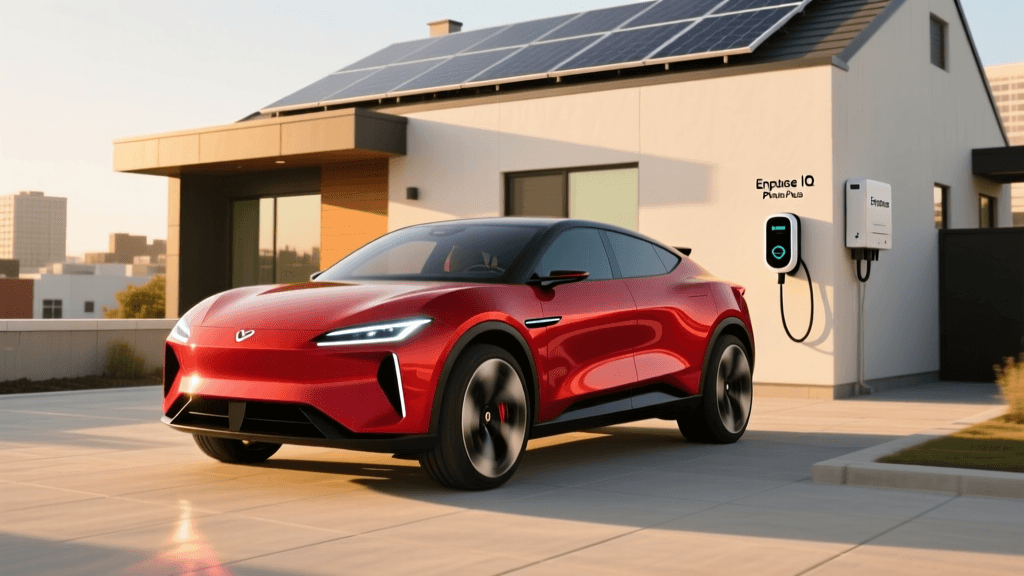
Pairing a home solar panel system with an electric vehicle is the ultimate strategy for achieving energy independence and eliminating your transportation carbon footprint. However, simply having solar panels and an EV charger on the same property does not guarantee that your car is charging on sunshine. To truly maximize your solar investment, you need a smart EV charger capable of dynamic solar diversion—automatically routing excess solar production into your vehicle's battery rather than exporting it to the grid for pennies.
In this head-to-head product showdown, we are pitting two industry heavyweights against each other: the Enphase IQ EV Charger and the Wallbox Pulsar Plus (with Eco-Smart). Both offer compelling solar integration features, but their underlying architectures, installation requirements, and ecosystem compatibility differ drastically. According to the U.S. Department of Energy's Alternative Fuels Data Center, optimizing home charging infrastructure is critical for maximizing EV efficiency and grid stability. Let us break down which solar-integrated charger deserves a spot in your garage.
Contender 1: Enphase IQ EV Charger
The Enphase IQ EV Charger is designed from the ground up to be a native component of the broader Enphase Energy ecosystem. If your home is already equipped with Enphase microinverters and an Envoy communications gateway, this charger offers an unparalleled, seamless integration experience.
How the Solar Integration Works
Unlike agnostic chargers that require additional hardware to 'guess' your solar production, the IQ Charger communicates directly with the Enphase Envoy gateway via your home's local network. The Envoy already monitors exactly how much power your microinverters are producing and how much power your home is consuming in real-time. When you enable the 'Green Charging' or solar diversion feature in the Enphase Enlighten app, the charger dynamically adjusts its charging amperage to match your exact surplus solar production.
Pros and Cons
- Pros: Zero additional hardware required if you have an Enphase system; highly reliable local network communication; sleek, durable NEMA 4X rated enclosure.
- Cons: Strictly locked to the Enphase ecosystem; if you have SolarEdge, SMA, or Tesla inverters, this charger cannot perform native solar diversion.
Contender 2: Wallbox Pulsar Plus with Eco-Smart
The Wallbox Pulsar Plus is a powerhouse in the Level 2 charging market, known for its compact footprint and robust software. To unlock its solar charging capabilities, Wallbox utilizes a feature called Eco-Smart, which requires the installation of the Wallbox Power Meter and current transformer (CT) clamps.
How the Solar Integration Works
Because the Pulsar Plus is inverter-agnostic, it does not rely on communicating with your solar inverter's software. Instead, the Power Meter uses CT clamps installed directly onto your home's main service entrance conductors. It measures the net flow of electricity at the grid demarcation point. If the meter detects that electricity is flowing backward (exporting to the grid), it signals the Pulsar Plus to increase the charging amperage. If the home draws power from the grid, the charger throttles down or pauses entirely.
Pros and Cons
- Pros: Works with literally any solar inverter brand; offers both 'Full-Green' (solar only) and 'Eco' (solar + grid minimum) charging modes; excellent load balancing.
- Cons: Requires purchasing the separate Power Meter accessory; CT clamp installation can be complex in tight electrical panels.
Head-to-Head Specification & Solar Comparison
To visualize how these two units stack up, review the detailed comparison table below.
| Feature | Enphase IQ EV Charger | Wallbox Pulsar Plus (Eco-Smart) |
|---|---|---|
| Max Amperage | 40 Amps (Requires 50A Breaker) | 48 Amps (Requires 60A Breaker) |
| Solar Integration Method | Native API via Envoy Gateway | Hardware CT Clamps (Power Meter) |
| Inverter Compatibility | Enphase Microinverters Only | Universal (Any Brand) |
| Extra Hardware Needed | None (if Enphase system exists) | Wallbox Power Meter + CT Clamps |
| Minimum Solar to Charge | ~1.4 kW (6 Amps at 240V) | ~1.4 kW (6 Amps at 240V) |
| Estimated Hardware Cost | $700 - $800 | $650 (Charger) + $150 (Meter) |
Installation Showdown: Wiring, Permits, and Hardware
Installing a solar-integrated EV charger goes beyond simply hanging a box on the wall. The U.S. Department of Energy emphasizes that proper electrical sizing and code compliance are vital when combining solar arrays, battery storage, and EV supply equipment (EVSE).
Enphase IQ Installation Requirements
The Enphase IQ charger supports both hardwired and NEMA 14-50 plug-in configurations. However, for continuous solar diversion, a hardwired connection is highly recommended to prevent accidental disconnects and ensure weatherproof integrity. Because it maxes out at 40 amps, the National Electrical Code (NEC) Article 625 requires a 50-amp, 240-volt double-pole breaker. You will need 6 AWG copper wire (THHN/THWN) routed through rigid metal or PVC conduit. If your home already has an Enphase system, the electrician simply needs to mount the charger, run the wiring, and ensure the Envoy gateway is updated to recognize the new EVSE on the local network.
Wallbox Pulsar Plus Installation Requirements
The Pulsar Plus is a 48-amp charger, meaning it mandates a 60-amp double-pole breaker and thicker 4 AWG copper wire. The installation complexity increases significantly when integrating the Eco-Smart Power Meter. The electrician must install the Power Meter module inside or adjacent to your main electrical panel and route the CT clamps around the main service lateral wires (the thickest wires entering your home from the utility meter). This often requires pulling the utility meter or working in tight, high-amperage junction boxes, which can increase labor costs by $200 to $400 compared to a standard charger install. Furthermore, your electrical panel must have adequate physical space for the 60-amp breaker and the Power Meter module.
App Experience and Solar Diversion Logic
Hardware is only half the battle; the software dictates how smoothly your solar electrons make it into your car's battery.
The Enphase Enlighten App provides a beautifully unified dashboard. You can see your solar production, home consumption, and EV charging rate all on a single screen. The solar diversion logic is incredibly smooth, adjusting the pilot signal to the car in near real-time without causing the vehicle's onboard charger to 'time out' or throw fault codes when clouds pass over.
The Wallbox App is equally robust but separates the solar logic into distinct modes. The 'Eco' mode allows you to set a minimum grid-draw amperage (e.g., 6 amps) while supplementing the rest with solar, ensuring your car always charges even on heavily overcast days. The 'Full-Green' mode strictly requires surplus solar to initiate charging. While Wallbox offers more granular control for the user, the CT clamp-based measurement can occasionally result in slight oscillation (hunting) if your home has large, cyclical loads like HVAC compressors turning on and off.
Final Verdict: Which Solar Charger Wins?
The winner of this solar EV charging showdown depends entirely on your existing home infrastructure.
Choose the Enphase IQ EV Charger if: You already own an Enphase solar array with an Envoy gateway. The native, hardware-free integration is elegant, highly reliable, and saves you the cost and installation headache of adding CT clamps to your main service panel. It is the undisputed champion of ecosystem synergy.
Choose the Wallbox Pulsar Plus with Eco-Smart if: You have a non-Enphase solar system (like SolarEdge or Tesla), plan to add solar in the future, or want the flexibility to upgrade to a different inverter brand down the line. The higher 48-amp output also means faster charging for larger battery packs like the Ford F-150 Lightning or Rivian R1T, provided your electrical panel can support the 60-amp breaker requirement.
Ultimately, both units represent the pinnacle of residential solar-integrated charging. By matching your charger to your specific solar hardware and electrical panel capacity, you will ensure that every ray of sunshine is efficiently converted into miles of electric driving.