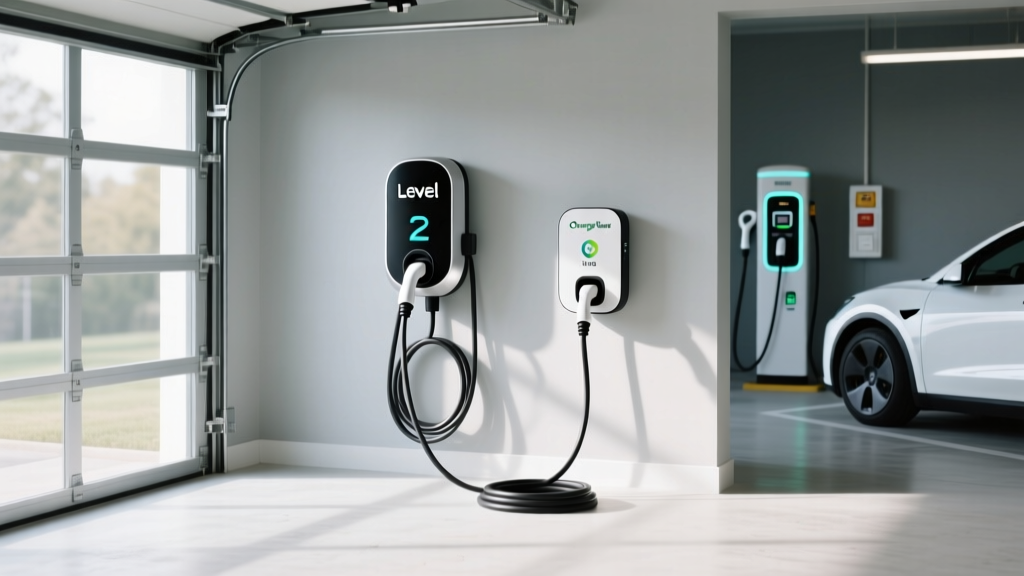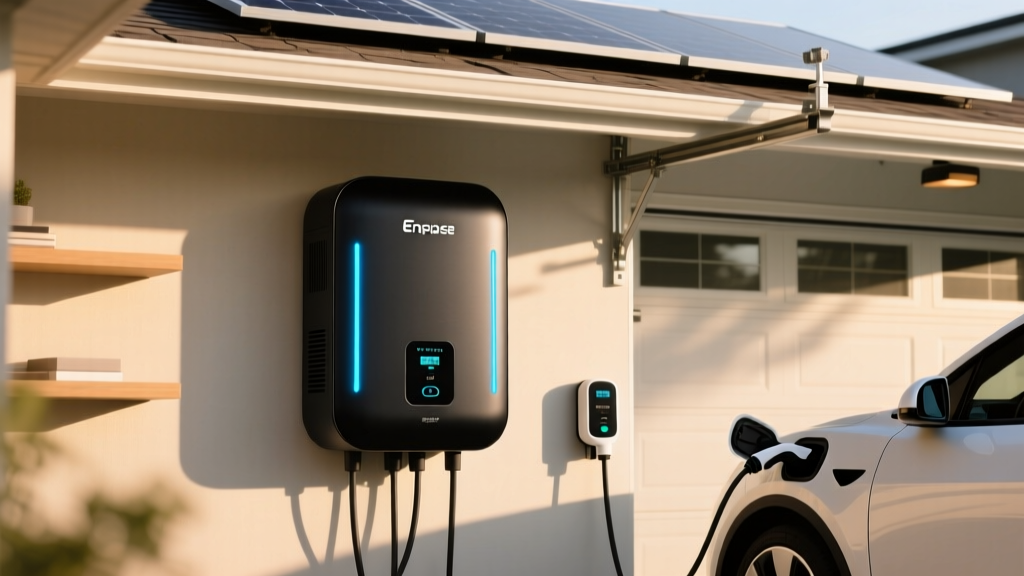
Quick Verdict: Is the Enphase Bidirectional Charger Worth It?
The Enphase IQ EV5 bidirectional charger is one of the first residential vehicle-to-home (V2H) chargers widely available to US consumers in 2026, enabling your compatible EV to send power back to your house during outages or peak-rate windows. With a Level 2 charge rate up to 11.5 kW (48A on a 240V circuit), it delivers competitive daily charging speed while adding genuine grid-resilience value — but only if you pair it with the Enphase IQ System Controller, a compatible EV (currently the Ford F-150 Lightning and select GM Ultium-based models), and a 200A+ electrical panel. Expect a total installed system cost between $5,800 and $9,200 before any incentives, making this a serious infrastructure investment rather than a simple wall-box swap.
| Spec | Value |
|---|---|
| Max Charge Power (EV charging) | 11.5 kW (48A / 240V) |
| Max Discharge Power (V2H) | 9.6 kW continuous |
| Circuit Requirement | 60A dedicated breaker |
| Connector | J1772 (CCS1 adapter included); NACS via adapter |
| Cable Length | 24 ft |
| Outdoor Rating | NEMA 4 (indoor/outdoor) |
| Smart Features | Enphase App, solar integration, TOU scheduling, V2H auto-switch |
| Required Companion Hardware | IQ System Controller 5 (for V2H islanding) |
| Equipment Price (charger only) | ~$2,100 – $2,400 MSRP |
| Warranty | 5 years |
What Does 'Bidirectional' Actually Mean for Your Home?
Bidirectional charging covers two distinct capabilities. Vehicle-to-Home (V2H) lets your EV battery power your house circuits during an outage, essentially replacing a standby generator or stationary home battery like the Tesla Powerwall. Vehicle-to-Grid (V2G) lets your utility draw from your battery during peak demand in exchange for bill credits — a feature still limited to pilot programs with select utilities in 2026. The Enphase IQ EV5 supports V2H natively when paired with the IQ System Controller, which safely disconnects your home from the grid (islanding) and routes EV power to your breaker panel. V2G participation depends on your utility's program and may require additional metering hardware.
A 9.6 kW discharge rate means the charger can sustain roughly a 40A continuous draw to your home — enough to run refrigerators, lighting, a well pump, and a gas furnace blower simultaneously. An F-150 Lightning with its 131 kWh extended-range battery could theoretically sustain an average home for 2–3 days at moderate consumption, though real-world duration depends heavily on HVAC load, electric cooking, and whether you're running a dryer or EV charger simultaneously.
Charging Levels Explained: Speeds in kW and Miles Per Hour
Understanding the difference between kW (power, or the rate of energy flow) and kWh (energy, the battery's total capacity) is critical. Think of kW as the width of the hose and kWh as the size of the bucket. Here's how each level translates to real range recovery:
| Level | Voltage | Max Power (kW) | Approx. Miles Added/Hour | Typical Use Case |
|---|---|---|---|---|
| Level 1 | 120V AC | 1.2 – 1.9 kW | 3 – 5 mi/hr | Overnight top-ups, PHEVs, emergency |
| Level 2 (home/public) | 240V AC | 7.2 – 19.2 kW | 20 – 60+ mi/hr | Daily home charging, workplace |
| DC Fast Charging | 400–800V DC | 50 – 350 kW | 150 – 1,200+ mi/hr | Road trips, highway corridors |
The Enphase IQ EV5 operates as a Level 2 charger at up to 11.5 kW. For a vehicle averaging 3.0 miles per kWh (like the Hyundai Ioniq 5 or Tesla Model Y), that translates to roughly 34 miles of range per hour of charging. A 75 kWh battery going from 10% to 80% (52.5 kWh replenished) would take approximately 4.5 to 5 hours at sustained power — though real-world charge curves taper slightly as the battery management system protects cells above 80% state of charge.
Home Installation: Electrical Requirements, Panel Upgrades, and Costs
The Enphase IQ EV5 requires a 240V / 60A dedicated circuit with 6 AWG copper wire (or 4 AWG aluminum) run from your breaker panel. The 48A continuous draw follows the National Electrical Code (NEC) 80% rule, which mandates that continuous loads not exceed 80% of a breaker's rated capacity. Here's a realistic cost breakdown based on 2026 national averages:
| Component | Typical Range | Notes |
|---|---|---|
| IQ EV5 Charger Unit | $2,100 – $2,400 | V2H-capable hardware |
| IQ System Controller 5 | $1,200 – $1,500 | Required for V2H islanding |
| Electrical Permit | $150 – $450 | Varies by municipality |
| Electrician Labor (standard install) | $800 – $2,000 | 240V/60A circuit, ~50 ft run |
| Panel Upgrade (if needed) | $2,500 – $5,000 | 100A → 200A service upgrade |
| Transfer Switch / Critical Loads Panel | $600 – $1,200 | Required to select V2H-backed circuits |
| Total (no panel upgrade) | $4,850 – $7,550 | Most newer homes |
| Total (with panel upgrade) | $7,350 – $12,550 | Older homes with 100A service |
Panel upgrade reality check: If your home has a 100A main panel — common in houses built before the 1990s — you almost certainly need an upgrade. A 60A EV circuit on a 100A panel leaves insufficient headroom for electric ranges, dryers, and HVAC. Even some 200A panels are near capacity if you've added electric heat or a hot tub. Have a licensed electrician perform a load calculation before purchasing equipment.
The IQ System Controller 5 is what distinguishes this from a standard Level 2 install. It sits between your meter and breaker panel (or at a critical-loads subpanel) and manages the transition between grid power and V2H power in under 100 milliseconds — fast enough that sensitive electronics won't reboot during a switchover. This unit requires its own dedicated space and adds roughly 2–3 hours to the electrician's scope.
Connector Compatibility: Will It Work With Your EV?
The Enphase IQ EV5 ships with a J1772 connector for Level 2 charging. For V2H discharge, the vehicle must support bidirectional DC coupling through the CCS1 or NACS standard. Here's the current compatibility landscape:
| EV Model | Charge Port | V2H Compatible? | Adapter Needed? |
|---|---|---|---|
| Ford F-150 Lightning | CCS1 / NACS (2025+) | Yes | NACS→J1772 for L2 charging |
| Chevrolet Silverado EV | NACS | Yes (Ultium) | NACS→J1772 for L2 charging |
| GMC Sierra EV | NACS | Yes (Ultium) | NACS→J1772 for L2 charging |
| Hyundai Ioniq 5 | NACS (2025+) | No (charge only) | NACS→J1772 |
| Tesla Model Y / Cybertruck | NACS | No (Tesla Powerwall ecosystem) | NACS→J1772 |
| Rivian R1T / R1S | NACS (2025+) | No (announced for future OTA) | NACS→J1772 |
As of early 2026, the Ford F-150 Lightning and GM Ultium-platform trucks are the primary V2H-capable consumer vehicles. Hyundai/Kia's E-GMP platform supports V2L (vehicle-to-load, powering individual devices via an outlet adapter) but not full V2H through the charge port. Tesla vehicles remain locked to the Powerwall ecosystem for home backup. If your EV isn't V2H-compatible, the IQ EV5 still functions as an excellent 11.5 kW unidirectional Level 2 charger — you simply won't use the discharge feature until you upgrade to a supported vehicle.
Charging Cost Per Mile: Home vs. Public vs. Gas
Electricity pricing varies dramatically by time-of-use (TOU) rates, region, and charging location. Here's a realistic comparison for 2026:
| Scenario | Rate / Price | Vehicle Efficiency | Cost Per Mile |
|---|---|---|---|
| Home Level 2 (off-peak TOU) | $0.09/kWh | 3.0 mi/kWh | $0.030 |
| Home Level 2 (standard rate) | $0.16/kWh | 3.0 mi/kWh | $0.053 |
| Public Level 2 (ChargePoint, EVgo) | $0.30/kWh | 3.0 mi/kWh | $0.100 |
| DC Fast Charging (Electrify America) | $0.48/kWh | 3.0 mi/kWh | $0.160 |
| Gas Vehicle (28 MPG combined) | $3.40/gal | 28 mi/gal | $0.121 |
| Gas Vehicle (truck, 18 MPG) | $3.40/gal | 18 mi/gal | $0.189 |
Home off-peak charging at $0.03/mile represents a 75% cost reduction versus a 28 MPG gas car. Even public DC fast charging at $0.16/mile remains competitive with gasoline for most vehicles. The Enphase system's TOU scheduling feature — accessible through the Enphase app — automatically starts charging during your utility's cheapest overnight window, maximizing savings without manual intervention. For EPA efficiency ratings specific to your vehicle, check the official fueleconomy.gov database.
Charging Time Examples for Common Battery Sizes
Here's what to expect from the IQ EV5 at 11.5 kW with real-world battery capacities (using 85% usable capacity to account for buffer and charge-curve taper):
- Ford F-150 Lightning Extended Range (131 kWh usable ~112 kWh): 10–80% in approximately 8.3 hours
- Chevrolet Silverado EV (200 kWh usable ~170 kWh): 10–80% in approximately 12.5 hours
- Tesla Model Y Long Range (75 kWh usable ~64 kWh): 10–80% in approximately 5.5 hours
- Hyundai Ioniq 5 (77.4 kWh usable ~66 kWh): 10–80% in approximately 5.7 hours
- Toyota RAV4 Prime PHEV (18.1 kWh usable ~15 kWh): 10–80% in approximately 1.3 hours
These times assume sustained near-peak power draw. In practice, Level 2 charge curves taper modestly above 85–90% state of charge as the battery management system shifts to constant-voltage charging to protect cell longevity. For daily use, scheduling charge to 80% is both faster and better for long-term battery health — and the Enphase app lets you set a target SoC limit.
Equipment Comparison: Enphase IQ EV5 vs. Alternatives
Enphase IQ EV5 (Bidirectional)
- Power Output: 11.5 kW charge / 9.6 kW discharge
- Connector: J1772 (NACS adapter available)
- Cable Length: 24 ft
- Smart Features: Solar integration, TOU scheduling, V2H auto-switch, Enphase Energy Intelligence
- Price: ~$2,100–$2,400 (charger) + $1,200–$1,500 (System Controller)
- Best For: Homeowners with solar, F-150 Lightning or GM Ultium trucks, outage-prone areas
Ford Charge Station Pro (Bidirectional)
- Power Output: 19.2 kW charge / 9.6 kW discharge
- Connector: CCS1 (NACS adapter for 2025+ models)
- Cable Length: 25 ft
- Smart Features: FordPass app, Intelligent Backup Power (requires Sunrun/Home Power Integration)
- Price: ~$1,300–$1,600 (charger) + integration hardware
- Best For: F-150 Lightning owners wanting maximum 19.2 kW charge speed
Emporia Vue / Level 2 Smart Charger (Unidirectional)
- Power Output: 11.5 kW charge only (no V2H)
- Connector: J1772 / NACS (2025+)
- Cable Length: 24 ft
- Smart Features: Whole-home energy monitoring, TOU scheduling, solar-aware
- Price: ~$500–$650
- Best For: Budget-conscious EV owners who don't need V2H
The Enphase system's advantage is ecosystem integration: if you already have Enphase IQ microinverters for solar, the IQ EV5 communicates directly with your solar production data, prioritizing self-generated energy for charging and minimizing grid draw. The trade-off is cost — the combined charger-plus-System-Controller price is roughly 2–3x a high-quality unidirectional Level 2 unit.
Safety, Code Compliance, and Permitting
The Enphase IQ EV5 is UL-listed (UL 2594 for EV supply equipment and UL 1741 for the System Controller's grid-tie inverter functions). Key installation requirements per the 2023 NEC (adopted by most US jurisdictions as of 2026):
- Dedicated circuit: The 60A breaker must serve only the EV charger — no shared circuits
- GFCI protection: Required for outdoor installations; the IQ EV5 has integrated ground-fault detection
- NEMA 4 rating: The unit is rated for outdoor installation, including rain, dust, and hose-directed water
- Working clearance: NEC 110.26 requires 36 inches of clear workspace in front of the panel and charger
- Permit and inspection: Virtually all US jurisdictions require an electrical permit and post-installation inspection for a 60A circuit — budget $150–$450 and 1–2 weeks for scheduling
Never install a 60A EV circuit without a permit. Unpermitted work can void homeowner's insurance coverage in the event of an electrical fire and will create complications during a future home sale. Per the National Electrical Code, any circuit above 30A requires a licensed electrician in most jurisdictions.
Federal Tax Credits and Incentives
As of 2026, the federal Alternative Fuel Vehicle Refueling Property Credit (IRS Form 8911) covers 30% of home EV charger equipment and installation costs, up to a maximum of $1,000 per year. This credit applies to the IQ EV5 hardware and the electrician's labor — but not the IQ System Controller if classified as a battery-backup device rather than charging equipment (consult a tax professional). Eligibility requires installation at your principal residence in an eligible census tract (non-urban). State-level incentives vary; check your state energy office or AFDC incentive database for local rebates.
Frequently Asked Questions
How much does it cost to install the Enphase bidirectional charger?
Expect $4,850–$7,550 total (equipment + System Controller + electrician + permit) for a home with an adequate 200A panel. Homes needing a panel upgrade should budget $7,350–$12,550. The federal 8911 credit can offset up to $1,000 of this.
Can any EV use V2H with the Enphase charger?
No. As of 2026, only the Ford F-150 Lightning and GM Ultium-platform trucks (Silverado EV, Sierra EV) support V2H discharge through the charge port. Other EVs can charge from the IQ EV5 at full 11.5 kW but cannot send power back.
Do I need solar panels to benefit from bidirectional charging?
No. V2H works as a standalone backup system — your EV charges from the grid and discharges to your home during outages. Solar integration is an optional benefit that reduces charging cost and keeps your EV topped up during multi-day outages.
How long can my EV power my home during an outage?
An F-150 Lightning with the 131 kWh extended-range battery can power an average US home (~30 kWh/day consumption) for approximately 3–4 days. Homes with gas heating and minimal electric loads may stretch this to 5+ days. All-electric homes running heat pumps in cold weather may see 1.5–2 days.
Is the Enphase IQ EV5 compatible with Tesla vehicles?
Yes for charging (with a NACS-to-J1772 adapter), but no for V2H. Tesla does not currently enable third-party bidirectional discharge. Tesla owners seeking home backup should consider the Powerwall ecosystem instead.
What happens to V2H if my EV battery degrades?
V2H discharge draws from whatever usable capacity remains. If your battery degrades to 85% state of health over 8–10 years, your backup duration drops proportionally. Enphase's 5-year warranty covers hardware defects but not battery degradation, which is covered under your vehicle's battery warranty (typically 8 years / 100,000 miles at 70% capacity retention).