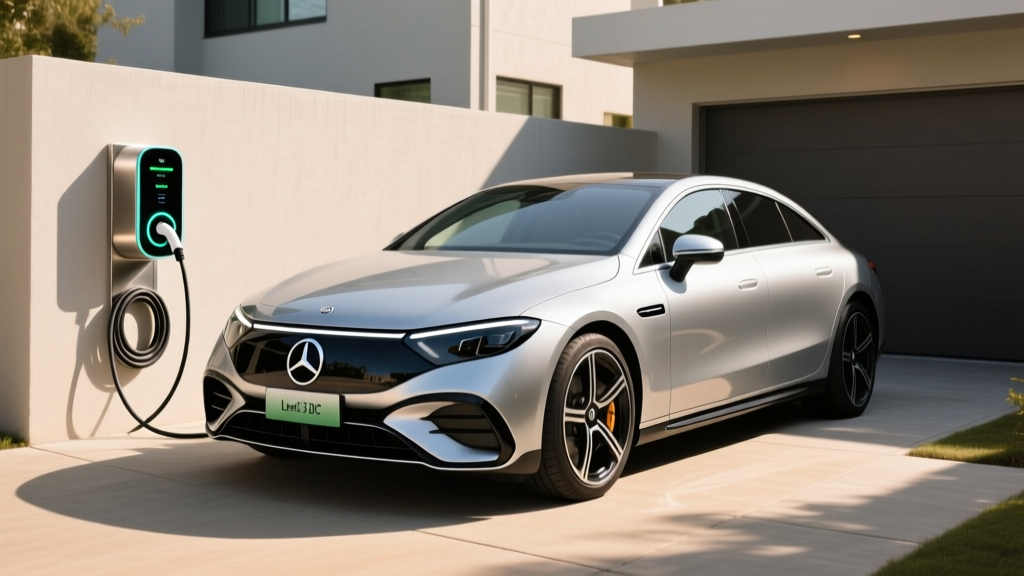
Volkswagen Group's Elli charging ecosystem has become one of Europe's most integrated EV energy platforms, and its footprint in Germany's Saarland region (often searched as elli vw group charging station saarl) reflects the brand's push to bundle home hardware, public access, and utility-grade tariffs under a single app. Whether you're driving a VW ID.4, ID.7, Audi Q4 e-tron, Škoda Enyaq, or any other EV with a CCS2 or NACS port, understanding how Elli fits into your daily charging routine — and what it takes to install compatible hardware at home — is essential for realistic ownership budgeting.
This guide covers the Elli ID. Charger hardware lineup, home installation electrical requirements and costs, public DC fast-charging speeds across VW Group's network, connector compatibility, and real cost-per-mile calculations. We'll also address the panel upgrades many older Saarland and European homes require before a dedicated 11 kW or 22 kW wallbox can go live.
Elli's Charging Hardware: The ID. Charger Lineup
Elli (short for Electric Life) is Volkswagen Group's energy and charging subsidiary, headquartered in Berlin. Its primary home-charging product is the ID. Charger, manufactured in partnership with Wallbox and available in several configurations. Here's what the 2025–2026 lineup looks like:
| Model | Max Power | Connector | Cable Length | Smart Features | Approx. Price (EU) |
|---|---|---|---|---|---|
| ID. Charger | 11 kW (3-phase, 16A) | Type 2 (CCS2 compatible) | 4.5 m attached | Basic app, RFID | €399–€499 |
| ID. Charger Connect | 11 kW (3-phase, 16A) | Type 2 | 4.5 m attached | Wi-Fi/LTE, app control, OTA updates | €549–€649 |
| ID. Charger Pro | 11 kW (3-phase, 16A) | Type 2 | 4.5 m attached | Wi-Fi/LTE, MID meter, solar integration | €699–€849 |
| ID. Charger Pro 22 | 22 kW (3-phase, 32A) | Type 2 | 4.5 m attached | Full smart suite, MID meter, load management | €899–€1,099 |
Key distinction — kW vs kWh: The charger's kW rating (11 or 22) is the power delivery rate — how fast energy flows. Your car's battery capacity in kWh (e.g., 77 kWh usable in an ID.4 Pro) is the energy storage volume. Think of kW as the width of a hose and kWh as the size of the bucket. A 22 kW charger fills a 77 kWh battery roughly twice as fast as an 11 kW unit, assuming the vehicle's onboard charger accepts that rate.
Most VW Group EVs (ID.3, ID.4, ID.5, ID.7, Audi Q4 e-tron) have an 11 kW onboard AC charger as standard, with an optional 22 kW upgrade on select trims. If your car's onboard charger tops out at 11 kW, buying the 22 kW ID. Charger Pro 22 won't speed up home charging — the car is the bottleneck. Save the money and get the 11 kW Connect or Pro instead.
Charging Levels Explained: Speeds and Range Added Per Hour
Understanding the three charging tiers is critical before you budget an installation or plan a road trip through Saarland and beyond.
| Level | Voltage / Phase | Typical Power (kW) | Miles of Range Added Per Hour | 10–80% Time (77 kWh Battery) | Best For |
|---|---|---|---|---|---|
| Level 1 (Schuko/standard outlet) | 230V / 1-phase | 2.0–2.3 kW | 8–10 mi/hr | ~26 hours | Overnight trickle, PHEVs, emergencies |
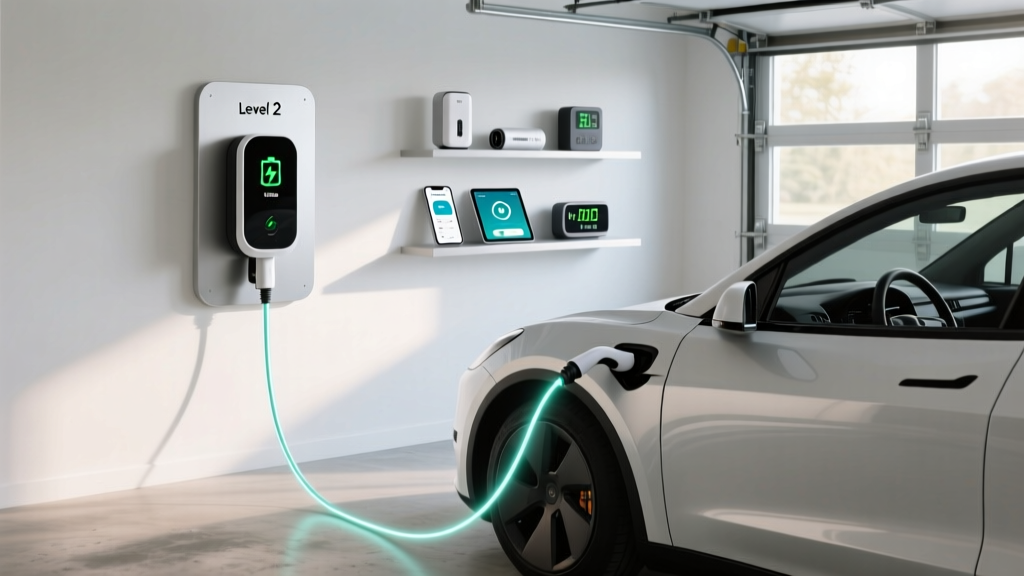
| Level 2 (Wallbox, 11 kW) | 400V / 3-phase, 16A | 11 kW | 38–44 mi/hr | ~5.5 hours | Daily home charging, most EVs |
| Level 2 (Wallbox, 22 kW) | 400V / 3-phase, 32A | 22 kW | 75–88 mi/hr | ~2.8 hours | 22 kW onboard charger equipped EVs |
| DC Fast Charging | 400–800V DC | 50–350 kW | 180–1,200+ mi/hr | 18–35 min (varies) | Road trips, highway corridors |
Real-world note: The 10–80% DC fast-charging times above assume optimal battery temperature (preconditioned) and a charger that can sustain peak output. In practice, a VW ID.4 (135 kW peak DC rate) at an Elli/Ionity 150 kW stall will typically do 10–80% in about 28–32 minutes. The Porsche Taycan and Audi e-tron GT, with 800V architecture and 270 kW peak rates, can achieve 10–80% in ~22 minutes at a 350 kW charger. Cold weather (below 5°C / 41°F) can add 10–15 minutes to these figures due to reduced charge acceptance.
Home Installation: Electrical Requirements and Costs
Installing an Elli ID. Charger (or any Level 2 wallbox) in a Saarland home — or anywhere in Germany — requires a dedicated circuit installed by a certified electrician (Elektrofachkraft). Here's what the electrical side looks like:
Typical Electrical Requirements
- 11 kW charger: 3-phase, 400V, 16A dedicated circuit with a Type B RCD (residual current device)
- 22 kW charger: 3-phase, 400V, 32A dedicated circuit with Type B RCD
- Connection: Hardwired to the distribution board (Festanschluss) or via a suitable industrial plug (e.g., CEE 16A or CEE 32A)
- Load management: If your home's main fuse is 63A or lower, dynamic load management (available on ID. Charger Pro) prevents tripping the main breaker when other appliances run simultaneously
Do You Need a Panel Upgrade?
Many older homes in Saarland (built before the 1990s) have main service panels rated at 40A or 63A with limited spare capacity. Adding a 16A or 32A three-phase circuit may require:
- Panel expansion or replacement: Adding a new row to the distribution board or replacing an outdated fuse box with a modern RCD/MCB panel
- Main service upgrade: In rare cases, requesting a higher-capacity grid connection from your local Netzbetreiber (distribution network operator, e.g., VSE in Saarland)
- Separate meter: Some utilities require or incentivize a dedicated EV meter for tariff optimization
| Component | Low End | High End | Notes |
|---|---|---|---|
| ID. Charger hardware (11 kW Connect) | €549 | €649 | Varies by retailer, Elli direct, VW dealer |
| Electrician labor (standard install) | €400 | €900 | 3–6 hrs at €70–€100/hr; short cable run |
| Materials (cable, conduit, RCD, breaker) | €150 | €400 | Depends on run length and wall type |
| Permit / notification to grid operator | €0 | €150 | In Germany, §19 NAV notification required; usually handled by electrician |
| Panel upgrade (if needed) | €800 | €2,500 | Older homes; new distribution board + RCDs |
| Main service upgrade (rare) | €1,500 | €4,000+ | Grid operator charges; multi-week lead time |
| Total (standard install, no panel upgrade) | €1,099 | €2,099 | Most homes built after 2000 |
| Total (with panel upgrade) | €1,899 | €4,599 | Older homes with limited capacity |
German subsidy note: The KfW 440/441/442 home charger subsidy programs have been paused or exhausted as of 2024–2025. Check the KfW website or your Saarland municipal utility (Stadtwerk) for any local incentives that may be active. Some Saarland utilities offer reduced electricity tariffs for EV charging, which can offset installation costs over time.
Public Charging: Elli's Network and VW Group DC Stations
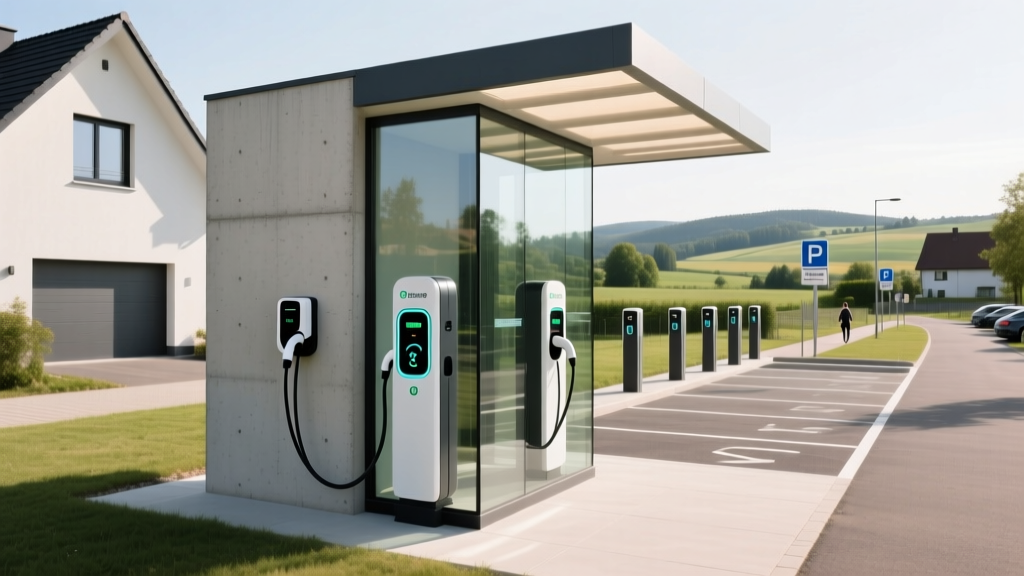
Elli doesn't just sell home hardware — it provides access to over 500,000 public charging points across Europe through the Elli app and VW Group's Electrify America (US) / Ionity (Europe) partnerships. In Saarland specifically, Elli-roaming coverage includes:
- Ionity ultra-fast stations along the A1, A6, and A8 Autobahn corridors — typically 150–350 kW CCS2 chargers
- Municipal and utility chargers in Saarbrücken, Saarlouis, Homburg, and Neunkirchen — mostly 22 kW AC and 50–150 kW DC
- Retail and workplace chargers at VW/Audi dealerships, shopping centers, and employer parking facilities
- Cross-border roaming into France (Moselle department) and Luxembourg via Elli's roaming agreements with networks like EnBW, Shell Recharge, and Allego
DC Fast-Charging Speeds on VW Group Vehicles
When using Elli-accessible DC fast chargers, your actual charging speed depends on your vehicle's peak DC charge rate and the charger's output:
| Vehicle | Battery (Usable kWh) | Peak DC Rate | 10–80% at 150 kW Charger | 10–80% at 350 kW Charger |
|---|---|---|---|---|
| VW ID.4 / ID.5 (2025–2026) | 77 kWh (NMC) | 135 kW | ~28 min | ~28 min (car-limited) |
| VW ID.7 / ID.7 Tourer | 77–86 kWh (NMC) | 175–200 kW | ~26 min | ~22 min |
| Audi Q4 e-tron (2025–2026) | 77 kWh (NMC) | 135 kW | ~28 min | ~28 min (car-limited) |
| Audi e-tron GT / RS e-tron GT | 85 kWh (NMC, 800V) | 270 kW | ~23 min | ~18 min |
| Porsche Taycan (2025+) | 84–105 kWh (NMC, 800V) | 320 kW | ~22 min | ~16 min |
| Škoda Enyaq 85 (2025–2026) | 77 kWh (NMC) | 135 kW | ~28 min | ~28 min (car-limited) |
Charge curve reality: The "peak" DC rate (e.g., 135 kW) is typically sustained only between ~10% and ~30% SoC. After 50%, the rate tapers significantly — often dropping below 50 kW past 80%. This is why manufacturers quote 10–80% times rather than 0–100%. Charging from 80–100% on DC can take as long as the 10–80% portion. For battery longevity and efficiency, most EV owners set their DC charge limit at 80% on road trips and only charge to 100% on AC at home before a long drive.
Connector Compatibility: What Plugs Into What
Europe standardized on CCS2 (Combo 2) for DC fast charging and Type 2 (Mennekes) for AC charging. This is different from North America's ongoing NACS/CCS1 transition. Here's how connectors map to Elli hardware and VW Group vehicles:
| Connector | Type | Used By | Elli Compatibility | Adapter Needed? |
|---|---|---|---|---|
| Type 2 (Mennekes) | AC (up to 22 kW) | All EU-market EVs | Native — ID. Charger uses Type 2 | No |
| CCS2 (Combo 2) | DC (50–350 kW) | All EU-market EVs | Native at public DC stations | No |
| CHAdeMO | DC (50–100 kW) | Older Nissan Leaf, Mitsubishi Outlander PHEV | Limited; some public stations | Not available (CHAdeMO is a separate physical standard) |
| NACS (Tesla / SAE J3400) | AC + DC | Tesla (all), Ford, GM, Rivian (NA); rare in EU | Tesla Superchargers (some opened to non-Tesla via app) | CCS2-to-NACS adapters available for EU Tesla Superchargers (limited) |
For North American readers driving VW Group EVs in the US/Canada: VW's ID.4 for the North American market now ships with a NACS port (starting 2025 model year). The Elli brand is primarily European; in North America, VW Group relies on Electrify America for public DC charging. The home charging principles in this guide still apply — just swap CCS2/NACS terminology and adjust voltage to 240V single-phase (North American residential standard).
Cost to Charge: Home vs Public vs Gas
The economics of EV charging depend heavily on where and when you charge. Here are realistic 2025–2026 scenarios for Saarland:
| Scenario | Price per kWh | Cost to Add 200 mi (ID.4, ~3.2 mi/kWh) | Cost Per Mile |
|---|---|---|---|
| Home, standard tariff (off-peak/Nachtstrom) | €0.22–€0.28/kWh | €13.75–€17.50 | €0.069–€0.088/mi |
| Home, EV-specific tariff (e.g., Saarland Stadtwerk autostrom) | €0.18–€0.24/kWh | €11.25–€15.00 | €0.056–€0.075/mi |
| Home, solar self-consumption | €0.06–€0.10/kWh (amortized) | €3.75–€6.25 | €0.019–€0.031/mi |
| Public AC (22 kW, Elli roaming) | €0.39–€0.55/kWh | €24.38–€34.38 | €0.122–€0.172/mi |
| Public DC fast (150 kW, Ionity/Elli) | €0.49–€0.79/kWh | €30.63–€49.38 | €0.153–€0.247/mi |
| Gasoline equivalent (€1.75/L, 30 MPG) | ~€0.20/mi | €40.00 | €0.200/mi |
The takeaway: Home charging — especially on an off-peak or solar-optimized tariff — delivers fuel costs at roughly one-third to one-half the per-mile cost of gasoline. Public DC fast charging, while convenient for road trips, can equal or exceed gasoline costs per mile at the highest Ionity rates. The Elli app's tariff filter and VW Group's negotiated "We Charge" rates can reduce public DC costs by 10–25% compared to ad-hoc pricing.
For an ID.4 driven 15,000 km/year (~9,300 miles) with 80% home charging at €0.25/kWh and 20% public DC at €0.60/kWh, annual "fuel" cost is approximately €1,115. A comparable gasoline Tiguan at 30 MPG and €1.75/L would cost roughly €1,890 — a savings of about €775/year with the EV.
Safety, Code, and Installation Best Practices
EV charger installation in Germany falls under DIN VDE 0100 (the national electrical code) and requires notification to the local grid operator under §19 NAV (Low-Voltage Connection Ordinance). Key safety requirements include:
- Dedicated circuit: The charger must have its own circuit breaker and RCD — no sharing with other household loads
- Type B RCD: Required for EV chargers to detect DC fault currents that standard Type A RCDs miss. Cost: €80–€200 per unit
- IP rating: Outdoor installations require at minimum IP54 (splash-proof); the ID. Charger is rated IP55, suitable for uncovered exterior walls
- Cable sizing: 11 kW requires minimum 2.5 mm² copper (5-core); 22 kW requires minimum 6 mm² copper. Longer runs (>15 m) may need larger gauge to prevent voltage drop
- Load management: If your home's main fuse is rated 63A or below, dynamic load management (built into ID. Charger Pro models) is strongly recommended to prevent main breaker trips
- Schuko warning: Never use a standard household Schuko outlet for sustained EV charging at 2.3 kW for more than a few hours. These outlets are not rated for continuous 10A+ loads and can overheat. If Level 1 is your only option, limit sessions to overnight with a timer and inspect the plug for warmth
Always hire a registered Elektrofachkraft (certified electrician). In Germany, only certified professionals can legally perform fixed electrical installations and submit the required §19 NAV notification to the grid operator. DIY installation voids insurance coverage and may violate building codes.
Equipment Recommendations Beyond Elli
While the Elli ID. Charger integrates seamlessly with VW Group vehicles and the Elli app ecosystem, several third-party wallboxes are equally compatible and may offer features Elli doesn't:
| Charger | Max Power | Connector | Cable | Smart Features | Price |
|---|---|---|---|---|---|
| Elli ID. Charger Pro | 11 kW | Type 2 | 4.5 m | App, LTE, MID meter, solar, load mgmt | €699–€849 |
| Wallbox Pulsar Max | 22 kW | Type 2 | 5 m or 7 m | Wi-Fi, app, solar, Power Sharing | €699–€899 |
| go-e Charger Gemini | 11–22 kW | Type 2 socket | Use your own cable | Wi-Fi, app, HTTP API, solar, load mgmt | €549–€749 |
| KEBA KeContact P40 | 22 kW | Type 2 | 4 m or 6 m | Modbus, OCPP, load mgmt, MID | €899–€1,199 |
| Heidelberg Wallbox Energy Control | 11 kW | Type 2 | 3.5 m or 5 m | Basic (no app), Modbus, load mgmt | €449–€549 |
If you drive a VW Group EV and want the tightest app integration (charging profiles synced to your VW ID account, automatic tariff optimization), the Elli ID. Charger Pro is the path of least resistance. If you want maximum flexibility — including the ability to use a longer aftermarket cable, integrate with a Home Assistant setup, or support multiple EV brands — the go-e Gemini or Wallbox Pulsar Max are excellent alternatives.
Frequently Asked Questions
How much does it cost to install a home EV charger in Saarland?
A standard installation of an Elli ID. Charger (11 kW) in a modern home with adequate panel capacity typically costs €1,100–€2,100 all-in (hardware + electrician + materials + notification). Older homes needing a panel upgrade should budget €1,900–€4,600. A site visit from a certified electrician for a quote is essential before committing.
How fast will each charging level add range to my VW ID.4?
At Level 1 (2.3 kW via Schuko): ~8–10 miles of range per hour. At Level 2 (11 kW wallbox): ~38–44 miles per hour — enough to fully replenish a day's driving overnight. At a DC fast charger (135 kW peak): ~180 miles in 30 minutes under optimal conditions. Real-world highway driving in cold weather will reduce these figures by 15–25%.
Which connector is compatible with my VW, Audi, or Škoda EV?
All current VW Group EVs sold in Europe use Type 2 for AC charging and CCS2 for DC fast charging. The Elli ID. Charger comes with a Type 2 attached cable, which is the universal European AC standard. No adapter is needed for any VW Group EV. If you're importing a North American EV or Tesla, adapter requirements vary — check the connector compatibility table above.
How much does charging cost per mile compared to gasoline?
Home charging in Saarland at €0.25/kWh costs approximately €0.07–€0.09 per mile in an ID.4 (3.2 mi/kWh efficiency). Gasoline at €1.75/L and 30 MPG costs about €0.20 per mile. Home EV charging is roughly 55–65% cheaper per mile. Public DC fast charging at €0.60+/kWh narrows the gap to near parity with gasoline.
What electrical upgrades might my home need before installing a charger?
Homes built before the 1990s may need a panel upgrade (new distribution board with modern RCDs, €800–€2,500) or, in rare cases, a main service capacity increase from the grid operator (€1,500–€4,000+). Most homes built after 2000 with a 63A+ main fuse can accommodate an 11 kW charger without upgrades, though dynamic load management is still recommended. Always get a professional assessment before purchasing hardware.
Can I use solar panels with the Elli ID. Charger?
Yes — the ID. Charger Pro and Pro 22 models support solar-optimized charging via integration with compatible inverters (e.g., SMA, Fronius). The charger can be configured to use only surplus solar energy, maximizing self-consumption and reducing grid dependence. This requires the MID-certified meter included with Pro models and compatible inverter communication protocols.
Is the Elli app required to use the ID. Charger?
No. The ID. Charger works as a standalone plug-and-charge unit with RFID authentication. The Elli app adds remote monitoring, scheduling, tariff optimization, and solar integration features, but basic charging requires only plugging in and authenticating with the RFID card. The Connect and Pro models add LTE connectivity for remote features even without home Wi-Fi.
Sources: Elli official site, Volkswagen ID.4 specifications, KfW subsidy programs. Pricing and tariffs reflect 2025–2026 data and may vary by location and provider.