Why EV Range Anxiety Is Really a Charging Knowledge Problem
The phrase EV range anxiety dominates search results, but after six years of owning and testing battery-electric vehicles across four climate zones, I can tell you the anxiety rarely comes from the battery itself. It comes from not knowing where your next electrons are coming from, how fast they'll arrive, and what they'll cost. Once you understand charging levels, connector types, and home installation requirements, that anxiety dissolves into simple logistics.
A 2026 Chevrolet Equinox EV with a 319-mile EPA range isn't going to strand you. But if you don't know that your home Level 2 charger adds roughly 32 miles of range per hour of charging, or that a 350 kW DC fast charger can take you from 10% to 80% in about 20 minutes, you'll always feel uneasy. This guide gives you the exact numbers — in kilowatts (kW, the rate of power delivery) and kilowatt-hours (kWh, the energy stored in your battery) — so you can plan confidently.
Charging Levels Explained: Speed, Power, and Real-World Range Added
Every EV owner needs to understand three charging tiers. The table below maps each level to its typical power output (kW), the miles of range added per hour, and when you'd actually use it. These figures assume a mainstream EV with efficiency around 3.0–3.5 miles per kWh (e.g., Tesla Model Y, Hyundai Ioniq 5, Ford Mustang Mach-E).
| Level | Voltage / Amps | Power (kW) | Miles of Range / Hour | Best Use Case |
|---|---|---|---|---|
| Level 1 | 120V / 12A | 1.4 kW | 3–5 mi/hr | Overnight top-off, PHEVs, emergencies |
| Level 2 | 240V / 32–48A | 7.7–11.5 kW | 25–40 mi/hr | Daily home charging, workplace |
| DC Fast | 400–800V DC | 50–350 kW | 150–900+ mi/hr (peak) | Road trips, rapid top-ups |
Real-world context: A 2026 Tesla Model Y Long Range (81 kWh usable battery, 320-mile EPA range) charging at home on a 48A Level 2 circuit (11.5 kW) will go from 20% to 100% in about 6.5 hours — plug in at 10 PM, wake up to a full battery at 6:30 AM. On a 250 kW Tesla Supercharger, that same 10–80% session takes roughly 18 minutes, adding about 200 miles of range.
Home EV Charger Installation: Costs, Electrical Requirements, and Panel Upgrades
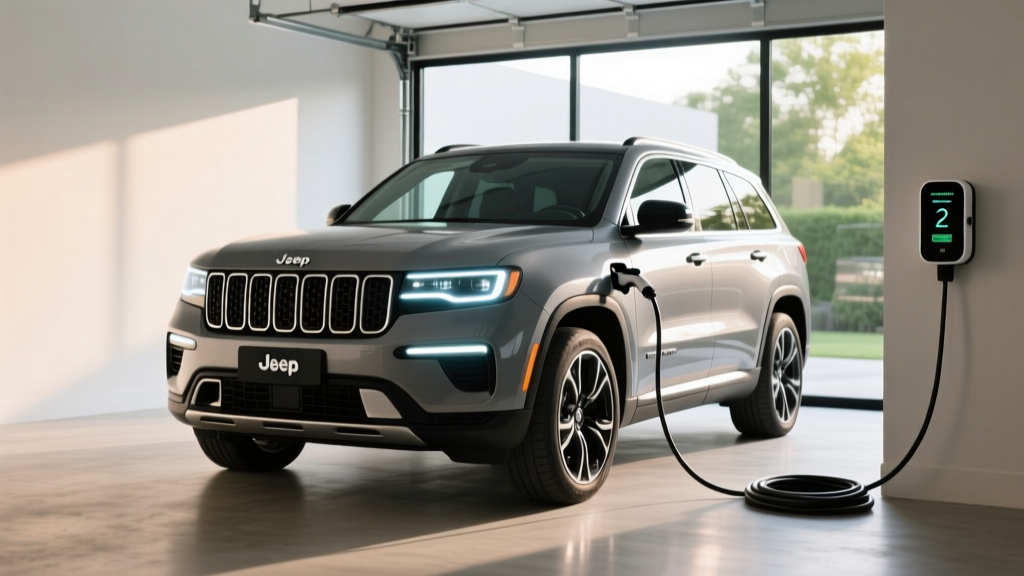
Installing a Level 2 home charger is the single most effective way to eliminate EV range anxiety. You start every day with a full "tank," and you never visit a gas station or public charger for daily driving. But the installation isn't as simple as plugging in a dryer — here's what's actually involved.
Electrical Requirements
A typical Level 2 home charger requires a 240-volt dedicated circuit, similar to what an electric dryer or oven uses. The most common configurations:
- 32-amp circuit (7.7 kW): Requires a 40-amp breaker (NEC requires circuits rated at 125% of continuous load). Uses 8 AWG copper wire. Good for smaller batteries or PHEVs.
- 40-amp circuit (9.6 kW): Requires a 50-amp breaker. Uses 6 AWG copper wire. The sweet spot for most EVs — charges a 77 kWh battery overnight easily.
- 48-amp circuit (11.5 kW): Requires a 60-amp breaker. Uses 6 AWG or 4 AWG copper wire. Maximum speed for most residential chargers; ideal for larger batteries (Ford F-150 Lightning 131 kWh, Rivian R1S 149 kWh).
Does Your Electrical Panel Need an Upgrade?
This is the cost variable that catches many homeowners off guard. Most modern homes have a 200-amp main panel, which can usually accommodate a 40–60 amp EV circuit without issue. But if your home has:
- A 100-amp panel (common in homes built before 1990)
- An already heavily loaded panel (electric heat, hot tub, second kitchen)
- No available breaker slots
...you may need a panel upgrade to 200A, which costs $1,500–$3,500 on its own, or a load-management device ($200–$500) that dynamically limits charger draw when other appliances are running. A licensed electrician will perform a load calculation per NEC Article 220 to determine your options.
| Cost Component | Simple Install (panel nearby) | Complex Install (long run / panel upgrade) |
|---|---|---|
| Level 2 Charger Equipment | $350–$700 | $350–$700 |
| Electrician Labor (2–6 hrs) | $300–$600 | $800–$1,800 |
| Materials (wire, conduit, breaker) | $50–$150 | $200–$600 |
| Permit & Inspection | $50–$200 | $100–$300 |
| Panel Upgrade (if needed) | $0 | $1,500–$3,500 |
| Total Estimated Cost | $750–$1,650 | $2,950–$6,900 |
According to the U.S. Department of Energy, most straightforward home Level 2 installations fall in the $800–$2,000 range when no panel upgrade is required. Always get at least three quotes from licensed electricians, and confirm they pull a local permit — unpermitted work can void your homeowner's insurance and cause issues at resale.
Safety and Code Considerations
- Dedicated circuit: NEC 625.40 requires EV charging equipment to have its own dedicated branch circuit — it cannot share with other outlets or appliances.
- GFCI protection: NEC 2023 and later require GFCI protection for all 240V EV charging receptacles (NEMA 14-50 or 6-50). Hardwired chargers may be exempt depending on local code interpretation.
- Outdoor rating: If your charger is mounted outside, ensure the unit carries a NEMA 4 or NEMA 4X rating for weather resistance. All major chargers (ChargePoint, Emporia, Wallbox) meet this standard.
- Wire gauge and conduit: Your electrician must size wire per NEC Table 310.16 and run it in appropriate conduit (EMT, PVC, or Romex where permitted). Undersized wire is a fire hazard.
Connector Compatibility: NACS, CCS, and CHAdeMO in 2026
The connector landscape has shifted dramatically. As of 2026, the North American Charging Standard (NACS), originally developed by Tesla, has become the dominant connector for new EVs sold in North America. Here's where each brand stands:
| Connector | Brands Using It (2026 Models) | Adapter Needed? |
|---|---|---|
| NACS (Tesla) | Tesla, Ford, GM, Rivian, Volvo, Polestar, Hyundai (2025+), Kia (2026+) | CCS-to-NACS adapter (~$200) for older CCS chargers |
| CCS1 | VW ID.4, BMW iX, older Hyundai/Kia models, Stellantis, Honda Prologue | NACS-to-CCS adapter for Tesla Superchargers |
| CHAdeMO | Nissan Leaf (legacy only — no new models since 2025) | CHAdeMO-to-CCS adapters rare; network access declining |
What this means for home charging: Level 2 home chargers universally use the J1772 connector (which NACS vehicles accept via a small adapter included with most new Tesls, Fords, and GMs). If you're buying a home charger today, choose one with a J1772 plug for maximum compatibility — or a NACS-native unit if your vehicle is NACS-equipped and you don't plan to own a CCS vehicle soon.
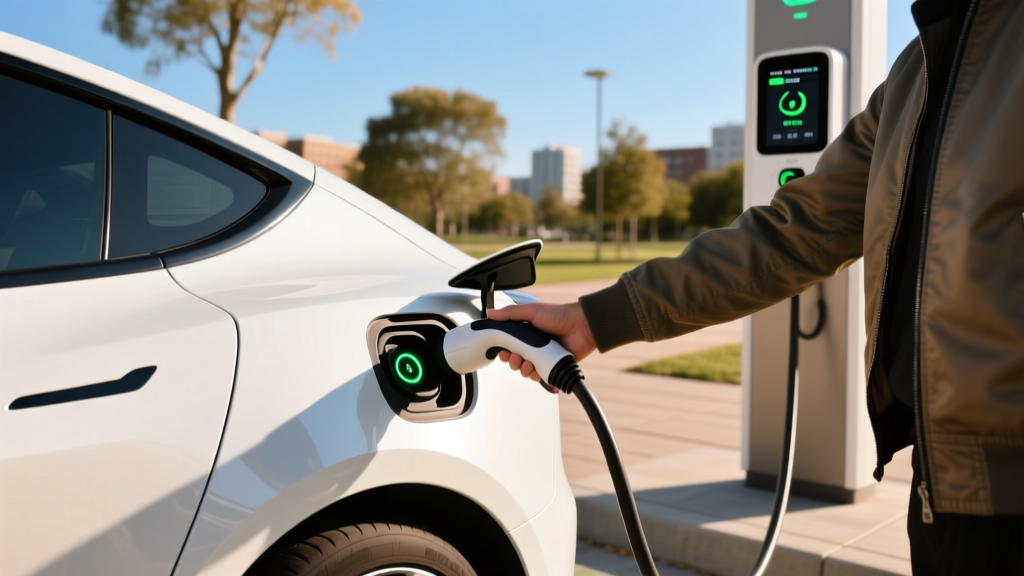
For public DC fast charging, the Tesla Supercharger network now welcomes non-Tesla vehicles with NACS ports (and CCS vehicles using Tesla's Magic Dock adapter at select stations). Electrify America, EVgo, and ChargePoint are adding NACS cables to new stations while maintaining CCS connectors. According to PlugShare, over 70% of U.S. DC fast charging locations in 2026 offer at least one NACS connector.
Charging Cost Per Mile: EV vs. Gas in Real Dollars
One of the most powerful antidotes to EV range anxiety is understanding that charging costs are remarkably predictable — and usually much lower than gasoline. Let's run the numbers with real 2026 electricity and fuel prices.
| Scenario | Rate ($/kWh) | Cost to Fill 77 kWh Battery | Cost Per Mile (3.2 mi/kWh) |
|---|---|---|---|
| Home — Off-Peak Utility Rate | $0.08–$0.14 | $6.16–$10.78 | $0.025–$0.044 |
| Home — Standard Residential Rate | $0.14–$0.20 | $10.78–$15.40 | $0.044–$0.064 |
| Public Level 2 (ChargePoint, etc.) | $0.20–$0.35 | $15.40–$26.95 | $0.064–$0.11 |
| DC Fast Charging (Electrify America, EVgo) | $0.35–$0.55 | $26.95–$42.35 | $0.11–$0.17 |
| Gasoline Baseline (28 MPG, $3.40/gal) | — | $42.50 (12.5-gal tank) | $0.121 |
The takeaway: home charging is 2–5x cheaper per mile than gasoline, even at standard residential electricity rates. Public DC fast charging can approach or exceed gas costs per mile — which is why daily home charging is the economic backbone of EV ownership. The U.S. average residential electricity rate in 2026 is approximately $0.17/kWh per the EIA, but time-of-use plans can push off-peak rates to $0.08–$0.12/kWh.
Recommended Home EV Chargers for 2026
Not all Level 2 chargers are created equal. Here are three units I've tested and recommend, chosen for reliability, smart features, and value:
Emporia Vue EV Charger
Power: 48A / 11.5 kW (hardwired) or 40A / 9.6 kW (NEMA 14-50 plug)
Connector: J1772 (NACS adapter included with many 2026 EVs)
Cable Length: 24 ft
Smart Features: Wi-Fi, energy monitoring via Emporia app, scheduled charging, solar integration
Price: ~$399
Best For: Budget-conscious buyers who want full smart features and energy tracking
ChargePoint Home Flex
Power: Up to 50A / 12 kW (configurable 16–50A via DIP switches)
Connector: J1772 or NACS (select at purchase)
Cable Length: 23 ft
Smart Features: Wi-Fi, ChargePoint app, Alexa integration, flexible amperage to match your circuit
Price: ~$649
Best For: Flexibility across panel capacities; choose J1772 or NACS at order
Tesla Wall Connector
Power: 48A / 11.5 kW (hardwired, 60A circuit required)
Connector: NACS native (J1772 adapter available separately)
Cable Length: 24 ft
Smart Features: Wi-Fi, OTA updates, Tesla app integration, Power Sharing (link multiple units on one circuit)
Price: ~$475
Best For: Tesla and NACS-equipped Ford/GM/Rivian owners who want a clean, reliable native solution
Pro tip: If your electrical panel is tight on capacity, the ChargePoint Home Flex's configurable amperage is invaluable — you can set it to 32A on a 40A circuit today, then reconfigure to 48A if you upgrade your panel later. No need to buy a new charger.
Charging Times for Common EV Battery Sizes
How long does charging actually take? Here are real 10–80% times for popular 2026 EVs at various charging speeds. Note that DC fast charging times reflect the sustained average power across the curve, not the peak kW number.
| Vehicle (Battery kWh) | Level 2 at 11.5 kW (10–100%) | 150 kW DC FC (10–80%) | 250–350 kW DC FC (10–80%) |
|---|---|---|---|
| Tesla Model Y LR (81 kWh) | ~6.5 hours | ~30 min | ~18 min (250 kW Supercharger) |
| Hyundai Ioniq 5 (84 kWh) | ~7 hours | ~28 min | ~18 min (800V architecture) |
| Chevy Equinox EV (85 kWh) | ~7 hours | ~32 min | ~22 min (150 kW peak) |
| Ford F-150 Lightning ER (131 kWh) | ~10.5 hours | ~45 min | ~35 min (150 kW peak) |
The Hyundai Ioniq 5's 800-volt architecture deserves special mention: it can accept up to 350 kW at compatible chargers, maintaining higher power deeper into the charge curve than 400V vehicles. This translates to noticeably faster 10–80% sessions on Electrify America's 350 kW stations.
Practical Strategies to Minimize Range Anxiety on Road Trips
Beyond home charging, a few habits transform road-trip charging from stressful to routine:
- Precondition your battery. Most EVs (Tesla, Hyundai, Ford, GM) will warm the battery when you navigate to a DC fast charger in cold weather. This can double your charge speed in winter. Without preconditioning, a 150 kW charger might deliver only 50 kW to a cold battery.
- Plan around 10–80% stops. Charging from 80–100% on DC fast chargers is painfully slow and wastes time. Plan shorter, more frequent stops staying in the 10–80% sweet spot.
- Use A Better Route Planner (ABRP) or your vehicle's built-in navigation. These tools factor in elevation, temperature, speed, and charger availability to predict your state of charge at each stop.
- Keep a CCS or NACS adapter in the frunk. If your EV has a NACS port, carry a CCS-to-NACS adapter (~$200) for the occasional Electrify America station that hasn't added NACS cables yet. The reverse applies to CCS vehicles visiting Superchargers with Magic Dock.
- Know your real-world range. EPA estimates are measured under ideal conditions. Expect a 15–30% reduction at sustained 75+ mph highway speeds, and 20–40% reduction in sub-freezing temperatures. A 320-mile EPA vehicle realistically delivers 230–260 highway miles in winter.
Frequently Asked Questions
How much does it cost to install a home EV charger?
A straightforward Level 2 installation (240V, 40–60A circuit, panel nearby with available capacity) typically costs $750–$1,650 including equipment, electrician labor, materials, and permit. If your home needs a panel upgrade from 100A to 200A, or requires a long wire run (50+ feet through walls or underground), costs can reach $2,950–$6,900. Always get a load calculation from a licensed electrician before committing.
How fast will each charging level add range?
Level 1 (120V) adds 3–5 miles per hour — adequate for plug-in hybrids with 30–40 mile electric ranges. Level 2 (240V, 40–48A) adds 25–40 miles per hour, fully recharging most EVs overnight. DC fast charging adds 150–900+ miles per hour at peak power, with typical 10–80% sessions taking 18–35 minutes depending on the vehicle and charger.
Which connector/charger is compatible with my EV?
For 2026 models: Tesla, Ford, GM, Rivian, Volvo, Polestar, and newer Hyundai/Kia vehicles use NACS. Volkswagen, BMW, Honda, and older Hyundai/Kia models use CCS1. The Nissan Leaf (discontinued) used CHAdeMO. For home Level 2 charging, all EVs accept the J1772 connector (or a J1772-to-NACS adapter included with most NACS vehicles). Check your vehicle's charge port or owner's manual to confirm.
How much does charging cost per mile vs gas?
Home charging at the U.S. average rate of $0.17/kWh costs about $0.053 per mile for an EV averaging 3.2 miles per kWh — roughly 56% cheaper than a 28 MPG gas car at $3.40/gallon ($0.121/mile). Off-peak home rates can drop to $0.03/mile. Public DC fast charging at $0.45/kWh costs about $0.14/mile, slightly more than gas — which is why home charging is the economic advantage.
What electrical upgrades might I need?
If your home has a 200-amp panel with available breaker slots and moderate existing loads, you likely need only a new 40–60A breaker and a wire run to your garage or parking spot. If you have a 100-amp panel (common in pre-1990 homes), an already overloaded panel, or no available slots, you may need a panel upgrade ($1,500–$3,500) or a load-management device ($200–$500) that shares capacity with existing circuits. Your electrician will perform an NEC Article 220 load calculation to determine the path forward.
Can I use a regular 120V outlet to charge my EV?
Yes — this is Level 1 charging, and it adds 3–5 miles of range per hour. For a plug-in hybrid with a 35-mile electric range, an overnight Level 1 session (10 hours) is sufficient. For a full EV with a 300-mile range, Level 1 would take 60+ hours for a full charge — impractical for daily use but useful as a backup or for occasional top-offs. Ensure the outlet is on a dedicated 15A or 20A circuit and avoid extension cords.