If you've seen social media buzz about an Electrify America free charging weekend, you're not imagining things. EA periodically runs promotional events where drivers can charge at no cost on their nationwide DC fast-charging network — typically tied to new station openings, Earth Day, National Drive Electric Week, or partnerships with automakers like Volkswagen, Hyundai, and Ford. But relying on free charging events isn't a long-term strategy. This guide breaks down what these weekends actually offer, how public DC fast charging works in 2026, and — more importantly — how to set up reliable, affordable home charging so you're never dependent on promotions.
What Is an Electrify America Free Charging Weekend?
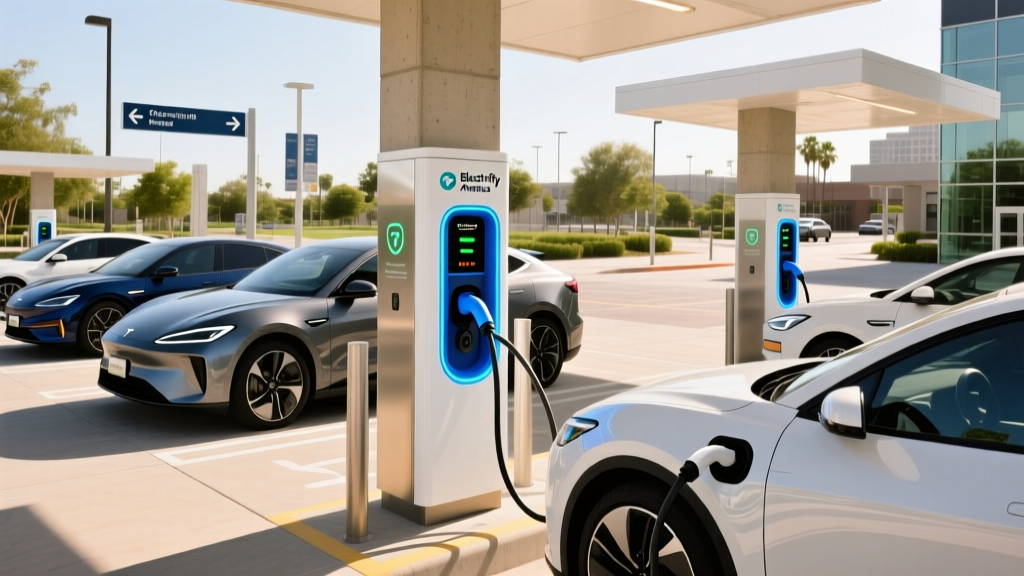
Electrify America operates over 1,000 DC fast-charging stations across the U.S. as of early 2026, with most stalls delivering between 150 kW and 350 kW peak power. Their free charging weekend promotions typically work in one of two ways:
- Open-access events: Any driver can plug in at participating stations during the promotional window (usually Saturday–Sunday) and charge at no cost. No EA app account required, though having one speeds up the process.
- Automaker-sponsored credits: Some promotions are tied to specific brands. For example, new Hyundai Ioniq 5 and Ioniq 6 buyers have historically received complimentary charging credits on EA's network — often 2 years of free 30-minute sessions or a set kWh allocation.
The catch? Free charging weekends are unpredictable. EA does not publish an annual calendar of events. They're announced via the Electrify America app, email newsletters, and social media, often just 1–2 weeks in advance. If you're shopping for an EV and counting on free public charging, you need a realistic baseline for what charging actually costs day-to-day.
Charging Levels Explained: Speed, Power, and Real-World Range Added
The single most important distinction in EV charging is between kW (kilowatts — the rate of power delivery, like water pressure from a hose) and kWh (kilowatt-hours — the total energy stored in your battery, like gallons in a tank). A charger rated at 150 kW can theoretically deliver 150 kWh of energy in one hour, though real-world charging always involves tapering as the battery fills.
| Level | Voltage | Power (kW) | Miles of Range Added per Hour | 10–80% Charge Time | Typical Use Case |
|---|---|---|---|---|---|
| Level 1 (120V household outlet) | 120V | 1.2–1.4 kW | 3–5 mi/hr | ~50+ hours | Emergency top-ups, PHEVs with small batteries |
| Level 2 (240V home/public) | 240V | 7.2–19.2 kW | 20–60 mi/hr | 4–8 hours | Daily home charging, workplace, hotels |
| DC Fast Charging (Level 3) | 400–800V DC | 50–350 kW | 150–1,200+ mi/hr (peak) | 15–45 minutes | Road trips, highway corridors, quick top-ups |
Real-world caveat: Those 10–80% times assume optimal battery temperature (preconditioned) and a charger that can sustain its peak rate. In practice, a 350 kW Electrify America stall will only deliver peak power in the 10–40% state-of-charge window. Above 60%, the charge curve tapers significantly — a 350 kW session might average 120–180 kW across the full 10–80% session. Cold weather (below 40°F) can add 20–40% to charging times if the battery hasn't been preconditioned via navigation routing.
How Much Does It Cost to Install a Home EV Charger?
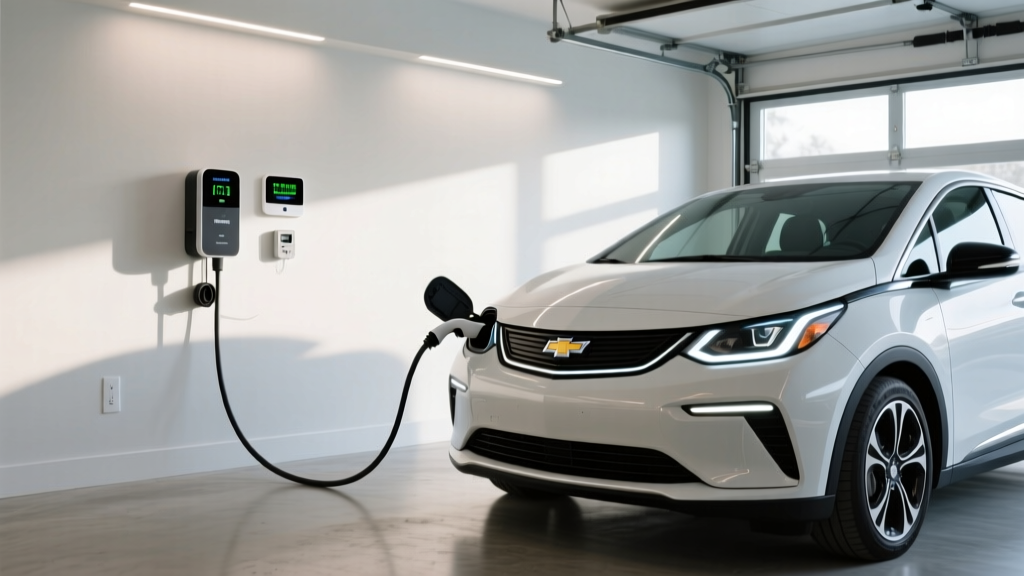
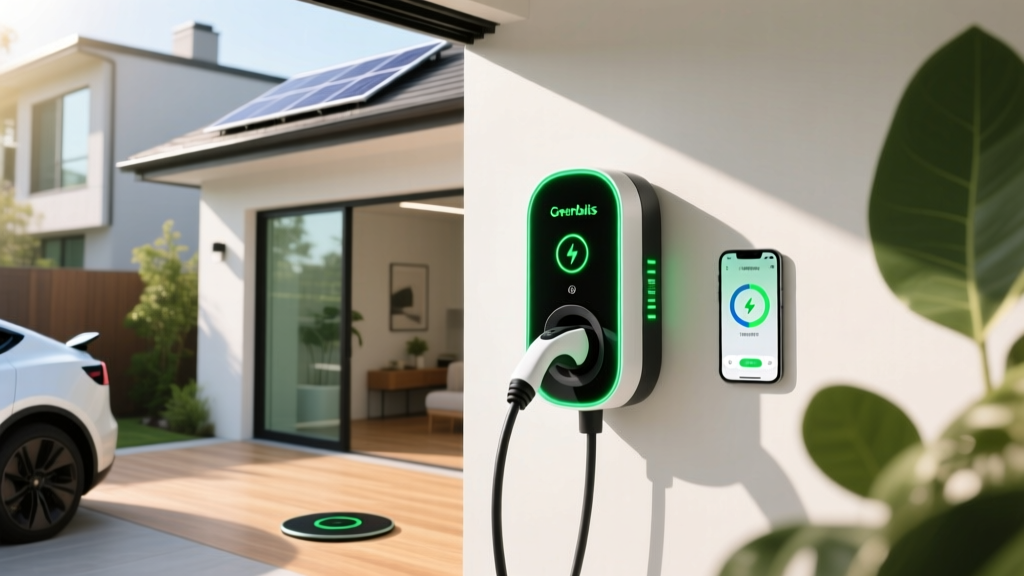
Home Level 2 charging is where the economics of EV ownership really work. Most EV owners do 80–95% of their charging at home, and a properly installed Level 2 charger will fully replenish any current-production EV overnight. But installation costs vary enormously based on your home's electrical infrastructure.
| Component | Basic Install (Panel Adjacent) | Standard Install (50–100 ft run) | Complex Install (Panel Upgrade Required) |
|---|---|---|---|
| Level 2 charger (hardware) | $400–$700 | $400–$700 | $400–$700 |
| Electrician labor | $300–$600 | $600–$1,500 | $1,500–$3,000 |
| Electrical permit | $50–$150 | $50–$200 | $100–$300 |
| Panel upgrade (if needed) | — | — | $1,500–$4,000 |
| Conduit, wire, misc. materials | $50–$150 | $150–$500 | $200–$800 |
| Total estimated cost | $800–$1,600 | $1,200–$2,900 | $3,700–$8,800 |
The panel-upgrade factor: Most homes built before 2000 have 100-amp or 150-amp electrical panels. A 48-amp Level 2 charger requires a dedicated 60-amp circuit (NEC code requires circuits to be rated at 125% of continuous load). If your panel is already near capacity — running HVAC, electric range, dryer, and water heater — adding a 60A circuit may require upgrading to a 200-amp panel. This is the single biggest variable in installation cost and something many online guides gloss over. Get a load calculation from a licensed electrician before committing to a charger purchase.
Electrical requirements for a typical 48A Level 2 charger:
- 240V dedicated circuit
- 60-amp breaker (for 48A continuous draw)
- 6 AWG copper wire (or 4 AWG aluminum) for runs up to 100 feet
- NEMA 14-50 receptacle or hardwired connection (hardwired is increasingly preferred for 48A+ units, as NEMA 14-50 outlets are rated for 50A and some inspectors flag their use with 60A breakers)
- GFCI protection if installed outdoors (required by NEC 2020 and later)
Connector Compatibility: NACS, CCS, and CHAdeMO in 2026
The connector landscape has consolidated significantly since Ford and GM adopted the North American Charging Standard (NACS) for their 2025+ models. Here's where things stand for 2026 model-year vehicles:
| Connector Type | Brands Using It (Native) | Adapter Needed for Electrify America? |
|---|---|---|
| NACS (Tesla standard) | Tesla (all), Ford (2025+), GM (2025+), Rivian (2025+), Hyundai/Kia (2026+), Volvo/Polestar | EA now offers NACS cables at new stations; older CCS-only stalls require a CCS-to-NACS adapter (~$200–$300) |
| CCS1 (Combined Charging System) | Volkswagen, BMW, Mercedes-Benz, Stellantis, legacy Hyundai/Kia (2024 and earlier) | No — CCS is EA's original native connector |
| CHAdeMO | Nissan Leaf (discontinued after 2025), Mitsubishi Outlander PHEV | CHAdeMO availability at EA stations is limited and declining; plan around CCS/NACS |
Practical advice for 2026 buyers: If you're purchasing a new EV with a NACS port, verify that Electrify America stations along your common routes have been retrofitted with NACS cables. EA has been adding native NACS connectors to new and renovated stations since mid-2024, but many legacy stalls still only have CCS1 cables. Carrying a CCS-to-NACS adapter in your trunk provides insurance against stranded situations. The EA app shows connector availability per stall in real time.
Cost to Charge: Home vs. Public vs. Gas — The Real Numbers
This is where the Electrify America free charging weekend promotion makes sense as a marketing tool: public DC fast charging is significantly more expensive than home charging. Here's what the math looks like in 2026:
| Charging Scenario | Typical $/kWh | Cost to Add 200 Miles (75 kWh Battery, 3.5 mi/kWh) | Equivalent Cost per Mile |
|---|---|---|---|
| Home Level 2 (national avg. electricity, ~$0.16/kWh) | $0.16 | $9.14 | $0.046 |
| Home Level 2 (off-peak TOU rate, ~$0.08/kWh) | $0.08 | $4.57 | $0.023 |
| Public Level 2 (ChargePoint, EVgo, etc.) | $0.25–$0.49 | $14.29–$28.00 | $0.07–$0.14 |
| Electrify America DC Fast (standard pricing) | $0.43–$0.56 | $24.57–$32.00 | $0.12–$0.16 |
| EA Pass+ subscription ($7/mo) | $0.33–$0.42 | $18.86–$24.00 | $0.09–$0.12 |
| Gasoline vehicle (28 MPG combined, $3.40/gal) | — | $24.29 | $0.121 |
The takeaway: Home charging on an off-peak rate delivers fuel cost savings of 75–80% versus gasoline. Public DC fast charging at Electrify America's standard rates is roughly cost-parity with gasoline — the advantage is convenience and speed on road trips, not savings. This is exactly why an Electrify America free charging weekend is so appealing: it temporarily eliminates the cost premium of public fast charging. But building your daily routine around home Level 2 charging is how EV ownership delivers on its economic promise.
For reference, the EPA's fueleconomy.gov tool lets you calculate exact per-mile energy costs for any EV model based on your local electricity rates and the vehicle's rated kWh/100mi efficiency.
Recommended Level 2 Home Chargers for 2026
After testing dozens of units across multiple homes and EV models, these are the Level 2 chargers that deliver the best combination of reliability, power output, and smart features for 2026 EV owners:
Emporia Level 2 EV Charger (Best Value)
- Power output: Up to 48A (11.5 kW on 240V)
- Connector: NACS (native); CCS adapter available
- Cable length: 24 feet
- Smart features: Wi-Fi connected, energy monitoring via Emporia Vue integration, scheduled charging for TOU rates, solar-aware charging
- Price: ~$400
- Best for: Budget-conscious buyers who want smart scheduling and energy tracking without paying a premium
ChargePoint Home Flex (Best All-Rounder)
- Power output: Up to 50A (12 kW on 240V, adjustable via DIP switches down to 16A)
- Connector: NACS (2025+ models); CCS1 available for older EVs
- Cable length: 23 feet
- Smart features: Wi-Fi, ChargePoint app scheduling, Alexa/Google Home integration, flexible amperage to match panel capacity
- Price: ~$550–$650
- Best for: Homes with limited panel capacity (can be set to 32A or 40A to avoid a panel upgrade)
Tesla Wall Connector (Best for NACS-Native Households)
- Power output: Up to 48A (11.5 kW on 240V)
- Connector: NACS (native Tesla plug); includes J1772 adapter for non-Tesla EVs
- Cable length: 24 feet
- Smart features: Wi-Fi, over-the-air updates, power sharing between two units on one circuit, vehicle-integrated scheduling
- Price: ~$475
- Best for: Tesla owners or multi-EV households with all-NACS vehicles
Grizzl-E Smart (Most Durable / Outdoor-Rated)
- Power output: Up to 40A (9.6 kW on 240V)
- Connector: J1772 (universal Level 2); NACS adapter included with newer models
- Cable length: 24 feet
- Smart features: Wi-Fi via Smart app, OCPP compatibility for utility demand-response programs, adjustable amperage
- Price: ~$500–$600
- Best for: Outdoor installations in extreme climates (IP67 rated, -40°F to +122°F operating range)
Safety, Electrical Code, and Installation Best Practices
A Level 2 charger is a continuous high-amperage load — it runs at full draw for hours at a time. This makes proper installation non-negotiable. Here's what the National Electrical Code (NEC) and best practices require:
- Dedicated circuit: Your EV charger must have its own dedicated breaker — no sharing with other appliances. A 48A charger needs a 60A breaker; a 32A charger needs a 40A breaker.
- GFCI protection: Outdoor installations require a GFCI (Ground Fault Circuit Interrupter) breaker. Many modern EV chargers have built-in GFCI detection, but local inspectors may still require a GFCI breaker at the panel. Confirm with your electrician and local AHJ (Authority Having Jurisdiction).
- Outdoor rating: If installing outside, the charger must be rated for outdoor use (look for NEMA 4 or IP65/IP67 ratings). The electrical junction box and conduit connections must also be weather-sealed.
- Hardwired vs. plug-in: For 48A+ chargers, hardwired installation is increasingly preferred. A NEMA 14-50 receptacle is rated for 50A, and running a 48A continuous load (which NEC treats as 60A for circuit sizing) through a 50A-rated receptacle creates a code gray area that some inspectors will reject. Hardwired connections eliminate this issue.
- Permit and inspection: Nearly all jurisdictions require an electrical permit for EV charger installation. The permit fee is typically $50–$200, and the inspection ensures your installation meets code. Skipping the permit risks insurance claim denials if an electrical fire occurs.
Maximizing an Electrify America Free Charging Weekend
When EA announces a free charging weekend, here's how to make the most of it:
- Download the EA app and create an account in advance. Even during free events, the app is the fastest way to activate a session.
- Arrive with a low state of charge (10–20%). The fastest charging happens in the 10–60% window. If you arrive at 50%, you'll spend most of your session in the taper zone where speeds drop significantly.
- Precondition your battery by navigating to the EA station in your vehicle's built-in nav (if supported) at least 20–30 minutes before arrival. This warms the battery to optimal charging temperature.
- Target a 350 kW stall if your vehicle supports it (800V architecture vehicles like the Hyundai Ioniq 5, Kia EV6, Porsche Taycan, and Lucid Air). On a 400V vehicle, a 150 kW stall is sufficient — you won't gain speed at a 350 kW unit.
- Charge to 80%, then move on. The 80–100% top-up takes nearly as long as the 10–80% session due to charge curve tapering. During a busy free event, charging to 80% is both courteous and efficient.
Frequently Asked Questions
How fast will each charging level add range to my EV?
Level 1 (120V) adds 3–5 miles per hour — adequate for plug-in hybrids with 25–40 miles of electric range, but impractical for full BEVs. Level 2 (240V) at 48 amps adds roughly 35–45 miles per hour for a typical midsize SUV like the Tesla Model Y or Ford Mustang Mach-E, fully replenishing a 75 kWh battery in 6–8 hours. DC fast charging at 150–350 kW can add 100–250 miles in 15–25 minutes, depending on battery size, architecture (400V vs. 800V), and state of charge.
How much does it cost to install a home EV charger?
A straightforward installation (charger near the electrical panel, no panel upgrade needed) typically costs $800–$1,600 including equipment, labor, and permit. A standard installation with a 50–100 foot wire run costs $1,200–$2,900. If your home needs a 200-amp panel upgrade to accommodate a 48A charger, expect $3,700–$8,800 total. Always get a load calculation from a licensed electrician before purchasing equipment.
Which connector and charger is compatible with my EV?
For 2026 model-year vehicles, most new EVs use the NACS connector (Tesla, Ford, GM, Rivian, Hyundai/Kia, Volvo/Polestar). Volkswagen, BMW, and Mercedes-Benz still use CCS1. For Level 2 home charging, most chargers now ship with NACS plugs or include J1772/CCS adapters. Check your vehicle's charge port before ordering a charger — and verify whether your local Electrify America stations have been retrofitted with NACS cables.
How much does EV charging cost per mile compared to gasoline?
Home charging on a standard rate (~$0.16/kWh) costs about $0.046 per mile for a 3.5 mi/kWh EV — roughly 60% less than a 28 MPG gasoline car at $3.40/gallon ($0.121/mile). Off-peak TOU rates (~$0.08/kWh) drop that to $0.023/mile, an 80% savings. Public DC fast charging at Electrify America's standard rates ($0.43–$0.56/kWh) costs $0.12–$0.16 per mile — roughly equivalent to gasoline. The economic advantage of EVs is maximized with consistent home charging.
What electrical upgrades might I need for a Level 2 home charger?
The most common upgrade is a panel capacity increase. If your home has a 100A or 150A panel and is already running high-draw appliances (electric range, dryer, HVAC), adding a 60A circuit for a 48A charger may exceed your panel's capacity. A 200A panel upgrade costs $1,500–$4,000. An alternative: install a lower-amperage charger (32A on a 40A circuit), which still adds ~25 miles per hour and may fit within your existing panel capacity. Some utilities also offer smart panel solutions like the Span smart electrical panel or load-management devices (e.g., Emporia's smart breaker) that dynamically share capacity between your charger and other circuits.
Is the Electrify America free charging weekend available nationwide?
Free charging promotions typically apply to all EA stations across the U.S., but specific events may be limited to certain regions or newly opened stations. Always check the Electrify America app or website for the exact terms, participating locations, and time windows before making a trip specifically for free charging. Some automaker-sponsored free charging (like Hyundai's complimentary EA credits) is tied to the vehicle's VIN and works at all EA stations regardless of promotional events.