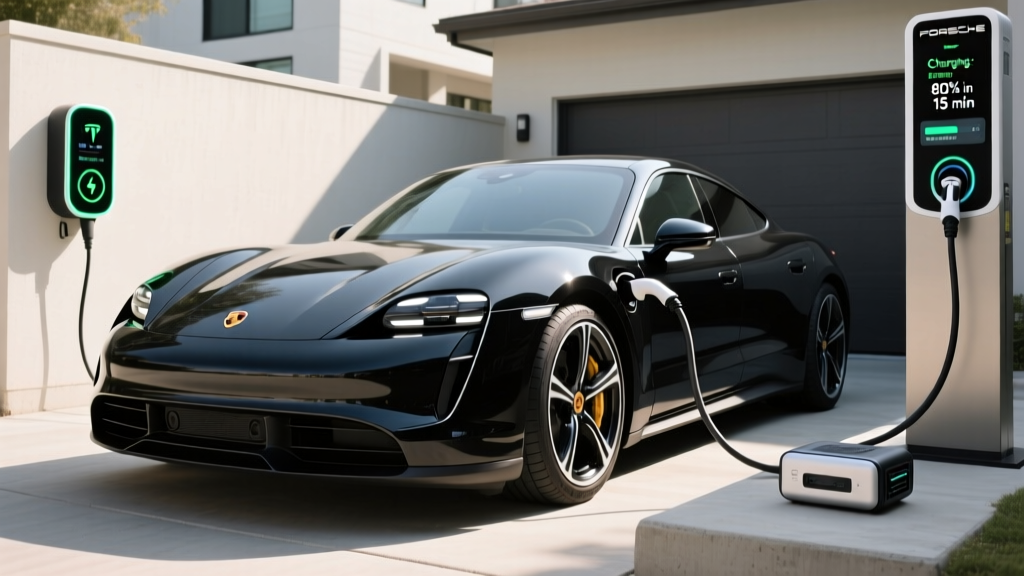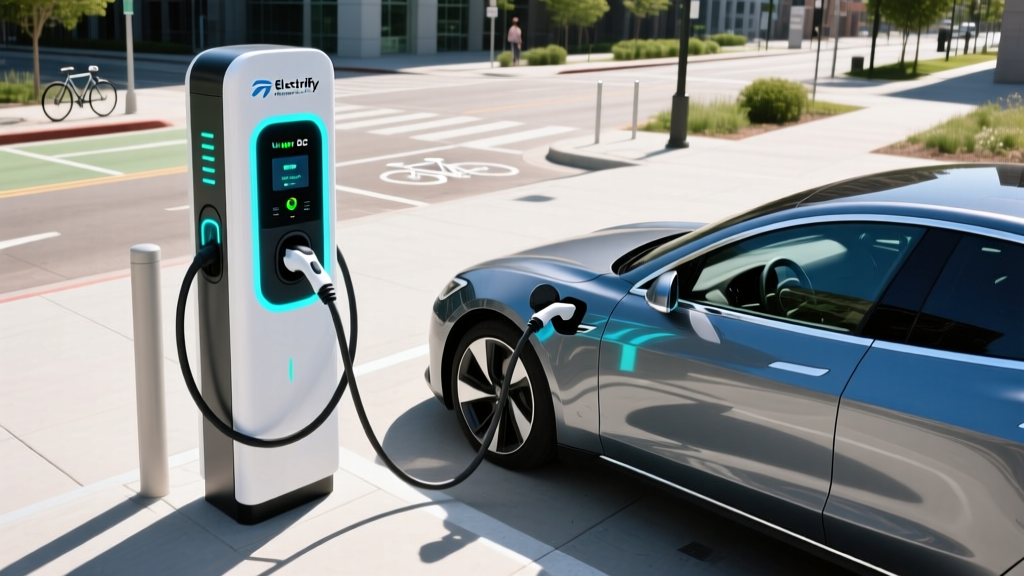
If you've ever pulled into an Electrify America (EA) station and watched the per-kWh price flash on the screen, you've probably asked: how much does Electrify America charge per kWh, and how does that compare to charging at home? The answer isn't a single number — it depends on your membership tier, the station's power class, your state's electricity regulations, and whether you're charging during peak or off-peak hours. This guide breaks down exactly what EA charges in 2026, how public DC fast charging costs stack up against home Level 2, and what you'll actually spend per mile to keep your EV running.
Electrify America Pricing: What You'll Pay Per kWh
Electrify America uses per-kWh pricing in most states where regulations allow it (a handful of states still require per-minute billing, though this is becoming rare as of 2026). Here's how the pricing tiers break down:
| Tier | Cost Per kWh | Session Fee | Monthly Cost | Best For |
|---|---|---|---|---|
| Guest (Pay-As-You-Go) | $0.48 – $0.58/kWh | $1.00 – $1.50 | $0 | Infrequent road-trippers |
| Pass+ Member | $0.36 – $0.44/kWh | Waived | $4/month | Monthly road-trippers |
| EA Included (OEM Credits) | $0.00 (credit drawdown) | Varies | N/A | New EV buyers with bundled credits |
Key pricing nuances: Rates vary by state and station. California stations tend to cluster around $0.48–$0.56/kWh for guests, while some East Coast and Midwest stations run $0.43–$0.52/kWh. Stations with ultra-fast 350 kW chargers sometimes carry a $0.03–$0.05/kWh premium over 150 kW stations. Idle fees of $0.20–$0.40/minute apply if you remain plugged in after your session ends — so set your phone alarm and don't linger.
For the most current rates at a specific station, check the Electrify America station map, which displays real-time pricing before you navigate there.
Charging Levels Explained: Speeds, Power, and Range Added
Before comparing costs, it's critical to understand the three charging levels — and the difference between kW (kilowatts), which measures power delivery rate, and kWh (kilowatt-hours), which measures energy stored. Think of kW as the width of the hose and kWh as the size of the bucket. A 350 kW charger fills your 77 kWh battery much faster than a 7.2 kW home charger — but both deliver the same kWh of energy.
| Charging Level | Voltage | Power Output (kW) | Miles of Range Added Per Hour | 10–80% Time (77 kWh battery) | Typical Use Case |
|---|---|---|---|---|---|
| Level 1 (120V) | 120V AC | 1.0 – 1.4 kW | 3 – 5 miles/hr | ~38 – 50 hours | Overnight trickle, PHEVs, emergencies |
| Level 2 (240V) | 240V AC | 7.2 – 19.2 kW | 22 – 60+ miles/hr | ~4 – 8 hours | Daily home/workplace charging |
| DC Fast Charge | 400–900V DC | 50 – 350 kW | 150 – 1,000+ miles/hr | ~18 – 45 minutes | Road trips, rapid top-ups |
Real-world charging curve reality: A "350 kW" charger doesn't deliver 350 kW for your entire session. Most EVs peak at their max charge rate only between roughly 10–40% State of Charge (SoC), then taper significantly. A Hyundai Ioniq 5 peaking at 240 kW might sustain that rate for 12–15 minutes before tapering to 100–120 kW above 60% SoC, which is why manufacturers quote 10–80% times rather than 0–100%. Charging past 80% at a DC fast charger is painfully slow and expensive — unplug at 80% unless you absolutely need the extra range.
Home Level 2 Charger Installation: Full Cost Breakdown
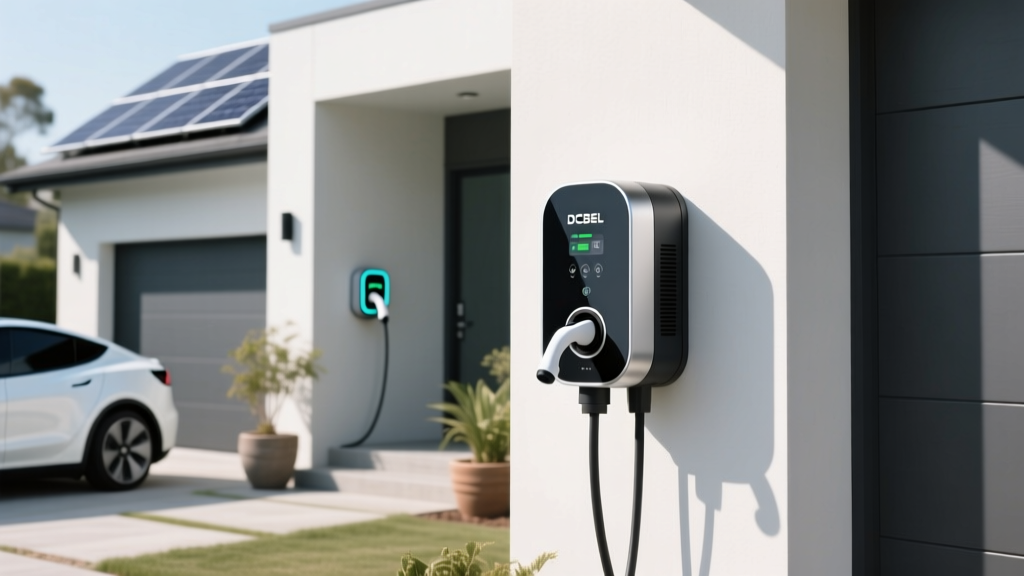
Installing a Level 2 home charger is the single most impactful upgrade an EV owner can make. You'll charge at $0.08–$0.18/kWh (your local electricity rate) instead of $0.40–$0.58/kWh at public DC fast chargers — and you'll wake up to a full battery every morning. Here's what the installation actually costs:
| Cost Component | Low End | High End | Notes |
|---|---|---|---|
| Level 2 Charger (Equipment) | $350 | $750 | Smart Wi-Fi chargers (ChargePoint, Wallbox, Emporia) |
| Electrician Labor | $400 | $1,500 | Depends on run length, conduit, and local rates |
| Electrical Permit | $50 | $250 | Required in most jurisdictions; fee varies by city |
| Panel Upgrade (if needed) | $1,500 | $3,500 | Needed if your panel is 100A or near capacity |
| Total (no panel upgrade) | $800 | $2,500 | Most homes with 200A service and nearby garage |
| Total (with panel upgrade) | $2,300 | $6,000 | Older homes or panels at/near max load |
Electrical requirements for a standard Level 2 install: Most home chargers run on a 240V circuit at 32A, 40A, or 48A, requiring a dedicated 40A, 50A, or 60A breaker respectively (NEC code requires circuits rated at 125% of continuous load). A 48A charger like the ChargePoint Home Flex needs a 60A breaker. Your electrician will assess your panel's available capacity — if you're running a 200A panel with significant headroom, you're likely fine. If you're on a 100A panel with an electric range, dryer, and central AC already drawing load, a panel upgrade or a smart load-management system (like the Emporia VUE with smart breaker) may be necessary.
Don't skip the permit. Unpermitted electrical work can void your homeowner's insurance, fail a home inspection during sale, and create a fire hazard. A licensed electrician will pull the permit and schedule the inspection as part of their scope.
Cost Per Mile: Public DC Fast Charging vs. Home vs. Gas
The real measure of charging economics isn't $/kWh — it's cost per mile. Here's how the three scenarios compare for a typical mid-size EV (efficiency of 3.0 miles/kWh, like a Tesla Model Y or Hyundai Ioniq 5):
| Charging Scenario | $/kWh | Cost Per Mile | Cost for 300 Miles | Annual Cost (12,000 mi) |
|---|---|---|---|---|
| Home Level 2 (national avg.) | $0.14/kWh | $0.047/mi | $14.00 | $560 |
| Home Level 2 (off-peak TOU rate) | $0.09/kWh | $0.030/mi | $9.00 | $360 |
| Electrify America (Pass+) | $0.40/kWh | $0.133/mi | $40.00 | $1,600 |
| Electrify America (Guest) | $0.52/kWh | $0.173/mi | $52.00 | $2,080 |
| Gas Vehicle (25 MPG, $3.40/gal) | N/A | $0.136/mi | $40.80 | $1,632 |
The takeaway: Charging at home on an off-peak rate is the cheapest way to drive — roughly one-third the cost of gas per mile. But if you rely exclusively on Electrify America Guest-rate DC fast charging, you'll actually pay more per mile than a 25 MPG gas car. Even the Pass+ membership at $0.40/kWh roughly matches gas costs per mile. Public DC fast charging is best thought of as a road-trip convenience, not your daily fueling strategy. If you can't charge at home or at work, a PHEV may be a more economical choice than a BEV.
Connector Compatibility: NACS, CCS, and CHAdeMO in 2026
The connector landscape has shifted dramatically since Ford, GM, Rivian, and most other automakers adopted Tesla's North American Charging Standard (NACS) beginning in 2025. Here's where things stand in 2026:
| Connector | Brands Using It (2026 Models) | Electrify America Availability | Adapter Needed? |
|---|---|---|---|
| NACS (Tesla plug) | Tesla, Ford, GM, Rivian, Volvo, Polestar, Mercedes, BMW (select), Hyundai/Kia (new models) | Yes — EA has retrofitted most stations with NACS cables | CCS-to-NACS adapter for older CCS vehicles |
| CCS1 (Combo) | Hyundai/Kia (pre-2025), VW ID.4, Subaru Solterra, Toyota bZ4X, legacy models | Yes — still available at all EA stations | N/A (native connector) |
| CHAdeMO | Nissan Leaf (discontinued after 2025), Mitsubishi Outlander PHEV (older models) | Limited — many EA stations have removed CHAdeMO cables | No adapter available for DC fast charging |
Adapter reality: If you drive a CCS-equipped EV and want to use Tesla Superchargers (now open to non-Tesla vehicles via NACS), you'll need a CCS-to-NACS adapter. Ford, Rivian, and GM provide or sell these adapters ($100–$250). Conversely, if your new 2026 NACS-equipped EV needs to use a legacy CCS-only charger, you'll need a NACS-to-CCS adapter. Electrify America has committed to deploying NACS cables at all new and retrofitted stations, so NACS is becoming the dominant standard.
Recommended Home Level 2 Chargers for 2026
ChargePoint Home Flex (2nd Gen)
- Power: Up to 12 kW (50A) — adjustable down to 16A
- Connector: NACS (CCS adapter included)
- Cable: 23 ft
- Smart Features: Wi-Fi, Alexa, scheduling, energy dashboard
- Price: ~$599
- Best for: Most homeowners wanting a reliable, flexible charger
Wallbox Pulsar Plus
- Power: Up to 11.5 kW (48A)
- Connector: NACS or CCS (choose at purchase)
- Cable: 25 ft
- Smart Features: Wi-Fi, Bluetooth, load balancing, solar integration
- Price: ~$549
- Best for: Solar-panel owners, tight spaces (compact unit)
Emporia Level 2 EV Charger
- Power: Up to 11.5 kW (48A)
- Connector: NACS (J1772 adapter included)
- Cable: 24 ft
- Smart Features: Wi-Fi, energy monitoring, TOU scheduling, V2L support
- Price: ~$399
- Best for: Budget-conscious buyers who want smart energy tracking
Buying tip: Choose a charger rated at least 48A if your EV supports 11.5 kW onboard charging (most 2026 EVs from Tesla, Hyundai, BMW, and Mercedes do). If your EV maxes out at 7.2 kW onboard (some base-trim models and PHEVs), a 32A charger is sufficient and saves on installation cost.
Safety, Code, and Installation Best Practices
EV charging draws sustained high current for hours — this is a continuous load under the National Electrical Code (NEC Article 625), and it demands proper installation:
- Dedicated circuit: Your Level 2 charger must be on its own dedicated breaker — never shared with other appliances. A 48A charger requires a 60A breaker.
- GFCI protection: NEC 2023 and later require GFCI protection for outdoor receptacles used for EV charging. Hardwired installations (which most electricians prefer for 48A+ chargers) typically do not require a separate GFCI breaker, as the charger has built-in ground-fault protection.
- Outdoor rating: If your charger is mounted outdoors, ensure it carries a NEMA 4 (weatherproof) rating. All three chargers recommended above are outdoor-rated.
- Wire gauge: A 60A circuit requires 6 AWG copper wire (or 4 AWG aluminum). Your electrician will size wire based on run length — longer runs may need thicker wire to prevent voltage drop.
- Load management: If your panel is near capacity, consider a smart load-management system (Emporia VUE, Span panel, or ChargePoint load-sharing) that dynamically throttles charger amperage when other appliances are running. This can avoid a costly panel upgrade.
Frequently Asked Questions
How much does it cost to install a home EV charger?
Most homeowners spend between $800 and $2,500 for a complete Level 2 installation (equipment, electrician, permit) if no panel upgrade is needed. Homes requiring a 200A panel upgrade should budget $2,300–$6,000 total. Get at least three quotes from licensed electricians — prices vary significantly by region and run complexity.
How fast will each charging level add range?
Level 1 (120V) adds 3–5 miles of range per hour. Level 2 (240V, 48A) adds roughly 30–45 miles per hour depending on vehicle efficiency. DC fast charging at 150–350 kW adds 150–1,000+ miles per hour at peak — but the charge curve tapers significantly above 60–80% SoC, which is why 10–80% times (typically 18–45 minutes) are the useful metric.
Which connector/charger is compatible with my EV?
Check your vehicle's charge port. 2026 models from Tesla, Ford, GM, Rivian, Volvo, and newer Hyundai/Kia vehicles use NACS. Most 2020–2024 non-Tesla EVs use CCS1. The Nissan Leaf used CHAdeMO (now discontinued). Home chargers are available in both NACS and CCS configurations, and adapters bridge the gap between them.
How much does charging cost per mile vs. gas?
Home charging on an average $0.14/kWh rate costs about $0.047/mile for a typical EV — roughly one-third the $0.136/mile cost of a 25 MPG gas car at $3.40/gallon. However, public DC fast charging at Electrify America's Guest rate ($0.52/kWh) costs $0.173/mile — actually more than gas. The economics of EV ownership depend heavily on home charging access.
What electrical upgrades might I need?
If your home has a 200A electrical panel with available capacity, you likely need no upgrades beyond a new dedicated breaker and circuit. Homes with 100A panels, older wiring, or panels already near their load limit may need a panel upgrade ($1,500–$3,500) or a smart load-management system to avoid one. Your electrician will perform a load calculation during the site assessment.
For current Electrify America station locations and pricing, visit electrifyamerica.com. For home electrical code requirements, consult the National Fire Protection Association NEC resources and always hire a licensed electrician for installation.