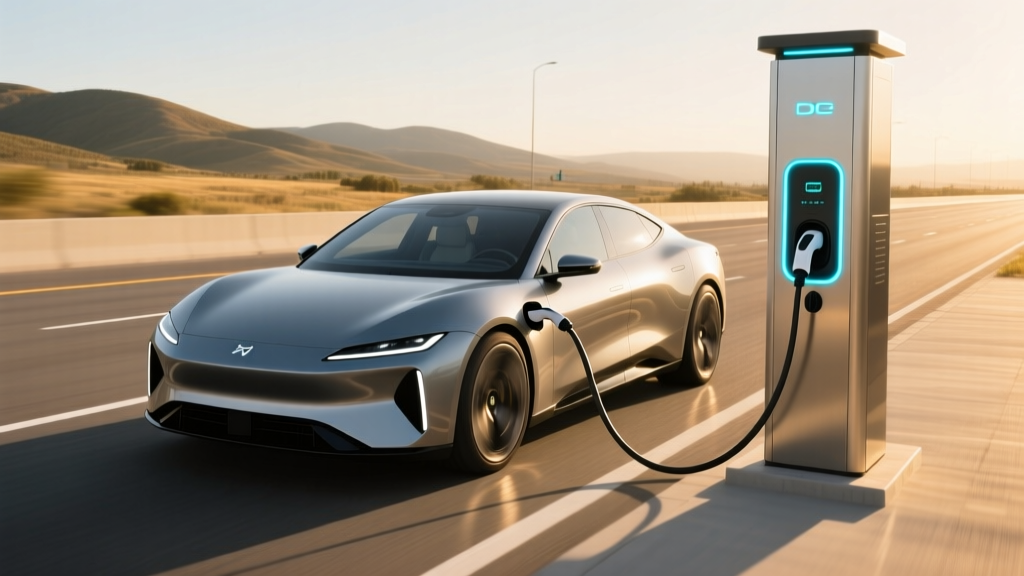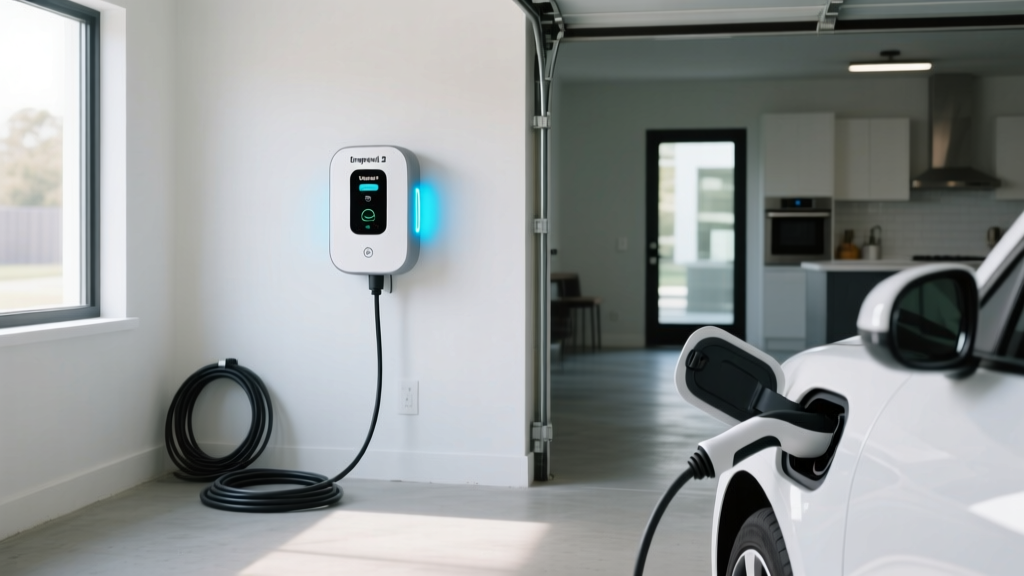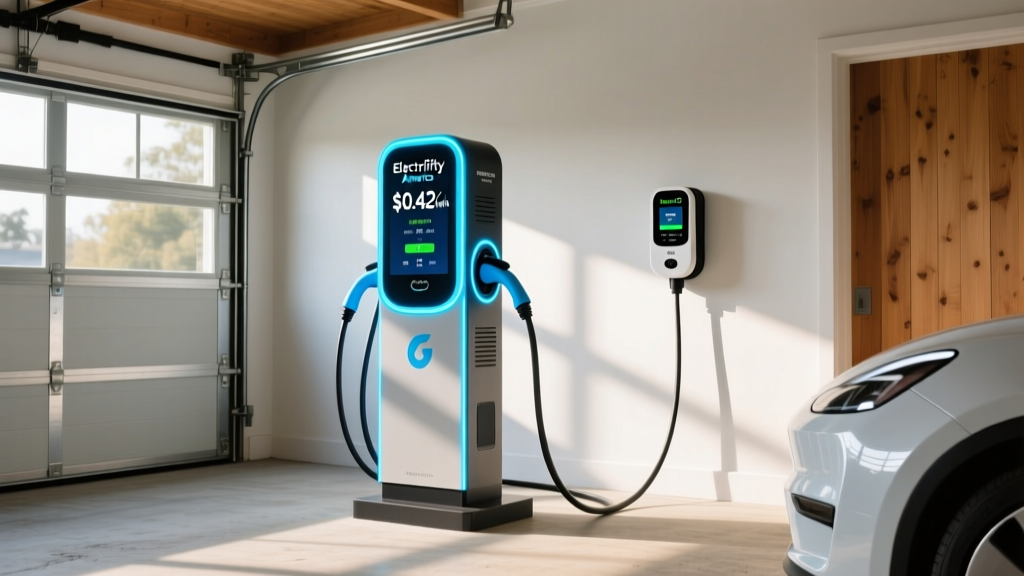
If you've pulled into a DC fast-charging plaza and watched the dollar counter spin, you've probably asked: how much does Electrify America actually cost per kWh, and how does that stack up against charging at home? The answer depends on your vehicle, your local electricity rate, and whether you're a member or a guest. This guide breaks down the real numbers — from Electrify America's current pricing tiers to the all-in cost of installing a Level 2 home charger — so you can calculate your true cost per mile and decide where to plug in.
Electrify America Cost Per kWh: What You'll Actually Pay
Electrify America (EA) prices its DC fast charging by the kilowatt-hour (kWh) — the unit of energy your battery absorbs — in most U.S. states where regulations permit kWh-based pricing. In a handful of states (notably California, parts of the Northeast), legacy per-minute pricing may still appear on older stations, though EA has largely transitioned to per-kWh billing nationwide.
Here's what the rate structure looks like in 2026:
- Guest (non-member) rate: $0.48–$0.56/kWh depending on location and station power class
- Pass+ member rate: $0.36–$0.44/kWh (Pass+ costs $4/month and includes 800 kWh of charging credits annually)
- Idle fee: $0.40/minute if you remain plugged in after reaching your charge limit (typically 80% or your preset target)
For a typical 75 kWh usable battery charged from 10% to 80% (about 52.5 kWh delivered), here's what a single session costs:
| Scenario | Rate | Session Cost (52.5 kWh) |
|---|---|---|
| Guest, high-cost metro | $0.56/kWh | $29.40 |
| Guest, average location | $0.48/kWh | $25.20 |
| Pass+ member | $0.40/kWh | $21.00 |
Compare that to filling a 15-gallon gas tank at $3.40/gallon: $51.00. Even at guest rates, DC fast charging delivers significant per-fill savings — but as we'll see, home charging makes the gap enormous.
Charging Levels Explained: Speed, Power, and Range Added Per Hour
Before calculating cost per mile, you need to understand the three charging levels. The critical distinction: kW (kilowatts) measures power — how fast energy flows into your car. kWh (kilowatt-hours) measures energy — how much your battery stores. Think of kW as the diameter of a hose and kWh as the size of the bucket.
| Level | Voltage | Power (kW) | Miles of Range Per Hour | Typical Use |
|---|---|---|---|---|
| Level 1 | 120V AC | 1.4–1.9 kW | 3–5 mi/hr | Overnight top-off, PHEVs, emergencies |
| Level 2 | 240V AC | 7.2–19.2 kW | 20–60 mi/hr | Home daily charging, workplace, hotels |
| DC Fast (Level 3) | 400–800V DC | 50–350 kW | 150–1,000+ mi/hr | Road trips, rapid top-ups |
Electrify America's stations range from 50 kW legacy chargers to 350 kW ultra-fast units. Most modern stations deploy 150 kW or 350 kW dispensers. However, your vehicle's onboard charge acceptance rate determines actual speed — a Hyundai Ioniq 5 with its 800V architecture can accept up to 240 kW (10–80% in roughly 18 minutes), while a Chevrolet Equinox EV tops out around 150 kW.
Cost Per Mile: Electrify America vs Home vs Gas
The most useful comparison for EV ownership is cost per mile. Here's how the three scenarios stack up, assuming a vehicle averaging 3.0 miles per kWh (roughly 112 MPGe — typical for a midsize crossover like the Tesla Model Y or Ford Mustang Mach-E):
| Charging Method | $/kWh | Cost Per Mile | Cost for 300-Mile Trip |
|---|---|---|---|
| Home (national avg electricity) | $0.17 | $0.057 | $17.10 |
| Home (off-peak utility rate) | $0.09 | $0.030 | $9.00 |
| Electrify America (Pass+) | $0.40 | $0.133 | $39.90 |
| Electrify America (Guest) | $0.52 | $0.173 | $51.90 |
| Tesla Supercharger (avg) | $0.35 | $0.117 | $35.10 |
| Gas vehicle (28 MPG, $3.40/gal) | — | $0.121 | $36.30 |
The takeaway: home charging at off-peak rates is roughly 75% cheaper per mile than gasoline. Electrify America at guest rates is actually more expensive per mile than gas in many scenarios. Pass+ membership brings EA costs roughly in line with gas, making it viable for road trips but not for daily charging strategy.
This is why home Level 2 installation is the single highest-ROI upgrade an EV owner can make. According to the U.S. Department of Energy's fueleconomy.gov, over 80% of EV charging happens at home — and the economics only work if you're not relying exclusively on public DC fast charging.
Home Level 2 Charger Installation: Costs, Electrical Requirements, and Panel Upgrades
Installing a 240V Level 2 home charger typically requires a dedicated 40-amp to 60-amp circuit on a NEMA 14-50 outlet or hardwired connection. Here's what's involved and what it costs:
Electrical Requirements
- Circuit: 240V dedicated, 40A–60A breaker (sized to 125% of charger's continuous draw — a 48A charger needs a 60A breaker)
- Wire gauge: 6 AWG copper for 40A circuits; 4 AWG for 60A circuits (longer runs may require upsizing)
- Outlet vs hardwired: NEMA 14-50 receptacle offers portability; hardwired avoids GFCI nuisance trips common on outdoor 50A receptacles under 2023/2026 NEC code
- Permit: Required in most jurisdictions; typically $50–$200 depending on municipality
Panel Upgrade Reality
Homes with 100A main service panels often lack spare capacity for a 40A–60A EV circuit, especially if you already run electric range, dryer, and HVAC on the same panel. A panel upgrade to 200A typically costs $1,800–$3,500. Some utilities offer load-management devices (like the Span smart panel or a simple load-shedding relay) that can avoid a full upgrade for $500–$1,200.
| Component | Low End | High End | Notes |
|---|---|---|---|
| Level 2 charger unit | $300 | $700 | 32A–48A smart charger |
| Electrician labor (standard install) | $500 | $1,500 | Short run from panel to garage |
| Electrical permit | $50 | $200 | Varies by municipality |
| Panel upgrade (if needed) | $1,800 | $3,500 | 100A → 200A service upgrade |
| Total (no panel upgrade) | $850 | $2,400 | Most homes with 200A panel |
| Total (with panel upgrade) | $2,650 | $5,900 | Older homes with 100A service |
The IRS residential clean energy credit (§25D) covers 30% of home charger equipment and installation costs (up to $1,000) through 2032, which can offset $255–$720 of a standard install. Note: this is separate from the §30D vehicle purchase credit. Consult a tax professional for eligibility specifics.
Which Connector and Charger Is Compatible With My EV?
The connector landscape shifted dramatically in 2024–2025 when most major automakers adopted the North American Charging Standard (NACS), originally developed by Tesla. Here's the current state:
| Connector | Brands Using It (2026 Models) | Notes |
|---|---|---|
| NACS (Tesla) | Tesla, Ford, GM, Rivian, Volvo, Polestar, Hyundai, Kia, BMW, Mercedes, Nissan (new models) | Now the dominant standard; native Tesla Supercharger access |
| CCS1 | VW, Audi, older BMW, older Hyundai/Kia, Stellantis, legacy models | Still widely available at EA, ChargePoint, EVgo; adapters to NACS available |
| CHAdeMO | Nissan Leaf (legacy), Mitsubishi Outlander PHEV | Declining availability; avoid for new purchases |
Electrify America stations primarily deploy CCS1 connectors, with NACS connectors being added progressively through 2025–2026. If you drive a NACS-equipped Ford or GM vehicle, you'll likely need a CCS-to-NACS adapter (typically $150–$250) to use EA stations — or rely on Tesla Superchargers instead.
For home Level 2 charging, the connector is almost universally J1772 (for CCS vehicles) or NACS. Most Level 2 chargers ship with J1772; NACS-compatible home chargers are now widely available from Tesla (Wall Connector), Emporia, and ChargePoint.
Recommended Level 2 Home Chargers for 2026
Emporia Vue Level 2 Smart Charger
- Power output: 48A (11.5 kW on 240V)
- Connector: J1772 (NACS version available)
- Cable length: 24 ft
- Smart features: Wi-Fi, app scheduling, energy monitoring, solar integration, load management
- Price: ~$399
- Best for: Budget-conscious buyers wanting full smart features and energy tracking
Tesla Wall Connector (Gen 4)
- Power output: 48A (11.5 kW on 240V)
- Connector: NACS (J1772 adapter included)
- Cable length: 24 ft
- Smart features: Wi-Fi, OTA updates, power sharing (link up to 6 units on one circuit), vehicle integration
- Price: ~$475
- Best for: Tesla and NACS-vehicle owners wanting seamless ecosystem integration
ChargePoint Home Flex
- Power output: Configurable 16A–50A (up to 12 kW)
- Connector: J1772 (NACS adapter available)
- Cable length: 23 ft
- Smart features: Wi-Fi, Alexa, app scheduling, flexible amperage to match circuit
- Price: ~$549
- Best for: Homes with limited circuit capacity needing adjustable amperage
Grizzl-E Smart
- Power output: 40A (9.6 kW on 240V)
- Connector: J1772
- Cable length: 24 ft
- Smart features: Wi-Fi, OCPP compatibility, adjustable output, extreme cold rated (-40°C)
- Price: ~$449
- Best for: Cold-climate and outdoor installations; rugged Canadian build
Charging Time Examples by Battery Size
| Vehicle (Example) | Battery (Usable kWh) | Level 2 at 11.5 kW (0–100%) | DC Fast 10–80% |
|---|---|---|---|
| Tesla Model Y LR | 75 kWh | ~6.5 hours | ~25 min (250 kW peak) |
| Hyundai Ioniq 5 | 74 kWh | ~6.5 hours | ~18 min (240 kW peak, 800V) |
| Ford Mustang Mach-E ER | 91 kWh | ~8 hours | ~35 min (150 kW peak) |
| Chevrolet Equinox EV | 85 kWh | ~7.5 hours | ~30 min (150 kW peak) |
| BMW iX xDrive50 | 105 kWh | ~9 hours | ~34 min (200 kW peak) |
Note that Level 2 home charging is designed for overnight replenishment. Even the largest batteries fully charge within a standard 8-hour sleep window at 48A. DC fast charging times assume optimal battery temperature (preconditioned) and an uncapped charge curve — cold batteries or stations operating below peak capacity will add time.
Safety, Code, and Installation Best Practices
EV charging places a sustained high-amperage load on your home's electrical system — unlike a dryer that cycles on and off, a Level 2 charger runs at full draw for 6–10 hours continuously. Code compliance isn't optional; it prevents fires.
- Dedicated circuit: Your EV charger must have its own breaker — never share a circuit with other appliances
- GFCI considerations: The 2023 NEC (and 2026 adoptions) requires GFCI protection on outdoor receptacles. However, many EV charger manufacturers recommend hardwired installs to avoid nuisance GFCI trips — the charger's internal ground-fault protection is typically sufficient
- Outdoor rating: If your charger is outdoors, ensure it carries a NEMA 4 or IP65 rating. All recommended units above meet this standard
- Wire sizing: Oversizing wire by one gauge for long runs (over 50 ft from panel) reduces voltage drop and heat buildup
- Permit and inspection: Always pull a permit. An inspector verifies wire gauge, breaker sizing, torque on connections, and grounding — this protects your home and satisfies insurance requirements
Hire a licensed electrician experienced with EV installations. Ask specifically about their experience with 240V/40A+ continuous-load circuits. The National Fire Protection Association's NEC guidelines govern these installations, and your local code may add amendments.
Frequently Asked Questions
How much does it cost to install a home EV charger?
A standard Level 2 installation runs $850–$2,400 all-in (charger, electrician, permit) for homes with adequate 200A panel capacity. If your home needs a panel upgrade from 100A to 200A, expect a total of $2,650–$5,900. The federal §25D credit covers 30% of equipment and installation up to $1,000.
How fast will each charging level add range?
Level 1 (120V) adds 3–5 miles per hour — adequate for PHEVs with small batteries but impractical for BEVs. Level 2 (240V, 48A) adds roughly 35–45 miles per hour for most EVs. DC fast charging at 150 kW can add 200+ miles in 20–25 minutes depending on battery size and charge curve.
Which connector does my EV use?
Most 2025–2026 EVs from Ford, GM, Rivian, Hyundai, Kia, and Tesla use the NACS connector. Volkswagen, older Hyundai/Kia models, and Stellantis EVs still use CCS1. Check your vehicle's charge port or owner's manual. For home charging, J1772 is the universal Level 2 standard, though NACS home chargers are now common.
How much does Electrify America cost compared to gas?
At guest rates ($0.48–$0.56/kWh), Electrify America costs $0.16–$0.19 per mile for an average EV — often more expensive than a 28 MPG gas car at $3.40/gallon ($0.12/mile). With a Pass+ membership ($0.36–$0.44/kWh), costs drop to roughly $0.12–$0.15/mile, making it competitive with gas for road trips. Home charging at $0.10–$0.17/kWh costs $0.03–$0.06/mile — dramatically cheaper than either option.
What electrical upgrades might I need for a home charger?
The most common upgrade is a panel capacity increase from 100A to 200A ($1,800–$3,500). You may also need a new sub-panel if your main panel is full, wire upgrades for long runs from the panel to the garage, or a load-management device if your utility requires demand limiting. An electrician's load calculation determines your specific needs.
Is Electrify America reliable for road trips?
Reliability has improved since 2023, with EA reporting 95%+ uptime across its network of 1,000+ stations. However, individual charger availability varies — always check the EA app before committing to a stop, and have a backup station (Tesla Supercharger, EVgo, or ChargePoint) within 10–15 miles. PlugShare user reviews are valuable for real-time station condition.