Why Your Charger Is the Real Electric Vehicle Range Extender
The most effective electric vehicle range extender isn't a trailer-mounted generator or a larger battery pack — it's a properly sized home charging station paired with knowledge of the public fast-charging network. A 2026 EV with a 75 kWh battery and 300 miles of EPA range becomes a genuinely road-trip-capable machine when you can add 200+ miles in 20 minutes at a DC fast charger, or wake up every morning with a full battery from a Level 2 home unit.
This guide breaks down every charging tier by the numbers: kilowatts (kW) of power delivery, miles of range added per hour, real installation costs, connector compatibility across the 2026 fleet, and what you'll actually pay per mile compared to gasoline. We'll also recommend specific charging equipment with output specs, cable lengths, and pricing so you can make a data-driven purchase.
Key terminology up front: kW (kilowatts) measures charging power — the rate at which energy flows into your battery. kWh (kilowatt-hours) measures battery energy capacity — the total amount of electricity stored. A 75 kWh battery charged at 11.5 kW gains roughly 75 kWh ÷ 11.5 kW = 6.5 hours for a full charge. Confusing these two is the single most common EV literacy mistake.
Charging Levels Explained: Speed, Power, and Range Added
Every EV owner interacts with three charging tiers. Here's how they stack up in measurable terms.
| Level | Voltage / Amperage | Max Power (kW) | Miles of Range Added per Hour | Typical Use Case |
|---|---|---|---|---|
| Level 1 (120V) | 120V / 12A | 1.4 kW | 3–5 mi/hr | Overnight top-up, PHEVs, low-mileage drivers |
| Level 2 (240V) | 240V / 32–48A | 7.7–11.5 kW | 25–44 mi/hr | Home daily charging, workplace, hotels |
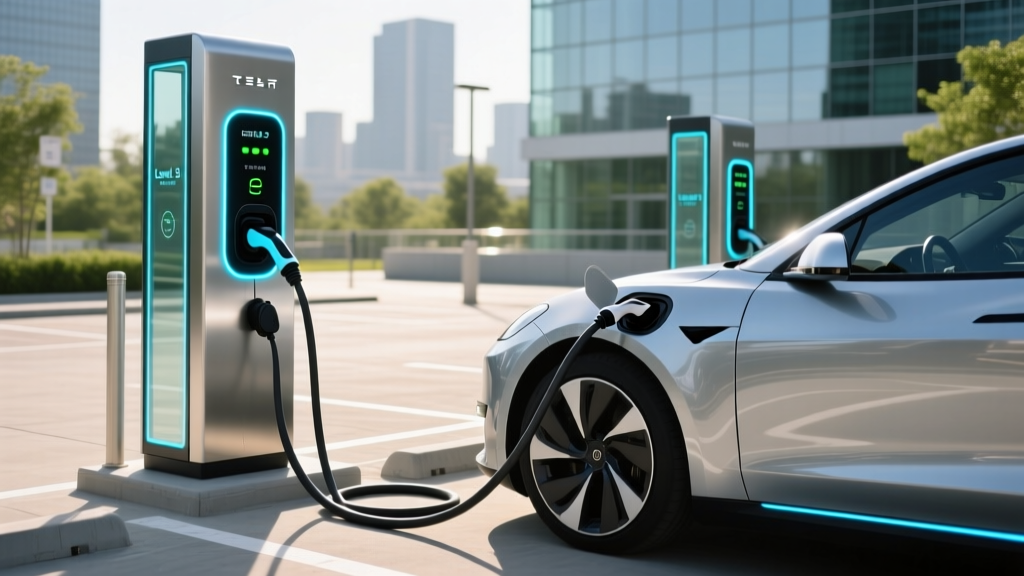
| DC Fast Charging | 400–800V DC | 50–350 kW | 150–1,200+ mi/hr (peak) | Road trips, highway corridors, quick top-ups |
Real-world context: Those "miles per hour" figures assume an average efficiency of 3–4 mi/kWh (roughly 85–100 MPGe combined). A heavier, less efficient EV like the Ford F-150 Lightning (2.0–2.3 mi/kWh) will add fewer miles per hour at each level, while a sedan like the Hyundai Ioniq 6 (4.0+ mi/kWh) will add more.
Charging time examples (10–80% SoC):
- 75 kWh battery (e.g., Tesla Model Y Long Range) at 11.5 kW Level 2: ~4.5 hours
- 75 kWh battery at a 250 kW DC fast charger (sustained average ~150 kW accounting for taper): ~22 minutes
- 100 kWh battery (e.g., GMC Sierra EV, Rivian R1T Max Pack) at 11.5 kW Level 2: ~6 hours
- 100 kWh battery at a 350 kW charger (800V architecture, sustained avg ~220 kW): ~20 minutes
The charge curve matters: most EVs accept peak kW only between roughly 10–40% SoC, then taper progressively. A "250 kW capable" vehicle may sustain that rate for only 5–8 minutes before stepping down. This is why we cite average sustained rates for 10–80% estimates, not peak marketing numbers.
Home Charger Installation: Electrical Requirements and Costs
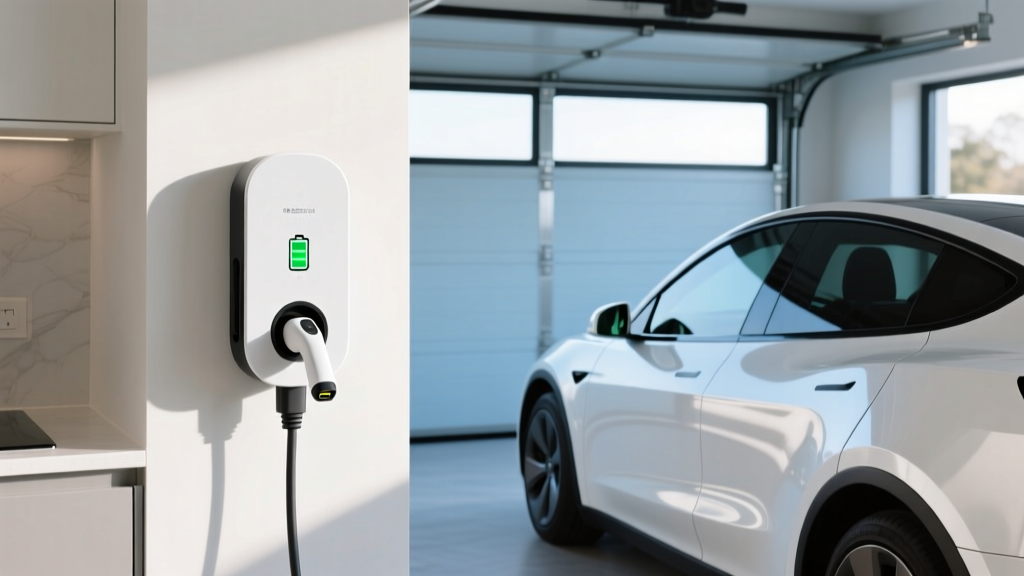
A Level 2 home charger is the single highest-impact upgrade an EV owner can make. It turns your garage into a personal "electric vehicle range extender" that refuels your car while you sleep — typically adding 200+ miles of range overnight, more than enough for any daily commute.
Electrical Requirements
Most Level 2 home chargers require a dedicated 240V circuit. Common configurations:
- 40A circuit / 32A continuous draw: Delivers 7.7 kW. Suitable for most daily driving needs. Requires a NEMA 14-50 outlet or hardwired connection.
- 50A circuit / 40A continuous draw: Delivers 9.6 kW. Ideal for larger batteries (85–100+ kWh) or two-EV households sharing charge time.
- 60A circuit / 48A continuous draw: Delivers 11.5 kW. Fastest common residential Level 2; requires adequate panel capacity.
Panel capacity reality check: Many homes built before 2000 have 100A or 150A main electrical panels. Adding a 50–60A EV circuit to an already-loaded panel may require a panel upgrade to 200A, which is a significant cost factor often omitted from charger marketing materials. A licensed electrician must perform a load calculation per NEC Article 220 to determine if your panel can support the additional circuit.
| Component | Low-End Estimate | High-End Estimate | Notes |
|---|---|---|---|
| Level 2 Charger (Equipment) | $350 | $750 | Smart Wi-Fi chargers, 32–48A, 18–25 ft cable |
| Electrician Labor | $400 | $1,500 | Depends on run length, conduit, drywall work |
| Electrical Permit | $50 | $300 | Varies by municipality; some bundle with inspection |
| Panel Upgrade (if needed) | $1,500 | $4,000 | 100A→200A service upgrade; not always required |
| Total (no panel upgrade) | $800 | $2,550 | Most typical installs fall $1,000–$1,800 |
| Total (with panel upgrade) | $2,300 | $6,550 | Older homes, high-load panels |
Federal incentive: The IRS Residential Clean Energy Credit (§25C/§25D) may cover up to 30% of qualified home charging equipment and installation costs (up to $1,000 under §25C for EVSE). Eligibility depends on your tax liability, property type, and current-year rules. Consult a tax professional and verify against IRS Publication 5695 before claiming.
Connector Compatibility: NACS, CCS1, and CHAdeMO in 2026
The North American charging connector landscape has consolidated significantly since 2024. Here's where things stand for the 2026 model year.
| Connector | Brands Using It (Native) | Notes |
|---|---|---|
| NACS (Tesla / SAE J3400) | Tesla, Ford, GM, Rivian, Volvo, Polestar, Mercedes-Benz, Nissan, Honda, Fisker, Lucid (2025+), Hyundai/Kia (2025+) | Industry standard for 2026; most new EVs ship with NACS port. Access to Tesla Supercharger network native. |
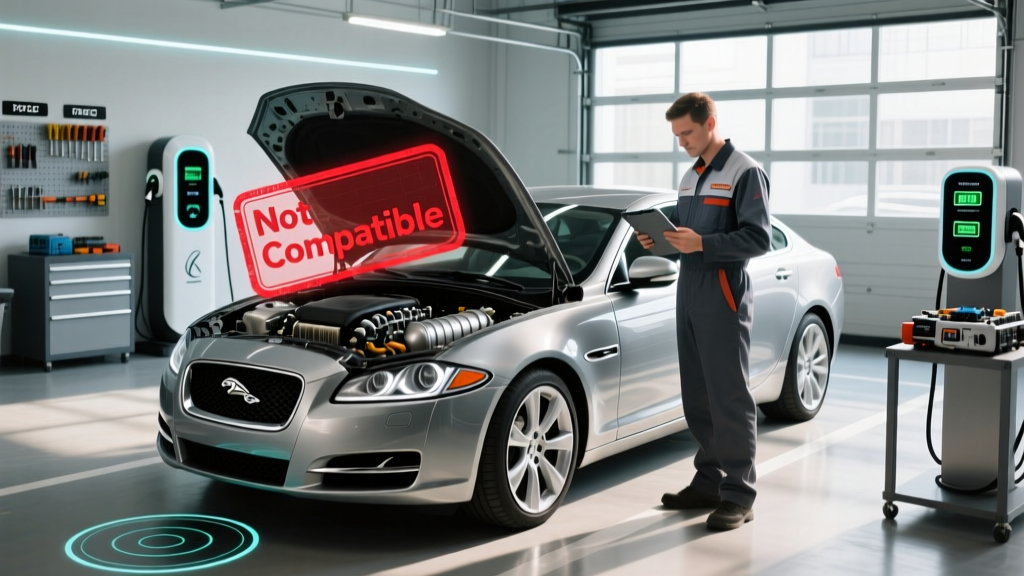
| CCS1 (Combo) | VW (ID.4 pre-2026 refresh), BMW (some 2024 carry-overs), Stellantis/Chrysler (limited) | Legacy standard; CCS1 vehicles can use NACS Superchargers with a Tesla-approved adapter (~$150–$230). |
| CHAdeMO | Nissan Leaf (discontinued 2025), Mitsubishi Outlander PHEV (older) | Effectively discontinued for new vehicles. Existing owners rely on Electrify America and remaining CHAdeMO stations. |
Adapter guidance for CCS1 owners: If you drive a 2023–2025 CCS1-equipped EV (e.g., VW ID.4, Hyundai Ioniq 5 pre-NACS transition), you'll need a CCS-to-NACS adapter to access the Tesla Supercharger network, which now represents the largest and most reliable DC fast-charging network in North America. Adapters from Tesla, Lectron, and A2Z are available; verify UL listing and your vehicle manufacturer's compatibility list before purchasing. The Ford and GM-provided adapters are free for qualifying owners through their transition programs.
Charging Cost Per Mile: EV vs. Gasoline
The economics of EV charging depend heavily on where and when you charge. Here's a realistic breakdown for a mid-efficiency EV averaging 3.5 mi/kWh (approximately 100 MPGe combined) versus a comparable gasoline car at 28 MPG combined.
| Scenario | Rate ($/kWh or $/gal) | Cost Per Mile | Annual Cost (12,000 mi) |
|---|---|---|---|
| Home, off-peak utility rate | $0.10/kWh | $0.029 | $343 |
| Home, average US residential | $0.17/kWh | $0.049 | $583 |
| Public Level 2 (ChargePoint, EVgo L2) | $0.30/kWh | $0.086 | $1,029 |
| DC Fast Charging (Electrify America, EA Pass) | $0.48/kWh | $0.137 | $1,646 |
| DC Fast Charging (Tesla Supercharger, avg) | $0.32/kWh | $0.091 | $1,097 |
| Gasoline car (28 MPG combined) | $3.40/gal | $0.121 | $1,457 |
The takeaway: Home-charged EVs cost 60–76% less per mile than gasoline. Even exclusive DC fast charging is often cost-competitive with gas, and most EV owners do 80–90% of their charging at home. The EPA's fueleconomy.gov tool lets you input your local electricity rate and specific vehicle to generate personalized cost estimates.
Recommended Home Charging Equipment (2026)
These are Level 2 chargers we've evaluated based on power output, cable reach, smart features, build quality, and value. All are UL-listed and support NACS (J3400) natively or via included adapter.
Emporia Vue Level 2 Smart Charger
- Power Output: 48A / 11.5 kW (on 60A circuit)
- Connector: NACS (J3400) native
- Cable Length: 24 feet
- Smart Features: Wi-Fi, app scheduling, solar-integration with Emporia Vue energy monitor, load-sharing for multi-charger setups
- Price: ~$399
- Best For: Budget-conscious buyers who want full smart features and solar-aware charging
ChargePoint Home Flex
- Power Output: Configurable 16–50A / up to 12 kW (on 60A circuit)
- Connector: NACS (J3400) — 2025+ models ship native NACS
- Cable Length: 23 feet
- Smart Features: Wi-Fi, Alexa/Google Home integration, detailed energy tracking, flexible amperage dial for panel-limited homes
- Price: ~$599
- Best For: Homes with limited panel capacity — the adjustable amperage means you can set it to 32A on a 40A circuit without an electrician revisit
Tesla Wall Connector (Gen 4)
- Power Output: 48A / 11.5 kW (on 60A circuit)
- Connector: NACS native
- Cable Length: 24 feet
- Smart Features: Wi-Fi, Power Sharing (up to 6 units on one circuit), OTA firmware updates, integrated cable management
- Price: ~$475
- Best For: Tesla owners and NACS-native EV owners seeking a clean, reliable, and network-integrated unit
Grizzl-E Smart (United Chargers)
- Power Output: 40A / 9.6 kW (on 50A circuit)
- Connector: NACS available; CCS1 variant also offered
- Cable Length: 24 feet
- Smart Features: OCPP-compatible (works with utility demand-response programs), outdoor-rated NEMA 4 enclosure, extreme cold tested to -40°F
- Price: ~$549
- Best For: Outdoor installations, cold-climate garages, and utility-program participants
Safety, Code, and Installation Best Practices
EV charging equipment draws sustained high current for hours — more akin to an electric furnace than a phone charger. Proper installation isn't optional.
- Dedicated circuit: Your Level 2 charger must be on its own dedicated breaker — never shared with other appliances. NEC 511 governs EV charging installations.
- GFCI protection: The 2023 NEC cycle requires GFCI protection for all EV receptacles (NEMA 14-50 outlets used for EV charging). Hardwired chargers may have GFCI built into the unit. Confirm with your electrician which approach your local AHJ (Authority Having Jurisdiction) enforces.
- Outdoor rating: If your charger is mounted outdoors or in an unsealed garage, ensure it carries a NEMA 4 (weather-resistant) or IP65+ rating. All four chargers recommended above meet this standard.
- Hardwired vs. plug-in: Hardwired installations (no outlet) eliminate the GFCI breaker requirement at the panel and reduce arc-flash risk. Plug-in (NEMA 14-50) offers portability if you move homes. Both are code-compliant when installed correctly.
- Cable management: Use a cable organizer or retractor to keep the charging cable off the garage floor — prevents trip hazards, connector damage, and water exposure.
- Permit and inspection: Every jurisdiction requires a permit for new 240V circuits. The inspection verifies wire gauge, breaker sizing, grounding, and GFCI compliance. Skipping the permit risks insurance denial in the event of an electrical fire.
Public Charging as a Range Extender on Road Trips
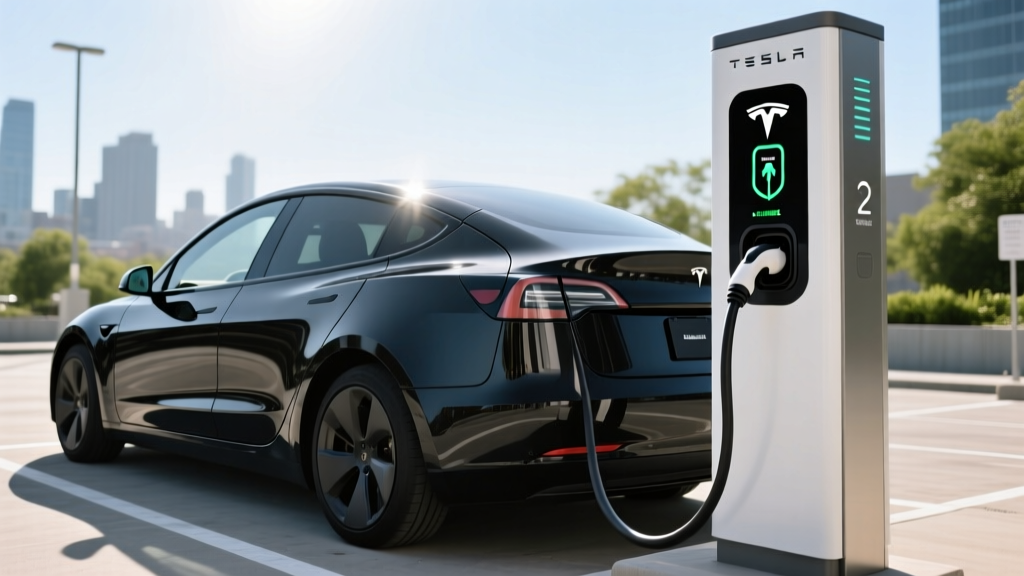
For road trips beyond your battery's EPA range, DC fast charging is your electric vehicle range extender in practice. Here's how to use it effectively:
- Precondition your battery: Most EVs (Tesla, Hyundai/Kia E-GMP, GM Ultium, Ford) automatically warm the battery when you navigate to a DC fast charger via the built-in nav system. A preconditioned battery at ~85–95°F accepts peak kW immediately; a cold battery may charge at 50% of peak rate for the first 5–10 minutes. This is the single biggest factor in achieving advertised 10–80% times.
- Plan around the charge curve: Charging from 10–80% is dramatically faster than 80–100%. On road trips, plan shorter, more frequent stops staying in the 10–80% window rather than one long stop to 100%. A 75 kWh battery at a 250 kW station might add 10–80% in 18 minutes but 80–100% in another 20 minutes.
- Network reliability varies: In 2026, Tesla Superchargers consistently report 97%+ uptime. Electrify America and EVgo have improved but still experience occasional connector and payment-system issues. Apps like PlugShare and A Better Routeplanner (ABRP) show real-time station status.
- Cold-weather range loss: Expect 20–35% range reduction in sub-freezing temperatures due to cabin heating demand and reduced battery efficiency. A vehicle rated at 300 miles EPA may deliver 200–240 real-world miles at 20°F. Plan charging stops accordingly.
Frequently Asked Questions
How much does it cost to install a home EV charger?
A typical Level 2 home charger installation (equipment + electrician + permit) costs $800–$2,550 when no panel upgrade is required, with most homeowners paying $1,000–$1,800. If your electrical panel needs upgrading from 100A to 200A service, add $1,500–$4,000. Always get a load calculation from a licensed electrician before committing to a charger amperage.
How fast will each charging level add range?
Level 1 (120V) adds 3–5 miles per hour — enough for PHEVs and very low-mileage drivers. Level 2 (240V) adds 25–44 miles per hour depending on amperage and vehicle efficiency, replenishing most EVs overnight. DC fast charging adds 150–1,200+ miles per hour at peak rates, with a typical 10–80% session taking 18–35 minutes depending on battery size and charger power.
Which connector/charger is compatible with my EV?
For 2026 models, NACS (SAE J3400) is the dominant standard — Tesla, Ford, GM, Rivian, Hyundai/Kia, Volvo, Mercedes, Nissan, Honda, and others now use it natively. If your EV has a CCS1 port (2023–2025 models from VW, BMW, some Stellantis vehicles), you can access NACS Superchargers with a manufacturer-approved adapter ($150–$230). CHAdeMO is discontinued for new vehicles.
How much does charging cost per mile vs gas?
Home charging at the US average residential rate ($0.17/kWh) costs roughly $0.049/mile for a mid-efficiency EV — about 60% less than a 28 MPG gasoline car at $3.40/gallon ($0.121/mile). Off-peak home rates can drop to $0.029/mile. Even exclusive DC fast charging at $0.48/kWh ($0.137/mile) is competitive with gasoline, though most owners charge at home 80–90% of the time.
What electrical upgrades might I need?
The most common upgrade is adding a dedicated 240V circuit (40–60A) with appropriately sized wire (6 AWG copper for 50A, 4 AWG for 60A). Homes with older 100A or 150A main panels may need a service upgrade to 200A, especially if you already have electric range, dryer, and HVAC loads. A licensed electrician will perform an NEC Article 220 load calculation to determine your panel's available capacity. In some cases, a lower-amperage charger (32A on a 40A circuit) can avoid a panel upgrade entirely.
Can I use a portable EV charger instead of installing a wall unit?
Yes — most new EVs ship with a portable Level 1 (120V) charging cord, and many manufacturers offer portable Level 2 units that plug into a NEMA 14-50 outlet. Portable Level 2 chargers deliver the same 7.7–11.5 kW as wall-mounted units, but you'll still need an electrician to install the 240V outlet. The advantage is portability if you move or travel; the trade-off is less clean cable management and typically no built-in load-sharing for multi-EV homes.