Why Your Electric Vehicle Charging Plan Matters More Than the Car
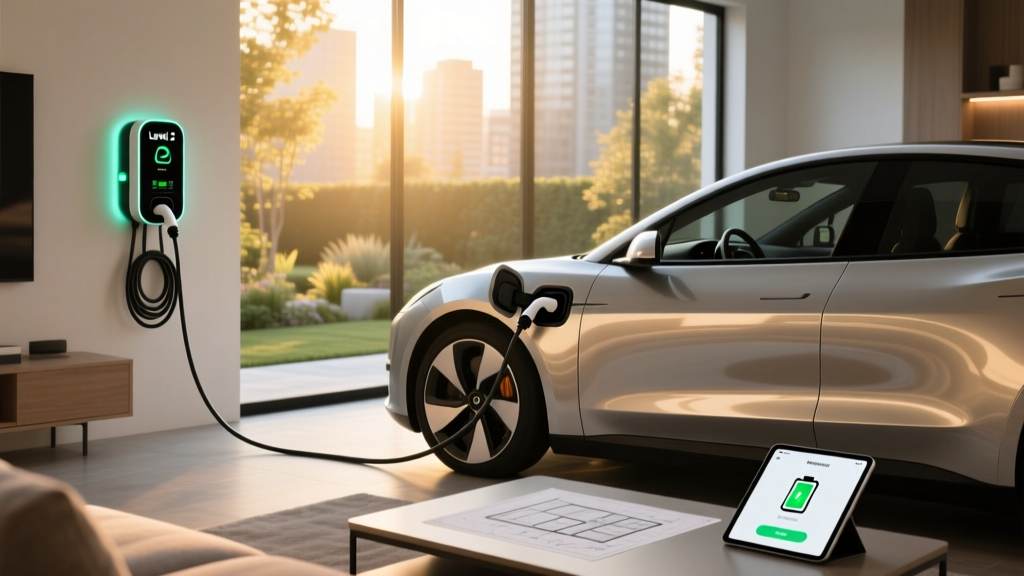
Buying an EV is only half the equation. The other half—where, how fast, and at what cost you recharge—determines whether ownership feels effortless or frustrating. A well-structured charging plan eliminates range anxiety, minimizes per-mile costs, and protects your home's electrical infrastructure.
This guide breaks down every variable: charging speeds in concrete numbers, real installation costs (not the rosy estimates), connector compatibility across the 2026 market, and a cost-per-mile comparison that shows exactly where electrified driving saves money. All figures reflect current 2026 pricing and the latest IRS §30D rules where applicable.
The Three Charging Levels: Speeds, Use Cases, and Real Numbers
Before choosing equipment, understand what each level delivers. The single most common EV confusion is mixing up kW (power, or charge rate—like water pressure) with kWh (energy, or battery capacity—like tank size). A 19.2 kW charger delivers energy faster than a 7.2 kW charger, but both fill the same kWh battery.
| Level | Voltage | Typical Power (kW) | Miles Added/Hour | Best For |
|---|---|---|---|---|
| Level 1 | 120V AC | 1.0–1.4 kW | 3–5 mi/hr | Overnight top-ups, PHEVs, low-mileage drivers |
| Level 2 | 240V AC | 7.2–19.2 kW | 22–65 mi/hr | Daily home charging, most EV owners |
| DC Fast | 400–800V DC | 50–350 kW | 150–1,200 mi/hr (peak) | Road trips, commercial fleets, apartment dwellers |
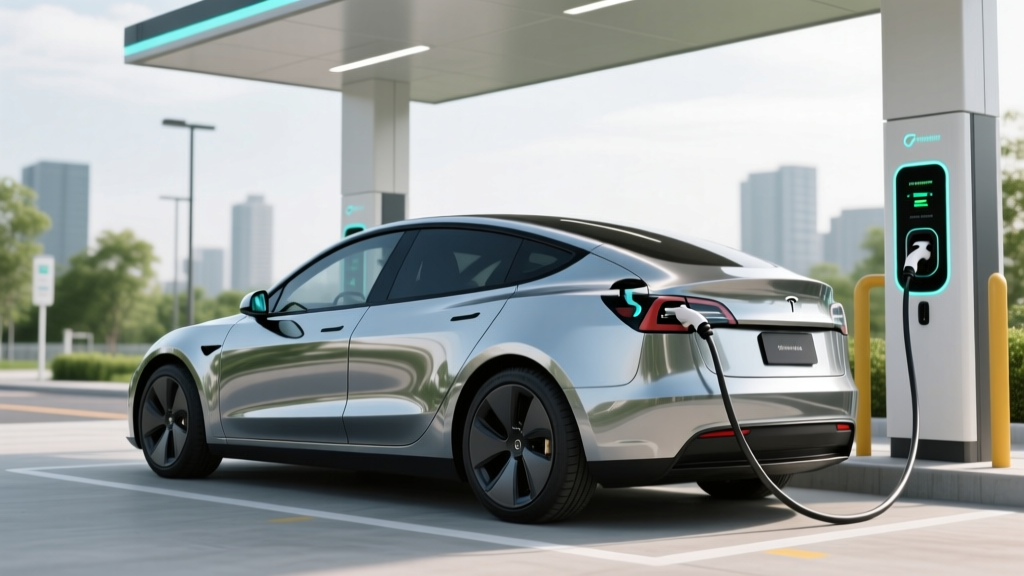
A quick reality check: DC fast charging rates are peak values, not sustained. A vehicle rated at 250 kW peak will typically sustain that rate only between 10–30% State of Charge (SoC), then taper. Expect a 10–80% session on a 350 kW charger to take 18–25 minutes for a ~75 kWh battery, not the theoretical 12 minutes the peak number implies. Cold batteries without preconditioning can double these times.
- 60 kWh battery (e.g., base Nissan Leaf, Chevy Equinox EV): Level 2 at 11.5 kW ≈ 4.5 hrs; 150 kW DCFC ≈ 28 min
- 77 kWh battery (e.g., Tesla Model Y, Hyundai Ioniq 5): Level 2 at 11.5 kW ≈ 5.5 hrs; 250 kW DCFC ≈ 18 min
- 100 kWh battery (e.g., Ford F-150 Lightning Extended, Rivian R1S Max): Level 2 at 19.2 kW ≈ 4 hrs; 350 kW DCFC ≈ 25 min
Home Charger Installation: Real Costs, Electrical Requirements, and Gotchas
The headline number for a Level 2 home install is often quoted as "$500–$2,000." That range is misleadingly narrow. Your actual cost depends on panel capacity, wire run distance, local permitting, and whether your utility requires an inspection. Here's the honest breakdown:
| Component | Low End | High End | Notes |
|---|---|---|---|
| Level 2 Charger (hardwired or NEMA 14-50) | $350 | $800 | Smart Wi-Fi models cost more; basic 40A units start ~$350 |
| Electrician labor (wire run, breaker, mount) | $400 | $1,500 | Depends on run length from panel to garage/driveway |
| Permit & inspection | $50 | $300 | Required in most jurisdictions; some utilities handle this |
| Electrical panel upgrade (if needed) | $1,500 | $3,500 | Needed if panel is 100A or maxed out; 200A is standard |
| Total (no panel upgrade) | $800 | $2,600 | Most 200A-panel homes fall here |
| Total (with panel upgrade) | $2,300 | $6,100 | Older homes with 100A service |
Electrical Requirements: What Your Home Actually Needs
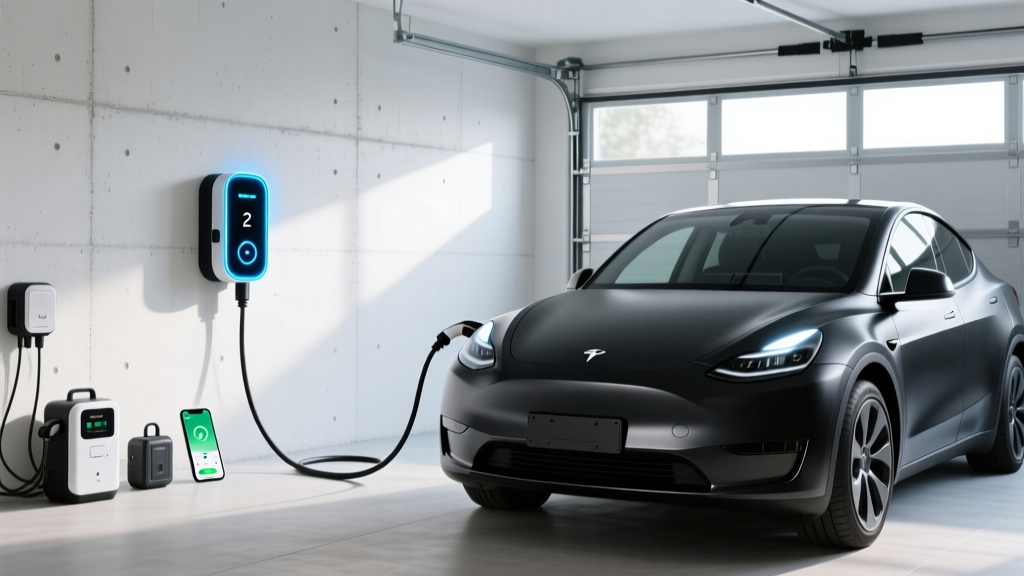
A standard Level 2 charger requires a 240V dedicated circuit. The most common setups:
- 40A circuit / 32A continuous: Delivers 7.7 kW. Sufficient for most EVs with overnight charging. Requires 8 AWG copper wire.
- 50A circuit / 40A continuous: Delivers 9.6 kW. The sweet spot for 75–85 kWh batteries. Requires 6 AWG copper wire. Uses a NEMA 14-50 outlet or hardwired.
- 60A circuit / 48A continuous: Delivers 11.5 kW. Ideal for larger batteries (F-150 Lightning, Rivian). Requires 6 AWG or 4 AWG wire, hardwired only.
- 80A circuit / 64A continuous: Delivers 15.4 kW. Requires 4 AWG or 3 AWG wire and a 200A panel with spare capacity. Hardwired only.
Panel upgrade warning: Homes built before 1990 often have 100A panels. Adding a 50A EV circuit may push total load beyond 80% of panel capacity (the NEC continuous-load rule), triggering a mandatory upgrade to 200A. Budget $1,500–$3,500 and 2–4 weeks for this work. A licensed electrician will perform a load calculation before recommending a circuit size—do not skip this step.
Safety and Code Considerations
- Dedicated circuit: Your EV charger must have its own breaker—never share with appliances.
- GFCI protection: NEC 2020 and later require GFCI breakers for outdoor receptacles; indoor hardwired installations may not require them (check local code).
- Outdoor rating: If mounting outside, ensure the charger carries a NEMA 4 or IP65 weatherproof rating. NEMA 14-50 outlets installed outdoors must have an in-use weatherproof cover.
- UL listing: Only purchase UL-listed (or ETL-listed) chargers. Non-listed units from overseas marketplaces may not meet fire code and can void insurance claims.
- Utility notification: Some utilities require advance notice of EV charger installation and offer rebates or time-of-use (TOU) rate plans that cut charging costs by 40–60%.
Connector Compatibility: NACS, CCS, and the 2026 Landscape
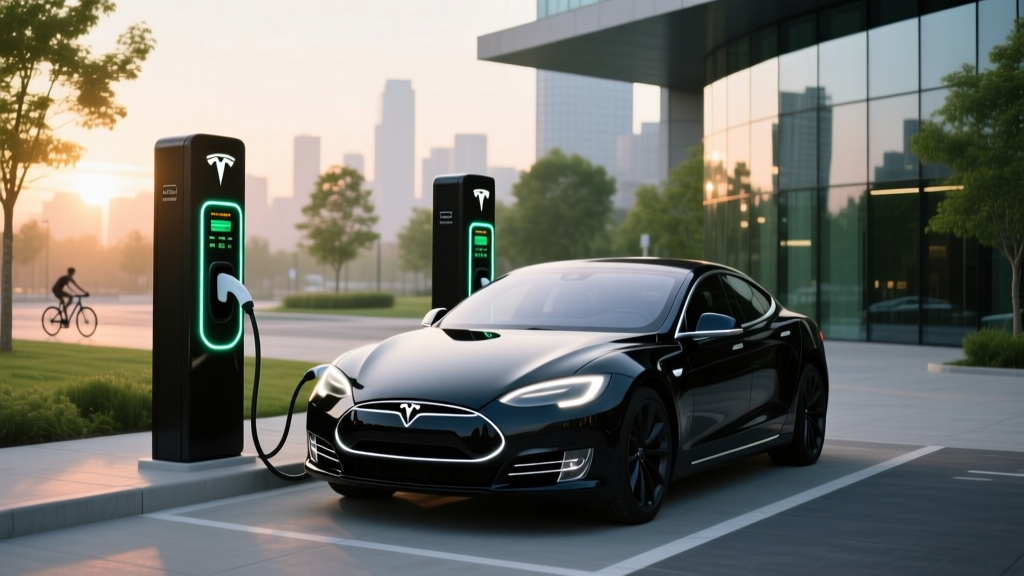
The connector wars have largely resolved in North America. As of 2026, the North American Charging Standard (NACS)—originally Tesla's proprietary connector—is the dominant standard. Nearly every major automaker has adopted it, and CCS1 chargers increasingly offer NACS cables or adapters.
| Connector | Brands Using It (New Vehicles) | Public Network Access |
|---|---|---|
| NACS (native) | Tesla (all), Ford, GM, Rivian, Volvo, Polestar, Mercedes-Benz, Hyundai/Kia (2025+ models) | Tesla Superchargers, Electrify America (NACS cables), EVgo, ChargePoint |
| CCS1 | VW ID.4 (2024 and earlier), BMW iX/i4 (pre-2026), some Stellantis models | Electrify America, EVgo, ChargePoint, Ionity (EU) |
| CHAdeMO | Nissan Leaf (legacy only, discontinued after 2025) | Limited and shrinking; adapter available |
Adapter reality: If you own a CCS-equipped vehicle, a CCS-to-NACS adapter ($150–$250) unlocks the Tesla Supercharger network—critical, since Superchargers represent roughly 60% of reliable DC fast-charging infrastructure in the U.S. Ford and GM provide these adapters to owners. Conversely, NACS-equipped vehicles can access CCS stations with a NACS-to-CCS adapter, though fewer stations require this.
Cost to Charge: Per-Mile Economics vs. Gasoline
The financial case for EVs hinges on charging costs, which vary dramatically by location and method. Here are realistic 2026 scenarios:
| Scenario | Rate ($/kWh) | Cost per Mile (3 mi/kWh EV) | Annual Cost (12,000 mi) |
|---|---|---|---|
| Home, off-peak TOU rate | $0.08–$0.12 | $0.03–$0.04 | $360–$480 |
| Home, standard residential rate | $0.14–$0.18 | $0.05–$0.06 | $600–$720 |
| Public Level 2 (workplace, retail) | $0.20–$0.35 | $0.07–$0.12 | $840–$1,440 |
| DC fast charging (road trips) | $0.35–$0.55 | $0.12–$0.18 | $1,440–$2,160 |
| Gasoline vehicle (28 MPG, $3.40/gal) | — | $0.12 | $1,440 |
Most EV owners charge 80–90% at home, making the off-peak TOU rate the relevant benchmark. At $0.10/kWh, an EV averaging 3 miles per kWh (a typical midsize SUV like the Hyundai Ioniq 5 or Tesla Model Y) costs $0.033 per mile—roughly one-quarter the cost of a 28 MPG gas car at $3.40/gallon. The savings compound: over five years and 60,000 miles, that's approximately $5,400 in fuel savings, partially offset by higher home electricity use.
If you rely primarily on DC fast charging (apartment dwellers, frequent road trippers), costs approach or exceed gasoline. This is the honest trade-off: EV economics depend heavily on home charging access. Check fueleconomy.gov for specific vehicle efficiency ratings in kWh/100mi and MPGe.
Equipment Picks: Recommended Home Chargers for 2026
- Power: Up to 12 kW (50A circuit) — adjustable down to 16A for lower-capacity panels
- Connector: NACS or J1772 (configurable at purchase)
- Cable length: 23 ft
- Smart features: Wi-Fi, app scheduling, TOU rate optimization, Alexa integration
- Price: ~$550–$650
- Best for: Most EV owners wanting flexible amperage and robust app control
- Power: Up to 11.5 kW (48A on 60A circuit) or 19.2 kW (80A on 100A circuit, hardwired)
- Connector: NACS native; J1772 adapter included
- Cable length: 24 ft
- Smart features: Wi-Fi, OTA updates, Tesla app integration, power sharing (link multiple units on one circuit)
- Price: ~$450 (48A) / ~$550 (80A)
- Best for: Tesla owners and mixed-EV households (via adapter); best value at high amperage
- Power: Up to 11.5 kW (48A on 60A circuit)
- Connector: J1772 (NACS adapter available separately)
- Cable length: 24 ft
- Smart features: Wi-Fi, energy monitoring, solar integration, TOU scheduling
- Price: ~$350–$400
- Best for: Budget-conscious buyers and solar-panel owners wanting energy tracking
- Power: Up to 10 kW (40A on 50A circuit)
- Connector: J1772 or NACS
- Cable length: 24 ft
- Smart features: Wi-Fi, app scheduling, extreme cold rating (-40°F)
- Price: ~$450–$550
- Best for: Cold-climate installations and outdoor mounting (built in Canada, IP67 rated)
Building Your Charging Plan: Decision Framework
- Your EV battery is under 70 kWh (e.g., Chevy Equinox EV, base Tesla Model 3)
- You drive under 40 miles daily and charge overnight
- Your panel has limited spare capacity
- Your EV battery is 75–100+ kWh (F-150 Lightning, Rivian, Ioniq 5 Long Range)
- You frequently need a full charge in 4–6 hours (e.g., returning from a road trip at 10% SoC)
- Your panel has 200A service with ample spare capacity
- Your home has a 100A main panel
- An electrician's load calculation shows total continuous load exceeding 80% of panel rating
- You plan to add solar, a heat pump, or a second EV in the next 5 years
Frequently Asked Questions
How much does it cost to install a home EV charger?
For a home with a 200A panel and a short wire run (under 30 feet), expect $800–$2,600 total (charger + electrician + permit). Older homes needing a panel upgrade to 200A will pay $2,300–$6,100. Always get a load calculation from a licensed electrician before committing to a circuit size.
How fast will each charging level add range?
Level 1 (120V) adds 3–5 miles per hour—adequate for PHEVs with small batteries. Level 2 (240V) at 48A adds roughly 35–40 miles per hour for a midsize EV. DC fast charging at 150–350 kW can add 150–300 miles in a 20-minute session, though real-world speeds taper significantly above 80% SoC.
Which connector/charger is compatible with my EV?
Check your vehicle's charge port. Most 2025–2026 EVs from Ford, GM, Tesla, Rivian, Hyundai, and Kia use NACS. Older VW, BMW, and Stellantis EVs use CCS1. The Nissan Leaf (discontinued) used CHAdeMO. Adapters bridge the gaps: a CCS-to-NACS adapter ($150–$250) unlocks the Tesla Supercharger network for CCS vehicles.
How much does charging cost per mile vs gas?
At a typical home off-peak rate of $0.10/kWh, an EV averaging 3 mi/kWh costs about $0.033/mile—roughly 70–75% less than a 28 MPG gas car at $3.40/gallon ($0.12/mile). Over 12,000 miles/year, that's $960 in fuel savings annually. Public DC fast charging at $0.45/kWh narrows the gap to near-parity with gas.
What electrical upgrades might I need?
The most common upgrade is a panel replacement from 100A to 200A service ($1,500–$3,500). Less common but possible: a utility transformer upgrade if your neighborhood transformer is near capacity (rare, but the utility handles this at their cost). A smart load-management device ($200–$400) can sometimes avoid a panel upgrade by dynamically reducing charger amperage when other appliances draw power.
For the latest federal incentive details, including the §30D Clean Vehicle Credit eligibility requirements (income caps, MSRP limits, battery sourcing), consult IRS guidance or a qualified tax professional. Some utilities also offer rebates of $250–$1,000 for Level 2 charger installation—check your local provider.