If you're shopping for an EV or just took delivery of one, the sticker price is only the beginning of the math. The real ongoing question is how much you'll pay to keep the battery full — and that number varies wildly depending on where and how you plug in. Electric vehicle charging costs can range from pennies per mile at home on an off-peak utility rate to nearly gas-equivalent pricing at a highway DC fast charger.
This guide breaks down every layer: what each charging level actually delivers in kW (power) and kWh (energy), what a home Level 2 installation really costs in 2026, which connector your EV needs, and how per-mile fueling costs stack up against a comparable gas car. All figures reflect current utility rates, network pricing, and equipment availability.
Charging Levels: Speeds, Power, and Miles Added Per Hour
The single most important distinction in EV charging is between kW (kilowatts — the rate of power flow, like water pressure) and kWh (kilowatt-hours — the total energy delivered, like gallons in a tank). Your battery capacity is measured in kWh; your charger's speed is measured in kW. Confusing the two is the most common mistake new EV owners make.
Here's how each level translates to real-world range recovery:
| Level | Voltage | Max Power (kW) | Miles of Range Per Hour | Best For |
|---|---|---|---|---|
| Level 1 (120V) | 120V AC | 1.2–1.9 kW | 3–5 mi/hr | Overnight top-ups, PHEVs, low-mileage drivers |
| Level 2 (240V) | 240V AC | 7.2–19.2 kW | 20–60 mi/hr | Daily home charging, workplace, destinations |
| DC Fast Charging | 400–800V DC | 50–350 kW | 150–900+ mi/hr (peak) | Road trips, highway corridors, quick top-ups |
A critical nuance: DC fast charging speeds are peak rates, not sustained. A charger rated at 250 kW may only deliver that rate between 10–30% State of Charge (SoC). As the battery fills, the charge curve tapers to protect the cells. A typical 10–80% session on a 150 kW charger with a 75 kWh battery takes roughly 28–35 minutes, not the theoretical minimum. Vehicles with 800V architectures — like the Hyundai Ioniq 5, Kia EV6, and Porsche Taycan — sustain higher rates longer, completing 10–80% in as little as 18 minutes on a 350 kW station.
How Much Does It Cost to Install a Home EV Charger?
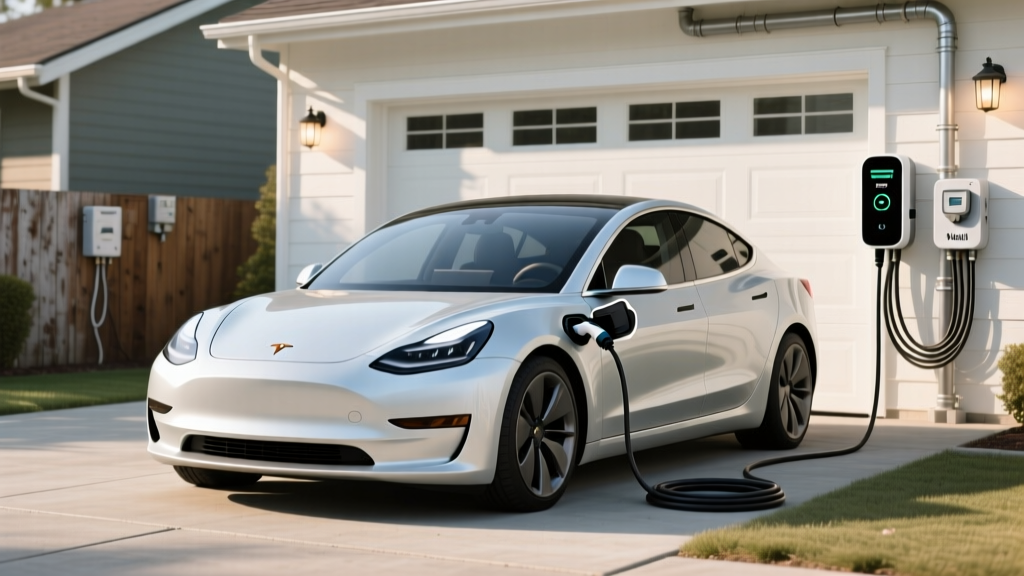
Home Level 2 charging is where most EV owners do 80–90% of their charging, and it delivers the lowest per-kWh cost. But the installation price is highly variable depending on your home's electrical panel, the distance from panel to charger location, and local permit fees.
Typical Home Level 2 Installation Cost Breakdown (2026)
| Component | Low End | High End | Notes |
|---|---|---|---|
| Level 2 Charger (Equipment) | $350 | $750 | Smart Wi-Fi chargers, 32A–48A, 240V |
| Electrician Labor | $500 | $2,000 | Depends on run length, wall type, conduit |
| Electrical Permit | $50 | $300 | Varies by municipality |
| Panel Upgrade (if needed) | $1,500 | $4,000+ | Required if panel is 100A or maxed out |
| Total (no panel upgrade) | $900 | $3,050 | Most homes with 200A service |
| Total (with panel upgrade) | $2,400 | $7,050+ | Older homes, 100A service |
Electrical requirements: A standard Level 2 home charger requires a dedicated 240V circuit, typically 40A or 50A. A 40A circuit delivers up to 9.6 kW (32A continuous draw, per the National Electrical Code's 80% rule for continuous loads). A 50A circuit allows up to 12 kW (40A continuous). The charger must be on a dedicated breaker — sharing a circuit with other appliances is a code violation and a fire risk.
Panel upgrade reality: Homes built before the 1990s often have 100A or even 60A main service panels. Adding a 40A EV circuit to a panel already near capacity requires a service upgrade to 200A — a significant cost that many buyers overlook. Have a licensed electrician perform a load calculation before committing to equipment. Some utilities and states offer rebates of $500–$1,500 toward panel upgrades when paired with EV charger installation; check your local utility's EV program page.
The federal Alternative Fuel Vehicle Refueling Property Credit (IRS Form 8911) can cover up to 30% of home charging equipment and installation costs, capped at $1,000, but eligibility depends on census-tract requirements. Consult a tax professional to confirm qualification.
Electric Vehicle Charging Costs: Home vs. Public vs. DC Fast
The price per kWh varies dramatically across charging scenarios. Here's what EV owners actually pay in 2026:
| Scenario | Typical $/kWh | Cost to Add 200 Miles* | Notes |
|---|---|---|---|
| Home — Off-Peak (Time-of-Use) | $0.06–$0.12 | $3.60–$7.20 | Best rate; schedule overnight charging |
| Home — Standard Flat Rate | $0.13–$0.18 | $7.80–$10.80 | National avg residential: ~$0.16/kWh |
| Home — Solar Offset | $0.00–$0.05 | $0.00–$3.00 | If solar covers daytime generation |
| Public Level 2 (Workplace/Destination) | $0.00–$0.25 | $0.00–$15.00 | Many workplaces still free; paid lots vary |
| Public DC Fast (Electrify America, EVgo) | $0.35–$0.55 | $21.00–$33.00 | Network pricing; membership plans reduce cost |
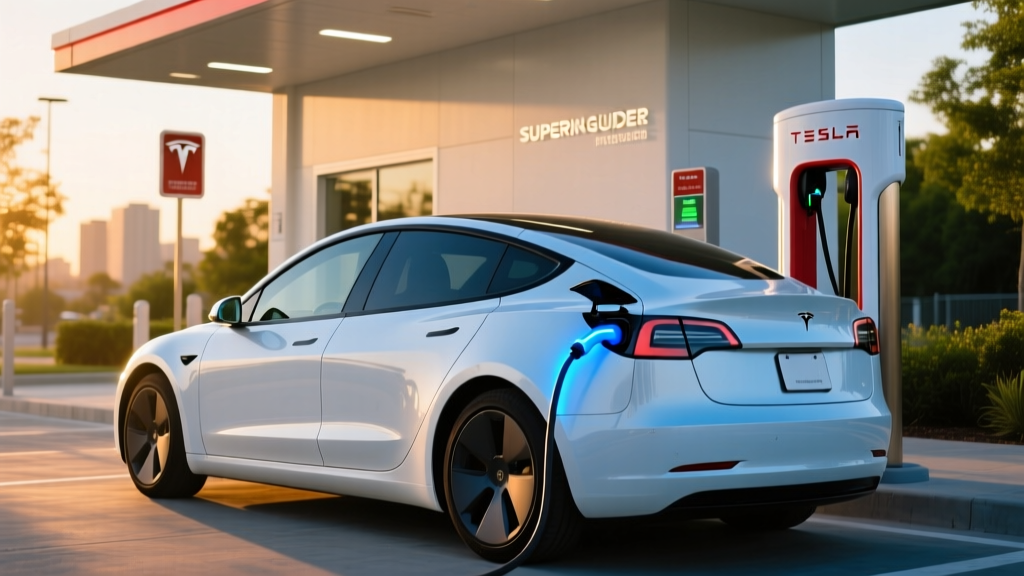
| Tesla Supercharger (V3/V4) | $0.25–$0.40 | $15.00–$24.00 | Varies by location and time of day |
*Based on a vehicle consuming ~3.0 miles/kWh (roughly 67 kWh for 200 miles), typical of mid-size crossovers like the Tesla Model Y or Hyundai Ioniq 5.
Cost Per Mile: EV Charging vs. Gasoline
| Vehicle / Scenario | Fuel Cost Per Mile | Annual Fuel Cost (12,000 mi) |
|---|---|---|
| EV — Home Off-Peak Charging | $0.02–$0.04 | $240–$480 |
| EV — Home Standard Rate | $0.04–$0.06 | $480–$720 |
| EV — DC Fast Charging (road trips) | $0.11–$0.18 | N/A (partial use) |
| Gas Car (25 MPG combined, $3.40/gal) | $0.14 | $1,680 |
| Gas Car (30 MPG combined, $3.40/gal) | $0.11 | $1,360 |
The takeaway: charging at home on a time-of-use plan is 3–5x cheaper per mile than gasoline. Even exclusive DC fast charging approaches gas parity but rarely exceeds it. The savings gap narrows in states with high electricity rates (California, Hawaii, Massachusetts) and widens in states with cheap power (Louisiana, Idaho, Washington).
According to fueleconomy.gov, the average EV achieves 3–4 miles per kWh, which translates to 100–133 MPGe combined. Efficiency varies: a Tesla Model 3 RWD returns roughly 4.2 mi/kWh (132 MPGe), while a Ford F-150 Lightning manages about 2.3 mi/kWh (70 MPGe).
Connector Compatibility: NACS, CCS, and CHAdeMO in 2026
The connector landscape has consolidated significantly since 2023, when Ford, GM, Rivian, and most other automakers announced adoption of the North American Charging Standard (NACS), originally developed by Tesla. As of the 2026 model year, NACS is the dominant connector for new EVs sold in the United States.
| Connector | Brands Using It (New Vehicles) | Adapter Needed? |
|---|---|---|
| NACS (Tesla) | Tesla, Ford, GM, Rivian, Hyundai, Kia, BMW, Volvo, Polestar, Mercedes-Benz, Nissan (Ariana+), Subaru | CCS-to-NACS adapter for older CCS-only public chargers (~$200–$300) |
| CCS1 | Legacy models pre-2025 (VW ID.4, older Bolt EUV, etc.) | NACS-to-CCS adapter for Tesla Superchargers (some OEMs provide free) |
| CHAdeMO | Nissan Leaf (discontinued), Mitsubishi Outlander PHEV (legacy) | Limited public infrastructure; no practical adapter to NACS for DC fast charging |
Practical advice: If you're buying a 2025 or 2026 model-year EV, it almost certainly has a NACS port. For home Level 2 charging, the J1772 connector is still standard on most wall chargers, and every NACS-equipped vehicle ships with a J1772-to-NACS adapter. For DC fast charging, NACS vehicles can access Tesla Superchargers natively and CCS stations via adapter. If you own a CCS-equipped vehicle, Tesla offers a CCS-to-NACS adapter enabling Supercharger access.
Charging Time Examples: How Long Does a Full Session Take?
Charge time depends on battery size (kWh), charger power (kW), and the vehicle's onboard charge curve. Here are realistic 10–80% session times for common configurations:
| Battery Size | Level 2 Home (11.5 kW / 48A) | DC Fast 150 kW | DC Fast 250 kW (800V vehicle) | DC Fast 350 kW (800V vehicle) |
|---|---|---|---|---|
| 60 kWh (e.g., Chevy Equinox EV) | ~4.5 hours | ~28 min | ~20 min | ~18 min |
| 75 kWh (e.g., Tesla Model Y LR) | ~5.5 hours | ~33 min | ~25 min | ~22 min |
| 84 kWh (e.g., Hyundai Ioniq 5 N) | ~6.2 hours | ~38 min | ~18 min | ~15 min |
| 100 kWh (e.g., GMC Sierra EV) | ~7.5 hours | ~45 min | ~32 min | ~25 min |
| 131 kWh (e.g., F-150 Lightning Ext.) | ~9.8 hours | ~58 min | ~42 min | ~35 min |
These times assume ideal conditions: battery preconditioned (warmed to optimal temperature), starting at 10% SoC, and a charger capable of sustaining its rated output. In cold weather (below 32°F / 0°C), expect 15–30% longer charge times unless the vehicle actively preconditioned the battery during navigation to the charger.
Preconditioning matters: Most modern EVs automatically warm the battery when you navigate to a DC fast charger via the built-in navigation system. This brings the cells to ~70–95°F, enabling peak charge rates. Arriving at a fast charger without preconditioning — especially in winter — can cut peak charge speed in half.
Recommended Home Level 2 Chargers (2026)
Not all Level 2 chargers are equal. Key differentiators include max amperage, cable length, smart features (Wi-Fi, scheduling, energy tracking), connector type, and whether the unit is hardwired or plug-in (NEMA 14-50). Hardwired units support higher amperage and avoid the GFCI breaker issues that plague some NEMA 14-50 installations.
Top Home Charger Picks
ChargePoint Home Flex (NACS)
- Power: Up to 12 kW (50A) hardwired / 9.6 kW (40A) plug-in
- Connector: NACS (native); J1772 version also available
- Cable Length: 23 feet
- Smart Features: Wi-Fi, app scheduling, Alexa integration, energy reports, utility demand-response compatible
- Price: ~$599 (NACS version)
- Best For: NACS-equipped EV owners wanting utility integration
Wallbox Pulsar Max
- Power: Up to 11.5 kW (48A) hardwired
- Connector: J1772 (with NACS adapter included in box for 2026 models)
- Cable Length: 25 feet
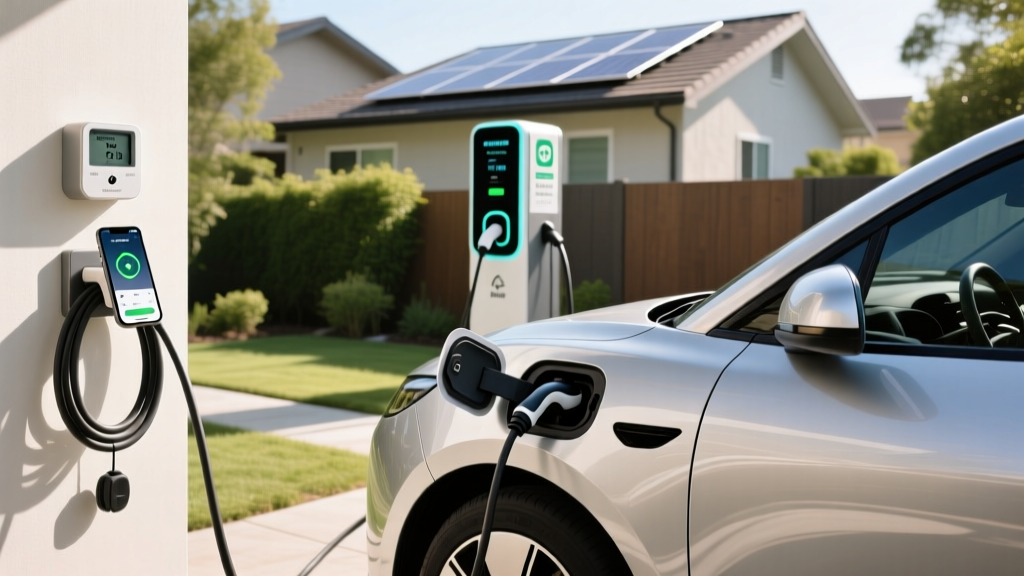
- Smart Features: Wi-Fi + Bluetooth, app control, load balancing (Power Sharing with solar), Power Boost panel monitoring
- Price: ~$499
- Best For: Solar-equipped homes, tight panel capacity
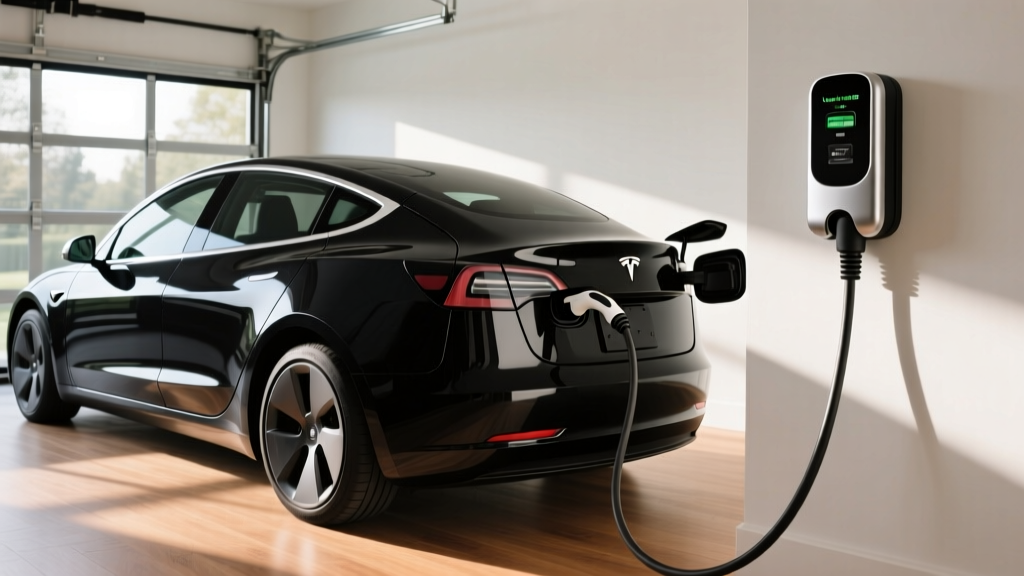
Tesla Wall Connector
- Power: Up to 11.5 kW (48A) hardwired
- Connector: NACS (native); J1772 adapter available separately
- Cable Length: 24 feet
- Smart Features: Wi-Fi, OTA updates, Power Sharing (up to 6 units on one circuit), access control
- Price: ~$475
- Best For: Tesla owners and NACS-native vehicles; cleanest aesthetic
Emporia Level 2 EV Charger
- Power: Up to 11.5 kW (48A) hardwired / 9.6 kW (40A) plug-in
- Connector: J1772 (NACS adapter included)
- Cable Length: 24 feet
- Smart Features: Wi-Fi, detailed energy monitoring, solar integration, works with Emporia Vue home energy monitor
- Price: ~$399
- Best For: Budget-conscious buyers wanting full smart features and energy tracking
Safety, Code, and Installation Considerations
EV charging draws sustained high current for hours — more like running an electric furnace than plugging in a phone. The National Electrical Code (NEC) treats it as a continuous load, which means the circuit must be rated for 125% of the charger's maximum draw. A 40A charger requires a 50A breaker and 6 AWG copper wire; a 48A charger requires a 60A breaker and 4 AWG copper.
Key safety requirements:
- Dedicated circuit: The charger must be on its own breaker — no shared circuits with dryers, ranges, or HVAC.
- GFCI protection: Outdoor installations require GFCI (Ground Fault Circuit Interrupter) protection per NEC 2023 and later. Note: some GFCI breakers nuisance-trip with certain EV chargers; your electrician should select a compatible breaker.
- Outdoor rating: If installed outside, the charger must carry a NEMA 4 or NEMA 4X rating for weather resistance. All chargers listed above meet this standard.
- Permit and inspection: Virtually all jurisdictions require an electrical permit and post-installation inspection. Skipping this can void homeowner's insurance coverage for electrical fires.
- NEMA 14-50 vs. hardwired: A NEMA 14-50 outlet offers portability but is limited to 40A (32A continuous). Hardwired installations support up to 48A or higher and avoid the GFCI compatibility issues that sometimes affect plug-in setups. For daily use, hardwired is more reliable.
Never use an extension cord or a standard household 120V outlet adapter for Level 2 charging. The sustained current draw will overheat undersized wiring and is a documented fire cause.
Frequently Asked Questions
How much does it cost to install a home EV charger?
A typical Level 2 home charger installation costs between $900 and $3,050 when no panel upgrade is needed, covering the charger unit ($350–$750), electrician labor ($500–$2,000), and permit ($50–$300). If your home has a 100A panel that needs upgrading to 200A, add $1,500–$4,000+. The federal Alternative Fuel Vehicle Refueling Property Credit may cover 30% of costs up to $1,000, subject to census-tract eligibility per IRS Form 8911.
How fast will each charging level add range?
Level 1 (120V) adds 3–5 miles of range per hour — adequate for PHEVs with small batteries but impractical for full BEVs. Level 2 (240V) adds 20–60 miles per hour depending on amperage, easily replenishing a full day's driving overnight. DC fast charging adds 150–900+ miles per hour at peak rates, with a typical 10–80% session taking 18–45 minutes depending on battery size and charger power.
Which connector/charger is compatible with my EV?
For 2025–2026 model-year vehicles, NACS is now the standard across nearly all brands (Tesla, Ford, GM, Hyundai, Kia, Rivian, BMW, Volvo, and more). For home Level 2 charging, most wall chargers output via J1772, and your vehicle includes a J1772-to-NACS adapter. For DC fast charging, NACS vehicles use Tesla Superchargers natively and CCS stations via adapter. Check your vehicle's charge port or owner's manual for confirmation.
How much does charging cost per mile vs gas?
Charging at home on a standard rate ($0.13–$0.18/kWh) costs roughly $0.04–$0.06 per mile for a typical EV. Off-peak home rates drop this to $0.02–$0.04/mile. A comparable gas car at 25 MPG with fuel at $3.40/gallon costs $0.14/mile. Even the most expensive DC fast charging ($0.45–$0.55/kWh) comes in at $0.12–$0.18/mile — roughly equivalent to a fuel-efficient gas car. The EPA's fuel economy site provides per-vehicle electricity cost estimates by ZIP code.
What electrical upgrades might I need?
The most common upgrade is a panel capacity increase from 100A to 200A service, required when your existing panel lacks headroom for a 40A–50A dedicated EV circuit. Your electrician will perform a NEC Article 220 load calculation to determine this. Other potential upgrades include adding a sub-panel closer to the garage (to reduce wire run cost), replacing outdated aluminum wiring, or installing a smart load-management device (like the Wallbox Power Boost or Emporia smart panel) that dynamically limits charger draw to avoid overloading the panel — potentially avoiding a full service upgrade.
Is a smart charger worth the extra cost?
Yes, for most owners. Smart chargers ($50–$150 more than dumb units) enable time-of-use scheduling (charge only during off-peak hours to cut costs by 30–60%), energy tracking, remote monitoring, and utility demand-response programs that can earn bill credits. Over 5 years, off-peak scheduling alone can save $300–$800 in electricity costs, paying for the smart features many times over.