Why Home Charging Changes Everything About EV Ownership
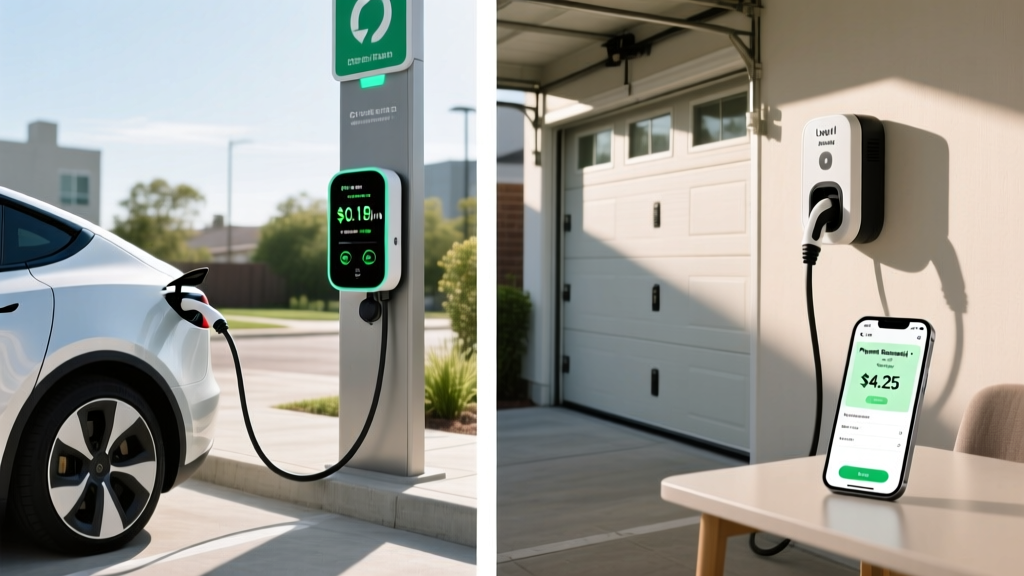
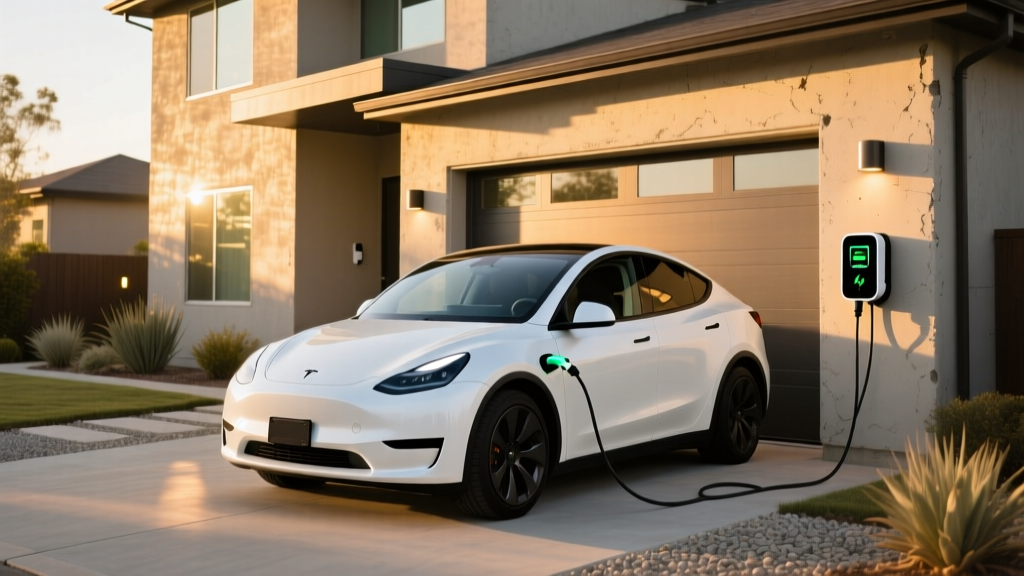
If you own or are shopping for an electric vehicle, electric vehicle charging at home is the single highest-impact decision you'll make. Over 80% of EV charging happens at a driver's residence, and for good reason: home electricity costs roughly $0.13–$0.17 per kWh on average, while public DC fast chargers routinely charge $0.35–$0.55 per kWh. A driver covering 12,000 miles annually in a vehicle rated at 3.5 miles/kWh will spend approximately $445 per year charging at home versus $1,200–$1,885 relying on public fast charging.
This guide covers every practical detail: charging speeds by level, electrical requirements, real installation costs, connector compatibility across brands, equipment recommendations, and a clear cost-per-mile breakdown compared to gasoline.
Charging Levels Explained: Speed, Power, and Real-World Range Added
Before evaluating equipment or electrical upgrades, you need to understand the three charging levels and what they mean in kW (power — the rate of energy delivery) and kWh (energy — the battery's total capacity). Confusing these two is the most common EV mistake. Think of kW as how fast water flows from a hose, and kWh as the size of the bucket.
| Level | Voltage | Power (kW) | Miles of Range/Hour | Best For |
|---|---|---|---|---|
| Level 1 (120V) | 120V AC | 1.0–1.4 kW | 3–5 mi/hr | Overnight top-ups, PHEVs, low-mileage drivers |
| Level 2 (240V) | 240V AC | 3.3–19.2 kW | 12–75 mi/hr | Daily home charging, most BEV owners |
| DC Fast Charging | 400–800V DC | 50–350 kW | 150–1,000+ mi/hr (peak) | Road trips, rapid top-ups away from home |
Electrical Requirements: What Your Home Needs for a Level 2 Charger
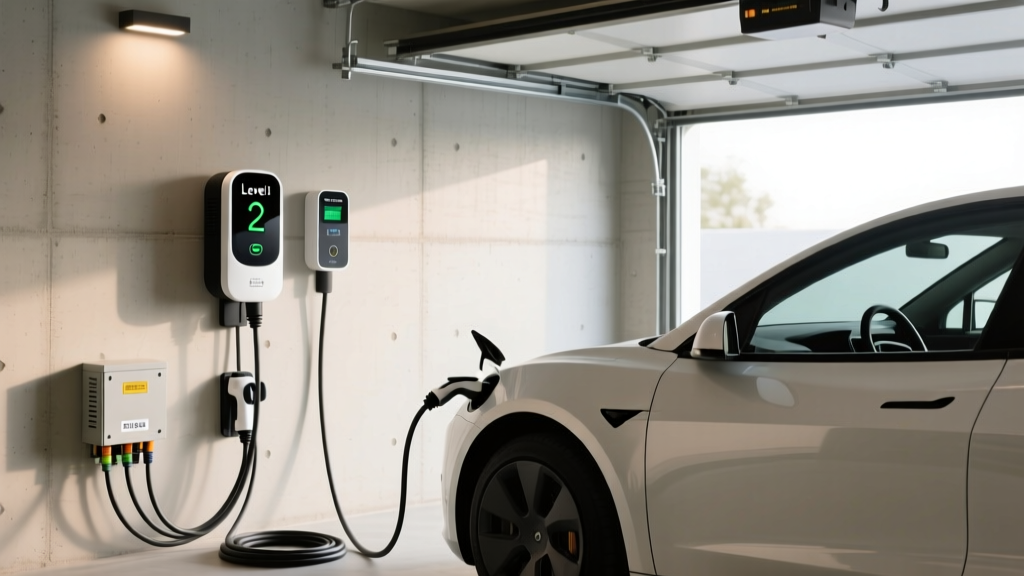
A Level 2 home charger requires a 240-volt dedicated circuit — the same voltage your electric dryer or oven uses. The most common residential setup is a 60-amp circuit breaker with a 48-amp continuous-load charger (the National Electrical Code requires circuits to be rated 125% above continuous load, so a 48A charger needs a 60A breaker).
Common Residential Configurations
- 40A circuit / 32A charger: Delivers 7.7 kW — adequate for most daily needs, adds ~28 miles/hour
- 50A circuit / 40A charger: Delivers 9.6 kW — adds ~35 miles/hour
- 60A circuit / 48A charger: Delivers 11.5 kW — adds ~40 miles/hour, the sweet spot for most BEV owners
- 100A circuit / 80A charger: Delivers 19.2 kW — adds ~65 miles/hour, requires a robust electrical panel; supported by chargers like the FLO Home X8 and select Tesla Wall Connector configurations
When You Need a Panel Upgrade
Most modern homes built after 1990 have a 200-amp electrical service panel. If your panel is already near capacity — common in homes with electric heating, central AC, an electric water heater, and an electric dryer — adding a 60A EV circuit may push total calculated load beyond the panel's rating. In that case, you'll need a service upgrade to 300A or 400A, or a smart load-management device like the DCB Energy nevi or Emporia Smart Panel that monitors real-time load and throttles the charger when other large appliances activate.
Panel upgrades typically cost $2,500–$5,000 depending on your utility and local requirements. This is the single biggest variable in home charging installation cost, and it's the reason you should get a licensed electrician's load calculation before purchasing equipment.
How Much Does It Cost to Install a Home EV Charger?
Installation cost depends on three factors: equipment, electrical labor, and whether your panel needs an upgrade. Here's a realistic breakdown for a typical 48A (11.5 kW) hardwired Level 2 charger on a 60A circuit:
| Component | Low End | High End | Notes |
|---|---|---|---|
| Level 2 Charger (48A, hardwired) | $400 | $750 | Grizzl-E Smart, ChargePoint Home Flex, Tesla Wall Connector |
| Electrical Permit | $50 | $300 | Varies by municipality |
| Electrician Labor (new circuit, short run <30 ft) | $400 | $800 | Panel to garage, same floor, accessible conduit path |
| Electrician Labor (long run >50 ft or complex routing) | $800 | $2,000 | Attic/crawlspace runs, trenching to detached garage |
| Panel Upgrade (if needed) | $2,500 | $5,000 | 200A → 300A/400A service upgrade |
| Load Management Device (alternative to panel upgrade) | $300 | $600 | Emporia, nevi — avoids panel upgrade in many cases |
| Total (no panel upgrade) | $850 | $2,850 | Most common scenario |
| Total (with panel upgrade) | $3,350 | $7,850 | Older homes with 100A–150A service |
The IRS §30C Alternative Fuel Vehicle Refueling Property Credit covers 30% of home charger equipment and installation costs, up to $1,000, provided you live in an eligible census tract (many suburban and rural areas qualify; check the IRS tool). This credit applies to both the charger hardware and the electrician's labor for the dedicated circuit.
Connector Compatibility: NACS, CCS, and CHAdeMO
For home Level 2 charging, the AC connector standard in North America is the J1772 plug — every non-Tesla EV sold in the U.S. uses it, and Tesla vehicles include a J1772 adapter in the glovebox. Starting in 2025, most automakers transitioned to the NACS (North American Charging Standard) connector, originally developed by Tesla. Here's where each brand stands for 2026 model-year vehicles:
| Brand | AC Home Charging Connector | DC Fast Charging Connector | Adapter Needed? |
|---|---|---|---|
| Tesla (all models) | NACS (native) | NACS (native) | J1772 adapter included for non-Tesla chargers |
| Ford (F-150 Lightning, Mustang Mach-E) | NACS (2025+ models) | NACS (2025+ models) | J1772 adapter for older home chargers |
| GM (Chevy Equinox EV, Blazer EV, Silverado EV, Cadillac Lyriq) | NACS (2025+ models) | NACS (2025+ models) | J1772 adapter for older home chargers |
| Hyundai/Kia (Ioniq 5/6, EV6, EV9) | CCS1 / NACS (2025+ transition) | CCS1 (native), NACS via adapter | NACS-to-CCS adapter for Tesla Superchargers |
| Volkswagen (ID.4, ID.7) | CCS1 | CCS1 (native) | NACS adapter for Tesla network |
| Rivian (R1T, R1S) | NACS (2025+ models) | NACS (native) | J1772 adapter for older chargers |
| Nissan (Leaf, Ariya) | J1772 (Leaf), CCS1 (Ariya) | CHAdeMO (Leaf), CCS1 (Ariya) | CHAdeMO becoming legacy; Ariya uses CCS1 |
| BMW (i4, i5, iX) | CCS1 / NACS (2025+ transition) | CCS1 | Check model year; adapters available |
Key takeaway for home charging: If you're buying a home charger in 2026, choose one with a J1772 connector (the universal AC standard) or a NACS connector if you exclusively own Tesla and newer NACS-native vehicles. Most quality chargers are available in both configurations, and J1772-to-NACS adapters cost $100–$200.
Charging Time Examples: How Long Does a Full Charge Take?
Charging time depends on battery size (kWh), the charger's power output (kW), and the vehicle's onboard charger limit. Here are real-world estimates for common battery sizes charging from 10% to 80% state of charge at home:
| Vehicle Example | Battery (kWh usable) | 7.7 kW Charger (32A) | 11.5 kW Charger (48A) | 19.2 kW Charger (80A) |
|---|---|---|---|---|
| Chevy Equinox EV (2026) | 85 kWh | ~8.0 hours | ~5.3 hours | ~3.2 hours* |
| Tesla Model Y (2026) | 75 kWh | ~7.1 hours | ~4.7 hours | ~4.7 hours** |
| Ford F-150 Lightning (extended) | 131 kWh | ~12.3 hours | ~8.2 hours | ~5.0 hours* |
| Hyundai Ioniq 5 (2026) | 77.4 kWh | ~7.3 hours | ~4.9 hours | ~4.9 hours** |
| Toyota RAV4 Plug-in Hybrid | 18.1 kWh | ~1.7 hours | ~1.7 hours*** | ~1.7 hours*** |
* Vehicle supports 19.2 kW AC onboard charging. ** Vehicle onboard charger limited to 11.5 kW; higher-power charger provides no speed benefit. *** PHEV onboard charger limited to 6.6 kW.
Cost Per Mile: Home Charging vs. Gasoline
The economic case for home charging is compelling when you compare cost per mile directly against gasoline. The following table uses a national average electricity rate of $0.14/kWh for residential off-peak charging, $0.48/kWh for public DC fast charging, and $3.30/gallon for regular unleaded:
| Vehicle / Scenario | Efficiency | Energy Cost | Cost Per Mile | Annual Cost (12,000 mi) |
|---|---|---|---|---|
| EV at home (off-peak, $0.14/kWh) | 3.5 mi/kWh | $0.14/kWh | $0.040 | $480 |
| EV at home (peak TOU, $0.22/kWh) | 3.5 mi/kWh | $0.22/kWh | $0.063 | $756 |
| EV public DC fast ($0.48/kWh) | 3.5 mi/kWh | $0.48/kWh | $0.137 | $1,646 |
| Gas sedan (28 MPG combined) | 28 MPG | $3.30/gal | $0.118 | $1,414 |
| Gas SUV/truck (20 MPG combined) | 20 MPG | $3.30/gal | $0.165 | $1,980 |
Home-charged EV drivers save $934–$1,500 per year compared to equivalent gas vehicles, and $600–$1,166 per year compared to relying exclusively on public DC fast charging. Over five years of ownership, that's $3,000–$7,500 in fuel savings — enough to offset the installation cost of a home Level 2 charger multiple times over.
Best Home EV Chargers for 2026: Equipment Recommendations
After testing and tracking reliability data across major brands, these are the Level 2 home chargers that deliver the best combination of power, durability, smart features, and value:
Grizzl-E Smart (Best Overall Value)
- Power Output: Up to 11.5 kW (48A, adjustable down to 16A)
- Connector: J1772 (NACS adapter available)
- Cable Length: 24 ft standard
- Smart Features: Wi-Fi, app-based scheduling, energy tracking, OTA updates
- Price: $449–$499
- Build: IP65 outdoor-rated, aluminum case, -40°F to +122°F operating range, 3-year warranty
- Why it wins: Canadian-built, extreme cold-tested, amperage adjustable via DIP switches to match any circuit, and consistently reliable over years of daily use.
Tesla Wall Connector (Best for Tesla/NACS Owners)
- Power Output: Up to 11.5 kW (48A) on 60A circuit
- Connector: NACS native (J1772 version also available)
- Cable Length: 24 ft
- Smart Features: Wi-Fi, power sharing between two units on one circuit, OTA firmware updates, integrates with Tesla app
- Price: $475
- Build: IP55 rated (indoor/outdoor with weather cover), 4-year warranty
- Why it wins: Seamless Tesla integration, sleek design, and the power-sharing feature lets you install two connectors on a single 60A circuit — ideal for two-EV households.
ChargePoint Home Flex (Best for Multi-Vehicle Households)
- Power Output: Up to 12 kW (50A, adjustable 16A–50A)
- Connector: J1772 (NACS adapter sold separately)
- Cable Length: 23 ft
- Smart Features: Wi-Fi, Alexa/Google Home integration, detailed ChargePoint app, scheduled charging, utility demand-response programs
- Price: $549–$599
- Build: NEMA 4 outdoor-rated, UL listed, 3-year warranty
- Why it wins: Broadest utility integration for time-of-use optimization, excellent app, and the adjustable amperage makes it future-proof for circuit upgrades.
Emporia Vue Level 2 Charger (Best Budget Smart Charger)
- Power Output: Up to 11.5 kW (48A)
- Connector: J1772
- Cable Length: 24 ft
- Smart Features: Wi-Fi, integrates with Emporia Vue energy monitor for whole-home load tracking, solar-aware charging
- Price: $399
- Build: IP65 outdoor-rated, 3-year warranty
- Why it wins: Lowest price for a full-featured 48A smart charger, and the Emporia ecosystem integration is excellent for homes with solar panels or load management needs.
Safety, Permits, and Code Requirements
Home EV charger installation is electrical work that requires adherence to the National Electrical Code (NEC) and your local jurisdiction's amendments. Key requirements include:
- Dedicated circuit: Your EV charger must have its own dedicated breaker — it cannot share a circuit with other outlets or appliances.
- GFCI protection: NEC 2020 and later requires GFCI (Ground Fault Circuit Interrupter) protection for all 240V EV charging outlets. Hardwired installations may be exempt depending on local code, and many hardwired chargers include built-in ground fault protection.
- Outdoor rating: If your charger is installed outdoors or in an unconditioned garage, it must carry at minimum an IP55 or NEMA 4 rating for weather resistance.
- Permit and inspection: Nearly all municipalities require an electrical permit for a new 240V circuit. The inspection ensures proper wire gauge, breaker sizing, grounding, and GFCI compliance. Skipping the permit risks insurance claim denial if an electrical fire occurs.
- Wire gauge: A 60A circuit requires 6 AWG copper wire (or 4 AWG aluminum) for runs under 100 feet. Longer runs may require larger gauge to prevent voltage drop.
Always hire a licensed electrician. EV charger installation involves working inside your main service panel with live bus bars — this is not a DIY project. A qualified electrician will perform a load calculation, pull the required permit, and ensure code compliance.
Frequently Asked Questions
Can I charge my EV with a regular 120V household outlet?
Yes, but slowly. Level 1 charging at 120V delivers roughly 1.0–1.4 kW, adding 3–5 miles of range per hour. For a plug-in hybrid with an 18 kWh battery, a full overnight charge (8–10 hours) is practical. For a battery-electric vehicle with a 75–100 kWh battery, Level 1 alone is insufficient for most drivers unless your daily commute is under 30 miles and you can charge for 12+ hours overnight.
Do I need a NACS or J1772 home charger?
For AC home Level 2 charging, J1772 remains the universal connector that works with every EV (Tesla includes a J1772 adapter). If you exclusively own Tesla or newer NACS-native vehicles (2025+ Ford, GM, Rivian), a NACS wall connector is convenient but not required. Buying a J1772 charger with a NACS adapter provides maximum flexibility for guests and future vehicle changes.
Will charging at home increase my electric bill significantly?
Charging a 75 kWh battery from 10% to 80% at $0.14/kWh costs approximately $7.35. If you drive 40 miles daily and recharge nightly, expect your monthly electricity bill to increase by $40–$60. Many utilities offer time-of-use (TOU) plans with off-peak rates as low as $0.06–$0.09/kWh between midnight and 6 AM, reducing that cost by 40–50%. Check with your utility about EV-specific rate plans.
How long does a home EV charger last?
Quality Level 2 chargers from reputable brands (Grizzl-E, ChargePoint, Tesla, Emporia) are rated for 10+ years of daily use. The cable and connector are the most wear-prone components. Most manufacturers offer 3–4 year warranties. Protect outdoor installations from direct UV exposure when possible to extend cable jacket life.
Is the IRS §30C tax credit still available for home charger installation?
Yes, through December 31, 2032. The §30C Alternative Fuel Vehicle Refueling Property Credit covers 30% of equipment and installation costs up to $1,000 per year. Eligibility requires installation at your primary residence in a qualifying census tract (generally non-urban areas). Consult a tax professional to confirm eligibility, as tract-level qualification and income rules apply.
What if I live in an apartment or don't have a garage?
Multi-unit dwelling residents face the biggest barrier to home EV charging. Options include: requesting your landlord or HOA install a shared Level 2 charger (some states have "right to charge" laws that prevent HOAs from blocking installation), using workplace charging, or relying on public Level 2 and DC fast charging networks. Curbside Level 2 chargers from providers like ChargePoint and EVgo are expanding in urban areas, though at higher per-kWh costs than residential rates.