If you're shopping for an EV or just took delivery of one, the first question that surfaces after range is almost always: how long does it actually take to charge? The answer depends entirely on which charging level you're using, the size of your battery, and whether your home's electrical panel can support a dedicated 240V circuit. This guide breaks down real-world electric vehicle charge time across every charging tier, the equipment you need, what installation actually costs, and how the per-mile economics compare to gasoline.
The Three Charging Levels: Speeds, Power, and Real-World Range Recovery
EV charging is categorized into three levels based on voltage and power delivery. Understanding the difference between kW (kilowatts — the rate of power delivery, like water pressure from a hose) and kWh (kilowatt-hours — the total energy stored in your battery, like the size of the tank) is essential. A higher kW rating means faster charging, but your battery's kWh capacity determines how much energy it can hold.
| Level | Voltage | Max Power (kW) | Miles of Range Added Per Hour | Best For |
|---|---|---|---|---|
| Level 1 | 120V AC | 1.0–1.4 kW | 3–5 miles | Overnight top-ups, PHEVs, low daily mileage |
| Level 2 | 240V AC | 7.2–19.2 kW | 20–75 miles | Daily home charging, most BEV owners |
| DC Fast Charging | 400–800V DC | 50–350 kW | 150–1,200+ miles (equivalent rate) | Road trips, quick top-ups away from home |
A few important caveats. Level 1 charging from a standard household outlet delivers roughly 1.2 kW continuously — that's about 4 miles of range per hour for a midsize EV like the Tesla Model Y or Hyundai Ioniq 5. If your daily commute is under 30 miles round-trip and you can plug in for 10+ hours overnight, Level 1 may technically suffice, but most BEV owners will find it frustratingly slow for replenishing a depleted battery.
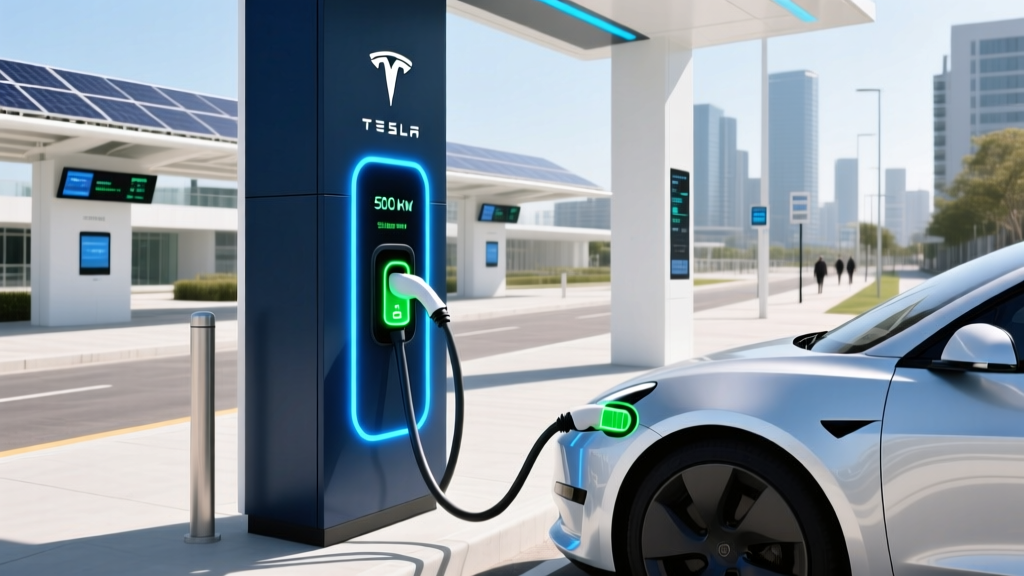
Level 2 is the practical baseline for battery-electric vehicles. A 48-amp (11.5 kW) home charger can fully replenish a 75 kWh battery overnight in roughly 7–8 hours. DC fast charging is designed for on-the-go replenishment: a 250 kW station can take a compatible vehicle from 10% to 80% state of charge in approximately 18–25 minutes, depending on the vehicle's charge curve and battery preconditioning.
Real-World Electric Vehicle Charge Time by Battery Size
Charge time depends on your battery's usable capacity (in kWh) and the power (in kW) your vehicle can accept. Here's how long common scenarios take:
| Battery Size | Example Vehicles | Level 1 (1.2 kW) | Level 2 (11.5 kW / 48A) | DC Fast (10–80%) |
|---|---|---|---|---|
| ~60 kWh | Chevrolet Equinox EV, Nissan Leaf Plus | ~50 hours | ~5.5 hours | ~20–28 min (at 150+ kW peak) |
| ~75 kWh | Tesla Model Y, Ford Mustang Mach-E ER | ~63 hours | ~7 hours | ~18–25 min (at 250 kW peak) |
| ~100 kWh | Rivian R1S, GMC Sierra EV | ~83 hours | ~9 hours | ~25–35 min (at 350 kW capable) |
Home Charger Installation: Electrical Requirements, Costs, and Panel Upgrades
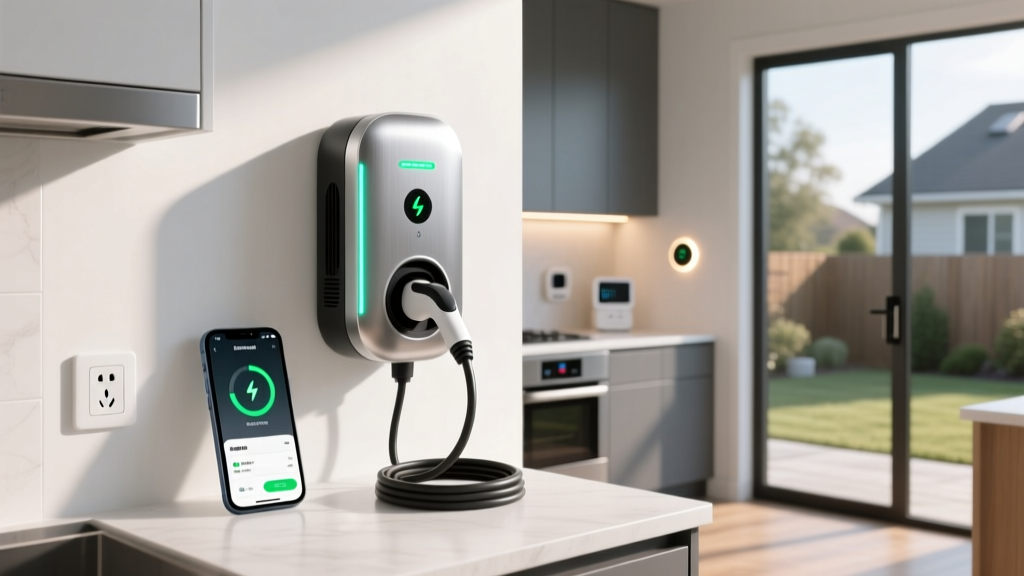
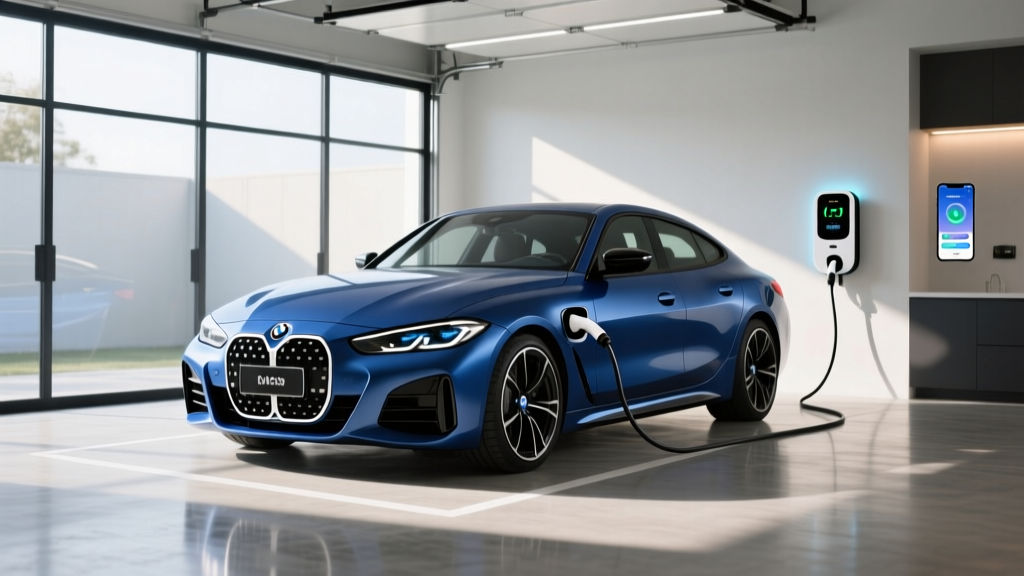
Installing a Level 2 home charger is the single most impactful upgrade for daily EV ownership. But the cost varies enormously depending on your home's existing electrical infrastructure. Here's what's involved:
Electrical Requirements
Most Level 2 home chargers require a 240V dedicated circuit, similar to what a clothes dryer or electric oven uses. The most common configurations:
- 40-amp circuit (delivers 32A continuous / 7.7 kW) — sufficient for most daily charging needs
- 50-amp circuit (delivers 40A continuous / 9.6 kW) — the sweet spot for faster overnight charging
- 60-amp circuit (delivers 48A continuous / 11.5 kW) — maximum practical home speed for most chargers
National Electrical Code (NEC) requires that continuous loads (like EV charging) not exceed 80% of the circuit breaker rating. So a 48A charger requires a 60A breaker.
Will You Need a Panel Upgrade?
This is the variable that can double or triple your installation cost. Homes built before 2000 often have 100A or 150A main service panels. If your panel is already near capacity (running electric heat, a dryer, an oven, and AC), adding a 50–60A EV circuit may require upgrading to a 200A panel. A licensed electrician will perform a load calculation to determine whether your existing panel can handle the additional draw.
| Component | Typical Cost Range | Notes |
|---|---|---|
| Level 2 Charger (Equipment) | $300–$700 | Smart Wi-Fi chargers; basic models start lower |
| Electrician Labor | $400–$1,500 | Depends on run length from panel to garage/driveway |
| Electrical Permit | $50–$200 | Required by most jurisdictions; inspection included |
| Panel Upgrade (if needed) | $1,500–$3,500 | 100A→200A upgrade; not always required |
| Total (No Panel Upgrade) | $750–$2,400 | Most common scenario for newer homes |
| Total (With Panel Upgrade) | $2,250–$5,900 | Older homes or high-load panels |
Some utilities offer rebates of $200–$500 for home charger installation, and certain states provide additional incentives. Check with your local utility before scheduling work. As of 2026, the federal Alternative Fuel Vehicle Refueling Property Credit (IRS Form 8911) may cover up to 30% of home charging equipment and installation costs (capped at $1,000), subject to income limits and census-tract eligibility. Consult a tax professional for your specific situation.
Safety and Code Considerations
- Dedicated circuit: Your EV charger must be on its own breaker — not shared with other appliances.
- GFCI protection: NEC 2020 and later requires GFCI (Ground Fault Circuit Interrupter) protection for outdoor receptacles. Many hardwired chargers have built-in GFCI; plug-in units require a GFCI breaker.
- Outdoor rating: If your charger is installed outside (driveway or exterior wall), it must carry a NEMA 4 or NEMA 4X weather-resistance rating.
- Hardwired vs. plug-in: Hardwired installations (directly connected to your panel) support higher amperage (48A+) and avoid the need for a NEMA 14-50 receptacle. Plug-in units (NEMA 14-50) offer portability but are typically limited to 40A. A licensed electrician should handle either configuration.
Connector Compatibility: NACS, CCS, and CHAdeMO Explained
The charging connector landscape has shifted dramatically. As of 2025–2026, the North American Charging Standard (NACS) — originally Tesla's proprietary connector — has been adopted by Ford, GM, Rivian, Volvo, Hyundai, Kia, BMW, and most major automakers. The older CCS1 (Combined Charging System) connector is being phased out on new vehicles but remains widely available at public stations. CHAdeMO, used primarily by the Nissan Leaf, is effectively legacy.
| Connector | Brands Using It | Adapter Needed? |
|---|---|---|
| NACS (native) | Tesla (all), Ford (2025+), GM (2025+), Rivian (2025+), Hyundai/Kia (2026+), Volvo/Polestar (2025+) | None for Tesla Superchargers; CCS→NACS adapter for some older CCS stations |
| CCS1 | Legacy models: earlier Hyundai/Kia, VW ID.4 (pre-2025), BMW i4 (pre-2025), most pre-2025 non-Tesla EVs | NACS→CCS adapter required to use Tesla Superchargers |
| CHAdeMO | Nissan Leaf (all years), Mitsubishi Outlander PHEV (older) | No adapter available for NACS; limited public network |
If you're purchasing a new EV in 2026, it will almost certainly come with a NACS port (unless it's a Nissan Leaf). For home Level 2 charging, all vehicles use the same J1772 connector (or NACS, which supports AC charging natively), so home charger compatibility is straightforward — any Level 2 charger with a J1772 plug or NACS connector will work.
Cost to Charge: Home vs. Public vs. Gas Per-Mile Comparison
One of the strongest arguments for EV ownership is fuel cost savings, but the math depends heavily on where you charge. Electricity rates vary significantly by region, time of day, and charging tier.
| Scenario | Rate | Cost Per Mile (at 3.5 mi/kWh) | Annual Cost (12,000 mi) |
|---|---|---|---|
| Home (off-peak utility rate) | $0.08–$0.14/kWh | $0.023–$0.040 | $275–$480 |
| Home (standard rate) | $0.14–$0.20/kWh | $0.040–$0.057 | $480–$685 |
| Public Level 2 (network) | $0.25–$0.49/kWh | $0.071–$0.140 | $857–$1,680 |
| DC Fast Charging (public) | $0.30–$0.65/kWh | $0.086–$0.186 | $1,029–$2,229 |
| Gasoline (25 MPG avg, $3.40/gal) | $3.40/gallon | $0.136 | $1,632 |
The takeaway: home charging is where the economics win decisively. An EV owner who charges primarily at home on off-peak rates spends roughly $300–$500 per year on "fuel" — about 70–80% less than a comparable gas vehicle. Public DC fast charging, while convenient for road trips, can approach or even exceed gasoline costs per mile at premium network rates. According to fueleconomy.gov, the average EV achieves 3–4 miles per kWh, making the per-mile calculation straightforward: divide your electricity rate by your vehicle's miles-per-kWh efficiency.
Recommended Home Level 2 Chargers: Equipment Picks for 2026
Not all Level 2 chargers are created equal. Key differentiators include maximum power output, cable length, smart features (Wi-Fi scheduling, energy monitoring), connector type, and build quality. Here are top picks based on real-world use:
ChargePoint Home Flex
- Power: Up to 12 kW (50A) on a 60A circuit
- Connector: J1772 (NACS adapter available)
- Cable: 23 ft
- Smart Features: Wi-Fi, app scheduling, Alexa, energy tracking
- Price: ~$550–$650
- Best For: Flexible amperage settings (dip-switch adjustable from 16A–50A to match your circuit)
Tesla Wall Connector (Gen 4)
- Power: Up to 11.5 kW (48A) on a 60A circuit
- Connector: NACS native
- Cable: 24 ft
- Smart Features: Wi-Fi, OTA updates, Tesla app integration, power sharing between units
- Price: ~$425–$475
- Best For: Tesla owners and NACS-equipped EVs; best value for power output
Emporia Level 2 Smart Charger
- Power: Up to 11.5 kW (48A) on a 60A circuit
- Connector: J1772
- Cable: 24 ft
- Smart Features: Wi-Fi, detailed energy monitoring, solar integration, TOU scheduling
- Price: ~$350–$400
- Best For: Budget-conscious buyers who want granular energy data and solar pairing
Frequently Asked Questions
How much does it cost to install a home EV charger?
For most homes with a modern 200A electrical panel and a garage or driveway close to the panel, expect to pay between $750 and $2,400 total (equipment, electrician labor, and permit). If your home needs a panel upgrade from 100A to 200A, add $1,500–$3,500. Always get at least two quotes from licensed electricians and confirm the quote includes permitting and inspection.
How fast will each charging level add range?
Level 1 (120V) adds roughly 3–5 miles per hour. Level 2 (240V) adds 20–75 miles per hour depending on amperage and your vehicle's onboard charger capacity. DC fast charging adds 150–1,200+ miles per hour at peak rates, though real sessions are measured in 10–80% minutes (typically 18–35 minutes) because charge speed tapers as the battery fills.
Which connector/charger is compatible with my EV?
For 2026 model-year vehicles, most new EVs use the NACS connector. If you drive an older CCS-equipped EV (pre-2025 Hyundai, Kia, VW, BMW), you'll need a NACS-to-CCS adapter (typically $100–$200) to access Tesla Superchargers, which now welcome non-Tesla vehicles at many locations. For home Level 2 charging, any J1772 or NACS-equipped charger will work with any EV sold in the US (adapters are widely available).
How much does charging cost per mile vs gas?
At home on off-peak rates ($0.08–$0.14/kWh), EV charging costs roughly $0.02–$0.04 per mile — about 70–80% less than gasoline at $3.40/gallon in a 25 MPG vehicle ($0.14/mile). Public DC fast charging ($0.30–$0.65/kWh) costs $0.09–$0.19 per mile, which narrows the gap. The savings are most dramatic when you charge at home overnight.
What electrical upgrades might I need?
The most common upgrade is a new 240V circuit run from your panel to the charger location. If your panel lacks capacity (common in homes with 100A service, electric baseboard heat, or multiple large appliances), you may need a panel upgrade to 200A. Some older homes also need a service drop upgrade from the utility (the wire from the pole to your meter), which the utility typically handles. A licensed electrician's load calculation will identify exactly what's needed before any work begins. For more on electrical safety standards, see the NFPA 70 National Electrical Code.