Why Electric School Bus Range Demands a Different Charging Playbook
Electric school bus range has become one of the most searched fleet-electrification topics in 2026, and for good reason. Districts are committing to zero-emission fleets under EPA Clean School Bus Program funding, but the depot charging infrastructure required to keep a Type C or Type D electric school bus rolling is fundamentally different from passenger EV charging. A single electric school bus battery can hold between 110 kWh and 387 kWh of usable energy — roughly five to seven times the capacity of a Tesla Model Y — and when you multiply that by a 40-bus depot, you are looking at multi-megawatt electrical service upgrades that rival small industrial facilities.
This guide breaks down the real-world charging requirements for electric school buses: what range to expect, which charging levels make sense for depot operations, how much installation costs, and what electrical upgrades districts should budget for before signing a purchase order.
Electric School Bus Range: What the EPA Numbers Actually Mean in Service
Published EPA range figures for electric school buses vary dramatically by manufacturer, battery size, and bus class. Unlike passenger vehicles, school buses do not always carry a standard EPA range sticker — many are certified under California Air Resources Board (CARB) or manufacturer testing protocols. Here is what the major 2026 models deliver:
| Manufacturer / Model | Bus Type | Battery (kWh usable) | Published Range (mi) | Real-World Range Estimate | Max DC Charge Rate (kW) |
|---|---|---|---|---|---|
| BlueBird Vision Electric | Type C | 155 kWh (NMC) | ~120 mi | 90–105 mi (mixed route) | 60 kW |
| BlueBird All American Electric | Type D | 196 kWh (NMC) | ~150 mi | 110–130 mi | 60 kW |
| Thomas Built Saf-T-Liner C2 Jouley | Type C | 226 kWh (NMC, Proterra-powered) | ~135 mi | 100–120 mi | 60 kW |
| IC Bus CE Series Electric | Type C | 210 kWh (NMC) | ~140 mi | 105–125 mi | 50 kW |
| Lion Electric LionC | Type C | 155–210 kWh (NMC) | 100–150 mi | 80–130 mi | 50–60 kW |
| GreenPower BEAST Type D | Type D | 387 kWh (NMC) | ~210 mi | 160–185 mi | 80 kW |
Charging Levels Explained: Which Speeds Serve School Bus Depots?
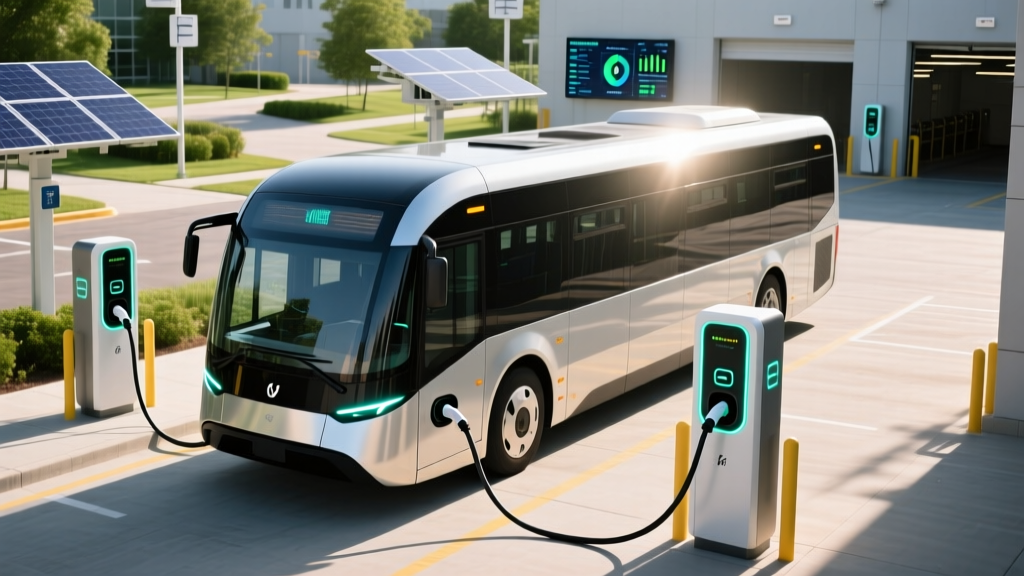
School bus charging is almost exclusively a depot-based operation — buses return to a central yard each afternoon and must be fully charged by the next morning. This operational pattern dictates the charging levels that make sense:
| Charging Level | Voltage / Phase | Power Output (kW) | Miles of Range Added per Hour | Typical Use Case |
|---|---|---|---|---|
| Level 2 (AC) | 208V or 240V / single-phase | 7.2–19.2 kW | 4–12 mi/hr | Overnight depot charging (10–14 hr window) |
| DC Fast Charging | 400V–1000V DC | 50–60 kW (typical bus) | 30–45 mi/hr | Mid-day opportunity charging, smaller depots |
| DC High-Power Charging | 400V–1000V DC | 80–150 kW | 50–90 mi/hr | Rapid turnaround, large fleet depots |
Most school districts rely on Level 2 overnight charging as the backbone. A 19.2 kW Level 2 charger running for 12 hours adds approximately 110–130 miles of range — sufficient for most daily routes. DC fast chargers at 50–60 kW serve as supplemental or mid-day top-up units for split-shift routes or activity buses.
The critical distinction: kW (kilowatts) measures charging power — the rate of energy delivery. kWh (kilowatt-hours) measures energy capacity — how much the battery holds. A 60 kW charger delivers 60 kWh of energy in one hour under ideal conditions, but real-world charge curves taper significantly above 80% state of charge.
Charging Time Examples: How Long to Charge a School Bus Battery?
Charge times depend on battery size, charger power, and the state-of-charge window. School bus operators typically charge from 20% to 100% overnight rather than the 10–80% window common in passenger EVs, since buses need maximum range each morning.
| Battery Size | Level 2 at 19.2 kW | DC Fast at 50 kW | DC Fast at 80 kW |
|---|---|---|---|
| 155 kWh (e.g., BlueBird Vision, LionC) | ~7.5 hours | ~2.8 hours | ~1.8 hours |
| 210 kWh (e.g., IC CE Electric, LionC extended) | ~10 hours | ~3.8 hours | ~2.4 hours |
| 226 kWh (e.g., Thomas Jouley) | ~11 hours | ~4.1 hours | ~2.6 hours |
| 387 kWh (e.g., GreenPower BEAST) | ~18.5 hours | ~7 hours | ~4.4 hours |
Note: DC fast charging times assume a 20–80% window at peak rate; the final 80–100% taper extends total time. Level 2 charging is linear and does not taper, making it predictable for overnight scheduling.
Depot Electrical Requirements: What Infrastructure Does a Bus Yard Need?
This is where most districts encounter sticker shock. Charging even a modest fleet of 10 electric school buses at Level 2 (19.2 kW each) requires approximately 192 kW of continuous electrical load — equivalent to adding a small commercial building to the grid. Here is what the electrical infrastructure typically demands:
Per-Charger Electrical Specifications
- Level 2 (19.2 kW): 240V single-phase, 80A dedicated circuit per charger
- Level 2 (7.2 kW): 240V single-phase, 40A dedicated circuit per charger
- DC Fast (50–60 kW): 480V three-phase, 100–150A service per unit
- DC Fast (80–150 kW): 480V three-phase, 200–400A service per unit
Panel and Transformer Upgrades
Most existing school bus depots were built for diesel operations and have minimal electrical service — perhaps a 200A or 400A main panel for lighting and office space. A 20-bus depot charging at 19.2 kW Level 2 requires roughly 384 kW of continuous load, which typically demands:
- A new dedicated utility transformer (500 kVA to 1,500 kVA depending on fleet size)
- New switchgear and distribution panels rated for the aggregate load
- Potential utility service upgrade from the local electric provider (new feeder lines, pad-mounted transformer)
- Smart load management systems to stagger charging and avoid peak demand charges
According to EPA Clean School Bus Program guidance, districts should engage their utility provider 12–18 months before bus delivery to assess service capacity and lead times for transformer installation.
How Much Does It Cost to Install School Bus Charging Infrastructure?
Costs vary enormously by depot size, existing electrical capacity, and local utility rates. Below is a realistic cost breakdown for a mid-size district installing depot charging:
| Cost Component | Level 2 (19.2 kW) | DC Fast (60 kW) |
|---|---|---|
| Charging Equipment | $4,000–$8,000 | $40,000–$80,000 |
| Electrical Contractor (wiring, conduit, circuit) | $3,000–$12,000 | $15,000–$40,000 |
| Permit & Inspection Fees | $500–$2,000 | $2,000–$5,000 |
| Utility Transformer / Service Upgrade (allocated per charger) | $5,000–$25,000 | $15,000–$50,000 |
| Load Management Software (per charger, annual) | $200–$500/yr | $500–$1,500/yr |
| Total Per Charger (Year 1) | $12,500–$47,000 | $72,000–$175,000 |
Connector Compatibility: What Plugs Do Electric School Buses Use?
Unlike the passenger EV market, which has largely converged on NACS (Tesla's North American Charging Standard), the electric school bus segment still uses a mix of connector standards. Fleet buyers must verify connector compatibility before ordering chargers:
| Manufacturer | AC Charging (Level 2) | DC Fast Charging | Adapter Needed? |
|---|---|---|---|
| BlueBird (Vision / All American Electric) | J1772 (Type 1) | CCS1 | No — CCS1 is standard |
| Thomas Built (Jouley) | J1772 (Type 1) | CCS1 | No — CCS1 is standard |
| IC Bus (CE Electric) | J1772 (Type 1) | CCS1 | No — CCS1 is standard |
| Lion Electric (LionC / LionD) | J1772 (Type 1) | CCS1 | No — CCS1 is standard |
| GreenPower (BEAST / Nano BEAST) | J1772 (Type 1) | CCS1 | No — CCS1 is standard |
The good news for fleet operators: nearly all North American electric school buses use CCS1 for DC fast charging and J1772 for Level 2 AC charging. This simplifies charger procurement — districts can order CCS1-compatible depot chargers without worrying about the NACS transition happening in the passenger vehicle market. However, always confirm connector specs with the bus OEM before finalizing charger orders, as some older pilot-program buses may have been equipped with CHAdeMO connectors.
Cost to Charge an Electric School Bus: Per-Mile Energy Cost vs Diesel
The operating economics of electric school buses hinge on local electricity rates and diesel fuel prices. Here is a realistic comparison:
| Energy Source | Rate Assumption | Efficiency | Cost Per Mile |
|---|---|---|---|
| Depot Level 2 (off-peak utility rate) | $0.08–$0.12 / kWh | 2.0–2.5 kWh/mi | $0.16–$0.30 / mi |
| Depot Level 2 (standard commercial rate) | $0.12–$0.18 / kWh | 2.0–2.5 kWh/mi | $0.24–$0.45 / mi |
| DC Fast Charging (public/commercial) | $0.25–$0.45 / kWh | 2.0–2.5 kWh/mi | $0.50–$1.13 / mi |
| Diesel (2026 national average) | $3.80 / gallon | 5.5–6.5 mi/gal | $0.58–$0.69 / mi |
| Propane Autogas | $2.60 / gallon | 5.0–6.0 mi/gal | $0.43–$0.52 / mi |
At off-peak depot rates, an electric school bus costs roughly $0.20–$0.30 per mile in energy — about half the fuel cost of a comparable diesel bus. Over a typical 12-year bus lifespan and 12,000 miles per year, that translates to $30,000–$55,000 in energy savings per bus. However, demand charges from utilities can erode these savings if charging is not managed properly. Districts should negotiate time-of-use (TOU) rates with their utility and implement smart charging software that staggers bus charging to avoid peak demand windows.
Recommended Charging Equipment for School Bus Depots
Fleet-grade chargers differ significantly from residential or commercial passenger EV chargers. They must withstand outdoor exposure, support long cable runs to reach bus charge ports (often located high on the vehicle), and integrate with fleet management software. Here are leading options for 2026:
Level 2 Depot Chargers
Power: 19.2 kW (dual-port capable) | Connector: J1772 | Cable: 25 ft | Smart features: Cloud management, load balancing, RFID access | Price: ~$5,500–$7,000 per unit
Power: 19.2 kW | Connector: J1772 | Cable: 25 ft | Smart features: Fleet dashboard, scheduled charging, demand response | Price: ~$4,500–$6,000 per unit
Power: 22 kW | Connector: J1772 (Type 2 adapter available) | Cable: 20 ft | Smart features: OCPP 1.6J, load management | Price: ~$3,500–$5,000 per unit
DC Fast Chargers for Depot Use
Power: 50 kW | Connector: CCS1 | Cable: 18 ft | Smart features: OCPP, remote diagnostics | Price: ~$45,000–$55,000
Power: 60 kW per dispenser (expandable) | Connector: CCS1 | Cable: 25 ft | Smart features: Power sharing, fleet scheduling | Price: ~$65,000–$110,000 per dispenser
Power: 60 kW | Connector: CCS1 | Cable: 20 ft | Smart features: Cloud management, payment processing | Price: ~$40,000–$50,000
Safety, Code, and Compliance for Bus Depot Charging
School bus depot charging installations must comply with the National Electrical Code (NEC), specifically NEC Article 625 (Electric Vehicle Charging System Equipment). Key requirements include:
- Dedicated circuits: Each Level 2 charger requires its own dedicated branch circuit — no shared circuits with lighting or other loads
- GFCI protection: All outdoor receptacles and hardwired chargers accessible to personnel require ground-fault circuit interrupter protection per NEC 625.54
- Outdoor rating: Chargers installed outdoors must carry NEMA 3R or NEMA 4 enclosure ratings (rain and dust protection)
- Ventilation: DC fast chargers with internal power electronics may require ventilation clearances per manufacturer specifications
- Cable management: Long cables (25 ft+) must be managed with retractors or holsters to prevent tripping hazards and cable damage in a bus yard environment
- Emergency disconnect: NEC 2023 and later require an externally accessible emergency disconnect for EV charging circuits — critical in a school bus depot where first responders may need to de-energize equipment
All installations should be performed by a licensed electrical contractor with experience in commercial EV infrastructure, and must pass local authority-having-jurisdiction (AHJ) inspection before energization.
Frequently Asked Questions About Electric School Bus Charging
How much does it cost to install a home EV charger vs a school bus depot charger?
Residential Level 2 chargers cost $1,000–$3,500 installed (equipment + electrician + permit). School bus depot chargers are an entirely different scale: $12,500–$47,000 per Level 2 unit installed, or $72,000–$175,000 per DC fast charger, largely due to utility transformer upgrades and commercial-grade electrical work. The per-charger cost drops as fleet size increases because transformer and switchgear costs are amortized across more units.
How fast will each charging level add range to a school bus?
Level 2 at 19.2 kW adds approximately 8–12 miles of range per hour, depending on bus efficiency (typically 2.0–2.5 kWh per mile). A 50 kW DC fast charger adds roughly 25–35 miles per hour. An 80 kW DC charger can add 40–50 miles per hour at peak rate, though the charge curve tapers above 80% state of charge, slowing the final portion of the session.
Which connector and charger is compatible with my electric school bus?
Nearly all 2026 North American electric school buses use J1772 for Level 2 AC charging and CCS1 for DC fast charging. BlueBird, Thomas Built, IC Bus, Lion Electric, and GreenPower all standardize on these connectors. Verify with your specific bus OEM and model year before ordering chargers, and avoid CCS2 (European standard) equipment unless you are operating outside North America.
How much does charging cost per mile compared to diesel?
At off-peak depot electricity rates ($0.08–$0.12/kWh), an electric school bus costs approximately $0.16–$0.30 per mile in energy. A comparable diesel bus at $3.80/gallon and 6 mpg costs $0.58–$0.69 per mile. That is roughly a 50–60% energy cost reduction per mile for electric, though total cost of ownership must also factor in higher upfront purchase price, infrastructure investment, and potentially higher insurance costs.
What electrical upgrades might my school bus depot need?
Most existing diesel depots have 200A–400A electrical service, which is vastly insufficient for fleet charging. A 10-bus depot charging at 19.2 kW Level 2 needs approximately 192 kW of continuous load — typically requiring a new 500 kVA utility transformer, new switchgear, and a dedicated feeder from the utility. Larger depots (20–40 buses) may require 1,000–2,000 kVA of new transformer capacity. Engage your utility provider early: transformer procurement lead times can stretch 12–24 months in high-demand regions. According to the U.S. Department of Energy's Alternative Fuels Data Center, utility coordination is the single longest lead-time item in most depot electrification projects.
Can I use managed charging software to reduce demand charges?
Yes, and it is strongly recommended. Smart charging platforms like ChargePoint Fleet, EV Connect, and Amply Power can stagger bus charging sessions to avoid simultaneous peak loads. By spreading a 20-bus charge cycle across a 12-hour overnight window rather than starting all chargers at 4 PM, districts can reduce peak demand by 60–70% and save thousands per month in utility demand charges. Some utilities offer specific EV fleet rates with lower demand charges in exchange for managed charging participation.