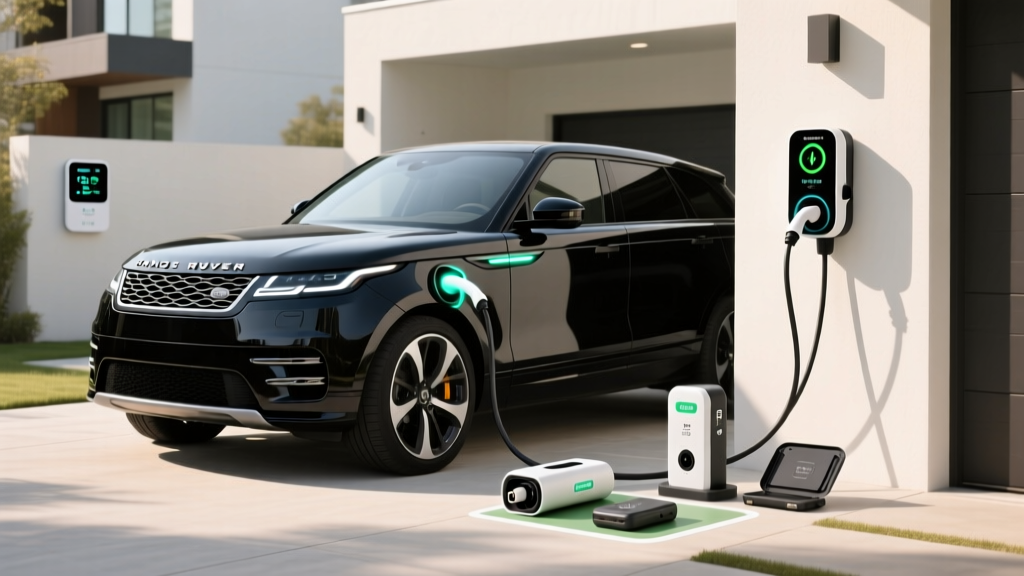
The all-new Electric Range Rover marks Jaguar Land Rover's entry into the luxury full-size EV SUV segment. Built on the flexible MLA (Modular Longitudinal Architecture) platform, this flagship pairs a massive battery with serious off-road capability. But a large battery also means you need a well-planned charging strategy — both at home and for road trips — to get the most out of ownership.
This guide walks through exactly how to charge the new Electric Range Rover, what electrical work your home may need, which public networks to rely on, and what your per-mile fuel cost actually looks like compared to a gas V8 Range Rover.
The Electric Range Rover is expected to deliver an EPA-estimated range near 300+ miles from its ~117 kWh usable battery pack. On highway road trips at 75 mph, expect roughly 250–270 miles before needing a charge stop. In cold weather (below 30°F), plan for a 20–30% range reduction, bringing practical range closer to 210–240 miles. These figures are preliminary; final EPA certification will be published on fueleconomy.gov upon release.
Charging Levels Explained: What Each Adds to Your Range
Before plugging in, it's essential to understand the difference between kW (kilowatts — the rate of power delivery, like water pressure) and kWh (kilowatt-hours — the total energy stored, like the size of the tank). Charging speed is measured in kW; your battery capacity is measured in kWh. The Electric Range Rover's ~117 kWh battery is one of the largest in any consumer EV, so charging times scale accordingly.
| Level | Power (kW) | Voltage | Miles of Range Added Per Hour | Best Use Case |
|---|---|---|---|---|
| Level 1 | 1.2–1.9 kW | 120V AC | ~3–5 mi/hr | Emergency / trickle only |
| Level 2 | 7.2–19.2 kW | 240V AC | ~20–55 mi/hr | Daily home charging |
| DC Fast Charging | 50–250+ kW | 400V+ DC | ~150–500+ mi/hr (peak) | Road trips, quick top-ups |
With a 117 kWh battery, Level 1 charging is impractical for anything beyond maintaining charge overnight. Even Level 2 at 7.2 kW would take over 16 hours for a full charge. A higher-amperage Level 2 setup is strongly recommended for daily ownership of this vehicle.
Home Charging Installation: Electrical Requirements and Costs
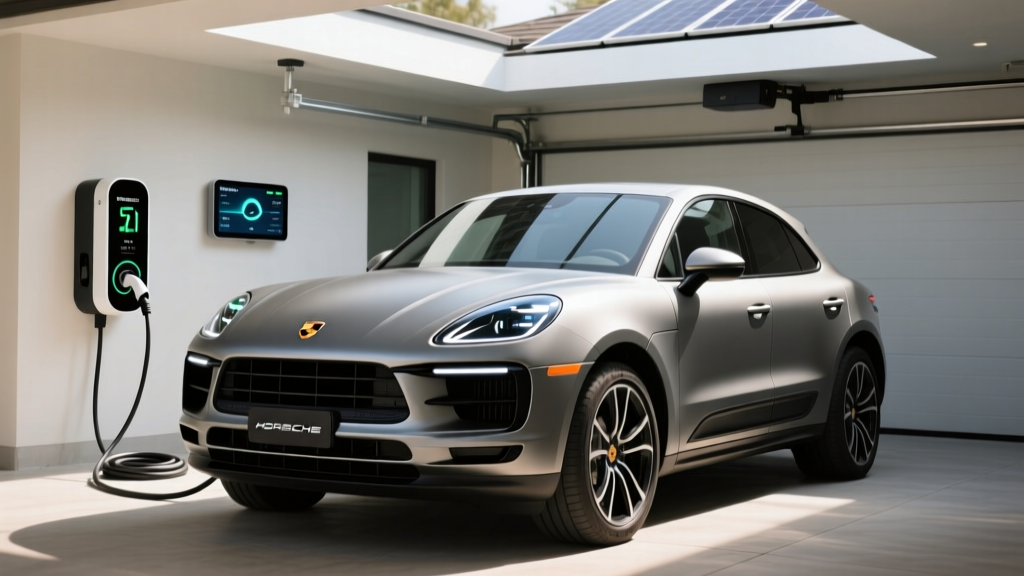
The Electric Range Rover will support AC charging at up to 11 kW (single-phase) or potentially 22 kW (three-phase, where available). In a typical US residential setting with single-phase power, you'll want a 240V circuit rated for at least 48 amps to deliver approximately 11.5 kW of continuous power. This means a 60-amp dedicated circuit breaker is required, since electrical code mandates that continuous loads use no more than 80% of the breaker rating.
What Your Electrician Will Evaluate
- Panel capacity: Most modern homes have a 200-amp main panel. Adding a 60-amp EV circuit consumes a significant portion of available capacity. Older homes with 100-amp service will almost certainly need a panel upgrade.
- Wire run distance: Longer runs from the panel to the garage or driveway require thicker (and more expensive) copper wire — typically 6 AWG or 4 AWG depending on distance and amperage.
- Permit requirements: Most jurisdictions require an electrical permit for EV charger installations, typically $50–$200. Your electrician will pull this and schedule an inspection.
- Outdoor vs. indoor mounting: If charging outside, the charger must carry a NEMA 4 or IP65 weather rating. A hardwired connection is preferred over a NEMA 14-50 receptacle for outdoor installs to reduce weather exposure risk.
| Component | Typical Cost Range | Notes |
|---|---|---|
| Level 2 Charger (hardware) | $400–$1,200 | Varies by brand, power output, smart features |
| Electrician labor (standard install) | $600–$2,000 | Depends on wire run length, wall type, conduit |
| Electrical permit | $50–$200 | Required in most jurisdictions |
| Panel upgrade (if needed) | $1,500–$4,000 | 100A → 200A service upgrade; common in older homes |
| Total (no panel upgrade) | $1,050–$3,400 | Most newer homes fall in this range |
| Total (with panel upgrade) | $2,550–$7,400 | Older homes or high-demand panels |
Always hire a licensed electrician familiar with EV charger installations. Ask specifically about load calculations per NEC Article 220 to confirm your panel can handle the additional draw without risk of tripping the main breaker during peak household usage.
Charging Times: 10–80% Estimates for the Electric Range Rover
EV charging isn't linear. The battery accepts power fastest at a low state of charge (SoC) and progressively slows as it fills — much like filling a water bottle faster when it's empty and slowing near the top. This is called the charge curve, and it matters enormously for trip planning. Most drivers charge from 10% to 80% on road trips, since charging from 80% to 100% can take nearly as long as the first 70%.
Here are estimated charging times for the Electric Range Rover's ~117 kWh battery:
| Charging Method | Power Delivered | Estimated 10–80% Time | Notes |
|---|---|---|---|
| Level 2 Home (48A / 11.5 kW) | ~11.5 kW | ~7.5 hours | Overnight charge; wake up full every morning |
| Level 2 Home (32A / 7.7 kW) | ~7.7 kW | ~11 hours | Lower-amp circuit; still viable for overnight |
| DC Fast Charge (peak 200+ kW) | ~150 kW avg | ~35–45 minutes | Peak rate tapers above 50–60% SoC |
| DC Fast Charge (350 kW station) | ~200+ kW avg | ~25–35 minutes | If vehicle supports peak rate; preconditioning required |
Preconditioning is critical. The battery must be warmed to its optimal temperature range (roughly 70–95°F internally) before it will accept peak DC fast-charging rates. Use the vehicle's built-in navigation to route to a charger — this triggers automatic battery preconditioning. Arriving at a DC fast charger with a cold battery can double your charging time.
Connector Compatibility: Which Plugs Fit the Electric Range Rover?
The EV charging connector landscape is shifting rapidly. As of 2025–2026, most new EVs sold in North America are adopting the NACS (North American Charging Standard, originally Tesla's proprietary connector). Land Rover has not yet confirmed whether the Electric Range Rover will ship with NACS or CCS1 in the US market. Here's how the major connector types compare:
| Connector | Used By | DC Fast Charge Networks | Adapter Needed? |
|---|---|---|---|
| NACS (Tesla) | Tesla (all), Ford, GM, Rivian, Volvo, and growing list | Tesla Supercharger, Electrify America (new stations), EVgo | CCS→NACS adapter if vehicle has CCS port |
| CCS1 | Most legacy non-Tesla EVs, Hyundai, Kia, BMW, VW | Electrify America, EVgo, ChargePoint, Ionity (EU) | NACS→CCS adapter if vehicle has NACS port |
| CHAdeMO | Nissan Leaf, Mitsubishi (legacy) | Limited; being phased out | Rarely available as adapter |
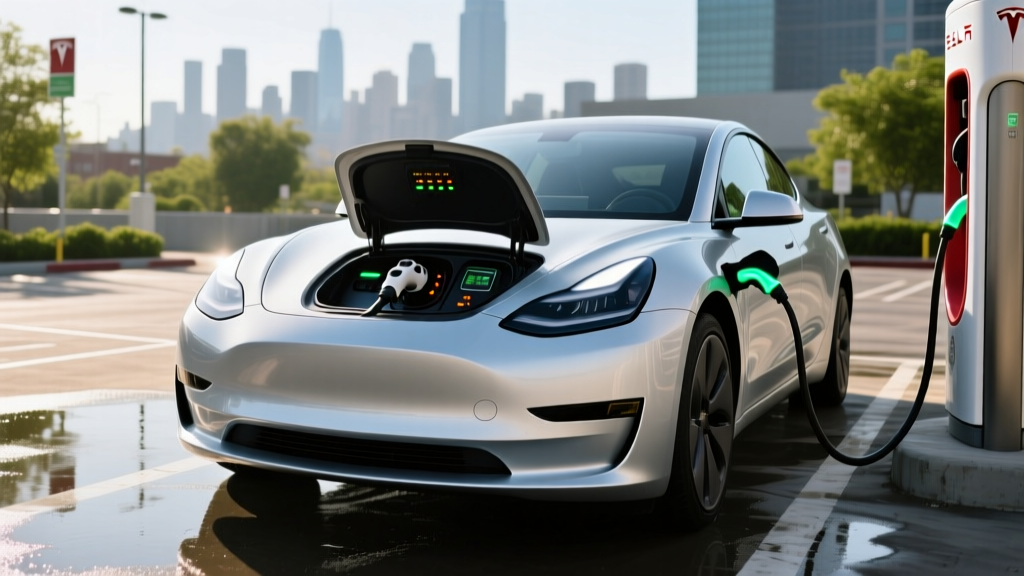
Regardless of which native connector the Electric Range Rover ships with, adapter solutions exist. Tesla sells a CCS-to-NACS adapter, and third-party options from brands like Lectron and A2Z are available. Confirm your vehicle's port type at delivery and purchase the appropriate adapter for maximum network access. For the latest on connector standards, refer to NHTSA.gov and manufacturer press releases.
Level 2 Charger Recommendations for a Large-Battery EV
With a ~117 kWh battery, you want the fastest Level 2 charger your electrical panel can support. Here are three proven units well-suited for the Electric Range Rover:
ChargePoint Home Flex
- Power Output: Up to 12 kW (50A circuit, 40A continuous) or up to 11.5 kW (60A circuit, 48A continuous) — configurable via DIP switch
- Connector: J1772 (NACS adapter included or available)
- Cable Length: 18 or 23 feet
- Smart Features: Wi-Fi, app scheduling, Alexa integration, energy tracking, utility demand-response compatibility
- Price: ~$550–$700
- Best For: Flexibility across electrical setups; excellent app
WallConnector (Tesla, 3rd Gen)
- Power Output: Up to 11.5 kW (48A continuous on 60A circuit)
- Connector: NACS native; J1772 adapter available for non-Tesla EVs
- Cable Length: 24 feet
- Smart Features: Wi-Fi, over-the-air updates, power sharing between multiple units, load management
- Price: ~$450–$500
- Best For: NACS-native vehicles; clean integrated design
Emporia Vue Level 2 Charger
- Power Output: Up to 11.5 kW (48A continuous on 60A circuit)
- Connector: J1772
- Cable Length: 24 feet
- Smart Features: Wi-Fi, app control, integration with Emporia home energy monitoring, solar-aware charging, off-peak scheduling
- Price: ~$400–$500
- Best For: Budget-conscious buyers who want energy monitoring
For the Electric Range Rover, the ChargePoint Home Flex is our top pick due to its configurable amperage (critical if your panel is near capacity) and broad connector compatibility. All three units carry NEMA 4 outdoor ratings and should be hardwired for outdoor installations.
Cost to Charge: Electricity vs. Gas Per Mile
One of the strongest ownership arguments for the Electric Range Rover is per-mile fuel cost. The outgoing gas V8 Range Rover (5.0L supercharged, ~16 MPG combined) costs roughly $0.22–$0.28 per mile to fuel at $3.80/gallon. Let's compare that to electricity across common charging scenarios.
| Charging Scenario | Cost per kWh | Estimated Cost per Mile* | Annual Cost (12,000 mi) |
|---|---|---|---|
| Home Off-Peak (utility rate) | $0.10–$0.15 | $0.03–$0.05 | $360–$600 |
| Home Standard (avg US rate) | $0.16–$0.18 | $0.05–$0.06 | $600–$720 |
| Public Level 2 (ChargePoint, etc.) | $0.25–$0.49 | $0.08–$0.15 | $960–$1,800 |
| DC Fast Charging (Electrify America, EVgo) | $0.35–$0.60 | $0.11–$0.18 | $1,320–$2,160 |
| Gas V8 Range Rover (16 MPG, $3.80/gal) | — | $0.24 | $2,880 |
*Based on estimated efficiency of ~3.0–3.5 miles per kWh for the Electric Range Rover. Final efficiency figures pending EPA certification.
Even if you rely entirely on DC fast charging, the Electric Range Rover should cost significantly less per mile than its gas counterpart. But the real savings come from home charging on off-peak utility rates — potentially saving $2,000+ per year compared to gas. Check your utility's time-of-use (TOU) rate plans and schedule charging between 10 PM and 6 AM for the lowest rates.
Safety, Code, and Smart Charging Practices
A proper installation protects your home, your vehicle, and your warranty. Key safety requirements include:
- Dedicated circuit: Your Level 2 charger must be on its own dedicated breaker — never shared with other appliances. A 60-amp breaker for a 48A continuous charger is standard.
- GFCI protection: NEC 2020 and later require GFCI protection for outdoor receptacles. Hardwired installations may not require a GFCI breaker (consult local code), but it's recommended for outdoor safety.
- Outdoor rating: Any charger mounted outside must carry at minimum a NEMA 4 rating (weatherproof against rain and splashing). NEMA 4X adds corrosion resistance for coastal areas.
- Cable management: Use a wall-mounted cable organizer to prevent tripping hazards and protect the connector from ground moisture and physical damage.
- Utility notification: Some utilities require notification before installing a Level 2 charger, especially if a panel upgrade is involved. You may also qualify for utility rebates ($250–$1,000 in some areas) that offset installation cost.
For battery longevity, avoid routinely charging to 100% on DC fast chargers. The Electric Range Rover's battery management system includes buffers to protect against degradation, but daily charging to 80–90% on Level 2 is the optimal routine. Use 100% only when you need maximum range for a road trip.
Frequently Asked Questions
How much does it cost to install a home EV charger for the Electric Range Rover?
A standard Level 2 home installation (48A hardwired charger, short wire run, no panel upgrade) typically costs $1,050–$3,400 including equipment, electrician labor, and permit. If your home has a 100-amp panel that needs upgrading to 200 amps, add $1,500–$4,000 to that total. Always get at least two quotes from licensed electricians.
How fast will each charging level add range?
Level 1 (120V) adds roughly 3–5 miles of range per hour — impractical for the Electric Range Rover's large battery. Level 2 at 11.5 kW adds approximately 30–38 miles per hour. DC fast charging at peak rates can add 150–250+ miles in 20–30 minutes, though the rate tapers significantly above 80% SoC.
Which connector is compatible with the Electric Range Rover?
This depends on the market and model year. Land Rover is expected to support either NACS or CCS1 for the US market. Confirm your vehicle's port type at delivery. Adapters are available to bridge NACS and CCS1 networks, ensuring you can access Tesla Superchargers, Electrify America, EVgo, and ChargePoint regardless of your native connector.
How much does charging cost per mile compared to a gas Range Rover?
Home charging at average US electricity rates costs approximately $0.05–$0.06 per mile, versus $0.24 per mile for a gas V8 Range Rover at 16 MPG and $3.80/gallon. That's roughly a 75% reduction in per-mile fuel cost when charging at home. Even public DC fast charging at $0.48/kWh costs about $0.14–$0.16 per mile — still substantially cheaper than gasoline.
What electrical upgrades might I need?
The most common upgrade is a panel replacement from 100-amp to 200-amp service, costing $1,500–$4,000. You may also need a new circuit run with appropriately gauged wire (6 AWG or 4 AWG copper), conduit for outdoor runs, and a dedicated 60-amp breaker. Homes built after 2005 with 200-amp panels usually have sufficient capacity without upgrades. A licensed electrician will perform a load calculation per NEC Article 220 to determine your exact needs.
Does the Electric Range Rover qualify for the federal EV tax credit?
Federal tax credit eligibility under IRS §30D depends on multiple factors: the vehicle's MSRP must not exceed $80,000 for SUVs, the buyer's adjusted gross income must fall below $300,000 (joint) / $225,000 (head of household) / $150,000 (single), and the battery must meet critical-mineral and component sourcing requirements. The Electric Range Rover's expected MSRP (likely exceeding $100,000) will probably disqualify it from the $7,500 federal credit. Consult a tax professional and check the latest IRS guidance for your specific situation. Point-of-sale transfer is available for qualifying vehicles.