Why Electric Micromobility Wireless Charging Matters for EV Owners
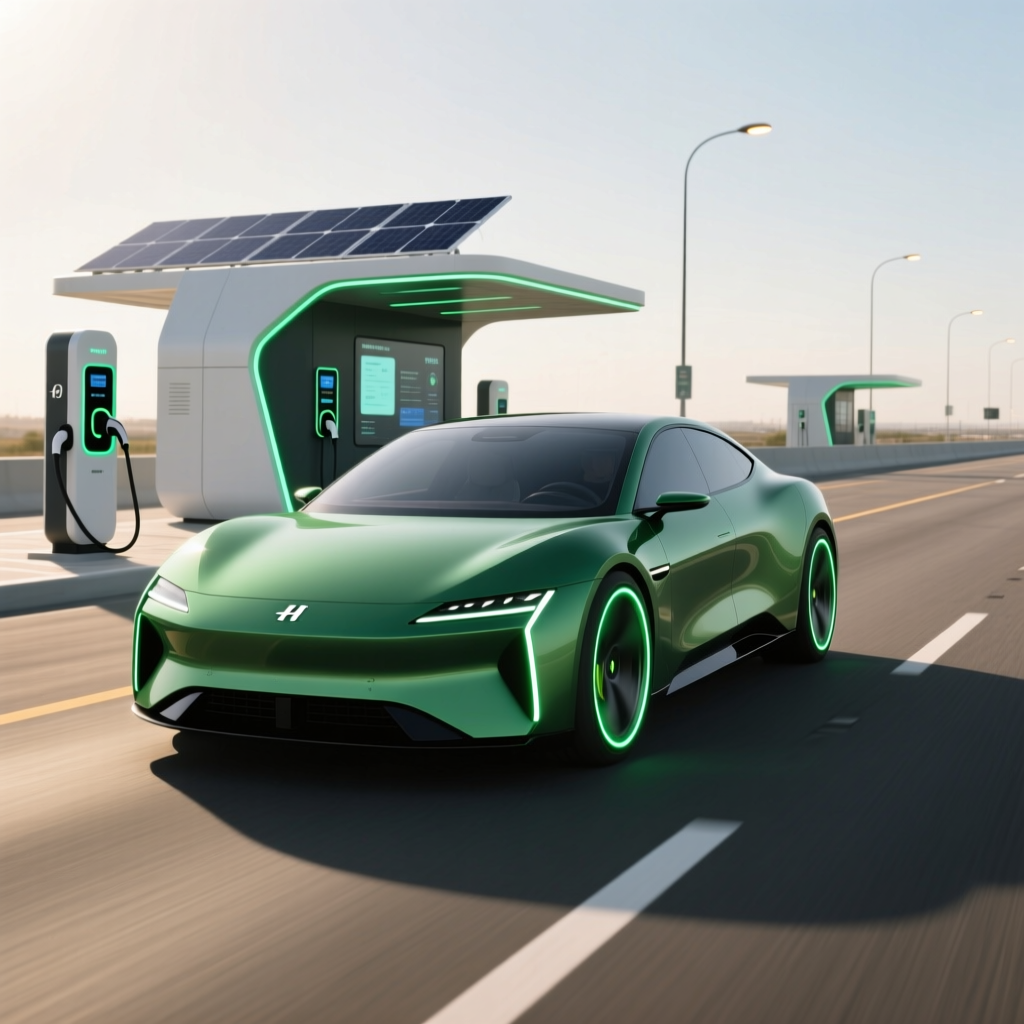
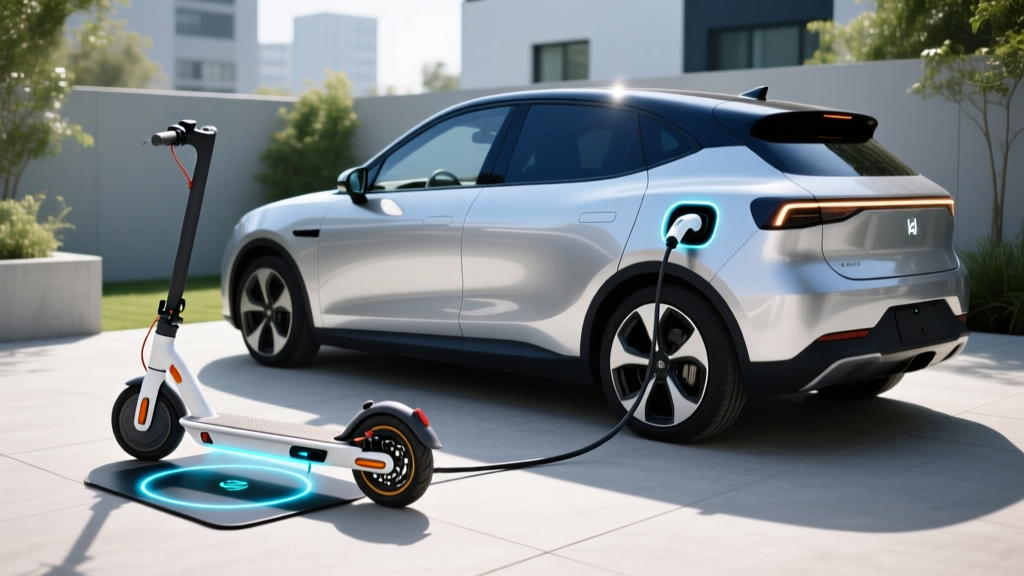
If you own an EV or are shopping for one, you've probably seen headlines about electric micromobility wireless charging — inductive pads embedded in sidewalks, bike lanes, and parking spots that juice up e-scooters, e-bikes, and compact EVs without a plug. The technology is real and expanding in pilot cities, but it operates at a completely different power tier than what your car needs. Understanding the gap between micromobility inductive charging (typically 0.5–3 kW) and home Level 2 EV charging (7.2–19.2 kW) is essential before you invest in equipment or electrical upgrades.
This guide covers the full charging landscape: what each level delivers, what a home install actually costs in 2026, which connector your vehicle needs, and how per-mile charging costs stack up against gasoline.
Charging Levels Explained: Speeds, Power, and Range Added Per Hour
The first rule of EV charging literacy: kW (kilowatts) measures power — the rate of energy delivery. kWh (kilowatt-hours) measures energy — the total capacity of your battery. Confusing them is the single most common mistake new EV owners make. A 10 kW charger doesn't store 10 kWh; it delivers 10 kW of power, adding roughly 10 kWh of energy in one hour (minus efficiency losses).
| Level | Voltage | Power (kW) | Miles of Range Added Per Hour | Typical Use Case |
|---|---|---|---|---|
| Level 1 | 120V AC | 1.0–1.4 kW | 3–5 mi/hr | Overnight trickle; PHEVs; emergency top-ups |
| Level 2 | 240V AC | 3.3–19.2 kW | 12–75 mi/hr | Home daily charging; workplace; public AC |
| DC Fast (Level 3) | 400–900V DC | 50–350+ kW | 150–1,200+ mi/hr (peak) | Road trips; highway corridors |
| Wireless Inductive (Micromobility) | Varies | 0.5–3.0 kW | ~2–10 mi/hr (scooters/bikes) | E-scooter docks, e-bike parking, pilot programs |
Real-world caveat: Those "miles per hour" figures assume ~3–4 mi/kWh efficiency (typical for a mid-size EV like the Tesla Model Y or Hyundai Ioniq 5). A heavier truck like the Rivian R1T gets closer to 2 mi/kWh, so the same kW adds fewer miles. Cold weather (below 32°F) can reduce charging speed by 20–40% due to battery preconditioning demands.
How Much Does It Cost to Install a Home EV Charger?
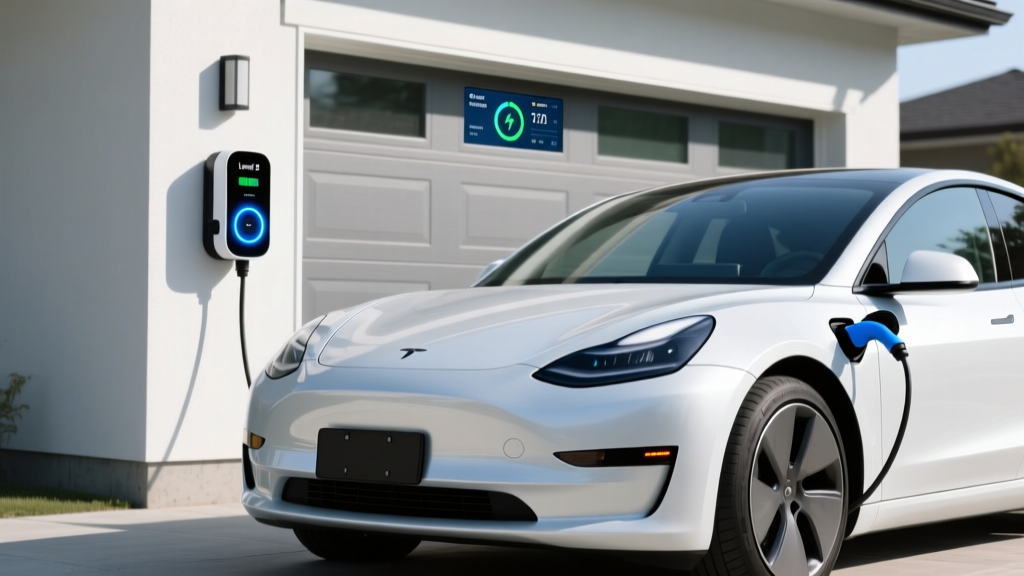
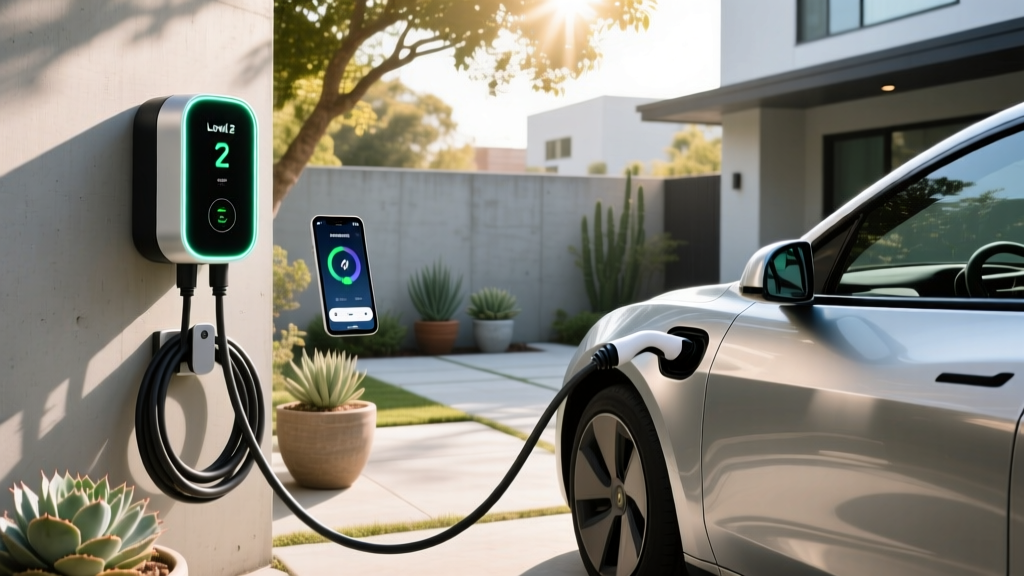
A Level 2 home charger installation in 2026 typically runs between $800 and $3,500 total, depending on your electrical panel, conduit run distance, and local permit fees. Here's a realistic breakdown:
| Component | Low End | High End | Notes |
|---|---|---|---|
| Level 2 Charger Unit (hardware) | $300 | $750 | 32A–48A smart charger; Wi-Fi enabled |
| Electrician Labor | $400 | $1,500 | Depends on conduit run length (garage-adjacent panel = cheap; 80+ ft run = expensive) |
| Permit & Inspection | $50 | $300 | Varies by municipality; some jurisdictions waive for EV installs |
| Electrical Panel Upgrade (if needed) | $1,500 | $4,000 | Required if your panel is 100A or maxed out; upgrading to 200A service |
| Total (no panel upgrade) | $750 | $2,550 | Most homes with 200A panels fall here |
| Total (with panel upgrade) | $2,250 | $6,550 | Older homes (pre-1990) often need this |
Electrical Requirements: What Your Electrician Will Check
A standard Level 2 home install requires a 240V dedicated circuit, typically 40A or 50A. The National Electrical Code (NEC) requires the circuit to be rated at 125% of the continuous load — so a 40A charger needs a 50A breaker, and a 48A charger needs a 60A breaker. Your electrician will verify:
- Panel capacity: Do you have enough spare amperage on a 200A (or larger) panel?
- Conduit and wire gauge: 6 AWG copper for 50A circuits; 4 AWG for 60A
- GFCI protection: NEC 2020+ requires GFCI for outdoor receptacles; hardwired units may bypass this requirement depending on jurisdiction
- Outdoor rating: If mounting outside, the charger must carry a NEMA 4 or NEMA 4X rating for weather resistance
Panel upgrade gotcha: If your home has a 100A panel (common in homes built before 1990), adding a 50A EV circuit will likely overload it when your AC, dryer, and oven run simultaneously. Budget $1,500–$4,000 for a 200A panel upgrade. Some utilities offer rebates — check with your provider before scheduling work.
Which Connector Is Compatible With Your EV?
The connector landscape shifted dramatically in 2024–2025 when nearly every major automaker adopted the North American Charging Standard (NACS), originally developed by Tesla. Here's where things stand in 2026:
| Connector | Brands Using It (Native) | Adapter Needed? |
|---|---|---|
| NACS (Tesla) | Tesla (all), Ford, GM, Rivian, Volvo, Polestar, Mercedes-Benz, BMW (2025+), Hyundai/Kia (2025+), Nissan (2025+) | None for new models; CCS-to-NACS adapters available for older vehicles |
| CCS1 (Combined Charging System) | Legacy models pre-2025 (VW ID.4 early models, some Hyundai/Kia pre-switch) | CCS-to-NACS adapter (~$200) for Tesla Supercharger access |
| CHAdeMO | Nissan Leaf (legacy), Mitsubishi Outlander PHEV (older) | Limited DC fast infrastructure; adapters rare and expensive |
| J1772 (AC only) | All EVs use this for Level 1/2 via adapter or native port | NACS vehicles include J1772 adapter; J1772 vehicles need NACS adapter for Tesla destination chargers |
Practical advice: If you're buying a new EV in 2026, it almost certainly has a NACS port. For home charging, buy a NACS-connector Level 2 wall unit. If you own a pre-2025 CCS vehicle, purchase a charger with a J1772 connector and use the J1772-to-NACS adapter that came with your car (or buy one for ~$150–$250).
Charging Cost Per Mile: EV vs Gasoline
This is where EV ownership economics shine — but the savings depend heavily on where and when you charge.
| Scenario | Rate ($/kWh) | EV Efficiency (kWh/100mi) | Cost Per Mile | Gas Equivalent (30 MPG @ $3.40/gal) |
|---|---|---|---|---|
| Home, off-peak utility rate | $0.08–$0.12 | 28 kWh/100mi | $0.022–$0.034 | $0.113/mi |
| Home, standard rate | $0.14–$0.18 | 28 kWh/100mi | $0.039–$0.050 | $0.113/mi |
| Public Level 2 (ChargePoint, etc.) | $0.25–$0.49 | 28 kWh/100mi | $0.070–$0.137 | $0.113/mi |
| DC Fast Charging (Electrify America, Tesla Supercharger) | $0.32–$0.58 | 30 kWh/100mi (highway) | $0.096–$0.174 | $0.113/mi |
Bottom line: Charging at home on off-peak rates costs roughly 70–80% less per mile than gasoline. Even DC fast charging on road trips is often comparable to or slightly below gas costs. The savings erode if you rely exclusively on expensive public chargers — another reason a home Level 2 install pays for itself quickly.
Charging Time Examples: 10–80% for Common Battery Sizes
DC fast charging follows a charge curve: the battery accepts peak power (e.g., 250 kW) only between roughly 10–50% State of Charge (SoC). Above 60%, the rate tapers significantly to protect battery chemistry. That's why manufacturers quote "10–80%" times rather than 0–100%.
| Vehicle | Battery (kWh) | Peak DC Charge Rate (kW) | 10–80% Time |
|---|---|---|---|
| Tesla Model Y Long Range | 75 kWh (NMC) | 250 kW | ~22 minutes |
| Hyundai Ioniq 5 (84 kWh) | 84 kWh (NMC) | 240 kW (800V architecture) | ~18 minutes |
| Ford F-150 Lightning Ext. Range | 131 kWh (NMC) | 150 kW | ~41 minutes |
| Chevrolet Equinox EV | 85 kWh (NMC) | 150 kW | ~30 minutes |
| BMW iX xDrive50 | 111.5 kWh (NMC) | 200 kW | ~31 minutes |
For Level 2 home charging, a full 0–100% session typically takes 8–12 hours for a 75–85 kWh battery on a 48A (11.5 kW) charger — perfect for overnight replenishment. A 32A (7.7 kW) charger extends that to 11–15 hours, still adequate if you drive under 50 miles daily.
Recommended Home Level 2 Chargers (2026)
ChargePoint Home Flex
- Power Output: Up to 12 kW (50A) — configurable down to 16A for panel-limited homes
- Connector: NACS or J1772 (select at purchase)
- Cable Length: 23 feet
- Smart Features: Wi-Fi, app scheduling, utility demand-response integration, energy tracking
- Price: ~$549 (hardware only)
- Best For: Most homeowners wanting a reliable, flexible smart charger
Tesla Wall Connector
- Power Output: Up to 11.5 kW (48A)
- Connector: NACS native
- Cable Length: 24 feet
- Smart Features: Wi-Fi, over-the-air updates, power-sharing between multiple units, Tesla app integration
- Price: ~$475
- Best For: Tesla owners or households with multiple NACS vehicles (power-sharing is excellent)
Emporia Level 2 EV Charger
- Power Output: Up to 11.5 kW (48A)
- Connector: J1772 (NACS adapter included)
- Cable Length: 24 feet
- Smart Features: Wi-Fi, solar integration (pairs with Emporia Vue energy monitor), load management
- Price: ~$399
- Best For: Budget-conscious buyers and solar-panel households wanting energy-aware charging
Grizzl-E Smart
- Power Output: Up to 10 kW (40A)
- Connector: J1772 (NACS version available)
- Cable Length: 24 feet
- Smart Features: OCPP-compatible, works with multiple apps, extreme cold rated (-40°F)
- Price: ~$449
- Best For: Cold-climate owners (Canadian-built, tested to -40°F) and commercial fleet use
Electric Micromobility Wireless Charging: Where It Fits (and Doesn't)
Wireless inductive charging for e-scooters and e-bikes uses electromagnetic coils to transfer energy across a small air gap — no plug required. Companies like WiTricity and Plugless have demonstrated systems at 0.5–3 kW, and pilot programs in cities like Oslo and Tokyo have deployed inductive pads at scooter-share docking stations.
However, this technology is not yet viable for full-size EVs at consumer scale. Here's why:
- Power gap: A 3 kW inductive pad would take 25+ hours to fill a 75 kWh EV battery. Even experimental automotive wireless systems (11–20 kW) are years from mass-market deployment.
- Efficiency loss: Inductive charging operates at 85–92% efficiency vs 95–98% for wired Level 2. At EV battery sizes, that 5–10% loss means wasted electricity and added heat.
- Alignment sensitivity: The vehicle must park precisely over the pad — tolerances of ±2 inches matter for efficient coupling.
- Cost: Wireless ground pads and vehicle receiver coils add $1,500–$3,000+ per installation, with no standardized connector ecosystem yet.
For now, electric micromobility wireless charging is a promising solution for light electric vehicles — scooters, cargo bikes, and neighborhood EVs with sub-10 kWh batteries. For your Tesla, Ford, or Hyundai, a wired Level 2 home charger remains the most practical, cost-effective, and fastest option.
Safety, Code, and Best Practices
Every home EV charger installation must comply with the National Electrical Code (NEC) and local amendments. Key requirements:
- Dedicated circuit: Your EV charger must have its own breaker — no sharing with dryers, ovens, or HVAC
- GFCI protection: Required for outdoor outlets (NEC 625.54); hardwired units may be exempt depending on AHJ (Authority Having Jurisdiction)
- NEMA rating: Outdoor chargers need NEMA 4 (weatherproof) or NEMA 4X (corrosion-resistant) enclosures
- Permit required: Most jurisdictions require an electrical permit and post-installation inspection — skipping this can void homeowner's insurance claims
- Cable management: Use a holster or retractor to prevent tripping hazards and cord damage
Frequently Asked Questions
How much does it cost to install a home EV charger?
Most homeowners spend $750–$2,550 for a Level 2 install (charger + electrician + permit) if no panel upgrade is needed. Homes with older 100A panels may need a $1,500–$4,000 panel upgrade, pushing the total to $2,250–$6,550. The federal Alternative Fuel Vehicle Refueling Property Credit (IRS Form 8911) can cover up to 30% of hardware and installation costs, capped at $1,000 — check current-year eligibility on irs.gov.
How fast will each charging level add range?
Level 1 (120V) adds 3–5 miles per hour. Level 2 (240V, 48A) adds 30–45 miles per hour for most EVs. DC fast charging adds 150–1,200+ miles per hour at peak power, but sessions typically last 18–40 minutes for a 10–80% fill. Wireless micromobility pads (0.5–3 kW) are designed for small batteries on scooters and bikes, adding roughly 2–10 miles per hour.
Which connector/charger is compatible with my EV?
For 2026 model-year vehicles, nearly all new EVs use the NACS connector. Pre-2025 models from VW, Hyundai, Kia, and others may have CCS1. Older Nissan Leafs use CHAdeMO. Check your vehicle's charge port or owner's manual, then buy a matching home charger. Adapters (CCS-to-NACS, J1772-to-NACS) bridge compatibility gaps for ~$150–$250.
How much does charging cost per mile vs gas?
Home charging on off-peak utility rates costs $0.02–$0.05 per mile — roughly 70–80% less than gasoline at $3.40/gallon and 30 MPG. Public DC fast charging costs $0.10–$0.17 per mile, still comparable to or cheaper than gas. Your exact cost depends on local electricity rates and your vehicle's efficiency (measured in kWh/100mi — check fueleconomy.gov for EPA-rated figures).
What electrical upgrades might I need?
If your home has a 200A electrical panel with spare capacity, you likely just need a new 50A or 60A breaker and a conduit run to your garage or driveway. If your panel is 100A or near capacity (common in pre-1990 homes), you'll need a panel upgrade to 200A — a $1,500–$4,000 job. Some utilities offer load-management devices (like the Emporia VUE with smart breaker) that let you add an EV circuit without a full panel upgrade by throttling charger power when other appliances are running.
Will wireless charging replace plug-in EV charging?
Not in the near term. Electric micromobility wireless charging shows promise for scooters and e-bikes with small batteries (1–5 kWh), where convenience outweighs the efficiency penalty. For full-size EVs with 75–130 kWh batteries, wired charging at 11.5–19.2 kW (Level 2) or 150–350 kW (DC fast) remains far faster, cheaper, more efficient, and universally available. Automotive-grade wireless charging (11+ kW) is in development but faces cost, standardization, and infrastructure hurdles that will take years to resolve.