The Mercedes-Benz G 580 with EQ Technology — the electrified successor to the legendary G-Class — is one of the most anticipated luxury EVs on the road. With its quad-motor setup, 116 kWh battery, and unmistakable boxy silhouette, it's a technical marvel. But owning a 6,600-pound electric off-roader demands a serious charging strategy. The electric G Wagon range is rated by the EPA at 239 miles, which is respectable for a vehicle of its mass and aerodynamics, but maximizing that figure requires understanding how to charge it efficiently at home and in public.
This guide breaks down everything you need to know to set up charging for the G 580, from Level 1 trickle charging to DC fast charging, home electrical upgrades, connector compatibility, and the real cost per mile compared to a gas G 550.
G 580 Battery and Range: The Numbers That Matter
Before sizing a charger, you need to know what you're filling. The 2026 Mercedes-Benz G 580 uses a 116 kWh usable lithium-ion (NMC chemistry) battery pack integrated into the ladder frame. Here are the headline specs:
| Specification | 2026 Mercedes G 580 EQ Technology |
|---|---|
| Battery Capacity (usable) | 116 kWh (NMC) |
| EPA Range | 239 miles |
| Real-World Range (highway/cold) | ~185–215 miles |
| MPGe (combined) | 58 MPGe |
| Efficiency | ~58 kWh/100 mi |
| Max DC Fast Charge Rate | 200 kW (peak) |
| 10–80% DC Fast Charge | ~32 minutes |
| Onboard AC Charger | 11 kW (Level 2 max) |
| 0–60 mph | 4.6 seconds |
| Horsepower | 579 hp (quad motor) |
| Base MSRP | ~$164,900 |
| Federal Tax Credit (§30D) | Not eligible (MSRP cap exceeded) |
Charging Levels Explained: Speeds, Power, and Range Added
Understanding the difference between kW (kilowatts, a measure of power — how fast energy flows) and kWh (kilowatt-hours, a measure of energy — how much the battery holds) is essential. Think of kW as the diameter of the hose and kWh as the size of the bucket.
The G 580's 116 kWh battery is a large bucket. Here's how each charging level fills it:
| Charging Level | Power (kW) | Voltage | Miles of Range Added per Hour | Full Charge Time (0–100%) |
|---|---|---|---|---|
| Level 1 (standard outlet) | 1.4–1.9 kW | 120V | ~2–3 miles/hr | ~60–80+ hours |
| Level 2 (home/public AC) | 7.2–11 kW | 240V | ~12–19 miles/hr | ~11–16 hours |
| DC Fast Charging | 50–200 kW | 400V+ | ~85–340 miles/hr (peak) | 10–80% in ~32 min (at 200 kW) |
For a 116 kWh battery, Level 1 charging is impractical as a primary strategy — it would take days to fill from empty. Level 2 at home is the daily workhorse. DC fast charging is for road trips and quick top-ups.
Important charge-curve note: The G 580's peak 200 kW rate is not sustained across the entire session. Like all EVs, charging speed tapers significantly above 80% state of charge (SoC) to protect the battery. Expect the 10–80% sprint to take roughly 32 minutes, but 80–100% could add another 25–35 minutes. For road trips, charge to 80% and move on — it's faster overall.
Home Charger Installation: Electrical Requirements and Costs
The G 580's onboard AC charger accepts up to 11 kW on Level 2 (240V, ~48A). To take full advantage, you'll need a dedicated 60-amp circuit with a hardwired wall charger or a NEMA 14-60 outlet. Here's what that involves:
Electrical Requirements
- Circuit: 60A dedicated breaker (for a 48A continuous load — NEC requires 125% overhead)
- Wire: 6 AWG copper (or 4 AWG aluminum) run from panel to charger location
- Outlet option: NEMA 14-60 (if using a plug-in charger rated for 40A/9.6 kW — a common compromise)
- Hardwired option: Direct wire to a 48A/11.5 kW charger (maximizes G 580's 11 kW acceptance)
- GFCI protection: Required by NEC 2023+ for EV outlets in garages
Panel Capacity Check
Before installation, an electrician will perform a load calculation on your electrical panel. Most modern homes with 200A service can accommodate a 60A EV circuit. However, older homes with 100A or 150A panels may need an upgrade — especially if you also run electric HVAC, a dryer, and an electric stove.
| Cost Component | Typical Range |
|---|---|
| Level 2 Charger (hardware) | $400–$800 |
| Electrician labor (standard install, <50 ft run) | $600–$1,500 |
| Permit & inspection | $100–$300 |
| Electrical panel upgrade (if needed, 100A → 200A) | $2,000–$4,500 |
| Total (no panel upgrade) | $1,100–$2,600 |
| Total (with panel upgrade) | $3,100–$7,100 |
Always hire a licensed electrician familiar with EV charger installs. According to NHTSA and NFPA guidelines, improper EV charging installations pose fire risks. A permit and inspection protect your home insurance coverage.
Connector Compatibility: NACS, CCS, and the G 580
Mercedes-Benz has committed to transitioning its North American EV lineup to the NACS (North American Charging Standard) connector — the Tesla-designed plug now adopted industry-wide. For the 2026 model year, the G 580 ships with a NACS charge port in the US market.
| Connector Type | Description | G 580 Compatible? |
|---|---|---|
| NACS (Tesla) | Compact, single connector for AC + DC. Now the North American standard. | Yes — native port on 2026 US models |
| CCS1 | Combined Charging System (J1772 + DC pins). Legacy standard at Electrify America, EVgo. | Adapter required (CCS-to-NACS) |
| CHAdeMO | Legacy DC connector (Nissan Leaf). Being phased out. | Not compatible; avoid |
| J1772 | Legacy AC connector (pre-NACS Level 2 public chargers). | Adapter included with most NACS vehicles |
What this means practically: With a native NACS port, the G 580 can charge at Tesla Superchargers (over 20,000 stalls in North America as of 2026) without an adapter. For Electrify America or other CCS-based networks, you'll need a CCS-to-NACS adapter — typically $150–$250. Mercedes usually includes a J1772-to-NACS adapter in the vehicle for public Level 2 chargers.
Charging Cost: Home vs. Public vs. Gas G 550
One of the strongest ownership arguments for the G 580 over a gas G 550 is fuel cost — even though the G 580 is a heavy, inefficient EV by sedan standards. Let's compare with real numbers.
The G 580 consumes approximately 58 kWh per 100 miles (per fueleconomy.gov EPA data). The gas G 550 averages about 14 MPG combined, requiring premium fuel.
| Scenario | Rate | Cost per 100 Miles | Cost per Mile |
|---|---|---|---|
| Home charging (off-peak utility rate) | $0.13/kWh | $7.54 | $0.075 |
| Home charging (peak rate / no TOU plan) | $0.22/kWh | $12.76 | $0.128 |
| Public Level 2 (ChargePoint, EVgo) | $0.35/kWh | $20.30 | $0.203 |
| DC Fast Charging (Electrify America, Tesla) | $0.48/kWh | $27.84 | $0.278 |
| Gas G 550 (14 MPG, $4.20/gal premium) | — | $30.00 | $0.300 |
Even at the most expensive DC fast charging rates, the G 580 costs less per mile than the G 550 on premium gasoline. At home on off-peak rates, you'll spend roughly $0.08/mile vs. $0.30/mile — a 73% reduction. Over 15,000 miles annually, that's roughly $3,300 in fuel savings.
Time-of-use tip: Many utilities offer EV-specific rate plans with off-peak rates between 10 PM and 6 AM. Schedule your G 580 to charge overnight using the Mercedes me app or your charger's built-in scheduling to lock in the lowest rates.
Recommended Level 2 Chargers for the G 580
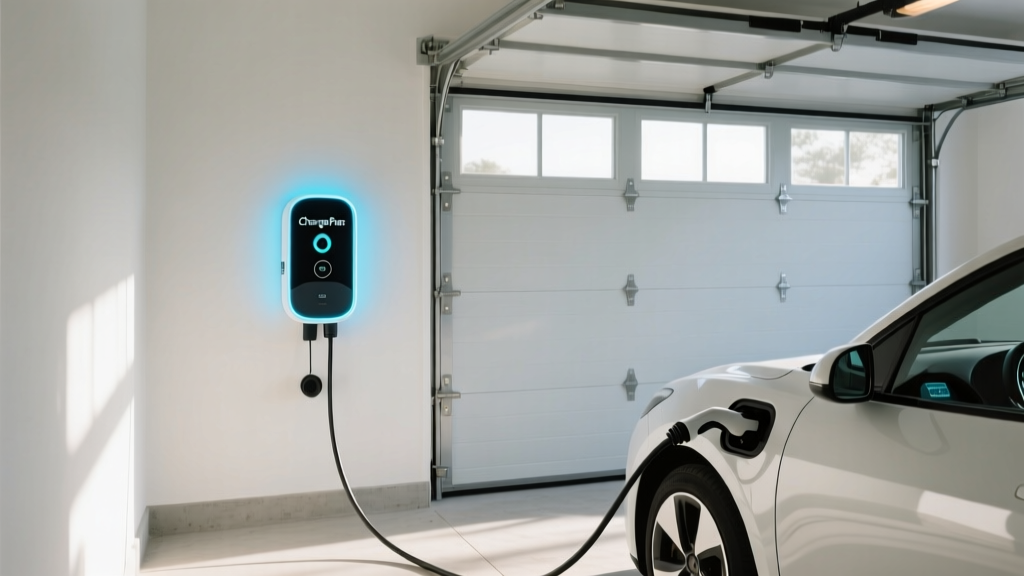
Because the G 580 accepts up to 11 kW on AC, pairing it with a high-output Level 2 charger maximizes your overnight range recovery. Here are three chargers suited to the task:
ChargePoint Home Flex (NACS)
- Power Output: Up to 11.5 kW (48A, 240V hardwired)
- Connector: NACS native (2025+ models)
- Cable Length: 23 feet
- Smart Features: Wi-Fi, app scheduling, Alexa integration, energy tracking
- Price: ~$599
- Why it fits: Matches the G 580's 11 kW AC acceptance rate. UL-listed, outdoor-rated (NEMA 4).
Tesla Wall Connector (NACS)
- Power Output: Up to 11.5 kW (48A, 240V hardwired)
- Connector: NACS native
- Cable Length: 24 feet
- Smart Features: Wi-Fi, OTA updates, power-sharing for multi-charger setups
- Price: ~$475
- Why it fits: Best value for NACS vehicles. Seamless Supercharger ecosystem integration. Clean, minimal design.
Emporia Vue Smart EV Charger
- Power Output: Up to 11.5 kW (48A, 240V hardwired)
- Connector: NACS (2025+ models) or J1772 with adapter
- Cable Length: 24 feet
- Smart Features: Solar integration, whole-home energy monitoring, time-of-use scheduling
- Price: ~$399
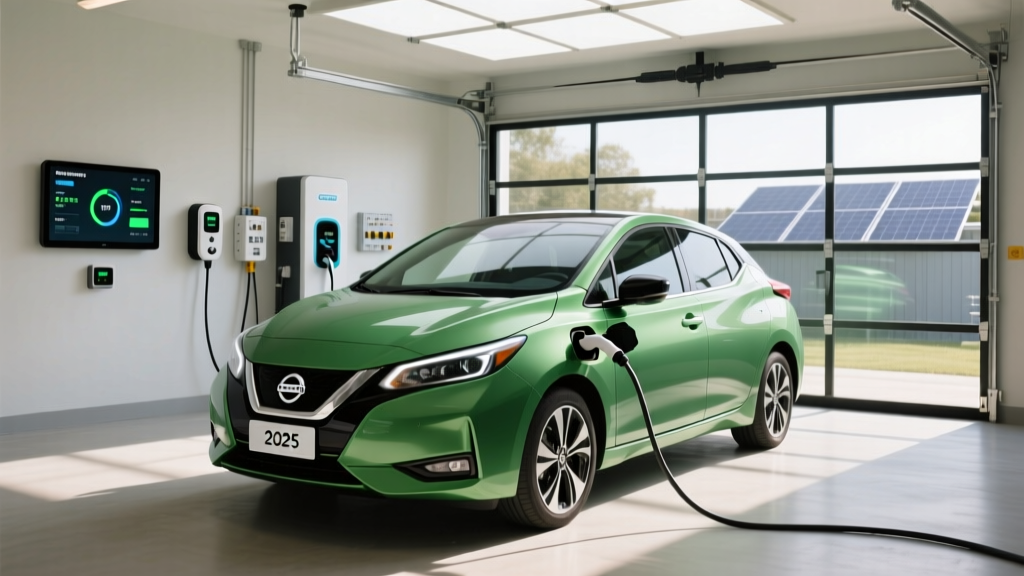
- Why it fits: Ideal if you have solar panels. Real-time energy dashboard shows exactly when your G 580 is charging on solar vs. grid power.
All three chargers require a 60A dedicated circuit for maximum output. If your panel is tight on capacity, a 40A circuit with a 32A/7.7 kW charger is a viable compromise — you'll still recover ~150 miles overnight, enough for most daily driving.
DC Fast Charging on the Road: Network Access and Strategy
With a native NACS port, the G 580 has access to the broadest fast-charging network in North America: Tesla Superchargers. The 200 kW peak charge rate means a 10–80% session takes approximately 32 minutes under ideal conditions (battery preconditioned, moderate ambient temperature).
Road-trip charging strategy for the G 580:
- Use the Mercedes me app or the built-in navigation's EV route planner to precondition the battery before arriving at a DC fast charger. Preconditioning warms the battery to optimal temperature, enabling faster charge acceptance.
- Target 80% SoC and move on. The charge curve tapers sharply above 80% — waiting for 100% at a DC charger wastes time.
- At 200 kW peak, the G 580 can add roughly 145 miles of range in 20 minutes. Plan rest stops accordingly.
- In cold weather, add 10–15 minutes to expected charge times — the battery management system will limit charge rate until the pack reaches operating temperature.
For non-Tesla DC networks like Electrify America, you'll need the CCS-to-NACS adapter. The Mercedes navigation system and the PlugShare or A Better Routeplanner apps can help locate compatible chargers along your route.
Safety, Code, and Smart Charging Practices
Installing and operating a home EV charger for a vehicle as powerful as the G 580 requires attention to safety and code compliance:
- Dedicated circuit: Never share the EV charger circuit with other appliances. The NEC requires a dedicated breaker.
- GFCI protection: Required for receptacle-based (plug-in) EV chargers in garages and outdoors per NEC 2023 Article 625.
- Outdoor rating: If installing outside, use a NEMA 4-rated (weatherproof) charger enclosure.
- Cable management: With a 24-foot cable and a vehicle this large, plan charger placement to avoid tripping hazards and cable strain. Wall-mounted cable organizers are recommended.
- Ventilation: While EVs don't emit exhaust during charging, charging generates heat. Ensure adequate airflow in enclosed garages.
- Surge protection: Consider a whole-home surge protector or a charger with built-in surge suppression — the G 580's power electronics are sensitive to voltage spikes.
Frequently Asked Questions
How much does it cost to install a home EV charger for the G 580?
A typical Level 2 installation with a 60A circuit, 48A hardwired charger, and no panel upgrade costs between $1,100 and $2,600 (equipment, electrician labor, and permit). If your home needs a panel upgrade from 100A to 200A service, add $2,000–$4,500. Always get multiple quotes from licensed electricians.
How fast will each charging level add range to the G 580?
Level 1 (120V) adds roughly 2–3 miles per hour — impractical for daily use with a 116 kWh battery. Level 2 (240V, 48A) adds approximately 19 miles per hour, recovering a full charge in about 11 hours. DC fast charging at 200 kW can add up to 340 miles per hour at peak rate, with a 10–80% session taking about 32 minutes.
Which connector and charger is compatible with the electric G Wagon?
The 2026 US-market G 580 uses the NACS connector natively. This means direct compatibility with Tesla Superchargers and any NACS-equipped Level 2 charger. For CCS-based DC networks like Electrify America, a CCS-to-NACS adapter is required.
How much does charging the G 580 cost per mile versus gas?
At home on off-peak electricity ($0.13/kWh), the G 580 costs about $0.075 per mile. The gas G 550 on premium fuel ($4.20/gal at 14 MPG) costs about $0.30 per mile. Even at public DC fast charging rates ($0.48/kWh), the G 580 costs roughly $0.28/mile — still cheaper than gas.
What electrical upgrades might I need for a G 580 home charger?
The most common upgrade is a panel capacity increase. If your home has 100A or 150A service and you already run multiple high-draw appliances (electric range, dryer, HVAC), a 60A EV circuit may exceed capacity. A licensed electrician will perform a load calculation to determine if a panel upgrade to 200A is necessary. Some utilities offer rebates for panel upgrades tied to EV adoption — check with your local provider.
Does the G 580 qualify for the federal EV tax credit?
No. Under current IRS §30D rules, the G 580's MSRP (~$164,900) far exceeds the $80,000 cap for SUVs and trucks. It is not eligible for the $7,500 federal clean vehicle credit. State and local incentives may still apply — consult fueleconomy.gov and your tax professional.
Final Word: Charging the Electric G Wagon Is Manageable — With Planning
The electric G Wagon range of 239 miles EPA is workable for most owners, especially given that 90% of EV charging happens at home. A properly installed 48A Level 2 charger recovers roughly 210 miles of range overnight — more than enough for daily driving. On road trips, the 200 kW DC fast charging capability and NACS Supercharger access make long hauls practical with brief stops.
The key is preparation: verify your electrical panel capacity before purchase, invest in a quality NACS Level 2 charger, and take advantage of time-of-use electricity rates. The G 580 is a $165,000 vehicle — your charging infrastructure should match its quality.