The Ford F-150 Lightning is one of the most capable electric trucks on the market, but its real-world utility hinges on how you charge it. Whether you're eyeing the Standard Range model or the Extended Range variant, understanding charging infrastructure — from your garage to the open highway — is the difference between seamless ownership and frustrating compromises. This guide breaks down exactly what it takes to keep an electric F-150 charged, what it costs, and which equipment delivers the best results for a truck with a battery this large.
Electric F-150 Range: What the EPA Says vs. Real-World Driving
Before we talk charging speeds, let's establish what you're filling up. The 2025–2026 F-150 Lightning comes in two battery configurations:
- Standard Range: 98 kWh usable battery (LFP chemistry on select trims), EPA-estimated 240 miles
- Extended Range: 131 kWh usable battery (NMC chemistry), EPA-estimated 320 miles
With a battery this large — particularly the 131 kWh Extended Range pack — charging strategy matters enormously. A full charge from empty on a standard 120V outlet would take over 5 days. That's why the right Level 2 home setup isn't optional for F-150 Lightning owners; it's essential.
Charging Levels Explained: Speeds, Power, and What They Mean for Your Truck
EV charging is measured in kW (kilowatts), which represents the rate of power delivery — think of it as the width of the hose filling your tank. The battery capacity is measured in kWh (kilowatt-hours), which is the total energy stored — the size of the tank itself. Confusing these two is the most common EV literacy mistake. A 19.2 kW charger delivering power for one hour adds 19.2 kWh of energy to your battery.
| Level | Voltage | Max Power (kW) | Miles Added/Hour (F-150 Lightning) | Best Use Case |
|---|---|---|---|---|
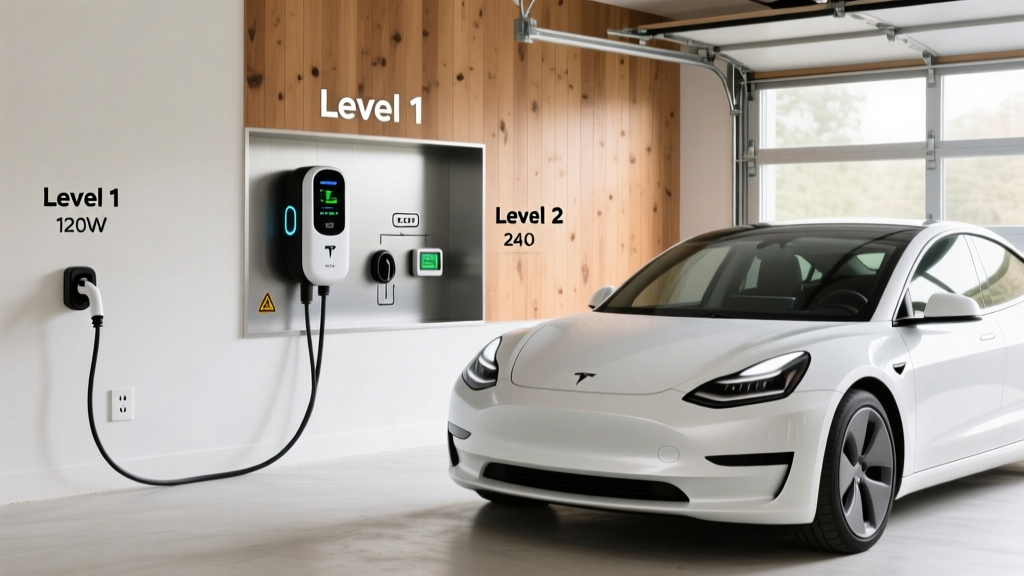
| Level 1 | 120V AC | 1.2–1.4 kW | ~2–3 miles | Emergency / overnight trickle |
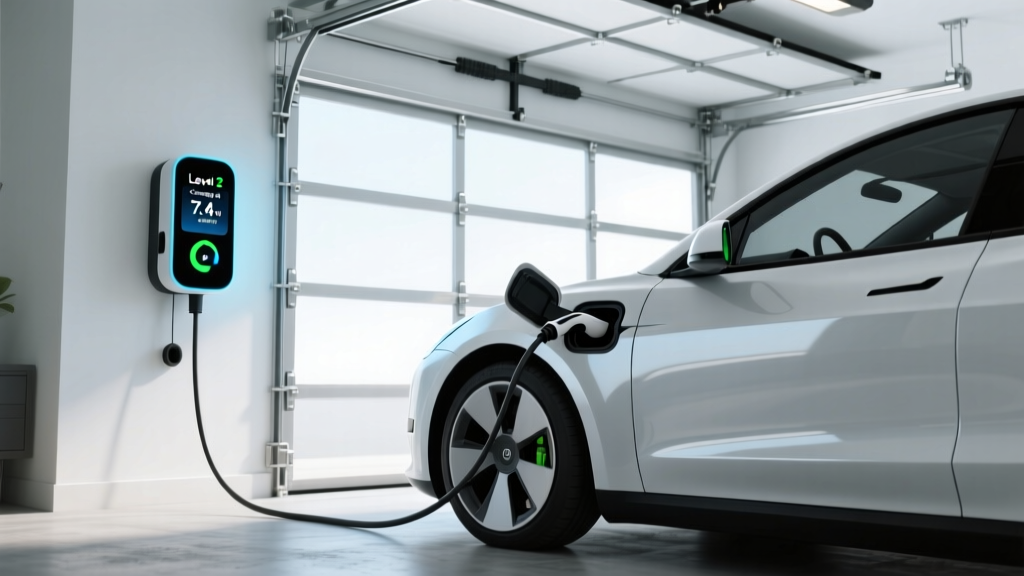
| Level 2 | 240V AC | 7.2–19.2 kW | ~13–34 miles | Daily home charging |
| DC Fast Charging | 400V+ DC | 150–250 kW (peak) | ~150–250 miles in 30 min | Road trips / rapid top-ups |
The F-150 Lightning's onboard charger accepts up to 19.2 kW on Level 2 (when equipped with the optional dual onboard charger — standard trucks accept 10.5 kW). On DC fast charging, the Extended Range model peaks at approximately 150 kW, while the Standard Range peaks around 120 kW.
Charging Time Examples: 10–80% State of Charge
| Charging Method | Std Range (98 kWh) 10–80% | Ext Range (131 kWh) 10–80% |
|---|---|---|
| Level 1 (1.4 kW / 120V) | ~68 hours | ~91 hours |
| Level 2 (10.5 kW / 240V 48A) | ~9 hours | ~12 hours |
| Level 2 (19.2 kW / 240V 80A) | ~5 hours | ~6.5 hours |
| DC Fast (150 kW peak) | ~44 minutes | ~41 minutes |
Charge curve reality check: DC fast charging does not sustain peak kW for the entire session. The F-150 Lightning will peak at 150 kW around 15–20% SoC, then taper progressively. From 80–100%, speed drops dramatically to protect the battery — this is why we quote 10–80% times, and why road-trip strategy means charging to 80% and moving on.
Home Charger Installation: Electrical Requirements, Permits, and Total Cost
For an F-150 Lightning, a Level 2 home charger is non-negotiable for practical daily use. Here's what's involved in getting one installed properly.
Electrical Requirements
- Circuit: A dedicated 240V circuit is required. For a 48-amp charger (11.5 kW), you need a 60-amp breaker. For a 64-amp charger (15.4 kW), an 80-amp breaker. For the full 80-amp / 19.2 kW Ford Charge Station Pro, you need a 100-amp breaker.
- Wire gauge: Typically 6 AWG copper for 60A circuits; 4 AWG or 3 AWG for 80–100A circuits, depending on run length.
- Panel capacity: Most modern homes have a 200-amp main panel. Adding a 60–100A circuit is feasible if your panel isn't already near capacity. Older homes with 100-amp service will almost certainly need a panel upgrade.
- Permit: Virtually all jurisdictions require an electrical permit for a new 240V circuit. This ensures the work is inspected and meets NEC (National Electrical Code) standards.
Installation Cost Breakdown
| Component | Simple Install (near panel) | Complex Install (far run / upgrades) |
|---|---|---|
| Level 2 Charger Equipment | $500–$800 | $700–$1,300 |
| Electrician Labor (2–6 hrs @ $85–$150/hr) | $200–$500 | $600–$1,500 |
| Materials (wire, conduit, breaker) | $100–$250 | $300–$800 |
| Permit Fee | $50–$150 | $50–$200 |
| Panel Upgrade (if needed) | N/A | $1,500–$4,000 |
| Total Estimated Cost | $850–$1,700 | $3,150–$7,800 |
Connector Compatibility: NACS, CCS1, and What Your F-150 Lightning Uses
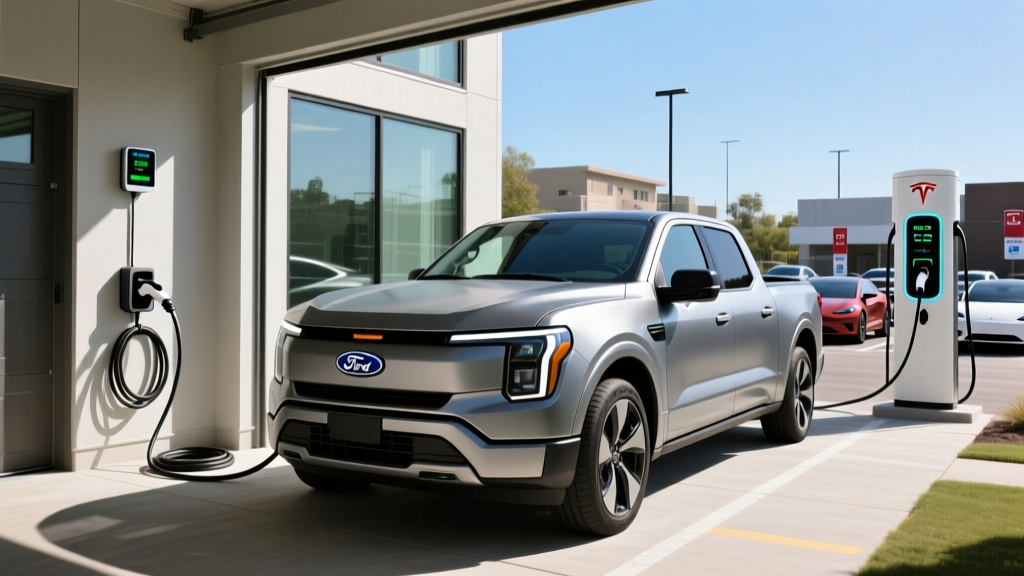
Ford made a pivotal move for the 2025 model year: the F-150 Lightning switched to the NACS (North American Charging Standard) connector — the Tesla-designed plug now adopted across most of the industry. This is a major advantage for access to Tesla Supercharger stations.
| Connector | Brands Using It (Native) | DC Fast Network Access |
|---|---|---|
| NACS (Tesla plug) | Tesla, Ford (2025+), GM (2025+), Rivian, Hyundai (2025+), Volvo, Polestar | Tesla Supercharger, Electrify America (new stalls), EVgo (select) |
| CCS1 | Ford (2022–2024 Lightning), VW, BMW, Hyundai (pre-2025), Kia, Stellantis | Electrify America, EVgo, ChargePoint DC, Ionity (EU) |
| CHAdeMO | Nissan Leaf (legacy), Mitsubishi Outlander PHEV | Limited — being phased out |
Adapter needs: If you own a 2022–2024 F-150 Lightning with a CCS1 port, Ford provides a complimentary NACS adapter to access Tesla Superchargers. For 2025+ models with native NACS, you may need a CCS adapter (approximately $200–$250) to use older Electrify America or EVgo stations still equipped with CCS-only cables. Always verify adapter compatibility with your specific model year before purchasing.
Cost to Charge: Home Electricity vs. Public DC Fast vs. Gasoline
One of the strongest ownership arguments for the F-150 Lightning is fuel cost savings — but only if you charge smart. Here's what it actually costs to "fill up.Using a national average electricity rate of $0.16/kWh and a gas price of $3.40/gallon:
| Scenario | Cost per kWh or Gallon | Cost per Mile (Lightning Ext Range) | Cost per Mile (Gas F-150 4x4, 20 MPG) |
|---|---|---|---|
| Home Off-Peak Charging | $0.10–$0.13/kWh | $0.04–$0.05 | $0.17 |
| Home Standard Rate | $0.16/kWh | $0.06–$0.07 | $0.17 |
| Public Level 2 (ChargePoint, etc.) | $0.25–$0.40/kWh | $0.10–$0.16 | $0.17 |
| DC Fast Charging (EA, EVgo, Tesla) | $0.35–$0.55/kWh | $0.14–$0.22 | $0.17 |
Annual fuel savings estimate: Driving 12,000 miles/year and charging primarily at home on off-peak rates, an F-150 Lightning Extended Range owner spends roughly $500–$650/year on electricity. A comparable gas F-150 4x4 at 20 MPG combined spends approximately $2,040/year on fuel. That's a $1,400–$1,500 annual savings — and it's where the Lightning's total cost of ownership advantage is most pronounced.
However, if you rely exclusively on DC fast charging at $0.45+/kWh, your cost per mile can exceed the gas truck. Home charging access is the economic linchpin of EV truck ownership.
Recommended Level 2 Chargers for the F-150 Lightning
Given the Lightning's large battery, you want a charger that can deliver meaningful range overnight. Here are our top picks, selected for power output, reliability, and feature set:
Ford Charge Station Pro
- Power: 19.2 kW (80A) — maximum Level 2 for Lightning
- Connector: NACS (2025+) / CCS1 (2022–2024)
- Cable Length: 25 ft
- Smart Features: FordPass integration, scheduled charging, energy management, V2H (vehicle-to-home backup power capable)
- Price: ~$1,300 (often included with Extended Range purchase)
- Best For: Maximum overnight speed, home backup power
ChargePoint Home Flex
- Power: Up to 12 kW (50A adjustable)
- Connector: NACS or CCS1 (configurable)
- Cable Length: 23 ft
- Smart Features: Wi-Fi, app scheduling, Alexa integration, amperage adjustable to match your circuit
- Price: ~$650–$700
- Best For: Flexible install on 40–60A circuits, reliable app
Tesla Wall Connector
- Power: Up to 11.5 kW (48A)
- Connector: NACS native
- Cable Length: 24 ft
- Smart Features: Wi-Fi, OTA updates, power sharing (dual units on one circuit), load management
- Price: ~$450–$500
- Best For: NACS-native 2025+ Lightning owners, budget-conscious installs
Emporia Level 2 Smart Charger
- Power: Up to 11.5 kW (48A)
- Connector: NACS or J1772 (with adapter)
- Cable Length: 24 ft
- Smart Features: Energy monitoring, solar integration, scheduling, detailed app analytics
- Price: ~$400–$450
- Best For: Solar-home owners, energy-usage tracking
Safety, Code, and Installation Best Practices
A Level 2 charger for the F-150 Lightning draws sustained, high-amperage current for hours. This isn't a phone charger — it's more akin to a continuous-duty electric furnace. Proper installation isn't just about code compliance; it's about fire safety and long-term reliability.
- Dedicated circuit: Your EV charger must have its own dedicated breaker — never share a circuit with other major appliances.
- GFCI protection: NEC 2020 and later require GFCI (Ground Fault Circuit Interrupter) protection for outdoor receptacles. Many modern Level 2 chargers have built-in GFCI; hardwired installations may require a GFCI breaker.
- Outdoor rating: If installing outside, the charger must carry a NEMA 4 or NEMA 4X rating for weather resistance. All units listed above meet this standard.
- Hardwired vs. plug: Hardwired installations (no plug, direct wire to the unit) are preferred for circuits above 50A. They eliminate the failure point of a receptacle and are required by code for 80A continuous loads in most jurisdictions.
- Load management: If your panel is near capacity, consider a smart load-management system (such as the Emporia or Tesla Power Sharing) that dynamically adjusts charger amperage based on other household loads.
Always hire a licensed electrician who has experience with EV charger installations. Ask for a load calculation and permit before work begins. Per the National Electrical Code, unpermitted electrical work can void insurance coverage and create serious safety hazards.
Frequently Asked Questions
How much does it cost to install a home EV charger for the F-150 Lightning?
A straightforward installation with a 60-amp circuit near your electrical panel typically costs $850–$1,700 including equipment, labor, materials, and permits. Complex installations requiring long wire runs, conduit, or a panel upgrade can range from $3,150–$7,800. The Ford Charge Station Pro (80A) demands a 100-amp circuit, which increases cost and may require a panel upgrade in older homes.
How fast will each charging level add range to my F-150 Lightning?
Level 1 (120V) adds approximately 2–3 miles per hour — impractical for daily use on a truck this size. Level 2 at 10.5 kW adds roughly 19 miles per hour; at 19.2 kW, it adds approximately 34 miles per hour. DC fast charging at peak rates can add 100+ miles in 15–20 minutes, but speed tapers significantly above 80% state of charge.
Which connector does the F-150 Lightning use?
The 2025–2026 F-150 Lightning uses the NACS (North American Charging Standard) connector natively, granting direct access to Tesla Superchargers. The 2022–2024 models use CCS1, but Ford provides a NACS adapter for Supercharger access. For older CCS-only public stations, 2025+ owners may need a CCS adapter (~$200–$250).
How much does charging cost per mile compared to gas?
Charging at home on off-peak electricity ($0.10–$0.13/kWh) costs approximately $0.04–$0.05 per mile in the Extended Range Lightning. A comparable gas F-150 4x4 at 20 MPG costs roughly $0.17 per mile at $3.40/gallon. However, DC fast charging at $0.45–$0.55/kWh can push EV costs to $0.14–$0.22 per mile — sometimes exceeding gas. Home charging is essential for the cost advantage.
What electrical upgrades might I need for a home charger?
Most modern homes with 200-amp panels can accommodate a 60-amp EV circuit without upgrades. Older homes with 100-amp service, or homes with significant existing electrical loads (electric heat, tankless water heater, dual ovens), may need a panel upgrade to 200A or 325A, costing $1,500–$4,000. A licensed electrician should perform a load calculation to determine your specific needs before purchasing a charger.
Does the F-150 Lightning qualify for the federal EV tax credit?
The F-150 Lightning may qualify for up to $7,500 under IRS §30D, but eligibility depends on the buyer's modified adjusted gross income (caps at $150K single / $300K joint), the truck's MSRP (must be under $80,000 for trucks), and battery-component/critical-mineral sourcing requirements that change annually. As of 2025–2026, the credit can be transferred to the dealer as a point-of-sale discount. Always verify current eligibility on IRS.gov and consult a tax professional.