Electric Escalade Range and Efficiency: What the Numbers Mean
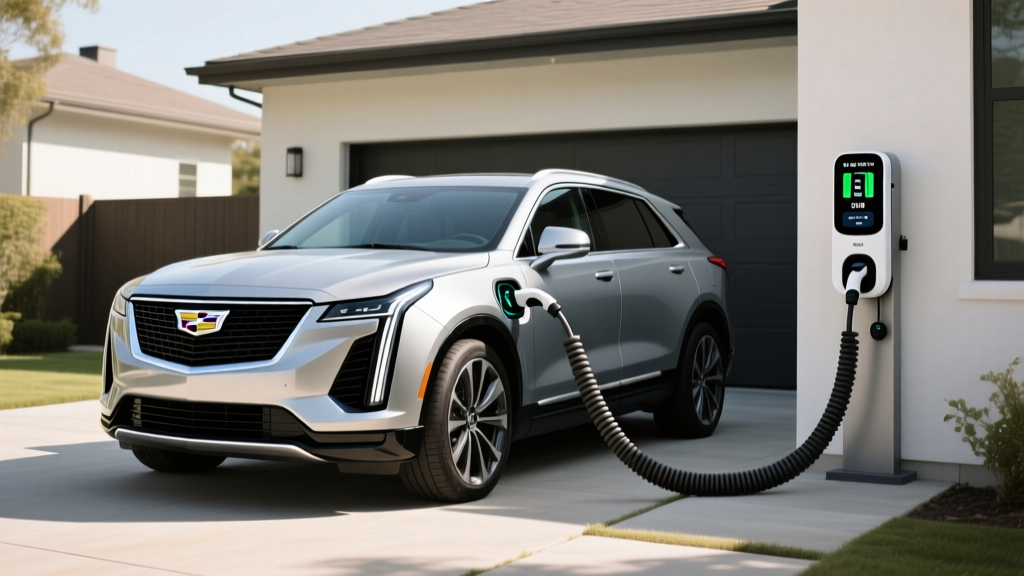
If you're researching the electric Escalade range, you're likely looking at the Cadillac Escalade IQ — GM's full-size luxury EV SUV built on the Ultium platform. The headline figure is impressive: up to 460 miles of EPA-estimated range on the Luxury and Sport trims equipped with the largest battery pack. But as with any large EV, real-world results depend heavily on how and where you drive.
EPA estimate: 460 miles (Luxury/Sport, 24-inch wheels). Expect ~370–410 miles on sustained highway driving at 70+ mph, and ~300–350 miles in sub-freezing winter conditions. The Escalade IQ's massive battery helps offset the aerodynamic penalty of a full-size SUV, but physics still applies. Source: fueleconomy.gov.
| Spec | Value |
|---|---|
| Battery (usable) | ~200 kWh (NCMA, Ultium) |
| EPA Range | Up to 460 mi (varies by trim/wheels) |
| Peak DC Fast Charge | ~350 kW (800V architecture) |
| 10–80% DC Fast Charge | ~20 minutes (est.) |
| Level 2 Charge Rate | 11.5 kW (onboard charger) |
| Horsepower | Up to 750 hp (AWD) |
| 0–60 mph | ~3.5 sec (est.) |
| Starting MSRP | ~$129,990 (Luxury 1) |
| Battery/Powertrain Warranty | 8 yr / 100,000 mi |
Charging Levels Explained: How Fast Can You Add Range?
Understanding charging speeds is the foundation of EV ownership. The critical distinction: kW (kilowatts) measures the rate of power delivery — how fast energy flows into the battery. kWh (kilowatt-hours) measures total energy stored — the battery's capacity. Think of kW as the flow rate of a hose and kWh as the size of the tank.
| Level | Voltage / Amps | Max Power (kW) | Miles of Range Added per Hour | 10–80% Time (approx.) |
|---|---|---|---|---|
| Level 1 (120V outlet) | 120V / 12A | ~1.4 kW | ~3–4 mi/hr | Not practical (90+ hrs) |
| Level 2 (240V home/public) | 240V / 48A | 11.5 kW | ~30–35 mi/hr | ~14–16 hrs |
| DC Fast Charging | 800V architecture | ~350 kW (peak) | ~700+ mi/hr (peak) | ~20 min |
The charge-curve reality: That 350 kW peak only applies at low states of charge (roughly 10–30%). As the battery fills, the onboard battery management system tapers the charge rate to protect the cells. Expect the rate to drop to ~150 kW around 60% SoC and further to ~50 kW above 85%. This is why manufacturers quote 10–80% times rather than 0–100%.
Home Charger Installation: Requirements, Costs, and Gotchas
For a vehicle with a ~200 kWh battery like the Escalade IQ, a robust Level 2 home charger is essential. Level 1 (standard 120V outlet) is effectively useless — it would take days to fill the battery. Here's what a proper Level 2 installation involves.
Electrical Requirements
The Escalade IQ's onboard charger accepts up to 11.5 kW, which requires a 240V circuit at 48 amps (a 60-amp breaker, since electrical code requires circuits to be rated at 125% of continuous load). This is a significant draw — comparable to running a large electric oven or clothes dryer continuously.
Do You Need a Panel Upgrade?
This is the question that catches many homeowners off guard. If your home has a 100-amp electrical panel (common in homes built before the 1990s), adding a 60-amp EV circuit will likely require a panel upgrade to 200 amps. Even some 200-amp panels may lack spare capacity if you already have electric heating, a pool, or other high-draw appliances. A licensed electrician will perform a load calculation to determine if your panel can handle the additional circuit.
| Component | Low Estimate | High Estimate |
|---|---|---|
| Level 2 Charger (hardware) | $400 | $750 |
| Electrician labor (simple install, panel nearby) | $500 | $1,200 |
| Permit & inspection | $100 | $300 |
| Conduit/wiring (long runs, wall penetration) | $200 | $800 |
| Panel upgrade (if needed — 100A to 200A) | $1,500 | $3,500 |
| Total (without panel upgrade) | $1,200 | $3,050 |
| Total (with panel upgrade) | $2,700 | $6,550 |
Pro tip: The federal Alternative Fuel Vehicle Refueling Property Credit (IRS Form 8911) may cover up to 30% of home charging equipment and installation costs, capped at $1,000, subject to census-tract eligibility. Check with a tax professional for your specific situation.
Connector Compatibility: NACS, CCS, and the Adapter Landscape
The Cadillac Escalade IQ ships with a NACS (North American Charging Standard) port — the Tesla-designed connector that GM adopted across its lineup starting with the 2025 model year. This is a significant advantage: it means native access to the Tesla Supercharger network without an adapter, in addition to any third-party networks that have added NACS connectors.
| Connector | Native Support? | Networks Available | Adapter Needed? |
|---|---|---|---|
| NACS (J3400) | Yes (native) | Tesla Supercharger, Electrify America (newer stations), EVgo, ChargePoint | None |
| CCS1 | No | Legacy Electrify America, older ChargePoint/Shell stations | NACS-to-CCS adapter (~$200–$300) |
| CHAdeMO | No | Declining; mostly Nissan Leaf legacy | Not recommended |
| J1772 (Level 2 AC) | Adapter included | Public Level 2 stations, home chargers with J1772 cables | NACS-to-J1772 (often included) |
Practical advice: Carry a NACS-to-CCS adapter ($200–$300 from Tesla or Lectron) for road trips through areas where older CCS-only chargers are still common. The CHAdeMO standard is effectively dead for new vehicles — don't invest in it.
Cost to Charge: Home vs. Public vs. Gas Comparison
One of the strongest ownership arguments for the Escalade IQ is the per-mile fuel cost advantage — but only if you charge smartly. Here's how the numbers shake out.
| Scenario | Rate | Cost per Mile | Full "Tank" Cost |
|---|---|---|---|
| Home (off-peak utility rate) | $0.12/kWh | $0.048 | ~$24 (200 kWh) |
| Home (standard rate) | $0.18/kWh | $0.072 | ~$36 |
| Public Level 2 | $0.30/kWh | $0.12 | ~$60 |
| DC Fast Charger | $0.48/kWh | $0.19 | ~$96 |
| Gas Escalade (16 MPG, $3.60/gal) | $3.60/gal | $0.225 | ~$54 (24-gal tank) |
The bottom line: Charging at home on off-peak rates saves roughly $3,500–$5,000 over 5 years / 75,000 miles compared to a gas Escalade. But if you rely exclusively on DC fast charging, the cost advantage nearly disappears — and you may actually pay more per mile than gas. Home charging access is the economic linchpin.
Recommended Home Chargers for the Escalade IQ
With an 11.5 kW onboard charger, you want a Level 2 unit that can deliver at least 48 amps (11.5 kW) to maximize your overnight charge. Here are three proven options for 2026:
ChargePoint Home Flex
Power: Up to 11.5 kW (48A, adjustable down to 16A)
Connector: NACS (native) or J1772
Cable length: 23 ft
Smart features: Wi-Fi, app scheduling, Alexa, energy tracking
Price: ~$599 (NACS version)
Best for: Flexible amperage settings if your panel is tight on capacity.
Tesla Wall Connector (J3400/NACS)
Power: Up to 11.5 kW (48A)
Connector: NACS native
Cable length: 24 ft
Smart features: Wi-Fi, OTA updates, Power-Share (dual-unit load balancing)
Price: ~$475
Best for: Lowest cost, seamless integration with GM's NACS port.
Emporia Vue Level 2 Charger
Power: Up to 11.5 kW (48A)
Connector: J1772 (adapter to NACS needed)
Cable length: 24 ft
Smart features: Whole-home energy monitoring integration, solar-aware charging, app control
Price: ~$399
Best for: Homes with solar panels or those wanting detailed energy analytics.
Safety, Code, and Installation Best Practices
A Level 2 charger pulling 48 amps for hours is one of the largest continuous loads in your home. Cutting corners here is a fire risk. Here's what proper installation requires:
- Dedicated circuit: The charger must have its own 60-amp breaker — never shared with other appliances.
- GFCI protection: NEC 2023 and later require GFCI (ground-fault circuit interrupter) protection for EV outlets in garages. Hardwired installations may exempt you from this requirement in some jurisdictions — check local code.
- Outdoor rating: If installing outside, use a charger rated NEMA 4 (weatherproof). Indoor units are typically NEMA 3R or 4.
- Wire gauge: A 60-amp circuit requires 6 AWG copper wire (or 4 AWG aluminum) for runs up to ~50 feet. Longer runs may need thicker wire to minimize voltage drop.
- Permit and inspection: Most jurisdictions require an electrical permit ($100–$300) and a post-installation inspection. Don't skip this — it protects you and is required for insurance claims.
- Hardwired vs. plug: Hardwired installations (no receptacle) are generally more reliable and avoid the NEMA 14-50 outlet loosening over time. However, a plug-in setup lets you take the charger when you move.
Homes built before 1990 with 100-amp panels will almost certainly need a panel upgrade ($1,500–$3,500) to support a 60-amp EV circuit. Even some 200-amp panels may be at capacity. Always get a professional load calculation before purchasing equipment. Some utilities offer rebates for panel upgrades tied to EV adoption — check with your local provider.
Public Charging Strategy for the Escalade IQ
With a ~200 kWh battery, the Escalade IQ can absorb energy at up to 350 kW on a compatible DC fast charger — but only if the station can deliver it. Here's what to prioritize on road trips:
- Tesla Supercharger V4 stations: Now open to NACS-equipped GM vehicles. V4 stalls deliver up to 350 kW and feature pull-through designs for vehicles towing trailers.
- Electrify America Hyperchargers: 350 kW capable; newer stations include NACS cables alongside CCS.
- Precondition the battery: Navigate to a charger using the Escalade IQ's built-in navigation. The thermal management system will warm the battery to optimal temperature, significantly improving charge speed — especially in cold weather.
- Don't charge above 80% on DC: The charge curve tapers sharply above 80%. If you need the last 20%, it's faster and cheaper to top off at your destination on Level 2.
Frequently Asked Questions
How much does it cost to install a home EV charger for the Escalade IQ?
Expect $1,200–$3,050 for a standard Level 2 installation if your electrical panel has sufficient capacity. If a panel upgrade from 100A to 200A is needed, add $1,500–$3,500, bringing the total to $2,700–$6,550. Always get a licensed electrician's load calculation first.
How fast will each charging level add range to the Escalade IQ?
Level 1 (120V) adds roughly 3–4 miles per hour — not practical for a 200 kWh battery. Level 2 (240V, 48A) adds about 30–35 miles per hour, filling the battery overnight in ~14–16 hours. DC fast charging at 350 kW can add 10–80% in approximately 20 minutes.
Which connector does the Escalade IQ use?
The Escalade IQ has a native NACS (J3400) port, giving it direct access to Tesla Superchargers and an expanding number of third-party networks. For older CCS-only chargers, a NACS-to-CCS adapter (~$200–$300) is recommended for road trips.
How much does charging the Escalade IQ cost per mile vs. gas?
At home on off-peak rates ($0.12/kWh), the Escalade IQ costs about $0.048 per mile — roughly one-quarter the cost of a gas Escalade at $0.225/mile. Even at standard utility rates ($0.18/kWh), you're at $0.072/mile. Public DC fast charging ($0.48/kWh) narrows the gap to $0.19/mile.
What electrical upgrades might I need for a home charger?
You'll need a dedicated 240V / 60-amp circuit with 6 AWG copper wire. Homes with 100-amp electrical panels will likely need a panel upgrade to 200 amps. Your electrician will perform a load calculation to determine if your existing panel can handle the additional draw alongside existing appliances.
Is the Escalade IQ eligible for the federal EV tax credit?
The IRS §30D clean vehicle credit offers up to $7,500, but the Escalade IQ's MSRP (~$129,990+) exceeds the $80,000 MSRP cap for SUVs. As of 2026, it does not qualify for the federal credit. However, some states offer additional incentives — check afdc.energy.gov for state-specific programs.