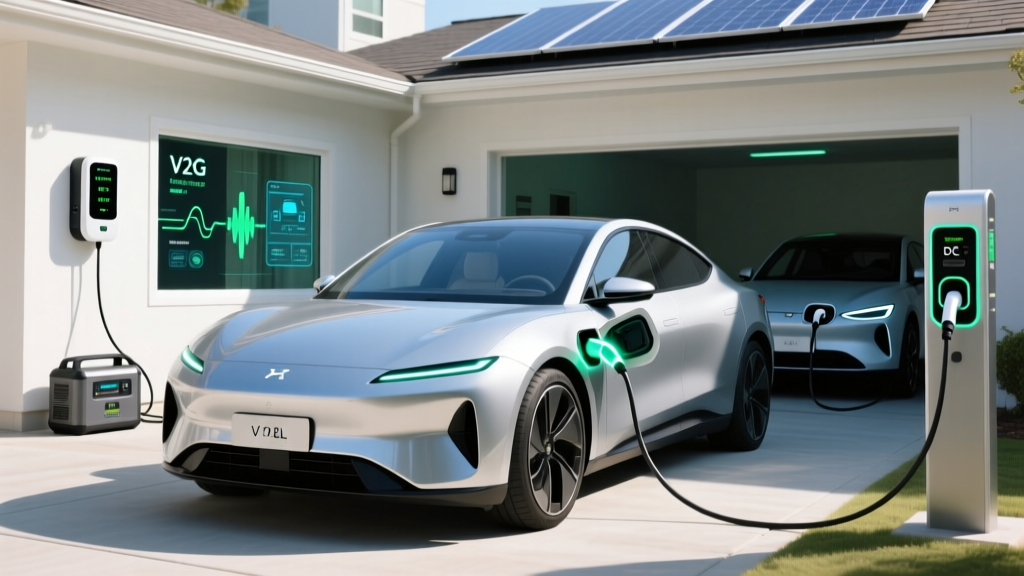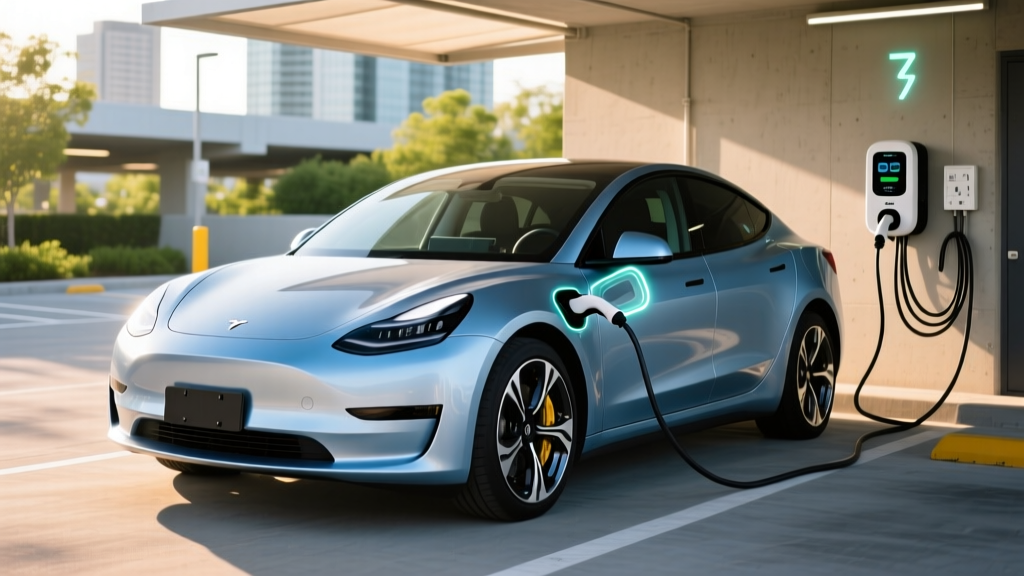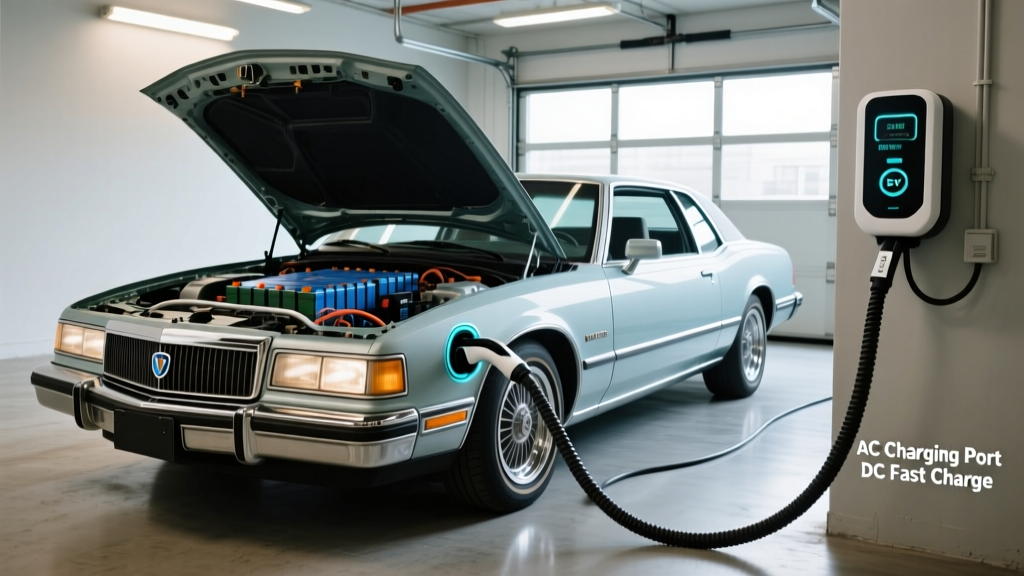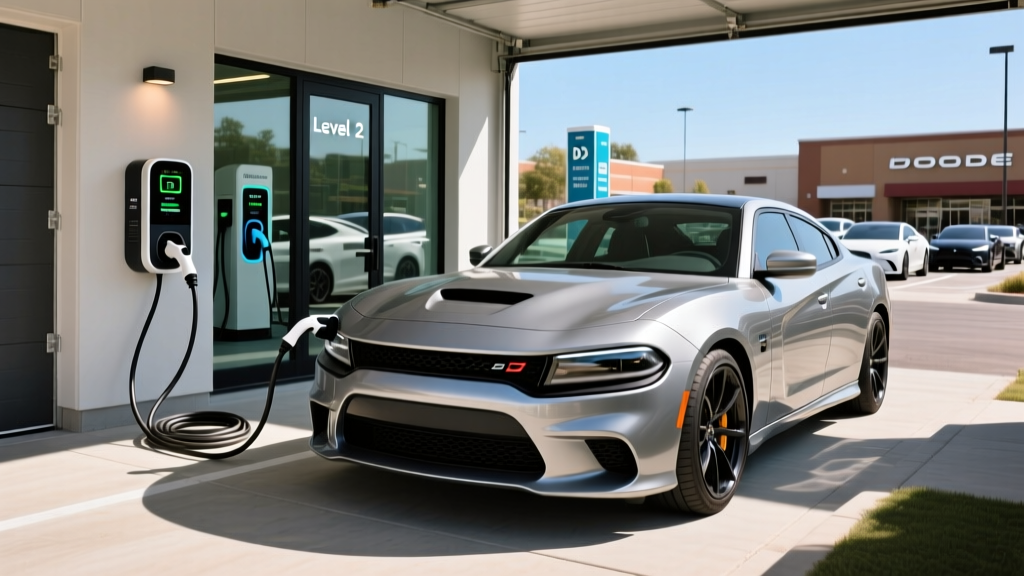
The Dodge Charger Daytona EV marks a pivotal moment for Stellantis: a muscle-car icon reborn as a battery-electric vehicle on the STLA Large platform. With its 100 kWh battery pack and available 800-volt architecture, the Charger Daytona Scat Pack delivers up to 670 horsepower and an EPA-estimated 260 miles of range. But owning an EV is only as practical as your charging strategy. Whether you're parking in a garage in Detroit or road-tripping down Route 66, this guide breaks down exactly how to charge the electric Dodge Charger Daytona — at home, on the road, and with the right equipment.
Understanding Charging Levels: How Fast Can the Charger Daytona Gain Range?
EV charging operates across three tiers, each defined by its power delivery in kilowatts (kW). Remember: kW measures power (how fast energy flows into the battery), while kWh measures energy (how much the battery holds). The Charger Daytona's 100 kWh usable battery capacity determines how long each session takes; the charger's kW output determines how quickly those kWh accumulate.
| Level | Voltage | Power (kW) | Miles Added/Hour | Best Use Case |
|---|---|---|---|---|
| Level 1 | 120V AC | 1.0–1.4 kW | ~3–5 mi/hr | Emergency top-ups, overnight trickle |
| Level 2 (Home/Public) | 240V AC | 7.2–19.2 kW | ~22–60 mi/hr | Daily home charging, workplace, shopping |
| DC Fast Charging | 400–800V DC | 50–350+ kW | ~150–600+ mi/hr (peak) | Road trips, highway corridors |
Real-world context for the Charger Daytona: On a Level 2 home charger delivering 11.5 kW (48A at 240V), a full 10–100% charge takes approximately 8.5 hours — ideal for overnight replenishment. On a 350 kW DC fast charger leveraging the 800V architecture, Dodge estimates a 10–80% charge in roughly 25 minutes, though sustained rates taper as the battery management system protects cell health above 80% State of Charge (SoC). Expect peak rates closer to 200–270 kW during the 10–50% window, slowing progressively thereafter.
Home Charging Installation: What Your Electrical Panel Needs
Installing a dedicated Level 2 home charger is the single highest-impact upgrade for EV ownership. For the Charger Daytona's 100 kWh pack, a robust Level 2 setup means waking up to a full battery every morning without relying on public infrastructure.
Electrical Requirements
A Level 2 charger requires a dedicated 240-volt circuit. For optimal charging of the Charger Daytona (which accepts up to 11.5 kW onboard), you'll need:
- Circuit: 60-amp dedicated breaker (supports a 48A continuous charger load per NEC 80% rule)
- Wire gauge: 6 AWG copper for runs up to 50 feet; 4 AWG for longer runs
- Outlet option: NEMA 14-50 receptacle (for plug-in chargers) or hardwired connection (required for some 48A+ units)
- Panel capacity: Minimum 200-amp service recommended; older homes with 100-amp panels will likely need an upgrade
Panel Upgrade Reality
If your home has a 100-amp main panel — common in houses built before the 1990s — adding a 60-amp EV circuit may exceed your panel's capacity, especially if you're already running electric dryers, ranges, or HVAC. A panel upgrade to 200 amps typically costs $1,500–$3,500 including permits and utility coordination. Some homeowners opt for a smart load-management device (like the Emporia VUE with smart breaker) to avoid a full upgrade by dynamically sharing capacity between circuits.
| Component | Cost Range | Notes |
|---|---|---|
| Level 2 Charger (Equipment) | $350–$750 | Varies by kW output and smart features |
| Electrician Labor | $500–$2,500 | Depends on run length, wall type, conduit needs |
| Permit & Inspection | $50–$300 | Required by most jurisdictions; varies by municipality |
| Panel Upgrade (if needed) | $1,500–$3,500 | 200A upgrade; not always required |
| Total (no panel upgrade) | $900–$3,550 | Typical range for most installations |
| Total (with panel upgrade) | $2,400–$7,050 | Older homes with 100A service |
Always hire a licensed electrician familiar with NEC Article 625 (EV charging system requirements). A final inspection ensures your installation meets local code and is safe for long-term use.
Connector Compatibility: NACS, CCS, and What the Charger Daytona Uses
The 2024–2026 Dodge Charger Daytona ships with a CCS1 (Combined Charging System) connector for both Level 2 AC and DC fast charging. However, the North American EV charging landscape is rapidly consolidating around Tesla's NACS (North American Charging Standard), now adopted by Ford, GM, Rivian, Volvo, and most major automakers for 2025+ models.
| Connector | AC Level 2 | DC Fast | Charger Daytona Native? | Adapter Needed? |
|---|---|---|---|---|
| CCS1 | ✓ (J1772 + DC pins) | ✓ | Yes — factory equipped | No |
| NACS (Tesla) | ✓ | ✓ | No (2024–2026 models) | Yes — CCS-to-NACS adapter for Tesla Superchargers |
| CHAdeMO | N/A | ✓ (legacy) | No | Rarely available; avoid reliance |
What this means practically: At Electrify America, EVgo, and ChargePoint DC fast stations with CCS cables, you'll plug in natively. For Tesla Supercharger access (which offers the largest fast-charging network with over 25,000 stalls in North America), you'll need a CCS-to-NACS adapter. Stellantis has indicated adapter availability through dealerships; third-party options like the Lectron or A2Z CCS-to-NACS adapters ($150–$250) also work, though verify compatibility with the Charger Daytona's specific CCS implementation before purchase.
Charging Cost Per Mile: EV vs. Gas for the Charger Daytona
The Charger Daytona R/T starts at approximately $51,990 MSRP, and the Scat Pack at roughly $59,990. Beyond the purchase price, operating cost is where EVs typically shine — but the math depends on your electricity rates and charging habits.
| Scenario | Cost per kWh or Gallon | Cost per Mile | Annual Cost (12,000 mi) |
|---|---|---|---|
| Home charging (national avg, off-peak) | $0.13/kWh | $0.04 | $468 |
| Home charging (CA/utility TOU peak) | $0.28/kWh | $0.08 | $1,008 |
| Public Level 2 (ChargePoint/EVgo) | $0.25–$0.40/kWh | $0.07–$0.12 | $840–$1,440 |
| DC Fast Charging (EA/EVgo) | $0.35–$0.55/kWh | $0.10–$0.16 | $1,200–$1,920 |
| Gas equivalent (Challenger R/T, 19 MPG combined) | $3.40/gallon | $0.18 | $2,160 |
The math: The Charger Daytona consumes approximately 34 kWh per 100 miles (roughly 98 MPGe combined per EPA estimates). At the national residential average of $0.13/kWh, home charging costs about $0.044 per mile — roughly 75% less than fueling a comparable gas-powered Challenger at $0.18/mile. Even at public DC fast-charging rates of $0.48/kWh, the EV still saves money per mile.
However, if you rely exclusively on premium DC fast charging at $0.55/kWh, your cost per mile ($0.16) approaches that of an efficient gas sedan. Home charging is where the economics decisively favor the EV.
Recommended Home Chargers for the Dodge Charger Daytona
Given the Charger Daytona's 11.5 kW onboard charger acceptance rate, you'll want a Level 2 unit that can deliver at least 48 amps (11.5 kW at 240V) to maximize overnight charging speed. Here are proven options that pair well with the Daytona's CCS port:
ChargePoint Home Flex
- Power: Up to 12 kW (50A) — adjustable via DIP switches
- Connector: J1772 (CCS-compatible for AC Level 2)
- Cable length: 23 feet
- Smart features: Wi-Fi, app scheduling, energy tracking, Alexa integration
- Price: ~$599
- Best for: Versatile amperage settings for older panels; NEMA 14-50 plug or hardwire
Emporia Vue Level 2 Charger
- Power: Up to 11.5 kW (48A)
- Connector: J1772
- Cable length: 24 feet
- Smart features: Energy monitoring with whole-home panel integration, solar-aware scheduling, load management
- Price: ~$399
- Best for: Budget-conscious buyers who want energy visibility; pairs with Emporia VUE panel monitor
Grizzl-E Smart
- Power: Up to 10 kW (40A)
- Connector: J1772
- Cable length: 24 feet
- Smart features: OCPP-compatible, app control, extreme cold-rated (-40°F)
- Price: ~$449
- Best for: Cold-climate garages; built in Canada with rugged aluminum enclosure
Wallbox Pulsar Plus (48A)
- Power: Up to 11.5 kW (48A)
- Connector: J1772
- Cable length: 25 feet
- Smart features: Wi-Fi + Bluetooth, Power Sharing for dual-charger setups, compact form factor
- Price: ~$649
- Best for: Two-EV households; smallest footprint on the market
For the Charger Daytona specifically, the ChargePoint Home Flex at 50A or the Wallbox Pulsar Plus at 48A will fully utilize the vehicle's 11.5 kW onboard charger. The Emporia is a strong value pick if you want whole-home energy monitoring alongside your charging.
Public DC Fast Charging: Road-Trip Reality for the Charger Daytona
The Charger Daytona's 800-volt architecture positions it to take advantage of the fastest DC chargers available. Here's what to expect on the road:
- At a 350 kW charger (Electrify America, Ionity): Peak rates of ~200–270 kW in the 10–40% SoC window, tapering to ~100 kW by 70%, and ~50 kW above 85%. Expect 10–80% in approximately 25–28 minutes under optimal conditions.
- At a 150 kW charger (EVgo, older EA stations): The car will accept close to the full 150 kW through the mid-range SoC. Expect 10–80% in roughly 35–40 minutes.
- At a 50 kW charger (CHAdeMO legacy or low-power CCS): A steady but slow fill. 10–80% takes approximately 90–100 minutes. Plan these stops around meals or breaks.
Charge curve reality check: Marketing materials highlight peak kW, but the sustained rate matters more. The Charger Daytona's charge curve — like all lithium-ion packs — tapers significantly above 80% SoC to protect cell longevity. If you're road-tripping, charge to 80% and go rather than waiting for a full 100%. That last 20% can take as long as the first 60%.
Safety, Permits, and Code Considerations
EV charging involves sustained high-current draw over many hours — a scenario that demands proper installation to prevent overheating, arcing, or fire risk. Key safety requirements include:
- Dedicated circuit: Your Level 2 charger must be on its own breaker — never shared with other appliances. A 48A charger requires a 60A breaker per NEC continuous-load rules (125% of rated current).
- GFCI protection: NEC 2020 and later require GFCI protection for outdoor receptacles used for EV charging. Hardwired installations may have different requirements depending on your jurisdiction.
- Outdoor rating: If your charger is mounted outside or in an open carport, ensure it carries a NEMA 4 (weatherproof) rating. All chargers listed above meet this standard.
- Permit and inspection: Most municipalities require an electrical permit for new 240V circuits. Your electrician should pull this permit; the inspection ensures the work meets code. Skipping permits can void homeowner's insurance coverage for related claims.
- Cable management: Use a retractable reel or wall hook to prevent tripping hazards and cable damage. Never run charging cables under rugs, through doorways, or across driveways without protective covers.
For the latest NEC requirements specific to EV charging, consult NFPA 70 (National Electrical Code) Article 625, and always work with a licensed electrician who carries appropriate insurance.
Frequently Asked Questions
How much does it cost to install a home EV charger for the Dodge Charger Daytona?
A typical Level 2 home installation with a 60-amp circuit runs $900–$3,550 including equipment ($350–$750), electrician labor ($500–$2,500), and permits ($50–$300). If your home needs a panel upgrade from 100A to 200A service, add $1,500–$3,500. Always get 2–3 quotes from licensed electricians.
How fast will each charging level add range to the Charger Daytona?
Level 1 (120V) adds roughly 3–5 miles per hour — useful only for emergencies. Level 2 at 11.5 kW adds approximately 35–40 miles per hour, fully replenishing the 100 kWh pack overnight in ~8.5 hours. DC fast charging at 200+ kW can add 100+ miles in 10–12 minutes during the optimal SoC window.
Which connector is compatible with the electric Dodge Charger Daytona?
The 2024–2026 Charger Daytona uses CCS1 natively for both AC and DC charging. For Tesla Supercharger access, you'll need a CCS-to-NACS adapter ($150–$250). CHAdeMO is not supported and is being phased out across North America.
How much does charging cost per mile compared to gas?
At the national average residential rate of $0.13/kWh, home charging costs about $0.04/mile — roughly 75% less than fueling a gas Challenger at $0.18/mile (19 MPG, $3.40/gal). Even public DC fast charging at $0.48/kWh ($0.14/mile) remains cheaper than gas.
What electrical upgrades might I need for a home charger?
You need a dedicated 240V circuit with a 60-amp breaker. Homes with 100-amp main panels often require a panel upgrade to 200 amps ($1,500–$3,500). Homes already on 200-amp service with available breaker slots typically need only the new circuit, wiring, and receptacle or hardwire connection.
Does the Charger Daytona qualify for the federal EV tax credit?
Under IRS §30D rules, eligibility depends on MSRP caps (vehicles must be under $55,000 for sedans), buyer income limits ($150K single / $300K joint), and battery component/critical mineral sourcing requirements. The Charger Daytona Scat Pack exceeds the $55,000 MSRP cap and does not qualify. The R/T trim may qualify depending on final MSRP and Stellantis battery sourcing compliance. Check current eligibility at IRS.gov or consult a tax professional. Point-of-sale transfer is available at participating dealers for eligible vehicles.
Can I charge the Charger Daytona in extreme cold?
Yes, but expect reduced charge acceptance rates and range. At temperatures below 20°F, lithium-ion chemistry slows ion transfer, reducing DC fast-charge peak rates by 30–50% unless the battery is preconditioned. Range can drop 20–35% in sustained sub-freezing driving. Always precondition via the vehicle's app or route planner before fast-charging sessions in cold weather.