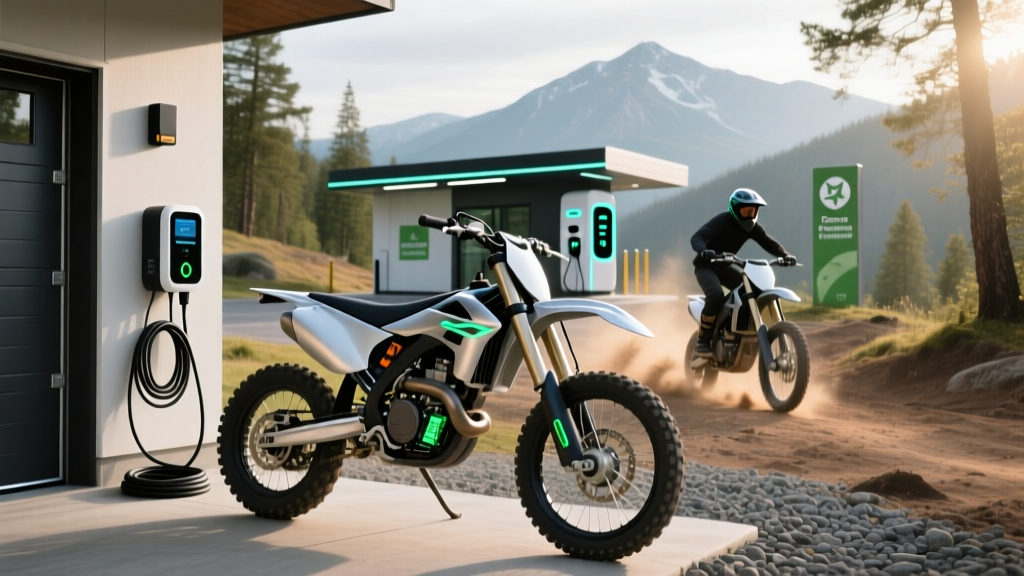
If you've just ordered the longest range electric dirt bike on the market — or you're weighing models like the KTM Freeride E-XC, Cake Kalk, Sur-Ron Ultra Bee, or the emerging 2026 crop of long-range enduro electrics — the first question after range is always charging. Unlike a Tesla or a Ford F-150 Lightning, an electric dirt bike doesn't plug into a NACS Supercharger or a 350 kW Electrify America stall. The power levels, connectors, and electrical requirements are a different ecosystem entirely, and getting them wrong can mean fried chargers, tripped breakers, or a bike that never finishes charging before your Saturday ride.
This guide breaks down exactly how to charge an electric dirt bike at home, what electrical work you might need, what it costs per mile versus a gas two-stroke, and which chargers are worth buying in 2026.
Charging Levels Explained: What kW Actually Means for a Dirt Bike
The first rule of EV charging applies to dirt bikes too: kW (kilowatts) is power — how fast energy flows. kWh (kilowatt-hours) is energy — how much the battery holds. A bike with a 6 kWh battery charging at 1 kW takes roughly 6 hours from empty. Confusing these two is the most common mistake new EV owners make.
Electric dirt bikes have much smaller batteries than cars — typically 2 kWh to 10 kWh — so even low-power chargers can refill them in a few hours. Here's how the three standard EV charging levels translate to off-road use:
| Level | Voltage | Power (kW) | Miles of Range Added per Hour | Dirt-Bike Use Case |
|---|---|---|---|---|
| Level 1 | 120V AC | 0.3–0.5 kW | ~5–10 mi/hr (bike-equivalent) | Overnight top-up, garage, cabin, no install needed |
| Level 2 | 240V AC | 0.6–1.5 kW (bike-limited) | ~15–30 mi/hr | Fast home refill, pre-ride top-off, shop use |
| DC Fast | 200–900V DC | Not applicable | N/A | Public DCFC stations do NOT support dirt bikes |
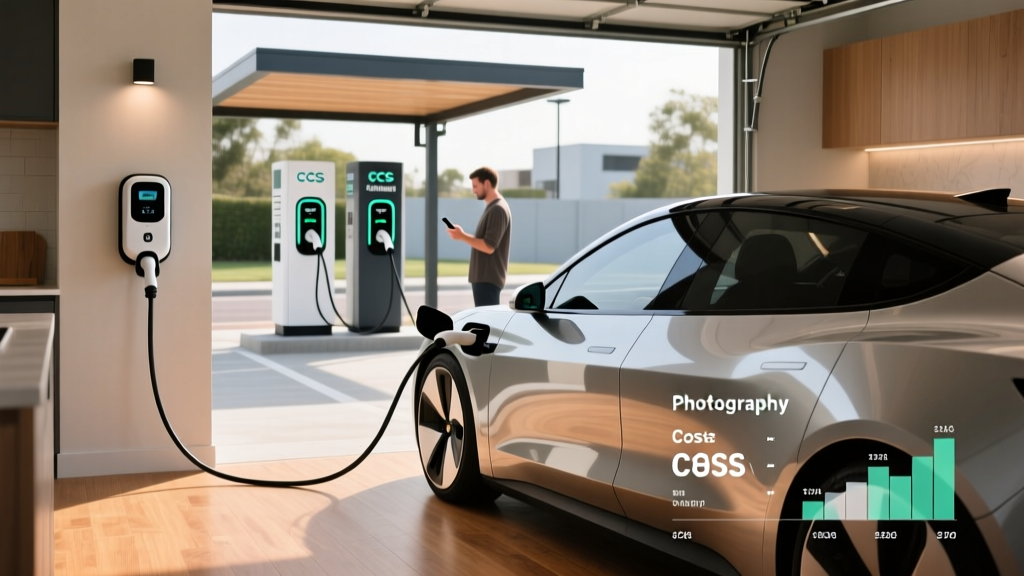
Why DC fast charging doesn't apply: Public DC fast chargers use CCS1, NACS, or CHAdeMO connectors designed for four-wheeled EVs with 40–150 kWh batteries. Electric dirt bikes charge via AC only — through a built-in onboard charger or an external brick — and use motorcycle-grade connectors (IEC 62196 Type 1/Type 2, or proprietary plugs). You cannot plug a Sur-Ron, KTM Freeride, or Cake into a Supercharger or an Electrify America CCS stall. Plan around Level 1 and Level 2.
How Much Does It Cost to Install a Home Charger for an Electric Dirt Bike?
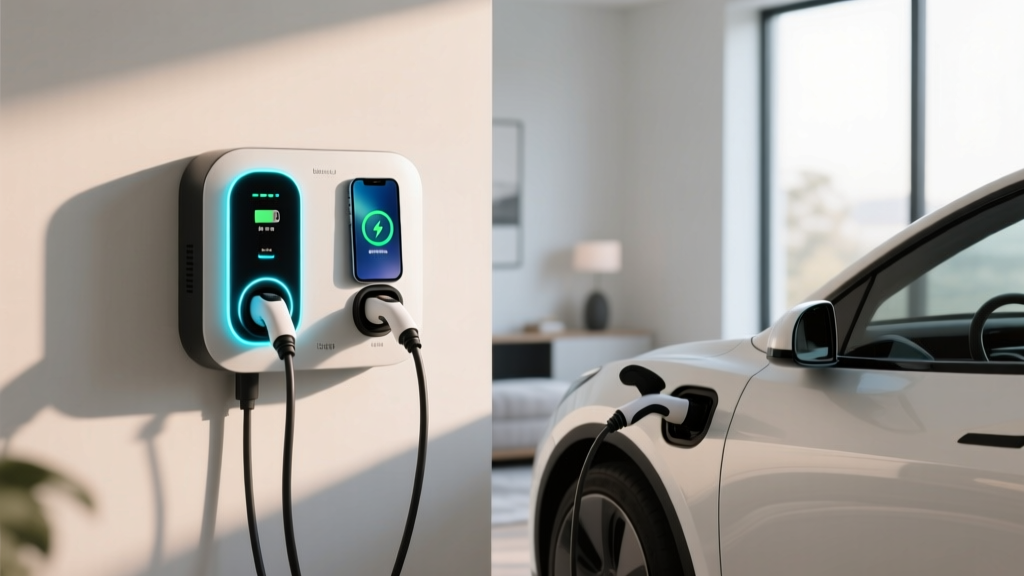
Because electric dirt bikes draw so little power compared to cars, many riders never need a dedicated 240V circuit. A standard 120V/15A garage outlet (Level 1) is usually sufficient — a 5 kWh bike will fully recharge overnight in 10–12 hours. But if you ride multiple sessions per day, want a fast turnaround between rides, or run a small fleet, a 240V Level 2 install pays off.
| Item | Typical Cost Range | Notes |
|---|---|---|
| Level 2 EVSE / smart charger (240V, 16–32A) | $350–$700 | Brands: ChargePoint Home Flex, Emporia Vue, Grizzl-E Smart |
| Electrician labor (240V/20–40A circuit run) | $500–$1,500 | Depends on panel proximity, drywall, conduit |
| Permit (municipal electrical) | $50–$200 | Required in most jurisdictions; inspection included |
| Panel upgrade (100A → 200A, if needed) | $1,500–$3,500 | Older homes with 100A service often need this |
| GFCI breaker (240V, code-required outdoors) | $80–$150 | Mandatory for outdoor installs per NEC 2023/2026 |
| Total (typical install, no panel upgrade) | $900–$2,400 | Most dirt-bike riders fall here |
| Total (with 200A panel upgrade) | $2,400–$5,900 | Older homes, rural properties |
Panel upgrade reality check: A typical electric dirt bike Level 2 install draws only 1.5–3 kW — trivial compared to a car's 7–11 kW. But if your home still runs on a 100A panel with aging breakers, the electrician may require an upgrade to meet NEC load-calculation rules, especially if you already have electric range, dryer, and AC. Get a load calculation before committing.
Connector Compatibility: What Plug Does an Electric Dirt Bike Use?
This is where electric dirt bikes diverge sharply from cars. There's no universal NACS standard here. Connector type depends on the manufacturer, region, and whether the bike uses an onboard charger or an external power brick.
| Connector / Plug | Bike Brands Using It | Adapter Needed? |
|---|---|---|
| IEC 62196 Type 2 (Mennekes) | KTM Freeride E-XC, Zero FX/FX-S, some Cake models (EU-spec) | Type 2 → J1772 adapter for US Level 2 EVSEs |
| J1772 (Type 1 AC) | Zero Motorcycles FX, some US-spec imports | Direct plug to US Level 2 chargers |
| Standard IEC C13/C14 (kettle lead) | Sur-Ron Ultra Bee, Talaria Sting, entry-level bikes with external brick | None — plugs into any 120V outlet via brick |
| Proprietary DC barrel / Anderson | Sur-Ron Light Bee, budget e-motos | Manufacturer-supplied brick only; no standard EVSE works |
| NACS / CCS1 / CHAdeMO | None (four-wheel EVs only) | N/A — dirt bikes cannot use DCFC |
Practical tip: If you're buying the longest range electric dirt bike available in 2026 and plan to charge at public Level 2 stations (say, at a trailhead parking lot with ChargePoint units), confirm the bike has a J1772 or Type 2 inlet. Bikes that rely solely on an external power brick with a C13 plug can only charge from a standard wall outlet — they cannot use public EVSEs at all.
Charging Time Examples: How Long to Refill Common E-Moto Batteries
Because dirt bike batteries are small, charging times are short even at modest power levels. Here's what to expect with real 2026 hardware:
| Battery Size (kWh) | Level 1 (120V, ~0.4 kW) | Level 2 (240V, ~1.5 kW bike-limited) | Example Bikes |
|---|---|---|---|
| 2.0 kWh | ~5 hours (0–100%) | ~1.5 hours | Sur-Ron Light Bee X |
| 4.0 kWh | ~10 hours | ~3 hours | Talaria Sting MX4 |
| 5.5 kWh | ~14 hours | ~4 hours | KTM Freeride E-XC (2026) |
| 7.2 kWh | ~18 hours | ~5 hours | Zero FX (with Power Tank) |
| 8.5 kWh | ~21 hours | ~6 hours | Long-range enduro builds (Cake Kalk variants) |
Charge curve note: Like all lithium batteries, e-moto packs charge fastest between 10–80% State of Charge (SoC) and taper sharply above 80% to protect cell health. A "4-hour" Level 2 charge may deliver 80% in 3 hours and spend the final hour topping off. If you ride daily, setting the bike's BMS (battery management system) to stop at 80% will extend pack life — same principle as a Tesla or Bolt.
Cost to Charge Per Mile vs. Gas: The Real Economics
One of the strongest arguments for the longest range electric dirt bike over a 250cc two-stroke is fuel cost. Let's run the numbers with real 2026 electricity and gas prices.
| Scenario | Electric Dirt Bike (5 kWh pack) | Gas 250cc Two-Stroke |
|---|---|---|
| Energy / fuel capacity | 5 kWh | 2.1 gallons |
| Full "tank" cost — home off-peak ($0.13/kWh) | $0.65 | — |
| Full "tank" cost — public Level 2 ($0.30/kWh) | $1.50 | — |
| Full tank cost — gas ($4.10/gal premix) | — | $8.61 |
| Real-world range per full charge/tank | ~45–60 trail miles | ~50–70 trail miles |
| Cost per mile — home charging | $0.011–$0.014 | — |
| Cost per mile — gas | — | $0.12–$0.17 |
| Savings per 1,000 trail miles | $110–$160 saved on electric | |
Over a typical riding season of 2,000–3,000 miles, home charging saves $220–$480 in fuel alone — and that's before factoring in eliminated premix oil, fewer air filter changes, and zero engine rebuilds. The U.S. Department of Energy's fueleconomy.gov offers an eGallon calculator that confirms similar savings for electric motorcycles broadly.
Equipment Recommendations: Best Chargers for Electric Dirt Bikes (2026)
Not every Level 2 EVSE is a good fit for dirt bikes. You want adjustable amperage (so you can dial down to 16A for a bike's small onboard charger), a long cable for garage flexibility, and smart scheduling for off-peak rates. Here are three proven picks:
ChargePoint Home Flex (2026 refresh)
- Power output: Up to 12 kW (50A), adjustable down to 16A
- Connector: J1772 (NACS adapter available for cars; bikes use J1772 natively or with Type 2 adapter)
- Cable length: 23 ft
- Smart features: Wi-Fi, app scheduling, Alexa, load sharing for dual units
- Price: ~$550
- Best for: Riders who also own an EV car and want one charger for both
Emporia Level 2 Smart Charger
- Power output: Up to 11.5 kW (48A), adjustable
- Connector: J1772
- Cable length: 24 ft
- Smart features: Real-time energy monitoring, solar integration, time-of-use scheduling
- Price: ~$400
- Best for: Budget-conscious riders with solar panels or TOU rate plans
Grizzl-E Smart
- Power output: Up to 10 kW (40A)
- Connector: J1772
- Cable length: 24 ft
- Smart features: OCPP-compatible, outdoor-rated (NEMA 4), extreme-temp tested (-40°F)
- Price: ~$450
- Best for: Outdoor installs, barns, unheated garages, cold-climate riders
Critical note on amperage: Most electric dirt bike onboard chargers accept only 0.6–1.5 kW from a Level 2 source, regardless of how much the EVSE can supply. A 50A ChargePoint will not charge your KTM Freeride faster than a 16A circuit if the bike's onboard charger tops out at 1.2 kW. The charger's adjustable amperage matters for safety and circuit sizing, not raw speed. Always check your bike's onboard charger spec before overspending on a high-amperage EVSE.
Safety, Electrical Code & Outdoor Install Considerations
Electric dirt bikes often live in garages, barns, or outdoor sheds — environments where electrical safety is non-negotiable. Here's what the National Electrical Code (NEC) requires and what a licensed electrician will enforce:
- Dedicated circuit: A Level 2 (240V) charger requires its own dedicated breaker — no sharing with the garage door opener, freezer, or lighting circuit.
- GFCI protection: NEC 2023 and 2026 editions require GFCI breakers for all outdoor EVSE installations and most garage installations. Budget $80–$150 for a 240V GFCI breaker.
- Outdoor rating: If the charger is mounted outside or in an open barn, the EVSE must carry a NEMA 4 (weatherproof) rating. The Grizzl-E Smart meets this; some indoor-rated units do not.
- Conduit and wire gauge: A 40A circuit typically requires 8 AWG copper wire in conduit; longer runs may need 6 AWG to prevent voltage drop. Your electrician will calculate this.
- Ventilation: Unlike gas bikes, electric dirt bikes don't emit fumes — but lithium batteries can off-gas during thermal events. Charging in a ventilated area (not a sealed closet) is best practice.
- Battery storage: Store and charge the bike away from direct sunlight and below 100°F ambient. Most BMS systems will throttle charge speed if cell temps exceed 113°F.
Always pull a permit for a 240V install. Unpermitted work can void homeowner's insurance and create liability if a fire traces back to an improper circuit.
Trail-Side & Off-Grid Charging: What's Realistic?
The "longest range" in an electric dirt bike only matters if you can recharge between sessions at the track or trailhead. Here's the reality of off-grid scenarios:
- Trailhead Level 2 stations: Some OHV parks and state trail systems now have ChargePoint or Blink units in parking lots. Bring your J1772 cable and check the PlugShare app before you ride — availability is still sparse in rural areas.
- Portable generators: A 2,000W inverter generator (Honda EU2200i, ~$1,100) can deliver ~1.5 kW continuous to a Level 1 charger brick. Expect 3–4 hours for a full charge on a 5 kWh bike. Useful for multi-day enduro events.
- Solar + battery banks: A 1 kWh portable power station (EcoFlow Delta Pro, Bluetti AC200) can top up a 2–3 kWh bike pack once before needing a recharge. Heavier setups with 200W+ solar panels can sustain trail-side charging but add 40–60 lbs of gear.
- Swap systems: Some brands (notably Cake and Sur-Ron) offer removable batteries. Carrying a spare charged pack is the fastest "refill" — 30 seconds to swap, zero charging downtime.
Frequently Asked Questions
How much does it cost to install a home EV charger for a dirt bike?
A basic Level 1 setup costs $0 if you have a standard 120V garage outlet. A dedicated 240V Level 2 install typically runs $900–$2,400 including equipment, electrician labor, and permit. If your home needs a panel upgrade (100A to 200A), add $1,500–$3,500.
How fast will each charging level add range to my electric dirt bike?
Level 1 (120V) adds roughly 5–10 trail-equivalent miles per hour of charging. Level 2 (240V, bike-limited to ~1.5 kW) adds 15–30 miles per hour. DC fast charging is not available for electric dirt bikes.
Which connector or charger is compatible with my electric dirt bike?
Check your bike's inlet: J1772 works with US Level 2 chargers directly. IEC Type 2 requires a Type 2-to-J1772 adapter. Bikes with external power bricks using a standard IEC C13 plug can only charge from 120V wall outlets and cannot use public EVSEs.
How much does charging cost per mile versus gas?
Home-charged electric dirt bikes cost roughly $0.01–$0.014 per trail mile. A gas 250cc two-stroke costs $0.12–$0.17 per mile including premix. That's a 10–12x fuel cost advantage for electric.
What electrical upgrades might I need?
Most riders need nothing beyond a standard 120V outlet. For Level 2, you'll need a dedicated 240V/20–40A circuit. Older homes with 100A panels may require a $1,500–$3,500 panel upgrade to meet NEC load-calculation requirements, especially if you also charge an EV car.
Can I charge my electric dirt bike at a Tesla Supercharger or public DCFC station?
No. Public DC fast chargers use CCS1, NACS, or CHAdeMO connectors and deliver 200–900V DC — incompatible with electric dirt bikes, which charge on AC at much lower voltages. Stick to Level 1 (120V) and Level 2 (240V) AC sources.
Will a Level 2 charger charge my bike faster than the stock brick?
Only if your bike has an onboard AC charger rated for 240V input. Many budget e-motos rely on an external power brick that accepts only 120V. In those cases, a 240V EVSE provides no speed benefit. Check your bike's spec sheet for "onboard charger" kW rating before investing.