If you're shopping for an electric vehicle or planning your first home charging setup, the sheer number of electric charging types can feel overwhelming. Between Level 1 trickle charging, 240V Level 2 wall connectors, and 350 kW DC fast chargers, each option delivers vastly different speeds, costs, and infrastructure requirements. This guide breaks down every charging type available to US EV owners in 2026, with exact power figures, real-world charge times, connector compatibility, and honest installation costs.
Before we get into the specifics, let's clear up the single most common EV terminology mistake: kW (kilowatts) measures power — how fast energy flows into your battery. kWh (kilowatt-hours) measures energy — the total capacity of your battery. Think of kW as the width of a hose and kWh as the size of the bucket. A wider hose (higher kW) fills the bucket (kWh) faster.
The Three Electric Charging Types: Speed and Range Compared
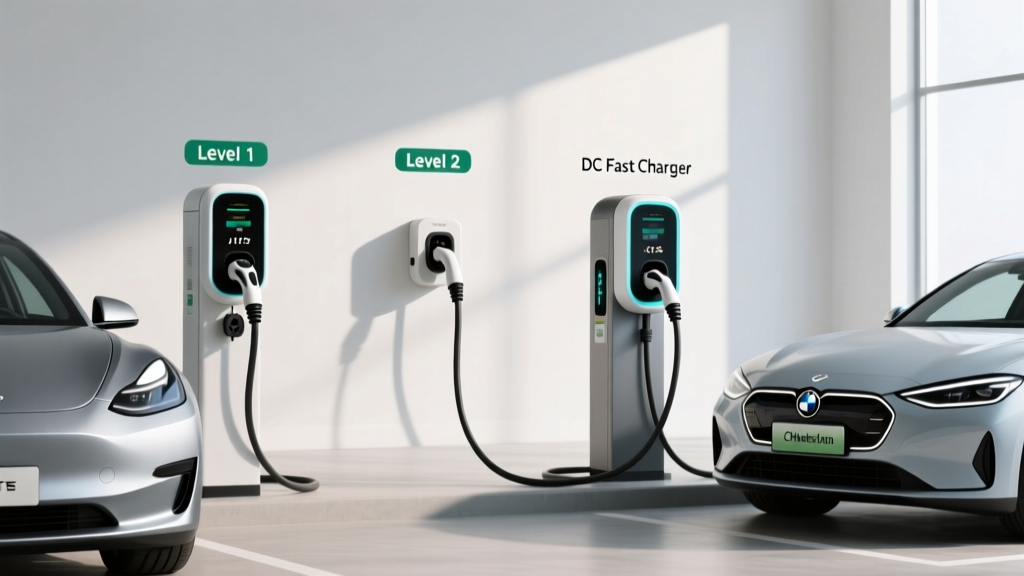
Every EV sold in the United States charges using one of three methods. Here's how they stack up in real-world performance.
| Charging Type | Voltage | Power (kW) | Miles of Range Added per Hour | Typical Use Case |
|---|---|---|---|---|
| Level 1 (120V AC) | 120V | 1.0 – 1.4 kW | 3 – 5 miles/hr | Overnight top-up, PHEVs, low-mileage drivers |
| Level 2 (240V AC) | 240V | 3.3 – 19.2 kW | 12 – 75 miles/hr | Daily home charging, workplace, destination charging |
| DC Fast Charging | 400 – 800V DC | 50 – 350 kW | 150 – 1,000+ miles/hr (peak) | Road trips, highway corridors, quick top-ups |
Level 1: The Emergency Backup
Every EV ships with a Level 1 cord that plugs into a standard 120V household outlet. At roughly 1.2 kW, it adds about 4 miles of range per hour. For a plug-in hybrid with 30 miles of electric range (like the Toyota RAV4 Prime), Level 1 can fully recharge overnight in about 8 hours. For a full-size EV with an 80+ kWh battery, Level 1 is impractical as a primary strategy — a 10% to 80% charge would take over 40 hours.
Level 2: The Daily Workhorse
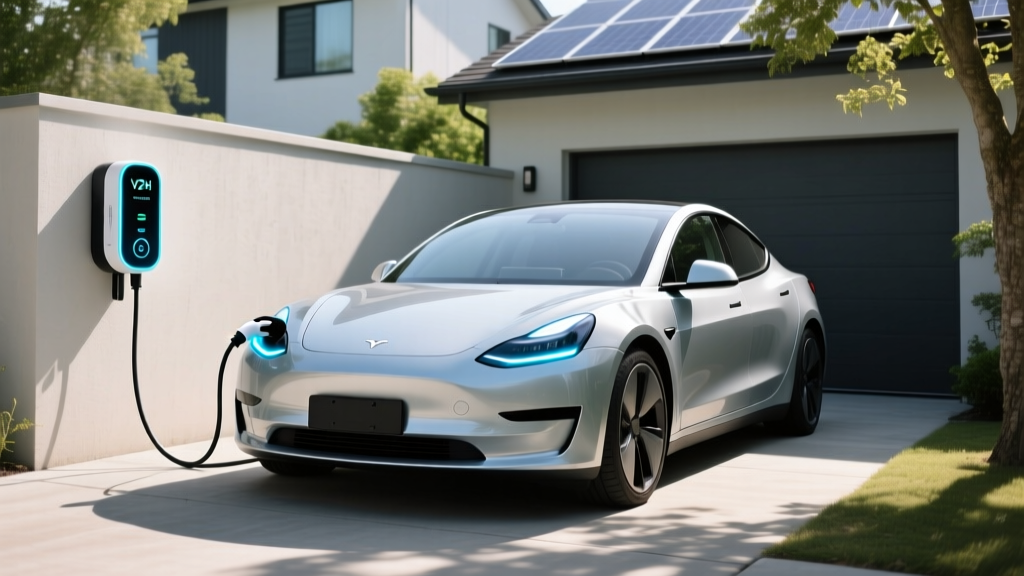
Level 2 charging at 240V is what most EV owners rely on at home. A typical 48-amp (11.5 kW) wall connector adds roughly 35–44 miles of range per hour, enough to fully recharge most EVs overnight in 6–8 hours. Most home chargers run between 32A (7.7 kW) and 48A (11.5 kW), though some hardwired units reach 64A (15.4 kW) or even 80A (19.2 kW) for vehicles with large onboard chargers like the Ford F-150 Lightning Extended Range.
DC Fast Charging: Road-Trip Essential
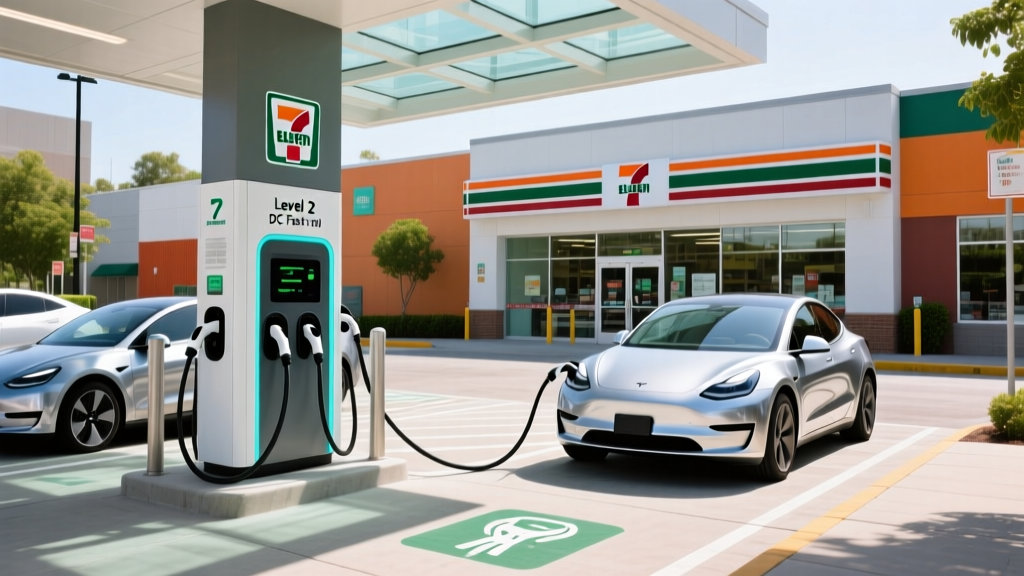
DC fast chargers bypass the vehicle's onboard charger and deliver direct current straight to the battery at 50–350 kW. On a 350 kW Electrify America or Tesla Supercharger V4 station, a Hyundai Ioniq 5 (84 kWh battery, 800V architecture) can charge from 10% to 80% in approximately 18 minutes, peaking near 240 kW. However, peak rates aren't sustained — charging speed tapers significantly above 80% State of Charge to protect battery health. Most road-trip charging happens in the 10–80% window for this reason.
Connector Compatibility: NACS, CCS1, and CHAdeMO
Not all EV plugs are the same, and the connector landscape has shifted dramatically since Tesla opened its North American Charging Standard (NACS) to the industry. Here's where things stand in 2026.
| Connector | Brands Using It (2026) | Max DC Fast Charge Power | Notes |
|---|---|---|---|
| NACS (Tesla) | Tesla, Ford, GM, Rivian, Volvo, Polestar, Mercedes-Benz, Hyundai, Kia, BMW, Nissan, Fisker, Lucid | Up to 350 kW (V4 Supercharger) | Now the dominant US standard; smaller, lighter connector. Most legacy CCS vehicles need a NACS adapter. |
| CCS1 (Combo) | Volkswagen ID.4 (older models), legacy Stellantis EVs, some older Hyundai/Kia models | Up to 350 kW | Being phased out on new models; still widely available at Electrify America and third-party networks. |
| CHAdeMO | Nissan LEAF (legacy), Mitsubishi Outlander PHEV | Up to 100 kW | Effectively discontinued for new vehicles; declining station availability. |
Adapter reality: If you own a vehicle with a CCS1 port, Tesla sells a CCS-to-NACS adapter (roughly $250) that grants access to the Supercharger network. Ford and GM also include NACS adapters with certain model years. Confirm your vehicle's native port before purchasing any adapter — using an undersized adapter on a high-power station can bottleneck your charge speed.
Home EV Charger Installation: Costs, Electrical Requirements, and Panel Upgrades
Installing a Level 2 home charger is the single biggest ownership decision you'll make after buying the car. Costs vary enormously depending on your home's electrical panel, the distance from the panel to your garage or driveway, and local permitting.
Electrical Requirements
A standard Level 2 home charger requires a dedicated 240V circuit. Here are the most common configurations:
- 32A charger: Requires a 40A breaker (NEC requires 125% headroom for continuous loads)
- 40A charger: Requires a 50A breaker
- 48A charger: Requires a 60A breaker
- 64A charger: Requires an 80A breaker (less common in residential)
Most homes with a 200A electrical panel can accommodate a 40A–60A EV circuit without a panel upgrade, provided there's available capacity. Older homes with 100A service often need a panel upgrade or a load-management device that throttles the charger when other major appliances are running.
Installation Cost Breakdown
| Cost Component | Low End | Typical | High End |
|---|---|---|---|
| Level 2 charger (hardware) | $300 | $500 | $750 |
| Electrician labor (short run, <25 ft) | $400 | $800 | $1,500 |
| Permit and inspection | $50 | $150 | $350 |
| Panel upgrade (if needed, 100A → 200A) | $1,500 | $2,500 | $4,500 |
| Total (no panel upgrade) | $750 | $1,450 | $2,600 |
| Total (with panel upgrade) | $2,250 | $3,950 | $7,100 |
The distance from your electrical panel to the charger location is the biggest variable in labor cost. A garage installation with the panel on the same wall might cost $400–$600 in labor. Running conduit 60+ feet to a detached garage or driveway pedestal can push labor past $2,000.
Federal incentive: The IRS §30D alternative fuel vehicle refueling property credit covers up to 30% of home charger installation costs (hardware + labor), capped at $1,000, for installations in eligible census tracts. Check IRS guidelines for your eligibility, as tract qualification and income limits apply. Always consult a tax professional before claiming.
Level 2 Charger Recommendations: What to Buy in 2026
Not all Level 2 chargers are equal. Here are proven picks based on power output, build quality, smart features, and connector type.
Tesla Wall Connector
- Power: Up to 11.5 kW (48A)
- Connector: NACS native
- Cable length: 24 ft
- Smart features: Wi-Fi, OTA updates, power sharing between units
- Price: ~$475
- Best for: Tesla and NACS-equipped owners
ChargePoint Home Flex
- Power: Up to 12 kW (50A), configurable 16A–50A
- Connector: NACS or J1772 (CCS adapter available)
- Cable length: 23 ft
- Smart features: Wi-Fi, app scheduling, Alexa integration, energy tracking
- Price: ~$599
- Best for: Multi-EV households, flexible amperage
Emporia Vue Level 2
- Power: Up to 11.5 kW (48A)
- Connector: J1772 (NACS adapter included)
- Cable length: 24 ft
- Smart features: Whole-home energy monitoring, solar integration, load management
- Price: ~$399
- Best for: Budget-conscious, solar homes
Grizzl-E Smart
- Power: Up to 10 kW (40A)
- Connector: J1772 (NACS adapter available)
- Cable length: 24 ft
- Smart features: Wi-Fi, OCPP compatibility, extreme cold rated (-40°F)
- Price: ~$449
- Best for: Cold climates, outdoor installs
For hardwired installations (recommended over NEMA 14-50 outlets for reliability and higher amperage), ensure your electrician uses a dedicated circuit with proper conduit. Hardwired units avoid the common failure point of a loose or overheated receptacle.
Charging Cost Per Mile: EV vs. Gas in 2026
One of the strongest arguments for EVs is lower fueling cost — but the savings depend heavily on how and where you charge. Here's a realistic comparison using national averages.
| Charging Scenario | Rate ($/kWh) | Cost to Add 200 Miles* | Cost Per Mile |
|---|---|---|---|
| Home Level 2 (national avg residential rate) | $0.16 | $10.24 | $0.051 |
| Home Level 2 (off-peak utility rate) | $0.08 | $5.12 | $0.026 |
| Public Level 2 (ChargePoint, EVgo) | $0.30 | $19.20 | $0.096 |
| DC Fast Charging (Tesla Supercharger avg) | $0.35 | $22.40 | $0.112 |
| DC Fast Charging (Electrify America peak) | $0.48 | $30.72 | $0.154 |
| Gasoline (28 MPG avg, $3.40/gal) | — | $24.29 | $0.121 |
*Based on a vehicle averaging 3.2 miles per kWh (typical midsize EV like the Tesla Model Y or Hyundai Ioniq 5). Actual efficiency varies by vehicle, temperature, and driving style. Source: fueleconomy.gov.
Home charging on an off-peak rate delivers the best economics — roughly one-quarter the per-mile cost of gasoline. Even at DC fast-charging rates, most EVs still undercut gas on a per-mile basis, though the gap narrows significantly at peak-rate stations. If you rely exclusively on public DC fast charging, your fuel savings may be negligible compared to an efficient hybrid.
Safety, Code Compliance, and Common Installation Mistakes
EV charging draws sustained high current for hours — this isn't like plugging in a dryer that cycles on and off. The National Electrical Code (NEC) treats EV charging as a continuous load, meaning the circuit must be rated for 125% of the charger's maximum draw. A 48A charger needs a 60A breaker and wire rated for 60A continuous use.
Key safety and code requirements to verify with your licensed electrician:
- Dedicated circuit: Your EV charger must have its own breaker — no shared circuits with other appliances.
- GFCI protection: NEC 2023 and later require GFCI protection for all EV charging outlets. Hardwired installations may have different requirements depending on local code.
- Outdoor rating: If your charger is mounted outside, it must carry a NEMA 4 or IP65+ weather rating. All recommended chargers above meet this standard.
- NEMA 14-50 receptacle considerations: If using a plug-in charger rather than hardwired, use an industrial-grade receptacle (Hubbell or Bryant, ~$80–$120) rather than a residential-grade one. Cheap 14-50 outlets have been linked to overheating and melting under sustained EV loads.
- Load calculation: Your electrician should perform a whole-home load calculation before adding an EV circuit. If your panel is near capacity, options include a panel upgrade, a smart load-management device (like the Emporia VUE or Span panel), or reducing charger amperage.
Charge Time Examples for Common EV Battery Sizes
How long does each charging type actually take? Here are 10% to 80% charge times for representative EVs across popular battery sizes.
| Vehicle (Battery Size) | Level 1 (1.2 kW) | Level 2 (11.5 kW / 48A) | DC Fast (Peak Rate) |
|---|---|---|---|
| Toyota RAV4 Prime PHEV (18.1 kWh) | ~10 hrs | ~1.5 hrs | N/A (no DC fast) |
| Tesla Model Y LR (75 kWh usable) | ~44 hrs | ~5.5 hrs | ~25 min (250 kW peak) |
| Hyundai Ioniq 5 (84 kWh usable) | ~49 hrs | ~6 hrs | ~18 min (240 kW peak, 800V) |
| Ford F-150 Lightning Ext. (131 kWh usable) | ~77 hrs | ~10 hrs (at 19.2 kW: ~6 hrs) | ~41 min (150 kW peak) |
| Chevrolet Equinox EV (85 kWh usable) | ~50 hrs | ~6.5 hrs | ~30 min (150 kW peak) |
These times assume a preconditioned battery at optimal temperature. In cold weather (below 32°F), expect Level 2 times to increase 10–20% due to battery heating, and DC fast charge times to increase 20–40% unless the vehicle has preconditioned the battery via navigation-routed charging.
Frequently Asked Questions
How much does it cost to install a home EV charger?
A typical Level 2 home charger installation costs between $750 and $2,600 when no panel upgrade is needed, covering the charger hardware ($300–$750), electrician labor ($400–$1,500), and permits ($50–$350). If your home needs a 200A panel upgrade, add $1,500–$4,500. The federal alternative fuel refueling credit (§30D) may cover up to 30% of costs (max $1,000) in qualifying census tracts — verify at irs.gov.
How fast will each charging level add range?
Level 1 adds 3–5 miles per hour. Level 2 at 48A (11.5 kW) adds roughly 35–44 miles per hour depending on vehicle efficiency. DC fast charging at 150–350 kW can add 150–1,000+ miles per hour at peak, but only for a portion of the session — the charge curve tapers significantly above 50–60% State of Charge.
Which connector and charger is compatible with my EV?
Most 2025–2026 model-year EVs now use the NACS connector (Tesla standard). Vehicles with legacy CCS1 ports can access Tesla Superchargers using a manufacturer-supplied or aftermarket NACS adapter. CHAdeMO is limited to older Nissan LEAF and Mitsubishi models. For home Level 2 charging, match your charger's connector to your vehicle's port — or use a certified adapter rated for your vehicle's maximum AC charge rate.
How much does charging cost per mile vs. gas?
Home Level 2 charging at the national average rate ($0.16/kWh) costs about $0.05 per mile in a typical midsize EV. Gasoline at $3.40/gallon in a 28 MPG vehicle costs about $0.12 per mile. Off-peak home charging can drop below $0.03/mile. However, exclusive reliance on public DC fast charging at $0.35–$0.48/kWh narrows or eliminates the cost advantage.
What electrical upgrades might I need for a home charger?
Homes with a 200A electrical panel and available breaker slots usually need no upgrade. Homes with 100A service, near-capacity panels, or long conduit runs from the panel to the garage may require a panel upgrade ($1,500–$4,500), a smart load-management system, or a reduced-amperage charger (32A instead of 48A) to stay within capacity. Always have a licensed electrician perform a load calculation before installation.