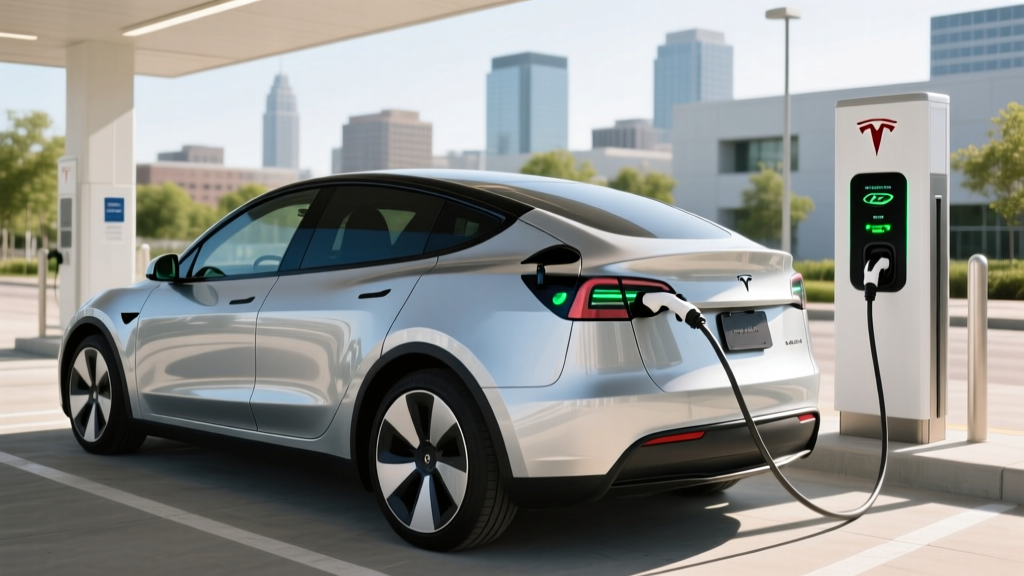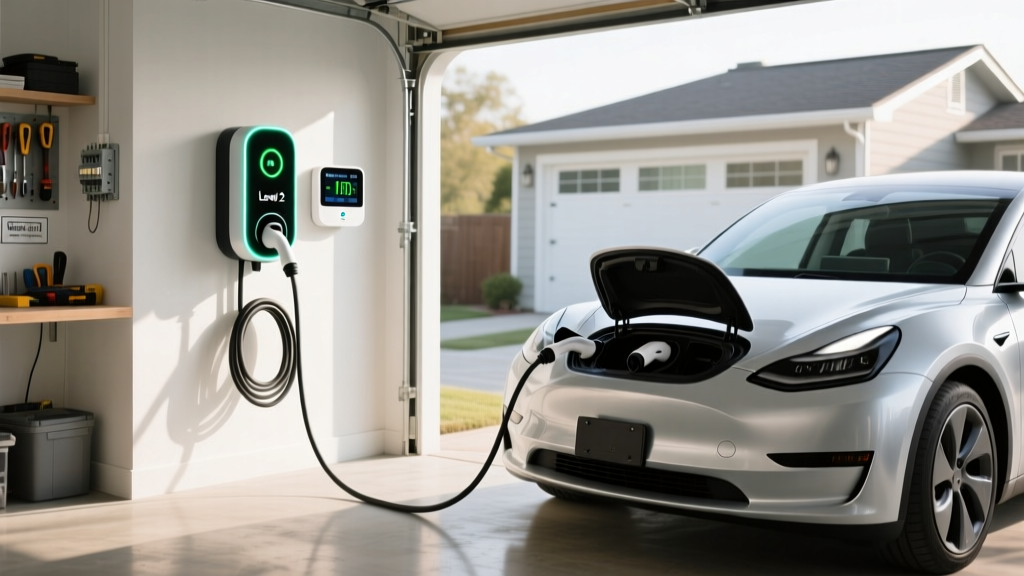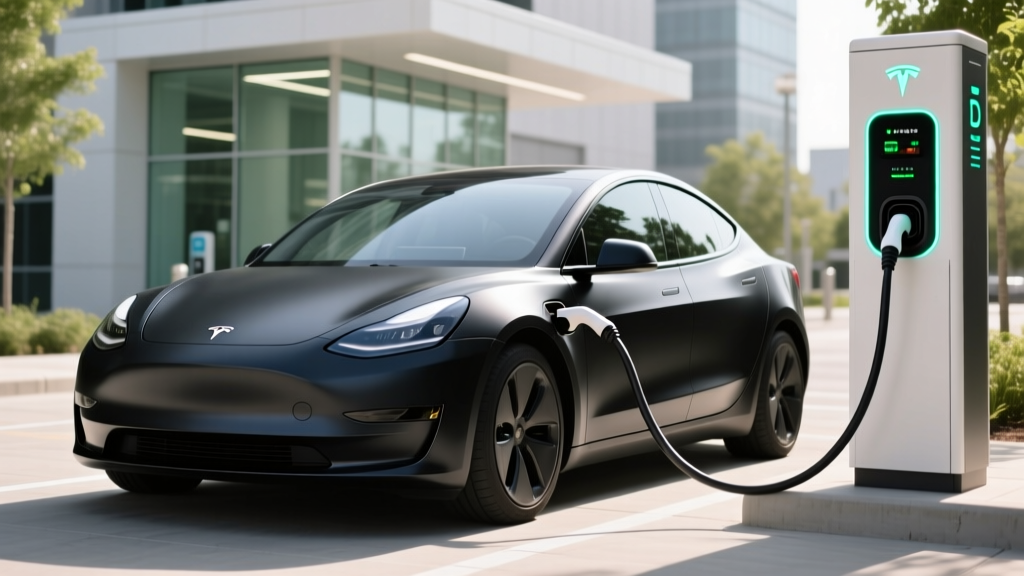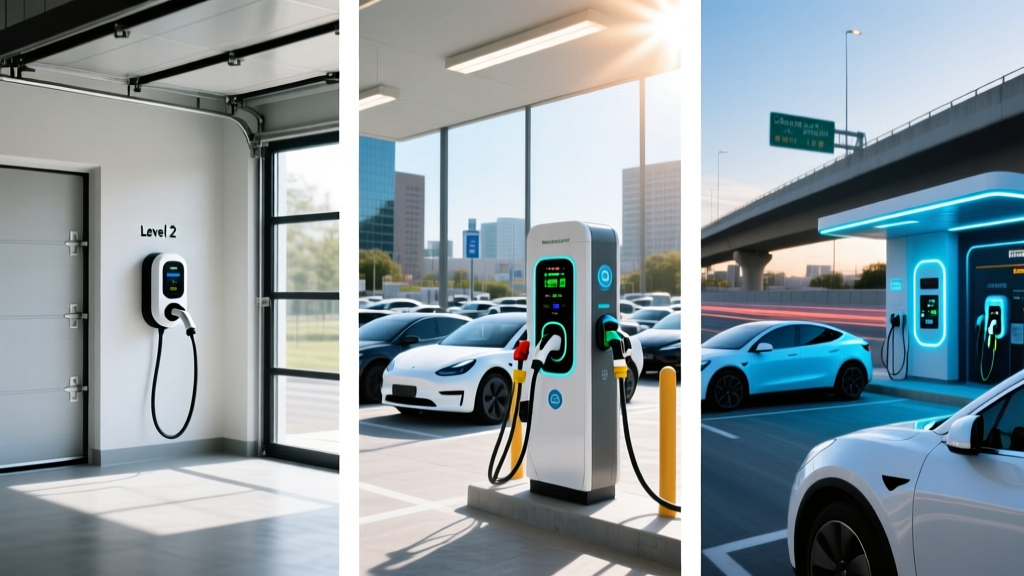
Whether you're pulling into a highway fast-charging plaza or plugging in at home overnight, understanding how each electric charging lane works — and what it actually costs — is the single most important skill for any EV owner. This guide breaks down charging levels in exact kilowatt figures, home installation requirements with real cost ranges, connector compatibility across every major brand, and the per-mile economics that determine whether electrification saves you money or costs you more.
A quick literacy note before we start: kW (kilowatts) measures power — the rate at which energy flows into your battery, like water pressure from a hose. kWh (kilowatt-hours) measures energy — the total amount stored in your battery, like gallons in a tank. A 77 kWh battery charged at 11 kW takes roughly 7 hours from empty. Confusing these two is the most common EV mistake, and we'll keep them strictly separated throughout this guide.
Charging Levels: Speeds, Range Added, and Real-World Times
Every electric charging lane falls into one of three categories. Here's what each delivers in measurable terms:
| Level | Voltage | Power (kW) | Miles of Range Added per Hour | Typical Use Case |
|---|---|---|---|---|
| Level 1 | 120V AC | 1.0–1.8 kW | 3–5 miles | Overnight top-up, PHEVs, emergencies |
| Level 2 | 240V AC | 3.3–19.2 kW | 12–75 miles | Home daily charging, workplaces, hotels |
| DC Fast (Level 3) | 400–800V DC | 50–350 kW | 150–1,200+ miles (theoretical) | Road trips, highway corridors, quick top-ups |
Real-world charging time examples (10–80% State of Charge):
- Tesla Model Y (75 kWh usable, NMC): ~27 minutes on a 250 kW V4 Supercharger; ~8 hours on a 48A (11.5 kW) home Level 2.
- Hyundai Ioniq 5 (77.4 kWh, NMC): ~18 minutes on a 350 kW charger (800V architecture); ~7.5 hours on a 48A home Level 2.
- Ford F-150 Lightning Extended Range (131 kWh usable, NMC): ~41 minutes on a 150 kW charger; ~13 hours on a 48A home Level 2.
- Chevrolet Equinox EV (85 kWh usable, NMC): ~30 minutes on a 150 kW charger; ~9 hours on a 40A (9.6 kW) home Level 2.
Home Charger Installation: Electrical Requirements and Real Costs
Installing a dedicated Level 2 home charger is the single biggest ownership decision you'll make. Here's what the electrical work actually involves and what you should budget.
Core electrical requirements:
- Circuit: A dedicated 240V circuit, typically 40A, 50A, or 60A, depending on charger amperage.
- Breaker sizing: The National Electrical Code (NEC) requires the breaker to be rated at 125% of the continuous load. A 40A charger needs a 50A breaker; a 48A charger needs a 60A breaker.
- Wire gauge: 6 AWG copper for 50A circuits; 4 AWG for 60A circuits (varies by run length and local code).
- Outlet vs. hardwired: NEMA 14-50 outlets offer portability; hardwired units allow higher amperage (48A+) and avoid the NEC 2023 GFCI breaker requirement for receptacles, which can add $80–$150 and cause nuisance trips.
| Component | Typical Range | Notes |
|---|---|---|
| Level 2 Charger Equipment | $200–$700 | Basic 32A units start ~$200; smart 48A units $400–$700 |
| Electrician Labor | $300–$1,500 | Depends on panel proximity, wall type, conduit run length |
| Electrical Permit | $50–$250 | Varies by municipality; some jurisdictions waive for EV circuits |
| Panel Upgrade (if needed) | $1,500–$4,000 | Required when existing panel lacks capacity — common in homes with 100A service |
| Outlet (NEMA 14-50, if not hardwired) | $50–$150 | Industrial-grade receptacle recommended; include GFCI breaker if code requires |
| Total (no panel upgrade) | $550–$2,450 | Most homes with 200A service and nearby panel |
| Total (with panel upgrade) | $2,050–$6,450 | Older homes or those adding multiple high-draw appliances |
Connector Compatibility: NACS, CCS, and CHAdeMO
The connector landscape consolidated significantly after Tesla opened its North American Charging Standard (NACS) to other automakers beginning in 2024. Here's where each brand stands as of the 2026 model year:
| Automaker | AC Level 2 Connector | DC Fast Connector | Adapter Needed for Tesla Superchargers? |
|---|---|---|---|
| Tesla (all models) | NACS (J3400) | NACS | No — native |
| Ford (F-150 Lightning, Mustang Mach-E) | NACS | NACS | No — switched for 2025+ models |
| GM (Cadillac, Chevy, GMC EVs) | NACS | NACS | No — native on 2025+ models |
| Hyundai / Kia (Ioniq 5/6, EV6/9) | J1772 / NACS | CCS1 / NACS | CCS-to-NACS adapter for older models; 2026 models ship NACS |
| Rivian (R1T, R1S) | NACS | NACS | No — native since 2024 |
| BMW (i4, i5, iX) | J1772 / NACS | CCS1 / NACS | Adapter included; 2026 models transition to NACS |
| Volkswagen (ID.4, ID.7) | J1772 | CCS1 | CCS-to-NACS adapter available |
| Nissan (Leaf — legacy) | J1772 | CHAdeMO | No direct adapter; CHAdeMO network shrinking |
Adapter guidance: If your EV has a CCS1 port and you want access to Tesla's Supercharger network (over 25,000 stalls in North America), you'll need a CCS-to-NACS adapter. Tesla sells one for ~$250, and several third-party options from Lectron and A2Z exist in the $150–$200 range. Verify the adapter is rated for the full amperage your vehicle can accept — some budget adapters cap at 300A, limiting charge speed on 800V vehicles.
For Level 2 home and public AC charging, J1772-to-NACS adapters (and the reverse) are widely available for $50–$100 and carry no meaningful speed penalty at AC power levels.
Cost to Charge: Home vs. Public vs. Gas Per Mile
The economics of every electric charging lane depend on local electricity rates, time-of-use pricing, and public network fees. Here's a realistic breakdown using a 2026 Tesla Model Y Long Range (EPA 320 miles, ~30 kWh/100 mi combined efficiency) as the benchmark:
| Charging Scenario | Rate ($/kWh) | Cost for 30 kWh (100 mi) | Cost per Mile |
|---|---|---|---|
| Home, off-peak (utility TOU rate) | $0.08–$0.12 | $2.40–$3.60 | $0.024–$0.036 |
| Home, standard residential rate | $0.13–$0.18 | $3.90–$5.40 | $0.039–$0.054 |
| Public Level 2 (ChargePoint, EVgo) | $0.25–$0.49 | $7.50–$14.70 | $0.075–$0.147 |
| DC Fast (Electrify America, Tesla) | $0.32–$0.58 | $9.60–$17.40 | $0.096–$0.174 |
| Gasoline baseline (28 MPG, $3.40/gal) | — | $12.14 (3.57 gal) | $0.121 |
The takeaway: Home off-peak charging costs roughly one-quarter to one-third of gasoline per mile. Even public DC fast charging at peak rates is often comparable to or slightly above gas — which is why home charging access is the single biggest factor in EV ownership satisfaction. According to fueleconomy.gov, the average EV driver who charges primarily at home saves $600–$1,000 annually versus a comparable gasoline vehicle.
Recommended Home Charging Equipment
Here are four Level 2 chargers that cover the most common installation scenarios, with exact specifications:
ChargePoint Home Flex
- Power: Up to 12 kW (50A), configurable down to 16A
- Connector: J1772 (NACS adapter included in 2025+ kits)
- Cable: 23 feet
- Smart features: Wi-Fi, app scheduling, Alexa/Google integration, energy tracking
- Price: ~$550–$650
- Best for: Flexible amperage for older panels; non-Tesla EVs
Tesla Wall Connector
- Power: Up to 11.5 kW (48A)
- Connector: NACS native (J1772 adapter available)
- Cable: 24 feet
- Smart features: Wi-Fi, OTA updates, power sharing (link multiple units), Tesla app
- Price: ~$475
- Best for: Tesla owners; cleanest integration, best value at 48A
Emporia Level 2 EV Charger
- Power: Up to 11.5 kW (48A)
- Connector: J1772 (NACS version available)
- Cable: 24 feet
- Smart features: Wi-Fi, solar integration, energy monitoring, load management
- Price: ~$350–$400
- Best for: Budget-conscious buyers; solar-panel households
Grizzl-E Smart
- Power: Up to 10 kW (40A)
- Connector: J1772 or NACS (specify at purchase)
- Cable: 24 feet
- Smart features: Wi-Fi, OCPP-compatible, adjustable amperage via dip switches
- Price: ~$400–$450
- Best for: Cold climates (rated to -40°C); outdoor installations; Canadian-built durability
Safety, Code, and Installation Best Practices
Every Level 2 installation must comply with the National Electrical Code (NEC) and local amendments. Here's what to verify with your electrician:
- Dedicated circuit: Your EV charger must have its own dedicated breaker — no sharing with dryers, ranges, or HVAC.
- GFCI protection: NEC 2023 requires GFCI protection for all receptacles in garages. Hardwired installations are exempt, which is one reason many installers now prefer hardwiring.
- Outdoor rating: If your charger is mounted outside, ensure the unit carries a NEMA 4 (weatherproof) rating and the conduit and junction boxes are rated for wet locations.
- Cable management: Use a holster or cable organizer to keep the connector off the ground and prevent tripping hazards.
- Load management: If your panel is near capacity, consider a smart load-management device (like the Emporia Smart Panel or Span Drive) that dynamically throttles charger amperage when other high-draw appliances activate.
- Permit and inspection: Always pull a permit. The inspection ensures your installation meets code and protects your homeowner's insurance coverage. Unpermitted work can void claims in the event of an electrical fire.
Federal Tax Credit and Incentives for Home Charging
The IRS §30D Clean Vehicle Credit applies to the vehicle itself, but a separate provision — the Alternative Fuel Vehicle Refueling Property Credit (IRS §30C) — covers home charging equipment and installation. As of 2026, this credit provides:
- Up to 30% of equipment and installation costs, capped at $1,000 per tax year.
- The property must be located in a qualifying census tract (generally low-income or non-urban areas). Use the IRS eligibility tool to check your address.
- The credit is non-refundable — you must have sufficient tax liability to claim it.
- Some states and utilities offer additional rebates of $200–$1,500 for Level 2 installations. Check your local utility's EV program page.
Frequently Asked Questions
How much does it cost to install a home EV charger?
Expect $550–$2,450 for a standard Level 2 installation on an existing 200A panel, including the charger ($200–$700), electrician labor ($300–$1,500), and permit ($50–$250). If your home has a 100A panel or lacks capacity, add $1,500–$4,000 for a panel upgrade, bringing the total to $2,050–$6,450. Always get at least two quotes from licensed electricians.
How fast will each charging level add range?
Level 1 (120V) adds 3–5 miles per hour — suitable only for PHEVs or emergency top-ups. Level 2 (240V) at 48A adds roughly 35–45 miles per hour for most EVs, fully replenishing overnight. DC fast charging at 150–350 kW can add 100–250 miles in 15–25 minutes, depending on battery size, chemistry, and the vehicle's charge curve.
Which connector and charger is compatible with my EV?
Check your vehicle's charge port. If it's NACS (the smaller, Tesla-style connector), you can use any NACS charger natively and access the full Supercharger network. If it's CCS1 (the larger, oval connector), you'll need a CCS-to-NACS adapter (~$150–$250) for Tesla Superchargers. For home Level 2, nearly all chargers use J1772 or NACS — adapters between the two cost $50–$100 and work without speed loss.
How much does charging cost per mile compared to gas?
Home charging at off-peak rates ($0.08–$0.12/kWh) costs $0.02–$0.04 per mile — roughly one-third the cost of gasoline at $3.40/gallon in a 28 MPG vehicle ($0.12/mile). Public DC fast charging at $0.35–$0.58/kWh runs $0.10–$0.17 per mile, comparable to gas. The savings case for EVs depends heavily on home charging access.
What electrical upgrades might I need for a home charger?
The most common upgrade is a panel replacement from 100A to 200A service ($1,500–$4,000), needed when your existing panel lacks spare capacity. Other possible upgrades include: adding a sub-panel closer to the garage ($400–$1,200), upgrading the service drop from the utility ($0–$2,000, sometimes covered by the utility), or installing a smart load-management system ($300–$800) to avoid a full panel upgrade by dynamically sharing capacity between the charger and other circuits.