Understanding Electric Car Ranges and Charging Fundamentals
When evaluating electric car ranges, the EPA sticker is just the starting point. Real-world range depends heavily on your charging strategy, battery chemistry, and how you manage state of charge (SoC). A vehicle with a 300-mile EPA range might deliver 240-260 miles in cold weather highway driving, or 280+ miles in moderate city conditions with regenerative braking.
The single most important distinction in EV charging: kW (kilowatts) measures power — how fast energy flows into your battery. kWh (kilowatt-hours) measures energy — the total capacity stored. Think of kW as the flow rate of a hose and kWh as the size of the bucket. Confusing these terms leads to wildly inaccurate charging time estimates.
Charging Levels: Speed and Range Recovery
| Level | Voltage/Amperage | Power (kW) | Miles Added Per Hour | Typical Use Case |
|---|---|---|---|---|
| Level 1 | 120V / 12-16A | 1.4-1.9 kW | 3-5 miles | Overnight, PHEV top-ups |
| Level 2 | 240V / 32-48A | 7.7-11.5 kW | 25-45 miles | Daily home charging |
| DC Fast | 400-800V DC | 50-350 kW | 150-300+ miles (peak) | Road trips, rapid top-ups |
Level 1 charging works for plug-in hybrids with 20-40 mile electric ranges or BEVs with small batteries, but it's impractical for daily BEV use. Level 2 is the sweet spot for home charging — fast enough to replenish 200+ miles overnight while being gentler on battery longevity than frequent DC fast charging.
DC fast charging speeds vary dramatically based on battery chemistry, temperature, and state of charge. A 2026 Hyundai Ioniq 5 with its 800V architecture can peak at 240 kW and charge 10-80% in roughly 18 minutes when preconditioned. However, that peak rate only sustains from about 10-50% SoC — above 80%, the charge curve tapers sharply to protect the battery, dropping to 50-70 kW.
Home Charger Installation: Requirements and Costs
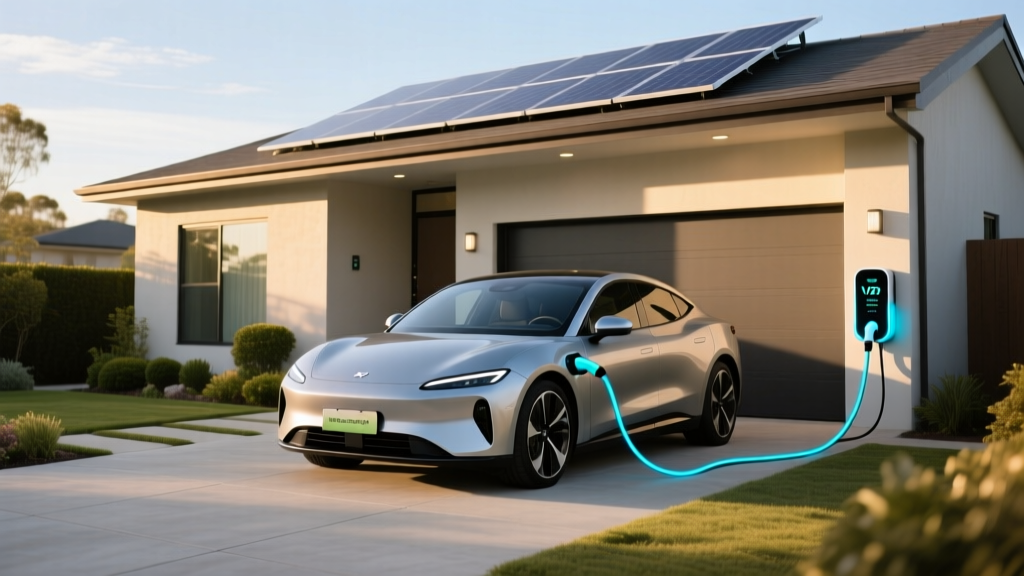
Installing a Level 2 home charger isn't just buying hardware — it's an electrical project that requires proper infrastructure. Here's what you're actually paying for:
| Component | Cost Range | Notes |
|---|---|---|
| Level 2 Charger (hardware) | $400-$800 | 32A-48A smart chargers |
| Electrician labor | $500-$2,000 | Depends on panel distance |
| Permit fees | $50-$300 | Varies by jurisdiction |
| Electrical panel upgrade | $1,500-$4,000 | If needed (older homes) |
| Total (no panel upgrade) | $950-$3,100 | Most installations |
| Total (with panel upgrade) | $2,450-$7,100 | Homes with 100A service |
Electrical Requirements
A 48-amp Level 2 charger requires a dedicated 60-amp circuit (NEC code mandates circuits be rated 125% of continuous load). This means 6-gauge copper wire for runs up to 50 feet, potentially 4-gauge for longer distances to minimize voltage drop. Your electrical panel must have two adjacent breaker slots available and sufficient amperage capacity.
Homes built before 2000 often have 100-amp service panels that are already near capacity. Adding a 60-amp EV circuit might require upgrading to 200-amp service — a $2,000-$4,000 project involving utility coordination, new meter base, and panel replacement. Some utilities offer rebates for panel upgrades tied to EV adoption.
Safety requirements include GFCI (ground-fault circuit interrupter) protection for outdoor installations, weatherproof enclosures rated NEMA 4 or higher, and proper grounding. Never use extension cords or adapters to circumvent code requirements — EV charging draws sustained high current that can overheat undersized conductors.
Connector Compatibility: NACS, CCS, and CHAdeMO
The North American charging landscape has consolidated around NACS (North American Charging Standard, aka Tesla's connector) as the dominant standard, but legacy connectors still exist:
| Connector | Compatible Brands | Adapter Needed? |
|---|---|---|
| NACS (Tesla) | Tesla, Ford, GM, Rivian, Volvo, Polestar, Mercedes, Nissan (2025+) | No (native) or CCS-to-NACS adapter for older CCS vehicles |
| CCS1 | Hyundai, Kia, BMW, VW, Audi, Porsche, Stellantis (some) | NACS-to-CCS adapter for Tesla Superchargers |
| CHAdeMO | Nissan Leaf (legacy), Mitsubishi Outlander PHEV (older) | Limited future support; networks phasing out |
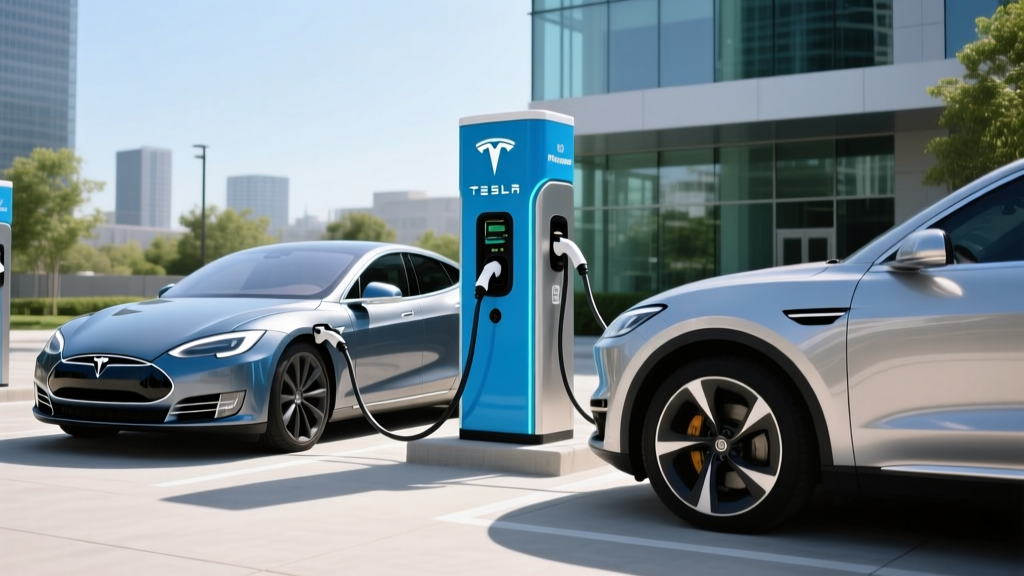
If you're buying a 2026 EV, prioritize NACS-equipped vehicles for the broadest charging network access. Tesla Superchargers now welcome non-Tesla vehicles with NACS ports, and the network's reliability (95%+ uptime) significantly outperforms Electrify America, EVgo, and ChargePoint in real-world testing. CCS-to-NACS adapters cost $200-$400 and enable access to Superchargers, but add a failure point and slight efficiency loss.
Charging Costs: Home vs. Public vs. Gas
The economics of EV charging depend entirely on where and when you charge:
| Charging Scenario | Cost per kWh | Cost per Mile (3.5 mi/kWh efficiency) |
|---|---|---|
| Home (off-peak utility rate) | $0.08-$0.15 | $0.023-$0.043 |
| Home (standard rate) | $0.12-$0.20 | $0.034-$0.057 |
| Public Level 2 | $0.25-$0.49 | $0.071-$0.140 |
| DC Fast Charging | $0.35-$0.60 | $0.100-$0.171 |
| Gas vehicle (30 MPG, $3.50/gal) | — | $0.117 |
Home charging during off-peak hours (typically 9 PM - 6 AM) delivers the lowest cost per mile — often 75-80% cheaper than gasoline. However, exclusive reliance on DC fast charging can make EVs more expensive to "fuel" than efficient hybrids. The break-even point: if more than 60% of your charging happens at home or work Level 2 stations, you'll save money versus gas.
Many utilities offer time-of-use (TOU) rates that incentivize overnight charging. Some provide EV-specific meters or smart charger integrations that automatically charge during cheapest hours. Check with your utility before installation — some offer $500-$1,000 rebates for smart Level 2 chargers.
Recommended Home Chargers (2026)
ChargePoint Home Flex
- Power Output: Up to 12 kW (50A, adjustable down to 16A)
- Connector: NACS or CCS1 (J1772 adapter included)
- Cable Length: 23 feet
- Smart Features: Wi-Fi, app scheduling, Alexa integration, energy tracking
- Price: $699
- Best For: Flexibility across circuit sizes, robust app ecosystem
Emporia Level 2 EV Charger
- Power Output: Up to 11.5 kW (48A)
- Connector: NACS or J1772
- Cable Length: 24 feet
- Smart Features: Real-time energy monitoring, solar integration, load management
- Price: $499
- Best For: Solar homes, budget-conscious buyers, energy visibility
Tesla Wall Connector
- Power Output: Up to 11.5 kW (48A)
- Connector: NACS (J1772 adapter sold separately, $95)
- Cable Length: 24 feet
- Smart Features: Wi-Fi, power sharing (multiple units on one circuit), OTA updates
- Price: $475
- Best For: Tesla owners, multi-EV households, clean aesthetics
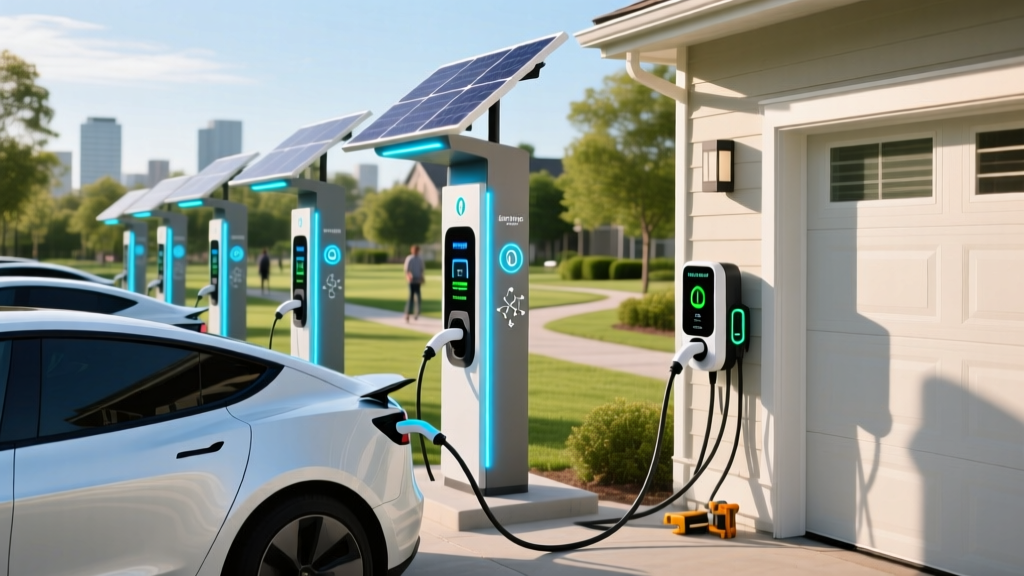
All three chargers are UL-listed, NEMA 4 rated for outdoor use, and support load balancing to prevent panel overload. The Emporia stands out for homes with solar panels — it can prioritize excess solar generation for EV charging, effectively providing "free" miles.
Real-World Charging Time Examples
Charging times depend on battery size, charger power, and the charge curve. Here are realistic 10-80% times for common scenarios:
- 60 kWh battery (Chevrolet Equinox EV): 9.6 kW Level 2 = 6.5 hours | 150 kW DC fast = 32 minutes
- 77 kWh battery (Ford Mustang Mach-E): 11.5 kW Level 2 = 6 hours | 150 kW DC fast = 38 minutes
- 84 kWh battery (Hyundai Ioniq 5): 11.5 kW Level 2 = 6.5 hours | 240 kW DC fast = 18 minutes
- 100 kWh battery (Tesla Model S): 11.5 kW Level 2 = 7.5 hours | 250 kW DC fast = 27 minutes
These times assume battery preconditioning (warming to optimal temperature) before DC fast charging. In cold weather below 40°F, unpreconditioned batteries may charge at 50-60% of peak rates until they warm up. Most modern EVs automatically precondition when you navigate to a charging station.
Frequently Asked Questions
How much does it cost to install a home EV charger?
Expect $950-$3,100 for a standard installation (charger + electrician + permit) if your electrical panel has capacity. Homes needing a panel upgrade (common in pre-2000 construction) will pay $2,450-$7,100 total. Get three electrician quotes — prices vary 2-3x based on local labor rates and job complexity.
How fast will each charging level add range?
Level 1 (120V): 3-5 miles per hour. Level 2 (240V): 25-45 miles per hour depending on amperage. DC Fast: 150-300+ miles per hour at peak rates, but only for 10-50% SoC — above 80% the rate drops dramatically.
Which connector/charger is compatible with my EV?
Check your vehicle's charge port. 2026 models from Tesla, Ford, GM, Rivian, and others use NACS. Hyundai, Kia, BMW, and VW still use CCS1. Adapters exist ($200-$400) but native compatibility is preferable for reliability and resale value.
How much does charging cost per mile vs gas?
Home charging (off-peak): $0.02-$0.04 per mile. Public DC fast: $0.10-$0.17 per mile. Gas vehicle (30 MPG): $0.12 per mile. Home charging saves 70-80% versus gas; exclusive DC fast charging can cost more than gas.
What electrical upgrades might I need?
If your home has 100-amp service or your panel is near capacity, you'll likely need a 200-amp upgrade ($1,500-$4,000). Some utilities offer "make-ready" programs covering panel upgrades for EV adopters. An electrician can assess your panel's available capacity during a site visit (usually free or $50-$100).
For detailed tax credit eligibility on EV purchases and charging equipment, consult IRS guidelines on clean vehicle credits. Current §30D rules include MSRP caps, income limits, and battery sourcing requirements that change annually.
Charging infrastructure and battery technology continue evolving. For the most current EPA range and efficiency data, reference fueleconomy.gov — manufacturer estimates often differ from real-world performance, especially in extreme temperatures or highway driving.