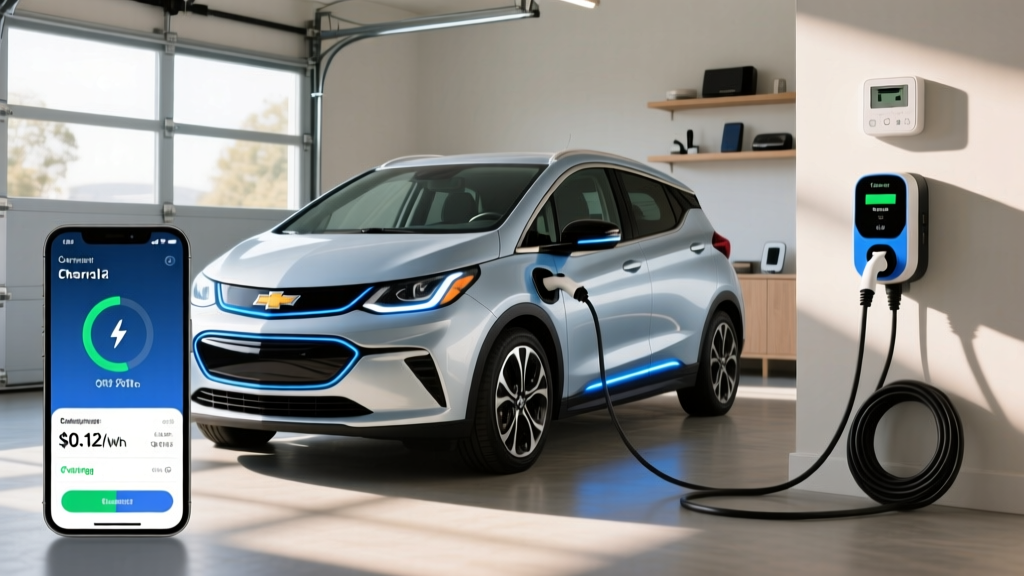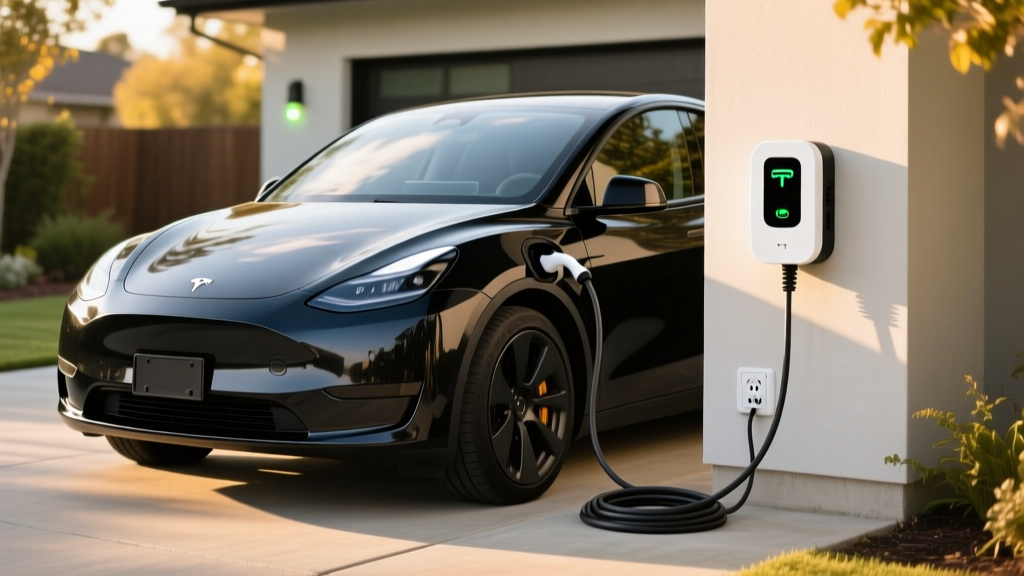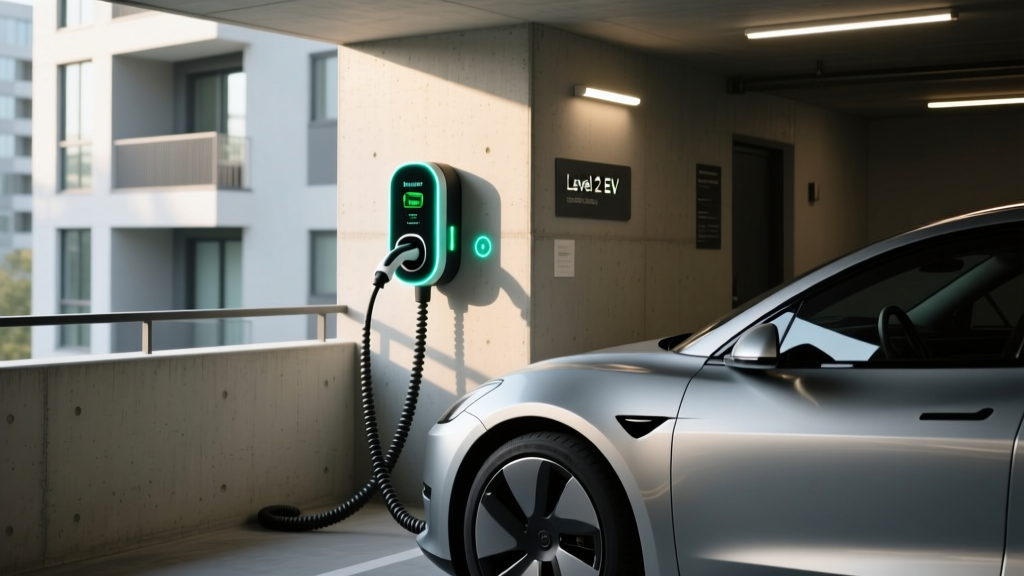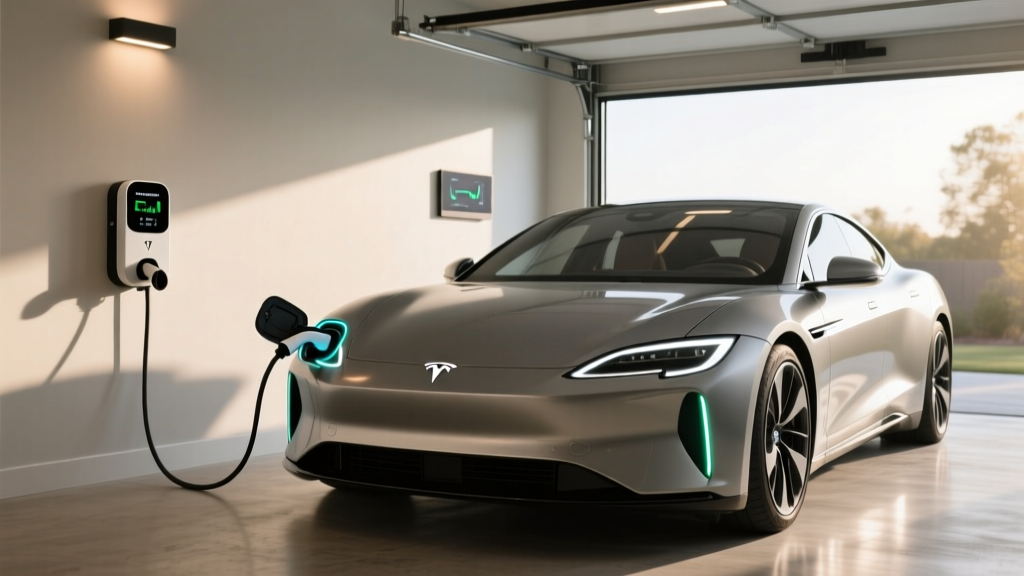
You've done the research and zeroed in on the electric car with most range — maybe it's the Lucid Air Grand Touring (EPA 512 miles, 112 kWh usable battery) or the Tesla Model S Long Range (EPA 402 miles, 100 kWh). A massive battery eliminates range anxiety on road trips, but it introduces a different problem: charging anxiety. Pushing 100+ kWh of energy into a pack using a standard 120V wall outlet would take over four days. Even a basic Level 2 home charger needs strategic planning to replenish a high-capacity battery overnight.
This guide walks through exactly what it takes to charge a 400+ mile EV at home and on the road — electrical requirements, real installation costs, connector compatibility for the 2026 model year, and the per-mile cost math that makes the case for electrification.
Charging Levels Explained: Speeds, Power, and Real-World Range Added
EV charging operates at three distinct levels, each defined by its power delivery in kilowatts (kW). Power (kW) is the rate of energy flow; energy (kWh) is the total capacity of your battery. Think of kW as the width of the pipe and kWh as the size of the tank. Here's how each level performs with a large-battery EV like the Lucid Air or Tesla Model S:
| Level | Voltage / Amperage | Max Power (kW) | Miles of Range Added Per Hour | 10–80% Time (100 kWh Battery) |
|---|---|---|---|---|
| Level 1 (120V) | 120V / 12A | 1.4 kW | 3–5 mi/hr | ~60+ hours (not practical) |
| Level 2 (240V) | 240V / 32–48A | 7.7–11.5 kW | 25–44 mi/hr | 7–10 hours |
| DC Fast Charge | 400–900V DC | 150–350 kW | 500–1,200 mi/hr | 15–30 minutes (varies by curve) |
A few real-world caveats: DC fast charging speeds are peak rates, not sustained. A Lucid Air can accept up to 300 kW at a low state of charge, but the charge curve tapers significantly above 60% SoC to protect battery health. Expect the 10–80% session to average roughly 180–220 kW on a 350 kW Electrify America or Tesla Supercharger V4 station. Also, cold batteries (below 50°F) accept charge more slowly until the thermal management system warms them — always use your EV's preconditioning feature before arriving at a DC fast charger.
How Much Does It Cost to Install a Home EV Charger?
For owners of the electric car with most range, a 48-amp Level 2 charger on a 240V/60A dedicated circuit is the practical minimum. Here's a realistic cost breakdown for a 2026 installation:
| Component | Low Estimate | High Estimate | Notes |
|---|---|---|---|
| Level 2 Charger (48A, hardwired) | $400 | $750 | ChargePoint Home Flex, Emporia Level 2, Tesla Wall Connector |
| Electrician Labor | $600 | $2,000 | Depends on run length from panel to garage |
| Electrical Permit | $50 | $300 | Varies by municipality |
| Panel Upgrade (if needed) | $1,500 | $4,500 | Required if existing panel is 100A or near capacity |
| Total (no panel upgrade) | $1,050 | $3,050 | |
| Total (with panel upgrade) | $2,550 | $7,550 |
When Do You Need a Panel Upgrade?
A 48A continuous-draw charger requires a 60A breaker (NEC 125% rule for continuous loads). If your home has a 100-amp service panel that's already running electric dryers, ranges, and HVAC, adding 60A of EV charging may exceed your panel's safe capacity. Homes built before 1990 frequently have 100A panels; most homes built after 2000 have 200A panels with adequate headroom. A licensed electrician will perform a load calculation per NEC Article 220 to determine whether an upgrade is necessary — don't skip this step.
Some utilities and states offer rebates for panel upgrades tied to EV adoption. Check the Alternative Fuels Data Center for current incentives in your state, and consult a tax professional about whether your installation qualifies under federal energy efficiency credits.
Connector Compatibility: NACS, CCS1, and CHAdeMO in 2026
The connector landscape has shifted dramatically. As of the 2026 model year, the North American Charging Standard (NACS) — originally developed by Tesla — is now the dominant connector for new EVs. Here's where each major brand stands:
| EV Brand | Built-In Connector | DC Fast Charging Access | Adapter Needed? |
|---|---|---|---|
| Tesla (Model S, 3, X, Y, Cybertruck) | NACS | Tesla Supercharger network (native) | Magic Dock adapter for CCS stations |
| Lucid (Air, Gravity) | CCS1 | Electrify America, EVgo; Supercharger via adapter | NACS-to-CCS adapter for Tesla Superchargers |
| Ford (F-150 Lightning, Mustang Mach-E) | NACS (2025+) | Tesla Supercharger (native) | CCS adapter for older stations |
| Hyundai / Kia (Ioniq 5/6, EV6/EV9) | NACS (2025+) | Tesla Supercharger (native) | CCS adapter for non-Tesla DC stations |
| Rivian (R1T, R1S) | NACS | Tesla Supercharger (native) | None for most networks |
| GM (Chevy, Cadillac, GMC) | NACS (2025+) | Tesla Supercharger (native) | CCS adapter for legacy stations |
| Nissan (Leaf — older models) | CHAdeMO | Limited — CHAdeMO stations declining | No adapter available; CHAdeMO infrastructure shrinking |
For home Level 2 charging, all non-Tesla EVs sold before 2025 use the J1772 connector. NACS-equipped vehicles can use a NACS-to-J1772 adapter (typically $150–$250) with any standard Level 2 home charger. Tesla Wall Connectors natively deliver NACS. If you own a Lucid Air or a pre-2025 CCS-equipped vehicle, buy a Level 2 charger with a J1772 connector and use the adapter that came with your car.
Charging Cost Per Mile: EV vs. Gas in Real Dollars
One of the strongest arguments for buying the electric car with most range is the fuel-cost advantage — but only if you charge smartly. Here's how common scenarios compare, using a Lucid Air Grand Touring (EPA-estimated 146 MPGe combined, roughly 3.0 miles per kWh) as the baseline:
| Charging Scenario | Rate ($/kWh) | Cost Per Mile | Annual Cost (12,000 mi) |
|---|---|---|---|
| Home — Off-Peak Utility Rate | $0.08–$0.12 | $0.027–$0.040 | $324–$480 |
| Home — Standard Residential Rate | $0.14–$0.18 | $0.047–$0.060 | $564–$720 |
| Public Level 2 (ChargePoint, EVgo) | $0.25–$0.40 | $0.083–$0.133 | $996–$1,596 |
| DC Fast Charging (Electrify America) | $0.35–$0.55 | $0.117–$0.183 | $1,404–$2,196 |
| Gasoline Equivalent (25 MPG, $3.40/gal) | $3.40/gallon | $0.136 | $1,632 |
| Gasoline Equivalent (25 MPG, $4.00/gal) | $4.00/gallon | $0.160 | $1,920 |
The takeaway: home charging on an off-peak utility plan delivers fuel savings of 70–80% compared to gasoline. Even standard residential rates cut fuel costs by 60%+. However, if you rely exclusively on public DC fast charging, your per-mile cost can equal or exceed gasoline. For owners of 400+ mile EVs, the large battery makes home charging even more critical — you can charge once every 5–7 days on a Level 2 circuit and rarely touch a public charger for daily driving.
Check fueleconomy.gov for the exact kWh/100mi rating of your specific EV to calculate your personalized cost per mile.
Best Home Chargers for Long-Range EVs in 2026
When your EV has a 100+ kWh battery, you need a Level 2 charger that can deliver maximum amperage to keep overnight charging practical. Here are three proven options:
Tesla Wall Connector (Gen 4)
- Power Output: Up to 11.5 kW (48A, 240V)
- Connector: NACS native; J1772 adapter available
- Cable Length: 24 feet
- Smart Features: Wi-Fi connected, OTA firmware updates, load sharing between multiple units, Power Sharing for panel-limited homes
- Price: ~$475
- Best For: Tesla owners and NACS-equipped Ford, GM, Hyundai, and Rivian vehicles. The load-sharing feature is ideal for homes with limited panel capacity — two Wall Connectors can share a single 60A circuit.
ChargePoint Home Flex
- Power Output: Up to 12 kW (50A, 240V) — adjustable via DIP switches to match your circuit
- Connector: J1772 (works with all EVs; NACS vehicles use included adapter)
- Cable Length: 23 feet
- Smart Features: Wi-Fi, scheduling via app for off-peak rates, Alexa/Google Home integration, detailed energy tracking
- Price: ~$550–$650
- Best For: Multi-EV households with mixed connectors. The adjustable amperage means you can install it on a 40A, 50A, or 60A circuit depending on your panel's capacity.
Emporia Vue Level 2 Charger
- Power Output: Up to 11.5 kW (48A, 240V)
- Connector: J1772 (NACS adapter available)
- Cable Length: 24 feet
- Smart Features: Integrates with Emporia Vue home energy monitor for real-time solar and grid tracking, scheduled charging, circuit-level load management
- Price: ~$399
- Best For: Budget-conscious buyers who want smart scheduling and solar integration. Excellent value at this price point.
All three chargers support hardwired installation (required for 48A+ circuits — a plug-in NEMA 14-50 outlet is limited to 40A continuous draw per NEC). Hardwiring also eliminates the GFCI breaker requirement that applies to receptacle-based installations, reducing nuisance trips.
Safety, Electrical Code, and Installation Best Practices
EV charging is a continuous load — defined by the National Electrical Code (NEC) as a load expected to run for three hours or more. This triggers specific requirements that differ from typical household circuits:
- Dedicated circuit: Your EV charger must have its own breaker — no sharing with other outlets or appliances. A 48A charger requires a 60A breaker (125% derating rule).
- Wire gauge: 6 AWG copper for 60A circuits; 4 AWG for runs longer than 100 feet to limit voltage drop.
- GFCI protection: Required for receptacle-based installations (NEMA 14-50) per NEC 2020/2023. Hardwired installations are exempt, which is why most electricians recommend hardwiring for 48A+ chargers.
- Outdoor rating: If your charger is mounted outside or in an unsealed garage, ensure it carries a NEMA 4 (weatherproof) rating. All three chargers above meet this standard.
- Permit and inspection: Most jurisdictions require an electrical permit and a post-installation inspection. Your electrician will pull the permit — don't accept a quote that skips this step, as unpermitted work can void homeowner's insurance claims.
For homes with solar panels, ask your electrician about wiring the charger to prioritize solar self-consumption during midday hours. Chargers like the Emporia and Tesla Wall Connector can integrate with solar inverters to automatically adjust charging rate based on real-time solar production.
Charging Time Examples: What to Expect With a 100+ kWh Battery
Here are realistic charging times for the electric cars with the most range in 2026, from a depleted state (10% SoC) to a usable 80%:
- Lucid Air Grand Touring (112 kWh usable): 10–80% at home on 11.5 kW Level 2: ~7 hours. At a 350 kW DC fast charger: ~20 minutes (peaks at 300 kW, tapers to ~120 kW above 60%).
- Tesla Model S Long Range (100 kWh usable): 10–80% at home on 11.5 kW Level 2: ~6.5 hours. At a 250 kW V3 Supercharger: ~25 minutes.
- Mercedes-Benz EQS 580 (108.4 kWh usable): 10–80% at home on 11.5 kW Level 2: ~7 hours. At a 350 kW DC fast charger: ~31 minutes (peaks at 200 kW — slower than Lucid or Tesla).
- Chevrolet Silverado EV 4WT (200+ kWh battery): 10–80% at home on 11.5 kW Level 2: ~14+ hours. At a 350 kW DC fast charger: ~45 minutes. This truck's enormous battery makes DC fast charging essential for road trips.
These times assume preconditioned batteries at 70–80°F. In sub-freezing weather, add 15–30% to DC fast-charge times unless you've used the vehicle's navigation-based battery preconditioning (available on Tesla, Lucid, and most 2025+ EVs).
Frequently Asked Questions
How much does it cost to install a home EV charger?
A typical Level 2 home charger installation costs $1,050–$3,050 including equipment, electrician labor, and permits — assuming your electrical panel has adequate capacity. If a panel upgrade from 100A to 200A is needed, add $1,500–$4,500. Always get a load calculation from a licensed electrician before committing.
How fast will each charging level add range?
Level 1 (120V) adds 3–5 miles per hour — impractical for large-battery EVs. Level 2 (240V, 48A) adds 30–44 miles per hour, enough to fully replenish most EVs overnight. DC fast charging adds 500–1,200 miles per hour at peak rates, enabling a 10–80% charge in 15–30 minutes on compatible vehicles.
Which connector and charger is compatible with my EV?
For 2025–2026 model-year vehicles, most new EVs use NACS (Tesla, Ford, GM, Hyundai, Kia, Rivian). Lucid and some pre-2025 models use CCS1. For home charging, a J1772 Level 2 charger works with every EV on the road using the adapter that ships with your car. Tesla Wall Connectors use NACS natively.
How much does charging cost per mile compared to gas?
Home charging at off-peak utility rates costs $0.03–$0.04 per mile — roughly 75% less than gasoline at $3.40/gallon in a 25 MPG vehicle ($0.14/mile). Public DC fast charging at $0.40–$0.55/kWh costs $0.12–$0.18 per mile, comparable to or slightly above gasoline. Maximizing home charging is key to realizing EV fuel savings.
What electrical upgrades might I need for a home charger?
The most common upgrade is a panel replacement from 100A to 200A service ($1,500–$4,500), required when your existing panel lacks capacity for a 60A EV circuit. Homes with 200A panels typically need no upgrade. Other potential costs include trenching for detached garages ($500–$2,000) and utility service upgrades for very old homes. See the National Electrical Contractors Association for guidance on finding qualified installers.
The electric car with most range is only as practical as your ability to charge it efficiently. A properly installed 48A Level 2 home charger transforms a 400+ mile EV from a road-trip novelty into a genuinely convenient daily driver — one that you plug in at night and wake up to a full battery every morning, at a cost per mile that gasoline simply can't match.