Why a Home Charging Station Changes EV Ownership
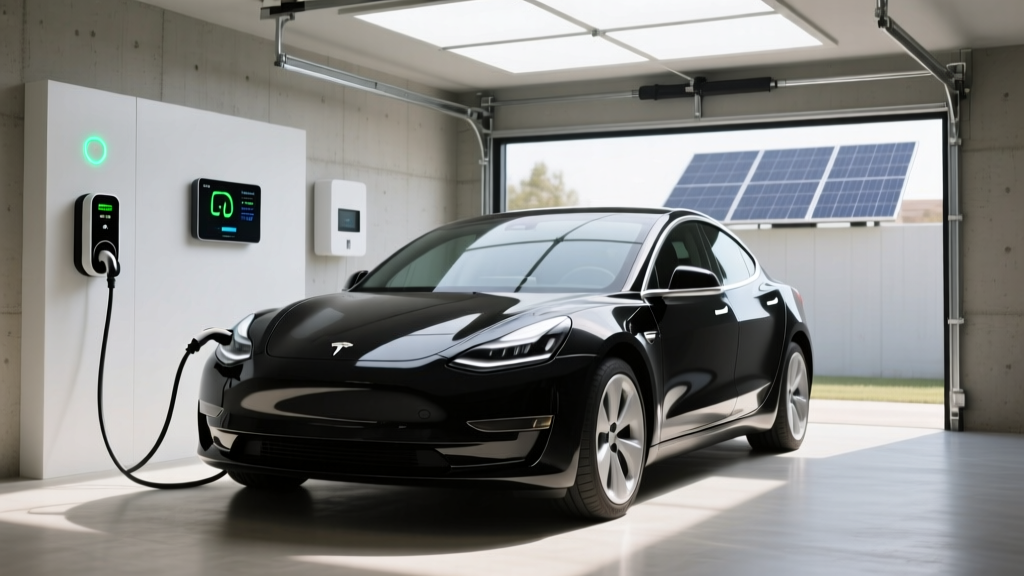
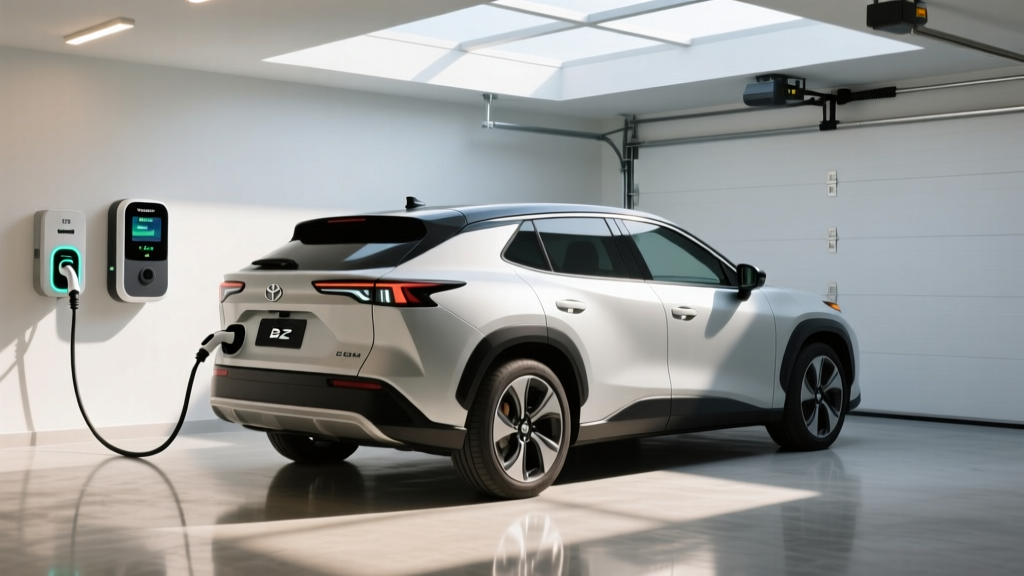
Over 80% of EV charging happens at home, and for good reason: a properly installed Level 2 electric car charging station at home delivers 25–44 miles of range per hour plugged in, costs roughly $0.04–$0.06 per mile on off-peak utility rates, and means you start every morning with a full battery. Public DC fast chargers are essential for road trips, but daily charging at home is cheaper, faster for overnight needs, and gentler on your battery's long-term health.
This guide walks through every decision point — from choosing the right kW output to budgeting for a panel upgrade — so you can spec a home charging setup that matches your EV, your electrical panel, and your budget.
Charging Levels Explained: Speeds, Power, and Real-World Range
Before buying equipment, understand the three charging tiers available to EV owners. The critical distinction: kW (kilowatts) measures power — how fast energy flows into your car. kWh (kilowatt-hours) measures energy — the total capacity of your battery. A 60 kWh battery charged at 7.2 kW takes roughly 8.3 hours from empty to full (minus losses).
| Level | Voltage | Power (kW) | Miles of Range Added per Hour | Typical Use Case |
|---|---|---|---|---|
| Level 1 | 120V AC | 1.0–1.4 kW | 3–5 mi/hr | Overnight top-up, PHEVs, low-mileage drivers |
| Level 2 | 240V AC | 3.3–19.2 kW | 12–75 mi/hr | Home daily charging, workplace, public destinations |
| DC Fast Charge | 400–800V DC | 50–350 kW | 150–1,200+ mi/hr (peak) | Road trips, highway corridors, rapid top-ups |
How Much Does It Cost to Install an Electric Car Charging Station at Home?
Installation costs vary widely depending on your home's electrical infrastructure. A straightforward install near the panel on a modern 200-amp service might run $500–$800 in labor, while older homes needing a panel upgrade can see $3,000–$5,000+ in total project cost. Here's a realistic breakdown based on 2026 electrician rates and equipment pricing:
| Component | Budget Install | Standard Install | Complex Install (Panel Upgrade) |
|---|---|---|---|
| Level 2 Charger (Equipment) | $250–$400 | $400–$700 | $500–$800 |
| Electrician Labor | $300–$500 | $500–$1,200 | $1,000–$2,000 |
| Electrical Permit | $50–$100 | $100–$250 | $150–$300 |
| Panel Upgrade (if needed) | $0 | $0 | $1,500–$3,500 |
| Conduit, Wiring, Misc. | $50–$150 | $100–$400 | $200–$600 |
| Total Estimated Cost | $650–$1,150 | $1,100–$2,550 | $3,350–$7,200 |
What Electrical Upgrades Might I Need?
A 48-amp Level 2 charger requires a dedicated 60-amp circuit on a 240V line (National Electrical Code mandates circuits be rated at 125% of continuous load). Here's what determines whether your panel can handle it:
- 200-amp service (most homes built after 1990): Usually sufficient for a 60-amp EV circuit, assuming you don't already have heavy loads (electric range, dryer, HVAC, hot tub). A load calculation by your electrician will confirm.
- 100-amp service (older homes): Often requires a panel upgrade to 200 amps, especially if you plan to charge at 48 amps while running other large appliances. Budget $1,500–$3,500 for this upgrade.
- Panel is full (no open breaker slots): You may need a sub-panel or tandem breakers, adding $200–$600.
- Long wire runs (garage far from panel): Conduit and heavier-gauge wire add $2–$8 per linear foot. A 60-foot run could add $200–$500.
Which Connector and Charger Is Compatible With My EV?
The connector landscape has consolidated significantly since 2024, when Ford, GM, Rivian, and most major automakers adopted the North American Charging Standard (NACS) — the Tesla-originated connector. By 2026, nearly all new EVs sold in the U.S. ship with a native NACS port. If you own an older CCS1-equipped vehicle (2021–2024 model years from Hyundai, Kia, VW, BMW, and others), adapters are widely available.
| Connector | Brands Using It (2026 Models) | Home Charger Availability | Adapter Needed? |
|---|---|---|---|
| NACS (Tesla/J3400) | Tesla, Ford, GM, Rivian, Hyundai, Kia, BMW, Volvo, Polestar, most new EVs | Tesla Wall Connector, ChargePoint, Emporia, Grizzl-E (NACS variants) | No for new EVs; CCS-to-NACS adapters ~$150–$250 for older CCS cars |
| CCS1 (Combo) | Legacy 2021–2024 models (VW ID.4, older Bolt, early Ioniq 5) | ChargePoint, Emporia, Grizzl-E (CCS variants) | NACS-to-CCS adapter needed if buying a NACS charger |
| CHAdeMO | Nissan Leaf (discontinued 2025 in U.S.), Mitsubishi Outlander PHEV | Limited home options | No direct NACS adapter for DC; separate CHAdeMO chargers rare |
2026 Recommendation: Buy a NACS-connector charger. It's the standard going forward, and a CCS-to-NACS adapter (~$150–$200) handles any legacy vehicle you might own or charge for a guest.
Best Home EV Chargers in 2026: Equipment Compared
These five chargers cover the range of budgets, power outputs, and smart features available in 2026. All are hardwired or NEMA 14-50 plug-in, UL-listed, and compatible with residential 240V circuits.
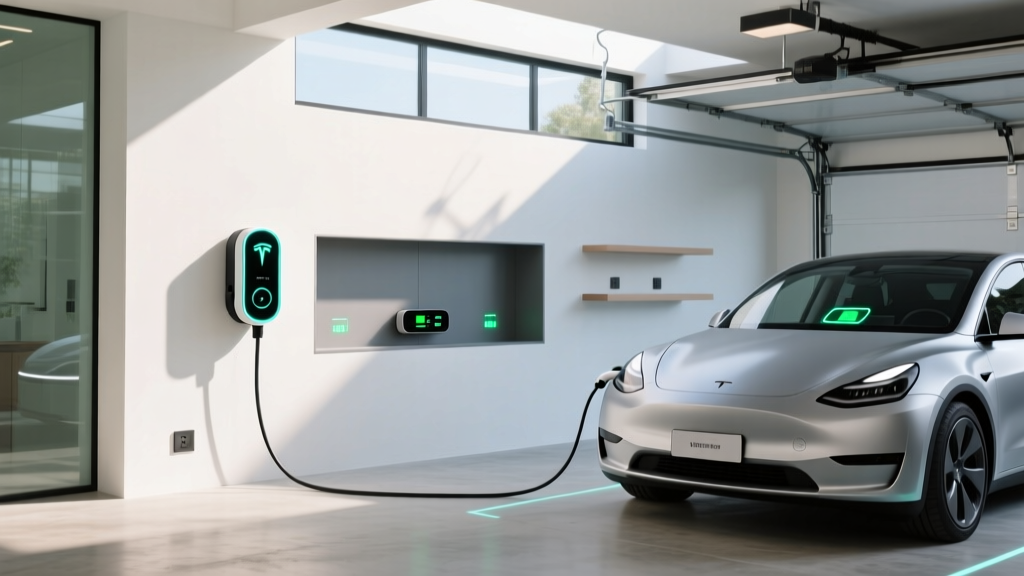
Tesla Wall Connector (Gen 4)
- Power: Up to 11.5 kW (48 amps)
- Connector: NACS (native)
- Cable length: 24 feet
- Smart features: Wi-Fi, OTA updates, Tesla app scheduling, Powerwall integration, load sharing between two units
- Price: ~$475
- Best for: Tesla owners, NACS-native EVs, households with solar/Powerwall
ChargePoint Home Flex (2nd Gen)
- Power: Up to 12 kW (50 amps) — adjustable via DIP switches
- Connector: NACS or CCS1 (configurable at purchase)
- Cable length: 23 feet
- Smart features: Wi-Fi, Alexa/Google Home, detailed ChargePoint app with energy tracking, scheduled charging, utility demand-response programs
- Price: ~$550–$650
- Best for: Multi-EV households, users wanting granular energy data, utility program participants
Emporia Vue Smart EV Charger
- Power: Up to 11.5 kW (48 amps)
- Connector: NACS
- Cable length: 24 feet
- Smart features: Wi-Fi, Emporia app with whole-home energy monitoring integration, solar-aware charging, time-of-use scheduling
- Price: ~$399
- Best for: Budget-conscious buyers, homes with Emporia Vue energy monitor, solar-integrated setups
Grizzl-E Smart (United Chargers)
- Power: Up to 10 kW (40 amps) — adjustable down to 16A
- Connector: NACS or J1772 (configurable)
- Cable length: 24 feet
- Smart features: Wi-Fi, OCPP-compatible, adjustable amperage for panel-limited homes, -40°F rated for extreme cold
- Price: ~$449
- Best for: Cold-climate owners, homes with 100-amp panels needing 40A max, outdoor installs
Wallbox Pulsar Plus (48A)
- Power: Up to 11.5 kW (48 amps)
- Connector: NACS (2026 model) or J1772
- Cable length: 25 feet
- Smart features: Wi-Fi + Bluetooth, Wallbox app, Power Sharing (distributes load across two chargers on one circuit), Eco-Smart solar integration
- Price: ~$599
- Best for: Two-EV garages needing load sharing, compact form factor preference
How Much Does Charging Cost Per Mile vs. Gas?
Electricity pricing varies by utility and time of day. Below are realistic 2026 scenarios for a mid-size EV with 3.5 miles per kWh efficiency (roughly 28.5 kWh/100 miles, typical of a Hyundai Ioniq 5 or Tesla Model Y):
| Scenario | Rate ($/kWh) | Cost per 100 Miles | Cost per Mile | Equivalent MPG Gas Price |
|---|---|---|---|---|
| Home off-peak (Time-of-Use rate) | $0.09–$0.13 | $2.55–$3.69 | $0.03–$0.04 | $0.75–$1.10/gal |
| Home standard rate (no TOU) | $0.14–$0.18 | $3.99–$5.13 | $0.04–$0.05 | $1.15–$1.50/gal |
| Public Level 2 (workplace/retail) | $0.20–$0.30 | $5.70–$8.55 | $0.06–$0.09 | $1.65–$2.50/gal |
| DC Fast Charging (Electrify America, etc.) | $0.35–$0.55 | $9.98–$15.68 | $0.10–$0.16 | $2.90–$4.55/gal |
| Gas car (28 MPG combined, $3.40/gal) | — | $12.14 | $0.12 | $3.40/gal |
Key takeaway: Home off-peak charging costs roughly one-quarter to one-third what gasoline does per mile. Even public DC fast charging is often comparable to or cheaper than gas, though it's the most expensive EV charging option. For a driver covering 12,000 miles/year, home charging on a TOU plan saves approximately $900–$1,100 annually compared to a 28 MPG gas car at $3.40/gallon.
The U.S. Department of Energy maintains a state-by-state electricity rate tool to help you estimate local costs. For precise home charging economics, check your utility's EV-specific Time-of-Use rate plans — many utilities now offer super off-peak rates of $0.05–$0.08/kWh between midnight and 6 AM.
Charging Time Examples for Common Battery Sizes
Charge times depend on battery capacity (kWh), charger power (kW), and the vehicle's onboard charger limit. Most 2026 EVs accept 11.5 kW on Level 2; some, like the Ford F-150 Lightning Extended Range, can accept up to 19.2 kW with the optional 80-amp Pro Power onboard charger. Below are 10–80% charge times on a typical 48-amp (11.5 kW) home Level 2 station:
| Vehicle (2026) | Usable Battery (kWh) | 10–80% Time (approx.) | Overnight Full Charge? |
|---|---|---|---|
| Tesla Model Y Long Range | 75 kWh | ~4.5 hours | Yes, easily |
| Hyundai Ioniq 5 (Long Range) | 77.4 kWh | ~4.7 hours | Yes |
| Chevrolet Equinox EV | 85 kWh | ~5.2 hours | Yes |
| Ford F-150 Lightning (Std Range) | 98 kWh | ~6.0 hours | Yes (tight on short nights) |
| Chevrolet Silverado EV (Max Range) | 200 kWh | ~12.2 hours | No — requires multi-night or partial charges at 11.5 kW |
| Toyota RAV4 Prime (PHEV) | 18.1 kWh | ~1.1 hours | Yes, trivial |
Safety, Code Requirements, and Installation Best Practices
A Level 2 charger draws sustained high current for hours — making electrical safety non-negotiable. Here's what the National Electrical Code (NEC) and best practices require:
Dedicated Circuit and Breaker Sizing
- A 48-amp charger requires a 60-amp breaker (NEC Article 625 mandates 125% overcurrent protection for continuous loads exceeding 3 hours).
- The circuit must be dedicated — no other outlets or appliances on the same breaker.
- Wire gauge: typically 6 AWG copper for a 60-amp circuit, though 4 AWG may be required for long runs to minimize voltage drop.
Hardwired vs. NEMA 14-50 Plug
- Hardwired (recommended): Directly connected to the circuit with no plug. Eliminates plug-receptacle heat risk, allows full 48-amp continuous draw, and is required by some local codes for circuits above 40 amps.
- NEMA 14-50 receptacle: Allows charger portability (take it when you move). Limited to 40 amps continuous (NEC 80% rule on a 50-amp breaker). Tesla and others have documented cases of 14-50 receptacles overheating with sustained 40A loads — use a commercial-grade Hubbell or Bryant receptacle ($80–$120) if you go this route, not a residential-grade Leviton.
GFCI, Outdoor Rating, and Permit Requirements
- GFCI protection: NEC 2023+ requires GFCI on all EV receptacles. Hardwired chargers with built-in ground fault protection may satisfy this — confirm with your electrician and local inspector.
- Outdoor installs: Choose a charger rated NEMA 4 (weatherproof). All units listed above carry outdoor ratings. Ensure the conduit entry is sealed and the unit is mounted at least 18 inches above grade.
- Permits: Nearly all jurisdictions require an electrical permit for EV charger installation ($50–$300). This ensures a city/county inspector verifies the work — critical for insurance and resale. Never skip the permit.
Federal Tax Credit and Utility Rebates for Home Charging
The IRS §30D and §25C credits may offset some charging equipment costs, though the landscape has tightened for 2026:
- The Alternative Fuel Vehicle Refueling Property Credit (IRC §30C) offers up to $1,000 for home charger equipment and installation, but only for taxpayers in eligible census tracts (typically low-income or non-urban areas). Check the IRS eligibility tool.
- Many utilities offer EV charger rebates of $250–$750, sometimes bundled with TOU rate enrollment. PG&E, ConEdison, Xcel Energy, and others run active programs.
- Some states (California, New York, Colorado, Massachusetts) stack additional incentives. Consult your state energy office or AFDC state law database for current programs.
Frequently Asked Questions
Can I install a home EV charger myself?
Level 1 (120V) requires no installation — just plug into a standard outlet on a dedicated 15-amp circuit. Level 2 (240V) involves high-amperage wiring, breaker installation, and code compliance. Unless you are a licensed electrician, hire a professional. Improper installation risks fire, voids homeowner's insurance claims, and fails inspection.
Will a home EV charger work with solar panels?
Yes. Chargers like the Emporia Vue, Wallbox Pulsar Plus, and Tesla Wall Connector (with Powerwall) offer solar-aware charging modes that prioritize excess solar production. This effectively charges your EV for near-zero marginal cost during peak sun hours, though you'll still want overnight grid charging for consistency.
How fast will a Level 1 charger add range — is it enough?
Level 1 delivers roughly 3–5 miles of range per hour. Over a 10-hour overnight session, that's 30–50 miles — adequate for PHEVs (which typically need only 25–42 miles) and BEV drivers with short commutes under 30 miles round-trip. For larger-battery BEVs or higher-mileage drivers, Level 2 is strongly recommended.
Does charging at home degrade my battery faster than DC fast charging?
The opposite. Slow Level 2 charging generates less heat and keeps lithium-ion cells in a lower-stress state. Frequent DC fast charging — especially at 250+ kW — accelerates degradation over time. Most manufacturers recommend DC fast charging for road trips only and daily charging on Level 2 for optimal battery longevity.
What if my home only has 100-amp electrical service?
You have options: (1) Install a lower-amperage charger (16–24 amps / 3.8–5.8 kW) that doesn't require a panel upgrade, (2) use an automated load-management device like the Wallbox Power Sharing or Emporia smart splitter that dynamically reduces charger draw when other appliances activate, or (3) upgrade to 200-amp service ($1,500–$3,500) for full flexibility.