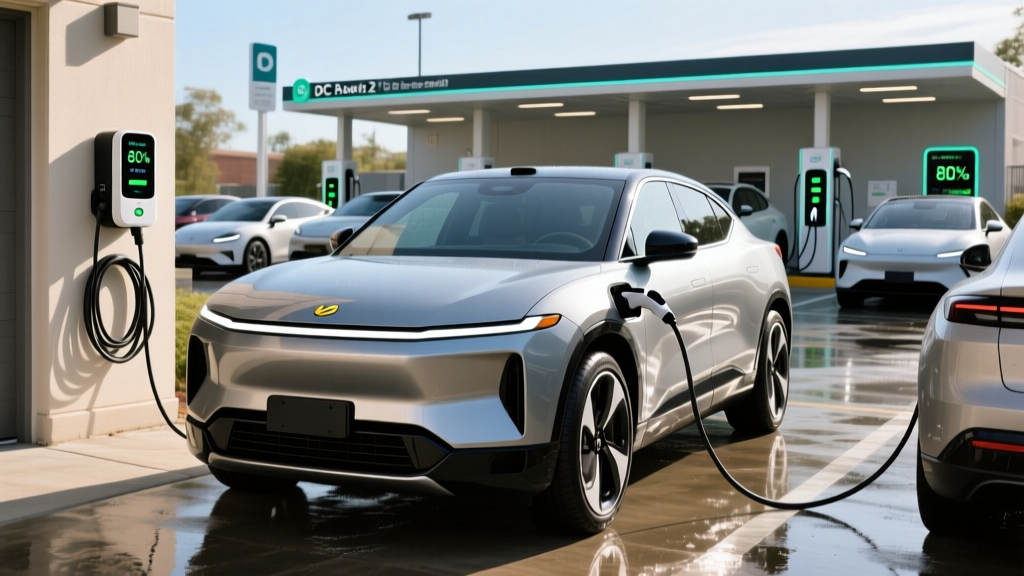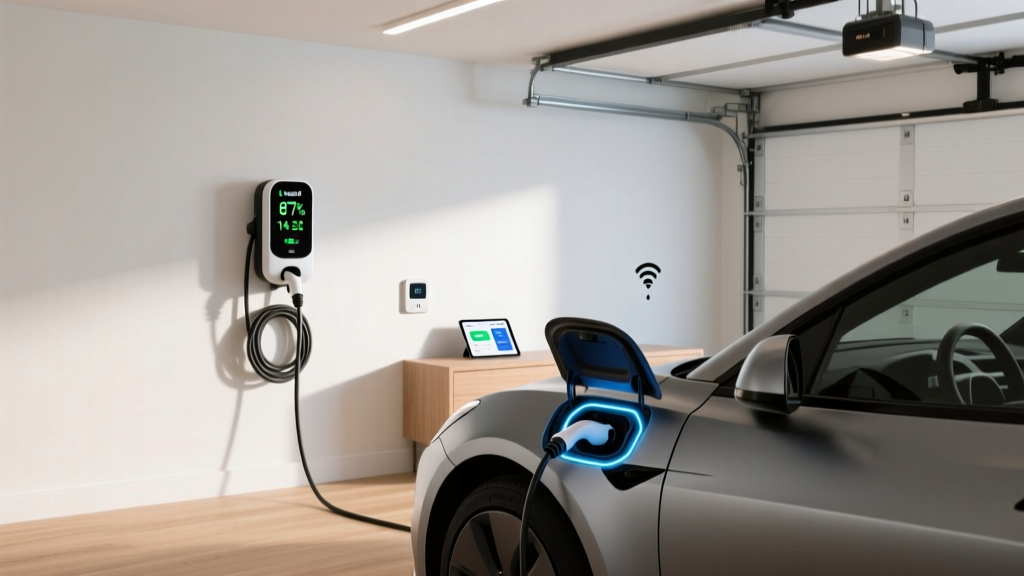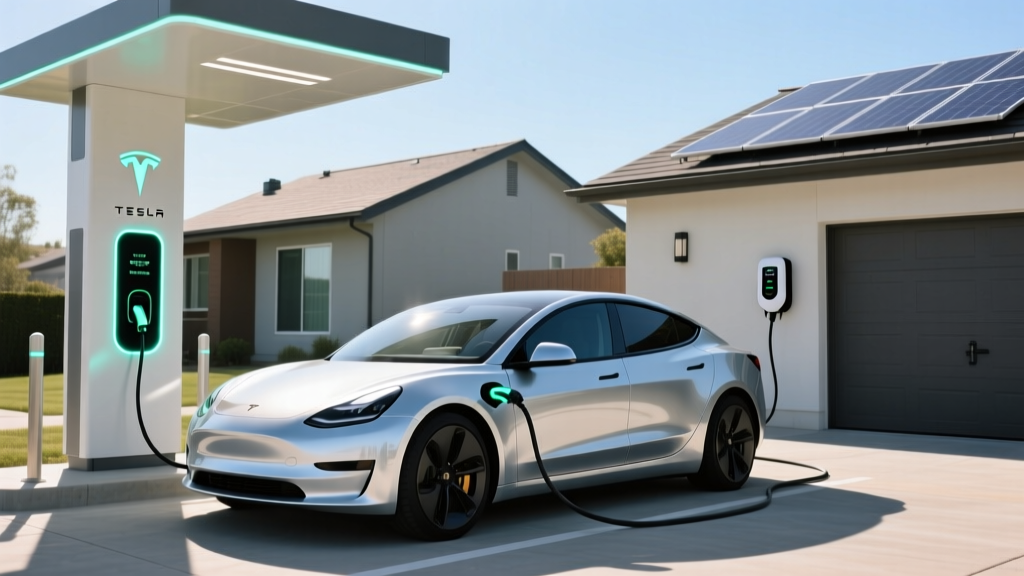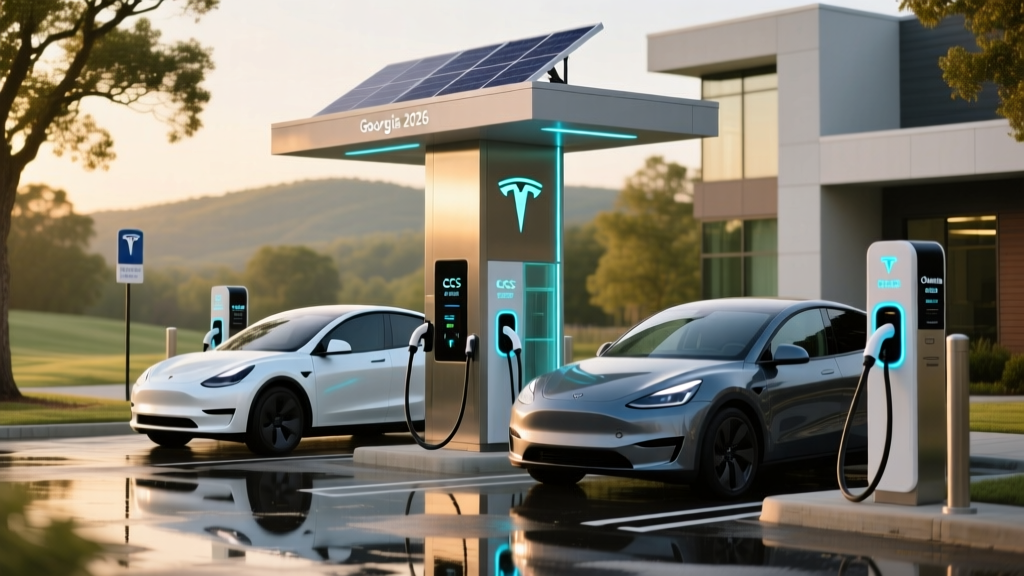
If you own an EV in Georgia — or are about to buy one — figuring out where and how to charge is your most important ownership decision. The Peach State has one of the fastest-growing EV networks in the Southeast, but the landscape of electric car charging station companies in Georgia is fragmented across residential installers, public network operators, and utility programs. This guide breaks down every charging tier, real installation costs in the Atlanta metro and beyond, which connectors your EV actually needs, and what you'll pay per mile compared to gasoline.
Understanding EV Charging Levels: kW, kWh, and Miles Per Hour
Before evaluating any charging company, you need clarity on the single most confused concept in EV ownership: kW (kilowatts) measures power — how fast energy flows, while kWh (kilowatt-hours) measures energy — the total capacity of your battery. A 60 kWh battery charged at 7.2 kW takes roughly 8.3 hours from empty to full. A 250 kW DC fast charger can refill that same battery to 80% in about 20 minutes.
| Level | Voltage / Power | Typical kW | Miles of Range Added Per Hour | Best For |
|---|---|---|---|---|
| Level 1 | 120V / 15A | 1.4 kW | 3–5 mi/hr | Overnight top-ups, PHEVs |
| Level 2 (Home/Public) | 240V / 32–48A | 7.7–11.5 kW | 25–44 mi/hr | Daily home charging, workplace |
| DC Fast Charging | 400–800V DC | 50–350 kW | 150–1,200+ mi/hr (peak) | Road trips, quick top-ups |
Most Georgia EV owners do 85–90% of their charging at home on Level 2. DC fast charging is for road trips along I-75, I-85, and I-20 — and understanding the charge curve is critical. A charger rated for 250 kW peak will only sustain that rate briefly (usually between 10–30% State of Charge), then taper progressively. A "10–80% in 18 minutes" claim assumes optimal battery preconditioning and warm ambient temperatures. In Georgia's summer heat, thermal management systems work overtime, which can slightly extend charge times.
How Much Does It Cost to Install a Home EV Charger in Georgia?
Home Level 2 installation costs in Georgia vary enormously based on your electrical panel's capacity, the distance from your panel to the garage or driveway, and whether you need a panel upgrade. Here's a realistic breakdown based on 2026 Atlanta-area electrician quotes:
| Component | Simple Install (Panel Adjacent) | Complex Install (Long Run / Upgrade) |
|---|---|---|
| Level 2 Charger Equipment | $350–$700 | $350–$700 |
| Electrician Labor (240V/40–50A circuit) | $500–$1,200 | $1,500–$3,500 |
| Permit Fee (County/City) | $50–$150 | $50–$150 |
| Electrical Panel Upgrade (if needed) | $0 | $1,500–$3,000 |
| Total Estimated Cost | $900–$2,050 | $3,400–$7,350 |
Georgia also offers a state income tax credit for alternative fuel vehicle infrastructure — currently 25% of the cost of qualified EV charging equipment and installation, capped at $250 for residential installations. This stacks with certain utility rebates. Always verify current incentive availability with the Alternative Fuels Data Center and consult a tax professional for eligibility.
Which Connector Does Your EV Need? NACS, CCS, and CHAdeMO in Georgia
Georgia's public charging infrastructure supports all three major connector standards, but the landscape is shifting rapidly toward NACS (North American Charging Standard) as of 2025–2026. Here's what your EV requires:
| Connector | Brands Using It (Native) | GA Public Availability | Adapter Needed? |
|---|---|---|---|
| NACS (Tesla) | Tesla, Ford, GM, Rivian, Volvo, Polestar, Hyundai/Kia (2025+) | Excellent — Tesla Superchargers + NACS-equipped EA stations | CCS-to-NACS adapter for older CCS vehicles |
| CCS1 | VW, BMW, Mercedes, Hyundai/Kia (pre-2025), Stellantis | Good — Electrify America, ChargePoint, EVgo | NACS-to-CCS adapter for Tesla Superchargers |
| CHAdeMO | Nissan Leaf (legacy), Mitsubishi Outlander PHEV | Declining — limited to older stations | No widely available adapter to NACS/CCS |
If you drive a 2025+ Ford F-150 Lightning, GM Equinox EV, or any newer Hyundai/Kia EV, your vehicle natively uses NACS. You can charge at Tesla Superchargers across Georgia — there are over 50 Supercharger stations in the state, concentrated along I-75 (Atlanta to Macon to Valdosta), I-85 (Atlanta to LaGrange), and I-16 (Macon to Savannah). For older CCS-equipped vehicles, Tesla sells a CCS-to-NACS adapter (~$250) that unlocks Supercharger access.
Top Electric Car Charging Station Companies in Georgia: Public Networks
Georgia's public DC fast-charging ecosystem is dominated by four networks, each with different reliability profiles, pricing models, and coverage patterns:
Tesla Supercharger Network
The gold standard for reliability in Georgia. Most stalls deliver 150 kW (V2) or 250 kW (V3), with newer 350 kW V4 stalls appearing at select locations. Pricing averages $0.28–$0.36/kWh in the Atlanta metro, with off-peak discounts at some stations. Open to NACS-equipped non-Tesla EVs at designated locations.
Electrify America
Operates 350 kW-capable CCS and NACS chargers along major corridors, including key Atlanta suburban locations and highway rest areas. Pricing: $0.48–$0.56/kWh for guest rates, or $0.36/kWh with the Pass+ subscription ($4/month). Reliability has improved but still trails Tesla — expect 5–10% of stalls to be offline at any given time.
EVgo
Strong presence in Atlanta retail locations (Kroger, shopping centers). Chargers range from 50 kW legacy units to newer 350 kW stalls. Pricing: $0.39–$0.49/kWh depending on location and subscription tier. Good for urban top-ups but less suited for highway corridor travel.
ChargePoint
Primarily Level 2 destination charging (workplaces, retail, hotels) with a growing DC fast-charging footprint. Best for opportunistic charging while shopping or working. Level 2 rates: $0.12–$0.25/kWh or per-hour fees set by the property owner.
What Does Charging Cost Per Mile in Georgia vs. Gasoline?
Georgia's electricity rates make home charging one of the most economical in the Southeast. Georgia Power's residential rate averages approximately $0.13/kWh (2026), with time-of-use plans offering off-peak rates as low as $0.06–$0.08/kWh for overnight charging.
| Scenario | Rate / Price | Vehicle Efficiency | Cost Per Mile |
|---|---|---|---|
| Home Charging (Off-Peak, GA Power TOU) | $0.07/kWh | 3.0 mi/kWh (avg EV) | $0.023/mi |
| Home Charging (Standard Rate) | $0.13/kWh | 3.0 mi/kWh | $0.043/mi |
| Public DC Fast (Tesla Supercharger) | $0.32/kWh | 3.0 mi/kWh | $0.107/mi |
| Public DC Fast (Electrify America Guest) | $0.52/kWh | 3.0 mi/kWh | $0.173/mi |
| Gasoline (GA Avg $3.10/gal) | $3.10/gal | 28 MPG (avg sedan) | $0.111/mi |
| Gasoline (Truck, 20 MPG) | $3.10/gal | 20 MPG | $0.155/mi |
The math is clear: home charging in Georgia costs roughly $0.02–$0.04 per mile, making it 70–80% cheaper than gasoline on a per-mile basis. Even public DC fast charging at Tesla Superchargers undercuts gasoline. The only scenario where EV charging approaches gas-car costs is using premium-priced networks like Electrify America at guest rates without a subscription.
Recommended Home Level 2 Chargers for Georgia EV Owners
These are the chargers we recommend based on power output, connector availability, cable length, smart features, and real-world reliability — all compatible with Georgia's 240V residential circuits:
Tesla Wall Connector
- Power: 11.5 kW (48A) max
- Connector: NACS native
- Cable: 24 ft
- Smart Features: Wi-Fi, OTA updates, load sharing, power metering
- Price: ~$475
- Best For: Tesla, Ford, GM, Rivian, and other NACS vehicles
ChargePoint Home Flex
- Power: Up to 12 kW (50A), configurable down to 16A
- Connector: J1772 (NACS adapter available)
- Cable: 23 ft
- Smart Features: Wi-Fi, app scheduling, Alexa, flexible amperage
- Price: ~$550–$700
- Best For: CCS/J1772 vehicles, panel-limited homes (adjustable amps)
Emporia Level 2 EV Charger
- Power: 11.5 kW (48A)
- Connector: J1772 (NACS version available)
- Cable: 24 ft
- Smart Features: Wi-Fi, energy monitoring, solar integration, scheduling
- Price: ~$400
- Best For: Budget-conscious buyers wanting smart features
Grizzl-E Smart
- Power: 10 kW (40A)
- Connector: J1772 (NACS version available)
- Cable: 24 ft
- Smart Features: OCPP-compatible, durable outdoor build, adjustable amperage
- Price: ~$450
- Best For: Outdoor installations, harsh-environment durability
For Georgia's hot, humid summers, outdoor-rated chargers (NEMA 4 or IP65) are essential if your installation is on an exterior wall or carport. All chargers listed above carry appropriate outdoor ratings. Ensure your electrician installs a GFCI-protected 240V receptacle (NEMA 14-50 or hardwired) per the 2023 NEC, which Georgia has adopted statewide.
Real-World Charging Times for Common EV Battery Sizes
Here's what 10–80% charging actually looks like across different battery capacities and charger types. These figures assume a preconditioned battery at moderate temperatures (~75°F):
| Battery Size (Usable kWh) | Example Vehicles | Level 2 at 11.5 kW (0–100%) | DC Fast 150 kW (10–80%) | DC Fast 250+ kW (10–80%) |
|---|---|---|---|---|
| 58 kWh | VW ID.4 Std, Chevy Equinox EV 2LT | ~5.5 hours | ~25 min | ~20 min |
| 77 kWh | Ford Mustang Mach-E ER, Tesla Model Y LR | ~7.2 hours | ~32 min | ~22 min |
| 98 kWh | Rivian R1S Max, GMC Sierra EV | ~9.0 hours | ~40 min | ~28 min |
| 131 kWh | Ford F-150 Lightning Ext Range | ~12.0 hours | ~52 min | ~35 min |
Key takeaway: for overnight home charging on Level 2, even the largest EV batteries (131 kWh) will fully recharge while you sleep. The real bottleneck is DC fast charging on road trips — larger batteries take significantly longer, and charge-curve taper above 80% means that last 20% can take as long as the first 60%. On Georgia road trips, plan to charge to 80% and move on rather than waiting for a full battery.
Safety, Electrical Code, and Georgia Installation Requirements
Every Level 2 home installation in Georgia must comply with the National Electrical Code (NEC) as adopted by the state. Key requirements include:
- Dedicated Circuit: Your EV charger must be on its own dedicated 240V circuit — no sharing with dryers, ranges, or HVAC equipment.
- Amperage Derating: NEC requires continuous loads (EV charging qualifies) to use only 80% of the circuit's rated capacity. A 50A breaker supports 40A continuous charging; a 60A breaker supports 48A.
- GFCI Protection: The 2023 NEC requires GFCI protection for all EV charging receptacles — your electrician must install a GFCI breaker or use a charger with built-in ground-fault protection.
- Permit and Inspection: Georgia requires an electrical permit for new 240V circuits. Your county building department (Fulton, DeKalb, Cobb, Gwinnett, etc.) will inspect the work before final approval. Budget $50–$150 and 1–2 weeks for inspection.
- Outdoor Rating: Any charger or receptacle exposed to weather must carry a NEMA 3R or NEMA 4 rating. Use an in-use bubble cover for NEMA 14-50 receptacles installed outdoors.
Frequently Asked Questions
How much does it cost to install a home EV charger in Georgia?
A straightforward Level 2 installation (panel has capacity, short wire run) typically costs $900–$2,050 total including equipment, electrician labor, and permits. Complex installs requiring a 200A panel upgrade can reach $3,400–$7,350. Georgia's state tax credit covers 25% of equipment and installation costs up to $250.
How fast will each charging level add range?
Level 1 (120V) adds 3–5 miles per hour — adequate only for plug-in hybrids or very low daily mileage. Level 2 (240V) adds 25–44 miles per hour depending on amperage, sufficient for any daily driving pattern. DC fast charging adds 150–1,200+ miles per hour at peak, but sustained rates taper significantly above 50–60% State of Charge.
Which connector is compatible with my EV?
For 2025–2026 model-year vehicles: Tesla, Ford, GM, Rivian, Volvo, and newer Hyundai/Kia models use NACS natively. Most other brands (VW, BMW, Mercedes, pre-2025 Hyundai/Kia) use CCS1. The Nissan Leaf uses CHAdeMO. Check your vehicle's charge port or owner's manual. CCS-to-NACS adapters are available for ~$200–$250 to access Tesla Superchargers with a CCS vehicle.
How much does EV charging cost per mile vs. gas in Georgia?
Home charging on Georgia Power's standard rate costs approximately $0.04/mile — about 65% less than a 28 MPG gasoline car at $3.10/gallon ($0.11/mile). Off-peak home charging drops to ~$0.02/mile. Public DC fast charging at Tesla Superchargers costs ~$0.11/mile, roughly equal to gasoline. Premium networks without subscriptions can exceed gas-car costs per mile.
What electrical upgrades might I need for a home charger?
The most common upgrade is a panel capacity increase from 100A or 150A to 200A, costing $1,500–$3,000. This is needed when your existing panel's load calculation doesn't have headroom for a 40–50A EV circuit. Older homes with Federal Pacific or Zinsco panels must be upgraded regardless, as these panels are known fire hazards and insurers may require replacement. A licensed electrician will perform a NEC Article 220 load calculation before recommending any upgrade.