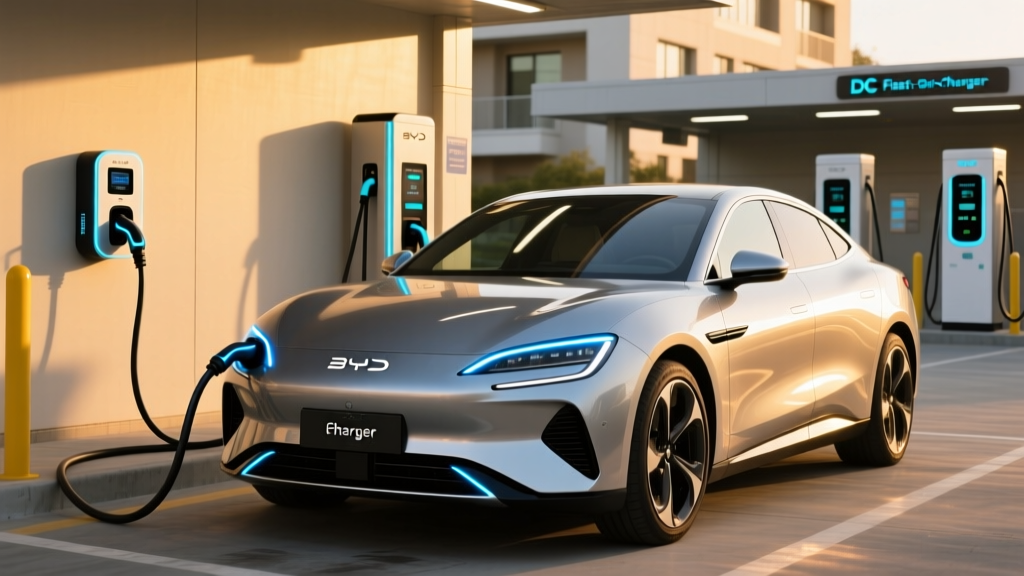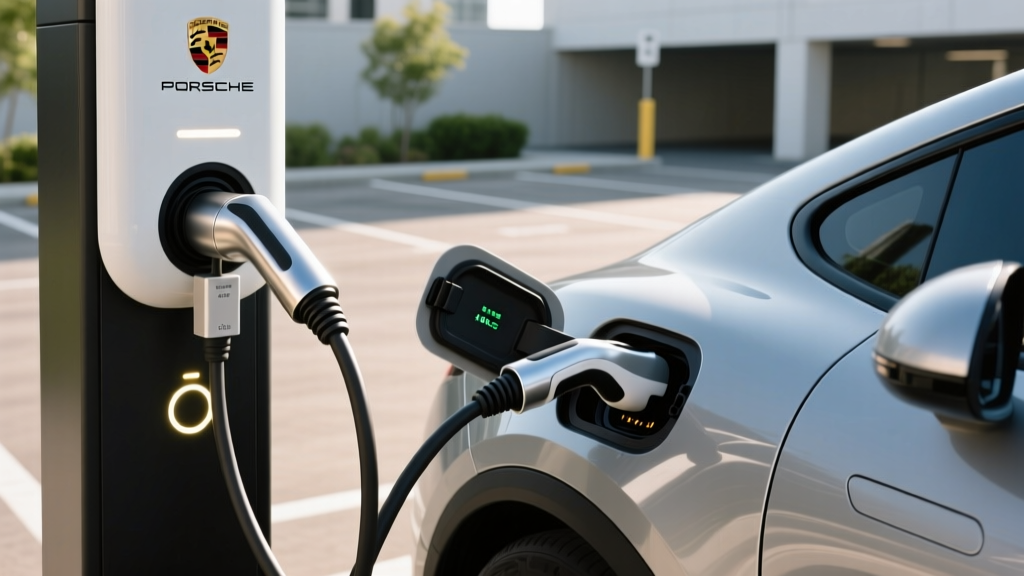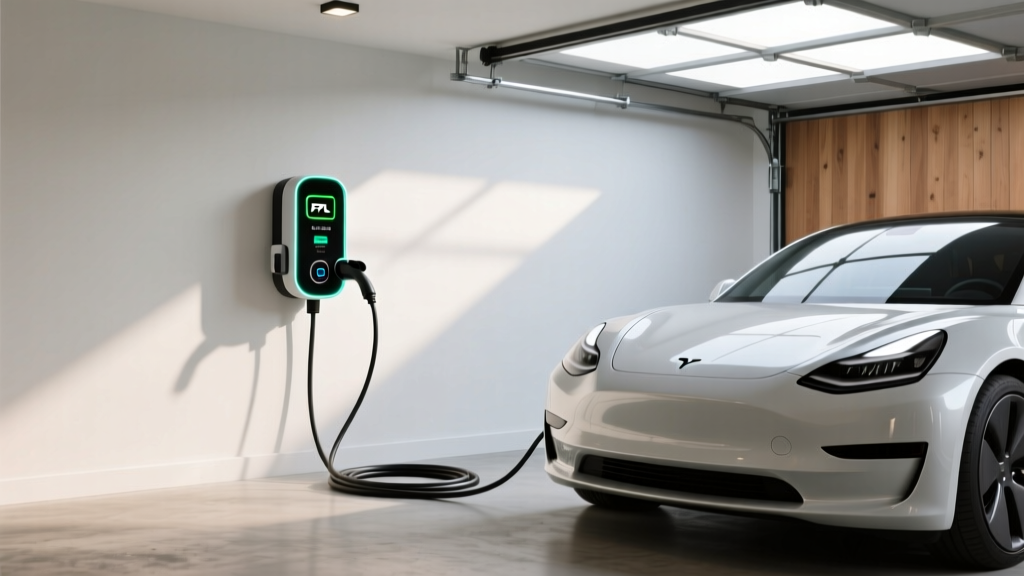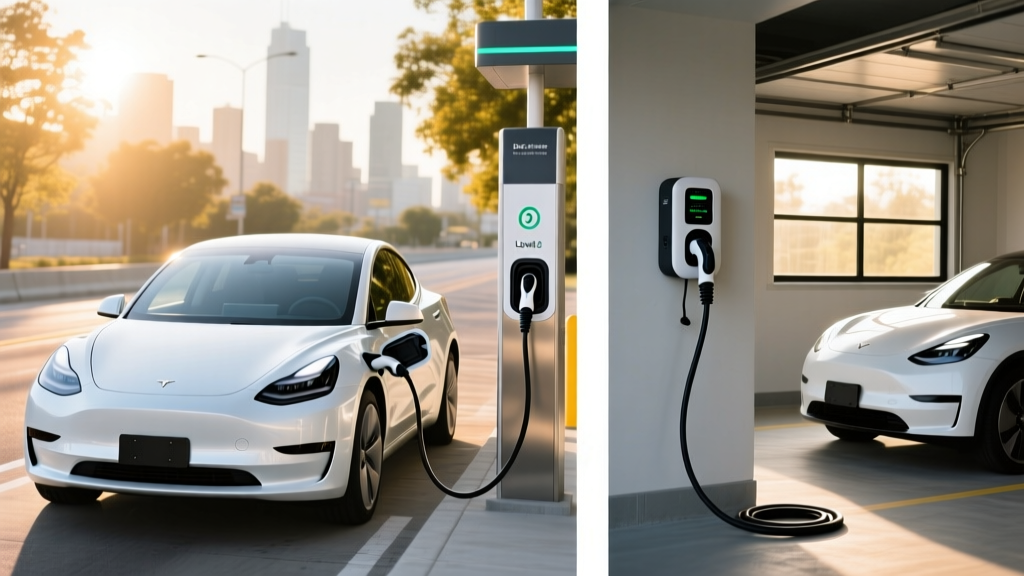
Whether you're planning your first highway trip in a battery-electric vehicle or mapping out a daily charging routine, understanding the mechanics and economics of electric car charging on the road is essential. This guide breaks down charging levels with exact speeds, connector compatibility across brands, real installation costs for home Level 2 setups, and the per-mile math that determines whether an EV actually saves you money compared to a gas car.
Charging Levels Explained: Speeds, Power, and Range Added
The single most important distinction in EV charging is between kW (kilowatts) and kWh (kilowatt-hours). A kilowatt is a unit of power — the rate at which electricity flows into your battery. A kilowatt-hour is a unit of energy — the actual amount of electricity stored. Think of kW as the width of a hose and kWh as the bucket you're filling. A wider hose (higher kW) fills the bucket (battery kWh) faster.
There are three charging levels you'll encounter as an EV owner:
| Level | Voltage | Max Power (kW) | Miles of Range Added Per Hour | Typical Use Case |
|---|---|---|---|---|
| Level 1 (120V) | 120V AC | 1.2–1.9 kW | 3–5 mi/hr | Overnight trickle charge, PHEVs, low-mileage drivers |
| Level 2 (240V) | 240V AC | 3.3–19.2 kW | 12–75 mi/hr | Home daily charging, workplace, shopping centers |
| DC Fast Charge | 400–800V DC | 50–350 kW | 150–1,200+ mi/hr (peak) | Highway road trips, rapid top-ups |
Level 1 plugs into any standard 120V household outlet. It's slow — adding roughly 4 miles of range per hour — but it works for plug-in hybrids with small batteries (10–18 kWh) or BEV owners who drive under 30 miles daily and can charge overnight. A full charge on a 75 kWh battery at Level 1 takes 40+ hours, making it impractical as a primary charging method for most BEVs.
Level 2 requires a 240V circuit, identical to what a clothes dryer or electric oven uses. This is where most daily EV charging happens. At 48 amps (11.5 kW), a Level 2 charger adds roughly 35–45 miles of range per hour, meaning a typical 75 kWh battery charges from empty to full in 7–8 hours — perfect for overnight replenishment.
DC Fast Charging bypasses the vehicle's onboard charger and feeds direct current straight into the battery at high voltage. Speeds vary enormously based on the vehicle's architecture and the charger's output. A Hyundai Ioniq 5 on a 350 kW charger can peak at 238 kW and reach 10–80% in roughly 18 minutes, while an older Nissan Leaf on a 50 kW CHAdeMO station might take 45 minutes for the same 10–80% session.
Connector Compatibility: NACS, CCS1, and CHAdeMO
The connector landscape has consolidated significantly since 2023, when Ford and GM announced adoption of Tesla's North American Charging Standard (NACS). As of the 2026 model year, nearly every major automaker has transitioned to NACS as the native port on new vehicles, though millions of CCS1-equipped EVs remain on the road.
| Connector | Brands Using It (Native) | DC Fast Charge Networks | Adapter Available? |
|---|---|---|---|
| NACS (Tesla) | Tesla, Ford, GM, Rivian, Volvo, Polestar, Mercedes, BMW, Hyundai/Kia (2025+), Toyota (bZ series) | Tesla Supercharger, Electrify America (NACS stalls), EVgo | CCS1→NACS adapters widely available ($150–$250) |
| CCS1 | Legacy: VW ID.4 (pre-2025), older Hyundai/Kia, older Ford Mustang Mach-E, BMW i4/iX (pre-2025) | Electrify America, EVgo, ChargePoint, non-Tesla networks | NACS→CCS1 adapters available ($200–$300) |
| CHAdeMO | Nissan Leaf (all years), Mitsubishi Outlander PHEV (older) | Limited and shrinking network | No practical adapter to NACS/CCS |
If you're buying a new EV in 2026, you'll almost certainly get a NACS port. If you own a CCS1 vehicle, adapters from brands like Lectron, A2Z, and Tesla's official CCS adapter allow access to Supercharger stalls that support non-Tesla vehicles. CHAdeMO owners face the most restricted DC fast-charging future, as networks have largely deprioritized new CHAdeMO installations.
Home Level 2 Installation: Electrical Requirements and Costs
Installing a Level 2 home charger is the single biggest quality-of-life upgrade an EV owner can make. But costs vary dramatically based on your home's electrical panel, the distance from panel to charger location, and local permit requirements.
Electrical Requirements
A typical Level 2 charger draws between 16 and 48 amps on a 240V circuit. The National Electrical Code (NEC) requires that continuous loads (anything running 3+ hours, which includes EV charging) use no more than 80% of a circuit's rated capacity. This means:
- A 40-amp charger requires a 50-amp breaker and 6-gauge copper wire
- A 48-amp charger requires a 60-amp breaker and 4-gauge copper wire
- A 32-amp charger requires a 40-amp breaker and 8-gauge copper wire
Your home's main electrical panel must have enough spare capacity to support the new circuit. Most modern homes with 200-amp service can accommodate a 50–60 amp EV circuit without issue. Older homes with 100-amp service may require a panel upgrade to 200 amps, which is the single largest variable in installation cost.
Installation Cost Breakdown
| Component | Simple Install (Panel Nearby) | Moderate Install (50–100 ft Run) | Complex Install (Panel Upgrade Needed) |
|---|---|---|---|
| Level 2 Charger (Equipment) | $350–$700 | $350–$700 | $350–$700 |
| Electrician Labor | $300–$600 | $600–$1,500 | $1,000–$2,500 |
| Electrical Permit | $50–$150 | $50–$200 | $100–$300 |
| Panel Upgrade (if needed) | — | — | $1,500–$4,000 |
| Conduit, Wire, Misc. Materials | $50–$150 | $150–$400 | $200–$600 |
| Total Estimated Cost | $750–$1,600 | $1,200–$2,800 | $3,150–$8,100 |
Always hire a licensed electrician and pull the required local permit. Unpermitted EV charger installations can void home insurance claims and create fire hazards. Many utilities offer rebates of $250–$1,000 for Level 2 installations — check with your local provider before scheduling work.
How Much Does Charging Cost Per Mile vs. Gas?
The economics of EV charging depend heavily on where and when you charge. Here's a realistic breakdown for a mid-size EV averaging 3.0 miles per kWh (roughly 33 kWh/100mi, similar to a Tesla Model Y or Hyundai Ioniq 5):
| Charging Scenario | Cost Per kWh | Cost Per Mile (3 mi/kWh) | Annual Cost (12,000 mi) |
|---|---|---|---|
| Home, Off-Peak Rate | $0.08–$0.14 | $0.03–$0.05 | $320–$560 |
| Home, Standard Rate | $0.14–$0.20 | $0.05–$0.07 | $560–$800 |
| Public Level 2 (Workplace/Mall) | $0.20–$0.40 | $0.07–$0.13 | $800–$1,600 |
| DC Fast Charge (Electrify America, EVgo) | $0.35–$0.65 | $0.12–$0.22 | $1,400–$2,600 |
| Tesla Supercharger (average) | $0.28–$0.40 | $0.09–$0.13 | $1,120–$1,600 |
| Gas Vehicle (28 MPG avg, $3.40/gal) | — | $0.12 | $1,440 |
The takeaway: home charging is dramatically cheaper than gas, often saving $800–$1,100 annually. But if you rely exclusively on DC fast charging — common for apartment dwellers without home charging access — your per-mile cost can equal or exceed gasoline. The economics strongly favor EV owners who can charge at home overnight.
Charging Times for Common Battery Sizes
How long a session takes depends on battery capacity, charger power output, and the vehicle's charge acceptance rate. Here are real-world estimates for common scenarios:
| Vehicle / Battery Size | Level 1 (1.4 kW) | Level 2 (11.5 kW) | DC Fast (Peak kW) |
|---|---|---|---|
| PHEV — 15 kWh (Toyota RAV4 Prime) | ~8 hrs | ~1.5 hrs | N/A (most PHEVs lack DC) |
| Compact BEV — 58 kWh (VW ID.4) | ~30 hrs | ~5.5 hrs | ~28 min (135 kW peak) |
| Mid-Size BEV — 77 kWh (Tesla Model Y) | ~40 hrs | ~7 hrs | ~20 min (250 kW peak) |
| Large BEV — 100 kWh (Ford F-150 Lightning Ext.) | ~52 hrs | ~9 hrs | ~35 min (150+ kW sustained) |
| 800V Architecture — 77 kWh (Hyundai Ioniq 5) | ~40 hrs | ~7 hrs | ~18 min (238 kW peak) |
Cold weather caveat: Battery charging slows significantly when cell temperatures drop below 50°F. In sub-freezing conditions, expect DC fast-charge sessions to take 20–40% longer unless your vehicle has an active battery preconditioning system. Tesla, Hyundai/Kia, and GM vehicles with heat pumps and thermal management precondition the battery automatically when you navigate to a charger.
Recommended Home Level 2 Chargers (2026)
Not all Level 2 chargers are equal. Here are top picks based on reliability, smart features, build quality, and value:
Best Overall: ChargePoint Home Flex
- Power: Up to 12 kW (50 amps), adjustable down to 16A
- Connector: NACS (native), J1772 with adapter
- Cable: 23 ft
- Smart Features: Wi-Fi, app scheduling, Alexa, energy tracking
- Price: ~$599
Best Value: Emporia Level 2 Charger
- Power: Up to 11.5 kW (48 amps)
- Connector: J1772 (NACS adapter available)
- Cable: 24 ft
- Smart Features: Wi-Fi, app control, solar integration, load management
- Price: ~$399
Best for Tesla/NACS: Tesla Wall Connector
- Power: Up to 11.5 kW (48 amps)
- Connector: NACS native
- Cable: 24 ft
- Smart Features: Wi-Fi, OTA updates, power sharing (link multiple units)
- Price: ~$475
Best Premium: Grizzl-E Smart
- Power: Up to 10 kW (40 amps)
- Connector: J1772 or NACS
- Cable: 24 ft
- Smart Features: OCPP-compatible, works with any energy management platform
- Price: ~$549
Safety, Code, and Installation Best Practices
EV charging involves sustained high-current draw, making proper installation non-negotiable. Key requirements:
- Dedicated circuit: Your EV charger must have its own dedicated breaker — never share a circuit with other high-draw appliances.
- GFCI protection: The 2020 NEC and later require GFCI (Ground Fault Circuit Interrupter) protection for all outdoor EV charging outlets. Many modern hardwired chargers have built-in GFCI; plug-in units on NEMA 14-50 outlets need a GFCI breaker.
- Outdoor rating: If mounting outside, ensure the charger carries a NEMA 4 or IP65 weather rating. All units listed above meet this standard.
- Hardwired vs. plug: Hardwired installations (directly connected to the circuit) are generally preferred for 48-amp and above chargers, as NEMA 14-50 receptacles can loosen over time with the sustained thermal load of EV charging. Plug-in units offer portability but are limited to 40 amps on a 50-amp circuit per NEC 80% rule.
- Utility notification: Inform your electric utility before installation. Some utilities offer time-of-use (TOU) rate plans that cut charging costs by 40–60% during off-peak hours (typically 10 PM – 6 AM).
Frequently Asked Questions
How much does it cost to install a home EV charger?
A straightforward Level 2 installation with the panel nearby costs $750–$1,600 including equipment, labor, and permits. If your electrical panel needs upgrading from 100A to 200A, total costs can reach $3,000–$8,000. Always get at least two quotes from licensed electricians and check for utility rebates, which can offset $250–$1,000 of the total.
How fast will each charging level add range?
Level 1 (120V) adds 3–5 miles per hour. Level 2 (240V, 48A) adds 30–45 miles per hour depending on vehicle efficiency. DC fast charging adds 150–1,200+ miles per hour at peak, though real sessions last 18–45 minutes for a 10–80% fill because charge speed tapers as the battery fills.
Which connector/charger is compatible with my EV?
For 2026 model-year vehicles, most new EVs use the NACS connector natively. Older CCS1 vehicles can access Tesla Superchargers via a CCS-to-NACS adapter ($150–$300). CHAdeMO vehicles (mainly the Nissan Leaf) have limited adapter options and a shrinking DC fast-charge network. Check your vehicle's charge port or owner's manual for the specific connector type.
How much does charging cost per mile vs. gas?
Home off-peak charging costs $0.03–$0.05 per mile, roughly one-quarter the cost of gasoline at $3.40/gal in a 28 MPG vehicle ($0.12/mi). Public DC fast charging costs $0.12–$0.22 per mile, comparable to or slightly above gas. The savings case for EVs depends heavily on access to affordable home charging.
What electrical upgrades might I need?
If your home has 200-amp electrical service with available breaker slots, you likely need no panel upgrade. Homes with 100-amp service, older wiring (aluminum or knob-and-tube), or panels near capacity may require a $1,500–$4,000 panel upgrade. A licensed electrician can assess your panel during a site visit — most offer this evaluation for free or a nominal fee applied toward installation.