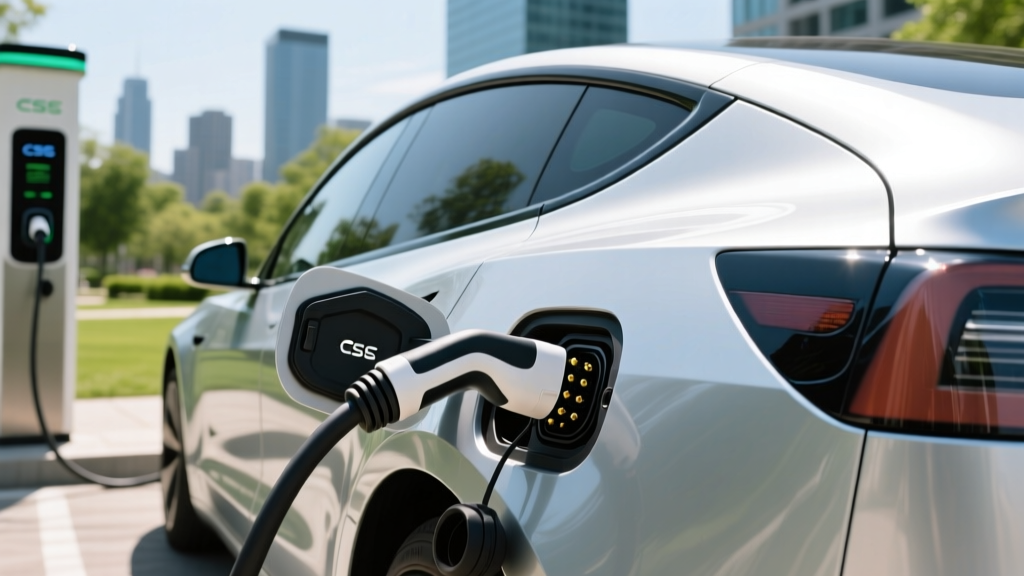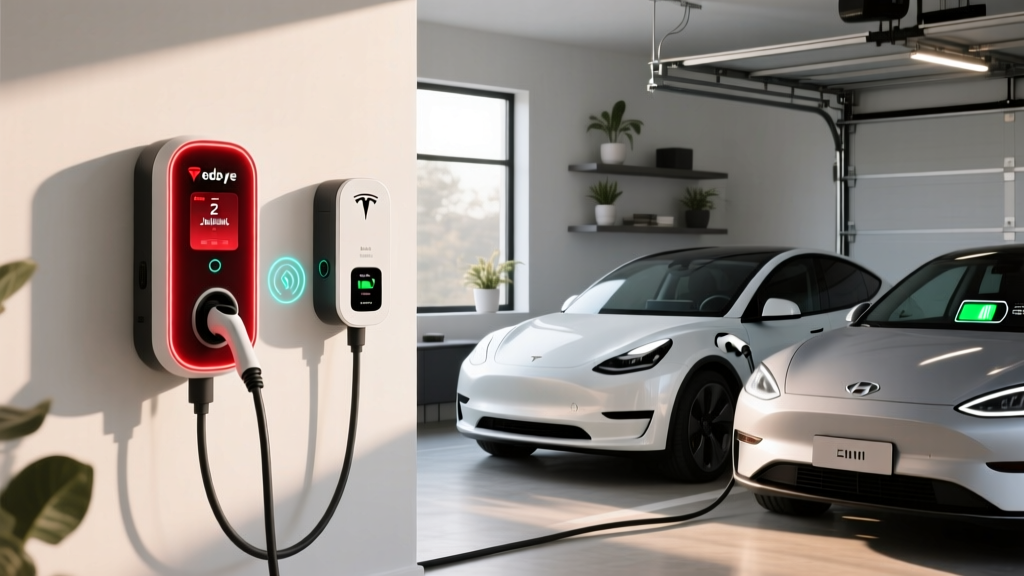
Search for "electric car charging free" and you will find a patchwork of promises: complimentary chargers at malls, zero-cost workplace plugs, and promotional credits from charging networks. Some of it is true. A lot of it is misleading. In 2026, the reality is that most EV charging costs money — but how much depends entirely on where and how you plug in. A homeowner on a time-of-use utility plan might pay the equivalent of $1.10 per gallon of gasoline, while a road-tripper relying solely on DC fast chargers could pay more per mile than a hybrid owner.
This guide cuts through the noise with exact numbers: kilowatt (kW) charge rates, kilowatt-hour (kWh) energy costs, real installation bills, and per-mile math you can trust. We will also show you the narrow scenarios where electric car charging is actually free — and why you should not build your ownership plan around them.
Is Electric Car Charging Ever Actually Free?
Yes, but the window is closing. Here are the legitimate ways EV owners charge at zero out-of-pocket cost in 2026:
- Workplace charging: A growing number of employers offer complimentary Level 2 charging as an employee benefit. Availability varies wildly by industry and region — tech campuses and government facilities lead, while small businesses rarely offer it.
- Retail and hospitality perks: Some shopping centers, hotels, and restaurants provide free Level 2 chargers to attract customers. These are typically slower (6.6–19.2 kW) and limited to 1–2 hours.
- Manufacturer promotional credits: Brands like Volkswagen, Hyundai, and Ford have bundled complimentary DC fast charging (e.g., 2–3 years of Electrify America or EVgo credits) with new vehicle purchases. These expire and are not renewable.
- Apartment/condo amenities: Some multi-family properties include EV charging in HOA fees or rent, effectively making it "free" at the point of use.
- Municipal and utility programs: A handful of cities and public utilities still offer free public Level 2 stations, though many have transitioned to pay-per-use as EV adoption has scaled.
The catch? Free chargers are almost always Level 2 (adding roughly 20–45 miles of range per hour), they are often occupied or broken, and they are not a viable primary charging strategy. Plan to pay for the majority of your electrons.
Charging Levels Explained: Speeds, kW, and Miles Per Hour
Before comparing costs, you need to understand the three charging tiers. Kilowatts (kW) measure the rate of energy flow — think of it as how fast the "pump" fills your battery. Kilowatt-hours (kWh) measure total energy stored — the size of your battery "tank." Confusing the two is the single most common EV mistake.
| Level | Voltage | Power (kW) | Miles of Range Added Per Hour | Typical Use Case | 10–80% Time (75 kWh Battery) |
|---|---|---|---|---|---|
| Level 1 | 120V AC | 1.0–1.4 kW | 3–5 mi/hr | Overnight trickle; PHEV top-ups | ~40+ hours (impractical) |
| Level 2 | 240V AC | 3.3–19.2 kW | 12–75 mi/hr | Home, workplace, retail | ~4.5 hrs at 11.5 kW |
| DC Fast Charge | 400–800V DC | 50–350 kW | 150–1,200+ mi/hr (peak) | Road trips, highway corridors | 18–45 min (varies by vehicle) |
Real-world caveat: DC fast charging does not sustain peak kW for the entire session. A vehicle advertising "250 kW peak" may only hold that rate between 10–40% State of Charge (SoC), then taper significantly. Expect a 10–80% session on a 250 kW-capable vehicle (like a Hyundai Ioniq 5 or Tesla Model 3) to average roughly 150–180 kW over 18–25 minutes, not a sustained 250 kW. Vehicles on 800V architectures (Ioniq 5, Kia EV6, Porsche Taycan, Lucid Air) sustain higher rates longer than 400V platforms.
How Much Does a Home Level 2 Charger Cost to Install?
Home Level 2 charging is where most EV owners save the most money — but the upfront installation cost can be a shock, especially in older homes. Here is a realistic breakdown for a standard 240V / 48-amp hardwired Level 2 charger installation in 2026:
| Component | Typical Cost Range | Notes |
|---|---|---|
| Level 2 charger (hardware) | $350–$750 | Smart Wi-Fi chargers (e.g., ChargePoint Home Flex, Emporia Level 2, Tesla Wall Connector) |
| Electrician labor | $500–$2,000 | Depends on run length, wall/fish complexity, and local rates |
| Electrical permit | $50–$250 | Required in most jurisdictions; varies by municipality |
| Electrical panel upgrade (if needed) | $1,500–$4,500 | Needed if your panel is 100A or maxed out; upgrading to 200A is common |
| Total (no panel upgrade) | $900–$3,000 | Typical scenario for newer homes with 200A service |
| Total (with panel upgrade) | $2,400–$7,500 | Older homes (pre-2000) with 100A or 125A panels |
What Electrical Upgrades Might You Need?
A 48-amp Level 2 charger requires a dedicated 60-amp circuit (National Electrical Code requires circuits to be rated at 125% of the continuous load). If your electrical panel is already near capacity — common in homes built before 2000 with 100-amp service — you will need a panel upgrade to 200 amps before an electrician can add the EV circuit.
Some utilities and states offer rebates that offset panel upgrade costs. The federal Residential Clean Energy Credit does not cover EV charger hardware in most cases after 2022, though the separate Alternative Fuel Vehicle Refueling Property Credit (30C) provides up to $1,000 for home charger installation through 2032, subject to census-tract eligibility. Consult a tax professional for your specific situation.
For homes where a panel upgrade is prohibitively expensive, consider a lower-amperage charger (e.g., 32-amp on a 40-amp circuit) or a smart load-management device like the Emporia V2X or Wallbox Power Sharing system, which dynamically limits charger draw to stay within your panel's capacity.
Connector Compatibility: NACS, CCS, and CHAdeMO in 2026
The connector landscape has consolidated significantly. Tesla's North American Charging Standard (NACS) has been adopted by Ford, GM, Rivian, Volvo, Polestar, Mercedes-Benz, BMW, and most major automakers starting with 2025–2026 model-year vehicles. CCS1 remains on many vehicles already on the road, and CHAdeMO is effectively legacy (Nissan Leaf being the primary holdout).
| Connector | Brands Using It (New Vehicles) | Adapter Needed? |
|---|---|---|
| NACS (Tesla standard) | Tesla, Ford, GM, Rivian, Volvo, Polestar, Mercedes, BMW, Hyundai, Kia (select 2026 models) | CCS-to-NACS adapters available (~$150–$250) for legacy CCS vehicles |
| CCS1 | Volkswagen ID.4 (pre-2026), older Hyundai/Kia/Stellantis models, Honda Prologue (2024–2025) | NACS-to-CCS adapters for accessing Tesla Superchargers |
| CHAdeMO | Nissan Leaf (legacy); no new US vehicles since ~2024 | CHAdeMO-to-CCS adapters exist but are expensive (~$400+) and rare |
For home Level 2 charging: All non-Tesla vehicles use the J1772 connector for AC charging. Tesla vehicles include a J1772-to-NACS adapter in the glovebox. If you buy a third-party Level 2 charger with a J1772 plug, it will work with every EV on the road (Tesla included, via adapter). If you buy a Tesla Wall Connector, you will need the J1772 adapter for non-Tesla vehicles.
Cost Per Mile: EV Charging vs. Gasoline in 2026
This is where the "electric car charging free" question gets its most honest answer. Even when you pay for every kWh, home charging is dramatically cheaper per mile than gasoline. Public DC fast charging narrows the gap but usually still beats gas.
| Scenario | Rate | Vehicle Efficiency | Cost Per Mile | Annual Cost (12,000 mi) |
|---|---|---|---|---|
| Home Level 2 (national avg electricity) | $0.16/kWh | 3.0 mi/kWh (typical EV) | $0.053 | $636 |
| Home Level 2 (off-peak TOU rate) | $0.08/kWh | 3.0 mi/kWh | $0.027 | $324 |
| Public Level 2 (network pricing) | $0.25/kWh | 3.0 mi/kWh | $0.083 | $996 |
| DC Fast Charging ( Electrify America, EVgo) | $0.48/kWh | 3.0 mi/kWh | $0.160 | $1,920 |
| Gasoline (25 MPG combined, $3.40/gal) | $3.40/gal | 25 MPG | $0.136 | $1,632 |
| Gasoline (30 MPG combined, $3.40/gal) | $3.40/gal | 30 MPG | $0.113 | $1,356 |
The takeaway: Home charging at average or off-peak rates is 2–5× cheaper per mile than gasoline. But if you rely exclusively on DC fast charging at $0.48/kWh, you will actually spend more per mile than a 30 MPG gas car. This is why home charging access is the single biggest financial factor in EV ownership. According to the U.S. Department of Energy, EV owners who charge primarily at home save an average of $800–$1,200 annually on fuel compared to gasoline vehicle owners.
Recommended Home EV Chargers for 2026
After testing and tracking reliability data across dozens of Level 2 chargers, these are our top picks based on power output, build quality, smart features, and value:
ChargePoint Home Flex
- Power: Up to 11.5 kW (48A) — configurable down to 16A
- Connector: J1772 (works with all EVs; Tesla via adapter)
- Cable length: 23 ft
- Smart features: Wi-Fi, scheduling, energy tracking, Alexa
- Price: ~$549
- Best for: Flexibility — adjustable amperage fits any panel
Tesla Wall Connector
- Power: Up to 11.5 kW (48A)
- Connector: NACS (J1772 adapter available separately ~$95)
- Cable length: 24 ft
- Smart features: Wi-Fi, OTA updates, power sharing, Tesla app
- Price: ~$475
- Best for: Tesla households; cleanest NACS integration
Emporia Level 2 Smart Charger
- Power: Up to 11.5 kW (48A)
- Connector: J1772
- Cable length: 24 ft
- Smart features: Wi-Fi, solar integration, energy monitoring, load management
- Price: ~$399
- Best for: Budget-conscious buyers; solar-panel homes
Wallbox Pulsar Plus
- Power: Up to 11.5 kW (48A)
- Connector: J1772
- Cable length: 25 ft
- Smart features: Wi-Fi + Bluetooth, Power Sharing, Eco-Smart (solar)
- Price: ~$599
- Best for: Multi-charger households; solar integration
Safety, Electrical Code, and Installation Best Practices
EV charging draws significant continuous current — often for 6–10 hours at a stretch. Cutting corners on installation is a fire risk and a code violation. Here is what your installation must include:
- Dedicated circuit: Your Level 2 charger must have its own breaker — never share a circuit with other appliances. A 48A charger requires a 60A breaker per NEC Article 210.20(A).
- GFCI protection: NEC 2020 and later require GFCI protection for all EV charging outlets. Hardwired installations (which most electricians prefer for 48A+ chargers) often have GFCI built into the charger itself.
- Outdoor rating: If your charger is installed outdoors or in an unsealed garage, it must carry a NEMA 4 (or IP65+) weatherproof rating. All chargers recommended above meet this standard.
- Wire gauge: A 60A circuit typically requires 4 AWG copper wire (THHN in conduit) or 6 AWG for runs under 50 feet, depending on local code. Your electrician will size this correctly.
- Permit and inspection: Every jurisdiction requires a permit for new 240V circuits. The inspection ensures your installation meets NEC and local amendments. Do not skip this — unpermitted work can void home insurance claims.
For detailed code requirements, reference the National Fire Protection Association's NEC guidelines.
Real Charging Times for Popular 2026 EVs
Charging speed depends on both the charger's output and the vehicle's onboard acceptance rate. Here are real 10–80% times for common battery sizes at various charger types:
| Vehicle (Battery Size) | Level 2 at 11.5 kW | DC Fast at 150 kW | DC Fast at 250+ kW |
|---|---|---|---|
| Tesla Model 3 (75 kWh, NMC) | ~4.5 hours | ~30 min | ~22 min (V3 Supercharger) |
| Hyundai Ioniq 5 (77.4 kWh, NMC, 800V) | ~5 hours | ~22 min | ~18 min (350 kW capable) |
| Ford Mustang Mach-E (91 kWh, NMC) | ~5.8 hours | ~38 min | ~32 min |
| Chevrolet Equinox EV (85 kWh, NMC) | ~5.5 hours | ~35 min | ~28 min |
| Toyota bZ4X (71.4 kWh, NMC) | ~4.5 hours | ~35 min | ~30 min (limited to ~150 kW peak) |
Charge curve reality check: Those DC fast times assume optimal battery temperature (preconditioned) and starting at 10% SoC. If you arrive at a charger with a cold battery or above 30% SoC, add 5–15 minutes. Charging above 80% slows dramatically — going from 80–100% can take as long as 10–80%. For road trips, plan to charge to 80% and drive on.
Frequently Asked Questions
How much does it cost to install a home EV charger?
Between $900 and $3,000 for a typical installation in a home with adequate 200A electrical service. If your home needs a panel upgrade (common in pre-2000 homes with 100A service), expect $2,400–$7,500 total. The federal 30C tax credit can offset up to $1,000 of the cost if you live in an eligible census tract.
How fast will each charging level add range?
Level 1 (120V) adds 3–5 miles per hour. Level 2 (240V, 48A) adds roughly 35–45 miles per hour for most EVs. DC fast charging adds 150–1,200+ miles per hour at peak, but sessions are measured in minutes (18–45 min for 10–80%), not hours, because you won't stay plugged in that long.
Which connector or charger is compatible with my EV?
For 2026 model-year vehicles: Tesla, Ford, GM, Rivian, Volvo, and several others now use NACS. Most 2024–2025 non-Tesla EVs still use CCS1. For home Level 2 charging, all vehicles accept J1772 (Tesla via included adapter). Buy a J1772 charger for universal compatibility, or a Tesla Wall Connector if your household is all-Tesla.
How much does charging cost per mile compared to gas?
Home charging at the national average of $0.16/kWh costs about $0.053 per mile in a typical EV (3.0 mi/kWh) — roughly 60% cheaper than a 25 MPG gas car at $3.40/gallon ($0.136/mi). Off-peak home rates ($0.08/kWh) drop that to $0.027/mi. Public DC fast charging at $0.48/kWh costs ~$0.16/mi, which is more expensive than most gas cars.
What electrical upgrades might I need for a home charger?
If your home has a 200-amp electrical panel with available breaker slots, you likely need no upgrade — just a new 60A dedicated circuit. If your panel is 100A or near capacity, you will need a panel upgrade to 200A ($1,500–$4,500). An alternative is installing a lower-amperage charger (32A on a 40A circuit) or using a smart load-management system that shares capacity with existing appliances.
Can I really charge my EV for free?
Occasionally, yes — through workplace chargers, retail perks, or manufacturer promotional credits. But these are supplemental, unreliable as a primary strategy, and increasingly rare as networks monetize. Budget for paid home charging as your baseline; treat free charging as a bonus.