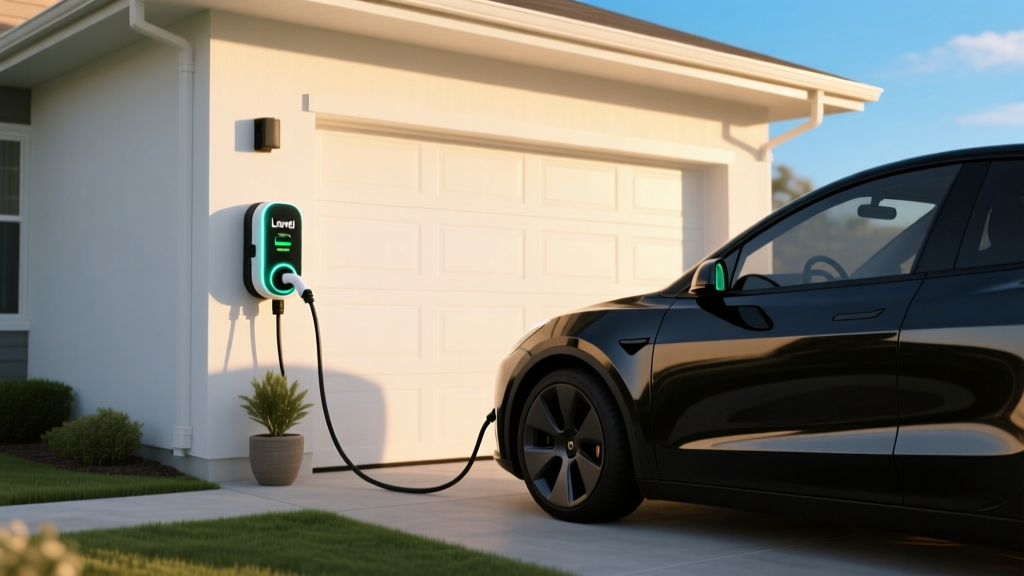
Mounting an electric car charger outside your home is one of the highest-impact upgrades an EV owner can make. A properly installed outdoor Level 2 station adds 25–44 miles of range per hour of charging, costs a fraction of public fast charging, and eliminates the daily friction of hunting for public stations. But outdoor installations carry specific electrical, code, and weatherproofing requirements that indoor setups don't.
This guide walks through every decision point — from panel capacity and circuit sizing to connector choice, equipment selection, and the real installed cost you should budget for in 2026.
Charging Levels Explained: Speeds in kW and Miles Per Hour
The single most important distinction in EV charging is between kW (kilowatts — the rate of power delivery) and kWh (kilowatt-hours — the total energy stored in your battery). A 48-amp Level 2 charger delivering 11.5 kW adds energy at that rate; a 75 kWh battery charged from empty at that rate would theoretically fill in roughly 6.5 hours.
| Level | Voltage | Power (kW) | Miles of Range Added Per Hour | Typical Use Case |
|---|---|---|---|---|
| Level 1 | 120V AC | 1.0–1.4 kW | 3–5 mi/hr | Overnight trickle; PHEVs with small batteries |
| Level 2 | 240V AC | 3.3–19.2 kW | 12–44+ mi/hr (at 11.5 kW: ~30 mi/hr) | Home daily charging; workplace; destination |
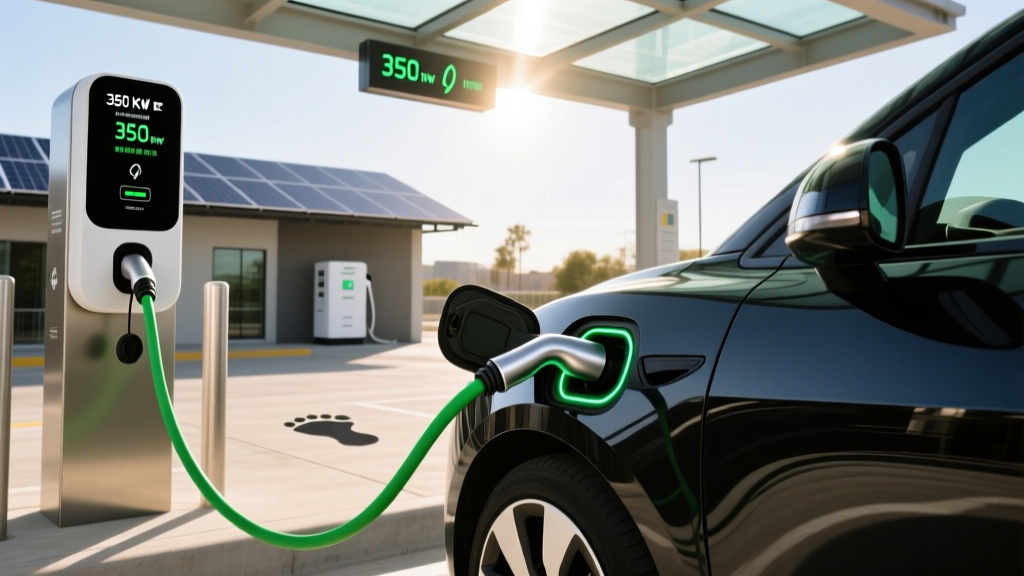
| DC Fast | 400–800V DC | 50–350+ kW | 150–300+ mi/hr (varies by vehicle charge curve) | Road trips; 10–80% in 18–35 minutes |
For an outdoor home installation, Level 2 is the standard. Most modern EVs accept between 7.2 kW and 11.5 kW on Level 2, though some (like the Chevrolet Silverado EV and certain Tesla models with 48-amp onboard chargers) can accept up to 19.2 kW if paired with an 80-amp circuit and a capable charger.
- Tesla Model Y (75 kWh usable, 11.5 kW onboard): ~4.5 hours on a 48A/11.5 kW Level 2 charger
- Hyundai Ioniq 5 (77.4 kWh usable, 10.9 kW onboard): ~5 hours on a 48A charger
- Ford F-150 Lightning Extended Range (131 kWh usable, 19.2 kW onboard): ~5 hours on an 80A/19.2 kW charger; ~9 hours on a 48A/11.5 kW charger
- Toyota RAV4 Prime PHEV (18.1 kWh usable, 6.6 kW onboard): ~2 hours on a 32A/7.7 kW charger
Electrical Requirements for an Outdoor EV Charger
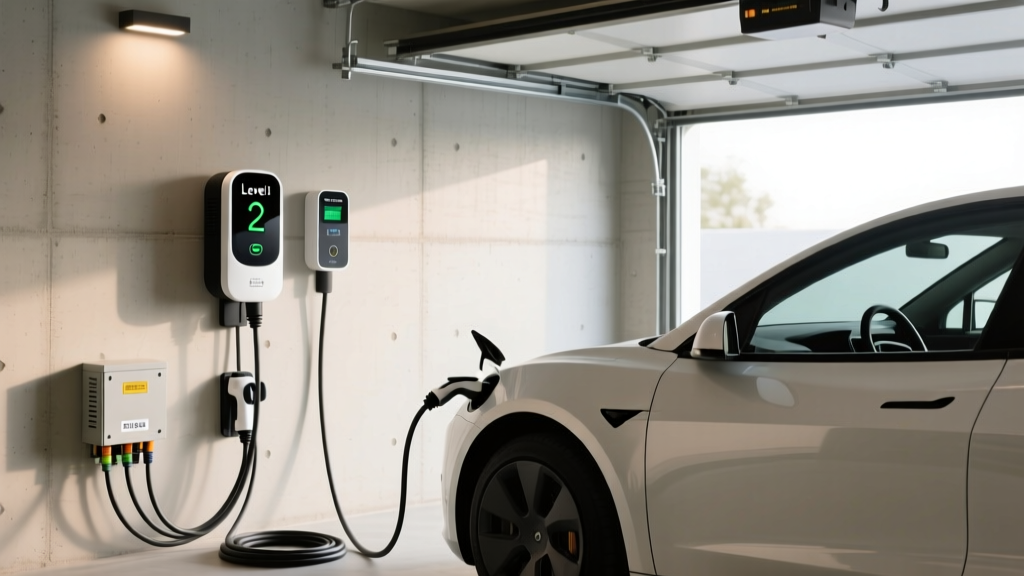
An outdoor Level 2 charger requires a dedicated 240-volt circuit, the same voltage your electric dryer or oven uses. The circuit amperage determines your maximum charging power:
- 20-amp circuit: 16 amps continuous → 3.8 kW (adequate for PHEVs and low-mileage BEV commuters)
- 30-amp circuit: 24 amps continuous → 5.8 kW
- 40-amp circuit: 32 amps continuous → 7.7 kW (the most common residential setup)
- 50-amp circuit: 40 amps continuous → 9.6 kW
- 60-amp circuit: 48 amps continuous → 11.5 kW (optimal for most BEVs)
- 100-amp circuit: 80 amps continuous → 19.2 kW (requires large-gauge wire and a panel with ample spare capacity)
Per the National Electrical Code (NEC), EV chargers are considered continuous loads, meaning the circuit must be rated at 125% of the charger's maximum draw. A 48-amp charger requires a 60-amp breaker. This is non-negotiable and your electrician will enforce it.
Will You Need a Panel Upgrade?
This is the question that most surprises first-time EV buyers. Most homes built before 2000 have 100-amp or 150-amp main electrical panels. Adding a 60-amp circuit for an EV charger can consume 30–60% of your panel's spare capacity. If your panel is already loaded with electric heating, an electric water heater, a dryer, and an electric range, you may need a panel upgrade to 200 amps or a load-management device that throttles the charger when other large appliances are running.
Load-management devices (like the Emporia Smart Load Management or Tesla Wall Connector's built-in load sharing) can avoid a full panel upgrade by dynamically capping the charger's draw based on real-time household consumption. These add $150–$400 to equipment costs but can save $2,000–$4,000 versus a panel upgrade.
How Much Does It Cost to Install an Outdoor Home EV Charger?
Outdoor installations typically cost more than indoor garage setups due to longer wire runs, weatherproof conduit, and the need for NEMA 4-rated (weatherproof) enclosures. Here's a realistic 2026 cost breakdown:
| Component | Low-End Estimate | High-End Estimate | Notes |
|---|---|---|---|
| Level 2 Charger (hardware) | $350 | $750 | 32A–48A smart charger; hardwired preferred outdoors |
| Electrician labor | $500 | $2,000 | Depends on wire run length, wall/foundation penetration |
| Materials (wire, conduit, breaker) | $150 | $600 | Longer outdoor runs = more copper and conduit |
| Permit and inspection | $50 | $300 | Varies by municipality; some jurisdictions waive EV permits |
| Panel upgrade (if needed) | $1,500 | $4,000 | 100A→200A service upgrade; not always required |
| Total (no panel upgrade) | $1,050 | $3,650 | Typical range for most homes |
| Total (with panel upgrade) | $2,550 | $7,650 | Older homes with 100A service |
Several utilities offer rebates of $250–$1,000 for residential Level 2 installations, and some states offer additional incentives. Check your local utility's EV program page and the Alternative Fuels Data Center state incentive database for current programs in your area.
Connector Compatibility: NACS, CCS1, and CHAdeMO
The connector landscape has consolidated significantly since 2024. Here's where things stand for 2026 model-year vehicles:
| Connector | Brands Using It (Factory) | Home Charger Availability |
|---|---|---|
| NACS (North American Charging Standard / Tesla connector) | Tesla, Ford, GM, Rivian, Volvo, Polestar, Hyundai, Kia, BMW, Mercedes-Benz (new models) | Tesla Wall Connector, ChargePoint Home Flex (NACS), Emporia VUE (NACS), Grizzl-E (NACS) |
| CCS1 (Combined Charging System) | Legacy models from VW, BMW, Mercedes; some Stellantis vehicles | ChargePoint Home Flex (CCS), Emporia VUE (CCS), JuiceBox (CCS — used/refurbished market) |
| CHAdeMO | Nissan Leaf (remaining stock); Mitsubishi Outlander PHEV | No mainstream home CHAdeMO chargers available; use adapter or CCS/NACS vehicle |
If you own a CCS1-equipped vehicle but want a NACS charger (for future-proofing or because you also own a Tesla), a CCS-to-NACS adapter is available from Tesla and third-party manufacturers for approximately $150–$250. However, for daily home charging, matching your charger's connector to your vehicle's native port eliminates adapter hassle and potential failure points.
Cost to Charge: Home vs. Public vs. Gas
The economics of home EV charging remain compelling in 2026, especially when compared to public DC fast charging and gasoline. Here's a comparison based on national average rates:
| Charging Scenario | Rate | Cost per kWh | Cost Per Mile (at 3 mi/kWh efficiency) |
|---|---|---|---|
| Home — off-peak TOU rate | Utility time-of-use plan | $0.08–$0.14 | $0.03–$0.05 |
| Home — standard residential rate | Flat rate, no TOU | $0.14–$0.20 | $0.05–$0.07 |
| Public Level 2 (ChargePoint, EVgo L2) | Per-kWh pricing | $0.25–$0.49 | $0.08–$0.16 |
| DC Fast Charging (Electrify America, Tesla Supercharger) | Per-kWh pricing | $0.35–$0.65 | $0.12–$0.22 |
| Gasoline vehicle (28 MPG combined, $3.40/gal) | EPA average | — | $0.12 |
At off-peak home rates, charging an EV costs roughly one-quarter to one-third the per-mile cost of gasoline. Even at standard residential rates without time-of-use optimization, home charging undercuts gas for most vehicles. The break-even point shifts if you rely exclusively on DC fast charging at $0.50+/kWh — at that rate, a less-efficient EV (like a full-size truck at 2 mi/kWh) can approach gasoline per-mile costs.
For a driver covering 12,000 miles annually in a vehicle averaging 3 mi/kWh:
- Home off-peak ($0.11/kWh): ~$440/year in electricity
- Home standard ($0.17/kWh): ~$680/year
- Gasoline ($3.40/gal, 28 MPG): ~$1,457/year
That's $777–$1,017 in annual fuel savings by charging at home, which pays off a typical outdoor Level 2 installation in 1–4 years depending on your install cost.
Equipment Picks: Outdoor-Rated Chargers for 2026
Every charger below carries a NEMA 4 or NEMA 4X weatherproof rating suitable for full outdoor exposure. All support hardwired installation, which is strongly recommended for outdoor setups.
Tesla Wall Connector (Gen 4)
- Power: Up to 11.5 kW (48A on 60A circuit)
- Connector: NACS native
- Cable length: 24 ft
- Smart features: Wi-Fi, OTA updates, access control, power sharing between units, load management
- Outdoor rating: NEMA 4
- Price: ~$475
- Best for: Tesla and NACS-equipped Ford/GM/Rivian/Hyundai/Kia owners
ChargePoint Home Flex (2025 refresh)
- Power: Up to 12 kW (50A on 60A circuit); configurable down to 16A
- Connector: Available in NACS or CCS1
- Cable length: 23 ft
- Smart features: Wi-Fi, app scheduling, Alexa integration, load sharing, energy reports
- Outdoor rating: NEMA 4
- Price: ~$599–$649
- Best for: Multi-EV households wanting connector choice and detailed energy tracking
Emporia VUE Smart Charger
- Power: Up to 11.5 kW (48A on 60A circuit)
- Connector: Available in NACS or CCS1 (J1772 with adapter)
- Cable length: 24 ft
- Smart features: Wi-Fi, solar integration, load management with Emporia panel monitor, scheduling
- Outdoor rating: NEMA 4
- Price: ~$399–$449
- Best for: Homes with solar panels or those wanting whole-home energy monitoring integration
Grizzl-E Smart (United Chargers)
- Power: Up to 10 kW (40A on 50A circuit)
- Connector: Available in NACS or J1772 (CCS adapter included)
- Cable length: 24 ft
- Smart features: Wi-Fi, OCPP support, adjustable amperage via DIP switch
- Outdoor rating: NEMA 4X (superior corrosion resistance for coastal areas)
- Price: ~$499
- Best for: Harsh climates, coastal salt air, extreme cold (rated to -40°F)
Safety, Code, and Outdoor Installation Considerations
Outdoor EV charger installations must comply with NEC Article 625 (Electric Vehicle Charging System Equipment) and local amendments. Key requirements and best practices:
- Dedicated circuit: The charger must be on its own dedicated circuit — no sharing with other outlets or appliances.
- GFCI protection: NEC 2023 and later require GFCI protection for outdoor receptacles. Hardwired chargers may be exempt in some jurisdictions, which is another reason hardwiring is preferred outdoors.
- Mounting height: Most codes require the charger to be mounted between 18" and 48" above grade. Mount it high enough to avoid snow burial and splash damage but low enough for comfortable cable handling.
- Cable management: Use a holster or cable retracting system to keep the cable off the ground. Cables lying on concrete, gravel, or in standing water degrade faster and create tripping hazards.
- Conduit and wiring: Outdoor wire runs must be in rated conduit (Schedule 80 PVC or rigid metal). Direct burial cable (UF-B or USE-2) is permitted for underground segments but must be buried to code depth (typically 18–24 inches depending on conduit type).
- Surge protection: A whole-home surge protective device (SPD) at the panel, or a Type 2 SPD at the charger, protects the charger's electronics from lightning-induced surges — a real risk for outdoor equipment in storm-prone regions.
- Permit and inspection: Nearly all jurisdictions require an electrical permit for a new 240V circuit. The inspection verifies wire gauge, breaker sizing, grounding, and GFCI compliance. Skipping the permit risks voiding your homeowner's insurance in the event of an electrical fire.
Frequently Asked Questions
How much does it cost to install an electric car charger outside?
A typical outdoor Level 2 installation without a panel upgrade runs between $1,050 and $3,650, including the charger ($350–$750), electrician labor ($500–$2,000), materials ($150–$600), and permit fees ($50–$300). If your home needs a panel upgrade from 100A to 200A service, add $1,500–$4,000. Utility rebates of $250–$1,000 can offset a significant portion of these costs.
How fast will each charging level add range?
Level 1 (120V) adds 3–5 miles per hour — adequate for PHEVs with small batteries but too slow for most BEVs. Level 2 (240V) at 48 amps / 11.5 kW adds approximately 30 miles per hour, fully replenishing a 300-mile-range EV overnight. DC fast charging at 150–350 kW can add 150–300+ miles per hour, though the charge curve tapers significantly above 80% state of charge, so published 10–80% times (typically 18–35 minutes) are the relevant metric.
Which connector and charger is compatible with my EV?
For 2026 models, most new EVs from Tesla, Ford, GM, Rivian, Hyundai, Kia, Volvo, and others use the NACS connector. Older CCS1 vehicles (2022–2024 VW ID.4, BMW i4, etc.) use CCS1. The Nissan Leaf uses CHAdeMO. Match your charger's connector to your vehicle's port, or use a certified adapter. The Tesla Wall Connector is NACS-native; ChargePoint Home Flex and Emporia VUE are available in both NACS and CCS1 configurations.
How much does charging cost per mile compared to gas?
At home off-peak rates ($0.08–$0.14/kWh), EV charging costs $0.03–$0.05 per mile. A comparable gasoline vehicle at 28 MPG and $3.40/gallon costs about $0.12 per mile. Even at standard residential rates without time-of-use optimization, home charging costs $0.05–$0.07/mile — roughly half the cost of gasoline. Public DC fast charging at $0.40–$0.65/kWh narrows the gap to $0.13–$0.22/mile.
What electrical upgrades might I need for an outdoor charger?
You'll need a dedicated 240V circuit (typically 40–60 amps) with appropriately sized wire (6 AWG copper for 60A, 4 AWG for longer runs). If your electrical panel lacks sufficient spare capacity — common in homes with 100A service and multiple electric appliances — you may need a panel upgrade to 200A ($1,500–$4,000) or a smart load-management device ($150–$400) that dynamically limits charger draw. Your electrician will perform a load calculation per NEC Article 220 to determine what your panel can support.